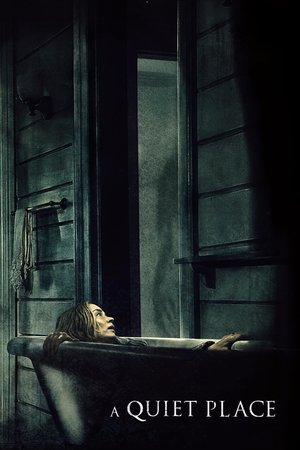
A QUIET PLACE(2018)
Written by: Scott Beck & Bryan Woods
Genre: Horror
Title: A Quiet Place
Written by: Scott Beck & Bryan Woods
Draft date: Not specified
LOGLINE
In a world where blind, sound-hunting creatures have decimated civilization, a family on an isolated farm struggles to survive in near-total silence — until the birth of a newborn and a young deaf girl's desperate search for her lost father force them to confront both the monsters outside and the grief that has silenced them from within.
| Very Poor | Poor | Fair | Good | Excellent | |
|---|---|---|---|---|---|
| PREMISE | ✓ | ||||
| STRUCTURE | ✓ | ||||
| CHARACTER | ✓ | ||||
| CONFLICT | ✓ | ||||
| DIALOGUE | ✓ | ||||
| PACING | ✓ | ||||
| TONE | ✓ | ||||
| ORIGINALITY | ✓ | ||||
| LOGIC | ✓ | ||||
| CRAFT | ✓ |
| Strong Pass | Pass | Consider | Recommend | Strong Recommend | |
|---|---|---|---|---|---|
| Overall | ✓ |
Genre: Thriller, Horror
Sub-genre: Creature Feature, Survival Thriller, Family Drama
Keywords: Post-Apocalyptic, Family, Silence, Monsters, Rural Setting, Female Protagonist, Child Protagonist, Deaf Character, Grief, Father-Daughter Relationship, Pregnancy, Survival, Creature, Loss of a Sibling, Communication, Redemption
MPA Rating: PG-13 (sustained creature tension and peril, brief bloody violence, one implied death, a childbirth scene — no strong language, nudity, or drug use)
Budget Tier: Medium ($10M–$40M) — primarily rural and farm locations, one wind turbine interior requiring set construction, creature effects (CGI or practical), limited cast, no major period requirements
Pages: 67
Time Period: Present (though a pre-apocalypse past is shown in flashbacks). Primary action spans approximately 3 days. Flashbacks cover roughly 1-2 years prior.
Locations: 70% at and around a single farmhouse and its outbuildings (padded interiors, a soundproofed shed/nursery, a basement with a protruding nail). 10% at a lake with red algae and a rope-pull rowboat, a stone well. 10% in corn fields, a grain silo (interior collapse sequence). 10% at a wind turbine farm on a shortgrass prairie (exterior and interior climb of a full-scale turbine tower). Flashbacks include a pickup truck crash (intersection), a doctor's office, and an electronics store.
Lead: April, female, approximately 8 years old, Caucasian (implied), deaf in one ear with a hearing aid. Nervous, eager, grieving the loss of her older sister, estranged from her father due to unresolved guilt and anger.
Comparables: Signs (M. Night Shyamalan) — a family under alien siege on a rural farm, with grief as the emotional engine. Don't Breathe (Fede Alvarez) — sustained tension built around the danger of making sound. The Road (John Hillcoat) — post-apocalyptic survival focused on a parent-child bond. Hush (Mike Flanagan) — a protagonist whose deafness shapes the terms of a survival scenario.
SYNOPSIS
APRIL (8), a girl with a hearing aid, lives with her family on an isolated farmhouse in a post-apocalyptic landscape where blind, sound-hunting creatures have killed most life. Her father JOHN (40s), mother MIA (30s, visibly pregnant), and brother WILL (10) have adapted every aspect of daily life to produce no noise: padded walls, plastic cutlery, muzzled dog, shoe covers, sign language, and silent routines. During a game of Monopoly, April lets out a giggle. The family freezes as a distant, inhuman scream responds — then recedes. A title card appears: A QUIET PLACE.
That night, something large moves through the corn. By morning, the family carries on. April finds a Polaroid of a TEENAGE GIRL — her older sister IRIS — in the basement, triggering visible grief and tension with John, who tries to comfort her but is rebuffed. John and Will row across a red-algae-covered lake to retrieve water from a well, a painstaking, silent process. Meanwhile, Mia notices the family dog has torn free from its leash and disappeared. She begins experiencing pains.
Mia goes into labor. Red flood lights on the farmhouse activate as a signal. Will and April split off to execute a rehearsed emergency plan: Will runs to a hidden tractor to light a fuse that triggers fireworks, drawing the creature away. April attempts to activate a speaker box near a weather vane in the corn field but is knocked unconscious by an electrical explosion. The creature enters the house during the birth. John retrieves his MP3 player, plugs it into a system that broadcasts music from the distant speaker, and lures the creature away. The family reunites in the soundproofed shed — except April, who is missing. John cannot leave because the shed door jams and the creature returns.
April wakes alone in the corn field at night, disoriented. The speaker box is destroyed. She wanders through flashback-laden memories of Iris — who, we learn, died in a car accident caused when John ran a yellow light. April was also injured, losing her hearing. The guilt and grief between April and John stem from this event: John never told Iris he loved her, and April told John she wished he had died instead. April eventually spots a distant grain silo and heads toward it.
The next morning, John and Will escape the shed roof in a tense sequence involving loose shingles. They split up — Will goes to fetch water alone, John searches for April. Mia, left with the newborn, discovers the shed doors have been pushed open and the creature is inside with her sleeping baby. She silently retrieves the infant and escapes to the basement, where she steps on a protruding nail. She stifles her scream while the creature prowls above.
April reaches the silo and climbs to its roof, where she constructs a sundial from buttons to find the farmhouse's direction. She spots John's smoke signal in the distance but falls through the rusted silo platform into grain that acts like quicksand, submerging her. The creature, drawn by her scream, breaks through the silo wall. The grain spills out, carrying April to daylight, and she escapes to a creek.
John, meanwhile, has traveled to a wind farm. His plan involves planting timed alarm lures and climbing a turbine to call April's name from an elevated position while the creature is distracted. He falls during the climb, breaks his arm, and barely reaches the top. The timers go off prematurely — Will, arriving at the lake, is capsized when the creature leaps from the water at the first timer's ding. John repels down the turbine exterior, traps the creature inside, and screams April's name. She hears him. They reunite at the creek and run toward the farmhouse, joined by Will.
As the creature closes in, April finds the signal generator from a scarecrow — the same device Iris once suggested to drive crows away, the same device that caused pain in April's sensitive ears after the accident. Its batteries are corroded. Flashback voices build into a montage of John's unspoken grief: his failure to tell Iris he loved her, his emotional withdrawal. John says aloud, "I love you," sacrificing himself to draw the creature away from the children. Will turns down April's hearing aid volume, silencing John's death from the audience.
April and Will flee to the shed. April pulls batteries from the MP3 player, inserts them into the signal generator, and activates it in front of the charging creature. The high-frequency sound causes the alien to seize and collapse dead. Mia stops April from closing the shed doors — they no longer need to hide.
An epilogue shows a cemetery one year later. April, in a Sunday dress with the signal generator around her neck, places a purple iris on John's grave. Mia, Will, and baby IRIS (1) stand nearby. The sound of baby Iris's laughter fills the air.
COMMENTS
PREMISE — Excellent
The premise — a family that must live in total silence to survive sound-hunting creatures — is exceptionally high-concept, immediately graspable, and rich with cinematic potential. It fuses a creature-survival scenario with a domestic grief narrative: a father who never told his dead daughter he loved her now literally cannot speak, and the enforced silence becomes both physical threat and emotional metaphor. The setting on an isolated farm in an empty, post-apocalyptic landscape provides natural constraints that amplify tension. The choice to center the emotional point of view on April, an eight-year-old with a hearing aid whose disability becomes the key to defeating the creature, gives the premise a satisfying structural irony. Compared to Signs, which similarly uses a family on a farm besieged by aliens with a single exploitable weakness, this material ties its thematic concerns (communication, grief, unexpressed love) more directly to its survival mechanics. The central dramatic question — can this family survive and reconnect before silence destroys them from within as surely as the creature threatens from without — is compelling and clear.
STRUCTURE — Fair
The narrative is organized into two clearly marked acts rather than the conventional three, with the first act running from the silent domestic opening through the baby's birth and April's separation (1–23), and the second act encompassing April's solo journey, John's turbine mission, and the climax (24–67). The inciting incident — Mia's labor triggering the emergency plan and April's separation from the family — arrives around page 12, proportionally appropriate. The midpoint, where the creature enters the shed with the sleeping baby and Mia steps on the nail (40–41), delivers a visceral escalation that splits the family's survival into three parallel tracks. However, the back half overextends John's wind turbine sequence (52–59), which consumes nearly eight pages of climbing, falling, and timer mechanics. While each individual beat generates tension, the cumulative effect is repetitive — John slips, recovers, slips again — and the logistical explanation of turbine climbing (55) and timer placement reads more like production design than dramatic momentum. The resolution, in which April retrieves batteries from the MP3 player and activates the signal generator (66), is satisfying in its callback structure but arrives very abruptly after John's death, compressing emotional processing into a single page. The epilogue (67) provides closure but also undercuts the climactic moment by jumping forward a full year without transition.
CHARACTER — Fair
April is the emotional protagonist, and her arc — from grief-stricken, defiant child who told her father she wished he had died (64), to the one who weaponizes her disability to save the family — is the material's strongest character achievement. Her want (to reconnect with her father) and her need (to forgive him and herself) are clearly articulated through the flashback structure. John functions as co-protagonist, and his arc mirrors April's: he is a man who cannot say what matters, first by choice and then by circumstance. His sacrifice on page 66, finally speaking "I love you" aloud, completes the thematic circuit. However, Mia and Will remain functionally defined rather than internally developed. Mia is resourceful and loving — she survives labor, rescues the baby from the shed (41), endures the nail (41) — but she has no internal conflict or want beyond survival. Will is similarly brave but interchangeable with any capable older sibling. The dead sister Iris, seen only in flashbacks, is ironically more vivid than either living supporting character, because her scenes (49–51) carry emotional specificity — her frustration, her humor about Diplo, her storming out. The supporting cast serves the plot but does not challenge or complicate it.
CONFLICT — Good
The external conflict — surviving creatures that hunt by sound — is formidable, clearly established, and escalates steadily from the opening giggle (5) through the birth sequence (12–22), the shed infiltration (40–41), the silo entrapment (43–44), and the turbine sequence (55–59). Each set piece introduces a new acoustic danger: a baby crying, a nail underfoot, grain collapsing, a timer going off prematurely. The internal conflict — John's inability to communicate love, and April's blame toward him for Iris's death — is the emotional spine, and the material ties it directly to the external threat: the world punishes sound, and this family's deepest wound is silence. The scene-level conflict is almost uniformly strong, with nearly every sequence built around a specific sound-related threat. The one area where conflict thins is during April's solo wandering in the corn field (24–33), where her obstacles are largely environmental (cold, hunger, disorientation) without the creature applying direct pressure. The material benefits from the mounting irony that the very device that hurt April's ears after the accident becomes the weapon that saves her family.
DIALOGUE — Good
Dialogue is used with extreme economy and deliberate impact, appearing almost exclusively in flashback sequences that reveal the family's pre-apocalyptic life. The contrast is effective: the present-day silence makes every spoken word in the past carry heightened weight. Iris's voice is the most distinctive — her line "I think I like it better when you don't say anything to me" (49) crystallizes the thematic core in a single sentence. John's halting, avoidant speech patterns ("I, um... Iris, I need to tell you something" on page 49, followed by deflecting to the crow problem) are consistent and revealing. The pickup truck scene (50–51) where John's "Nevermind. It's nothing" precedes the fatal crash is the material's most devastating use of dialogue, precisely because of what goes unsaid. April's "I hate you. I wish you died instead of her" (64) is blunt in a way that reads authentically for a traumatized child. The overlapping voice montage (65) risks sentimentality but earns its effect through prior restraint. One limitation: because dialogue is confined to flashbacks, the present-day characters communicate almost entirely through mime, which places enormous burden on visual description to convey emotional nuance — a burden the prose handles unevenly (see: Craft).
PACING — Fair
The opening fifteen pages establish the world with patient, accumulating detail — padded walls, plastic cutlery, shoe covers, muzzled dog — before the labor sequence detonates the tension at page 12. This slow-burn approach is effective and appropriate for the premise. The birth-to-fireworks sequence (12–22) is the best-paced stretch, cutting between four simultaneous actions with crisp momentum. However, the middle section sags. April's solo journey from the corn field to the silo (24–35) covers roughly eleven pages with limited dramatic escalation; she wanders, has fragmented memories, cries, and walks. The intercut flashbacks (31, 49–51) are emotionally valuable but break the present-tense urgency. The turbine climb (55–59) also overextends, particularly the pages dedicated to timer countdowns and mechanical details. The typographical trick of dedicating near-empty pages to John's walk toward the shed (16–21) — "30 feet away," "20 feet away," "10 feet" — is a bold pacing choice that works on the page as a reading experience but consumes six pages for one action beat, which creates a proportional imbalance given the total 67-page count.
TONE — Fair
The tone is consistently somber, tense, and emotionally earnest, blending creature-horror dread with domestic grief in a way that generally coheres. The quiet opening domestic scenes (2–5) establish warmth and love under constraint, making the horror beats land harder. The flashback sequences shift into naturalistic family drama — John and Iris's argument (31), the Diplo joke in the truck (50) — and these tonal pivots are handled smoothly because they emerge from April's or John's emotional states. One tonal wobble occurs during the silo sequence (43–44), where the prose inserts factual statistics about grain entrapment ("Five seconds. That is how quickly someone can become engulfed..."). This reads as documentary narration dropped into what is otherwise an immersive, experiential survival sequence, breaking the established tonal register. Similarly, the turbine climbing note about harnesses (56) is expositional in a way that pulls outside the world. The epilogue's warmth (67) is earned but perhaps too neat — baby Iris's laughter as the final sound risks sentimentality after the rawness of John's death moments earlier.
ORIGINALITY — Good
The core conceit — silence as survival — is distinctive and cinematically inventive, generating tension from the absence of what most films rely on. While Don't Breathe explored a contained scenario where sound equals danger, and Signs staged an alien invasion through a family's farmhouse, this material fuses the two into something with its own identity: an open-world survival scenario where sound is lethal everywhere, not just in one location. The deeper originality lies in the metaphorical layer — a family unable to speak becomes a literalization of emotional repression and grief — which elevates the creature premise beyond genre exercise. The execution contains genuinely surprising set pieces: the silo quicksand sequence, the wind turbine climb, and the signal generator payoff all feel fresh. Where originality thins is in certain genre conventions — the creature design (eyeless, sound-hunting) echoes the Demogorgon from Stranger Things and the aliens from Tremors in broad strokes, and John's sacrificial death follows a well-worn paternal template seen in Armageddon and similar material. The emotional resolution, while effective, does not subvert expectations so much as fulfill them precisely.
LOGIC — Poor
The internal logic is carefully constructed but contains notable gaps. The family's survival systems — padded walls, plastic plates, shoe covers, muzzled dog, biohazard toilet bags — are impressively detailed and consistent. However, the baby's survival strains credibility: newborns cry involuntarily and unpredictably, and a fleece blanket and breathing mask (13–14) are insufficient solutions for the weeks and months that follow birth. The material never addresses how the family planned to manage an infant long-term. The shed doors that April pulls a sheet from (11) and that later blow "WIDE OPEN" (39) represent a critical vulnerability that the family — months into preparation — would logically have secured with interior latches. The signal generator's batteries being corroded (65) is a convenient complication, but the fresh MP3 player batteries fitting the generator is an unearned coincidence that the material does not address. The creature leaping from the lake (57) implies it was submerged in algae-covered water, yet its established behavior suggests it hunts by sound, raising the question of how it tolerated the constant ambient noise of water. The timers' purpose as lures (52–53) is clever but the plan's failure — all three going off while John is mid-climb — feels contrived rather than organic.
CRAFT — Fair
The writing operates in a heightened, muscular register that uses formatting as a dramatic tool — capitalized action lines, isolated words on single lines, progressive spacing to simulate real-time tension (16–21). This approach is effective during set pieces: the walk to the shed, the silo submersion (44), and the turbine fall (57) all generate visceral momentum through typographical rhythm. Character introductions are clean and efficient — April's hearing aid, Mia's pregnant belly, John's headphones each deliver immediate visual characterization. The description of the world's silent rules (6–7) is economical and evocative. However, the prose occasionally over-directs emotional responses ("A look that says, 'It's too late. We're already dead'" on page 13) rather than trusting the situation to convey the feeling. The parenthetical editorial voice — "the least of her problems" (45), "Don't be afraid. There. Is. Nothing. Under. Your. Boat." (39) — breaks the fourth wall in a way that clashes with the otherwise immersive tone. The flashback structure is clearly delineated but the transition into the climactic voice montage (65) includes the instruction "PUSH IN ON JOHN'S FACE, AS WE REALIZE, THE FLASHBACKS ARE HIS MEMORIES," which tells rather than shows a revelation that the visual and emotional context has already established.
OVERALL — Recommend
A Quiet Place is a high-concept creature-survival thriller about a family living in enforced silence on an isolated farm, built around a father's inability to express love and a daughter's grief over a dead sister. The premise is the material's greatest asset — immediately graspable, cinematically rich, and emotionally layered in a way that elevates it above standard creature fare. April's arc and John's sacrifice provide a resonant emotional through-line, and the best set pieces (the birth sequence, the shed infiltration, the silo entrapment) demonstrate expert command of tension mechanics. The weakest elements are structural: the middle section sags during April's solo wandering and John's overextended turbine climb, and the supporting characters (Mia, Will) lack interior lives. Logic gaps around the newborn's long-term survival and the signal generator's convenient battery swap are noticeable but not fatal. The craft is bold and inventive in its use of formatting to simulate silence and suspense, though it occasionally overreaches into editorializing. At 67 pages, this draft reads lean — almost too lean — with the near-empty tension pages (16–21) inflating the count while the emotional denouement after John's death feels compressed. The material's central insight — that silence can be both the thing that kills you and the thing that keeps you alive — gives it thematic weight that distinguishes it within its genre.
Get this level of coverage for your screenplay
Every coverage includes 10 category ratings, an overall recommendation, and detailed analysis — powered by the same methodology used by talent agencies and literary managers.
Movie data provided by TMDB