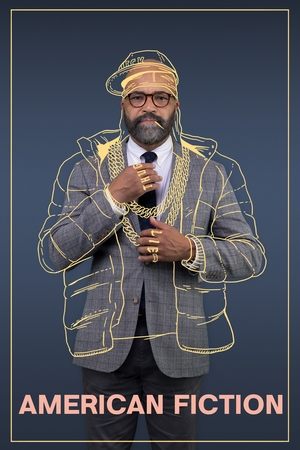
AMERICAN FICTION(2023)
Written by: Cord Jefferson
Draft date: Not specified.
Genre: Drama
Title: American Fiction
Written by: Cord Jefferson
Draft date: Not specified.
LOGLINE
A Black literature professor and struggling novelist, frustrated that publishers only want stereotypical "Black stories," writes a satirical ghetto novel as a joke — only to watch it become a runaway bestseller, forcing him to maintain an elaborate deception while his family fractures around him.
| Very Poor | Poor | Fair | Good | Excellent | |
|---|---|---|---|---|---|
| PREMISE | ✓ | ||||
| STRUCTURE | ✓ | ||||
| CHARACTER | ✓ | ||||
| CONFLICT | ✓ | ||||
| DIALOGUE | ✓ | ||||
| PACING | ✓ | ||||
| TONE | ✓ | ||||
| ORIGINALITY | ✓ | ||||
| LOGIC | ✓ | ||||
| CRAFT | ✓ |
| Strong Pass | Pass | Consider | Recommend | Strong Recommend | |
|---|---|---|---|---|---|
| Overall | ✓ |
Genre: Comedy, Drama
Sub-genre: Black Comedy, Satirical Drama, Literary Satire
Keywords: Satire, Race, Publishing Industry, Family Drama, Alzheimer's, Pseudonym, Deception, African-American Theme, Academic, Literary World, Sibling Relationships, Caretaking, Ensemble Cast, Based on Novel, Fish-Out-Of-Water, Identity, Grief
MPA Rating: R (pervasive strong language throughout, cocaine use, brief sexual situations)
Budget Tier: Medium ($10M–$40M): Multiple East Coast and Los Angeles locations, period-free but requires banquet hall, elder care facility, beach house, studio backlot, and fantasy sequences with notable cast members.
Pages: 110
Time Period: Present over approximately 3-4 months.
Locations: Approximately 40% in the greater Boston/Cambridge area (family home, beach house, restaurants, bars, elder care facility, hotel conference rooms, bookstore), 20% at the beach house on the Massachusetts coast, 15% in various office interiors (agent's office, publisher's office), 10% in Los Angeles (USC classroom, studio backlot), and 15% across miscellaneous interiors (hotel rooms, Coraline's house, doctor's office). The beach house requires ocean-adjacent exterior. A banquet hall is needed for the climactic gala. Fantasy sequences require a stylized study set.
Lead: Male, 50s, Black, neurotic and intellectual, an accomplished but commercially unsuccessful novelist who masks vulnerability with sharp wit and emotional distance.
Comparables: Get Out (2017) for its satirical examination of white liberal racial dynamics and tonal blend of comedy with social commentary; Barton Fink (1991) for the portrait of a writer whose principles collide with commercial pressures; The Savages (2007) for the sibling dynamic around a parent's cognitive decline; Adaptation (2002) for its meta-narrative structure and a protagonist wrestling with artistic integrity.
SYNOPSIS
THELONIOUS "MONK" ELLISON (50s, Black), a literature professor at USC, provokes a white student, BRITTANY (19), by writing a racial slur from a Flannery O'Connor title on the whiteboard. The incident, combined with past complaints, leads his department chair LEO (50s) and colleagues GILDA (50s) and MANDEL (60s) to place Monk on mandatory leave. They suggest he extend his upcoming trip to a Boston book festival into a break.
In Boston, Monk's agent ARTHUR (50s) informs him that his latest novel — a literary reworking of Aeschylus — has been rejected by yet another publisher because it lacks connection to "the African-American experience." At the book festival, Monk's sparsely attended panel contrasts with a packed event for SINTARA GOLDEN (32, Black), whose debut novel "We's Lives in Da Ghetto" features stereotypical dialect and has received universal acclaim. Monk is bewildered by the reception.
Monk reunites with his sister LISA (late 50s), a Planned Parenthood doctor, and their mother AGNES (70s), who is showing signs of memory loss. Lisa reveals their late father's affairs and confronts Monk about his emotional distance and refusal to share family responsibilities. During a candid outdoor conversation, Lisa suddenly collapses from cardiac arrest and dies. Monk reads Lisa's self-authored eulogy at a beach memorial, joined by their brother CLIFF (early 50s), a plastic surgeon recently outed as gay and going through a brutal divorce. Their longtime housekeeper LORRAINE (late 60s) and Agnes grieve alongside them.
Agnes's condition deteriorates rapidly — she wanders away at night and is found near the ocean believing Lisa is still alive. Monk learns her diagnosis is early Alzheimer's requiring eventual full-time care. Financially strained, Monk writes a deliberately terrible, stereotype-laden novel titled "My Pafology" under the pseudonym Stagg R. Leigh, intending it as satire to expose the publishing industry's appetite for Black trauma narratives. He instructs Arthur to submit it straight, expecting rejection.
Instead, publisher PAULA BADERMAN (50s) at Thompson-Watt offers $750,000 to pre-empt. Arthur fabricates a backstory that Stagg R. Leigh is a wanted fugitive, which only increases industry excitement. Monk reluctantly accepts the deal to pay for Agnes's care at Sunrise Elder Care Home. Meanwhile, he begins a romance with his neighbor CORALINE WILSON (early 40s), a public defender, and is invited to judge the prestigious Literary Award alongside Sintara and three other judges.
The deception escalates: film producer WILEY VALDESPINO (50s) offers $4 million for adaptation rights after Monk flees their meeting upon hearing sirens — which Wiley interprets as fugitive behavior. Thompson-Watt's marketing head JOHN BOSCO (30s) plans a Juneteenth release. Monk, attempting to sabotage the project, demands the title be changed to "Fuck," but the publisher enthusiastically agrees. The book debuts at number one. Monk appears in silhouette on a talk show as the fugitive author.
Agnes is settled into the care home, where a sweet moment of Cliff dancing with her is shattered when Agnes says she "always knew" he wasn't gay. Cliff departs, wounded. Monk's secrecy and irritability cause a rift with Coraline, who discovers his contempt for "Fuck" — a book she enjoyed — and throws him out. Lorraine announces her engagement to neighborhood security guard MAYNARD (late 60s) and the wedding is held at the beach house, where Cliff has arrived with new friends KENNY (20s) and ALVIN (40s). At the reception, Cliff counsels Monk about their father's secrecy and urges him to let people love the real him.
"Fuck" is submitted for the Literary Award. Monk and Sintara both argue against it, but the three white judges outvote them. At a private lunch, Sintara and Monk debate whether Black writers have a responsibility to resist market demand for trauma narratives. At the awards gala, "Fuck" wins. Monk stands to approach the stage, and the narrative presents three possible endings: first, a smash to black before he speaks; second, Monk leaves the ceremony and goes to Coraline's door to apologize; third, police storm the banquet and shoot Monk dead, believing him to be a fugitive. Wiley loves the violent third ending. Monk exits the studio lot defeated, and Cliff drives him away into a sunny Los Angeles day.
COMMENTS
PREMISE — Excellent
The premise operates on a double engine: a frustrated Black intellectual writes a deliberately awful novel to expose racial pandering in publishing, only to have the satire embraced as authentic genius. This ironic trap — the smarter Monk behaves, the less successful he is, while his most cynical work earns millions — generates inherent and escalating tension. The parallel family crisis (a mother's Alzheimer's, a sister's death, a brother's unraveling) gives the satire emotional stakes, preventing the material from becoming a mere intellectual exercise. The central dramatic question — whether Monk will maintain the deception or reveal the truth — gains complexity because the answer is not purely moral: his mother's care depends on the money. The premise positions itself in territory adjacent to Bamboozled and Get Out, but distinguishes itself by centering the publishing and literary world rather than entertainment media, and by grounding the satire in a deeply personal family narrative.
STRUCTURE — Good
The opening twelve pages efficiently establish Monk's professional crisis (classroom incident, tribunal, festival humiliation) before Lisa's death around page 23 catalyzes the family obligations that create financial pressure. The sale of "My Pafology" around page 45-46 functions as a strong midpoint reversal — the joke becomes real — and the escalation through the movie deal (66), title change to "Fuck" (73-75), and the book's bestseller status propels the second half forward. The Literary Award judging provides a clean structural spine for the final movement. However, the triple-ending sequence beginning at page 105 introduces a meta-narrative frame (Monk pitching endings to Wiley on a film set) that, while thematically resonant, arrives without adequate structural preparation — there is no earlier scene establishing that Monk is writing a screenplay adaptation of his own experience. The shift from lived narrative to pitched narrative is disorienting on first encounter because the Wiley meeting on page 101 appears to be a new scene rather than a frame that has been containing the preceding action. The pacing of structural beats is otherwise proportional and well-distributed.
CHARACTER — Good
Monk is a fully realized protagonist with clear backstory (emotionally distant father, favoritism, academic isolation), a defined want (literary respect), a conflicting need (genuine human connection), and an active but self-defeating approach to both. His arc — from intellectual superiority and emotional withdrawal toward vulnerability — is tracked through his relationships with Coraline, Cliff, and Agnes. Cliff is the strongest supporting character: his black eye, his poolside disruption (76-77), his tender dance with Agnes (82), and his porch counsel (95-96) reveal a man navigating his own identity crisis with more emotional courage than the protagonist, which provides a useful mirror. Coraline, however, functions more as a sounding board and romantic reward than as a character with independent dramatic agency — her breakup with Jelani is mentioned but never dramatized, and her arc consists primarily of reacting to Monk's behavior. Agnes's decline is rendered with specificity (the bathtub scene on page 28, the beach wandering on pages 55-56), though her lucid moments sometimes arrive with convenient timing for dramatic effect rather than consistent medical logic.
CONFLICT — Good
The central external conflict — Monk's need for money colliding with his contempt for the work generating that money — is formidable and escalates cleanly: each success (the book deal on page 45, the movie offer on page 66, the bestseller status on page 83, the award nomination on page 89) deepens the trap. The internal conflict between Monk's intellectual principles and his pragmatic compromises mirrors his father's pattern of secrecy, a parallel made explicit by Cliff on page 95. Scene-level conflict is consistent and well-calibrated: the phone calls with Paula and John (48-50, 70-75) generate friction through Monk's barely concealed disgust, and the judges' deliberations (96-97, 101-102) dramatize ideological collision. The weakest conflict thread is Monk versus Sintara — their lunch debate (98-100) is the most substantive exchange about the material's central themes, but it occurs only once and late, limiting its dramatic weight.
DIALOGUE — Excellent
The dialogue is the material's most consistently accomplished element. Characters are sharply differentiated: Lisa's deadpan humor ("It's a matter of row versus wade," page 11), Cliff's irreverent candor ("I've only been gay for like five minutes," page 78), Arthur's salesmanship-with-a-conscience ("Never underestimate how stupid everyone is," page 46), and Monk's reflexive intellectualism all read as distinct voices. Subtext operates effectively in the Paula/John speakerphone scenes, where the publishers' enthusiasm communicates their obliviousness without anyone stating it directly (48-50, 70-75). The Stagg R. Leigh performance voice — Monk's exaggerated bass and slang — works as both comedy and commentary. One limitation is that Coraline's dialogue, while natural, lacks the distinctive edge given to every other principal character, making her scenes with Monk feel slightly flatter by comparison (86-88).
PACING — Fair
The first half moves briskly, with Lisa's death arriving as a genuine shock around page 22-23 because the preceding scenes establish her as the family's emotional anchor. The middle section, covering Monk's financial maneuvering and Agnes's placement in care, sustains momentum through escalating absurdity (the Wiley restaurant meeting on pages 63-66 is a highlight of comedic pacing). The judges' deliberation scenes in the final third, however, are distributed across multiple short Zoom calls (66-68, 90-91) that begin to feel repetitive in format if not content. The triple-ending sequence (105-110) risks dissipating climactic energy by offering and then retracting resolution three times — the first smash-to-black is effective, but each subsequent version slightly diminishes the impact of the one before it.
TONE — Good
The tonal register — satirical comedy anchored by genuine grief — is maintained with impressive consistency through approximately 100 pages. The fantasy sequences with Van Go and Willy (36-39) could easily derail the tone, but they function because they are framed as Monk's creative process, with characters breaking the fourth wall to consult him. The Kenya Dunston talk show segment (83-84) sustains the satirical mode without becoming cartoonish. Where the tone becomes uncertain is the climactic police shooting ending (109): presented as one of three pitched options, it reads simultaneously as satire of Hollywood's appetite for Black death and as a genuine dramatic possibility. The Wiley framing device asks the audience to hold these readings simultaneously, which is intellectually coherent but tonally vertiginous — it is unclear whether the moment is meant to land as horror, comedy, or commentary, and the material does not fully commit to any single register.
ORIGINALITY — Good
The core concept — a Black intellectual deliberately writes terrible fiction to expose racial patronization, only to be rewarded for it — shares DNA with Spike Lee's Bamboozled (2000), which executed a similar trap in the television industry, and with the literary satire of Wonder Boys (2000), where a writer's self-destruction is played for dark comedy. The execution distinguishes itself through specificity: the publishing industry mechanics (the Johnnie Walker metaphor on page 47, the Juneteenth marketing push on page 72, the judges' deliberations) feel granular and observed rather than broadly sketched. The triple-ending structure is a genuinely inventive formal choice that dramatizes the material's own argument about audience expectations. The Van Go/Willy sequences, in which fictional characters negotiate with their author in real time, are the most formally distinctive element and have few direct precedents in produced screenplays of this type.
LOGIC — Fair
The fugitive backstory fabricated by Arthur (49) is the material's most significant logical pressure point: the FBI investigation (85) is introduced and then dismissed ("Don't worry, they're not gonna give him up"), but the absence of any meaningful consequences for this federal fraud strains credibility. If the FBI is investigating, the lack of follow-through — no subpoena, no questioning of Arthur — requires explanation. Additionally, Monk's ability to appear on stage at the awards gala (104) without anyone connecting the judge Thelonious Ellison to the pseudonymous Stagg R. Leigh assumes a level of anonymity that contradicts his established reputation as a published author and festival panelist. The financial logistics are handled more carefully — the reverse mortgage (21), Lisa's estate, the care facility costs (43-44) — and provide believable economic pressure. The meta-narrative frame introduced at page 105 raises the question of how much of what preceded it was "real" versus "pitched," which is likely intentional ambiguity but may read as a logic gap to some.
CRAFT — Good
The prose style is lean and efficient, with character introductions that economically convey personality through behavior rather than description — Monk is established as "neurotic, tired" and then immediately demonstrated to be both through his classroom manner (2-3). Action lines are spare but occasionally vivid: "Monk realizes what's happening and he turns away, silent, placid" (23) conveys the hospital scene's emotional devastation without overwriting. The fantasy sequences are formatted with clear delineation between Monk's reality and his fictional world, using stage directions like "breaking the fourth wall" (37) to orient the reader. The Johnnie Walker pitch (47-48) is a standout piece of expository craft — it delivers thematic argument through concrete visual metaphor. Minor formatting inconsistencies appear (a duplicated "MONK (CONT'D)" exchange on page 76 where Cliff's lines are attributed), and there are occasional typos ("bears all the hallmarks" on page 14 should be "bear"), but these do not materially impede readability.
OVERALL — Recommend
American Fiction is a satirical dramedy about a Black literary novelist who writes a deliberately terrible "ghetto novel" as a protest against the publishing industry's racial expectations, only to watch it become a bestseller he cannot disown. The dialogue and premise are the material's greatest strengths — the former is sharp, distinctive, and consistently subtext-rich across nearly every character, while the latter generates escalating ironic tension that sustains 100 pages of narrative momentum. The family dynamics, particularly the Monk-Cliff relationship and Agnes's decline, provide genuine emotional weight that prevents the satire from becoming schematic. The principal weakness is the triple-ending sequence, which is intellectually ambitious but structurally disorienting — it introduces a meta-narrative frame without prior preparation and risks dissipating the climactic energy that the preceding 104 pages carefully built. Coraline's underdevelopment as a character independent of Monk's arc is a secondary concern that limits the romantic subplot's resonance. The material is thematically cohesive, formally adventurous, and populated with vivid supporting characters, though it asks its audience to accept a degree of logical implausibility around the pseudonym mechanics that more rigorous plotting could address.
Get this level of coverage for your screenplay
Every coverage includes 10 category ratings, an overall recommendation, and detailed analysis — powered by the same methodology used by talent agencies and literary managers.
Movie data provided by TMDB