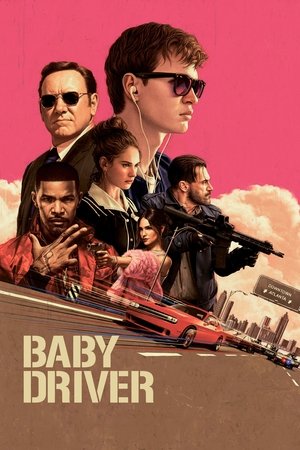
BABY DRIVER(2017)
Written by: Edgar Wright
Draft date: 1st Draft Revisions - August 15th 2014
Genre: Action
Title: Baby Driver
Written by: Edgar Wright
Draft date: 1st Draft Revisions - August 15th 2014
LOGLINE
A young getaway driver with tinnitus who uses music to drown out a constant ringing in his ears tries to break free from a crime boss's control, but a final heist goes catastrophically wrong, forcing him to outrun both the law and a vengeful colleague while protecting the waitress he's fallen for.
| Very Poor | Poor | Fair | Good | Excellent | |
|---|---|---|---|---|---|
| PREMISE | ✓ | ||||
| STRUCTURE | ✓ | ||||
| CHARACTER | ✓ | ||||
| CONFLICT | ✓ | ||||
| DIALOGUE | ✓ | ||||
| PACING | ✓ | ||||
| TONE | ✓ | ||||
| ORIGINALITY | ✓ | ||||
| LOGIC | ✓ | ||||
| CRAFT | ✓ |
| Strong Pass | Pass | Consider | Recommend | Strong Recommend | |
|---|---|---|---|---|---|
| Overall | ✓ |
Genre: Action, Thriller
Sub-genre: Action Crime, Heist Thriller, Romantic Crime Drama
Keywords: Getaway Driver, Heist, Music-Driven, Car Chases, Criminal Underworld, Tinnitus, Foster Care, Romance, Redemption, Los Angeles, iPod, Disability, Mentor-Protégé, One Last Job, Male Protagonist, Ensemble Cast
MPA Rating: R (pervasive strong violence including multiple shootings, frequent strong language including numerous uses of "fuck," drug use)
Budget Tier: High ($40M–$100M) — Multiple elaborate car chase sequences across Los Angeles freeways and surface streets, helicopter shots, extensive stunt driving, gunfight set pieces, large number of locations, period-accurate vehicles, complex music synchronization requirements, and a sizable ensemble cast.
Pages: 119
Time Period: Present over approximately 2-3 weeks, with brief flashback sequences to roughly 15 years earlier.
Locations: Primarily Los Angeles — 40% various LA streets, freeways (405, I-10), and parking structures for chase sequences. 15% a sparse apartment in a dilapidated building near a park. 15% an undecorated garment warehouse/loft in Bunker Hill used as a criminal base. 10% a retro 1950s-themed diner. 5% underground parking garage (P1-P3). Remaining 15% split among a post office in Watts, a strip mall bank in San Fernando Valley, an abandoned rail yard, a gas station, a discount record store, a discount clothing store, a rundown mall, a retirement home, and a prison. Requires extensive stunt-ready roads, a parking structure that can sustain vehicle collisions, and a diner with 1950s auto-themed wall art.
Lead: Male, early 20s, white, baby-faced with short-cropped hair and blue eyes. Stoic and near-silent in criminal settings but goofy and childlike when alone with his music. A prodigious driver with tinnitus from a childhood car accident who masks vulnerability behind sunglasses and earbuds.
Comparables: Drive (2011) — taciturn, music-obsessed getaway driver with a moral code caught up in escalating criminal violence. The Blues Brothers (1980) — music-synchronized car chases and set pieces integrated into a crime narrative. Heat (1995) — ensemble of professional criminals with distinct personalities executing heists that go wrong. Scott Pilgrim vs. the World (2010) — Edgar Wright's signature of stylized action choreographed to music and pop culture rhythms.
SYNOPSIS
BABY (early 20s), a baby-faced getaway driver wearing earbuds and sunglasses, waits in a red Honda Civic while three accomplices — the beefy GRIFF (30s), the charming older BUDDY (40s), and his younger girlfriend DARLING (20s) — rob a Chase bank in the San Fernando Valley. Baby dances joyously to music until the alarm sounds, then executes a spectacular escape through LA traffic, losing multiple police cruisers and a helicopter before switching to a clean car. He delivers the gang to DOC (60s), a silver-haired, well-dressed crime boss who divides the take in a garment warehouse loft. Griff bullies the nearly silent Baby, questioning his constant music-listening and refusal to carry a gun. Doc explains Baby has tinnitus from a childhood accident and needs music to drown out the ringing.
Doc takes most of Baby's share, explaining Baby owes him a debt. Baby returns to a bare apartment where he cares for JOSEPH (80s), his deaf, wheelchair-bound African American foster father, communicating in sign language. Brief flashbacks reveal Baby's parents died in a car crash — his father was abusive and criminal, his mother a singer — and Joseph, formerly a recording engineer, took him in. Baby obsessively records conversations on a handheld cassette recorder and remixes dialogue into musical collages.
Baby frequents a retro diner where he becomes enchanted by a new waitress, DEBORA (20s), who sings a song that spells out his name. Their tentative, awkward courtship unfolds over several visits as they bond over music and names that appear in songs. Doc interrupts this budding romance, informing Baby he's square on his debt but pressuring him into another job. Doc introduces a new crew: the intense, one-gloved BATS (30s), the dopey tattooed J.D. (30s), and the beefy EDDIE (30s). Baby impresses the skeptical crew by perfectly reciting the heist plan despite appearing not to listen.
Baby steals an Avalanche from a commuter parking lot and drives the crew to rob an armored truck at a Banco Popular. J.D. wears the wrong "Michael Myers" mask — Austin Powers instead of Halloween. The robbery turns violent when a MARINE in the parking lot opens fire, pursuing them onto the freeway and attempting to ram them. Baby executes extraordinary driving maneuvers to escape, but the crew must carjack a second vehicle. Baby instinctively rescues a child from the backseat. J.D.'s mask falls off during the switch, and he is later murdered by Bats, his body crushed in a car compactor. Baby witnesses this destruction and is shaken.
Doc tells Baby he's nearly paid off but needs one more job. He takes Baby to scout a post office in Watts, bringing along SAMM (8), a kid who efficiently cases the building. Baby meets a NICE LADY TELLER and feels guilt about the impending robbery. Doc reunites Baby with Buddy, Darling, and Bats for this final heist. Bats dominates the group with manic energy and long criminal anecdotes. During a nighttime gun buy at an abandoned rail yard, Bats murders THE BUTCHER and his FARMERS without warning, sparking a massive firefight. Baby refuses to shoot. The crew escapes with stolen weapons.
Bats insists on eating at Baby's diner, where he torments Baby in front of Debora and speculates cruelly about each crew member's background. When Bats reaches for his gun to rob the diner, Baby physically restrains him — his first act of defiance. Baby leaves Debora his pink iPod with her song cued up. That night, Bats discovers Baby's cassette recordings and accuses him of being a police informant. Baby demonstrates his recordings are musical collages, and Darling defends him, but trust is fractured.
The post office heist goes wrong from the start. Stuck in traffic beside a police car, the crew barely avoids detection. At the post office, a gunshot sounds inside, and Bats murders the security guard in front of Baby. Baby refuses to drive. When Bats counts to three with a shotgun at Baby's head, Baby floors the car directly into a construction truck, impaling and killing Bats on concrete poles. Baby, Buddy, and Darling flee on foot. In a mall parking lot, Darling is killed by police gunfire. Buddy, now consumed by rage, murders multiple officers and turns his gun on Baby. Baby escapes on foot, steals several cars, and eventually eludes both police and Buddy.
Baby calls Doc for help. Doc cryptically instructs him to "go to the florist's" — code Baby deciphers from his tape recordings to mean he should run. Baby discovers Doc has been murdered by Buddy. In the underground parking structure, Baby encounters the supposedly dead Farmers, who survived wearing Kevlar. Buddy arrives and mows them down with a car. An extended vehicular duel ensues across multiple parking levels, scored to Queen, as Baby uses multiple vehicles against Buddy's Charger. Baby ultimately forces Buddy's car over a barrier. Buddy emerges dying, and rather than shoot Baby, fires point-blank into both his ears, deafening him permanently before collapsing dead.
Now deaf, Baby drives by feeling musical vibrations through his car speakers. He goes to the diner, asks Debora to leave with him, and they drive off together. When police surround them, Baby stops the car, surrenders, and is arrested. A montage shows his trial, imprisonment, and adaptation to deaf prison life. He receives a letter from Debora. Upon his release, Debora waits for him in a classic 1950s convertible, both dressed like the idealized couple from the diner's wall art. They kiss and drive away.
COMMENTS
PREMISE — Excellent
The premise pairs a propulsive heist-thriller engine with an unusually specific character concept: a getaway driver whose tinnitus makes music not a stylistic choice but a medical and psychological necessity. This grants every synchronized set piece a narrative justification that similar music-driven crime films like Drive or The Blues Brothers lack — the music is diegetic, essential, and rooted in trauma. The central dramatic question — can Baby escape the criminal life Doc has locked him into — gains emotional texture from the foster-care backstory, the mute foster father, and the waitress who represents an alternative existence. The premise also embeds an escalating moral conflict: Baby is complicit in violence he refuses to commit, and each job pushes him closer to a line he cannot uncross. Doc's debt structure provides a clean ticking clock, and the rotating ensemble of criminals ensures fresh interpersonal friction across the three heist sequences. The diner romance grounds a high-velocity concept in something tender and small-scale, giving the material tonal range that pure action premises rarely achieve.
STRUCTURE — Fair
The three-heist architecture provides clear escalation: the Chase bank job (3-6) is clean, the Banco Popular armored truck (30-34) introduces chaos, and the Watts post office (86-88) collapses into catastrophe. Each heist functions as a structural act break, with Baby's situation deteriorating after each one. The inciting incident — Doc pulling Baby back in despite his debt being cleared (45) — lands at roughly 38% of the page count, which is late for a catalyst and creates a front-loaded section where Baby's pre-existing life and the Debora courtship, while charming, delay the central conflict's activation. The midpoint pivot is Bats murdering the gun dealers (65-66), which irrevocably escalates the stakes and traps Baby with a crew he cannot control. The post-office disaster and Bats' death (86-88) function as the break into the final movement at roughly 73%, well-placed proportionally. The extended Buddy-versus-Baby car duel in the parking structure (109-114) is thrilling but runs nearly six pages of vehicular combat that, without the benefit of visual choreography, reads somewhat repetitively on the page. The prison epilogue and romantic coda (119) resolve Baby's arc cleanly but arrive abruptly after the intense violence, compressing significant emotional beats — trial, incarceration, rehabilitation — into a brief montage.
CHARACTER — Good
Baby is a vivid creation whose contradictions — a prodigious criminal who refuses to carry a gun, a near-mute who obsessively records speech, a traumatized young man who dances like Gene Kelly — make him compelling despite his extreme reticence. His backstory is parceled out effectively through three flashback sequences that reveal his parents' abuse, his father's criminality, and the car crash that killed them and caused his tinnitus. His want (freedom, Debora) and his need (to stop being complicit in violence) diverge clearly, and his arc completes when he surrenders to police (119) rather than continuing to run. The supporting cast is sharply differentiated: Bats dominates every scene he enters with volatile menace and dark humor (25-88), Buddy's transformation from Baby's warmest ally to his deadliest enemy is the draft's most effective character turn (13, 92-115), and Doc occupies an ambiguous father-figure role that mirrors and improves upon Baby's dead biological father. Debora, however, remains more symbol than character — she is sweet, she sings, she waits — and her decision to write Baby in prison and greet him upon release lacks the grounding that would make it feel earned rather than wished for. She has no scene where she grapples independently with what Baby has done.
CONFLICT — Good
The central external conflict — Baby trying to complete his obligation to Doc and escape the criminal world — escalates methodically through increasingly dangerous heists and increasingly unstable partners. The Bats character functions as a walking conflict generator: his unprovoked murder of the gun dealers (65), his insistence on entering Baby's diner (68), and his discovery of the cassette recordings (79) each create distinct crises that compound Baby's entrapment. The internal conflict — Baby's moral refusal to participate in violence despite profiting from it — reaches its most powerful expression when he deliberately crashes the car to kill Bats (88), crossing the very line the material has spent eighty pages establishing he would not cross. This is a genuinely surprising and morally complex beat. The Buddy antagonism in the final movement provides relentless physical threat, but because Buddy's grievance is legitimate — Baby's actions did cause Darling's death — the conflict carries moral weight beyond mere chase mechanics. Scene-level conflict is consistently strong: even quiet diner scenes between Baby and Debora (19-21, 36-41) contain tension through Baby's inability to communicate and the audience's awareness of his hidden life.
DIALOGUE — Good
The dialogue is among the draft's strongest elements, with distinct voices maintained across a large ensemble. Bats speaks in long, digressive monologues that blend menace with absurdist comedy — his Bullitt anecdote (55-56) and his psychological profiling of Buddy (71) are virtuoso passages that reveal character while entertaining. Buddy's speech shifts registers convincingly from warm and avuncular (13, 53) to ice-cold threatening (72, 92), charting his transformation through diction alone. Baby's dialogue is deliberately sparse and often monosyllabic — "Uh. Yeah." recurs as a verbal tic (7, 14, 40) — which makes his rare extended speeches, like reciting the heist plan (28), land with genuine impact. Doc's lines balance paternal warmth with implicit threat, as in his "Monsters Inc" callback (103). The Mike Myers mask confusion (30-31) demonstrates how dialogue can generate comedy from character specificity. One limitation: Debora's lines, while pleasant, lack the idiosyncratic rhythms that distinguish everyone else — her speech is functional where theirs is textured.
PACING — Fair
The opening heist sequence (3-6) establishes velocity immediately and sets a high bar that the material largely sustains. The Debora courtship scenes (18-41) slow the pace deliberately and effectively, providing emotional breathing room between action set pieces. The middle section, however, accumulates exposition — Doc's offer of promotion (46-51), the post office scouting (47-50), the gun-buy sequence (62-67), and the diner confrontation (69-74) — that, while individually engaging, collectively delay the final heist until page 86 of 119. This means roughly 25% of the material is compressed into the last 33 pages: the post office disaster, Bats' death, the mall shootout, Baby's flight, Doc's murder, and the entire Buddy parking-structure duel. The parking-structure battle itself (109-114) is the most vulnerable to pacing fatigue, as multiple ram-and-reverse maneuvers without the benefit of visual spectacle begin to blur on the page. The prison epilogue (119) resolves too quickly, rushing through years of consequence in a single page.
TONE — Good
The tonal signature — kinetic action choreographed to music, laced with dark comedy and punctuated by genuine emotional vulnerability — is consistent and distinctive throughout. The juxtaposition of joyful music against criminal violence is the material's defining tonal gesture, and it works because Baby's experience of music is established as psychological necessity, not aesthetic affectation. Tonal shifts are managed carefully: the Bats gun-buy massacre (65-66) marks a decisive darkening that the material never reverses, and subsequent comedy is increasingly strained and uneasy, as intended. The diner scene with Bats (69-74) successfully sustains menace and humor simultaneously. One tonal risk that does not fully pay off is the fairy-tale ending (119), where Baby and Debora in 1950s clothing driving a classic convertible reads as fantasy rather than earned resolution — a choice that, placed immediately after brutal violence, deafness, and imprisonment, may strike as wish fulfillment rather than emotional truth. The TV-channel-surfing interlude (16) effectively uses found dialogue for comic and thematic purposes without breaking the dramatic register.
ORIGINALITY — Good
While the "one last job" heist structure and the taciturn-driver-with-a-code archetype are well-established — Drive and Thief are obvious reference points — the music-synchronization conceit transforms familiar material into something genuinely distinctive. The concept that every action, from windshield wipers to gunfire, occurs in rhythm with diegetic music has no direct cinematic precedent at this scale. The cassette-recorder subplot, where Baby remixes overheard criminal dialogue into musical collages, is a character detail that feels fresh and earns its plot function when it nearly gets him killed (79-83). The Mike Myers/Michael Myers mask gag (30-31) exemplifies how the material finds original comedy in genre conventions. The parking-structure duel scored to dueling stereos playing the same Queen track (109-114) is a set piece concept unlike anything in comparable heist films. Where originality is thinnest is in the romance — the manic pixie waitress who saves the brooding criminal through her sweetness is a pattern visible in films from True Romance to Drive — and in the prison-to-freedom epilogue, which follows a well-worn redemptive arc.
LOGIC — Fair
The material maintains internal consistency within its heightened world, but several plot points strain credibility. The Farmers surviving Bats' massacre due to Kevlar (109) is a significant late-game revelation that has no foreshadowing — their appearance reads as a deus ex machina to provide bodies for Buddy to destroy. Buddy's ability to track Baby to his apartment (96), to the diner (100), and to Doc's warehouse (104) is explained by the address book page, but his simultaneous ability to evade a massive police manhunt while driving a bullet-riddled Durango stretches plausibility. Baby's decision to drive Debora away from the diner (117-118) rather than immediately fleeing alone is emotionally motivated but tactically inexplicable for someone characterized as a driving savant. The gun-buy scene raises a question: why would Bats bring his own crew into a situation he planned to turn violent without warning them, risking their deaths (65)? Doc's coded phone message about "the florist" (103-104) is a clever device, but Baby's ability to decode it feels underdeveloped — he simply replays the tape and "suddenly it becomes clear" (106).
CRAFT — Good
The writing operates at a high level of craft, with a distinctive voice that blends precise technical description with playful editorial asides ("That's some Jackie Chan shit right there," p. 111; "And the first musical number is over. That was something," p. 6). Character introductions are economical and vivid — Bats as "an intense dude, mixed race, wiry with piercing eyes and permanent grin" with "a leather glove on one hand" (25) immediately communicates both personality and signature. The music-synchronization descriptions are the draft's most challenging technical achievement: action lines consistently specify which musical elements correspond to which visual beats, creating a readable blueprint for what would be extraordinarily complex to execute. Scene transitions are inventive, often using song changes as structural punctuation. The screenplay format is clean with minimal errors. One craft limitation: the action sequences in the final third, particularly the parking-structure duel, rely heavily on repeated verb constructions ("Baby floors it," "Buddy slams," "Baby reverses") that, absent the visual spectacle they describe, become monotonous on the page. The sign-language scenes with Joseph are handled with admirable restraint, withholding subtitles until the farewell (98-99) for maximum emotional effect.
OVERALL — Recommend
Baby Driver is a music-driven heist thriller about a tinnitus-afflicted getaway driver trying to escape his criminal obligations while falling for a waitress who represents the normal life he craves. Its greatest strength is the Craft and Dialogue categories — the writing voice is confident and distinctive, the ensemble voices are sharply differentiated, and the music-synchronization descriptions represent a genuinely innovative approach to action writing on the page. The Premise is inherently compelling, grounding a high-concept stylistic gambit in specific character psychology. The escalating criminal ensemble — particularly Bats and Buddy's transformation — provides rich Conflict that sustains tension across the middle sections. The material's primary weakness is Debora, who functions more as a thematic destination than a three-dimensional character, leaving the romance that drives Baby's motivation feeling lighter than the criminal relationships surrounding it. Structural compression in the final third packs too many climactic events into too few pages, and the fairy-tale coda, while emotionally appealing, does not fully reconcile with the brutal violence that precedes it. The parking-structure duel, likely electrifying on screen, reads somewhat repetitively in prose. This is a draft with a clear, original vision and strong execution across most categories, whose limitations are concentrated in the romance subplot and the challenge of translating its most cinematic sequences to the page.
Get this level of coverage for your screenplay
Every coverage includes 10 category ratings, an overall recommendation, and detailed analysis — powered by the same methodology used by talent agencies and literary managers.
Movie data provided by TMDB