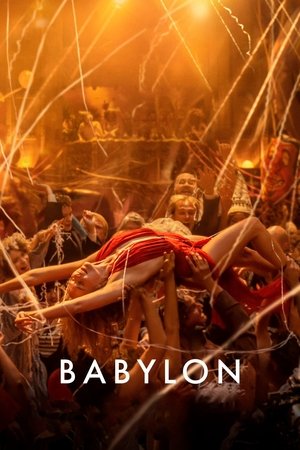
BABYLON(2022)
Written by: Damien Chazelle
Draft date: 03/31/21 (white), 05/20/21 (blue), 06/15/21 (pink), 06/28/21 (yellow), 07/06/21 (green)
Genre: Drama
Title: Babylon
Written by: Damien Chazelle
Draft date: 03/31/21 (white), 05/20/21 (blue), 06/15/21 (pink), 06/28/21 (yellow), 07/06/21 (green)
LOGLINE
In 1920s Hollywood, a young Mexican immigrant working odd jobs for the film industry, a brash aspiring actress from New Jersey, and an aging silent-film superstar each chase glory during the seismic transition from silent pictures to talkies — a revolution that will elevate some and destroy others.
| Very Poor | Poor | Fair | Good | Excellent | |
|---|---|---|---|---|---|
| PREMISE | ✓ | ||||
| STRUCTURE | ✓ | ||||
| CHARACTER | ✓ | ||||
| CONFLICT | ✓ | ||||
| DIALOGUE | ✓ | ||||
| PACING | ✓ | ||||
| TONE | ✓ | ||||
| ORIGINALITY | ✓ | ||||
| LOGIC | ✓ | ||||
| CRAFT | ✓ |
| Strong Pass | Pass | Consider | Recommend | Strong Recommend | |
|---|---|---|---|---|---|
| Overall | ✓ |
Genre: Drama
Sub-genre: Period Drama, Epic Drama, Showbiz Drama
Keywords: Hollywood, 1920s, Silent Film Era, Talkies, Rise and Fall, Mexican Protagonist, Ensemble Cast, Music, Show Business, Excess, Decadence, Ambition, Celebrity Culture, Immigration, Racism, Class, Transformation, Drugs, Gambling, Sound Revolution
MPA Rating: R (pervasive strong language, graphic sexuality and nudity, drug use, intense violence, disturbing imagery)
Budget Tier: Ultra High ($100M+) — period recreation of 1920s-1930s Los Angeles, massive extras for battle sequences and party scenes, multiple elaborate period sets, live animals including an elephant, extensive location work, large ensemble cast, period vehicles and costumes, multiple musical performances
Pages: 186
Time Period: Primarily 1926–1932, with an epilogue in 1952. Spans approximately 26 years.
Locations: 80% in and around Los Angeles (hilltop mansion, studio backlots, soundstages, desert exteriors, residential homes, Chinatown, Central Avenue clubs, underground den "The Blockhouse," Beverly Hills estate, various restaurants and theaters); 10% in New York City (Western Electric offices, Warner Theatre, Grand Central Station area, sanatorium); 5% Santa Barbara beach and hotel; 5% other (desert, rural roads). Requires period recreation of 1920s–1950s LA, massive outdoor battlefield with cavalry, medieval costumes, live elephant transport, snake wrangling, extensive party/orgy set pieces, underground multi-level dungeon set, and a 1952 movie theater screening.
Lead: Male, 20s–40s over the course of the narrative, Mexican, increasingly Americanized in appearance as he climbs the studio ladder. Resourceful, loyal, deeply romantic, and morally compromised by ambition.
Comparables: Once Upon a Time in Hollywood (Tarantino) — mythologized period Hollywood epic blending real and fictional figures; A Star Is Born (multiple versions) — rise-and-fall trajectories in the entertainment industry; The Great Gatsby (Luhrmann) — decadent excess masking personal longing in a period American setting; Boogie Nights (Anderson) — ensemble chronicle of an entertainment subculture's golden age and collapse.
SYNOPSIS
In 1926 Bel Air, MANUEL "MANNY" TORRES (20s), a young Mexican immigrant in a tuxedo, struggles to transport an elephant to a lavish party at the hilltop mansion of studio mogul DON WALLACH (50s). He bribes a TRUCK DRIVER (30s) and talks his way past a COP (30s) — both of whom join the caravan. Inside the party, chaos reigns. ORVILLE PICKWICK (40s), a morbidly obese guest, entertains a YOUNG WOMAN named JANE (teenager) who overdoses. BOB LEVINE (50s), Wallach's fixer, assigns Manny to catch a mescaline-addled chicken. ELINOR ST. JOHN (70s), an imperious gossip columnist, observes everything. SIDNEY PALMER (20s), a gifted Black trumpeter, plays unfazed amid a brawl. LADY FAY ZHU (early 40s), a Chinese-American performer, slaps Orville and later delivers a risqué cabaret number in a tuxedo.
Outside, NELLIE LaROY (mid-20s), a volcanic Jersey girl, crashes the party by smashing into a statue. Manny talks her past security. They share cocaine and sex. Nellie declares herself already a star despite having no credits. Meanwhile, JACK CONRAD (50), a beloved movie star radiating weary charm, arrives after his wife INA (30s) speeds off demanding a divorce. Jack works the room with effortless grace, sleeps with a server named JEN, and delivers a drunken speech to Manny about cinema's higher calling before falling off a balcony into a swimming pool. He invites Manny to set the next day.
The following day, parallel productions unfold. Jack shoots a medieval epic directed by OTTO VON STRASSBERGER (50s), where violent extras from Skid Row riot with real weapons, a grip dies impaled on a flagpole, and cameras keep getting destroyed. Manny races to downtown LA for a replacement camera, commandeering an ambulance to beat traffic. Simultaneously, Nellie — a last-minute replacement for the overdosed Jane — shoots her first scene at Kinoscope Pictures under director RUTH ADLER (30s). Nellie's raw talent astonishes everyone: she produces tears on command, calibrating them to Ruth's specifications. Both productions capture magic at golden hour — Jack delivering a transcendent kiss, Nellie a devastating close-up.
A montage of rising fortunes follows. Nellie becomes a tabloid sensation; Jack marries Hungarian actress OLGA PUTTI; Manny grows closer to Jack's inner circle. Fay writes title cards and befriends Nellie. Manny is sent to New York to evaluate sound technology, where he encounters Nellie surrounded by fans and shares an intimate car ride with her — she visits her mother in a sanatorium, but the woman doesn't recognize her. At the premiere of a pioneering sound film, Manny witnesses the audience's electric response and calls Jack: the future has arrived.
The transition to talkies upends everything. Kinoscope shuts down to build soundstages. Nellie's first sound shoot is a nightmare of technical limitations — immovable microphones, squeaking pins, heat-stroke-inducing camera boxes — culminating in a successful take but the death of the D.P. from heatstroke inside the sealed camera booth. Manny, recognizing Sidney's screen potential after an MGM publicity shoot, pitches Kinoscope on a reinvention plan: remake Nellie as a sophisticated lady and sign Sidney as an on-camera star. He fires Fay because her image and title-writing skills are no longer needed — a decision that costs him morally. GEORGE MUNN (40s), Jack's oldest friend and producer, commits suicide.
Manny coaches Nellie for a critical society gathering at WILLIAM RANDOLPH HEARST's (late 60s) home. Nellie maintains her mid-Atlantic accent and poise until the pressure overwhelms her — she snorts cocaine in the bathroom, kisses Manny desperately, then self-destructs spectacularly, telling a vulgar joke, wiping raw meat on a guest's fur, and projectile-vomiting across the room. Jack, arriving separately, discovers through guests' pitying remarks that his latest film has flopped — audiences laughed at his love scenes. He confronts Elinor, who delivers a devastating monologue: his time is over, but his filmed image will grant him a kind of immortality.
Manny asks Sidney to darken his skin with burnt cork so the band appears uniformly Black for Southern distribution. Sidney reluctantly complies, then quietly walks off the lot for good, leaving his studio car keys behind. Nellie, broke from gambling, begs Manny for help — she owes $85,000 to gangster JAMES McKAY. THE COUNT (30s), Manny's drug-dealing friend, secures prop money from a studio heist film. At a handoff, McKay discovers the bills are fake. Manny fights his way out of McKay's underground nightclub — a hellish, multi-level dungeon of cage fights, torture rooms, and circus exploitation — wielding a medieval spear and freeing a chained alligator to cover his escape.
Jack, after a tender farewell conversation with Fay in Santa Barbara, returns to his hotel room and shoots himself. Nellie and Manny share one last dance at a roadside café, captured by a tourism camera in luminous black-and-white. Nellie promises to flee to Mexico with him, then slips away into the night while he collects the Count. McKay's associate kills the Count and his roommate but spares Manny. Nellie is gone.
Sidney finds peace playing trumpet in a small Central Avenue club. Fay departs for Europe. In 1952, Manny — now a New York audio-shop owner with a wife SILVIA (40s) and young DAUGHTER — revisits the old Kinoscope lot. He wanders into a theater and stumbles upon a Technicolor musical depicting the silent-to-talkie transition. He weeps at the cavalier comedy made of events he lived through, then gradually surrenders to the joy radiating from the audience around him — a theater full of everyday moviegoers lost in the spell of cinema.
COMMENTS
PREMISE — Excellent
The premise channels the silent-to-sound revolution through an ensemble of outsiders — a Mexican immigrant, a working-class woman, a fading star, a Black musician, a Chinese-American performer — each pursuing belonging in a system that chews through people and spits them out. The central dramatic question is not whether Hollywood will survive its transformation, but whether these individuals can survive Hollywood. There is inherent tension in pairing ambitious characters with an industry that rewards reinvention but discards the people it reinvents, and the period setting provides a rich foundation for exploring themes of class, race, identity performance, and the collision between art and commerce. Jack Conrad's arc resonates with the fall of John Gilbert, while Nellie's rise and destruction echo Clara Bow, and the composite nature of these characters gives the premise room to pursue thematic arguments rather than biographical fidelity. The concept is sweeping — perhaps excessively so — but its core question about what cinema costs the people who make it, and what it gives back, provides genuine philosophical weight.
STRUCTURE — Fair
The first movement — Wallach's party through the dual shooting sequences — is the most tightly constructed section, with parallel action building toward simultaneous climaxes as Nellie and Jack each deliver magic at golden hour (47–53). The inciting incident for Manny arrives when Jack invites him to set (33), roughly 18% in, which tracks well proportionally. The midpoint arrives with the transition to sound (83–90), landing around 48% — a genuine tectonic shift that reorients every character's trajectory. The Hearst party sequence (113–125) functions as a devastating turn that collapses Nellie's reinvention and Manny's professional credibility. The climactic Blockhouse sequence (151–164) delivers visceral tension but arrives quite late and occupies substantial real estate for what is essentially a subplot resolution. The 1952 epilogue (182–187) serves as an emotional coda that recontextualizes the entire narrative, but the structural distance between Nellie's disappearance (178) and this coda leaves her arc without a definitive resolution, which is clearly intentional but may frustrate. Multiple subplots — Sidney's, Fay's, Jack's — resolve at different points rather than converging, giving the back half a fragmentary quality that mirrors the era's chaos but loosens narrative grip.
CHARACTER — Good
Manny is the connective tissue binding the ensemble, and his arc from starstruck outsider to morally compromised executive to humbled survivor is complete and well-tracked: the boy who carried an elephant for Don Wallach (2) becomes the man who hands Sidney burnt cork (132) and flees a gangster's dungeon (163). His weakness — the willingness to sacrifice others' dignity for professional survival — is dramatized rather than stated. Nellie is the most vivid creation, introduced crashing a car into statuary (10) and exiting into darkness (178), her trajectory a sustained argument that raw talent without institutional support is self-consuming. Jack functions as a thematic counterweight — someone who had everything the system could offer and still found it insufficient, his final conversation with Elinor (138–141) serving as the material's philosophical spine. Sidney's arc is the least developed proportionally: his decision to wear the cork (133–135) is the dramatic crux, but his interior life before and after that moment receives less attention than the other leads. Fay's firing (109) lands hard precisely because her earlier scenes — the cabaret number (20), the snake rescue (89), the tango with Nellie (80) — establish her as the most quietly capable person in the ensemble.
CONFLICT — Good
The overarching conflict is between individual identity and institutional machinery — each character must decide how much of themselves to sacrifice for the system's approval. This manifests differently for each lead: Nellie refuses to compromise and is destroyed; Jack cannot adapt and chooses death; Manny compromises everything and survives diminished; Sidney compromises once and walks away. At the scene level, the soundstage sequence (91–100) is a masterclass in escalating micro-conflicts — the microphone, the mark, the squeaking pin, the sneezing P.A. — each obstacle compounding until the D.P.'s death punctuates the absurdity with genuine tragedy. The Blockhouse sequence (159–164) generates sustained physical threat but represents a different genre of conflict than the rest of the material, veering into horror-thriller territory. The Hearst party (113–125) layers social conflict — Nellie performing refinement while every instinct screams against it — with the internal conflict between Manny's love for Nellie and his need to control her, culminating in her spectacular self-sabotage.
DIALOGUE — Good
The voices are sharply differentiated. Nellie's profane Jersey cadence ("You might wish you were eatin my asshole when you're out beggin for employment," 11) stands in deliberate contrast to her strained mid-Atlantic performance ("Evenin-g, sir. I ahm Miss La-Roy," 114). Jack's polyglot evasions — lapsing into Italian to avoid Ina's confrontation (14), Cantonese with Fay (22) — reveal character through linguistic deflection. Elinor's cockroach monologue (139–141) is the material's most rhetorically ambitious passage, and it earns its length because the metaphor is precise and the delivery is calibrated against Jack's mounting pain. The Blockhouse sequence weakens the dialogue standard: McKay's movie pitches (154–158) function as comic relief but repeat the same joke — absurd premise, Manny's polite approval — three times. Sidney's dialogue is notably spare, which suits his character but means his most important beat — accepting the cork — is communicated almost entirely through silence and physical action (133–134), placing enormous weight on performance rather than text.
PACING — Poor
The first 55 pages move with exhilarating velocity — the party, the dual shooting days, the intercut climaxes — establishing a propulsive rhythm that the middle section struggles to sustain. The montage sequences covering Nellie's rise and the sound transition (56–68) compress large swaths of narrative efficiently, but the Hearst party (113–125) and the soundstage shoot (91–100) both run at extended length, each demanding sustained attention for what are essentially single-location set pieces. The Blockhouse descent (159–164) is the most significant pacing gamble: it occupies roughly fifteen pages and takes the material into territory so tonally distinct that it risks feeling like a detour from the emotional throughlines. At 186 pages, the draft runs considerably long. The sections most amenable to compression are the repeated montage bridges and the Blockhouse's middle floors, where the escalating grotesquerie makes its point before the final basement.
TONE — Fair
The governing tone is operatic tragicomedy — a register that accommodates the elephant's defecation (3), the D.P.'s death in the camera box (100), and Jack's suicide (168) within the same narrative. This range is the material's greatest tonal achievement and its greatest risk. The Wallach party and the shooting-day sequences (2–55) strike the balance most successfully, finding genuine pathos inside chaos. The Blockhouse sequence (159–164) represents the most severe tonal departure: its descent into body horror — the rat-eating masked man, the excrement-covered walls, the tortured captives — pushes beyond the darkly comic register established elsewhere into something closer to exploitation cinema. The contrast with Jack's quiet, elegiac death scene on the same night (168) is jarring by design, but the Blockhouse's extremity risks numbing the audience before the emotional beats that follow. The 1952 epilogue (182–187) achieves a tonal resolution that retroactively justifies the material's wild swings — bitter recognition yielding to reluctant wonder.
ORIGINALITY — Good
The silent-to-sound transition has been dramatized before — most notably in the very film Manny watches in the epilogue, as well as in The Artist — but the execution here distinguishes itself through scale, multicultural perspective, and willingness to confront the ugliness that those predecessors romanticize or elide. Where The Artist treated the transition as a charming individual crisis, this material frames it as an extinction event affecting an entire ecosystem of marginal people. The decision to center a Mexican protagonist navigating Hollywood's racial hierarchies, and to include Sidney's cork-darkening scene as a moral crisis rather than historical footnote, represents a meaningful departure from the genre's typical white-centered nostalgia. The Blockhouse sequence has no clear precedent in Hollywood-about-Hollywood narratives and represents a genuinely unexpected set piece, though its connection to the thematic throughline — the entertainment industry's exploitation of bodies — could be more explicitly drawn. The structural gambit of ending with Manny watching a fictionalized version of his own life is audacious and earns its emotional payoff.
LOGIC — Poor
The prop-money scheme creates the most significant logical strain: the Count's plan to pay $85,000 in fake bills to a professional criminal (155–156) is presented as genuine naivety rather than stupidity, but McKay's operation would likely verify large cash payments before accepting them, making the scheme's initial success implausible. The timeline of Nellie's financial ruin is compressed without adequate explanation — she earns star-level income but is broke (142–143), with Robert's failed diner and unspecified spending cited as causes. More convincing would be a clearer dramatization of Robert's mismanagement. The Associate's decision to spare Manny (178–179) works emotionally but lacks clear motivation — having just murdered two people, releasing a witness contradicts criminal logic, even accounting for Manny's pathetic state. Sidney's departure from the studio (135–136) is logistically clean but raises questions about contractual obligations that go unaddressed.
CRAFT — Good
The writing operates at a high register of controlled excess — character introductions are novelistic in ambition ("she's some strange, inimitable mix of majesty and madness," 8) and the action lines consistently prioritize energy and voice over economy. The parallel-action sequences are formatted with unusual precision, using numbered scene headers and intercut labels (45–53) to create a reading rhythm that approximates cinematic cross-cutting. Camera directions are embedded throughout ("WE PAN," "WE PUSH IN," "WE FOLLOW"), which at 186 pages contributes to the page count but also establishes a distinctive directorial voice on the page. The Nellie soundstage sequence (91–100) demonstrates exceptional craft in building tension through technical detail — each take numbered, each interruption specific, the accumulated frustration palpable. Formatting is consistent and professional. The Spanish-language dialogue is integrated naturally, with translations provided when necessary and withheld for emotional effect when Manny speaks to Nellie (28). At its best, the prose achieves genuine lyricism: Jack's final walk down the hotel hallway (168) is described with restraint that contrasts powerfully with the maximalism surrounding it.
OVERALL — Recommend
Babylon is a sprawling period epic chronicling the lives of five outsiders navigating Hollywood's violent transition from silent films to talkies in the late 1920s. Its strongest categories are Premise and Character — the decision to filter this well-documented historical moment through the experiences of a Mexican immigrant, a working-class woman, a Black musician, and a Chinese-American performer gives familiar material genuine freshness, and the principal characters are vividly drawn with complete, emotionally resonant arcs. The craft of individual sequences — particularly the dual golden-hour shooting day and the soundstage nightmare — is exceptional, demonstrating a command of parallel structure and escalating tension that translates powerfully from page to screen. The weakest categories are Pacing and Tone: at 186 pages, the material asks for extraordinary endurance, and the Blockhouse sequence's descent into graphic horror, while thematically defensible, risks alienating the audience at a moment when the emotional stakes for Manny, Nellie, and Jack demand full engagement. The logic of the prop-money scheme and the Associate's mercy strain credulity. The epilogue is a remarkable structural gambit that lands with genuine emotional force, reframing the entire preceding narrative as raw material that cinema will digest, distort, and transform into something that moves strangers to tears and laughter — which is, finally, the point.
Get this level of coverage for your screenplay
Every coverage includes 10 category ratings, an overall recommendation, and detailed analysis — powered by the same methodology used by talent agencies and literary managers.
Movie data provided by TMDB