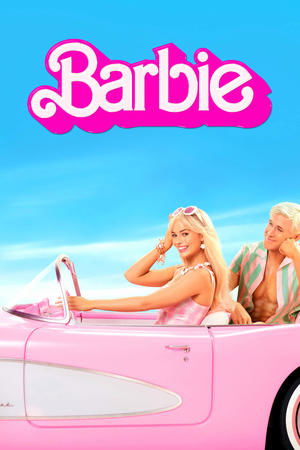
BARBIE(2023)
Written by: Greta Gerwig & Noah Baumbach
Genre: Comedy
Title: Barbie
Written by: Greta Gerwig & Noah Baumbach
Draft date: Not specified
LOGLINE
In a candy-colored utopia where dolls live in blissful perfection, a quintessential fashion doll begins experiencing existential dread and physical imperfections, forcing her to journey to the real world — with her lovestruck male counterpart in tow — to find the human whose sadness is disrupting her plastic paradise, only to discover that neither world is what she believed it to be.
| Very Poor | Poor | Fair | Good | Excellent | |
|---|---|---|---|---|---|
| PREMISE | ✓ | ||||
| STRUCTURE | ✓ | ||||
| CHARACTER | ✓ | ||||
| CONFLICT | ✓ | ||||
| DIALOGUE | ✓ | ||||
| PACING | ✓ | ||||
| TONE | ✓ | ||||
| ORIGINALITY | ✓ | ||||
| LOGIC | ✓ | ||||
| CRAFT | ✓ |
| Strong Pass | Pass | Consider | Recommend | Strong Recommend | |
|---|---|---|---|---|---|
| Overall | ✓ |
Genre: Comedy, Fantasy
Sub-genre: Romantic Comedy, Satirical Fantasy, Coming-of-Age Comedy
Keywords: Female Protagonist, Fish-Out-Of-Water, Satire, Feminism, Toy IP, Gender Politics, Ensemble Cast, Self-Discovery, Identity, Patriarchy, Mother-Daughter, Corporate Satire, Musical Numbers, Road Trip, Los Angeles, Existentialism
MPA Rating: PG-13 (mild innuendo, brief language including one strong profanity censored by a logo gag, thematic complexity)
Budget Tier: High ($40M–$100M) — Elaborate fantasy world requiring extensive production design for Barbie Land (multiple interconnected open-walled sets, transforming vehicles, beach, capitol, supreme court), real-world Los Angeles locations, large ensemble cast, significant costume and art department demands, musical/dance choreography, transportation montage sequences requiring multiple environments (snowmobile, rocket, speedboat), and moderate VFX for transitions and stylized sequences.
Pages: 115
Time Period: Present. Approximately 3-5 days of narrative time.
Locations: ~55% in Barbie Land, a Technicolor soundstage fantasy world requiring elaborate open-walled Dreamhouses, a beach, government buildings (pink White House, Supreme Court, Capitol), Weird Barbie's abstract Weirdhouse, and streets designed like a Richard Scarry illustration. ~35% in real-world Los Angeles including Venice Beach boardwalk, a junior high school, Mattel corporate headquarters (requiring a massive cubicle floor, pink glitter boardroom, 1950s kitchen set, lobby), police station, Century City streets, and various storefronts. ~10% in transitional transportation sequences requiring snowmobile terrain, open water for speedboat, tandem bike countryside, camper van in national park, and a rocket ship interior.
Lead: Female, appears late 20s/early 30s, white/blonde, physically flawless (by design), cheerful and confident to the point of naiveté, gradually developing emotional complexity and self-awareness.
Comparables: The Truman Show (protagonist discovers their perfect constructed world is artificial and must choose reality over comfort), Enchanted (a fantasy archetype enters modern-day New York and confronts the gap between fairy-tale ideals and messy human life), The Lego Movie (irreverent IP-based comedy exploring identity and meaning within a corporate toy universe), Legally Blonde (an underestimated blonde female protagonist weaponizes the traits others dismiss to prove her worth in an unwelcoming world).
SYNOPSIS
In a desert landscape recalling the dawn of civilization, little girls play with baby dolls until a giant BARBIE MARGOT (Adult) — the original 1950s Barbie — appears among them, inspiring the girls to smash their baby dolls in euphoric rebellion. Narrator HELEN MIRREN (V.O.) explains that Barbie changed everything for women, and in Barbie Land, all problems of feminism have been solved — or so the Barbies believe.
Barbie Margot lives her perfect daily routine in her open-walled Dreamhouse, floating into her car, eating nothing breakfasts, and cheering on her friends: BARBIE ISSA RAE (Adult), the president; BARBIE ALEXANDRA (Adult), a Nobel Prize-winning writer; BARBIE SHARON (Adult), a Supreme Court lawyer; BARBIE RITU (Adult), a journalist; and others including BARBIE EMMA (Adult), BARBIE HARI (Adult), and BARBIE ANA (Adult). KEN RYAN GOSLING (Adult), her devoted but sidelined boyfriend, exists only to be noticed by her. His job is simply "Beach." Other Kens — KEN SIMU (Adult), KEN KINGSLEY (Adult), KEN NCUTI (Adult), KEN SCOTT (Adult) — and the singular ALLAN (Adult) round out the ensemble.
At a blowout party, Barbie Margot abruptly asks, "Do you ever think about dying?" The next morning, things go wrong: bad breath, cold showers, burnt waffles, falling off her roof. Worst of all, her permanently arched feet go flat. Her friends send her to WEIRD BARBIE (Adult), a disfigured doll who explains that a rip between Barbie Land and the Real World has opened because the girl playing with Barbie Margot is sad. Barbie Margot must travel to the Real World, find this girl, and fix things — or become like Weird Barbie. Weird Barbie presents a choice between a high heel and a Birkenstock, but reveals there is no real choice: Barbie must go.
Barbie Margot departs via an absurd chain of vehicles. Ken Ryan Gosling stows away, motivated by a bet with Ken Simu. They arrive on Venice Beach in rollerblades and bikini/onesie, drawing stares, catcalls, and eventually arrest for punching a man who slaps Barbie. They steal clothes and are arrested again. While Barbie Margot meditates to locate her girl, Ken wanders Century City, discovering that men hold power in the Real World — a revelation that intoxicates him.
Barbie Margot receives visions of a mother and daughter and finds SASHA (13), a sharp-tongued junior high student, at her school. Sasha and her popular friends brutally mock Barbie, calling her a fascist and blaming her for destroying feminism. Barbie flees in tears. Meanwhile, Ken tries and fails to leverage masculinity into jobs — doctor, office worker, even lifeguard — and resolves to bring patriarchy back to Barbie Land.
Mattel agents capture Barbie Margot. At corporate headquarters, the all-male executive team led by the MATTEL CEO (Adult) tries to get her into a human-sized Barbie box. GLORIA (late 30s), a Mattel receptionist who has been drawing sad Barbies, works at the front desk. Barbie discovers no women hold leadership positions at Mattel. She escapes through the cubicle maze, pausing in a mysterious 1950s kitchen where a woman named RUTH (Adult) offers her tea and an escape route. Gloria, recognizing Barbie from her drawings, rescues her in her car with Sasha. During the chase, Gloria reveals she is Sasha's mother, that she found their old Barbies and started playing with them out of loneliness, and that her sad feelings infected Barbie Margot through their connection. The three flee to Barbie Land with Mattel in pursuit.
They arrive to find Ken Ryan Gosling has imposed patriarchy on Barbie Land, renaming Dreamhouses "Mojo Dojo Casa Houses," brainwashing the Barbies into subservient roles, and installing Kens in every position of power. A constitutional vote to make the changes permanent is 48 hours away. Barbie Margot is devastated and collapses, refusing to act. Gloria and Sasha leave, but Sasha turns the car around, telling Gloria her weird, dark drawings are amazing and that they must go back to help.
At Weird Barbie's hideout, Barbie Margot lies face-down, despairing. Gloria delivers a passionate monologue about the impossible contradictions of being a woman, which breaks the brainwashing on Barbie Alexandra and rouses Barbie Margot. They devise a heist-style plan: use the deprogrammed Barbies as decoys to distract the Kens by pretending to be helpless, deprogram each captive Barbie via Gloria's speech, and then turn the Kens against each other through jealousy. The plan works. Barbie Margot pretends to be Ken Ryan Gosling's girlfriend, then flirts with Ken Simu, triggering an all-out Ken civil war on the beach — fought with volleyballs, tennis racquets, and slap fights — that culminates in an earnest dance expressing frustrated masculinity.
While the Kens battle, the Barbies vote to reinstate their constitution. Ken Ryan Gosling, defeated, breaks down crying. Barbie Margot apologizes for taking him for granted and tells him he must discover who Ken is without her. President Barbie Issa offers concessions — a lower court judgeship for the Kens and a cabinet position for Weird Barbie. Gloria pitches "Ordinary Barbie" to the Mattel CEO, who initially hates it but approves it when told it will make money.
Ruth Handler — revealed as the ghost of Barbie's real-life creator — appears and walks with Barbie Margot into an origin space. Ruth explains that humans have only one ending, but Barbie Margot chooses to become human, wanting to be "the one imagining, not the idea itself." She experiences flashes of mortal life and says yes. In the final scene, now named Barbara Handler, she walks into an office building in pink Birkenstocks. Gloria, Sasha, and NERDY WELL MEANING DAD (Adult) cheer from the car. At the reception desk, she announces with deep pride that she is there to see her gynecologist.
COMMENTS
PREMISE — Excellent
The premise harnesses a universally recognized toy brand to construct a genuinely philosophical comedy about identity, gender, and the gap between idealized representation and messy reality. By establishing Barbie Land as a matriarchal utopia that mirrors and inverts the Real World's patriarchy, the concept generates inherent dramatic irony: the Barbies believe they have solved feminism, while the Real World proves otherwise. The central dramatic question — can a being designed to be perfect survive contact with imperfection and choose it anyway — provides a rich engine for both comedy and pathos. The premise also embeds a secondary question about Ken's identity crisis that productively parallels Barbie's, creating a dual-protagonist structure where both characters are searching for selfhood beyond their prescribed roles. This territory sits adjacent to The Truman Show and Enchanted but distinguishes itself through its explicit engagement with feminist discourse and corporate self-critique, making Mattel itself both sponsor and satirical target. The concept pitches cleanly and contains natural escalation built into its fish-out-of-water mechanics.
STRUCTURE — Good
The architecture is well-proportioned and maintains strong forward momentum through a clear three-movement design. The inciting incident — Barbie Margot's "Do you ever think about dying?" — arrives precisely at the right moment (13), disrupting the established perfection of Barbie Land. Weird Barbie's exposition and the Birkenstock/heel choice function as the commitment point (20-25), launching Barbie into the Real World by roughly the quarter mark. The midpoint lands effectively when Ken discovers patriarchy and Barbie is captured by Mattel (approximately 47-55), splitting the protagonists and raising the stakes. The structural weakness is in the transition from Barbie's escape from Mattel to the return to Barbie Land: the car chase with Gloria (59-63) and the transportation montage (63-65) compress significant emotional revelations into a high-velocity sequence where the bonding between Gloria, Sasha, and Barbie feels somewhat rushed relative to its importance. The Ken takeover reveal (66-75) and the heist-plan execution (88-98) operate as a well-constructed third movement with rising action, and the climax — the constitutional vote intercut with Ken's emotional collapse (101-106) — resolves both external and internal conflicts. The Ruth Handler epilogue (109-114) risks feeling appended rather than organic, though it earns its emotional weight through the earlier planted encounter (56-58).
CHARACTER — Good
Barbie Margot's arc satisfies all five essential beats with clarity and emotional conviction. Her backstory is her perfection itself — she has never experienced imperfection, which makes her want (to restore that perfection) immediately sympathetic, and her internal need (to discover that imperfection is what makes existence meaningful) emerges gradually and credibly. She is active throughout, making decisions even when afraid, from choosing the Birkenstock (24) to escaping the box (55) to orchestrating the heist (88). Her transformation from a doll who has never cried to a woman who chooses mortality is the emotional spine. Ken Ryan Gosling is the strongest supporting character, functioning as both comic foil and a genuinely moving parallel protagonist whose identity crisis — "I only exist within the warmth of your gaze" (105) — articulates the material's deepest thematic insight about how marginalization feels regardless of who experiences it. Gloria is the critical third pillar whose monologue (86-87) serves as the thematic thesis statement. However, Sasha's arc from hostile teen to supportive daughter (45 to 81) unfolds somewhat mechanically — her reversal at the wall (81) is motivated more by plot necessity than by a dramatized internal shift. The ensemble Barbies and Kens are efficiently differentiated through professional identities and verbal tics, though individually they remain functional rather than dimensional.
CONFLICT — Fair
The main external conflict — Barbie Margot must find the source of the disruption to her perfect existence and repair it — generates strong momentum in the first half but shifts targets: the original quest to find "the girl" (Sasha) is resolved and then replaced by the Ken takeover, which reframes the conflict as Barbie versus patriarchy. This pivot is thematically resonant but structurally means the antagonist changes at approximately the two-thirds mark. Ken Ryan Gosling functions as antagonist in the Ken Land sequence but is too sympathetic and too motivated by legitimate grievance to generate true menace, which is clearly intentional — the conflict is systemic rather than personal. The internal conflict is more consistently developed: Barbie's struggle between returning to perfection and accepting imperfection threads from her first flat-footed moment (17) through her face-down collapse (77) to her final choice (113). Scene-level conflict is strongest in the Sasha cafeteria confrontation (44-46), which delivers genuine emotional impact, and in the Mattel boardroom sequence (52-56), where corporate politeness masks coercion. The Ken war sequence (100-101) deliberately deflates its own conflict through absurdist comedy — volleyballs and hobby-horses — which is tonally appropriate but reduces tension at the climactic moment.
DIALOGUE — Good
The dialogue is the most consistently accomplished element, with nearly every character possessing a distinct verbal identity. Ken Ryan Gosling's lines are defined by earnest overstatement and wounded dignity — "My job is actually just, you know, Beach" (10) — while Weird Barbie speaks in a raspy, cryptic register punctuated by sudden bluntness: "I'd love to see what kind of nude blob he's packing under those jeans" (20). The dialogue excels at embedding subtext within apparently vapid exchanges, as when Barbie tells Ken "You can go now" (13) with a smile — the pleasantness masking total dismissal. Gloria's feminist monologue (86-87) risks being on-the-nose but earns its directness because the entire preceding narrative has built toward the moment when someone finally says what everyone is experiencing. Sasha's dialogue in the cafeteria scene (45-46) is convincingly articulate for an extremely smart thirteen-year-old, though the "fascist" accusation feels slightly overwritten for the character's age. The weakest dialogue belongs to the Mattel executives, whose lines after the boardroom introduction tend toward one-note corporate buffoonery that occasionally flattens into placeholder comedy (65-66). Helen Mirren's narration is sharp and self-aware throughout, functioning as both guide and Greek chorus.
PACING — Fair
The first thirty pages move at an exemplary clip, establishing Barbie Land's rules, introducing the ensemble, and launching the quest without a single wasted scene. The Real World arrival sequence (29-36) sustains momentum through rapid, escalating comic encounters — catcalls, construction workers, arrest, the old woman on the bench — each one deepening Barbie's disorientation while advancing theme. The pace flags most noticeably during the transportation montages, which occur three times (29-30, 63-65, 78) with diminishing returns. By the third iteration, the vehicle gags feel more obligatory than propulsive. The Ken takeover and brainwashing sequence (66-75) threatens to stall because the exposition of what has changed must be delivered largely through tour-and-reaction, though Ken Ryan Gosling's energy keeps scenes lively. The heist montage (88-93) restores excellent pacing through its rapid intercutting. The Ruth Handler epilogue (109-114) deliberately decelerates into a contemplative register, which works emotionally but creates a structural double ending — the public resolution (Barbie Land restored) followed by the private one (Barbie becomes human) — that extends the denouement beyond what the comic momentum can comfortably support.
TONE — Excellent
The tonal calibration is remarkably precise, managing a high-wire act between broad toy-commercial parody, pointed social satire, and genuine emotional vulnerability. The opening Kubrick homage (2) establishes the register immediately: this material takes absurd conceits seriously and treats serious themes absurdly. The most impressive tonal achievement is Gloria's monologue (86-87), which shifts the entire register from comedy to raw sincerity without breaking the frame — a transition prepared by Barbie's tears on the bench (35) and her collapse on the lawn (77). The Helen Mirren narration maintains tonal control by explicitly acknowledging the artifice — "Note to the filmmakers: You should have never cast Margot Robbie if you wanted to make this point" (85) — functioning as a pressure valve when emotion threatens to tip into sentimentality. The one tonal wobble occurs in the Mattel chase sequence (56), which attempts Buster Keaton physical comedy (the CEO climbing cubicles) immediately after the genuinely eerie Ruth Handler kitchen scene (56-58), creating a brief whiplash between registers. The Depression Barbie commercial (77-78) pushes the darkest comedy in the material and works because it externalizes Barbie Margot's interior state into product parody.
ORIGINALITY — Good
The core concept — a fashion doll becomes sentient and must confront the gap between her utopian existence and the real world — shares DNA with Enchanted and The Lego Movie, but the execution diverges meaningfully from both. Where Enchanted treats its princess's naiveté as the joke, Barbie Land's matriarchal perfection is presented as both aspirational and insufficient, a more complex position. Where The Lego Movie critiques conformity through a chosen-one narrative, this material critiques the very concept of representation — whether a doll designed to empower women actually does — and refuses to provide a simple answer. The Ken patriarchy subplot is the most original structural element: using Ken's discovery of male privilege as a comedic inversion of colonialism (Gloria's smallpox analogy, 72) creates a satirical framework that has no direct precedent in studio comedy. The ending — Barbie choosing mortality and visiting a gynecologist — is a genuine surprise that recontextualizes the entire preceding narrative as a creation myth in reverse. The heist-plan mechanics (88-93), however, rely on familiar tropes (the damsel-in-distress feint, the sports-instruction gag) that, while executed with wit, are the least original sequences in the material.
LOGIC — Fair
The internal logic holds well within the established fantasy framework, where Barbie Land operates on toy-play physics: no walls, no real food, floating into cars. The rules are set clearly and early, and violations of those rules (cold showers, burnt waffles, flat feet) function as reliable dramatic signals. The mechanism connecting Gloria's emotions to Barbie Margot's physical deterioration is explained adequately through Weird Barbie's exposition (21-23), though the causal chain raises a question the material does not address: if Gloria's sadness caused the disruption, why does bringing Gloria to Barbie Land fix anything rather than intensifying the problem? The Mattel chase operates on cartoon logic appropriate to the tone, but the ease of Barbie's escape — a conveniently unlocked door leading to Ruth's kitchen (56) — is a structural convenience disguised as a mystical encounter. More significantly, the brainwashing and deprogramming mechanics are asymmetrical: the Kens brainwash all Barbies apparently through a single conversation about patriarchy (72), while deprogramming requires Gloria's specific monologue delivered individually — yet the montage (90-93) implies this happens rapidly for a dozen or more Barbies, which strains the established difficulty. Ken Ryan Gosling's return to Barbie Land ahead of Barbie Margot is handled through a single cutaway (53) without explaining how he navigates the full vehicle chain alone.
CRAFT — Good
The writing voice is distinctive and confident, operating in a register that is simultaneously literary and accessible — descriptions function as both stage directions and comedy. Character introductions are vivid and efficient: Weird Barbie is "like David Bowie + a hairless cat" (19), Ken Ryan Gosling "seems to only exist when Barbie is paying attention to him" (8), and Gloria "has something of the kid in her, a pair of pink shoes" (38). Action lines frequently break the fourth wall productively — "Think Jeff Koons, Gaudi, Murakami all put in a blender" (18) — establishing a collaborative tone with the eventual director and production designer. The parenthetical asides to Helen Mirren's narration ("with a knowing smirk," "butting in") create a distinct comedic texture. Scene description is economical where it needs to be — the park montage (35) conveys enormous thematic weight through simple image lists — and expansive where spectacle demands it. Formatting is clean throughout with only minor inconsistencies: character name variations (Barbie Margot sometimes becomes just "Barbie" in action lines mid-scene, and "HELLEN MIRREN" appears on page 9). The craft is weakest in transitional passages that rely on directorial notes rather than dramatized content — "this should feel like the chase in Bullitt" (60), "maybe we even shoot it like Raging Bull" (45) — which are useful as tone guides but substitute instruction for execution.
OVERALL — Recommend
Barbie is a satirical fantasy comedy about a quintessential fashion doll who, after experiencing existential dread in her plastic utopia, journeys to the real world and discovers that neither perfection nor reality is what she believed, ultimately choosing messy human mortality over eternal doll perfection. The strongest categories are Dialogue and Tone, which together create the material's signature achievement: a voice that can pivot from broad physical comedy to devastating sincerity within a single scene, as demonstrated by Gloria's monologue breaking through brainwashing and Barbie's despair simultaneously (86-87). The Premise is exceptionally well-constructed, embedding its thematic ambitions into every structural choice rather than grafting commentary onto a conventional plot. The weakest category is Logic, where the mechanics of brainwashing and deprogramming lack symmetry, and several character movements (Ken's solo return, the ease of Mattel escape) rely on convenience. Pacing suffers from repetitive transportation montages and a double-ending structure. The material's central risk — that its feminist thesis might overwhelm its comedy — is largely managed through the narration, the ensemble's comic energy, and a willingness to satirize its own earnestness. The result is a blueprint that demands an extraordinary level of production design ambition and tonal precision from its eventual director, but provides an unusually complete vision of what it wants to be.
Get this level of coverage for your screenplay
Every coverage includes 10 category ratings, an overall recommendation, and detailed analysis — powered by the same methodology used by talent agencies and literary managers.
Movie data provided by TMDB