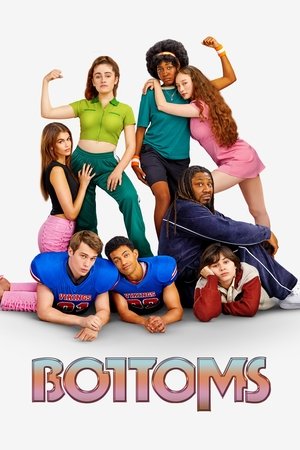
BOTTOMS(2023)
Written by: Rachel Sennott & Emma Seligman
Draft date: Not specified (Blue Rev. 04/14/22 noted on pages)
Genre: Comedy
Title: Bottoms
Written by: Rachel Sennott & Emma Seligman
Draft date: Not specified (Blue Rev. 04/14/22 noted on pages)
LOGLINE
Two unpopular, sexually frustrated gay high school girls start a self-defense fight club under false pretenses — claiming to be juvenile detention survivors — in order to get close to the cheerleaders they're desperate to date, only to discover the club they built on lies has become something real to the girls who joined it.
| Very Poor | Poor | Fair | Good | Excellent | |
|---|---|---|---|---|---|
| PREMISE | ✓ | ||||
| STRUCTURE | ✓ | ||||
| CHARACTER | ✓ | ||||
| CONFLICT | ✓ | ||||
| DIALOGUE | ✓ | ||||
| PACING | ✓ | ||||
| TONE | ✓ | ||||
| ORIGINALITY | ✓ | ||||
| LOGIC | ✓ | ||||
| CRAFT | ✓ |
| Strong Pass | Pass | Consider | Recommend | Strong Recommend | |
|---|---|---|---|---|---|
| Overall | ✓ |
Genre: Comedy
Sub-genre: Teen Comedy, Satire, Action Comedy
Keywords: Female Protagonist, LGBTQ+, High School, Fight Club, Coming-of-Age, Ensemble Cast, Female Friendship, Cheerleaders, Football, Small Town, Satire, Feminism, Underdogs, Deception, Queer Romance
MPA Rating: R (pervasive crude sexual humor, strong language throughout, comic violence including bloody fighting and an explosion, sexual references)
Budget Tier: Medium ($10M–$40M) — multiple school and town locations, large ensemble cast, practical action sequences including a climactic field battle, car explosion, and fight choreography requiring stunt coordination.
Pages: Approximately 119 formatted pages (with revision bloat; effective content closer to 95-100 pages of action)
Time Period: Present, over approximately one month (end of summer camp through Homecoming game)
Locations: 80% interiors and exteriors of a small-town high school (gym, classrooms, hallways, bleachers, football field, parking lot), 10% suburban residential locations (bedrooms, a diner, Jeff's large house), 10% miscellaneous (summer camp, a trailer/RV in the woods, a car fundraiser lot). Requires a football stadium with sprinklers, a car rigged for explosion, and a climactic large-scale fight sequence on a football field with extensive blood effects.
Lead: Two female co-leads, both 17, race/ethnicity unspecified. JOSIE — shy, anxious, Catholic-raised, wears oversized snapbacks and overalls, quietly desperate. PJ — brash, blindly confident, sexually aggressive, no filter, loyal underneath the bravado.
Comparables: Mean Girls (high school social hierarchy comedy with satirical edge), Fight Club (explicit structural homage — underground club built on lies that takes on a life of its own), Booksmart (two female best friends navigating the end of high school with an accelerated social mission), Romy and Michele's High School Reunion (low-status female duo leveraging fabricated credentials for social acceptance).
SYNOPSIS
At a summer camp called LOBOTOMY — a state-funded program for "medically horny" girls — JOSIE (17), shy and awkward, and PJ (17), brash and overconfident, get caught masturbating on their last night. Back home in Rockbridge Falls, a football-obsessed small town, they prepare for the annual back-to-school fair. Josie pines for ISABEL (17), a gorgeous cheerleader dating the school's star quarterback JEFF (17), while PJ pursues BRITTANY (17), Isabel's intimidatingly beautiful best friend. At the fair, their attempts to flirt are disastrous. When Isabel fights with Jeff in the parking lot, Josie offers her a ride. Jeff blocks the car, Josie nudges it forward, and Jeff collapses dramatically, claiming injury. TIM (17), Jeff's devoted sidekick, vows revenge.
At school, rumors spread that Josie and PJ went to juvenile detention and violently attacked Jeff. HAZEL (16), a manic, overlooked girl whose mother MRS. CALLAHAN (40s) is embroiled in PTA drama, latches onto the rumor enthusiastically. When PRINCIPAL MEYERS (50s) threatens expulsion, Josie blurts out they'll start a self-defense club. Meyers dismisses them with indifference, and PJ seizes the opportunity: if girls join the club, they'll bond with them, build trust, and eventually hook up with Isabel and Brittany.
The club launches in the gym with a handful of nerdy girls including ANNIE (17), SYLVIE (16), and CRYSTAL (16). PJ and Josie fabricate violent juvenile detention backstories to establish credibility. When MR. G (40s), a clueless divorced history teacher, agrees to be their faculty advisor, the club gains legitimacy. Isabel and Brittany join. Through a montage of increasingly intense fight sessions, the girls grow confident and bloodied. The club becomes genuinely meaningful to its members, who share stories of harassment, stalking, and mistreatment during a vulnerable sharing circle. Josie delivers an elaborate fictional account of her camp experience reframed as juvenile detention trauma, and Isabel opens up about Jeff cheating on her in Greece.
Meanwhile, Tim investigates the girls' backgrounds, and Mrs. Callahan — angry about Hazel's bruises and seeking reinstatement with the PTA group called the MILFS — allies with Meyers and Jeff to take down the club. Hazel discovers her mother is sleeping with Jeff. When Josie tells Isabel about the affair during a diner hangout, Isabel publicly confronts Jeff in the cafeteria and dumps him. The club retaliates by egging and TPing Jeff's house, but Hazel secretly plants a homemade bomb under his car, which explodes. The girls flee.
Their popularity peaks briefly, but Tim orchestrates a pep rally ambush: Hazel is forced to fight TUCKER, a massive boxer, while Tim reveals that Josie and PJ never went to juvenile detention — they attended a masturbation camp — and started the club solely to seduce cheerleaders. Hazel, who told Tim everything after PJ cruelly insulted her, is the source. The club dissolves in betrayal. Isabel calls Josie pathetic. PJ and Josie's friendship ruptures when they blame each other.
In the aftermath, Jeff convinces Isabel to take him back, the school reverts to its previous social order, and Josie and PJ are isolated. Josie visits RHODES (40s), their former camp supervisor, who warns that Huntington — Rockbridge's football rival — historically attempts to kill the opposing quarterback during their games. Josie realizes the month of Huntington attacks on girls was preparation for targeting Jeff. She finds PJ in the parking lot before the Homecoming game and argues they must reunite the club to save Jeff and redeem themselves.
PJ and Josie apologize to the club members. PJ genuinely apologizes to Hazel. At the game, Josie discovers barrels of pineapple juice (Jeff's lethal allergen) rigged to the sprinkler system. When Huntington players pin Jeff during play, the fight club charges the field. In an extended battle sequence, the girls fight off and defeat the Huntington team. Josie carries Jeff off the field, the sprinklers activate with pineapple juice but are shut off in time, and the town erupts in celebration. Josie apologizes to Isabel, and they kiss. PJ and Hazel share a tentative connection after their earlier kiss. Jeff declares Josie saved his life, the town cheers, and the fight club members look at each other with pride. Hazel's bomb belatedly detonates in the background.
COMMENTS
PREMISE — Excellent
The concept — two desperate, unpopular gay girls start a fight club to seduce cheerleaders — is instantly graspable and contains inherent comedic tension at every level. The lie that they survived juvenile detention provides escalating stakes as popularity grows, and the small-town football obsession creates a pressure-cooker setting where their deception is constantly at risk of exposure. The premise is strengthened by making both protagonists genuinely terrible at the thing they claim expertise in, which means the club's success surprises them as much as anyone. The satirical target is broad — toxic masculinity, performative feminism, school administration apathy, obsessive sports culture — and the premise accommodates all of it without strain. What elevates this beyond a simple deception comedy is the dual irony: the club built on lies produces authentic female empowerment, and the girls who started it for selfish reasons are the ones most transformed. The central dramatic question — can Josie and PJ sustain a fraud that's doing genuine good? — has natural momentum. The match between concept and the hyper-specific world of Rockbridge Falls, where the principal openly calls students slurs and mothers dance erotically for teenage boys, gives the satire room to operate at a heightened register without losing its internal logic.
STRUCTURE — Fair
The narrative architecture is sound through the first two-thirds and then compresses unevenly in the final act. The inciting incident — Josie blurting out "self-defense club" to avoid expulsion (29) — lands at almost exactly the right proportional moment and generates immediate forward momentum. The club's formation and growth through the montage sequences (42-44) functions as a clear commitment to the central conflict. The midpoint arrives when the sharing circle (49-51) shifts the club from a scheme into something with emotional stakes, and this is where the dual engine of the premise — deception and genuine connection — begins to produce friction. The pep rally exposure (74-78) serves as a strong "all is lost" beat, stripping away everything Josie and PJ built. However, the recovery from this low point is rushed: Josie visits Rhodes, learns about the Huntington threat, reconciles with PJ, reassembles the club, and launches the climactic battle all within roughly fifteen pages (82-88). The reconciliation with Isabel and the other club members in particular lacks the earned difficulty that the betrayal demanded. The Huntington-will-kill-Jeff revelation (83) arrives late and depends entirely on information from a character who has been absent for most of the narrative, making it feel mechanically planted rather than organically discovered. The climactic battle sequence (88D-88E) is written more as a description of what should happen than as a choreographed set piece, with directions like "each fight club member fights off and kills the Huntington player(s) she faces" doing a great deal of heavy lifting.
CHARACTER — Good
Josie and PJ are sharply differentiated co-leads whose contrasting approaches to the same goal — sexual validation — drive most of the material's best scenes. Josie's arc from passive piner to active agent is tracked through specific behavioral shifts: she cannot speak to Isabel at the fair (12), delivers an elaborate fabricated speech to the club (49-50), and ultimately tackles Jeff on the football field (88C). PJ's arc is less resolved. Her want — Brittany — is denied when Brittany identifies as straight (71A), but this rejection does not produce a visible internal shift; PJ simply redirects to kissing Hazel as a tactical distraction (88B), and the ending gestures toward a connection between them without establishing when PJ's feelings changed. Hazel is the most emotionally complete supporting character, with a clear home life (the Mrs. Callahan subplot), a genuine investment in the club, a betrayal motivated by real hurt, and a reconciliation that addresses PJ's specific cruelty. Isabel remains somewhat opaque — her function is primarily to be desired, and her interiority surfaces only in the sharing circle and the cafeteria confrontation. Jeff works well as a satirical object but his stupidity is so total that he never registers as a credible threat, which somewhat deflates the stakes (see: Conflict). Tim is the more effective antagonist, though his investigation subplot (57, 62-63) disappears for long stretches.
CONFLICT — Fair
The central conflict operates on two tracks: the external threat of exposure and the internal tension between the girls' selfish motives and the club's genuine value. The external conflict escalates effectively through Tim's investigation, Mrs. Callahan's alliance with Meyers (46-48), and the pep rally ambush (74-76). The internal conflict is strongest in the sharing circle (49-51), where Josie's elaborate lie sits directly beside Isabel's genuine vulnerability, creating real dramatic irony. Scene-level conflict is inconsistent — several sequences, particularly the fundraiser (53-57) and the egging mission (63-66), generate situation comedy but not escalating tension. The Huntington threat, which becomes the climactic external antagonist, is handled almost entirely through exposition: the announcements about Shelly's attack (19), the library shooting (33), and Rhodes's monologue about historical quarterback murders (83). Huntington players do not appear as characters until the final sequence, which means the climactic battle pits the girls against opponents with no established personalities, reducing the fight to spectacle rather than dramatic confrontation. The Josie-PJ friendship rupture (79-80) is the strongest piece of interpersonal conflict because both characters have legitimate grievances rooted in specific actions.
DIALOGUE — Good
Dialogue is the material's primary engine and its most consistent strength. Characters are well-differentiated: PJ's lines are declarative and crude ("To fuck cheerleaders. What are you, eight years old?" — 9A), Josie's are anxious and self-undermining ("you look, I mean it's almost concerning" — 12), Hazel's are earnest and slightly off-register ("You ate literal shit?... Where?" — 8), and Annie's are prim and rule-bound ("my vagina belongs to the government" — 18). The rapid-fire overlapping exchange about Josie's outfit (5-6) establishes the central friendship dynamic more efficiently than any exposition could. Subtext operates well in the Brittany-PJ homework scene (71A), where flirtation is conducted entirely through comments about wrist size and pen weight. The principal speaks almost exclusively in the language of institutional misogyny delivered as administrative procedure ("the ugly untalented gays" — 21), which is funny precisely because it is never commented upon as unusual. Where dialogue weakens is in the final act, where emotional beats are stated rather than performed — Josie's apology to Isabel (88F) catalogs offenses rather than expressing feeling, and the placeholder "(joke tk)" notations (88G) indicate this draft's ending was not finished.
PACING — Fair
The first half moves briskly, with the camp cold open, the fair, the parking lot incident, and the club's founding all arriving within thirty pages. The montage sequences (42-44) compress the club's growth effectively, though three consecutive montages risk blurring the passage of time rather than clarifying it. The mid-section sags in the fundraiser sequence (53-57), which runs several pages without advancing either the romance or the deception plot meaningfully — the Hazel-Jeff revelation could have been delivered in a single scene rather than spread across an extended outing. The pep rally (74-78) is well-paced as a set piece, with the Tucker fight creating physical urgency while Tim's revelation lands emotional blows. The final act, as noted in Structure, compresses too much: Rhodes's exposition (82-83), the parking lot reconciliation (84A-B), the apology tour (85-87), and the entire climactic battle (88A-88E) all occur within approximately fifteen pages. The result is that reconciliation — the most emotionally demanding beat — gets less screen time than the car explosion aftermath.
TONE — Good
The material commits to a heightened satirical register and sustains it with remarkable consistency. The world of Rockbridge Falls is absurd by design — a principal who openly insults students (22-23), a masturbation chart at summer camp (1), a mascot with a comically huge penis (6A), mothers performing sexualized dances for teenage football players (9) — and because these elements are introduced in the first ten pages, they establish the tonal contract early. The sharing circle (49-51) is the most significant tonal challenge, shifting into genuine emotional vulnerability, and it works because the comedy of Josie's fabricated trauma sits alongside Isabel's real pain without either undermining the other. The one tonal misstep is the climactic battle (88D-88E), which describes the fight club members "killing" Huntington players — language that pushes past comic exaggeration into something the material has not prepared for. Sylvie dropping a sword and the field being "covered in blood and dead Huntington Players" reads as though it belongs to a different genre than the one that preceded it, even within this heightened world.
ORIGINALITY — Good
The Fight Club homage is explicit and acknowledged within the text, but the gender and sexuality inversion — two gay teenage girls running the club to get laid rather than to reclaim masculine identity — gives it a distinct comedic identity. The closest comparables are Booksmart, which shares the compressed-timeline female friendship structure and the anxiety about high school's social window closing, and Mean Girls, which similarly weaponizes the gap between performed and genuine female solidarity. What distinguishes this material from both is the specificity of its satirical targets: the MILFS subplot, the school's casual acceptance of violence toward students, the principal's open hostility, and the football-industrial complex that governs every institution in Rockbridge Falls are drawn with a density of absurd detail that goes beyond what those predecessors attempted. The juvenile detention lie as the club's founding mythology is a clever structural choice that has no direct analogue in the teen comedy canon. Where originality flags is in the third act, which defaults to a conventional action-movie rescue structure — the climactic battle with faceless antagonists is the most genre-standard sequence in otherwise genre-subversive material.
LOGIC — Poor
The internal logic is generally consistent within the heightened world, but several plot mechanics strain even the generous rules the satire establishes. Tim's investigation of Josie and PJ's backgrounds is plausible, but his ability to produce their LOBOTOMY T-shirts at the pep rally (76) is never explained — the shirts were presumably at camp or at their homes, and Tim's access to them is a gap. The Huntington pineapple-juice-in-the-sprinklers plan requires that someone rigged the school's sprinkler system with barrels of juice without anyone noticing during game-day preparation, which is a significant logistical implausibility even in this world. Rhodes's exposition about Huntington's history of quarterback murder (83) — burning at the stake, drowning, quartering with horses — establishes a level of criminal violence that has apparently gone unpunished for fifty years, which stretches the satirical conceit past its breaking point. More locally, Josie's broken arm from the camp fall (1-2) is mentioned as needing "13 more hours to heal" (6) but appears to resolve without further reference, and the bomb Hazel plants under Jeff's car (65) detonates with sufficient force to engulf the vehicle in flames, yet no legal consequences follow for anyone.
CRAFT — Fair
The writing is energetic and confident in its comedic voice, with action lines that frequently double as jokes ("A crying Mom and Dad run up, holding a sign reading 'Welcome home not-pregnant Kaitlyn'" — 4). Character introductions are vivid and efficient: PJ is "horny, with zero sexual experience and incredibly blind confidence" (1), Hazel is "a burst of panicked energy" (8), and these descriptions pay off immediately in behavior. Scene transitions are generally clean, and the dual-location cutting between Josie and PJ getting dressed (4-6) is an effective structural choice for establishing their dynamic. The formatting carries significant revision bloat — color-coded revision markers, asterisks, and page-number irregularities (pages jump from 42A to 43-44, and the climax runs through 88A to 88H) make the draft difficult to follow in its final act. The placeholder dialogue "(joke tk)" on pages 88G indicates the ending was not completed, which is a significant craft issue for a draft being evaluated. Action description in the climactic battle (88D-88E) shifts from specific choreography to general direction ("each fight club member fights off and kills the Huntington player(s) she faces"), which abdicates the page-level storytelling that the rest of the material handles well.
OVERALL — Consider
Bottoms is a high-energy teen satire about two unpopular gay girls who start a fight club under fraudulent pretenses to seduce cheerleaders, only to build something genuine that they must then fight to preserve. Its strongest categories are Dialogue and Premise — the comic voice is distinctive, character-specific, and relentlessly funny, while the central concept generates natural escalation and ironic tension. The character work is strong for the co-leads and Hazel but thinner for Isabel and the antagonists. The most significant weakness is structural: the final act compresses reconciliation, revelation, and climax into too few pages, and the Huntington threat — which drives the entire ending — is introduced too late through exposition rather than dramatized conflict. The tonal and logical challenges of the climactic battle, in which teenage girls apparently kill multiple football players, represent a register shift the material has not earned. The unfinished placeholder dialogue in the final pages confirms this is a draft still in development. The foundation is strong — the comedic engine, the central friendship, and the satirical world-building are all operating at a high level — but the third act needs substantial development to deliver on the promise of the first two.
Get this level of coverage for your screenplay
Every coverage includes 10 category ratings, an overall recommendation, and detailed analysis — powered by the same methodology used by talent agencies and literary managers.
Movie data provided by TMDB