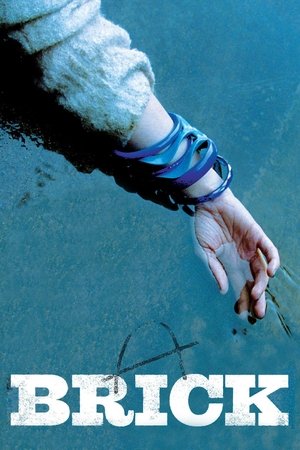
BRICK(2006)
Written by: Rian Johnson
Genre: Thriller
Title: Brick
Written by: Rian Johnson
Draft date: Not specified
LOGLINE
A loner high school student receives a desperate phone call from his ex-girlfriend, and when she turns up dead in a drainage tunnel, he infiltrates the local drug kingpin's operation to uncover who set her up to be killed.
| Very Poor | Poor | Fair | Good | Excellent | |
|---|---|---|---|---|---|
| PREMISE | ✓ | ||||
| STRUCTURE | ✓ | ||||
| CHARACTER | ✓ | ||||
| CONFLICT | ✓ | ||||
| DIALOGUE | ✓ | ||||
| PACING | ✓ | ||||
| TONE | ✓ | ||||
| ORIGINALITY | ✓ | ||||
| LOGIC | ✓ | ||||
| CRAFT | ✓ |
| Strong Pass | Pass | Consider | Recommend | Strong Recommend | |
|---|---|---|---|---|---|
| Overall | ✓ |
Genre: Thriller, Drama
Sub-genre: Neo-Noir, Mystery, Coming-of-Age Drama
Keywords: High School, Murder Investigation, Drug Trade, Undercover, Noir, Male Protagonist, Revenge, Ex-Girlfriend, Loner, Femme Fatale, Hard-Boiled Dialogue, Suburban Setting
MPA Rating: R (gun violence, multiple deaths, drug content, language)
Budget Tier: Low ($1M–$10M): Limited cast, contemporary suburban locations, no period requirements, minimal VFX, one car stunt, several fight sequences requiring choreography but no major set pieces.
Pages: 111
Time Period: Present over approximately 1 week, with brief flashbacks to several months prior.
Locations: 80% exteriors and interiors of a suburban Southern California high school and surrounding streets (hallways, parking lots, basketball field, library, theater/backstage, locker cages, payphones). 10% at two residential houses requiring basement sets (the Pin's house with kitchen, basement den, storage room; Tugger's house with bedroom and living room). 5% at a drainage/runoff tunnel requiring shallow running water. 5% misc locations: Carrows restaurant exterior, beach bonfire at sunset, Laura's party house with patio, streets for car sequences including one trunk-POV driving scene.
Lead: Male, late teens, unspecified ethnicity, slight build with glasses, intensely intelligent, emotionally guarded, physically tenacious despite repeated beatings.
Comparables: Chinatown (1974) — hard-boiled detective narrative structure transplanted to an unlikely setting, with a femme fatale and a devastating final revelation about parentage; Rian Johnson's own The Brothers Bloom — elaborate con-game mechanics and verbal dexterity; Veronica Mars (TV, 2004) — teen noir with an outsider protagonist investigating crime among high school social strata; Miller's Crossing (1990) — a protagonist playing multiple factions against each other in a crime-world power struggle, relying on wits over muscle.
SYNOPSIS
BRENDAN FRYE (late teens), a bespectacled loner, squats beside a runoff tunnel watching a young woman's pale blue arm in the shallow water. Two days earlier, his ex-girlfriend EMILY KOSTICH (late teens), pretty but visibly deteriorating, slipped a note into his locker requesting a meeting at a phone booth. She called him in tears, babbling about "the brick," "the pin," and someone named "poor Frisco," before the line went dead as a black Mustang roared past.
Brendan consults THE BRAIN (late teens), a small, bespectacled information broker, who tells him Emily drifted from LAURA DANNON's (late teens) elite crowd down to KARA (late teens), a manipulative drama student and small-time dealer. Brendan visits Kara backstage at the school theater but gets no answers. He finds a party invitation in Kara's dressing room that leads to Laura's house, where he attends a costume party uninvited. He provokes BRAD BRAMISH (late teens), Laura's jock boyfriend, and catches Laura's attention. On the patio, Laura tells him Emily has been missing and drops the clue "Coffee and Pie" — Carrows restaurant.
At Carrows, Brendan confronts DODE (late teens), a thin stoner who claims Emily is with him and safe. Brendan follows Dode and spots Emily getting out of a car. He pickpockets her address book during an emotional confrontation where she begs him to let her go. Inside the book he finds a cryptic symbol on a slip of paper. That night, a nightmare reveals the symbol matches the runoff tunnel. At dawn, Brendan finds Emily's body face-down in the water. Someone hiding in the tunnel attacks him and whispers "Your little Em."
Brendan resolves to find out who killed Emily. He enlists the Brain to operate intelligence, then systematically shakes the social order: he publicly beats Brad in the parking lot to draw the attention of the Pin, the local drug kingpin. TUGGER (late teens/early twenties), a scarred, volatile enforcer driving the black Mustang, retaliates by beating Brendan at school, but Brendan stands his ground and demands to see the Pin. Tugger takes him — in the trunk.
At the PIN's (mid-to-late twenties) house, a cluttered basement den, Brendan bluffs his way through a confrontation by revealing the house's address and threatening to tip off the authorities. Laura intervenes to save him when Tugger nearly kills him. The Pin's mother serves them breakfast upstairs. Brendan pitches himself as a double agent, claiming the vice principal is pressuring him and he can feed the Pin information. The Pin agrees to check his story.
Meanwhile, Brendan negotiates with GARY TRUEMAN (early thirties), the assistant vice principal, securing immunity from school discipline in exchange for future intelligence. A lug named CHUCK BURNS attacks Brendan with a switchblade at school, later revealed to have been hired by Brad independently. A disguised voice — Dode — calls Brendan threatening to expose him.
Brendan is accepted into the Pin's crew and learns the operation's contours: ten bricks of heroin, eight sold north, a ninth that went missing and came back "bad" — cut with poisonous chemicals that put FRISCO FARR (teenager) in a coma. Tugger reveals this privately but claims ignorance about Emily. The Pin announces someone wants to sell information about Emily and arranges a meeting at the tunnel.
On the basketball field, Dode confronts Brendan, accusing him of Emily's murder. Dode reveals Emily was pregnant and claims the child was his. At the tunnel, Dode tries to sell information to the Pin, but when he hints the killer is someone close, Tugger snaps — he shoots Dode dead and fires at the Pin, who escapes. Brendan collapses from fever.
At Tugger's house, Brendan learns Tugger killed Emily in a rage when she told him about the pregnancy. Brendan brokers a peace meeting between Tugger and the Pin at the Pin's house that night. He sleeps with Laura, then notices her cigarette has a pale blue arrow on the filter — the same brand from the Mustang on the day Emily called. Before leaving, he calls the Brain to surveil Laura and writes a note for Trueman.
The peace meeting erupts into a full brawl when someone steals the remaining brick during the negotiations. TANGLES, one of the Pin's men, is shot and dies reporting the theft. The Pin and Tugger fight savagely. Brendan kicks the gun away, then kicks it into the Pin's room and escapes through a window. Two gunshots follow. In the Mustang's trunk, he finds Emily's body wrapped in plastic. Police arrive moments later.
The next morning, Brendan confronts Laura on the basketball field. He lays out his deduction: Laura stole the ninth brick, cut it badly, framed Emily for the loss to deflect the Pin's wrath, and manipulated Tugger's violent nature to ensure Emily would be killed. She orchestrated the peace meeting knowing it would become a slaughter, and stole the final brick during the chaos. Laura denies it until Brendan reveals he planted the brick in her locker and tipped off Trueman. Cornered, Laura confirms most of his theory and reveals Emily was three months pregnant — making the timeline point to Brendan as the father. She whispers an obscenity in his ear and walks away. The Brain confirms Chuck Burns implicated Brad. Brendan stands alone on the field as the first period bell rings.
COMMENTS
PREMISE — Excellent
The premise transplants the architecture of classic hard-boiled detective fiction — a lone investigator, a femme fatale, a criminal kingpin, a dead woman whose secrets drive the plot — into the corridors and parking lots of a suburban American high school. The central dramatic question is double-layered: who killed Emily, and who put her in the position to be killed? This distinction gives the material more depth than a standard whodunit, because Brendan can discover the triggerman relatively early and still have a deeper conspiracy to unravel. The setting creates a productive tension between the gravity of the noir genre and the mundanity of high school life, where the "crime boss" lives with his mother and the "tough guys" ride school buses. Unlike teen mysteries that use adolescence as window dressing, the premise commits fully to the conceit that these teenagers operate within a self-contained underworld with its own codes, hierarchies, and consequences. The thematic core — that Brendan's obsessive need to protect Emily is the very thing that isolated her and, indirectly, left her vulnerable — gives the premise emotional stakes that transcend the genre exercise.
STRUCTURE — Good
The narrative is tightly organized around Brendan's investigation, with each scene serving as an information-gathering beat that propels him toward the next contact. The inciting incident — Emily's distressed phone call (2-4) — arrives immediately, and the discovery of her body at the tunnel (28-29) commits Brendan to the central conflict at roughly the quarter-mark, proportionally sound. The midpoint lands when Brendan gains entry to the Pin's operation and learns about the brick scheme from Tugger (74-75), which reframes the investigation from "who killed Emily" to "who set her up." The climactic peace meeting and its violent collapse (97-102) functions as the structural climax at approximately page 100 of 111, slightly late but effective given the denouement that follows. The basketball field confrontation with Laura (104-110) serves as a resolution scene that recontextualizes the entire narrative. Every subplot — the Brain's surveillance, Kara's scheming, Brad's irrelevance — feeds back into the main throughline. The one structural liability is the density of the mid-section, where Brendan's meetings with the Pin, Tugger, Laura, Kara, the Brain, and Trueman accumulate rapidly between pages 55 and 85, sometimes blurring which encounter advanced which thread.
CHARACTER — Good
Brendan is a precisely drawn protagonist whose intelligence, stubbornness, and emotional repression are established in his first phone call with Emily (2-4) and consistently demonstrated through every subsequent interaction. His want — to find and protect Emily — is clear, and his need — to accept that his controlling nature drove her away — emerges painfully in the flashback (33-34) and Emily's confrontation (23-26). His arc completes not with triumph but with the devastating knowledge that Laura's final revelation about the pregnancy implicates him personally. The supporting cast is sharply differentiated: the Pin is thoughtful and literary, quoting Tolkien on the beach (68-69); Tugger is a coiled spring whose scar literally reddens when he lies (75, 84); Kara is a predator who weaponizes intimacy (8-9, 59-61); and the Brain is a loyal functionary whose quiet competence anchors the intelligence-gathering structure. Laura is the most complex figure, maintaining genuine ambiguity about her motives through page 95, when the cigarette detail crystallizes her role. The one character who suffers is Dode, whose function as both Emily's protector and Kara's pawn is asserted more than demonstrated — his motivations arrive mostly through other characters' exposition rather than through scenes that develop him independently.
CONFLICT — Excellent
The central external conflict — Brendan versus the network of people responsible for Emily's death — is formidable because the antagonists are layered and their culpability is distributed. The Pin, Tugger, Laura, and Kara each bear partial responsibility, which means Brendan cannot simply identify and confront a single villain. This distributed antagonism escalates naturally: the Pin's operation is the framework (51-57), Tugger's volatility is the weapon (84-85), and Laura's manipulation is the hidden cause (106-108). The internal conflict — Brendan's recognition that his need to control and protect Emily contributed to her destruction — surfaces in the Emily flashback (33-34) and in Emily's accusation that he cannot "keep her safe" from a world she chose to enter. Scene-level conflict is abundant and varied: verbal sparring with Kara (8-9), physical confrontation with Brad (40-42), the cat-and-mouse with Tugger at the supermarket (49-50), and the tense basement negotiation with the Pin (51-53). The escalation is well-calibrated, with Dode's murder (84-85) marking the point of no return and the final shootout (100-102) delivering the highest physical stakes.
DIALOGUE — Good
The dialogue is the material's most distinctive and polarizing element — every character speaks in a stylized hard-boiled argot ("pot skulled reef worm," "brass cutting me favors," "clam") that has no naturalistic relationship to how teenagers actually talk (36, 52, 73). This is a deliberate choice that creates the noir world and sustains its tone, and it works because the commitment is total. Within this heightened register, characters are well-differentiated: the Pin speaks in meandering, almost philosophical cadences ("Sniffing for me like a vampire bat for a horse with a nick on its ear he can suck on," 51-52); Tugger speaks in blunt declaratives that betray his limited processing ("Yeah, well. That's understandable," 74); Brad is a broken record of sports clichés (13, 38-39); and Kara deploys seductive non-sequiturs to deflect questions (8-9). Brendan's dialogue establishes him as the smartest person in every room — his lines are clipped, precise, and laced with dry wit ("There's a thesaurus in the library. 'Yeah' is under 'Y'," 40). The risk is that the style occasionally overpowers subtext: in the final confrontation, Brendan narrates Laura's entire scheme in a long monologue (106-108) that functions more as a detective's summation than as a scene of emotional reckoning, though the emotional content reasserts itself in Laura's final whispered words.
PACING — Fair
The pacing is brisk through the first thirty pages, moving from Emily's call to the body discovery with efficient momentum, but the middle third requires sustained attention as Brendan simultaneously manages relationships with the Pin, Tugger, Laura, Kara, the Brain, Trueman, and Dode. The sequence from Brendan's acceptance into the Pin's crew (64) through the tunnel confrontation (82-85) covers considerable ground but relies heavily on short payphone scenes with the Brain that, while functional, begin to feel repetitive by the fourth or fifth iteration (43-44, 48, 66, 70-71, 87-88). The bonfire scene (67-69) provides a welcome tonal breather, allowing the Pin to become human before the violence escalates. The climactic shootout (97-102) moves at breakneck speed, effectively chaotic, though the transition from the brawl to Brendan's escape through the storage room window happens so quickly that spatial geography becomes unclear. The denouement on the basketball field (104-110) is paced deliberately and effectively, giving the final revelation room to land.
TONE — Good
The tone commits fully to its noir pastiche from the opening image of the body in the water and never wavers, which is both its greatest achievement and its greatest risk. The Pin's mother offering apple juice in a "country glass" (55) while her son runs a heroin operation, or Brendan eating cornflakes at a breakfast table after being beaten unconscious in a basement (54-55), exemplify the tonal control — these moments are absurd but played straight, creating dark humor that emerges from situation rather than commentary. The flashback to Brendan and Emily's breakup on the basketball field (33-34) is the one scene that shifts into raw emotional realism, and the contrast is effective precisely because it is brief. The dreamlike fever sequences (78, 82, 93-94) push toward expressionism without breaking the noir framework. The one tonal wobble occurs in the Kara strip scene (89-90), where Brendan dragging her naked into the backstage area registers as more cruel than the material seems to intend, sitting uncomfortably between hard-boiled toughness and something genuinely unpleasant.
ORIGINALITY — Excellent
The core concept — noir detective narrative set entirely in a high school — is genuinely original as a feature premise, though it draws openly on its antecedents. The closest comparison is Chinatown, which shares the structure of a private investigator uncovering layers of conspiracy that terminate in a devastating revelation about parentage, and whose final beat — the protagonist's inability to protect the woman he loves — mirrors Brendan's arc precisely. Miller's Crossing provides the template for the protagonist playing two criminal factions against each other while maintaining a precarious personal code. What elevates the execution beyond pastiche is the specificity of the teenage milieu: the social hierarchies, the payphone logistics, the way Brendan hides behind the gym to eat lunch alone — these details are not genre decorations but are integral to characterization and plot mechanics. The investigation proceeds not through police databases or wiretaps but through school hallways, dressing rooms, and parking lots, which forces inventive problem-solving that keeps the procedural elements fresh. The pregnancy revelation in the final scene pushes beyond genre expectation into genuinely uncomfortable emotional territory that most noir homages would avoid.
LOGIC — Fair
The internal logic is largely sound within its heightened world, though several elements strain credulity even by the material's own rules. Brendan's trunk escape — popping the trunk of a moving car, reading street signs through a three-inch gap, and closing it before Tugger notices (50) — is the most mechanically implausible sequence, though it functions within the genre's tradition of clever improvisation. The Pin's willingness to hire Brendan based on a single meeting and a bluff about knowing the house address (52-57) is accelerated but plausible given that the Pin explicitly notes Brendan's audacity appeals to him. More problematic is the brick theft during the peace meeting (100): someone steals the brick during a brawl that both the Pin's and Tugger's crews are engaged in, yet Laura — who is established as being at Tugger's house, not the Pin's (103-104) — is ultimately revealed as the thief. The logistics of how she accessed the brick during a firefight she was not present for go unexplained. Emily's body appearing in Tugger's trunk (102) is also left mechanically ambiguous — when and how it was placed there is never addressed, though this ambiguity may be intentional, suggesting Tugger moved it himself.
CRAFT — Good
The writing operates in a lean, controlled register that mirrors Brendan's own emotional economy — descriptions are sparse, actions are clipped, and the few moments of lyrical imagery ("the broken light of the bar makes her features seem liquid," 15) land with greater impact for their rarity. Character introductions are efficient and vivid: the Pin is "one inky black mass from the neck down and eyebrows up" (51), and the Brain has "eyeglasses the size of Volkswagen headlights" (4). Action sequences are written with clarity and physical specificity — the Brad fight (40-42) tracks every blow, and the supermarket standoff with Tugger (49-50) builds tension through precise spatial detail. The footnotes throughout (annotated production notes from the author) are charming but would need removal for a submission draft, as they break the reading experience. Formatting is clean throughout, with effective use of dissolves and insert shots to manage time compression (12, 28). The one craft-level weakness is the density of plot exposition delivered through phone calls with the Brain, which occasionally reads as functional scaffolding rather than dramatized narrative (see: Pacing).
OVERALL — Recommend
Brick is a neo-noir thriller that transplants the full machinery of hard-boiled detective fiction — a loner investigator, a femme fatale, a drug kingpin, layered conspiracy, and a devastating final revelation — into the social ecosystem of a suburban American high school. The material's greatest strengths are its premise, which generates inherent tension from the collision of genre and setting, and its dialogue, which commits totally to a stylized argot that differentiates every character while sustaining an unbroken tonal world. Brendan is a compelling protagonist whose intelligence, physical tenacity, and emotional repression are demonstrated rather than asserted, and the supporting cast — particularly the Pin, Tugger, and Laura — are vividly drawn. The structural architecture is sound, with the distributed antagonism creating genuine investigative complexity and the Laura revelation landing as a satisfying culmination. The material's weaknesses are concentrated in the dense middle section, where the multiplying phone-call scenes with the Brain become repetitive, and in certain logical gaps surrounding the brick theft and Emily's body. The Kara confrontation scene represents a tonal miscalculation. But these are mechanical issues within a fundamentally well-built narrative whose emotional core — that Brendan's need to protect Emily is inseparable from the possessiveness that drove her away — gives the genre exercise genuine weight.
Get this level of coverage for your screenplay
Every coverage includes 10 category ratings, an overall recommendation, and detailed analysis — powered by the same methodology used by talent agencies and literary managers.
Movie data provided by TMDB