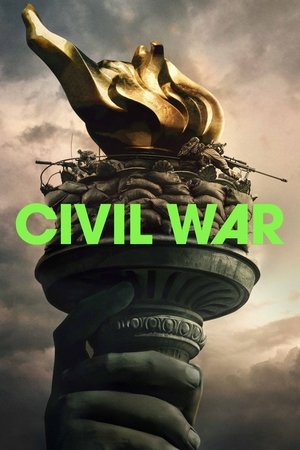
CIVIL WAR(2024)
Written by: A Garland V.05 [Writer name not explicitly credited on cover page; "A Garland" appears to be Alex Garland based on formatting convention]
Draft date: Not specified.
Genre: Drama
Title: Civil War
Written by: A Garland V.05 [Writer name not explicitly credited on cover page; "A Garland" appears to be Alex Garland based on formatting convention]
Draft date: Not specified.
LOGLINE
A veteran war photographer and her journalist partner set out on a dangerous road trip from New York to Washington, D.C. to interview and photograph the President before the capital falls to secessionist forces, but the journey through a fractured America — made with an aging colleague and a young aspiring photographer — forces a reckoning with the cost of bearing witness.
| Very Poor | Poor | Fair | Good | Excellent | |
|---|---|---|---|---|---|
| PREMISE | ✓ | ||||
| STRUCTURE | ✓ | ||||
| CHARACTER | ✓ | ||||
| CONFLICT | ✓ | ||||
| DIALOGUE | ✓ | ||||
| PACING | ✓ | ||||
| TONE | ✓ | ||||
| ORIGINALITY | ✓ | ||||
| LOGIC | ✓ | ||||
| CRAFT | ✓ |
| Strong Pass | Pass | Consider | Recommend | Strong Recommend | |
|---|---|---|---|---|---|
| Overall | ✓ |
Genre: Drama, Thriller
Sub-genre: War Drama, Road Movie, Political Thriller
Keywords: War Correspondent, Female Protagonist, Near-Future, Civil War, Journalism, Road Trip, Mentor-Protégé, American Setting, Ensemble Cast, Political Collapse, Violence, Photography, Coming-of-Age, Trauma
MPA Rating: R (pervasive strong violence, graphic war imagery, language throughout, brief drug use)
Budget Tier: High ($40M–$100M): extensive action sequences including tank assaults, helicopter gunships, urban warfare across Washington D.C. landmarks (White House, Lincoln Memorial, Pentagon), multiple vehicle stunts, pyrotechnics, military hardware, mass grave set piece, burning forest, refugee camp stadium, New York cityscape with distant explosions.
Pages: 111
Time Period: Near-future present, over approximately 4-5 days.
Locations: ~15% New York City (hotel interiors, Brooklyn streets with water truck riot); ~40% rural/suburban America on a road trip (gas stations, strip malls, open country roads, forest roads, a small untouched town, a refugee camp in a football stadium); ~10% military base near Charlottesville by the Rivanna River; ~35% Washington D.C. (Lincoln Memorial, Pennsylvania Avenue, White House exterior and interior including West Wing corridor and Oval Office). Requires extensive military hardware, a downed Apache helicopter, a mass grave with practical bodies, a burning forest sequence, and significant damage/battle staging at recognizable D.C. landmarks.
Lead: Female, 40, American (white implied), war photographer — outwardly composed and professionally fierce but privately haunted by cumulative trauma, increasingly fractured as the narrative progresses.
Comparables: The Hurt Locker (addiction to war zones, embedded journalist/soldier perspective, episodic tension), Salvador (journalists driving into a collapsing country amid civil war), Under the Banner of Heaven / Children of Men (near-future societal collapse as backdrop for a personal journey), Apocalypse Now (road-trip structure toward a climactic confrontation with a figure of power).
SYNOPSIS
THE PRESIDENT (age unspecified), a white-haired man with an undercurrent of anger, rehearses a speech in the White House claiming imminent victory over secessionist forces. In a New York hotel room, LEE (40), an acclaimed American war photographer, watches the broadcast and photographs the President's face on her TV screen. An explosion rocks the city skyline behind her.
In Brooklyn, Lee and her colleague JOEL (early 40s), a Latino journalist, drive their press-marked SUV to a water distribution point where desperate civilians queue under the watch of riot police. Lee notices JESSIE (23), an inexperienced young photographer mimicking veteran journalists. When a riot cop strikes Jessie, Lee pulls her to safety. Jessie recognizes Lee as her hero. Moments later, a woman carrying an American flag runs toward the crowd and detonates a suicide bomb. Lee photographs the carnage while Jessie, recovering, photographs Lee.
At the hotel bar, Lee and Joel discuss their plan with SAMMY (late 60s), an African American journalist with a limp. Lee intends to drive to D.C. to photograph the President before the capital falls. Sammy wants a ride to the front line at Charlottesville. Lee agrees. Jessie approaches the group after Lee retires, and Joel invites her along. Lee is furious the next morning but relents, insisting Jessie goes no further than Charlottesville.
The group navigates checkpoints and a jammed freeway. At a gas station, Jessie wanders behind the building and discovers two beaten captives hanging in a car wash. An armed guard sadistically asks Jessie to decide the captives' fate. Lee intervenes by asking to photograph the guard with his prisoners, defusing the situation. In the car, Jessie is shaken that she froze and failed to take photos. Lee lectures her on journalistic detachment, causing Jessie to cry, but Jessie vows not to make the mistake again.
Lee stops at a downed Apache helicopter and has Jessie photograph it, beginning a mentorship. Their relationship deepens as Jessie shares her developing process at a refugee camp and shows Lee a stunning combat photograph she took during a militia firefight near Charlottesville. Lee places a hand on Jessie's shoulder, acknowledging the image — and the toll it takes.
Driving through untouched small-town America, the group encounters a surreal pocket of normalcy. Lee tries on a summer dress at Jessie's urging, and Jessie photographs her smiling. TONY (Chinese, late 30s) and BOHAI (Chinese photographer), colleagues from New York, catch up to them on a forest road. In a playful moment, Tony and Jessie swap cars at speed. But Bohai's car disappears ahead, and Lee grows alarmed.
They find Bohai's car near a farmhouse. Through her zoom lens, Lee sees a mass grave — a digger filling a trench with civilian bodies — and Jessie and Bohai kneeling at gunpoint before two SOLDIERS. Despite Sammy's warnings, Lee, Joel, and Tony approach. The lead Soldier interrogates them about their origins. He shoots Bohai immediately, then Tony after learning he is from Hong Kong. As the Soldier threatens Joel, Sammy drives the SUV into the Soldiers, rescuing the group but knocking Jessie into the mass grave. She crawls out and they flee. In the car, they discover Sammy has been shot. He bleeds out as they drive through a burning forest.
At a Western Forces military base near Charlottesville, Sammy is dead. Lee photographs him through the car window, then almost deletes the image but keeps it. DAVE (TV camera operator) and ANYA (TV reporter) inform Joel that D.C.'s government military has surrendered and the Western Forces are moving in that night. Joel despairs that they are too late. Lee cleans Sammy's blood from the back seat — signaling they will continue.
In Washington, the journalists follow Western Forces through intense urban combat at the Lincoln Memorial and along 17th Street. Jessie ascends into confident, fearless photography while Lee increasingly shuts down, overwhelmed. At a barricade near the White House, they witness the President's motorcade attempt escape. The Beast is rammed and stopped, but Lee realizes the President is still inside the White House. She runs toward it, and Joel and Jessie follow.
Inside the White House, they find bodies and follow a squad of Soldiers led by SERGEANT JO (female) through the Press Briefing Room, where Secret Service Agent JOY BUTLER attempts to negotiate the President's surrender and is shot. The squad advances down the West Wing corridor in a sequence alternating between deafening action and silence through camera lenses. Jessie runs past Lee's cover position into the corridor. Lee drops her camera and throws herself at Jessie, knocking her down and shielding her. Lee is shot through the chest. Jessie photographs Lee in the moment of death — Lee looking straight down Jessie's lens.
Joel gently helps Jessie to her feet. They enter the Oval Office, where Sergeant Jo drags the President from behind his desk. Joel asks for a quote. The President begs not to be killed. Joel accepts this as sufficient. As Joel turns away, Sergeant Jo executes the President. Jessie photographs the moment.
COMMENTS
PREMISE — Good
The core concept — veteran war journalists driving across a fractured, civil-war-torn America to photograph and interview a cornered President — is immediately compelling and generates inherent tension at every level. The premise places a protagonist uniquely qualified to witness horror into the specific horror she has always documented abroad, creating a thematic through-line about the futility and necessity of bearing witness. The decision to center the narrative on journalists rather than combatants distinguishes it from most war films, placing the camera itself as the central dramatic instrument. The mentor-protégé relationship between Lee and Jessie provides a clean emotional spine: Lee's disillusionment and Jessie's ascent mirror each other with structural elegance. The American setting transforms familiar landmarks into war zones, which grounds the speculative premise in visceral recognition. The dramatic question — can Lee reach the President, and at what cost — is clear and urgent, though the material is more interested in the journey than the destination. Comparable to Salvador in its journalist-in-a-war-zone road structure and to The Hurt Locker in its examination of war's addictive pull, the premise occupies well-established territory but earns its place through the specificity of its American setting and its photojournalist lens.
STRUCTURE — Good
The architecture is clean and propulsive: pre-existing life in New York establishes the world and characters, the commitment to the D.C. journey launches around page 15, and the road provides escalating episodic encounters that build toward the White House climax. The inciting incident — Lee announcing the plan to drive to D.C. and photograph the President (15-16) — lands at approximately the right proportional point. Each road segment raises stakes: the gas station captives (29-31), the sniper standoff (61-65), and the mass grave (74-83) form a clear escalation. The midpoint functions effectively as the mass grave sequence, which falls around page 78 in a 111-page draft — slightly past center but within range, and it permanently alters the group's composition and emotional register. Sammy's death (84-87) serves as the "all is lost" moment at roughly 76%, propelling the final movement into D.C. The climactic White House assault (92-110) occupies a substantial proportion of the draft and sustains momentum through continuous action. One structural concern is that the Charlottesville military base section (86-91) functions as a necessary regrouping but temporarily stalls momentum between Sammy's death and the D.C. assault. Every early detail pays off: Jessie's film cameras, Lee's trauma, Joel's interview ambition, and the fluorescent vest all recur with purpose.
CHARACTER — Excellent
Lee is a fully realized protagonist whose arc traces a devastating decline: she begins as the consummate professional, hardened but functional, and ends broken in the corridor of the White House, choosing a person over a photograph for the first and last time. Her backstory is sketched economically — the bathtub sequence (23) and her war-memory montage establish cumulative trauma without exposition. Her want (to photograph the President) and her need (to find something worth more than the image) are clearly distinct, and her final act resolves both. Jessie's arc is the mirror: she begins tentative and overwhelmed at the water truck (7-8), freezes at the gas station (30), and by the Lincoln Memorial (92-93) has become the photographer Lee once was. The transfer is completed when Jessie photographs Lee's death (108-109). Joel is well-differentiated — his post-combat euphoria (48) and his wired vulnerability distinguish him from Lee's stoicism — though his arc is thinner, functioning more as witness than as a character who transforms. Sammy is the emotional conscience, and his death lands because his warmth is so precisely established in the bar scene (13-19). The Soldier at the mass grave (77-82) is a terrifyingly effective antagonist in a single scene, his dead-eyed interrogation about American identity distilling the entire conflict into a few exchanges.
CONFLICT — Good
The overarching external conflict — reaching D.C. alive through a war-torn America — provides a reliable engine that generates tension in every road sequence, from the checkpoint (26) to the sniper standoff (61-65) to the mass grave ambush (74-83). Each obstacle is distinct in type and escalates in lethality. The internal conflict is more nuanced and more central: Lee's growing inability to function as a witness, her realization that decades of photographing atrocity accomplished nothing, manifests physically as she freezes during the D.C. assault (94). This internal collapse drives the climactic decision — dropping the camera to save Jessie (107-108) — which resolves both conflicts simultaneously. Scene-level conflict is consistently present: the gas station guard's sadistic game with Jessie (30-31), Joel and Lee's argument about Jessie joining (25), and the tense dynamic between press credentials and armed combatants at every stop. The one area where conflict thins is the untouched town sequence (53-57), which functions as tonal relief but lacks a scene-level obstacle beyond the revelation of rooftop snipers (58), which is observed but never engaged.
DIALOGUE — Good
The dialogue is lean and differentiated, with each character carrying a distinct voice. Sammy's speech patterns are literary and wry — "The peace follows war is only ever peace for some" (14) — while Joel's are blunt and profane, driven by nervous energy. Lee speaks in short, declarative sentences that reveal control, as when she shuts down Jessie's panic with "We record — so other people ask" (32). The Soldier at the mass grave achieves chilling effect through flat, conversational menace: "Oh. China" followed by an immediate gunshot (82) is devastating in its brevity. Subtext operates well in the bar scene, where Sammy's casual "So where you kids headed tomorrow?" (15) masks his real agenda, and in the dress-shop exchange where Jessie's "I don't want to miss your sweet spot" (56) carries a flirtatious charge that surprises both characters. The Spotter's deadpan dialogue during the sniper sequence — "Oh, I get it. You're retarded" (64) — establishes character instantly. One limitation is that the President's dialogue, by design, is hollow rhetoric, which means the climactic "Don't let them kill me" (111) must carry enormous weight with very few words. It does, largely because Joel's response — "Yeah. That'll do" — is so perfectly calibrated.
PACING — Good
The pacing is expertly managed for most of the draft, with each road-trip episode lasting precisely long enough to establish its tension and deliver its impact before moving on. The water-truck bombing (10-11) arrives early and violently, establishing stakes within the first twelve pages. The gas station sequence (27-32) builds slowly and rewards patience. The sniper standoff (60-65) uses silence — the beetle on the grass blade, the wind noise — to create unbearable suspense before the single gunshot. The mass grave sequence (74-83) is the pacing high point, shifting from discovery through negotiation to sudden violence to desperate escape with relentless momentum. The D.C. assault (92-110) sustains intensity for nearly twenty pages, which risks exhaustion but is counterbalanced by the alternating silence/action technique in the West Wing corridor (106-108). The one segment that drags slightly is the refugee camp (48-52), where the developing-negatives conversation, while character-rich, slows the forward drive. The untouched town (53-57) also pauses momentum but earns its place as necessary counterpoint.
TONE — Good
The tone is controlled and consistent: clinical observation layered over escalating horror, punctuated by moments of dark humor and fleeting warmth. The juxtaposition of Joel's post-combat euphoria — "What a fucking RUSH!" (48) — against the carnage just witnessed captures the dissonant psychology of war journalism without editorializing. The untouched town sequence (53-57) risks tonal whiplash but succeeds because the surrealism is acknowledged by the characters ("Did we just drive through a time portal?" — 54) and undercut by the rooftop snipers. The dress-shop scene (55-57) is the most tonally daring moment, introducing genuine lightness and even flirtation into a war narrative, but it works precisely because it is so fragile and temporary. The mass grave sequence (74-82) shifts tone with brutal speed — from the playful car-swapping to execution — and this tonal violence mirrors the thematic point about war's proximity to normalcy. The final White House sequence maintains a grim, inevitable tone. The "silence through the lens" device (first introduced at 31, recurring through 105-108) provides a consistent tonal signature, creating meditative pauses that prevent the action from becoming numbing.
ORIGINALITY — Good
While war-journalist narratives have been explored in Salvador, The Killing Fields, and Under Fire, the specific conceit of setting the civil war in contemporary America and sending journalists down familiar highways past familiar strip malls toward familiar monuments inverts the genre's usual exoticism. The closest comparison is Children of Men, which similarly uses a near-future collapse to defamiliarize the present, though that film centers on a civilian rather than professionals who have chosen to be in the line of fire. The Hurt Locker provides the closest psychological parallel — the professional who cannot stop returning to the thing that is destroying them — but Lee's arc diverges meaningfully: where Renner's character loops back to the addiction, Lee breaks free of it at the cost of her life. The most original element is the transfer structure between Lee and Jessie, which reframes the war-photographer narrative as a generational relay rather than an individual tragedy. The "silence through the lens" technique — alternating between the noise of combat and the meditative stillness of the photographic moment — is a genuinely inventive formal device on the page. The mass grave interrogation, with its reduction of identity politics to a life-or-death sorting mechanism, is a set piece without a clear antecedent.
LOGIC — Fair
The internal logic is largely sound, with the road-trip structure providing plausible escalation through increasingly lawless territory. The currency detail — Canadian dollars holding value while American dollars do not (28) — is a small but effective worldbuilding touch that holds up. The President's decision to remain in the White House while sending a decoy motorcade (99-101) is a credible strategic choice. One notable gap involves Jessie's press credentials: Lee explicitly states "Jessie doesn't" have a press pass (75), yet this vulnerability never becomes a specific plot obstacle beyond that mention — the gas station guards, the refugee camp soldiers, and the Western Forces all interact with the group without specifically challenging Jessie's status. The Soldier at the mass grave does not ask for credentials at all, making the earlier concern moot but also slightly undermining the setup. The speed with which Sammy — established as old, limping, and using a walking stick (13) — manages to drive the SUV into the Soldiers (82-83) is plausible under adrenaline but pushes credulity given his established physical limitations. The political specifics of the civil war are deliberately vague — Texas and California allied, a Florida Alliance, a third-term President — which is an intentional choice that avoids partisanship but occasionally makes the world feel slightly under-specified.
CRAFT — Good
The writing is spare, present-tense, and visually precise — operating in a quasi-journalistic register that mirrors its subject matter. Action lines are short, often single sentences or fragments, creating a staccato rhythm that propels the eye down the page: "She falls sideways. / Dazed. / LEE sees this." (8). Character introductions are efficiently handled — Sammy's walking stick and limp tell his whole physical story in one line (13). The "silence through the lens" formatting device is the draft's most distinctive craft element, first appearing at the gas station (31) and recurring with escalating power through the White House assault (105-108), where the alternation between ACTION and SILENCE headers creates a formal rhythm on the page that approximates cinematic editing. The moment where Lee watches a beetle on a grass blade during the sniper standoff (65) is a precision detail that grounds an abstract tension in physical reality. One craft weakness is occasional redundancy in stage direction — "LEE'S face. Blank." followed shortly by "Impassively" (9, 17) — where the same emotional note is restated rather than developed. The formatting is clean throughout, with minimal errors, though "COROPRAL" appears multiple times as a misspelling of "CORPORAL" (42-45), and "NEW YOK" appears on page 5 where "NEW YORK" is intended.
OVERALL — Recommend
Civil War is a taut, episodic war drama that follows a veteran photojournalist's road trip across a fractured near-future America to photograph the President before Washington falls, structured as both a physical journey and a psychological transfer of purpose from a broken mentor to her young protégé. The strongest elements are the character work — particularly the precisely calibrated inverse arcs of Lee and Jessie — and the craft, which deploys the "silence through the lens" device to create a formal signature that distinguishes the material from conventional action-heavy war narratives. The mass grave sequence is the draft's centerpiece, achieving a level of tension and horror that justifies the entire road-trip structure leading to it. The dialogue is sharp and individuated throughout, with the bar scene and the Soldier's interrogation standing as particular highlights. The pacing is strong, though the middle road sections occasionally slow. The most significant weakness is a slight vagueness in the geopolitical worldbuilding, which is clearly intentional but leaves certain stakes feeling abstract rather than specific. Lee's final act — dropping the camera to save Jessie, and dying for it — is the emotional and thematic culmination the entire draft builds toward, and it lands with force because every preceding scene has earned it.
Get this level of coverage for your screenplay
Every coverage includes 10 category ratings, an overall recommendation, and detailed analysis — powered by the same methodology used by talent agencies and literary managers.
Movie data provided by TMDB