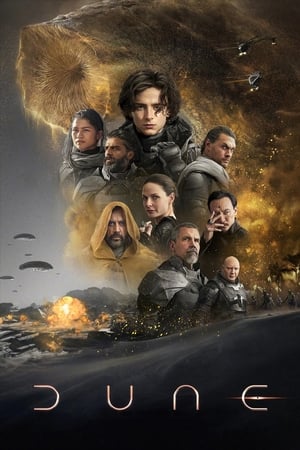
DUNE(2021)
Written by: Jon Spaihts (Current revisions); Previous drafts by Eric Roth, Denis Villeneuve
Draft date: September 24, 2018
Genre: Sci-Fi
Title: DUNE
Written by: Jon Spaihts (Current revisions); Previous drafts by Eric Roth, Denis Villeneuve
Draft date: September 24, 2018
LOGLINE
When a noble teenage heir and his family are ordered by the Emperor to assume control of a deadly desert planet — the galaxy's sole source of a mind-altering spice — they walk into a trap set by ancient enemies, and the young man must survive betrayal, massacre, and exile among the planet's fierce indigenous warriors while awakening to prophetic visions of a holy war fought in his name.
| Very Poor | Poor | Fair | Good | Excellent | |
|---|---|---|---|---|---|
| PREMISE | ✓ | ||||
| STRUCTURE | ✓ | ||||
| CHARACTER | ✓ | ||||
| CONFLICT | ✓ | ||||
| DIALOGUE | ✓ | ||||
| PACING | ✓ | ||||
| TONE | ✓ | ||||
| ORIGINALITY | ✓ | ||||
| LOGIC | ✓ | ||||
| CRAFT | ✓ |
| Strong Pass | Pass | Consider | Recommend | Strong Recommend | |
|---|---|---|---|---|---|
| Overall | ✓ |
Genre: Sci-Fi, Drama
Sub-genre: Political Thriller, Epic Adventure, Coming-of-Age Drama
Keywords: Chosen One, Political Intrigue, Prophecy, Desert Setting, Feudal Society, Betrayal, Revenge, Survival, Father-Son, Mother-Son, Fish-Out-Of-Water, Holy War, Indigenous Culture, Resource Exploitation, Colonialism, Ensemble Cast, Based on Novel, Messianic Figure, Royalty, Military
MPA Rating: R (sustained intense violence including beheadings and mass execution, brief nudity and sexuality, disturbing imagery)
Budget Tier: Ultra High ($100M+): Massive desert and palace environments, large-scale battle sequences, extensive VFX for sandworms and space travel, multiple distinct planets, large cast with crowd scenes, period-style costuming and world-building across numerous elaborate sets.
Pages: 130
Time Period: Far future over approximately 4–6 weeks.
Locations: ~40% Arrakeen Residency and city on desert planet Arrakis (interiors and exteriors including command tower, great hall, corridors, aircraft bays); ~20% deep desert of Arrakis (open dunes, rock ridges, caves, ecological research station, Fremen sietch — underground caverns); ~15% Castle Caladan on ocean world (medieval castle interiors, cliff terrace, cemetery, training room, landing pad); ~10% Giedi Prime — industrial fortress interiors and spice stockpile rooftop; ~5% Salusa Secundus military base (open tarmac, ritualistic staging); ~10% various ornithopter and spacecraft interiors, space/orbit shots. Requires massive desert exteriors, ocean cliffs, brutalist architecture, underground cavern sets, and sandworm VFX at scale.
Lead: Male, 16, ethnicity unspecified, angular features resembling his mother; intelligent, perceptive, trained in combat and politics, increasingly burdened by prophetic visions — transitions from sheltered heir to reluctant messiah.
Comparables: Lawrence of Arabia (outsider drawn into desert culture and guerrilla politics), Game of Thrones (feudal houses, betrayal, political maneuvering), The Lord of the Rings: The Fellowship of the Ring (epic world-building, a young figure thrust into a destiny larger than himself), Star Wars: A New Hope (chosen-one journey, desert setting, galactic empire).
SYNOPSIS
On the desert planet Arrakis, DUNCAN IDAHO (late 30s), a skilled warrior, drops from orbit on a covert mission. Meanwhile on the ocean world Caladan, LADY JESSICA (35), a member of the mystical Bene Gesserit order, meditates as a shuttle arrives bearing REVEREND MOTHER MOHIAM (75), the Emperor's Truthsayer. Jessica wakes her son PAUL ATREIDES (16) and brings him to the Reverend Mother, who subjects him to a test of pain — the gom jabbar — holding a poison needle to his neck while a box induces nerve-searing agony. Paul endures longer than any subject before. The Reverend Mother warns that Arrakis is a deathtrap and tells Jessica to accelerate Paul's training in the Voice, a Bene Gesserit technique of psychic compulsion. Privately, Mohiam rebukes Jessica for bearing a son instead of the daughter their breeding program required.
Paul studies Arrakis with the Mentat THUFIR HAWAT (75), a human supercomputer who serves as his father's master of intelligence, learning that the planet's spice is invaluable and the Fremen far more numerous than the Imperium knows. Swordmaster GURNEY HALLECK (45) drills Paul in combat. DUKE LETO (50), Paul's father, explains the political trap: the Emperor fears Leto's popularity and has pitted House Atreides against their ancient enemies, House Harkonnen, by transferring the fief of Arrakis. On Giedi Prime, the grotesquely obese BARON VLADIMIR HARKONNEN and his Mentat PITER DE VRIES outline their plan to crush the Atreides with his brutish nephew RABBAN watching. The family departs Caladan for Arrakis.
Upon arrival, crowds chant "Lisan al-Gaib" — a messianic title planted by the Bene Gesserit's Missionaria Protectiva. The family doctor, WELLINGTON YUEH (40), gives Paul a compact Bible with hidden significance. The Fremen housekeeper SHADOUT MAPES presents Jessica with a sacred crysknife, recognizing her as part of the prophecy. Hawat discovers a hunter-seeker assassination drone targeting Paul; Paul catches it bare-handed. Hawat and Piter wage an intercut Mentat chess match as Harkonnen sabotage drains Atreides resources. Jessica trains Paul in the Voice.
Duncan Idaho returns from weeks among the Fremen, reporting millions hidden in underground sietches. He brings the Fremen leader STILGAR (45) to meet Leto. Stilgar demands the Fremen be left alone; Leto agrees to respect their territory. Imperial Planetologist DR. LIET KYNES (40s), serving as Judge of the Change, guides Leto and Paul to the spice sands. When a carryall disappears, Leto personally rescues eighteen spice workers from an approaching sandworm. During the rescue, Paul is coated in spice dust and experiences his first waking vision — a Fremen army chanting his name and mountains of burning corpses.
On Salusa Secundus, Piter secures three battalions of the Emperor's elite Sardaukar soldiers, disguised for the coming assault. At a formal reception in Arrakeen, Jessica reads the loyalties of local power brokers while Paul hosts gracefully. Leto confides to Paul that the Fremen represent true "desert power" and the key to survival.
The blow falls at night. Yueh, whose wife WANNA is held hostage by the Harkonnens, disables communications and lowers the house shields. He drugs Leto but implants a poison-gas tooth as a weapon against the Baron, leaving Leto's signet ring and a tracking beacon hidden in the Bible for Paul. A massive Harkonnen-Sardaukar invasion overwhelms Arrakeen. Gurney fights desperately at the spaceport. Idaho battles through the Residency and escapes by ornithopter. The Baron executes Yueh and confronts the chained Duke. Leto bites the tooth and exhales poison gas, killing Piter and dozens in the room — but the Baron's shield slows the gas enough for him to survive, badly scarred.
Paul and Jessica, drugged and bound, are loaded into an ornithopter to be dumped in the desert. Paul uses the Voice to compel a trooper to remove Jessica's gag; together they kill their captors using Voice commands and combat skill. They survive a dust basin, shelter in a stilltent, and read Yueh's farewell note confirming Leto's death. Paul experiences escalating spice visions of holy war and tells Jessica about the terrible future he foresees. Idaho, guided by Yueh's beacon, rescues them with Kynes's help and brings them to an old Ecological Research Station.
Paul argues boldly to Kynes that he could claim the Imperial throne by marrying one of the Emperor's daughters, offering paradise for Arrakis in exchange for Fremen support. Kynes is moved but their refuge is discovered. Sardaukar assault the station. Idaho makes a heroic last stand, killing many before falling. Kynes sends Paul and Jessica through an escape tunnel to a hidden ornithopter and stays behind; she is stabbed by a Sardaukar assassin but dies defiantly as a sandworm swallows them both.
Paul flies into a massive Coriolis storm to escape pursuing missiles, navigating by spice vision when the engines die, and glides the damaged craft to a crash landing. They cross the open desert on foot, walking without rhythm to avoid worms. They stumble onto drum sand, attracting a worm, and barely reach rocky shelter. There they are surrounded by Stilgar's tribe. Jamis, an aggressive Fremen, demands their water. Jessica defeats Stilgar in hand-to-hand combat; Paul disarms Jamis. Stilgar is impressed but tribal law requires resolution. Jessica invokes Bene Gesserit scripture to win religious acceptance. Jamis challenges Paul to ritual combat. Paul meets CHANI (teenager), the girl from his recurring dreams, who gives him her crysknife and warns him of Jamis's fighting tricks. Paul kills Jamis — his first kill — and is given the Fremen name Usul, choosing the public name Muad'Dib after the desert mouse.
Meanwhile, Gurney leads seventy survivors to a smuggler hideout. On Giedi Prime, Atreides commandos led by LANVILLE destroy the Baron's hidden spice reserves. The Baron, surviving but disfigured, installs Rabban as planetary governor with orders to squeeze Arrakis and exterminate the Fremen, while secretly planning to later replace him with the more charming Feyd-Rautha. He recruits the captured Hawat as his new Mentat by falsely blaming Jessica for the betrayal.
At Sietch Tabr, Jessica undergoes the ritual of the Water of Life — drinking sandworm poison and transmuting it through Bene Gesserit biochemistry, surviving the Agony to become a Reverend Mother while the ancient REVEREND MOTHER RAMALLO (90) dies, passing her memories forward. The transformed Water is shared with the tribe. Paul drinks and plunges into overwhelming visions of war, love, and an unknowable future. He and Chani make love, and she pledges to stay with him always, kissing each of his names as the narrative ends.
COMMENTS
PREMISE — Excellent
The premise is built on a rich foundation of interlocking conflicts: a political trap set by an Emperor, a centuries-old blood feud between two Great Houses, and a coming-of-age journey for a young heir who may be a prophesied messiah — or the catalyst for galactic-scale holy war. The central dramatic question operates on two levels: whether Paul can survive and reclaim his family's honor, and whether doing so will unleash the very catastrophe he foresees. The desert planet setting, where water is currency and giant sandworms guard the most valuable substance in the universe, provides an inherently dramatic arena that forces every character into extreme decisions. The match between protagonist and world is ideal: Paul is simultaneously the most prepared person for this challenge (trained in combat, politics, and psychic discipline) and the most vulnerable (a sixteen-year-old heir whose sheltered upbringing leaves him untested). Compared to works like Lawrence of Arabia and Star Wars, the premise distinguishes itself through its moral ambiguity — the prophecy Paul fulfills is explicitly a colonial tool of manipulation, and his visions of the future are nightmarish rather than triumphant. The thematic tension between liberation and exploitation, between destiny and free will, gives the material uncommon intellectual weight for an epic adventure.
STRUCTURE — Good
The narrative follows a classical structure with clear proportional beats across its 130 pages. The Inciting Incident — the gom jabbar test and the Reverend Mother's warning that Arrakis is a deathtrap — lands on pages 7–11, roughly 8% in, establishing the stakes before the journey begins. The commitment to the central conflict occurs when the family arrives on Arrakis (25–27), at approximately 20%. A strong midpoint arrives with the spice crawler rescue and Paul's first waking vision (57–61), near page 60, which shifts Paul from observer to active participant with prophetic awareness. The devastating Harkonnen invasion and Yueh's betrayal function as the Break into Three (73–79), landing at roughly 57% — earlier than conventional placement, which means the entire latter third is devoted to survival and Fremen integration rather than to the fall itself. This proportioning works because the post-invasion material introduces substantial new conflicts (the desert crossing, Idaho's last stand, the ritual combat with Jamis, Jessica's Agony) rather than simply resolving prior ones. Every scene advances at least one throughline, and early plants pay off consistently: Yueh's Bible (32) becomes both beacon (96) and emotional talisman, the stillsuit fitting (50–52) establishes Paul's instinctive desert adaptation, and the mounted bull's head (17, 87) threads through as a symbol of Atreides valor and doom. The ending, however, functions more as a pause than a resolution — the holy war Paul fears is neither averted nor begun, and the structural engine (survive, find allies, strike back) is still accelerating when the fade-out arrives (130). This is clearly designed as a Part One, but as a standalone draft it leaves the central dramatic question unanswered.
CHARACTER — Good
Paul is the most fully developed figure, possessing all five arc beats: a clear backstory as a sheltered heir trained beyond his years (4–20), a goal of surviving and honoring his father's legacy (91–101), an internal need to reconcile his emerging power with the horror of its consequences (91–92), active pursuit of alliances and solutions (99–101), and measurable change from a boy who has never killed to a young man who takes a Fremen name after his first death (122–125). His arc is genuinely compelling because each station of growth — the gom jabbar, the spice vision, the flight from captivity, the duel with Jamis — costs him something. Jessica is nearly as strong: her dual loyalty to the Bene Gesserit and to Leto creates layered conflict, and her transformation into a Reverend Mother (128–130) completes an arc from anxious mother to spiritual authority. Duke Leto, however, is the character whose presence most elevates the material despite limited screen time — his moral clarity during the spice crawler rescue (57–59) and his final act with the poison tooth (88–89) define the ethical standard Paul must either live up to or betray. The antagonists are less dimensional: the Baron is vivid but operates primarily as a grotesque force of appetite (21–23, 87–89), and Rabban exists mainly as a blunt instrument. Stilgar and Chani arrive late but are efficiently established through action — Stilgar's spit on the table (48) and Chani's pragmatic knife advice before the duel (123) both define character in single gestures.
CONFLICT — Good
The central external conflict — House Atreides versus House Harkonnen, with the Emperor's hidden hand tipping the scales — is formidable and escalates methodically from sabotage (38–42) through assassination attempts (35–38) to full-scale invasion (76–80). The intercut Mentat sequences between Hawat and Piter (39–42) give the conflict an intellectual dimension, making the strategic squeeze as gripping as any physical battle. The internal conflict is equally potent: Paul's growing awareness that fulfilling his destiny means igniting a galaxy-wide jihad (91–92) creates a genuine moral trap with no clean exit. Scene-level conflict is consistently present — the gom jabbar (7–10), Gurney's training bout where real anger bleeds through sport (17–20), Jessica's confrontation with Mapes (33–35), the desert crossing and drum sand (113–114), and the Jamis duel (121–124) all generate distinct tensions with escalating consequences. The one area where conflict thins is the Fremen integration sequence, where Paul's acceptance comes relatively quickly after the Jamis fight — the tribe shifts from hostility to reverence in a compressed span (124–125) that does not fully test the friction between Paul's outsider status and their xenophobia.
DIALOGUE — Good
Dialogue consistently differentiates characters through distinct idioms. Gurney speaks in Biblical quotations and bawdy verse (17, 27, 44), the Baron in sensual menace with his mouth full (87–88), Stilgar in spare, ceremonial authority (49, 116), and the Reverend Mother Mohiam in clipped imperatives that carry centuries of institutional weight (7–10). Paul's voice evolves credibly from a teenager's curiosity — "What's in the box?" (8) — to a young leader's command — "You will call me my Lord or Sire" (100). Subtext is well deployed, particularly in the soirée sequence where Jessica reads the room through hand signals with Paul (71) while surface pleasantries mask espionage. The Voice scenes (42–43, 83–84) are effective theatrical devices, distinguishing themselves typographically and dramatically. Where the dialogue occasionally becomes expository is in the world-building passages — Kynes's stillsuit explanation (52), Yueh's spice briefing (32), and Jessica's explanation of the Missionaria Protectiva (28) are functional but lean toward direct instruction rather than dramatic exchange. The Hawat-Piter intercut (39–42) partially solves this problem by dramatizing exposition as adversarial chess, but several other briefing scenes rely on question-and-answer cadences that flatten the conversational texture.
PACING — Fair
The first thirty pages move briskly, establishing world, characters, and stakes through a sequence of distinct dramatic encounters — the gom jabbar, the training bout, the Baron's introduction, the cemetery conversation — each compactly staged and purposeful. The middle section on Arrakis (25–72) maintains momentum through escalating threats but occasionally clusters similar scenes of strategic briefing (38–45) that risk repetition despite their individually effective construction. The invasion sequence (73–82) is the pacing high point: the betrayal, battle, and escape unfold with relentless propulsion across ten pages. The desert survival and Fremen integration that follow (83–130) sustain tension through life-or-death stakes but introduce a tonal deceleration as the material shifts from political thriller to spiritual journey. Idaho's last stand (102) provides a necessary burst of violence in the third act, and the Jamis duel (121–124) delivers a strong climactic set piece. The ritual sequence that closes the draft (126–130), however, asks for contemplative patience at a moment when narrative urgency is highest — the Water of Life ceremony and Paul's visions are thematically essential but arrive without an external threat to counterbalance their inward focus.
TONE — Good
The tone is consistently grave and epic, anchored by a formal register in both dialogue and description that suits the feudal-galactic setting. It accommodates occasional warmth — Gurney's bawdy song (17), the hand-signal exchange at the party (71), Paul's "Well, you're dirtier" to Idaho (46) — without undermining the prevailing seriousness. The Baron's scenes (21–23, 87–89, 106–109) push toward Grand Guignol horror — the beheading of Yueh (88), the murdered slave children (109), the black-fluid bath (106) — and these tonal extremes risk cartoonishness but are grounded by the surrounding material's restraint. The Fremen spiritual sequences (119–130) introduce a devotional register that sits somewhat uneasily beside the political realism of the first two-thirds; the Water of Life ceremony and the sex scene (132) ask the audience to shift from tactical engagement to mystical communion in a compressed span. The closing pages, where Paul and Chani make love during a communal drug ritual (129–132), represent the largest tonal departure — intimate and visionary, nearly psychedelic — and while thematically coherent with the material's mystical throughline, the juxtaposition with the preceding violence requires careful directorial calibration.
ORIGINALITY — Fair
The material is adapted from Frank Herbert's landmark 1965 novel, which makes originality a question of what this draft brings to both its source and to cinematic predecessors, principally David Lynch's 1984 Dune and the broader tradition of desert epics like Lawrence of Arabia. The core concept — a young heir navigating feudal politics on a resource-cursed desert world — is well-established territory. What distinguishes this draft's execution is its investment in the moral discomfort of the messianic narrative: Paul's vision of jihad (91–92) is presented not as heroic destiny but as a horror he cannot prevent, and the Bene Gesserit's Missionaria Protectiva is explicitly named as colonial manipulation (28), making the "chosen one" framework self-aware in ways that most genre comparables avoid. The intercut Mentat chess match (39–42), which visualizes opposing strategists as if sharing a room, is a structurally inventive device for dramatizing information warfare. The ecological dimension — Kynes's dream of terraforming, the hidden water reserves (119–120) — adds a layer of environmental commentary uncommon in space opera. However, many individual elements — the training montage, the wise mentor's death, the ritual combat for acceptance, the love scene during spiritual awakening — are genre staples executed with polish rather than reinvention.
LOGIC — Fair
Internal consistency is strong across the draft's complex world-building. The shield-technology rules (slow blade penetrates, shields attract worms, darts must slow to pass through) are established early (18, 56, 76) and applied consistently — the poison-tooth scene hinges on the shield slowing the gas (89), which follows directly from established mechanics. The stillsuit technology, spice economics, and worm behavior are governed by clear rules that remain stable. One notable gap involves the Harkonnen invasion logistics: the draft establishes that the Spacing Guild charges enormous premiums for warship transport (97), and that the Baron's spice reserves are later destroyed by Atreides commandos (107–108), yet the Baron still plans to recoup costs by squeezing Arrakis (109) — the timeline and financial logic of simultaneously losing reserves and expecting profit from a devastated planet's infrastructure is acknowledged as a problem by Rabban but not fully resolved. Yueh's betrayal is plausible given his established motivation (77–78), though his ability to single-handedly disable all house communications and shields while under Hawat's surveillance stretches credibility, particularly since Hawat is characterized as the Imperium's finest security mind. The tracker hidden in the Bible (32, 96) is a well-planted device, but Idaho finding Paul in the vast desert based on it, while Harkonnen forces with presumably superior technology cannot, receives no explicit explanation (96).
CRAFT — Good
The writing operates in a register that balances literary ambition with functional screenwriting economy. Action lines are vivid and purposeful — "He is a mountain: six hundred pounds of flesh piled on a sofa like a basking walrus" (21) gives the Baron physical and psychological definition in a single image. Character introductions are consistently strong: Stilgar is "a desert lion with a mane of black hair" who "stands like a king" (26), Kynes "exudes pride and intelligence" (51), and Gurney's scar and baliset establish his dual nature as warrior-poet instantly (17). The intercut structure between Hawat and Piter (39–42) is handled with clear formatting and effective visual rhythm. Scene transitions are generally sharp, with pre-lap dialogue and visual rhymes (the desert mouse echoed in Paul's filmbook, then in his chosen name) creating thematic continuity. The draft includes production notes — "[NOTE: Lanville will re-appear in Part Two...]" (108) — that indicate this is a working document rather than a polished submission, and there are a few scene-numbering artifacts and OMITTED placeholders (71, 72) that suggest ongoing structural revision. The Fremen language and ritual passages (119–121, 128–130) are handled with confidence, integrating subtitled Chakobsa without disrupting flow. Description occasionally runs long in world-building passages — Kynes's stillsuit explanation (52) and the spice filmbook sequence (34–35) could be tightened — but overall the prose maintains momentum and visual specificity.
OVERALL — Recommend
Dune is a sweeping science-fiction epic that tracks a sixteen-year-old heir's journey from sheltered prince to reluctant desert messiah after his noble family is betrayed and massacred on a planet that produces the galaxy's most valuable resource. The strongest elements are Character and Conflict: Paul's arc is genuinely layered, the political machinations are dramatized with intelligence and escalating stakes, and the ensemble — particularly Leto, Jessica, Gurney, and Idaho — is populated with figures whose decisions carry moral weight and emotional consequence. The Premise provides an exceptionally rich foundation, and the Craft sustains a distinctive voice throughout. The principal limitation is structural: this draft is explicitly the first half of a larger narrative, and while it contains complete arcs for several characters (Leto, Idaho, Yueh, Kynes), Paul's central dramatic question — whether he will become the holy warrior he fears — remains suspended rather than resolved. The closing ritual sequence, while thematically resonant, lacks the external dramatic pressure that might have given the ending greater force as a standalone experience. Dialogue is distinctive and well-differentiated, with occasional over-reliance on expository exchanges in the middle act. The material is ambitious, densely realized, and emotionally grounded — a blueprint for a production of enormous scale that, on the page, earns its scope through the specificity of its human conflicts.
Get this level of coverage for your screenplay
Every coverage includes 10 category ratings, an overall recommendation, and detailed analysis — powered by the same methodology used by talent agencies and literary managers.
Movie data provided by TMDB