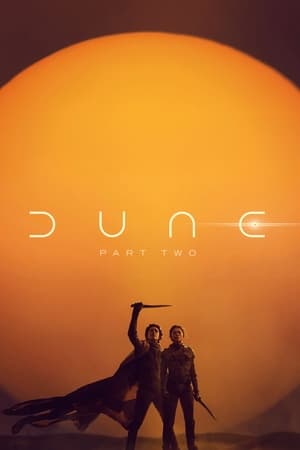
DUNE: PART TWO(2024)
Written by: Denis Villeneuve & Jon Spaihts
Genre: Sci-Fi
Title: Dune: Part Two
Written by: Denis Villeneuve & Jon Spaihts
Draft date: Not specified
LOGLINE
A young nobleman in hiding, grieving his father's murder and hunted by the empire that destroyed his house, must choose between the woman he loves and a messianic destiny among the desert warriors of a brutal planet — knowing that claiming their prophecy will unleash a holy war across the galaxy.
| Very Poor | Poor | Fair | Good | Excellent | |
|---|---|---|---|---|---|
| PREMISE | ✓ | ||||
| STRUCTURE | ✓ | ||||
| CHARACTER | ✓ | ||||
| CONFLICT | ✓ | ||||
| DIALOGUE | ✓ | ||||
| PACING | ✓ | ||||
| TONE | ✓ | ||||
| ORIGINALITY | ✓ | ||||
| LOGIC | ✓ | ||||
| CRAFT | ✓ |
| Strong Pass | Pass | Consider | Recommend | Strong Recommend | |
|---|---|---|---|---|---|
| Overall | ✓ |
Genre: Sci-Fi, Drama
Sub-genre: Epic, Political Thriller, War
Keywords: Chosen One, Prophecy, Desert, Revenge, Religious Manipulation, Empire, Messiah, Star-Crossed Romance, War, Rebellion, Female Protagonist (secondary), Ensemble Cast, Colonialism, Based on Novel, Sequel, Foreign Locale, Spice, Sandworms
MPA Rating: PG-13 (intense sustained battle violence, brief sexuality implied but not depicted, disturbing images of mass death and cruelty, no significant profanity beyond one use of "shit")
Budget Tier: Ultra High ($100M+): massive desert locations, enormous battle sequences involving thousands of extras, extensive creature VFX (giant sandworms), futuristic cities, orbital spacecraft, nuclear explosions, arena spectacle, multiple distinct planetary settings, and elaborate production design across several civilizations.
Pages: 117
Time Period: Far future (Year 10191), spanning approximately several months.
Locations: Approximately 60% deep desert of Arrakis (open dunes, rock formations, underground sietches, volcanic southern terrain, cave systems, spice fields — requires vast practical desert locations and extensive set builds for underground villages and temples). 15% Arrakeen city (residency, war room, spaceport, tarmac — militarized urban production design). 10% Giedi Prime (gladiatorial arena for 50,000 under a "black sun" requiring desaturated/monochrome visual treatment, palace corridors, Baron's quarters). 10% Imperial locations (lush gardens with rain, pavilions, elegant interiors — contrasting green/wet environments). 5% space/orbit. Key special requirements include a burning mass grave, a collapsing mountain range from nuclear blasts, a three-thousand-meter sandstorm, worm-riding sequences, and a gladiatorial combat spectacle.
Lead: Male, approximately 19-20, mixed European heritage (implied); lean, intense, initially vulnerable and uncertain, progressively more commanding and prophetic. A grieving son transformed into a reluctant and then decisive messianic war leader.
Comparables: Lawrence of Arabia (outsider assimilating into desert culture, leading indigenous warriors, moral corruption through power). The Last Temptation of Christ (reluctant messiah wrestling with the human cost of divine destiny). Dune: Part One (direct predecessor, shared world and characters). Game of Thrones (political intrigue among great houses, prophecy, arranged marriages as power plays).
SYNOPSIS
PRINCESS IRULAN (early 20s), an elegant and intelligent royal, records her imperial diary over images of the Harkonnen massacre of House Atreides on Arrakis — thousands of bodies burning, portraits of Duke Leto destroyed. BEAST RABBAN HARKONNEN (40s), brutal and volatile, receives the governorship medallion from his uncle, the hovering BARON VLADIMIR HARKONNEN (60s), who appears weakened.
On Arrakis during an eclipse, PAUL ATREIDES (late teens), heir to the destroyed House Atreides, awakens from a vision beside CHANI (late teens), a fierce Fremen warrior. Paul hides with his pregnant mother JESSICA (40s) and the Fremen leader STILGAR (50s) as a Harkonnen patrol searches the desert. Stilgar's Fremen ambush the patrol using a thumper to summon a sandworm that devours the Harkonnen dead. The group travels to Sietch Tabr, an underground Fremen settlement, where the council debates whether to accept Paul and Jessica. Stilgar believes Paul may be the Lisan al-Gaib — a prophesied messiah — but the elders and younger Fremen like Chani and SHISHAKLI (20s), a bold squad leader, are skeptical, viewing the prophecy as Bene Gesserit manipulation.
Stilgar reveals to Jessica that their dying REVEREND MOTHER RAMALLO (200+) needs a successor. Jessica drinks the Water of Life — a deadly worm poison — and survives through her Bene Gesserit training, though the poison also reaches her unborn daughter, ALIA, whose consciousness awakens in the womb. Paul publicly denies being the messiah, asking only to fight alongside the Fremen. He trains in desert survival with Chani, who teaches him to sandwalk and maintain windtraps. A romance blossoms between them. Meanwhile, Jessica privately begins manipulating Fremen believers to strengthen Paul's legend, whispering with the unborn Alia about converting non-believers.
Paul joins Fedaykin raids on Harkonnen spice harvesters, proving himself as a skilled and prescient fighter. The Fremen give him the names Usul and Muad'Dib. Rabban, drunk and incompetent, brutalizes his own commanders over mounting losses. The Baron threatens Rabban with death if spice production continues to fall. Paul and Chani grow closer as lovers, but Paul is haunted by visions of a holy war causing billions of deaths — a future triggered if he goes south to the fundamentalist tribes.
On the Imperial homeworld, the Emperor SHADDAM IV (60s) discusses the Muad'Dib problem with Irulan and REVEREND MOTHER GAIUS MOHIAM (70s), the Bene Gesserit leader. Irulan deduces that Paul Atreides may still be alive. Mohiam redirects attention to FEYD-RAUTHA HARKONNEN (early 20s), the Baron's psychopathic but charismatic younger nephew, as an alternative prospect for the Bene Gesserit breeding program.
On Giedi Prime, Feyd-Rautha fights in a gladiatorial arena, killing three prisoners including LANVILLE (40s), an Atreides officer left undrugged as a birthday "gift" from the Baron. LADY FENRING (35), a Bene Gesserit agent, seduces Feyd, tests him with the gom jabbar, and conceives his child to secure the bloodline. The Baron awards Feyd governorship of Arrakis, replacing the disgraced Rabban.
Paul reunites with GURNEY HALLECK (50s), his father's loyal weapons master, now working as a smuggler. Gurney reveals the location of the Atreides family atomics — ninety-two nuclear warheads hidden in a cave. Jessica travels south to the fundamentalist tribes, spreading the prophecy of the Lisan al-Gaib and preparing the southern Fremen for Paul's arrival. She also visits the Maker's Temple, instructing the MAKER KEEPER to allow a man to attempt the Water of Life ritual.
Feyd-Rautha arrives on Arrakis and launches devastating artillery strikes on Sietch Tabr and Fremen settlements across the North, destroying the sacred Cistern of Souls. Shishakli is captured and killed. The surviving Fremen flee south through the storm belt. Paul, tormented by his visions, drinks the Water of Life at the Maker's Temple. He collapses and appears dead. Chani, furious at Jessica's manipulation, is compelled through the Voice to revive Paul with her tears mixed with the poison — fulfilling the prophecy. Paul awakens with full prescient vision, seeing all possible futures clearly. He discovers that Jessica is the Baron Harkonnen's daughter, making him half-Harkonnen.
Paul travels to the southern fundamentalist assembly and claims the mantle of Lisan al-Gaib, demonstrating his prescience by reading the intimate memories of strangers. He declares himself Duke of Arrakis and sends a challenge to the Emperor. The Emperor arrives with his Sardaukar army. Paul deploys three nuclear warheads to collapse the mountain shield protecting the Imperial forces, then leads tens of thousands of Fremen warriors on sandworms into battle. The Sardaukar are overwhelmed. Paul kills the Baron, whispering "Grandfather." He offers the Emperor terms: Paul will marry Irulan and assume the throne. Feyd-Rautha volunteers as the Emperor's champion. In a brutal knife fight, Paul kills Feyd. The Emperor kneels and kisses Paul's ring. Chani, heartbroken by Paul's political marriage and messianic transformation, leaves. When the Great Houses refuse to honor his ascendancy, Paul orders Stilgar to lead the Fremen armies to war. Jessica watches from a balcony as the holy war begins. Chani, alone in the desert, sets a thumper and calls a worm, fighting back tears as spacecraft rise into the sky.
COMMENTS
PREMISE — Excellent
The premise harnesses one of science fiction's richest source texts and asks its central question with admirable clarity: what happens when a young man designed to be a savior recognizes the catastrophe his salvation will cause — and embraces it anyway? The tension between Paul's genuine love for the Fremen and his awareness that claiming their prophecy will ignite galactic genocide provides an engine that drives virtually every scene. The match between protagonist and world is ideal: Paul is both uniquely suited to Arrakis (bred for prescience, trained in combat) and uniquely dangerous to it (an outsider weaponizing indigenous faith). The Bene Gesserit's multigenerational breeding program and planted prophecies give the material a layer of institutional critique — religion as colonial technology — that elevates it beyond adventure. The premise's weakness is also its inheritance: as a sequel, it depends heavily on knowledge of Part One for emotional grounding with characters like Gurney and Jessica. Within its own pages, however, the dramatic question — will Paul resist or surrender to messianic destiny — is clear, urgent, and deeply compelling, placing it in the company of works like Lawrence of Arabia and The Last Temptation of Christ while occupying distinctly its own territory.
STRUCTURE — Good
The architecture is well-proportioned and propulsive. The opening Harkonnen massacre and Irulan's diary establish the world state efficiently, and the inciting incident — Paul's arrival at Sietch Tabr and Jessica's forced choice to become Reverend Mother — lands within the first fifteen pages, setting Paul's integration into Fremen life as the central first-movement concern. The midpoint pivot is Paul's wormriding trial (41-44), which transforms his status from outsider to Fremen warrior and triggers the religious fervor that becomes the material's central tension. The break into the final movement — Paul drinking the Water of Life (90-96) — arrives at roughly the 77% mark, slightly late but justified by the amount of ground that must be covered in Paul's Southern transformation. The climactic battle and duel with Feyd-Rautha occupy the final fifteen pages with appropriate escalation. One structural liability is the Giedi Prime sequence (55-67): while dramatically potent, it constitutes an extended departure from Paul's throughline, functioning almost as a self-contained short film. The return to Paul afterward (80) requires recalibration of momentum. The subplot of Jessica's southern missionary work (44-47, 79-81) is handled through efficient intercutting but relies heavily on telling rather than showing her conversion of the fundamentalists.
CHARACTER — Good
Paul's arc is the material's strongest asset and its most complex achievement. His progression from grieving son to reluctant warrior to self-aware false prophet is tracked through concrete behavioral shifts: denying messiahhood (22), choosing the humble war name Muad'Dib (32-33), and finally exploiting his prescience to dominate the southern assembly (99-100). The arc completes with devastating moral clarity when he orders the holy war he spent the entire narrative trying to avoid (116). Chani functions as Paul's moral conscience and the material's emotional anchor, and her skepticism about the prophecy ("You want to control people, you tell them a messiah will come," 19) provides the thematic counterweight to Stilgar's faith. However, her agency diminishes in the final third: she is compelled by the Voice to revive Paul (93), sidelined at the assembly (97), and ultimately reduced to leaving in heartbreak (116). Feyd-Rautha is introduced with vivid menace — casually slitting an attendant's throat to test a blade (56) — and his gladiatorial showcase establishes him as a credible physical threat, but his inner life remains thin beyond cruelty and ambition. Stilgar is the most emotionally generous presence, and his line "The Mahdi is too humble to say he is the Mahdi" (23) crystallizes the tragic irony of faith co-opted by power. Jessica's transformation into a calculating manipulator (27, 44) is chilling and well-executed, though her conversations with the unborn Alia occasionally strain credulity (see: Logic).
CONFLICT — Good
The central conflict operates on three interlocking levels — Paul versus the Harkonnens, Paul versus the Emperor's political order, and Paul versus his own prophesied destiny — and all three are given adequate dramatic weight. The external military conflict escalates methodically from guerrilla raids (28-30) to Feyd's artillery bombardment (82-83) to the climactic nuclear-assisted battle (108-110). The internal conflict is the more compelling engine: Paul articulates his dilemma explicitly to Gurney — "Because I gain it" (74) — and every subsequent choice carries the audience's awareness that Paul's victory is also his moral defeat. Scene-level conflict is generally strong, particularly in the Sietch Tabr council debates (12-13) and the southern assembly confrontation (97-100), where Paul's desire to lead clashes with the Fremen's own traditions. One area where conflict thins is the final battle itself: the Sardaukar are overwhelmed so quickly (108-110) that the climactic military engagement lacks suspense. The real climax — the duel with Feyd — compensates, but the ease of the larger victory undercuts the sense that Paul has paid a tactical price.
DIALOGUE — Good
The dialogue demonstrates strong differentiation across the ensemble. Stilgar's earnest, faith-saturated speech ("As written," repeated as a refrain on pages 23, 43, 94) contrasts sharply with Chani's blunt pragmatism ("You want to control people, you tell them a messiah will come," 19) and Gurney's weathered soldier's humor ("My stillsuit is full of piss," 68). The Harkonnen dialogue is appropriately brutal and clipped — Rabban's incoherent rage ("RATS!!! KILL THEM ALL!!!" 10) versus Feyd's cold precision ("Only pleasure remains," 89). The material handles the considerable challenge of multilingual dialogue — English, Chakobsa, Harkonnen — without losing clarity, and the subtitled exchanges feel organic rather than expository. Subtext operates effectively in the Jessica-Paul exchanges: when Jessica relays Alia's messages about strategic alliances (47), the unspoken power struggle between mother and son charges every line. One weakness is the Emperor's dialogue in the final confrontation (112-113), which leans toward declarative exposition ("There is a massed armada in orbit!") rather than the cunning one might expect from a man who orchestrated the Atreides genocide.
PACING — Fair
The first sixty pages maintain excellent momentum through alternating rhythms: tense action sequences (the eclipse ambush, 3-8), quiet character-building (Paul and Chani's desert courtship, 26-36), and escalating raids (28-32). The wormriding sequence (39-44) arrives at precisely the right moment to reward accumulated tension with spectacle. The Giedi Prime section (55-67) is internally well-paced — the arena fight builds with methodical intensity — but its placement creates a fifteen-page absence from Paul's narrative that slows overall forward drive. The material recovers strongly with Gurney's reintroduction (68-71), which injects new energy and new stakes. The final thirty pages accelerate almost too rapidly: Paul's Water of Life ordeal, his southern assembly speech, and the climactic battle occur in quick succession (90-117), compressing what could be three separate dramatic movements into one sustained crescendo. The duel with Feyd (114-115) is appropriately paced as a climactic beat, but the political resolution — marriage offer, Emperor's submission, Great Houses' refusal, holy war order — unfolds in barely three pages (112-116), giving these world-altering decisions less room to breathe than they merit.
TONE — Good
The tonal register is remarkably consistent: epic and grave, leavened by carefully placed warmth (Paul and Chani's courtship, Stilgar's comic earnestness) and punctuated by horror (the Giedi Prime gladiatorial sequence, Shishakli's implied immolation on page 89). The material earns its grandeur by grounding spectacle in character — the wormriding scene (41-44) works because it is filtered through Chani's fear and Stilgar's tears, not just through visual scale. The Giedi Prime sequences achieve a distinct tonal pocket — colder, more perverse, almost art-house in their cruelty — that could feel jarring but instead enriches the world by demonstrating Harkonnen culture as an alien aesthetic. Jessica's vomiting after watching water extraction (8) and Stilgar's earnest "Don't let it out!" provide essential tonal release in the early pages. The one moment that risks tonal dissonance is Paul's slap from Chani after his resurrection (95): it functions as a beat of romantic comedy in a scene otherwise charged with religious awe. It lands, but barely.
ORIGINALITY — Good
As an adaptation of Frank Herbert's novel, the material operates within well-established narrative territory, and comparisons to Lawrence of Arabia (outsider going native, leading desert warriors, losing himself to the role) and David Lynch's 1984 Dune are unavoidable. The execution, however, distinguishes itself through several choices. The unborn Alia's consciousness — communicated through womb imagery and filtered dialogue — is a genuinely unsettling narrative device that has few cinematic precedents. The treatment of prophecy as colonial infrastructure rather than mystical truth gives the messiah narrative a political dimension that neither the Lynch adaptation nor comparable chosen-one films like The Matrix foreground this directly. Feyd-Rautha's gladiatorial sequence, staged under a "black sun" that renders the world in monochrome, represents a bold visual and tonal departure. The ending — in which the protagonist's victory is explicitly framed as a moral catastrophe — inverts the expected genre resolution with a conviction that distinguishes it from more conventional epic climaxes.
LOGIC — Fair
The internal logic is largely sound, with the world's rules — worm behavior, stillsuit mechanics, the Water of Life's effects — applied consistently. One significant question arises around Paul's prescience: he can read the intimate memories of strangers at the assembly (99-100), yet he did not foresee Feyd's bombardment of Sietch Tabr (82), which he explicitly says he "didn't see coming" (86). The material gestures toward an explanation — his visions were fragmentary before drinking the Water of Life — but this distinction could be clearer. The Alia subplot raises questions: Jessica converses with a three-week-old embryo who offers strategic counsel (24, 47), and while the Bene Gesserit lore supports prenatal consciousness, the sophistication of Alia's advice ("she reminds you that you must reserve your hand for the most strategic alliance," 47) strains the premise's own rules. The nuclear warheads' survival is plausible given the genetic lock (78), but their proximity to Arrakeen — "right under everybody's noses" (77) — is acknowledged in-text as a deliberate gambit, which inoculates against the objection. The Great Houses' fleet arriving exactly when Paul needs them (111) is convenient but adequately set up by Paul's foreknowledge ("he's right on time," 103).
CRAFT — Good
The writing operates in a muscular, visually oriented register that prioritizes cinematic clarity over literary texture. Action sequences are constructed with spatial precision — the eclipse ambush (3-8) tracks soldier positions, sight lines, and sound cues with the discipline of a military briefing. Character introductions are efficient and evocative: Feyd-Rautha is captured in a single phrase — "cruelty in the mouth, high intelligence in the eyes" (55) — and the Maker Keeper is established through physicality alone, catching a lunging worm with "an impressive technique" (81). The Chakobsa subtitles are formatted cleanly with parallel columns, a significant production consideration handled with care throughout. Descriptive language is occasionally functional to a fault: "They fight. Like demons. A HELL OF A FIGHT" (114) delegates the duel's choreographic specificity to the director rather than building it on the page, a notable contrast to the detailed Feyd-Lanville fight (59-61). Parenthetical direction is used liberally ("without arrogance," 100; "definitive authority," 54) in places where the dialogue itself could carry the tone. Formatting is clean with minimal errors, though the scene numbering (inherited from a shooting draft format) occasionally clutters the reading experience.
OVERALL — Recommend
Dune: Part Two is a sprawling science-fiction epic about a young nobleman who assimilates into a desert warrior culture, claims their messianic prophecy, and unleashes a holy war he knows will devastate the galaxy. Its greatest strengths are its premise and its protagonist's arc: Paul Atreides' transformation from reluctant refugee to self-aware false prophet is tracked with moral seriousness and emotional specificity, and the material refuses to let his victory register as triumphant. The character work across the ensemble — particularly Stilgar's tragic faith, Chani's fierce pragmatism, and Jessica's chilling calculation — gives the epic scale a human foundation. Structure is disciplined and well-proportioned, with the wormriding midpoint and the Water of Life turning point landing with maximum impact. The primary weaknesses are the compression of the final political resolution, which rushes world-altering decisions into too few pages, and Chani's diminished agency in the third act, where the material's most vital moral voice is progressively sidelined. The Giedi Prime section is dramatically potent but creates a structural interruption that the pacing must absorb. The craft is confident and visually precise, though the climactic duel between Paul and Feyd receives less choreographic specificity on the page than the earlier Feyd-Lanville fight. This is a serious, ambitious, and largely successful blueprint for a film of enormous scale, anchored by a protagonist whose triumph is designed to unsettle rather than satisfy.
Get this level of coverage for your screenplay
Every coverage includes 10 category ratings, an overall recommendation, and detailed analysis — powered by the same methodology used by talent agencies and literary managers.
Movie data provided by TMDB