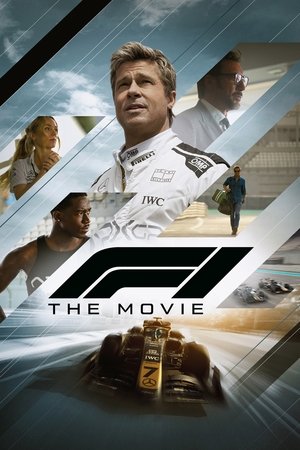
F1(2025)
Written by: Ehren Kruger
Draft date: December 15, 2024
Genre: Drama
Title: F1
Written by: Ehren Kruger
Draft date: Buff Revision - 12.15.24
LOGLINE
A 54-year-old former racing prodigy, whose Formula One career was destroyed by a catastrophic crash decades ago, is lured out of obscurity by his old teammate — now the struggling owner of the worst team in F1 — for one last shot at redemption across the final nine races of the season.
| Very Poor | Poor | Fair | Good | Excellent | |
|---|---|---|---|---|---|
| PREMISE | ✓ | ||||
| STRUCTURE | ✓ | ||||
| CHARACTER | ✓ | ||||
| CONFLICT | ✓ | ||||
| DIALOGUE | ✓ | ||||
| PACING | ✓ | ||||
| TONE | ✓ | ||||
| ORIGINALITY | ✓ | ||||
| LOGIC | ✓ | ||||
| CRAFT | ✓ |
| Strong Pass | Pass | Consider | Recommend | Strong Recommend | |
|---|---|---|---|---|---|
| Overall | ✓ |
Genre: Action, Drama
Sub-genre: Sports Drama, Comeback Drama, Buddy Drama
Keywords: Racing, Formula One, Comeback, Mentor-Protégé, Male Protagonist, Underdog, Team Sport, Rivalry, Redemption, Aging Athlete, International Locations, Ensemble Cast, Corporate Espionage, Father Figure
MPA Rating: PG-13 (limited strong language, intense racing sequences with crashes and fire, one brief sexual situation implied)
Budget Tier: Ultra High ($100M+) — multiple international race circuits (Silverstone, Hungary, Monza, Netherlands, Japan, Mexico City, Las Vegas, Abu Dhabi), extensive high-speed racing sequences requiring specialized camera rigs, real F1 cars and tracks, large crowd scenes, night racing, fire/crash effects, period flashback footage, and real-world F1 personalities appearing as themselves.
Pages: 183
Time Period: Present over approximately 3-4 months (the final nine races of an F1 season), with brief flashback footage from 1990.
Locations: Approximately 30% at Silverstone and Apex HQ in the English countryside (factory, wind tunnel, simulator, pub, offices). 10% Daytona International Speedway, Florida. 10% Hungaroring, Budapest. 10% Autodromo Nazionale Monza, Italy. 5% Zandvoort, Netherlands. 5% Suzuka, Japan. 5% Mexico City. 10% Las Vegas Strip and hotel interiors. 10% Yas Marina Circuit, Abu Dhabi. 5% various interiors (Joshua's London home, hospital rooms, laundromat/truck stop in the US, Baja Mexico). Requires access to or recreation of real F1 pit lanes, garages, paddocks, starting grids, and grandstands at each venue. Multiple high-speed crash sequences including fire, barrier impacts, and gravel traps.
Lead: Male, 54, Caucasian American. Rugged, fit, determined. A former racing prodigy turned drifter who lives in a camper van, wears mismatched socks, and masks deep physical pain and emotional trauma behind dry humor and stubborn self-reliance.
Comparables: Days of Thunder (mentor-protégé racing dynamics, rivalry becoming partnership), Ford v Ferrari (underdog racing team challenging establishment powers, obsessive craftspeople building the perfect machine), Rocky Balboa (aging athlete's improbable comeback), Rush (interpersonal driver rivalry fueling both characters' growth).
SYNOPSIS
SONNY HAYES (54), a rugged, nomadic racing veteran living in a camper van, wins the 24 Hours of Daytona endurance race driving for team boss CHIP HART (55) but refuses the trophy and declines future commitments. At a truck stop laundromat, his old Formula One teammate RUBEN CERVANTES (55), now the owner of the failing Apex GP team, tracks him down. Ruben explains Apex has never scored a point, his best driver quit, and without a race win before season's end, the board will force a sale. He offers Sonny the second seat. Sonny resists — his F1 career ended with a horrific crash at the 1990 Spanish Grand Prix that broke his spine — but Ruben appeals to his love of racing, and Sonny eventually accepts.
At Silverstone, Sonny meets Technical Director KATE MCKENNA (40), an Irish ex-aerospace engineer, Team Principal KASPAR SMOLINSKI (50), Chief Mechanic KARIMU "DODGE" DAUDA (43), young mechanic JODIE (25), and Apex's talented but insecure rookie driver JOSHUA PEARCE (25). Friction is immediate: Joshua views Sonny as a threat to his seat, and the team is skeptical of hiring an eighth-choice driver. In a test session, Sonny crashes but posts a competitive lap time, earning a grudging measure of respect. He notices the car's aerodynamic instability and begins pushing Kate to redesign it for close combat rather than clean-air speed.
At the British Grand Prix, Sonny deliberately delays on the formation lap to warm his tires — a cunning trick that costs rivals grip — and charges from last to the midfield. However, when ordered to let the faster Joshua pass, Sonny refuses, and the teammates collide, producing a double DNF. Joshua confronts Sonny in the corridor, and Sonny challenges him to earn respect through results rather than entitlement. In Hungary, Sonny suffers early puncture damage but stages a one-man chaos campaign, engineering multiple safety cars through aggressive driving that allows Joshua to score Apex's first-ever championship point. Investor PETER BANNING (38) celebrates alongside Ruben in the hospitality suite.
Kate and Sonny grow closer. She challenges him to explain why he returned to F1, and he asks her to build a car capable of fighting in turbulent air behind other cars. She develops a rippled floor-edge upgrade. At Monza, Sonny acts as a strategic decoy — faking pit stops, blocking rivals, and manipulating safety car periods — to position Joshua for a potential win. In deteriorating weather, Joshua ignores Sonny's instruction to wait for a safer passing opportunity on the straight and instead attacks at Turn 11, where he crashes violently and is engulfed in flames. Sonny sprints to the wreckage and pulls Joshua free. At the hospital, Joshua's mother BERNADETTE threatens Sonny personally, blaming him for the accident.
Joshua recovers over several races while Sonny, aided by Kate's upgrade, steadily climbs the standings — finishing P11 in the Netherlands, P8 in Japan, and P5 in Mexico City. Joshua watches from the gym and simulator, gradually adopting Sonny's training methods and studying his approach. He replays the Monza crash in the simulator and realizes Sonny's advice would have won the race. Meanwhile, Banning secretly forges documents and reports Apex's upgrade to the FIA, forcing the team to race without it in Las Vegas.
Kate arranges a poker night that doubles as a peace summit between Sonny and Joshua. The evening thaws their rivalry as they exchange genuine criticism and discover shared history — both lost their fathers at thirteen. Sonny lets Joshua win the hand, and Kate and Sonny spend the night together. On her balcony, Sonny finally reveals the emotional core of his return: after his crash, he lost not just his career but his love of racing, and he spent years getting it back. He chases a rare moment of peace he finds behind the wheel.
At the Las Vegas Grand Prix, Sonny drives recklessly without his lucky playing card and crashes hard, suffering blurred vision and collapsing on track. In the hospital, Ruben discovers Sonny's original medical report warned that further impacts could cause paralysis or death. Furious and terrified, Ruben fires him. In the parking garage, Banning reveals his scheme: he engineered Apex's struggles to force a sale, wants to buy the team himself, and offers Sonny a lucrative management role. Sonny rejects the offer.
For the final race in Abu Dhabi, Joshua leads the mechanics in Sonny's signature team jog around the track. Sonny arrives unannounced with a legal waiver absolving Ruben of liability and reclaims his seat. The FIA confirms Banning's documents were forged, restoring the upgrade. Starting P22 after a late driver swap, Sonny and Joshua execute an intricate relay strategy — trading positions, providing aerodynamic tows, and sacrificing individual advantage for team gain. In the closing laps, Sonny attacks the Mercedes leader to create an opening for Joshua, but contact spins Sonny off. He recovers. Joshua takes the lead but collides with Hamilton, knocking both out and leaving Sonny, improbably, in first with one lap to go. Sonny holds off the field and wins.
On the podium, Sonny hands the trophy to Ruben. He says goodbye to Kate with a promise to reconnect, bids farewell to Joshua — telling him "It's your team now" — and departs for Baja, Mexico, where he arrives at a small family racing operation looking for his next challenge.
COMMENTS
PREMISE — Good
The premise — an aging, broken racing legend returns to the sport that nearly killed him to save a doomed team — is built on a conflict engine that generates tension at every level: physical (Sonny's hidden spinal injury could paralyze or kill him), institutional (the board's forced-sale deadline), interpersonal (the generational rivalry with Joshua), and internal (Sonny's search for the transcendent feeling he lost after his crash). The setting of Formula One provides a naturally high-stakes, visually spectacular canvas, and the nine-race countdown functions as a ticking clock that gives the narrative momentum. The mentor-protégé dynamic between Sonny and Joshua occupies well-charted territory — Days of Thunder and Ford v Ferrari are close predecessors — but the premise distinguishes itself by making the mentor an active competitor rather than a retired advisor, creating genuine ambiguity about whether Sonny is helping Joshua or serving his own ego. The thematic concern with what it means to compete when the body and the odds say stop gives the premise emotional weight beyond the spectacle.
STRUCTURE — Fair
The narrative is organized efficiently around the nine-race arc, with each Grand Prix functioning as a discrete escalation. The inciting incident — Ruben's pitch at the laundromat — lands cleanly around page 9, and Sonny's arrival at Silverstone by page 20 locks in the central conflict at an appropriate pace. The midpoint reversal at Monza (67-77) is the structural high point: Joshua's crash converts the rivalry into genuine stakes and guilt, pivoting the relationship from antagonism toward reluctant collaboration. The Banning betrayal (the FIA investigation on page 99 and the parking-garage offer on pages 106-108) provides a late-act complication, though the reveal that Banning forged documents arrives with minimal foreshadowing, making it feel more convenient than earned. The Las Vegas crash and hospital confrontation (103-106) serve as the "all is lost" beat at roughly 70% of the page count, which is proportionally sound. The Abu Dhabi finale stretches across nearly thirty pages (109-137), and the density of racing action, strategy twists, red flags, and steward decisions risks numbing rather than building tension — trimming even five pages from this sequence would sharpen the climax. The final coda in Baja (149-150) provides a clean thematic bookend to Sonny's restless, race-anywhere philosophy established in the opening.
CHARACTER — Good
Sonny Hayes is a well-constructed protagonist whose backstory (the 1990 crash, a decade of self-destruction, the hidden spinal injury), clear want (to race at the highest level one more time), internal need (to recapture the peace he lost), and arc (from lone wolf to team player who sacrifices his own finish for Joshua) are all legible and satisfying. His eccentricities — mismatched socks, ocean sounds, the playing card ritual — give him texture without becoming gimmicks. Joshua is the most important supporting character, and his arc from insecure, ego-driven rookie to a driver willing to sacrifice his own result (the final-lap collision with Hamilton) mirrors Sonny's arc in reverse, which is structurally elegant. The weakness is that Joshua's transformation happens largely off-screen during the montage sequences (81-86) where he adopts Sonny's training methods, so the emotional payoff at Abu Dhabi slightly exceeds what has been dramatically demonstrated. Bernadette is warm and effective as a moral anchor (32, 78-79, 109), though she serves a single function. Kate is drawn with specificity — her aerospace background, her bicycle commute, her insistence that F1 is a team sport (67) — yet her romantic relationship with Sonny develops abruptly, moving from professional skepticism to a hotel room in a single scene transition (96-97). Ruben, Kaspar, and Dodge provide color and comic relief, and the ensemble is well-differentiated, but Banning is a conspicuously thin antagonist whose scheming receives too little screen time to feel like a genuine threat.
CONFLICT — Good
The central external conflict — Apex must win a race before the season ends or lose the team — is clear, well-established, and escalated methodically through nine races of incrementally better results (DNF, one point, near-win, P8, P5, then victory). The internal conflict is more interesting: Sonny's concealed injury means every race could be his last, and the tension between his physical fragility and his psychological need to drive is the material's most compelling source of dread. Scene-level conflict is abundant — nearly every race features wheel-to-wheel duels, pit-wall arguments, and radio standoffs (the pit-lane mutiny in Hungary on pages 63B-63D is a highlight). The Sonny-Joshua rivalry provides strong interpersonal conflict through the first two-thirds, peaking when Joshua deliberately spins Sonny off at Spa (115). However, the corporate espionage subplot involving Banning (99, 106-108) introduces conflict that operates at a remove from the track — it is resolved off-screen when the FIA confirms the forgery (112) — and therefore never generates the visceral tension the racing conflicts do.
DIALOGUE — Good
The dialogue is consistently sharp, efficient, and character-differentiating. Sonny's voice — dry, deflective, laced with gambling metaphors — is distinct from Joshua's clipped, contemporary British slang ("fya," "bruh," "mutton") and from Kate's precise, withering directness. The laundromat reunion between Sonny and Ruben (8-9) establishes their rhythm beautifully through rapid-fire banter that conveys decades of history without exposition. Kate's pub monologue dismantling Sonny's "lone wolf" self-image (55-67) is the strongest dialogue scene, because it forces Sonny to confront a truth he has been avoiding. The press conferences effectively use Don Cavendish as a foil, and the poker scene (91-94) allows all three principals to speak honestly under the guise of a game. Where dialogue falters is in the on-the-nose moments: Sonny's balcony speech to Kate about "chasing that feeling" (97-98) states his theme so explicitly that it removes the subtext his character has been built on. The broadcast commentary, while necessary for clarity, occasionally over-narrates what the visuals already convey, particularly during the Abu Dhabi finale.
PACING — Fair
The first forty pages move briskly, establishing Sonny's world, the recruitment, and the team dynamics with minimal fat. The montage sequences covering races four through six (81-86) compress effectively but risk making individual races feel interchangeable — the Dutch, Japanese, and Mexico City Grands Prix blur together because each follows the same pattern (Sonny starts at the back, climbs through the field, finishes in the points). The Las Vegas poker scene (90-94) is a welcome deceleration that lets the characters breathe, and the shift from competition to connection there earns the emotional weight the finale needs. The Abu Dhabi Grand Prix, however, occupies roughly pages 109 through 137 — nearly thirty pages for a single race — and the red flag stoppage, while narratively necessary, extends the climax past its optimal tension point. The pit-lane repair sequence (124-125) and steward deliberation (126) add procedural detail that slows momentum precisely when it should be accelerating toward the checkered flag.
TONE — Fair
The dominant tone is crowd-pleasing sports drama with a vein of melancholy running beneath it — Sonny's physical pain, his nightmare flashback (96A), and his emotional collapse after winning (135) prevent the material from tipping into pure wish-fulfillment. This balance is maintained remarkably well through the first hundred pages. Kaspar's comic-relief bits (eating raw onions for virility on page 37A, his imaginary interview on pages 63G-63H) land because they are character-consistent rather than arbitrary. The Banning subplot introduces a corporate-thriller register that sits somewhat uneasily beside the rest — his parking-garage pitch (106-108) could belong to a different film, and his cartoonish "YES!" outburst when Sonny crashes (122) undercuts whatever menace he might carry. The broadcast commentary, which functions almost as a Greek chorus, keeps the tone accessible but occasionally tips into expository hand-holding, particularly when it narrates strategy the pit-wall scenes have already established.
ORIGINALITY — Fair
The core concept — a middle-aged racer's F1 comeback — is not substantially different from the aging-athlete-returns template seen in Rocky Balboa or The Rookie, and the racing-team-underdog framework closely mirrors Ford v Ferrari. The execution, however, brings several distinctive elements: the "Plan C" chaos strategy, where Sonny deliberately manufactures safety cars and fake pit stops to advantage his teammate, is a genuinely inventive tactical conceit that gives the racing sequences intellectual interest beyond physical spectacle. The decision to make both drivers protagonists with mirrored arcs — rather than centering solely on the comeback driver — is a structural choice that distinguishes this from most sports-comeback narratives. The integration of real F1 personalities (Hamilton, Verstappen, Leclerc, Wolff, Steiner, Buxton) grounds the world in a way fictional competitors would not, though this also anchors the material to a specific moment in time. The Banning corporate-espionage thread is the least original element, functioning as a generic boardroom antagonist in a narrative that generates more than enough conflict from the track itself.
LOGIC — Poor
The most significant logic concern is the legal waiver Sonny presents in Abu Dhabi (112). The notion that a "Tijuana lawyer" could produce a document that absolves an F1 team owner of liability for knowingly racing a driver with a life-threatening spinal condition strains credulity, and Ruben's acceptance of it — after his passionate refusal moments earlier — happens too quickly. The FIA's confirmation that Banning's documents "were forged" (112) arrives without any depicted investigation, which makes the resolution feel like a narrative convenience. During the Abu Dhabi red flag sequence, the broadcast explains that Apex has unused soft tires because they failed to qualify in the top 10, but earlier dialogue established Sonny starting P22 due to a late driver swap — the relationship between qualifying position and tire allocation could be clearer. Sonny's ability to race competitively at 54 after a career-ending spinal injury is addressed but not fully resolved: the medical report (105) suggests further impact could cause paralysis, yet he sustains multiple major crashes throughout the season with no cumulative consequence beyond blurred vision. The playing card ritual — never looking at the card — is a charming detail, but the moment in Abu Dhabi where he reaches for it and it is missing (102) implies superstitious causation for his crash, which slightly undermines the otherwise grounded racing logic.
CRAFT — Fair
The writing is muscular, visual, and well-paced for the genre — action lines are lean and evocative ("Like a dragon from a cave, Sonny accelerates onto the track"), and character introductions are efficient (Chip Hart's "Orlando beer gut," Kate's bicycle commute establishing her philosophy before she speaks a word). The multiple "ALT" lines and "VERSION 1/VERSION 2" options throughout the draft (pages 56-62B, 107, 114, etc.) indicate this is a working document still in flux, which occasionally disrupts readability and makes certain scenes feel unresolved — the two versions of the prep-room confrontation between Sonny and Joshua (56-62B) represent meaningfully different tonal choices that have not been reconciled. The broadcast commentary is handled as a structural device throughout, which is a smart choice for clarity but creates a crutch: by Abu Dhabi, the telecast is narrating strategy ("you'd almost have to wonder if Sonny was trying to engineer it," page 123A) that would land with more power if discovered through character behavior alone. Formatting is mostly consistent, though the page numbering includes appended letters (63A through 63I, for example) that suggest extensive revision passes. The voice is confident and distinct — there is a clear sensibility behind the material that understands both the mechanics of racing and the emotional registers of the genre.
OVERALL — Consider
F1 is a large-scale sports drama about a 54-year-old former racing prodigy who returns to Formula One to save his friend's failing team, clashing with a young teammate before learning to sacrifice personal glory for collective victory. Its strongest assets are its well-drawn protagonist, whose hidden vulnerability grounds the spectacle in genuine stakes, and its inventive race strategy sequences, which give the action intellectual dimension beyond speed and crashes. The dialogue is consistently sharp and character-differentiating, and the ensemble — particularly Joshua, Kate, and Ruben — provides a satisfying emotional ecosystem around the central figure. The primary weaknesses are structural: the montage compression of mid-season races flattens their individual dramatic value, the Abu Dhabi finale extends past peak tension, and the Banning corporate-antagonist subplot is underdeveloped relative to its narrative function. The legal waiver that enables the climax is the single most vulnerable logic point. The multiple ALT lines throughout signal a draft still searching for definitive choices in key moments. At its best, the material delivers exactly what the premise promises — the visceral thrill of racing combined with the emotional weight of a man confronting his own mortality at 200 miles per hour.
Get this level of coverage for your screenplay
Every coverage includes 10 category ratings, an overall recommendation, and detailed analysis — powered by the same methodology used by talent agencies and literary managers.
Movie data provided by TMDB