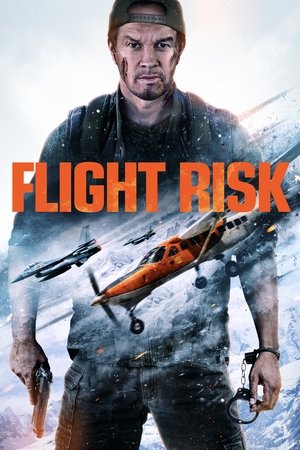
FLIGHT RISK(2025)
Written by: Not specified [No writer credit found on cover page]
Genre: Action
Title: Not specified [No title found on cover page]
Written by: Not specified [No writer credit found on cover page]
Draft date: Not specified
LOGLINE
A U.S. Marshal transporting a key mob witness by small plane across the Alaskan wilderness discovers their charter pilot is a hitman sent to kill them both — and after subduing him, must fly the plane herself while unraveling a conspiracy that reaches to the top of her own agency.
| Very Poor | Poor | Fair | Good | Excellent | |
|---|---|---|---|---|---|
| PREMISE | ✓ | ||||
| STRUCTURE | ✓ | ||||
| CHARACTER | ✓ | ||||
| CONFLICT | ✓ | ||||
| DIALOGUE | ✓ | ||||
| PACING | ✓ | ||||
| TONE | ✓ | ||||
| ORIGINALITY | ✓ | ||||
| LOGIC | ✓ | ||||
| CRAFT | ✓ |
| Strong Pass | Pass | Consider | Recommend | Strong Recommend | |
|---|---|---|---|---|---|
| Overall | ✓ |
Genre: Thriller
Sub-genre: Action Thriller, Bottle Thriller
Keywords: Single Location, Female Protagonist, Alaska, Plane, Survival, Corruption, Witness Protection, U.S. Marshal, Conspiracy, Cat-and-Mouse, Contained Thriller, Redemption
MPA Rating: R (sustained violence, strong language throughout including multiple uses of "fuck," blood)
Budget Tier: Low ($1M–$10M) — single primary location (plane interior), limited cast, Alaskan wilderness aerials, modest VFX for plane sequences and crash landing
Pages: 93
Time Period: Present, over approximately 2-3 hours of real time
Locations: 95% interior of a Cessna 206 small aircraft in flight over Alaskan wilderness and coastline. 5% exterior Alaskan skies/wilderness (aerial shots). Runway/tarmac at Anchorage for final landing sequence. Requires a practical or set-built Cessna cockpit and cabin, aerial photography of Alaskan mountains and coastline, and a crash-landing sequence on a runway.
Lead: Female, 30s/40s, race/ethnicity unspecified, no-nonsense U.S. Marshal carrying guilt over a prior failure, physically capable, determined, and sharp under pressure.
Comparables: Non-Stop (2014) — contained thriller aboard an aircraft with escalating twists and a protagonist under suspicion; Flightplan (2005) — single-location airborne tension with conspiracy elements; Flight (2012) — high-stakes aviation crisis driving character study; Wrath of Man (2021) — criminal infiltration of a professional operation with hidden identities.
SYNOPSIS
U.S. Deputy Marshal MADOLYN HARRIS (30s/40s) loads handcuffed prisoner WINSTON (late 20s/30s), a fastidious, wiry cooperating government witness, into a cramped Cessna 206 charter plane somewhere in rural Alaska. Madolyn calls her supervisor, Supervisory Deputy CAROLINE VAN SANT (40s), who informs her that the judge on the case has been replaced and they must fly all night to make New York by morning. The stakes are clear: Winston must testify against mob boss Moretti, and the clock is ticking.
Their pilot, DARYL BOOTH (40s), a rough-hewn, charming bush pilot, takes off from Bethel toward Anchorage. Early in the flight, the GPS shorts out. Daryl assures Madolyn it happens frequently and convinces her to press on rather than turn back into approaching weather. In the back seat, Winston discovers a charter license card under the pilot's seat — the photo on it looks nothing like the man flying the plane. Winston desperately tries to alert Madolyn, who is wearing noise-canceling headsets, eventually spitting a shirt button to get her attention. He signals his fear but cannot explain with Daryl watching.
Madolyn grows suspicious on her own. She tests Daryl by inventing a female pilot named Janikowski; Daryl takes the bait, referring to the fictional pilot as male. Both spring into action simultaneously — a brutal, cramped fight erupts in the cockpit. Daryl produces a hidden knife and slashes Madolyn, but she tases him unconscious. The plane dives before Madolyn manages to engage autopilot.
With Daryl unconscious, Madolyn and Winston move him to the back row, restrained with zip-cuffs and shackles. Madolyn discovers a folded paper in Daryl's wallet containing photos, addresses, and identifying details of both her and Winston — including Winston's mother's home address. Winston is shaken, insisting the leak must come from within the Marshals' office. Madolyn contacts Van Sant via satellite phone and explains the situation. She then raises an anonymous bush pilot on the aviation radio who begins guiding her, but the signal breaks up and is lost.
Madolyn reaches Van Sant again, who arranges search and rescue. She also connects with HASAN, an upbeat Anchorage air traffic controller, who begins walking her through basic flight operations and turns her toward the coast. Meanwhile, Daryl quietly works to free himself, locating his dropped knife under Madolyn's seat and using a shard from Madolyn's stolen sunglasses to saw through the leather handhold he is cuffed to.
Winston reveals that Moretti's payoffs went to someone in Sankaty, Massachusetts. When DIRECTOR COLERIDGE (50s/60s), the head of the Marshals Service, mentions he is at his beach house in Sankaty, Madolyn puts the pieces together: Coleridge himself is the mole. She urgently calls Van Sant to warn her, apologizing for her earlier accusation. Van Sant rushes to leave the office.
Daryl breaks free and attacks. He hurls his hidden knife into Winston's gut and strangles Madolyn from behind. Winston pulls the knife from his own body and slashes Daryl's arm, freeing Madolyn. In the ensuing struggle, Madolyn shoots Daryl in the shoulder. He collapses. Madolyn hogtied him with cut seatbelts and tends to Winston's grave wound.
Madolyn learns from Coleridge that Van Sant was killed in a staged car crash. Enraged, Madolyn confronts Coleridge directly, telling him she can prove his corruption and will see him in New York. Hasan guides her toward Anchorage, but Winston is fading fast. Madolyn increases speed, burning through fuel reserves. Daryl makes one last desperate attempt to prevent the landing, but Madolyn pistol-whips him and Winston offers his own handcuffs to secure him.
Hasan talks Madolyn through the final approach in crosswinds. She kills the engine and master switch, gliding silently toward the runway. The landing is rough — a wheel breaks off, a wingtip shears away — but the plane skids to a stop. Winston is alive. Emergency crews extract them. Daryl is dragged away. Alone in the wrecked cabin, Madolyn gives the hula-skirted grizzly bear figurine one final push, restarting its dance, and climbs out into the world.
COMMENTS
PREMISE — Excellent
The premise operates as a high-concept bottle thriller: a law enforcement officer trapped in a tiny aircraft with a disguised assassin and a vulnerable witness, set against an Alaskan wilderness that offers no escape and no help. The concept is immediately pitchable and generates inherent tension from its physical constraints — every confrontation, negotiation, and discovery occurs within a space roughly the size of a minivan. The layered conspiracy element, in which the threat extends beyond the cockpit to the upper echelons of the protagonist's own agency, elevates what could be a simple survival scenario into something with genuine institutional stakes. Madolyn is well-matched to this situation: her guilt over a prior failure makes the possibility of losing another prisoner existentially threatening, not just professionally dangerous. The premise does most of its heavy lifting in the first twenty pages, establishing the confined setting, the ticking clock, and the revelation that the pilot is an imposter with efficient clarity. The central dramatic question — can Madolyn fly a plane she does not know how to operate, protect a witness she is responsible for, and navigate a conspiracy she is only beginning to understand — is compelling and sustains across the full page count.
STRUCTURE — Good
The narrative is tightly constructed around a series of escalating crises that propel the action forward with clear causality. The inciting incident — Winston's discovery of the false charter license (11-12) — arrives at almost exactly the right proportional moment, and the break into the central conflict, Madolyn and Daryl's simultaneous attack on each other (19-20), lands around page 20, cleanly dividing the setup from the sustained survival scenario. The midpoint pivot, where Madolyn realizes Coleridge is the true mole (64-65), reframes the entire conspiracy and raises the external stakes substantially. The "all is lost" moment — Daryl's breakout, Winston's stabbing, and the gunfight (71-73) — arrives around page 71, proportionally sound, and precipitates the final act's landing sequence. Every scene serves a clear function: Madolyn's backstory with Maria (55-56) deepens her internal stakes, Winston's confessional about easy money (80-81) completes his arc, and the shipwreck identification (68-69) provides a concrete problem-solving beat that advances the plot physically. One structural vulnerability is the conspiracy thread's reliance on phone calls, which risks becoming repetitive in method — Van Sant, Coleridge, and Hasan are all experienced primarily through voice, and the mid-section accumulates several call-hangup-call sequences in close succession (57-67). However, the phone calls do carry meaningfully different dramatic content each time, and the physical stakes in the cabin prevent the material from becoming static.
CHARACTER — Good
Madolyn is the strongest element: her arc moves cleanly from a marshal haunted by a fatal lapse in judgment to one who refuses to repeat that failure, and her characterization is expressed through active choices rather than exposition — she tests Daryl with the Janikowski trap (18), refuses to kill when she could (85-86), and makes the high-risk decision to burn fuel for Winston's life (78). Her backstory with Maria is efficiently deployed (55-56) and pays off in her final resolve. Winston is well-differentiated as the motormouth accountant whose bravado masks genuine terror, and his arc from selfish cowardice to courage — pulling the knife from his own gut to save Madolyn (71) — is earned. Daryl functions effectively as a charismatic, resourceful antagonist whose competence is demonstrated through action: hiding the knife, stealing the sunglasses, sawing through his restraints. His refusal of Winston's bribe (22-23) establishes principles that mirror and contrast Madolyn's, giving him dimension beyond a stock villain. Van Sant and Coleridge are necessarily thin given their phone-only presence, but their roles in the conspiracy are clearly delineated. The cast is appropriately sized for the confined setting.
CONFLICT — Good
The central external conflict — Madolyn must land a plane she cannot fly while keeping a critically wounded witness alive — is formidable and escalates in clear, measurable increments: lost GPS, no radio, hijacker's attack, knife wound, gunshot, fuel depletion, crosswind landing. Each obstacle compounds the previous one, creating genuine cumulative pressure. The internal conflict is equally well-defined: Madolyn's guilt over Maria's death drives her refusal to lose another prisoner, and Daryl exploits this psychological wound deliberately (52-54), provoking her into a reckless physical confrontation that allows him to steal the sunglasses he needs to escape. This is conflict operating on multiple levels simultaneously and is the material's greatest strength. The conspiracy thread — discovering Coleridge as the mole — functions as a secondary conflict that recontextualizes Madolyn's trust in her own institution. The one area where conflict slightly underperforms is Daryl's final attack (87-88), which, while viscerally effective, is his third physical assault, and the pattern of incapacitation-and-recovery risks diminishing returns by this point.
DIALOGUE — Good
The dialogue is sharp, naturalistic, and character-differentiating throughout. Winston's nervous motormouth energy — his Gulfstream complaint (2), his "cooperating government witness" correction (6), his "kite with seatbelts" callback (91) — contrasts distinctly with Madolyn's clipped, procedural speech and Daryl's folksy, insinuating cadence. Daryl's dialogue is particularly effective: his "principles" speech (23) and his goading of Madolyn about Maria (52-54) reveal a character who weaponizes conversation as deliberately as he wields a knife. Hasan's irrepressible humor — "pretty plane and simple" (43), "did that one fly over your head?" (69) — provides essential tonal relief without undermining tension. Subtext operates well in the Madolyn-Van Sant phone calls, particularly when Madolyn begins probing with "And you" (48) and the loaded exchange about trust (58-59). One minor issue: Daryl's taunting about Madolyn killing her "last prisoner" (52) relies on information he has no clear mechanism for obtaining beyond the vague explanation of a Marshals' leak, which slightly undercuts the scene's credibility even as the dialogue itself crackles.
PACING — Good
The pacing is exceptionally tight for a single-location thriller, maintaining momentum across 93 pages with almost no dead weight. The opening ten pages establish character dynamics with wit and efficiency before the license discovery initiates the first spike of tension. The mid-section, which could sag under the weight of phone calls and waiting, is kept kinetic through Daryl's escape preparations — the sunglasses theft (55), the sawing sequences (57-58, 61, 67, 69) — which create a ticking-clock subplot running in parallel with Madolyn's above-board crisis management. The knife attack at page 71 detonates at precisely the right moment, just as the audience might begin to feel safe with the coast in sight. The landing sequence (85-91) sustains tension through granular procedural detail — flaps, throttle, altitude callouts — punctuated by Daryl's final lunge and the crosswind complication. The only stretch that drags slightly is the sequence of consecutive phone calls between pages 57 and 67, where Madolyn speaks to Van Sant, Hasan, Janine, and Coleridge in relatively quick succession. While each call carries new information, the physical repetition of the action — dial, talk, hang up — creates a rhythm that temporarily stalls the kinetic energy.
TONE — Good
The tone is consistent and well-calibrated: a grounded, procedural thriller that takes its survival scenario seriously while allowing carefully measured moments of levity. The humor — primarily delivered through Winston's anxiety-fueled complaints and Hasan's irrepressible puns — never undercuts the danger. Daryl's Jimmy Buffett affectation and the hula grizzly figurine establish an ironic warmth in the early pages (7-8) that the figurine then carries through as a visual motif, its final appearance (93) providing an unexpectedly resonant emotional beat. The Maria flashback (55-56) introduces genuine pathos without tipping into melodrama, and Winston's deathbed confession about easy money (80-81) is restrained rather than sentimental. The single tonal wobble is Daryl's singing (45-46), which walks a fine line between menacing nonchalance and theatrical villainy — but the scene earns it by using the singing as cover for his practical objective of retrieving the knife.
ORIGINALITY — Good
The contained-thriller-on-a-plane concept has clear predecessors in Non-Stop and Flightplan, both of which place protagonists in airborne danger with conspiracy elements. The distinguishing factor here is the intimacy of scale: this is not a commercial airliner but a six-seat Cessna, which compresses every confrontation to arm's length and eliminates the crowd dynamics those films rely upon. The conspiracy element — a mole within the U.S. Marshals leading to the agency's own director — is a familiar construction, but the Sankaty payoff detail, where a clue dropped in casual conversation by the villain parallels information from the witness, demonstrates precise plotting rather than generic twists. The decision to have Daryl weaponize Madolyn's psychological guilt to engineer his own escape — provoking a beating specifically to steal her sunglasses — is a character-driven set piece that feels fresh for the genre. The material's strongest claim to originality lies in its execution: the granular procedural detail of non-pilot flight management, combined with the emotional through-line of Madolyn's redemption, gives the familiar chassis a distinctive engine.
LOGIC — Good
The internal logic is largely sound, with the confined setting naturally limiting the range of actions and making most decisions feel inevitable rather than contrived. The most significant logic question is how Daryl knows about Madolyn's personal work history — specifically Maria's death (52) — which is attributed broadly to a leak within the Marshals' office but never explained with enough specificity to be fully satisfying, particularly since the leak is later identified as Coleridge, who would presumably have access to such records. The mechanics of Daryl's escape are meticulously staged across multiple scenes: the knife sliding during the climb (50), the sunglasses theft during the beating (55), and the sawing through the handhold (57-69) all follow clear cause-and-effect chains. One minor question: Madolyn's satellite phone functions consistently throughout the flight at altitude over remote Alaska (38-84), which is plausible for satellite technology but notably convenient given that radio communication proves unreliable. The fuel gauge visual at page 28 sets up the later fuel dilemma cleanly, and the crosswind complication during landing (86-89) is established by Daryl's earlier dialogue about weather conditions.
CRAFT — Excellent
The writing is lean and propulsive, with a strong command of visual storytelling and spatial awareness. Character introductions are efficient and distinctive: Winston is defined by his "immaculately groomed" appearance contrasted with the squalid cabin (2), Madolyn by her weariness and hidden weapons (2-3), and Daryl by his "ratty baseball cap" and "backwoods swagger" (5). The action sequences are written with exceptional clarity given the extreme physical constraints — the first fight (19-20), the tasing (24-25), and the knife attack (71-73) each read as distinct set pieces with clear spatial choreography. The parenthetical "(for clarity, we're going to continue to refer to this character as Daryl)" (20) is a practical and unobtrusive production note. The hula grizzly figurine functions as both a thematic symbol and a structural marker, its appearances tracking the emotional temperature of the narrative from whimsy (8) through crisis to resolution (93). Formatting is clean throughout with no notable errors. The writing sits on the minimalist end of the spectrum, trusting the reader to infer emotional states from behavior rather than describing them — "On Madolyn: sinking into a pool of dread" (82) is one of the few interior-state descriptions, and it earns its place at a moment of genuine revelation.
OVERALL — Recommend
This untitled thriller is a taut, contained survival narrative about a U.S. Marshal who must fly a small plane across the Alaskan wilderness after her pilot is revealed as a mob hitman, while simultaneously uncovering a conspiracy within her own agency. Its strongest categories are structure and conflict: the escalating crises are precisely engineered, each complication organic to the situation and compounding the last, and the dual-track tension of physical survival and institutional betrayal sustains across the full page count. Madolyn is a well-constructed protagonist whose internal wound drives her decisions in ways that feel consequential rather than decorative. The dialogue is distinctive and character-revealing, with Hasan's levity providing essential counterbalance to the escalating stakes. The craft is clean and confident, with particular skill in choreographing action within the Cessna's claustrophobic confines. The weakest element is the mid-section's reliance on sequential phone conversations, which, while each individually purposeful, temporarily flatten the physical momentum that is the material's primary engine. The conspiracy reveal, though effectively plotted through the Sankaty detail, resolves through dialogue rather than action, and Van Sant's death occurs entirely offscreen — a necessary limitation of the bottle format, but one that slightly diminishes the emotional impact of the betrayal. These are calibration issues rather than structural deficiencies, and the material delivers on its premise with efficiency and considerable skill.
Get this level of coverage for your screenplay
Every coverage includes 10 category ratings, an overall recommendation, and detailed analysis — powered by the same methodology used by talent agencies and literary managers.
Movie data provided by TMDB