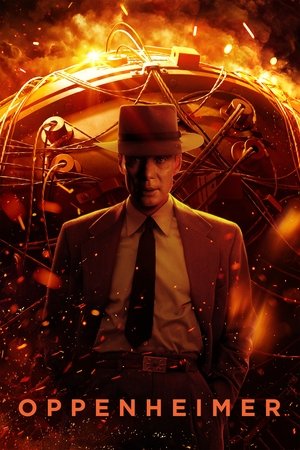
OPPENHEIMER(2023)
Written by: Christopher Nolan, Based on the novel "American Prometheus: The Triumph and Tragedy of J. Robert Oppenheimer" by Kai Bird and Martin J. Sherwin
Draft date: April 21, 2023
Genre: Drama
Title: Oppenheimer
Written by: Christopher Nolan, Based on the novel "American Prometheus: The Triumph and Tragedy of J. Robert Oppenheimer" by Kai Bird and Martin J. Sherwin
Draft date: 2023-04-21
LOGLINE
A brilliant theoretical physicist is recruited to lead America's secret effort to build the atomic bomb during World War II, only to face a Cold War-era security hearing that threatens to destroy the reputation and legacy he built — while a powerful political adversary simultaneously fights for his own confirmation to the Presidential Cabinet.
| Very Poor | Poor | Fair | Good | Excellent | |
|---|---|---|---|---|---|
| PREMISE | ✓ | ||||
| STRUCTURE | ✓ | ||||
| CHARACTER | ✓ | ||||
| CONFLICT | ✓ | ||||
| DIALOGUE | ✓ | ||||
| PACING | ✓ | ||||
| TONE | ✓ | ||||
| ORIGINALITY | ✓ | ||||
| LOGIC | ✓ | ||||
| CRAFT | ✓ |
| Strong Pass | Pass | Consider | Recommend | Strong Recommend | |
|---|---|---|---|---|---|
| Overall | ✓ |
Genre: Drama, Thriller
Sub-genre: Political Thriller, Period Drama, Biographical Drama
Keywords: Based on True Events, Scientist Protagonist, Manhattan Project, Nuclear Weapons, Cold War, McCarthyism, Dual Timeline, Ensemble Cast, Male Protagonist, Political Intrigue, Moral Dilemma, Historical Figure, Government, Courtroom, Espionage, Atomic Age, Jewish Theme, Loyalty, Betrayal, Guilt, War
MPA Rating: R (sexual content including nudity, mature thematic material involving weapons of mass destruction, brief strong language)
Budget Tier: High ($40M–$100M) — Period settings spanning the 1920s through 1960s across multiple countries and US locations, large ensemble cast, significant practical effects for the Trinity test sequence, period-accurate military and government settings, no heavy CGI but extensive production design requirements.
Pages: 197
Time Period: Primarily 1920s–1954 over approximately 30 years, with framing sequences in 1954 (security hearing) and 1959 (Senate confirmation hearing), and a brief flash-forward to the mid-1960s.
Locations: Approximately 30% Los Alamos, New Mexico (a purpose-built wartime town including labs, residences, lecture halls, and the Trinity test site in the desert); 20% Room 2022, Atomic Energy Commission, Washington, DC (small hearing room); 15% Senate Committee hearing room and offices, Washington, DC (shot in black-and-white); 10% Berkeley, California (university campus, homes, labs); 10% Princeton, New Jersey (Institute for Advanced Study, Olden Manor); remainder split among Cambridge, England; Leiden and Zurich; various Washington DC government buildings including the Oval Office and Pentagon; New York hotel rooms; New Mexico ranch and desert. Requires period vehicles, military equipment, a steel tower in a desert, and a practical or effects-driven nuclear detonation sequence.
Lead: Male, ages 21–59 across the narrative, Caucasian/Jewish-American. Gaunt, intellectual, charismatic, mercurial — a chain-smoking polymath equally capable of seducing a room and alienating its most powerful occupant.
Comparables: A Man for All Seasons (a principled man ground down by a politically motivated proceeding), JFK (multi-timeline political investigation told through competing testimonies), The Social Network (a deposition/hearing framework used to reconstruct the rise of a controversial genius), Bridge of Spies (Cold War-era moral conviction tested by political machinery).
SYNOPSIS
J. ROBERT OPPENHEIMER (50), a gaunt physicist, reads a statement into the record at a 1954 security hearing in a small Washington room. Intercut with this, LEWIS STRAUSS (63), a prosperous political figure, prepares for his 1959 Senate confirmation hearing for Commerce Secretary, coached by a SENATE AIDE (Adult). These two proceedings frame the entire narrative.
In flashback, a YOUNG OPPENHEIMER (21) struggles at Cambridge under physicist PATRICK BLACKETT (Adult), nearly poisons an apple with cyanide, and is redirected by the legendary NIELS BOHR (Adult) to study theoretical physics in Göttingen, Germany. He flourishes in Europe, befriends fellow American physicist ISIDOR RABI (30), and meets the brilliant WERNER HEISENBERG (26) before returning to America, determined to build a school of quantum theory at Berkeley. There he bonds with experimentalist ERNEST LAWRENCE (Adult) and grows his program from one student, LOMANITZ (21), into a packed classroom. His work on dying stars — what will later be called black holes — brings him academic fame.
Oppenheimer's political engagement deepens through friendships with professor HAAKON CHEVALIER (Adult) and psychiatry student JEAN TATLOCK (Adult), a Communist with whom he begins an intense affair. He attends leftist gatherings and supports the Spanish Republic, drawing FBI surveillance. He meets KITTY (31), a former Communist Party member widowed by the Spanish Civil War, and they begin a relationship. He marries Kitty after she becomes pregnant, breaking off his relationship with Tatlock.
When news breaks that German scientists have split the atom, Oppenheimer realizes a bomb is possible. General LESLIE GROVES (Adult), the blunt Army engineer who built the Pentagon, selects Oppenheimer to lead the Manhattan Project despite his radical associations — partly because those associations give Groves leverage. Oppenheimer proposes building a secret laboratory town at Los Alamos, New Mexico, and embarks on a cross-country recruitment drive, enlisting HANS BETHE (Adult), RICHARD FEYNMAN (Adult), KENNETH BAINBRIDGE (Adult), and others.
At Los Alamos, Oppenheimer manages clashing egos, including the ambitious EDWARD TELLER (Adult), who pushes for a thermonuclear "Super" bomb rather than the fission weapon at hand. When Teller's calculations suggest an atomic detonation could ignite the atmosphere, Oppenheimer consults ALBERT EINSTEIN (Adult), who advises sharing the findings with the Nazis if the risk proves real. Bethe's recalculations show the probability is "near zero." Meanwhile, Chevalier relays that a man named ELTENTON (Adult) has offered to pass information to the Soviets. Oppenheimer refuses but delays reporting the incident, eventually telling security officer BORIS PASH (Adult) an embellished "cock-and-bull story" to protect Chevalier — a decision that haunts him.
Tatlock dies, apparently by suicide, devastating Oppenheimer. Bohr arrives at Los Alamos after escaping Nazi-occupied Denmark and warns Oppenheimer that the bomb's true significance will outlast the war. As the Trinity test approaches, GEORGE KISTIAKOWSKY (Adult) bets his salary the implosion device will work despite a failed final test. On July 16, 1945, amid a desert thunderstorm, the bomb detonates successfully — a blast Rabi bet at twenty kilotons. Oppenheimer is carried on jubilant shoulders.
Two bombs are shipped to the Pacific. After Hiroshima, Oppenheimer addresses the Los Alamos community in a scene of mounting horror: as the crowd cheers, he envisions their flesh ripped away by atomic fire. He meets President TRUMAN (Adult), who dismisses his guilt and calls him a "crybaby." In the postwar years, Oppenheimer uses his fame to advocate for international arms control and opposes the Hydrogen bomb, clashing with Strauss at a pivotal AEC meeting. Strauss, humiliated by Oppenheimer at a congressional isotopes hearing, orchestrates a campaign: he provides WILLIAM BORDEN (Adult) with Oppenheimer's FBI file, Borden writes to Hoover accusing Oppenheimer of being a Soviet agent, and the AEC initiates a security clearance review — a rigged proceeding with a prosecutor, ROGER ROBB (Adult), who has full access to classified files while Oppenheimer's attorney, LLOYD GARRISON (Adult), does not.
The hearing grinds through Oppenheimer's Communist associations, the Chevalier incident, and his opposition to the H-bomb. KITTY (46) testifies with sharp wit, dismantling Robb's questioning. Teller testifies that he cannot trust Oppenheimer's judgment. Rabi passionately defends him. Groves concedes he would not clear Oppenheimer under current rules. The board finds Oppenheimer loyal but revokes his clearance two-to-one.
In the parallel Senate proceedings, scientist DAVID HILL (Adult) eviscerates Strauss, accusing him of personal vindictiveness against Oppenheimer. Despite Strauss's political maneuvering, including planting favorable press through Henry Luce, his Cabinet nomination is denied — with the deciding votes led by a young Senator JOHN F. KENNEDY.
In a flash-forward, President LYNDON JOHNSON (Adult) awards Oppenheimer the Enrico Fermi Award. Kitty refuses to shake Teller's hand. The final scene returns to the lakeside at Princeton where Oppenheimer and Einstein first spoke: Oppenheimer tells Einstein he believes they did start a chain reaction that would destroy the world — not the atmosphere, but the arms race. Einstein pales and walks away. Oppenheimer stares into a vision of expanding nuclear arsenals before jamming his eyes closed.
COMMENTS
PREMISE — Excellent
The premise harnesses an inherently dramatic collision: a man brilliant enough to build the most destructive weapon in history is then subjected to a bureaucratic process designed to destroy him for the very qualities — independence, moral complexity, political engagement — that made him indispensable. The dual-framing device adds a second engine: Strauss's confirmation hearing provides both an adversarial perspective and dramatic irony, since the man who engineered Oppenheimer's downfall is undone by the same political machinery. The central dramatic question is not whether Oppenheimer built the bomb — that is settled by the midpoint — but whether the system that demanded his genius will also demand his humiliation, and whether that humiliation constitutes justice or persecution. The thematic ambition is enormous: guilt versus duty, the morality of knowledge, the tension between scientific conscience and state power. The setting — spanning prewar European academia through the New Mexico desert to Cold War Washington — provides natural visual and dramatic escalation. Compared to A Man for All Seasons, which examines a principled figure destroyed by state apparatus, this premise adds the complicating factor that its protagonist is not purely principled — he is vain, unfaithful, and complicit in mass death, which enriches the moral territory considerably.
STRUCTURE — Good
The three-timeline architecture — Oppenheimer's color security hearing, Strauss's black-and-white confirmation hearing, and the chronological life story — is ambitious and largely functional, though it places extraordinary demands on the reader's attention. The inciting incident for the life narrative, the discovery of fission (31), arrives at roughly 16% of the page count, appropriately propelling Oppenheimer from academic to weapons scientist. Groves's recruitment of Oppenheimer and the commitment to building Los Alamos (48–54) functions as the break into the central conflict at approximately 27%, slightly late but within range. The Trinity test sequence, which climaxes around page 132 (67%), serves as the emotional and dramatic midpoint rather than the structural midpoint — the material's true pivot occurs with the Hiroshima aftermath and the Fuller Lodge address (139–141), around 71%, where Oppenheimer's internal crisis crystallizes. The "all is lost" moment arrives with the Borden letter being read into the record (170), at 86%, and the board's verdict follows at 192 (97%). The Strauss denial and Einstein coda function as resolution. Every scene advances either the factual chronology, the hearing's evidentiary contest, or Strauss's political exposure, but the first forty pages cover so much biographical ground — Cambridge, Göttingen, Leiden, Zurich, Berkeley, multiple romantic relationships — that the narrative engine does not fully engage until Groves appears. The subplots (Frank's Communism, Tatlock's decline, Lawrence's friendship) all pay off within the hearing framework, giving the structure strong causal cohesion.
CHARACTER — Good
Oppenheimer is rendered with unusual complexity: his want (to be the indispensable man) and his need (to reconcile his guilt with his ambition) are distinct and in tension throughout. His backstory is richly drawn — the Cambridge breakdown, the poisoned apple, the emotional immaturity (5–10) — and his arc traces a clear path from ambitious naïf to haunted icon. His active pursuit of the goal is evident in every recruitment scene and every political maneuver. The weakness in his characterization is that his passivity during the hearing, while historically grounded and thematically purposeful, makes him a less dynamic figure in the final third. Kitty compensates substantially: her testimony (176–181) is the most dramatically satisfying sequence in the hearing because she fights where Oppenheimer will not. Strauss functions as both antagonist and parallel protagonist, and his arc — from self-made outsider seeking respect to vindictive operator destroyed by his own methods — is the most complete in the material. Rabi, Groves, and Teller are sharply differentiated supporting figures who each challenge Oppenheimer in distinct ways. The ensemble is large but well-managed; each named character serves a clear narrative function.
CONFLICT — Excellent
The main external conflict — whether Oppenheimer will retain his security clearance and reputation — is formidable because the proceeding is rigged from the start (155–158), creating a sense of institutional entrapment that escalates with each procedural revelation (the hidden recording at 161, the denied witness list at 162, the Borden letter at 170). The main internal conflict — Oppenheimer's inability to reconcile his role as creator of the bomb with his moral revulsion at its use — drives his most revealing testimony (185–191) and his hallucinations throughout. Scene-level conflict is consistently present: Oppenheimer versus Groves over compartmentalization (75–76), versus Teller over the Super (71–72, 105–106), versus Pash over naming Chevalier (93–98), versus Robb over moral scruples (185–191). The material wisely keeps the stakes escalating: the early conflicts are professional, the middle conflicts are existential (Trinity's "near zero" risk), and the final conflicts are reputational and spiritual. The resolution of the external conflict (clearance denied, 192) is unsatisfying by design — the system wins — while the internal conflict resolves ambiguously with Oppenheimer's confession to Einstein (197) that the chain reaction he feared was not atmospheric but geopolitical.
DIALOGUE — Excellent
The dialogue is the material's most consistent strength, achieving individuality across an enormous cast. Oppenheimer's speech is erudite, allusive, and often cutting — his exchange with Strauss about pronunciation (7), his "hamburger stand" line to Groves (52), his Bhagavad Gita translation during sex (28) — all establish a man who performs his intelligence. Kitty's voice is distinct from Oppenheimer's: pragmatic, blunt, and combative, as in her hearing testimony where she dismantles Robb's phrasing with surgical precision (179–181). Rabi's warmth and directness ("Don't be absurd... what more do you want, mermaids?" at 167) contrast with Teller's self-satisfied provocation ("Let's leave it with something new," 71). Groves speaks in clipped military cadences that conceal genuine strategic thinking (54). The subtext is most effective in the Pash interview (93–97), where Oppenheimer's evasions and Pash's patient menace create genuine tension beneath the surface politeness. The weakest dialogue belongs to the more functional Senate scenes, where the Aide occasionally serves as too transparent an exposition device, though this is mitigated by the late-breaking revelation of his growing disillusionment with Strauss (152–153).
PACING — Fair
The first thirty pages, while rich in character detail and visual invention, cover so much biographical ground — six European locations, multiple relationships, the entire arc from troubled student to Berkeley professor — that individual scenes do not breathe long enough to build momentum. Once Groves appears (48), the pacing tightens dramatically, and the recruitment montage (55–58) moves with propulsive efficiency. The Los Alamos section sustains tension through competing deadlines and interpersonal friction, and the Trinity sequence (123–134) is masterfully paced, with the weather delay, the failed implosion test, and the countdown building unbearable suspense. The post-Hiroshima section (134–143) risks deflation after the Trinity climax but sustains engagement through the Fuller Lodge horror sequence (139–141) and the devastating Truman meeting (141–143). The hearing scenes maintain their tension through procedural revelations and well-timed testimony, though the sheer volume of cross-examination in the final quarter demands considerable patience. The intercuts between the two proceedings prevent either from becoming static.
TONE — Good
The tone navigates an extraordinary range — from the hallucinatory quantum visions of the Cambridge section to the procedural dread of the hearing room — with remarkable consistency. The governing register is one of mounting moral gravity, punctuated by dry wit that reliably belongs to the characters rather than feeling imposed. The Fuller Lodge sequence (139–141) represents the tonal apex: the silent cheering, the flesh ripped from faces, the charred corpse underfoot shift the material decisively from historical drama into something closer to psychological horror, and this shift is earned by the preceding 138 pages of escalation. The black-and-white Strauss sequences maintain a cooler, more political tone that provides necessary contrast. The sex scene with Tatlock reading the Bhagavad Gita (27–28) risks tonal incongruity — sacred text during intercourse — but functions as character revelation rather than provocation. The one tonal wobble occurs in the Truman scene (142–143), where "Don't let that crybaby back in here" lands as slightly on-the-nose, though historically sourced.
ORIGINALITY — Good
The biographical drama of a brilliant figure undone by political forces is well-established territory — A Man for All Seasons, The Crucible, Good Night, and Good Luck — and the Manhattan Project itself has been dramatized in Fat Man and Little Boy and the television series Manhattan. What distinguishes this material is the structural innovation of using two parallel proceedings to tell the life in retrospect, creating a Rashomon-like effect where the same events carry different weight depending on which proceeding frames them. The subjective hallucinatory sequences — quantum particles, the stamping feet, the Fuller Lodge horror — represent a genuinely unusual approach to depicting interiority in a historical drama, pushing the material beyond docudrama into something more expressionistic. The decision to withhold the Einstein-Oppenheimer conversation until the final scene, using it as a structuring mystery throughout, is an inventive narrative gambit that pays off with genuine emotional force. The Strauss timeline functions not just as exposition but as a mirror narrative with its own satisfying arc, which is a structural choice that elevates the material above straightforward biopic conventions.
LOGIC — Good
The cause-and-effect chain is meticulously constructed across three decades and two proceedings, with very few structural logic problems. The rigged nature of the hearing — Robb has classified access, Garrison does not (158) — is established clearly enough that the procedural unfairness registers as intentional design rather than contrivance. Oppenheimer's decision to protect Chevalier by telling an elaborate lie to Pash, then confessing the lie to Groves (95–98), is the most complex logic chain in the material, and it holds: his behavior is psychologically consistent with a man who is simultaneously arrogant and naïve about institutional power. The one area where logic strains involves the Strauss conspiracy: the scene in Nichols' office (155–157) where Strauss orchestrates every detail of the proceeding — Robb's appointment, the denial of defense clearance, the predetermined outcome — feels slightly schematic, presenting Strauss as more omniscient and methodical than the surrounding material supports. The Einstein conversation reveal (197) works emotionally but requires accepting that Strauss spent years fixated on a brief exchange he witnessed from a distance, which borders on contrivance but is supported by the character's established pattern of perceived slights (the isotopes humiliation at 46, the snubbed son at 145).
CRAFT — Good
The writing operates at a high level of craft, deploying a distinctive first-person narration for the Oppenheimer color sequences that creates immediate intimacy and subjective access. The action lines are vivid and economical — "I walk the main drag like a SHERIFF" (59), "walking like GARY FUCKING COOPER" (133) — conveying character through physicality. Character introductions are handled efficiently even within the enormous cast: Teller "BURSTS" through a door uninvited (60), Pash radiates "the disarming friendliness of the truly dangerous" (93), Kitty is introduced reaching for Oppenheimer's drink (36). The visual motifs — the poisoned apple, the goldfish bowl filling with marbles, the stamping feet, the raindrops in puddles — create a coherent symbolic vocabulary without becoming heavy-handed. The formatting convention of distinguishing color from black-and-white sequences is clearly maintained throughout. The first-person voice occasionally creates awkward constructions ("I watch the ROILING PLASMA" versus standard third-person action description), but this is a deliberate stylistic choice that pays dividends in the hearing scenes, where "I" testifying maps directly onto "I" experiencing.
OVERALL — Recommend
Gadget is an ambitious biographical drama that uses the framework of two parallel proceedings — a 1954 security hearing and a 1959 Senate confirmation — to reconstruct the life of J. Robert Oppenheimer, the physicist who led the creation of the atomic bomb and was subsequently stripped of his security clearance by the political machinery he served. The strongest elements are the dialogue, which differentiates a cast of thirty-plus characters with precision and wit, and the structural architecture, which transforms what could be a conventional biopic into a taut procedural thriller. The Trinity test sequence represents a high-water mark of tension-building on the page. The weakest element is the early pacing, where the wealth of biographical material from Cambridge through Berkeley dilutes narrative momentum before the central conflict engages. The Strauss conspiracy sequence, while dramatically satisfying, slightly simplifies the political mechanics into a single orchestrating villain. The material's deepest achievement is its refusal to resolve Oppenheimer's moral contradiction: he is neither hero nor villain but a man whose brilliance and vanity are inseparable, and whose punishment is both unjust and, in some cosmic sense he himself intuits, deserved. The dual-timeline structure ensures that this ambiguity operates at every level — narrative, political, and moral — making the material genuinely challenging rather than merely biographical.
Get this level of coverage for your screenplay
Every coverage includes 10 category ratings, an overall recommendation, and detailed analysis — powered by the same methodology used by talent agencies and literary managers.
Movie data provided by TMDB