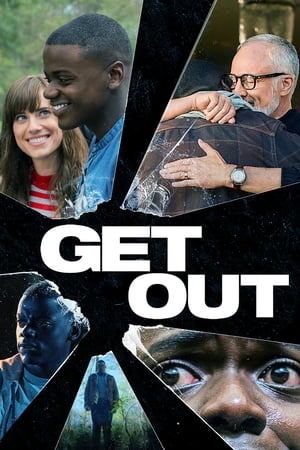
GET OUT(2017)
Written by: Jordan Peele
Draft date: Not specified.
Genre: Horror
Title: Get Out
Written by: Jordan Peele
Draft date: Not specified.
LOGLINE
A young Black photographer visits his white girlfriend's wealthy, isolated family estate for a weekend getaway, only to discover that the family's warmth conceals a horrifying conspiracy targeting Black people through hypnosis and a secret surgical procedure.
| Very Poor | Poor | Fair | Good | Excellent | |
|---|---|---|---|---|---|
| PREMISE | ✓ | ||||
| STRUCTURE | ✓ | ||||
| CHARACTER | ✓ | ||||
| CONFLICT | ✓ | ||||
| DIALOGUE | ✓ | ||||
| PACING | ✓ | ||||
| TONE | ✓ | ||||
| ORIGINALITY | ✓ | ||||
| LOGIC | ✓ | ||||
| CRAFT | ✓ |
| Strong Pass | Pass | Consider | Recommend | Strong Recommend | |
|---|---|---|---|---|---|
| Overall | ✓ |
Genre: Horror, Thriller
Sub-genre: Psychological Thriller, Social Horror
Keywords: Interracial Relationship, Suburban Horror, Hypnosis, Secret Society, African American Protagonist, Body Horror, Abduction, Conspiracy, Auction, Brain Surgery, Meet the Parents, Fish-Out-Of-Water, Race Relations, Suburban Setting, Isolation
MPA Rating: R (pervasive language including multiple uses of "fuck," violence including impalement, bludgeoning, and gunshot wounds, disturbing thematic content)
Budget Tier: Low ($1M–$10M) — single primary estate location, limited cast, minimal VFX beyond practical effects, contemporary setting
Pages: 100
Time Period: Present over approximately 4-5 days
Locations: Approximately 70% at a large isolated estate with multiple interior rooms (living room, kitchen, dining room, basement games room, operating room, bedrooms, office, gazebo, expansive lawn and lake) in upstate New York. 15% in Brooklyn (apartment, streets, police station, airport exterior). 10% suburban street (opening abduction scene) and rural roads. The estate requires a mansion with grounds, lake access, and wooded surroundings. A basement needs to accommodate a games room and operating room setup. One car crash scene on a wooded road. House fire in the climax.
Lead: Male, 26, Black, handsome and naturally athletic. Chris is a talented photographer with a quiet confidence, underlying vulnerability from childhood trauma (mother's death), and sharp observational instincts.
Comparables: The Stepford Wives (1975) for the suburban conspiracy replacing individuals' autonomy with compliant versions. Rosemary's Baby (1968) for the protagonist gradually realizing a tight social circle harbors sinister intentions while being gaslighted. Guess Who's Coming to Dinner (1967) for the interracial meet-the-parents framework, here subverted into horror.
SYNOPSIS
ANDRE (29), a Black man jogging through a suburban neighborhood at night, is stalked by a vintage Porsche with tinted windows. The driver, wearing a medieval knight's helmet, shoots Andre with a tranquilizer dart and loads his unconscious body into the trunk while a nearby white family eats dinner obliviously.
CHRIS WASHINGTON (26), a talented Black photographer, prepares to spend the weekend at the family estate of his white girlfriend ROSE ARMITAGE (28). Chris asks whether Rose has told her parents he's Black. She dismisses the concern, assuring him her father "would vote for Obama a third time." Chris calls his best friend ROD WILLIAMS (26), a TSA agent, to confirm Rod will watch his dog Sid. On the drive upstate, Rose hits a deer. When a police officer demands Chris's ID despite Rose being the driver, Rose aggressively shuts the officer down.
They arrive at the Armitage estate, an isolated mansion surrounded by forest and lake. Chris meets Rose's parents: DEAN ARMITAGE (59), an affable retired neurosurgeon, and MISSY ARMITAGE (56), a poised hypnotherapist. Chris notices the Black groundskeeper WALTER (35) and housekeeper GEORGINA (30) behave strangely — placid smiles, vacant eyes, robotic mannerisms. Dean preemptively explains they were hired to care for his late parents and became "part of the family." At dinner, Rose's brother JEREMY (29) arrives, intense and aggressive, interrogating Chris about his physical build and attempting to put him in a headlock before Dean intervenes.
That night, Chris sneaks out for a cigarette and encounters Walter sprinting across the yard in the dark. When he turns back, Georgina stares through the kitchen window. Missy catches Chris inside and lures him into a hypnosis session ostensibly to cure his smoking. She guides him back to the traumatic night his mother died — when eleven-year-old Chris sat watching TV instead of calling for help while his mother lay dying from a hit-and-run. Missy plunges Chris into "the Sunken Place," a dark abyss where he can see through his own eyes but cannot control his body. Chris wakes the next morning believing it was a dream, but discovers his cigarette now makes him nauseous.
The Armitages host an annual party of roughly thirty wealthy white guests and one Japanese man. The guests treat Chris with patronizing fascination — asking about the "African American experience," commenting on his physique, inquiring about sexual performance. Chris spots another Black guest and feels relief, but this man introduces himself as LOGAN KING — and Chris recognizes him as Andre from the opening scene, now speaking in a completely different voice and manner, submissive to his older white partner PHIL (65). Chris meets JIM HUDSON (57), a blind art dealer who genuinely admires Chris's photography and offers him a solo show.
When Chris photographs Andre/Logan, the camera flash triggers a violent episode. Andre's original personality surfaces briefly, grabbing Chris and screaming "GET OUT!" before being subdued. Dean explains it as a seizure. Chris tells Rose he wants to leave. She reveals she might be pregnant, and Chris, connecting it to his guilt over abandoning his dying mother, vows not to abandon Rose. She agrees to leave with him.
While they were at the lake, an auction took place at the party — Dean silently auctioned Chris to the gathered guests using hand signals. Jim Hudson won the bid. Chris discovers Rose's closet contains photographs of her with multiple Black men in romantic selfies, including one with Walter. Rose catches him looking, and Chris realizes she has been complicit all along. He tries to leave, but Dean launches into a deranged speech about immortality and sacrifice. Rose refuses to hand over the car keys. Missy clinks her teacup, triggering the hypnotic command, and Chris collapses. The family carries him to the basement.
Rod, unable to reach Chris, identifies Andre from the photo Chris sent, discovers Andre went missing months ago, and goes to the police. DETECTIVE LATOYA (50) and her colleagues laugh Rod out of the station. Rod calls Chris's phone and Rose answers, claiming Chris left days ago, then attempts to seduce Rod to discredit him. Rod hangs up, disturbed.
Chris wakes strapped to a chair in a basement games room, forced to watch a karaoke video of "You've Got a Friend" on repeat. Jim Hudson appears on the television and explains the Coagula procedure: a partial brain transplant in which Jim's consciousness will be placed into Chris's body, leaving Chris trapped in the Sunken Place as a permanent passenger. Jim wants Chris's "eye" — his artistic vision. Chris notices the chair's leather armrest is torn, exposing cotton stuffing, and stuffs cotton into his ears as makeshift earplugs.
When the hypnotic teacup sound plays to sedate him for surgery, Chris fakes unconsciousness. Rose enters to prepare him and discovers the earplugs, but Chris, with one arm already freed, strangles her until she goes limp. He escapes the chair, kills Jeremy with a badminton racket, impales Dean with a mounted deer head, scalds Missy with hot tea and bludgeons her. He takes Jeremy's car — the same Porsche from the opening — and flees, but hits Georgina on the road. Unable to leave her, he loads her into the car. Georgina revives, revealing an old surgical scar — she is Grandma Armitage in a new body. She attacks Chris, causing a crash that kills her.
Walter, revealed as Grandpa Armitage, pursues Chris at superhuman speed. Jeremy, still alive, directs Walter to kill Chris. Chris flashes his camera phone in Walter's face, triggering the same momentary lapse that freed Andre. Walter, briefly himself, shoots Jeremy, then turns the gun on himself. Chris beats the still-living Jeremy with the rifle butt as police arrive. The final scene finds Chris in a maximum-security prison, at peace, telling Rod he "stopped it." He walks back to his cell whistling "You've Got a Friend."
COMMENTS
PREMISE — Excellent
The central concept — a Black man discovering his white girlfriend's family abducts Black people and transplants white consciousnesses into their bodies — fuses the interracial meet-the-parents scenario with body horror in a way that generates inherent tension from the first scene. The premise transforms everyday social anxieties about race (microaggressions, tokenism, liberal overcompensation) into literal mechanisms of a horror plot, giving each uncomfortable party interaction a second layer of menace. Chris is uniquely vulnerable as the protagonist: his orphan backstory, his desire not to abandon those he loves, and his position as a racial outsider in an all-white space all conspire to keep him in danger longer than a less emotionally wounded character would stay. The Armitage family operates as a compelling institutional antagonist — the conspiracy is multi-generational, organized, and hidden behind progressive rhetoric. The premise's central dramatic question — will Chris recognize the trap and escape before the procedure — sustains the entire narrative. The thematic commentary on the commodification of Black bodies and the hollow performance of white allyship gives the horror genuine intellectual architecture, placing the material closer to Rosemary's Baby's paranoid domesticity than to standard slasher conventions.
STRUCTURE — Good
The opening abduction of Andre establishes the threat and the world's rules before a clean break into Chris's pre-existing life in Brooklyn, and the transition from urban comfort to rural isolation follows a clean geographic and tonal trajectory. The inciting incident — the decision to visit the Armitage estate — occurs early, and Chris crosses the threshold into the estate around page 17, which is proportionally appropriate for a 100-page work. The midpoint lands effectively with Andre/Logan's "GET OUT" outburst (63-64), which transforms Chris's vague unease into concrete alarm and shifts the narrative from social horror to active danger. The revelation of Rose's complicity and the shoebox of photographs (72-73) functions as the decisive break into the final movement, occurring around 72% of the page count. The auction sequence intercut with Chris and Rose at the lake (66-68) is structurally elegant, layering dramatic irony by showing the transaction Chris does not yet know has occurred. The climactic escape sequence beginning around page 92 maintains escalating threat through multiple antagonists. One structural concern is that Chris's imprisonment in the games room (79-91) extends across twelve pages with limited forward momentum — the exposition from Jim Hudson is necessary but delivered almost entirely through a monologue on a television screen, which creates a static stretch at the point where momentum should be accelerating.
CHARACTER — Good
Chris is a well-constructed protagonist whose backstory, want, weakness, and arc interlock cleanly. His childhood guilt over his mother's death (revealed in the hypnosis session, 38-42, and again at the lake, 68-69) is the precise emotional lever the Armitages exploit and the precise wound that keeps him from leaving when instinct tells him to. His active approach to his situation escalates believably — observation, then confrontation with Rose, then attempted departure, then violent self-rescue. His arc completes when he refuses to abandon Georgina on the road (95-96), choosing to act rather than watch passively as he did the night his mother died. Rose's character design is the ensemble's most layered achievement: the early scenes construct a convincingly loving partner, making her reveal as a willing conspirator (72-76) genuinely destabilizing. Dean, Missy, and Jeremy each serve distinct functions — Dean as the intellectual architect, Missy as the instrument of control, Jeremy as the physical threat — though Jeremy borders on one-note menace. Rod provides essential comic relief and serves as Chris's external lifeline, but his police-station scene (80-83) gives him an extended subplot that does not ultimately affect Chris's rescue, which slightly diminishes his structural utility. Walter and Georgina function effectively as walking evidence of the conspiracy's success, their eerie behavior generating sustained dread.
CONFLICT — Good
The central external conflict — Chris versus the Armitage family conspiracy — escalates in carefully measured stages, beginning with social discomfort and culminating in life-or-death physical combat. The internal conflict is equally well-defined: Chris's guilt over inaction during his mother's death wars against his growing instinct to flee. This internal battle is what the antagonists weaponize — Missy's hypnosis exploits his trauma (38-42), and Rose's possible pregnancy (67-68) triggers his fear of abandonment, keeping him on the estate past the point of safety. The scene-level conflict is consistently present: even ostensibly pleasant interactions like the party conversations (48-51) carry undercurrents of predation disguised as social awkwardness. The auction intercut (66-68) elevates stakes without Chris's knowledge, creating dramatic irony that intensifies the subsequent scenes. The physical conflict of the escape (92-98) delivers sustained, escalating confrontations with multiple family members in sequence. One area where conflict thins is during Chris's captivity in the games room, where the opposition is essentially a television and leather straps — the threat is abstract rather than active until Jim Hudson's monologue provides exposition.
DIALOGUE — Good
The dialogue achieves strong differentiation across the cast, with Rod's voice being the most distinctive — his paranoid riffs on Dahmer, sex slavery, and geriatric terrorism (58-60) are tonally precise and immediately identifiable. Chris speaks in a naturalistic register that shifts subtly between comfort with Rod and careful politeness with the Armitages, reflecting his social navigation. Dean's dialogue effectively captures the specific cadence of a liberal white father trying too hard — "My dad would legit vote for Obama a third time" through Rose (9), and his own "one down, a few hundred thousand to go" about the deer (20). The contrast between Andre's urban dialect in the opening ("This is some shit right here," 4) and his "Logan" voice ("My life as an African American has been, for the most part, very good," 62) is the single most effective use of dialogue as evidence of the conspiracy. Missy's hypnosis dialogue (37-42) uses precise sensory commands that double as genuinely unsettling manipulation. Dean's monologue about fire and immortality (74-76) is the one instance where dialogue becomes overwritten — the speech is lengthy, and its grandiosity, while intentionally unhinged, strains the scene's pacing.
PACING — Fair
The first forty pages establish character, setting, and unease at a measured tempo that rewards close attention — each interaction with Walter, Georgina, or the family adds a specific data point to Chris's growing suspicion. The party sequence (47-65) maintains momentum through rapid vignette-style encounters, each escalating the discomfort. The intercut auction (66-68) is the most propulsive stretch of the middle section, creating urgency through parallel action. However, the games-room captivity sequence (79-91) represents a pacing trough: Chris is immobilized, the "You've Got a Friend" repetition is acknowledged as torturous by the text itself, and Jim Hudson's expository monologue (87-91) conveys essential plot mechanics but does so in a format — a man on a TV screen lecturing — that limits visual and dramatic dynamism. The escape and chase (92-98) recover the pace sharply, stacking confrontations without pause. The prison epilogue (98-100) provides resolution but introduces a tonal shift that, depending on interpretation, either deepens or deflates the climax's catharsis.
TONE — Good
The tonal control through the first two-thirds is the material's most consistent achievement, maintaining a precise calibration between recognizable social comedy and creeping dread. The early Brooklyn scenes (6-13) establish warmth and humor that make the subsequent estate sequences feel progressively wrong by contrast. The party guests' comments about race — Tiger Woods, sexual performance, "what skin color is more culturally advantageous" (48-51) — inhabit an exact tonal register where the comedy of recognition coexists with the horror of objectification. Rod's scenes (58-60, 78-83) provide tonal relief without undercutting the threat. Dean's fire monologue (74-76) represents the most significant tonal risk — the shift from restrained menace to operatic villainy is abrupt, and his rhetoric ("We baptize ourselves in the firewater!") pushes toward camp in a way that sits uneasily alongside the grounded horror that precedes it. The prison ending (98-100) introduces a somber, resigned register that contrasts sharply with the visceral escape sequence, a deliberate choice that prioritizes thematic weight over cathartic release.
ORIGINALITY — Excellent
The core concept occupies genuinely uncharted territory at the intersection of social satire and body horror. While The Stepford Wives explored the replacement of autonomous individuals with compliant versions, and Invasion of the Body Snatchers depicted the horror of personality erasure, neither centered the racial dimension that defines this premise. The specific mechanism — liberal white families bidding on Black bodies at an auction disguised as a garden party — recontextualizes American racial history (slavery auctions, medical experimentation on Black bodies) within a contemporary horror framework in a way that has no direct cinematic precedent. The execution surprises consistently: Rose's complicity is concealed effectively because the early scenes (particularly the police encounter, 15-17) build genuine trust in her as an ally. The "Sunken Place" as a metaphorical and literal space of Black disempowerment (41-43) generates a visceral image that operates on both psychological and political registers. The auction conducted entirely through silent hand signals during a garden party (66-68) is an inventive set piece. The use of the camera flash as both weapon and liberation device (63, 97) ties Chris's identity as a photographer to his survival in a way that feels organically embedded rather than imposed.
LOGIC — Fair
The internal rules of hypnosis and brain transplantation are established clearly enough to function within the genre's conventions, and the material respects its own logic regarding the camera flash triggering "momentary lapses in motor function" — introduced through Andre's outburst (63) and paid off when Chris uses it against Walter/Grandpa (97). The cotton-earplug escape (91-92) is a satisfying solution that Chris's scratching of the chair arm sets up earlier. However, several points strain credibility. The police officer in the deer scene (15-17) drops his demand for Chris's ID with minimal resistance after Rose objects, which feels convenient given the officer's aggressive posture. The Armitage family leaves Chris's phone accessible on the dining room table (94), and Rose's closet full of incriminating photographs (72-73) represents a significant operational security failure for a conspiracy that has operated successfully for years. Jim Hudson's exposition (87-91) raises questions it does not fully address — the "blue part" and "red part" brain diagram is simplified to the point where it invites scrutiny rather than satisfaction, and the timeline of recovery ("a couple weeks") seems implausible for a brain surgery with no established fictional technology.
CRAFT — Good
The writing demonstrates confident visual storytelling throughout, with several sequences relying entirely on image and action to convey information — the silent auction (66-68), Walter's nighttime sprinting (35), and Georgina's reflection in the kitchen window (35-36) are all communicated without dialogue. Character introductions are effective: Dean is "the kind of guy who pronounces garbage, Gar-bahge" (18), which instantly communicates his personality. The "Sunken Place" sequence (41-43) uses the conceit of a screen-within-an-abyss to translate a subjective psychological state into a filmable image. The intercut structure during the auction and lakeside conversation is cleanly executed. Action description during the escape (92-98) is vivid and propulsive. Formatting is standard throughout. A few craft-level issues appear: the transition "TING TING... TING TING" is used effectively as a motif but recurs so frequently it risks losing impact. Several minor typos appear — "strait" for "straight" (42, 97), "loader" for "louder" (15), and incomplete sentences in scene description (18, "Rose parks in front of the house, and. He has a pleasant smile"). The writing style balances efficiency with atmospheric detail effectively, leaning toward visual economy rather than literary prose.
OVERALL — Recommend
Get Out is a social horror thriller about a young Black photographer who discovers his white girlfriend's affluent family runs a conspiracy to transplant white consciousnesses into abducted Black bodies. The strongest elements are the premise and its tonal execution — the material sustains an exact calibration between recognizable social discomfort and escalating horror for the majority of its pages, and the central metaphor of Black bodies being auctioned and colonized by wealthy white liberals gives the genre machinery genuine thematic force. Character work is strong, particularly in Chris's psychologically coherent arc and Rose's devastating reveal as a willing participant. The weakest stretch is the games-room captivity sequence, where pacing stalls during Jim Hudson's expository monologue and the protagonist's immobility drains momentum at a critical juncture. Dean's fire monologue introduces a register of grandiosity that sits awkwardly against the material's otherwise grounded tone. The prison ending is a bold choice that prioritizes thematic resonance — Chris "stopped it" but at the cost of his freedom — though it risks leaving the visceral satisfaction of the escape without adequate emotional resolution. The craft is assured throughout, with several sequences achieving elegant visual storytelling without dialogue. The material's most significant achievement is its originality: it occupies a genre space that, at the concept level, has no close predecessor.
Get this level of coverage for your screenplay
Every coverage includes 10 category ratings, an overall recommendation, and detailed analysis — powered by the same methodology used by talent agencies and literary managers.
Movie data provided by TMDB