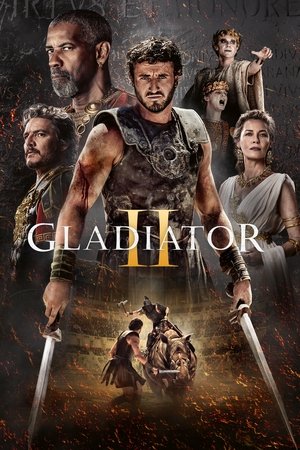
GLADIATOR II(2024)
Written by: David Scarpa (story by Peter Craig and David Scarpa)
Draft date: May 29, 2023 Shooting Draft / June 15, 2023 Revisions / Pink Shooting Script (June 17, 2024)
Genre: Action
Title: Gladiator TT
Written by: David Scarpa (story by Peter Craig and David Scarpa)
Draft date: May 29, 2023 Shooting Draft / June 15, 2023 Revisions / Pink Shooting Script (June 17, 2024)
LOGLINE
A Roman-born exile, raised among North African tribespeople, is enslaved after the fall of his adopted city and thrust into the gladiatorial arena, where he discovers that the mother who sent him away as a child is a prisoner of Rome's twin emperors — and that the path to her freedom, and Rome's, runs through the very sand where his father died.
| Very Poor | Poor | Fair | Good | Excellent | |
|---|---|---|---|---|---|
| PREMISE | ✓ | ||||
| STRUCTURE | ✓ | ||||
| CHARACTER | ✓ | ||||
| CONFLICT | ✓ | ||||
| DIALOGUE | ✓ | ||||
| PACING | ✓ | ||||
| TONE | ✓ | ||||
| ORIGINALITY | ✓ | ||||
| LOGIC | ✓ | ||||
| CRAFT | ✓ |
| Strong Pass | Pass | Consider | Recommend | Strong Recommend | |
|---|---|---|---|---|---|
| Overall | ✓ |
Genre: Action, Drama
Sub-genre: Historical Epic, Revenge Drama, Gladiator Film
Keywords: Ancient Rome, Gladiator, Revenge, Legacy, Sequel, Male Protagonist, Empire, Political Intrigue, Colosseum, Slavery, Arena Combat, Mother-Son Relationship, Forbidden Identity, Conspiracy, Naval Battle, Patricide, Republic vs. Tyranny
MPA Rating: R (pervasive brutal violence, warfare, animal attacks, execution, brief nudity, implied sexual content)
Budget Tier: Ultra High ($100M+) — massive ancient Rome sets including the Colosseum, large-scale naval and land battles, water-filled arena with sharks, extensive period costuming, large extras, CG animals (baboons, rhino, sharks), multiple elaborate action sequences, numerous locations across North Africa and Rome.
Pages: Approximately 152 pages (with revision inserts and omitted scenes)
Time Period: Approximately 200 AD (Roman Imperial era), spanning several weeks. Flashbacks to approximately 20 years earlier (aftermath of the first Gladiator).
Locations: 40% Colosseum and undercroft (Rome), 20% various Roman interiors (Imperial Palace, Lucilla's villa, Macrinus' estate, Thraex's mansion, Senate), 15% North African coastal city of Numidia (battle sequences, sea walls), 10% provincial arena and roads outside Rome, 10% Roman streets and outskirts, 5% desert/rural locations. Requires extensive period construction or CG augmentation for ancient Rome and Numidia, a functional water-filled arena, naval vessels, siege towers, and animal sequences.
Lead: Male, early 30s, mixed European heritage (Roman-born, raised in North Africa), athletic and battle-hardened, carries deep grief and rage beneath a controlled exterior, literate and strategic.
Comparables: Gladiator (2000) — direct sequel continuing the legacy narrative; Ben-Hur (2016/1959) — aristocrat stripped of identity, enslaved, returns for vengeance within Roman spectacle; The Count of Monte Cristo — hidden identity, long revenge arc, political maneuvering; Kingdom of Heaven — an outsider defending a besieged multicultural city against a dominant empire.
SYNOPSIS
In the North African coastal city of Numidia, LUCIUS (early 30s), known locally as Hanno or Mago, lives with his lover ARISHAT (late 20s), a skilled archer. Warning bells announce the arrival of a Roman fleet. Tribal leader JUGURTHA (50s) conducts sacred rituals to bless his warriors. Lucius and Arishat exchange rings on the battlements as they await the attack.
The Roman fleet, commanded by General ACACIUS (50), a battle-scarred veteran, launches a massive naval assault on Numidia's sea walls. Lucius leads a company of defenders while Arishat picks off Roman officers with her bow. When Acacius personally leads the charge across a siege tower, the Romans overwhelm the city. Lucius orders Arishat to fire on Acacius, but a Roman archer kills her with an arrow through the chest. Lucius is struck from behind and plunges into the sea. Underwater, he experiences a vision of a dark river where he sees Arishat boarding a boat that vanishes into mist. He washes ashore among the dead, finds Arishat's body, and is captured by Roman soldiers.
Acacius claims Numidia for Rome and conducts funeral rites for both sides' dead. Lucius is branded with the mark of Rome and shipped with other prisoners, including the wounded Jugurtha, aboard a galley. Jugurtha warns Lucius that what awaits him will test his soul. At a provincial arena, Lucius fights mandrill baboons, subduing the silverback through dominance rather than killing it. Watching from the stands, MACRINUS (50s), a wealthy, self-made Roman of African descent and arms dealer, purchases Lucius.
At Macrinus' estate, trainer VIGGO (60s), a former gladiator, tests Lucius in combat. Macrinus recognizes Lucius' rage and offers a bargain: obedience in exchange for the chance to kill Acacius. Lucius accepts. Macrinus takes Lucius to a lavish party at Senator THRAEX's mansion, where Lucius fights and kills a Goth gladiator before the twin Emperors CARACALLA (30s), syphilitic and erratic, and GETA (30s), calculating and cold. Lucius recites Virgil, shocking the Emperors and intriguing Macrinus, who begins to suspect Lucius is more than a barbarian. FORTUNA (early 20s), a young woman kept by Macrinus, takes an interest in Lucius.
Meanwhile, LUCILLA (50s), daughter of Marcus Aurelius and Lucius' mother, lives under house arrest with Acacius, who is now her husband. Acacius, disgusted by the Emperors' tyranny, conspires with Lucilla and Senators GRACCHUS (60s) and Thraex to overthrow Caracalla and Geta using his army, which waits at Ostia. The Emperors pressure Lucilla to adopt them as sons to legitimize their rule, which she refuses.
Macrinus brings his gladiators to Rome for the Colosseum games. Lucius enters the Colosseum undercroft and discovers a wall of legendary fights, including the chiseled-away name of his father beside "Commodus." In his first Colosseum fight, Lucius faces GLYCEO, a gladiator mounted on a white rhino. After a brutal contest, Lucius refuses the Emperor's mercy, then kills Glyceo, becoming a crowd sensation. During a naval battle reenactment in the water-filled arena, Lucius seizes a crossbow and fires at Acacius but misses, nearly hitting Lucilla. He watches Macrinus touch the Emperor's empty throne — revealing Macrinus' ambition for power.
Flashbacks reveal Lucius' childhood: witnessing Maximus' death in the arena, being sent away by Lucilla for his safety, fleeing Roman search parties through the desert. Lucilla discovers that the gladiator is her son after recognizing his gestures and the Virgil verse inscribed in his childhood room. She visits him in his cell, but Lucius rejects her bitterly, blaming her for abandoning him and connecting Acacius to Arishat's death. Lucilla tells him his father was Maximus.
Macrinus exploits Thraex's gambling debts to extract intelligence about Acacius' coup plot. When Acacius leads a nighttime extraction mission to rescue Lucius from the Colosseum, Macrinus and the Praetorians ambush them. Acacius, Lucilla, and Gracchus are captured. Macrinus advises Geta to let Acacius die publicly in the arena rather than by crucifixion.
Lucius is forced to fight Acacius in the Colosseum. Acacius surrenders, confessing his love for Lucilla and loyalty to Maximus' memory. Despite the Emperors' thumbs-down, Lucius refuses to kill him, but Geta orders archers to execute Acacius with a volley of arrows. Lucilla watches her husband die. Riots erupt in the streets.
Macrinus manipulates Caracalla into murdering Geta, then uses Geta's severed head to terrorize the Senate into granting him power as Second Consul — behind the monkey Dondus, whom the deranged Caracalla names First Consul. Lucilla and Lucius reconcile in a final prison visit. She gives him Marcus Aurelius' signet ring and they embrace. Lucius sends RAVI (40s), a freed gladiator turned doctor who has befriended him, to Ostia to summon Acacius' army under General DARIUS.
On the final day of games, Macrinus orders Lucilla's public execution. Lucius uses keys from Ravi to free the gladiators, kills Viggo, and dons Maximus' breastplate from the catacombs. He leads two hundred gladiators into the arena to defend Lucilla. As chaos erupts, Macrinus kills Caracalla with a stiletto, then shoots Lucilla with an arrow. She dies in Lucius' arms, telling him to remember who he is.
Lucius pursues Macrinus outside the Colosseum. They fight on horseback and then on foot beneath an ancient arch, crashing into a river. Lucius kills Macrinus by cutting off his arm and slashing his abdomen, watching him drift away in the current. Standing between the arriving armies — the Praetorians and Acacius' loyal troops — Lucius throws down his sword and calls for an end to tyranny, invoking Marcus Aurelius' dream of Rome as a republic. He returns to the empty Colosseum, kneels where his father died, and whispers prayers to his mother and father.
COMMENTS
PREMISE — Good
The premise operates as both sequel and standalone tragedy: a lost prince, stripped of identity by exile, must reclaim his heritage through the very institution — gladiatorial combat — that killed his father. The central dramatic question is compelling on multiple levels, asking whether Lucius can transcend the cycle of violence that defines Rome or whether he will become another instrument of it. The match between character and world is potent, placing a man who hates Rome inside Rome's most sacred theater of power. Macrinus provides an effective philosophical counterweight, embodying the argument that Rome's only truth is power, while Lucius carries his grandfather's dream of a republic — a tension that gives the material thematic weight beyond spectacle. The premise's greatest liability is its dependency on the first film's emotional infrastructure: Maximus' legacy, Lucilla's guilt, and the Colosseum's symbolic resonance are all inherited rather than generated fresh. Compared to the original Gladiator, which built its premise from a general's fall and rise, this material must work harder to justify Lucius as its center, since his identity is defined more by lineage than by personal decisions made before the narrative begins.
STRUCTURE — Fair
The architecture follows a clear trajectory — battle, enslavement, arena ascent, identity revelation, final confrontation — but the proportions are uneven. The Numidia battle and capture occupy roughly the first 15% (through page 15), establishing Lucius' world and its destruction efficiently. The inciting incident — Macrinus' purchase of Lucius and the bargain for Acacius' head (25-31) — lands at approximately 20%, which is functional. The midpoint, where Lucius refuses mercy and kills Glyceo (65-67), arrives slightly past the 40% mark and serves its purpose as a public declaration of defiance, though it could be stronger as a reversal. The most significant structural problem is the back half's density of plot machinery: Thraex's betrayal, the failed extraction, Acacius' arena death, the Geta assassination, Caracalla's descent, Lucilla's death, and the final duel with Macrinus all compress into roughly thirty pages (103-152), creating a cascade of climaxes that dilutes the impact of each. Acacius' death in the arena (110-112) functions as a false climax that is arguably more emotionally resonant than the actual climax with Macrinus, which is a structural imbalance. The flashback sequences (61-62, 64A) arrive around page 52-56, interrupting forward momentum at a point where the Lucius-Lucilla recognition thread needs acceleration, not retrospection.
CHARACTER — Fair
Lucius is defined primarily by loss — of Arishat, of homeland, of mother — and his arc moves from rage toward acceptance of his lineage, but the transformation lacks a decisive internal turning point. His refusal to kill Acacius (110) is the closest thing to a character-defining choice, yet it is undercut when Acacius dies by arrows moments later, denying Lucius the moral consequence of his decision. Macrinus is the most fully realized character: a former slave who has internalized Rome's philosophy of power, whose brand reveal (128-130) retroactively enriches every scene he has occupied. His manipulation of Caracalla (119-120) and Thraex (101-102) demonstrates a man who weaponizes others' weaknesses with surgical precision. Lucilla carries genuine emotional weight in her prison-visit scenes (96-98), but her agency is limited to pleading and witnessing. Acacius functions effectively as the man Lucius must learn not to hate, though his shift from antagonist to sacrificial hero happens primarily through exposition rather than scenes shared with Lucius. Fortuna (79-81) is intriguing as a character caught between autonomy and servitude, but her arc lacks resolution — her exit from Macrinus' box (141-142) is brave but thematically incomplete.
CONFLICT — Fair
The central external conflict — Lucius' survival in the arena and his desire to kill Acacius — is gradually subsumed by Macrinus' political machinations, which creates a productive but occasionally disorienting shift in antagonist focus. The internal conflict between Lucius' rage and his capacity for mercy surfaces most clearly in the Acacius fight (108-112), where he must choose between personal vengeance and the larger cause his mother represents. This is the material's strongest moment of unified internal and external conflict. However, the scene-level conflict diminishes in the middle stretch: the party at Thraex's mansion (37-48) and Macrinus' library encounters (29-31, 47-49) rely heavily on verbal sparring that, while well-crafted, lacks the physical or dramatic stakes of the arena sequences. The Lucius-Lucilla reunion (96-98) generates conflict through emotional rejection rather than action, which is appropriate, but the scene's formatting — with parenthetical stage directions embedded in dialogue — suggests it was still being worked out at this draft stage, softening its impact.
DIALOGUE — Good
The dialogue achieves effective differentiation among principals. Macrinus speaks in coiled, predatory sentences that reveal intelligence and menace simultaneously — "rage drips out of you like milk from a mother" (30), "I am a snake, Barbarian" (31). Lucius' Virgil recitation (46) serves as both character revelation and plot catalyst, and the line "What is the punishment for victory?" (67) becomes a genuine rallying cry. Caracalla's dialogue convincingly renders cognitive deterioration — his womb-logic argument about conception order (32) and his naming of Dondus as First Consul (126-127) are darkly comic while maintaining menace. The weakest dialogue belongs to the arena rally speeches: Lucius' final address to the armies (151-152) trades in generalities ("a city for the many and a home for those in need") that lack the specificity of his earlier, angrier declarations. Fortuna's dialogue is notable for its subtext — "Did I say or did I not? You must not talk" (80) — operating on multiple levels of manipulation and genuine attraction.
PACING — Poor
The opening battle sequence through Lucius' capture (2-15) moves with tremendous velocity, establishing stakes and world with economy. The provincial arena baboon fight (22-25) and Thraex party fight (42-44) maintain engagement through escalating spectacle. However, the middle stretch between the first Colosseum fight and the failed extraction — roughly pages 68-100 — sags under the weight of political setup scenes, flashbacks, and cell-visit conversations that, while individually effective, accumulate into a passage where the narrative engine idles. The naval battle (86-93) provides a kinetic centerpiece but arrives when the material needs plot advancement more than spectacle. The final act, conversely, is rushed: Macrinus' assassination of both emperors, Lucilla's death, and the Macrinus fight all occur within approximately twenty pages (122-152), leaving insufficient breathing room for the emotional weight each event demands. Lucilla's death in particular (146) happens so quickly after her reunion with Lucius that the loss registers more as plot mechanics than as earned devastation.
TONE — Fair
The tone maintains a consistent register of grandeur and brutality appropriate to the historical epic genre, with the Emperors' scenes providing welcome dark comedy — Caracalla's relationship with Dondus (119-120, 126-127, 132-134) threads absurdist humor through genuine political horror. The baboon fight (23-25) and rhino fight (63-64) risk tipping into spectacle-for-spectacle's-sake, but both are grounded by Lucius' tactical intelligence. The most tonally uncertain passage is the Fortuna-Lucius cell scene (79-81), which oscillates between seduction, espionage, and genuine vulnerability in a way that never quite settles — the line "I confess I like the beast" (81) plays as genre-romance dialogue in a scene that wants to be something more psychologically complex. The vision sequence on the volcanic beach (12-13) introduces a metaphysical register that is never fully integrated — Lucius' dream of the dark river recurs (106) but remains more thematic decoration than structural architecture.
ORIGINALITY — Fair
As a sequel to Gladiator (2000), the material necessarily operates within that film's shadow, and its most original contribution is the inversion of perspective: where Maximus was a Roman general fighting to restore Rome from within, Lucius is a colonized subject fighting against Rome's very identity. This anti-imperial framing — Lucius' speech about Rome as "the enslaver, the destroyer" (7) — is a meaningful departure from the original's more nostalgic relationship to Roman civilization. Macrinus as antagonist offers genuine freshness compared to Commodus: a self-made former slave who has mastered Rome's systems rather than a petulant heir who inherited them, closer in conception to the political operators of House of Cards than to conventional gladiatorial villains. However, the arena-spectacle escalation (baboons, rhino, sharks, naval battle) follows a Ben-Hur/Gladiator template of "bigger and wilder," and the hidden-prince narrative echoes The Count of Monte Cristo and The Man in the Iron Mask without significantly subverting those structures. The monkey-as-consul beat is genuinely audacious and historically resonant (echoing Caligula's horse), providing a satirical edge that distinguishes this material from straight-faced epics.
LOGIC — Poor
The material's most significant logic strain is the mechanics of Lucius' identity concealment. He grew up in Rome, was personally known to Lucilla, Acacius, and the political class, yet moves through Roman society — including performing before the Emperors at Thraex's party (42-47) and fighting in the Colosseum with Lucilla present (60-67) — without being recognized until Lucilla chooses to investigate. The twenty-year gap and his weathered appearance provide some cover, but the ease with which he operates undetected strains credibility, particularly given that Macrinus begins suspecting his identity relatively early (79). The failed extraction (103-104) depends on Thraex's betrayal, which is adequately motivated by his gambling debts (101-102), but the Praetorians' ability to assemble a hundred soldiers in the Colosseum tunnels without Acacius' elite unit detecting them is a convenience the narrative does not address. Macrinus' ability to single-handedly saw off Geta's head while physically puppeteering the frail Caracalla (122-123) pushes the bounds of physical plausibility even within the genre's heightened register. The shark-in-arena sequence (89-91) is historically attested but logistically extraordinary — the mechanism for filling the Colosseum with water and introducing live sharks is presented without explanation, which is appropriate for spectacle but notable as a logic gap.
CRAFT — Fair
The writing operates in a muscular, action-forward register that conveys scale and violence with clarity — the Numidia battle sequence (5-14) is a model of spatial orientation across multiple simultaneous engagements. Character introductions are strong for principals: Macrinus' entrance ("he radiates the confidence and èlan of a self-made man," 22) and Lucilla's ("still a great beauty after twenty years under house arrest," 21) efficiently communicate status and history. However, the draft's shooting-script nature creates significant readability issues: embedded stage directions, revision asterisks, parenthetical notes to the director ("N.B. As much as we can keep the momentum here the better," 149), and alternative dialogue options (97-98) clutter the reading experience and make it difficult to assess certain scenes as finished dramatic writing. The formatting inconsistencies — scene numbers that skip, "OMITTED" placeholders, and production-specific annotations — are standard for a pink shooting script but worth noting as they affect coverage. Action description occasionally over-directs ("we HOLD on his face," "we see") rather than trusting the prose to convey the image, though this is a minor stylistic preference.
OVERALL — Consider
Gladiator TT is a historical epic sequel that follows the enslaved son of Maximus as he fights through Rome's gladiatorial system to reclaim his heritage and challenge a former slave turned political mastermind for the soul of the Empire. The material's greatest strengths are its antagonist — Macrinus is a genuinely compelling villain whose ideology of power-as-truth provides meaningful philosophical opposition — and its action set pieces, which escalate inventively through the arena sequences. The weakest elements are structural: the back half compresses too many climactic events into too few pages, causing Lucilla's death and the Macrinus confrontation to land with less force than the Acacius arena sequence that precedes them, and the middle stretch sags under the weight of political maneuvering that, while necessary, slows momentum. Lucius himself is the material's central vulnerability — defined more by what has been done to him than by choices he makes, he risks becoming a vessel for legacy rather than a protagonist in his own right. The draft's shooting-script format, with its revision annotations and embedded directorial notes, makes definitive assessment of certain scenes difficult, but the fundamental architecture of an ambitious, thematically engaged sequel is visible throughout.
Get this level of coverage for your screenplay
Every coverage includes 10 category ratings, an overall recommendation, and detailed analysis — powered by the same methodology used by talent agencies and literary managers.
Movie data provided by TMDB