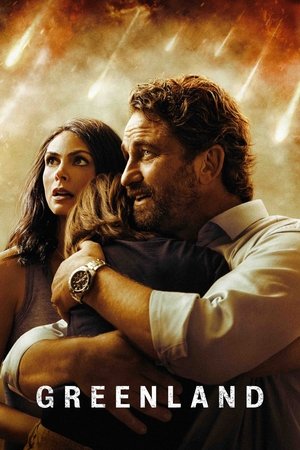
GREENLAND(2020)
Written by: Chris Sparling
Draft date: January 25, 2017
Genre: Action
Title: Greenland
Written by: Chris Sparling
Draft date: 01.25.17
LOGLINE
When a government announcement reveals a planet-killing asteroid will strike Earth in four days, a middle-class structural engineer trying to reconcile with his estranged wife is selected with his family for evacuation to an underground bunker — but their diabetic seven-year-old son is rejected at the checkpoint, splitting the family apart in a desperate race across a collapsing Eastern Seaboard to reunite and survive.
| Very Poor | Poor | Fair | Good | Excellent | |
|---|---|---|---|---|---|
| PREMISE | ✓ | ||||
| STRUCTURE | ✓ | ||||
| CHARACTER | ✓ | ||||
| CONFLICT | ✓ | ||||
| DIALOGUE | ✓ | ||||
| PACING | ✓ | ||||
| TONE | ✓ | ||||
| ORIGINALITY | ✓ | ||||
| LOGIC | ✓ | ||||
| CRAFT | ✓ |
| Strong Pass | Pass | Consider | Recommend | Strong Recommend | |
|---|---|---|---|---|---|
| Overall | ✓ |
Genre: Thriller, Drama
Sub-genre: Disaster Thriller, Survival Drama, Family Drama
Keywords: Asteroid, Apocalypse, Family, Reunion, Survival, Separation, Chronic Illness, Diabetes, Military, Evacuation, Road Trip, East Coast, Estranged Marriage, Father-Son, Mother-Son, Moral Dilemma, Countdown, End of the World
MPA Rating: R (pervasive intense peril, several gunshot deaths including a mercy killing, strong language throughout, disturbing images)
Budget Tier: High ($40M–$100M) — multiple cities (Philadelphia, Boston, Portland ME, Brunswick ME, Wilmington DE, Greenland), large crowd sequences at seaports and airports, military vehicles and helicopters, capsizing sailboat sequence, car crashes, earthquake destruction, asteroid VFX, cruise ships, commercial aircraft, underground bunker set
Pages: 117
Time Period: Present over approximately 5 days
Locations: ~15% suburban Philadelphia home and neighborhood. ~25% Boston streets, seaport, and cruise ship interior. ~20% various roads and highways across New England. ~10% Portland ME shipyard and docks (including capsizing sailboat on water). ~10% rural Brunswick ME home and underground shelter. ~15% Wilmington DE airport interior and tarmac. ~5% Greenland military installation and underground bunker. Requires military vehicles, crowd scenes numbering in the thousands, multiple vehicle crashes, a capsizing sailboat, a destroyed house under a fallen tree, and a massive underground bunker set.
Lead: Male, 38, white, handsome and inscrutable; an aviation insurance professional estranged from his wife after an affair, carrying quiet guilt and a desire to reconnect with his son.
Comparables: Deep Impact (1998) — asteroid extinction event filtered through personal family drama and government lottery for survival. The Impossible (2012) — family separated during a natural disaster, parallel survival journeys toward reunion. War of the Worlds (2005) — flawed father protecting his child through apocalyptic chaos while society collapses around them. The Road (2009) — parent-child survival journey through a dying world with emotional intimacy at its center.
SYNOPSIS
JOHN GARRITY (38), a handsome but emotionally guarded aviation insurance professional, drives home through Philadelphia traffic, passing military vehicles. He arrives at his suburban home with suitcases, apparently moving back in. His wife ALLISON GARRITY (36), world-weary and resentful, makes clear this is a trial reunion — for the sake of their son, not for John. Their son NATHAN GARRITY (7), a shy boy who manages Type 1 diabetes with an insulin pump, arrives home from the school bus with neighbor ELLIE FITZPATRICK (9). Nathan is cautious around his father but eventually hugs him, breaking down in tears. That night, John witnesses dozens of dogs fleeing down the street in apparent terror.
The next morning, the Internet is down, military helicopters fill the sky, and Nathan's school bus never arrives. A W.E.A. alert orders all citizens to tune in to an AM radio broadcast. The neighborhood gathers at the Fitzpatrick home, where KENNY FITZPATRICK (40) tunes in. A FEMA OFFICIAL announces that a nine-mile-wide asteroid will strike Earth in four days, destroying the planet. Underground bunkers have been constructed, and a lottery has selected citizens for relocation.
That evening, soldiers arrive at the Garrity home with a red duffel bag, electronic ID bracelets, and instructions: they have been selected. Ship 33-A departs Boston Harbor at 8 AM. Neighbors — including Kenny, his wife DEBRA FITZPATRICK (39), and ED PRUITT (56) — realize what is happening and surround the house. The Garritys flee through their garage as neighbors bang on the windows and beg them to take Ellie. Despite Nathan's pleas, Allison closes the door.
They drive through the night to Boston, abandon their car in gridlock, and reach the seaport on foot. At the cruise ship checkpoint, John is separated into a different line from Allison and Nathan. John boards. But a soldier discovers Nathan's insulin pump, and a MAJOR BREEN (50) informs Allison that anyone with a chronic medical condition cannot board — Nathan's selection was an oversight. Allison refuses to board without her son. Meanwhile, John searches the ship frantically and eventually convinces the STAFF SERGEANT to let him off. He finds Allison's note on a construction wall: she has Nathan and is heading to her father's in Brunswick, Maine.
Allison and Nathan hitch a ride with RALPH VENTO (56) and JUDY VENTO (54), who are heading to Portland, where more ships are departing. On the road, Nathan's blood sugar climbs dangerously and his insulin pump is nearly empty. When Judy realizes Allison and Nathan have ID bracelets, she and Ralph pull over, violently drag Allison from the car, steal her bracelet, and drive off with Nathan. Allison is left on the roadside, bloodied.
John, meanwhile, rides in the cargo area of a Maine-bound pickup truck with COLIN (young man), to whom he gives his ID bracelet. John exits near Brunswick. Allison gets a ride to Portland with a Mexican family. At the Portland shipyard, Ralph and Judy attempt to board with Nathan using the stolen bracelet, but soldiers detect the fraud and arrest them, leaving Nathan alone. Nathan, his insulin depleted, is taken aboard a small sailboat by a YOUNG WOMAN and her HUSBAND. The overloaded boat capsizes. Allison arrives, spots Nathan trapped under the sail, leaps into the water, and pulls him free.
John reaches the rural Brunswick home of Allison's father, DALE CLARK (65), a cantankerous prepper. Dale and John exchange bitter words about John's affair and Dale's own history of domestic violence. Allison arrives with an ailing Nathan. Dale provides insulin from his own diabetic supply and syringes. That night, a massive shockwave — caused by an asteroid fragment striking Tunisia — topples a tree onto Dale's house and partially collapses his underground shelter, impaling Dale on torn metal. Dale asks John to shoot him. After agonizing hesitation and Dale's screaming, Allison yells for John to do it. He does.
The family buries Dale at dawn. Driving south in Dale's truck, they hear a BBC report about the fragment strike and then see nearly a hundred commercial airliners filling the sky — the military has reopened airspace, taking anyone who can reach a plane. John encounters Kenny Fitzpatrick among refugees on the highway and loads people into the truck. They race to Wilmington Airport. In line at the gate, John notices Nathan is going low and realizes Allison has only a month's supply of insulin. He spots the Downeast Construction truck outside and knows the duffel bag with Nathan's full supply may be inside. He tells his family goodbye — knowing he cannot return to the line — confesses to Nathan that he, not Allison, chose to leave the family, and runs to find the bag.
He recovers the duffel bag but returns to find the gate closed and Allison and Nathan boarding the last plane on the tarmac. He smashes a window, tries to push the bag through, but soldiers drag him away. Allison boards without seeing him. The plane departs. John stands at the broken window — then notices a commotion at a nearby gate.
The plane lands at Thule Air Base in Greenland. Allison and Nathan are bused to an enormous underground bunker. A countdown clock reaches its final minutes. Nathan spots John in the bunker — he made it on another plane with the duffel bag. The family reunites. As they assume crash positions, a montage of family memories flashes — Nathan's birth, sprinklers, carousels, kites, birthdays — accelerating until the screen cuts to black.
COMMENTS
PREMISE — Good
The premise marries an extinction-level disaster scenario with a raw domestic drama about a family fractured by infidelity, generating an engine that is both externally urgent and emotionally grounded. John's affair and departure — the reason Nathan resents Allison and the reason Allison cannot trust John — become the emotional stakes that mirror the physical stakes of the asteroid. Nathan's Type 1 diabetes provides a brilliantly specific complication: it is the reason he is rejected from the ship, the reason the family is separated, and the ticking clock within the ticking clock. The premise compares most directly to Deep Impact, but distinguishes itself by centering the survival lottery's human cost on a single family rather than distributing focus across government and astronaut narratives. The central dramatic question — can this broken family survive together — is compelling precisely because "together" is both the logistical and emotional challenge. The one limitation of the concept is that the underground bunker endgame is somewhat abstract as a destination; the material derives most of its power not from where they are going but from what they must endure to get there.
STRUCTURE — Good
The architecture is efficient and well-proportioned. The pre-existing life and marital tension occupy roughly the first twelve pages before the FEMA broadcast serves as a clear inciting incident (19). The military selection at the Garrity doorstep (24) functions as the break into the central conflict, and the family's separation at the Boston checkpoint (36-44) locks in the dual-protagonist structure that drives the middle. The midpoint arrives with Allison's violent separation from Nathan by the Ventos (61), which radically escalates the stakes and sends both parents on divergent rescue missions. Dale's mercy killing (94-95) serves as the emotional nadir, and the Wilmington airport sequence (103-112) provides a sustained, well-escalated climax with John's sacrifice of his seat. The final reunion in the bunker (116) resolves both the external and internal throughlines simultaneously. Structural causality is strong throughout: Nathan's insulin pump causes the ship rejection, which causes the road journey, which causes the Vento theft, which causes the Portland near-drowning. One structural concern is the handling of John's transfer from Portland-bound truck to Brunswick — the logistics of how he then reaches Wilmington Airport and boards a separate plane are compressed into implication rather than dramatized, which slightly undermines the plausibility of the reunion.
CHARACTER — Good
John is the most fully developed character, possessing a clear backstory (affair, departure from home), a defined want (reunion with family), an internal need (to accept responsibility and prove himself worthy of trust), and a completed arc culminating in his confession to Nathan that he — not Allison — chose to leave (107). His decision to sacrifice his seat on the plane for the insulin bag is the ultimate expression of a man who once abandoned his family now refusing to do so again. Allison is nearly as well-drawn: her refusal to pretend things are fine (4), her fierce maternal instincts at the CVS and in the Portland harbor, and her quiet devastation when revealing that she let Nathan blame her for the separation (84-85) all create a dimensional portrait. Nathan functions effectively as the emotional catalyst but necessarily remains more reactive than active given his age and illness. Dale is vividly realized in a compressed space — his prepper mentality, his "Don't Tread On Me" flag, his acknowledgment of past domestic violence, and his request for a mercy killing form a complete character in approximately fifteen pages (77-95). The weakest character work is the Ventos, whose turn from sympathetic strangers to violent bracelet thieves (60-62) is telegraphed through Judy's dialogue but still feels like a plot mechanism rather than a fully motivated human choice.
CONFLICT — Good
The central external conflict — getting the family to safety before the asteroid strikes — is layered with increasingly specific obstacles that prevent the material from becoming a single sustained chase. The ship rejection, the Vento kidnapping, Nathan's depleting insulin, the fragment shockwave, and the airport's dwindling planes each represent a distinct escalation. The internal conflict is equally well-defined: John must earn the right to be part of this family again, and every external crisis forces a test of that worthiness. The scene where John gives away his bracelet to Colin (66) is a quiet but pivotal moment where the internal and external conflicts merge — he chooses family over self-preservation. At the scene level, conflict is consistently present: the garage escape with neighbors swarming the car (29-30), the CVS gunfight (48-49), the capsizing sailboat (74-76), and the airport window-smashing sequence (111-112) all deliver visceral tension. The one area where conflict slightly diminishes is during the road sequences between major set pieces, where the characters are largely in transit and the tension depends on radio broadcasts rather than active opposition.
DIALOGUE — Good
The dialogue is naturalistic, purposeful, and largely free of exposition that announces itself. The marital exchanges between John and Allison are particularly effective because they communicate years of resentment through specificity rather than generalization — "He worships you. It would have crushed him. And he would have hated you for it. So I let him hate me instead" (85) is devastating precisely because it is concrete. Nathan's voice is convincingly childlike without being precocious, as when he suggests that life should flash before your eyes when you live rather than when you die (7). Dale's voice is distinctly blue-collar and cantankerous — "You ain't gonna leave me suffering, you son of a bitch" (94) — and his shift from insult to genuine tenderness feels earned. Colin's brief exchanges with John (62-66) efficiently establish character and provide levity ("I'm trying to be funny 'cause I'm scared as shit"). The Vento dialogue, however, is where the writing strains: Judy's extended hypothetical about grandparents and soldiers (60) telegraphs the twist so transparently that it undermines the scene's intended surprise. The radio callers and broadcasts (54-55, 78, 97) serve as effective worldbuilding exposition, though they occasionally carry heavy informational loads.
PACING — Good
The pacing is aggressive and well-modulated, with quieter character moments strategically placed between action sequences. The opening twelve pages of domestic tension are brisk enough to avoid feeling like throat-clearing, and the FEMA broadcast (19) arrives before patience thins. The Boston seaport sequence (31-44) sustains tension through continuous forward motion and the escalating separation between John and his family. The mid-section road sequences — John in the pickup truck, Allison in the Vento car — represent the material's lowest energy, though the radio broadcasts and insulin crisis provide sufficient undercurrent. The Portland sailboat capsizing (74-76) is perhaps slightly rushed; the sequence moves from boarding to capsizing to rescue in three pages, which compresses what could be a more harrowing set piece. The Wilmington airport climax (103-112) is the best-paced sequence, building from arrival through the line to John's sacrifice with escalating urgency. The memory montage at the end (116-117) risks tipping into sentimentality given its length, but the cut to black prevents it from overstaying.
TONE — Good
The tone maintains a consistent register of grounded domestic realism set against escalating apocalyptic chaos, and the two elements reinforce rather than undermine each other throughout. The material resists the bombast typical of disaster films by keeping the camera, so to speak, at ground level — the asteroid is not seen until the final pages (115), and destruction is experienced through its human consequences rather than spectacle. The Dale mercy-killing sequence (89-95) is the tonal high-wire act, and it succeeds because the scene is prepared by Dale's earlier characterization as simultaneously abrasive and deeply human. The right-wing talk radio host (78) provides a touch of dark humor that grounds the world without breaking tone. The one tonal risk is the memory montage (116-117), which shifts from the visceral present-tense survival mode into a lyrical, sentimental register. Whether this works depends on execution, but on the page, the detailed shot list (sparklers, bike-riding, Christmas ornaments) verges on the generic rather than the specific, which slightly dilutes the emotional precision the rest of the material has earned.
ORIGINALITY — Fair
The asteroid-impact disaster premise has well-established cinematic precedent in Deep Impact and Armageddon, and the government-lottery-for-survival concept echoes both Deep Impact's ark and the broader genre of survivalist fiction. The execution, however, distinguishes itself meaningfully from these predecessors by making the insulin pump — a small, specific medical device — the fulcrum on which the entire plot turns. No comparable disaster film has used a chronic childhood illness as both the mechanism of family separation and the emotional throughline in this way. The Vento bracelet-theft sequence, while somewhat telegraphed, is a genuinely dark turn that most studio disaster films would avoid. The decision to have John give away his bracelet to a stranger and then later sacrifice his plane seat for insulin represents a moral calculus specific to this material rather than borrowed from the genre. The mercy killing of Dale is another beat that positions the material closer to The Road than to Deep Impact in its willingness to confront ugliness. Where originality is weakest is in the macro structure — the separated-family-reunites-against-the-clock template is familiar from The Impossible and War of the Worlds — but the specific obstacles are fresh enough to sustain engagement.
LOGIC — Fair
The internal logic is mostly sound but contains several points that strain plausibility. The most significant: John is let off the cruise ship in Boston (45), then somehow reaches Allison's father in Brunswick, Maine, then drives south to Wilmington, Delaware, and boards a separate plane — all within what appears to be roughly 36-48 hours during societal collapse. The logistics of this final leg are never shown; the material cuts from the bunker reunion directly. How John reached Wilmington Airport after the pickup truck left him on the roadside near Brunswick (70-71) is unclear — Dale's Chevy Silverado was taken by Allison. The pre-screening system that somehow missed Nathan's diabetes diagnosis (40) is acknowledged as an "oversight," which is a functional but convenient plot device. The Ventos' plan to use a duct-taped, stolen bracelet bearing another person's photo (69) is correctly shown failing, which maintains logical consistency. The fragment strike causing an earthquake in Maine (86) is scientifically questionable for a Tunisian impact, though the BBC report's framing provides some cover. Nathan's blood sugar fluctuations are handled with notable medical specificity and consistency throughout, which lends credibility to the insulin-supply tension.
CRAFT — Good
The writing is clean, efficient, and visually minded, with a strong instinct for using physical details to convey emotional states. The marker stain on John's hand (8), which recurs when he reflects in the truck (64), is a subtle motif that demonstrates craft beyond plot mechanics. Character introductions are effective — Dale is conveyed through his environment (the "Don't Tread On Me" flag, the canned goods, the cane) before he speaks a word (78). Action description is economical and cinematic: "Dozens of legs become visible as the door slowly rises" (29) is a single image that communicates the approaching threat without over-describing it. The intercutting between John on the ship and Allison in the FEMA trailer (37-44) is handled with precise parallel structure. Formatting is professional throughout, with minor errors — "Martial Law" is written as "Marshall Law" (20), "Alison" appears without the second 'l' on page 10, and "Fizpatrick" appears on page 17. The radio broadcasts occasionally carry exposition that the visual storytelling elsewhere avoids, but they serve the practical purpose of worldbuilding in a narrative that stays close to its protagonists. The montage ending (116-117) is the one section where the writing becomes more prescriptive than evocative, listing specific shots rather than trusting the emotional throughline to guide execution.
OVERALL — Recommend
Greenland is a grounded disaster thriller about a fractured family fighting to reunite and survive as an extinction-level asteroid approaches Earth. Its greatest strength is the integration of domestic drama and survival action: John's affair, Allison's resentment, and Nathan's diabetes are not backstory decoration but active plot engines that generate the material's most consequential turning points. The character work, particularly in the Allison-John dynamic and the compressed but potent Dale sequence, operates at a level of emotional specificity that elevates the material above genre convention. Structure and pacing are the most consistently strong categories — the escalating obstacles maintain propulsive momentum across 117 pages. The primary weaknesses are logical: John's journey from Maine back to Delaware is insufficiently accounted for, and several coincidences (the Downeast truck appearing at Wilmington, Colin ending up on Allison's plane) ask for considerable goodwill. The Vento subplot, while thematically resonant in its depiction of desperation corrupting ordinary people, telegraphs its reversal through dialogue. The memory montage ending risks generic sentimentality where the rest of the material has been pointedly specific. These are meaningful but not fatal issues in a draft that demonstrates a confident command of parallel-narrative thriller construction and a genuine emotional core.
Get this level of coverage for your screenplay
Every coverage includes 10 category ratings, an overall recommendation, and detailed analysis — powered by the same methodology used by talent agencies and literary managers.
Movie data provided by TMDB