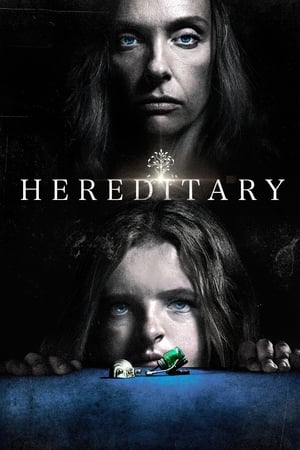
HEREDITARY(2018)
Written by: Ari Aster
Draft date: November 30, 2016
Genre: Horror
Title: Hereditary
Written by: Ari Aster
Draft date: 11-30-2016
LOGLINE
After burying her secretive, domineering mother, a middle-aged miniature artist and her fractured family are drawn into an escalating chain of grief, guilt, and increasingly inexplicable horrors when a devastating accident kills the youngest child and a seemingly benevolent stranger reveals a connection to the occult that threatens to consume them all.
| Very Poor | Poor | Fair | Good | Excellent | |
|---|---|---|---|---|---|
| PREMISE | ✓ | ||||
| STRUCTURE | ✓ | ||||
| CHARACTER | ✓ | ||||
| CONFLICT | ✓ | ||||
| DIALOGUE | ✓ | ||||
| PACING | ✓ | ||||
| TONE | ✓ | ||||
| ORIGINALITY | ✓ | ||||
| LOGIC | ✓ | ||||
| CRAFT | ✓ |
| Strong Pass | Pass | Consider | Recommend | Strong Recommend | |
|---|---|---|---|---|---|
| Overall | ✓ |
Genre: Horror, Drama
Sub-genre: Supernatural Horror, Family Drama, Psychological Horror
Keywords: Family, Grief, Occult, Cult, Female Protagonist, Possession, Miniatures, Artist, Dysfunctional Family, Bereavement, Supernatural, Domestic Setting, Demonic, Secrets, Inherited Trauma, Mental Illness
MPA Rating: R (sustained disturbing imagery, graphic violence including decapitation, strong language, drug use by a minor, frightening sequences throughout)
Budget Tier: Medium ($10M–$40M): Single primary house location with extensive interior sets, treehouse, miniature workshop and detailed miniature props, some VFX for floating/supernatural sequences, moderate cast, winter/snow conditions, practical effects for fire and gore.
Pages: 119
Time Period: Present over approximately 2–3 months.
Locations: 70% in and around a large craftsman-style house in a snowy, wooded rural area (requires workshop filled with elaborate miniature dioramas, treehouse attached to a large oak, attic). 10% at a high school (classrooms, hallways, bleachers, cafeteria). 5% at a Catholic school gymnasium (support group). 5% at an urban apartment building (Joan's apartment). Remaining 10% split among a funeral home, cemetery, party house, highway at night (requires a telephone pole for a collision stunt), art supply store, and psychiatrist's office. Snow conditions required throughout. A burning corpse, a decapitated head covered in ants, and multiple scenes of fire are notable practical requirements.
Lead: Female, approximately 45, white, worn beauty — Annie Graham is a miniature artist and mother of two, compulsively creative, emotionally volatile, carrying deep guilt and unresolved trauma from a family history of mental illness, estrangement, and manipulation.
Comparables: Rosemary's Baby (1968) — domestic horror driven by conspiratorial manipulation of a woman within her own family and home; The Babadook (2014) — grief-fueled horror centered on a mother-child relationship under supernatural siege; The Exorcist (1973) — demonic possession within a family unit, escalating dread, loss of bodily autonomy; Don't Look Now (1973) — parental grief spiraling into the supernatural with an atmosphere of creeping inevitability.
SYNOPSIS
ANNIE GRAHAM (45), a miniature artist, is preparing to bury her mother, ELLEN LEIGH (75). Annie's husband STEVE GRAHAM (47), a psychiatrist, wakes their son PETER (17) and retrieves their daughter CHARLIE (14) — a plump, androgynous girl with a tongue-clicking tic — from the family treehouse, where she slept overnight in the cold. At the funeral, Annie delivers an ambivalent eulogy revealing her mother was intensely secretive, manipulative, and afflicted with dissociative identity disorder. A woman covertly streaks oil on Ellen's lips in the casket. Charlie catches a MIDDLE-AGED BLONDE MAN staring sentimentally at her.
At home, Annie works in her workshop among elaborate dollhouse miniatures, including a precise replica of the Graham house. She opens boxes of her mother's belongings, finding books on spiritualism. In the dark workshop, Annie glimpses her dead mother's apparition smiling at her from a corner — then it vanishes. Annie confides to Steve only that she "scared herself." Meanwhile, Charlie collects severed animal heads in a shoebox and carves the word "Satony" into her bedroom wall. Peter attends English class, where a discussion of Sophocles centers on fate versus free will, and develops a crush on classmate BRIDGET (17).
Annie attends a grief support group, where she reveals her family's devastating history: her father starved himself from psychotic depression, her schizophrenic brother hanged himself accusing their mother of "putting people inside of him," and Annie sleepwalked two years ago, nearly setting Peter and Charlie on fire with paint thinner. Annie forces Charlie to attend a party with Peter. At the party, Peter leaves Charlie alone to smoke marijuana with Bridget. Charlie eats chocolate cake containing walnuts, triggering a severe allergic reaction. Peter rushes her to the hospital, speeding down a dark highway. Charlie, gasping for air, sticks her head out the window. Peter swerves to avoid a deer carcass, and Charlie's head collides with a telephone pole, decapitating her.
Peter drives home in shock, leaves Charlie's headless body in the car, and goes to bed without a word. The next morning, Annie discovers the body and lets out an inhuman scream. The family buries Charlie. At the wake, Peter hides in the bathroom, replaying Annie's voicemail asking him to keep Charlie safe. Steve weeps over Charlie's drawing pad. Annie begins sleeping in Charlie's treehouse.
Weeks pass. Annie meets JOAN (late 60s) in the parking lot of the support group. Joan lost her son and grandson to drowning. They develop a friendship. Annie confides the full circumstances of Charlie's death and the sleepwalking incident to Joan. Peter suffers a panic attack while smoking marijuana, echoing Charlie's symptoms. Annie finds her mother was friends with Joan — discovering photos of them together wearing matching sigil necklaces — but Joan never mentioned knowing Ellen.
At a tense family dinner, Annie explodes at Peter, blaming him for Charlie's death. Peter fires back that Annie forced Charlie to attend the party. Steve mediates but the damage is done. Annie destroys all her miniatures in a rage except the Graham house replica. Steve calls psychiatrist colleague DR. STETSON (50s), who evaluates Annie and finds her lucid.
Joan invites Annie to her apartment and demonstrates a seance, apparently channeling her dead grandson LOUIE through a moving glass and self-writing chalkboard. Joan gives Annie a black candle, a Sanskrit prayer, and instructions to conduct a seance with her family. Annie performs the seance with Steve and Peter. The glass moves. Annie enters a trance and begins speaking in Charlie's voice, terrified and blind. Steve throws water on Annie to break the trance. He is furious and demands she see Dr. Stetson.
Annie follows a trail of ants to Peter's room in what becomes a disturbing dream sequence where, drenched in paint thinner, she confesses she tried to miscarry Peter. Waking, she finds Steve's side of the bed empty. Peter experiences escalating supernatural attacks — Charlie's clicking sound, phantom hands grabbing his head, his reflection acting independently. At school, Peter's arm involuntarily rises, his face slams repeatedly into his desk, breaking his nose.
Annie discovers Joan's apartment is decorated with the sigil of Paimon and a photo of Peter with his eyes crossed out. In her mother's boxes, Annie finds a book on demonic invocation describing King Paimon — a male demon who covets a male human body. Her mother's farewell note asks forgiveness and promises rewards for their "sacrifice." Annie finds the headless corpse of an old woman in the attic, the Paimon sigil painted above in blood. Charlie's drawing pad fills itself with violent sketches of Peter's face, eyes X'd out, framed by triangles.
Annie tries to burn the drawing pad but discovers she is physically linked to it — flames that touch the pad ignite on her body. She begs Steve to throw it in the fire to save Peter, even though it will kill her. Steve refuses, believing she is mentally ill. Annie seizes the pad and hurls it into the fireplace herself. Steve instantly ignites and burns to death. A streak of light enters Annie.
Peter wakes to find Steve's charred, headless corpse by the fireplace. Annie, now possessed, floats on the ceiling and pursues Peter through the house, sawing off her own head with piano wire. Peter crashes through the attic window and lies face-down in the snow. A light enters him. In a trance, Peter climbs to the treehouse, where robed worshippers surround a giant manikin crowned with Charlie's decomposed head. The headless corpses of Annie and Ellen bow before it. Joan places the crown on Peter's head and addresses him as Paimon, King of Hell, now installed in a healthy male host. The worshippers chant "Hail Paimon" as Peter — confused, tearful, speaking in Charlie's voice — asks "Who am I?" The final image dissolves to the Graham house looking indistinguishable from its miniature replica.
COMMENTS
PREMISE — Excellent
The premise fuses domestic grief drama with occult horror through a compellingly specific lens: a family already fractured by inherited mental illness and mutual resentment becomes the unwitting instrument of a multi-generational demonic conspiracy. The central dramatic question — whether the Grahams can survive the forces manipulating them — gains its power from the secondary, more emotionally urgent question of whether Annie can repair her relationships with her children before it is too late. The miniature-artist conceit is a potent metaphor for control and helplessness, literalizing the idea that these characters are being arranged like figurines. Ellen's secret cult, Charlie's grooming as an initial host, and the requirement for a male body create a tightly interlocking premise where every family member serves a narrative function. Compared to Rosemary's Baby, where the conspiracy is discovered gradually by a single protagonist, here the conspiracy is distributed across generations and discovered too late by a protagonist who is both victim and unwitting accomplice. The thematic resonance with Greek tragedy — fate versus agency, the sins of the parent visited upon the child — is embedded directly in the classroom scenes and echoed structurally.
STRUCTURE — Good
The narrative divides into two broadly proportional halves: a grief drama punctuated by dread (roughly through Steve and Annie's bedroom argument around pages 57–62), and an escalating supernatural siege. The inciting incident — Charlie's decapitation (35–36) — lands at approximately 30% of the page count, later than expected, but the funeral and family dynamics preceding it function as a sustained first-movement engine. The midpoint falls around the seance sequence (72–80), which fundamentally alters the family's reality and pushes the conflict from psychological to supernatural. The "all is lost" moment occurs when Annie throws the drawing pad into the fire and Steve ignites (110), triggering the final descent. Every major subplot — Joan's friendship, Peter's school life, the miniatures — feeds the throughline. The classroom discussions of Greek tragedy (13–16, 101–102) serve as structural commentary, explicitly articulating the thematic architecture. One structural concern is that the exposition of the Paimon mythology arrives in a concentrated block (98–100) relatively late, requiring Annie to read and relay information that recontextualizes the entire preceding narrative. This dump, while dramatically motivated, compresses crucial revelatory beats into a narrow window rather than layering them more gradually.
CHARACTER — Good
Annie is the strongest and most fully realized character, possessing a clear backstory (family history of mental illness, estrangement with her mother), a want (to hold her family together), a need (to confront her own guilt and complicity), and an arc that culminates in self-sacrifice — attempted when she asks Steve to burn the book (109), and achieved when she does it herself (110). Her active pursuit of the seance and her determination to solve the mystery drive the second half. Peter functions primarily as a vessel — his guilt over Charlie's death is powerfully rendered in the bathroom voicemail scene (59) and his breakdown with Steve (62–63), but his agency diminishes as the supernatural takes hold, and by the climax he is purely acted upon. Charlie is vivid in her brief screen time — the tongue-clicking tic, the animal-head collection, the androgynous detachment — but her characterization serves the plot's needs more than her own interiority. Steve is the most underwritten principal: he is consistently reactive, his psychiatrist profession functions mainly as an ironic counterpoint to Annie's supernatural claims, and his death arrives without a scene in which he meaningfully reckons with the evidence before him (44, 54–56, 105–110). Joan's warm exterior and hidden agenda are effective, though her function is almost entirely mechanical.
CONFLICT — Excellent
The central external conflict — a demonic cult's conspiracy to install Paimon in Peter's body — operates largely beneath the characters' awareness for most of the narrative, which makes the primary experienced conflict Annie's battle against her own grief, guilt, and family dysfunction. This layering is the material's greatest strength: the dinner-table confrontation (57–59) where Annie and Peter finally erupt at each other is devastating precisely because both are right and both are culpable, and the supernatural threat amplifies rather than replaces the domestic wound. The scene-level conflict is consistently high — nearly every interaction between Annie and Steve, Annie and Peter, or Annie and Joan contains competing agendas. The escalation is well-calibrated, moving from psychological unease (the apparition on page 11) through grief-driven arguments to physical supernatural assault (Peter's head-slamming, 102–103) to the final siege. The internal conflict — Annie's inability to accept her own role in the family's destruction — drives her decisions throughout and is never cheaply resolved.
DIALOGUE — Good
The dialogue is naturalistic and character-differentiating: Annie's speech patterns are marked by self-interruption, parenthetical qualifications, and sudden bursts of candor, as in her support-group monologue (21–24). Steve speaks in measured, therapeutic cadences that reveal both his professional training and his emotional avoidance — "I can't tell you your experience" (56), a line that devastates Peter precisely because of its clinical detachment. Peter's dialogue is clipped and defensive, often one-word responses that convey his emotional shutdown (8, 54). Charlie's sparse, flat utterances ("It's okay," "I want grandma") establish her as an alien presence in her own family. The dinner argument (57–59) is the dialogue's peak achievement, with overlapping accusations that reveal each character's deepest wound. The seance sequence (72–80) risks exposition but Annie's desperate explanatory energy — "I'm a medium!" — keeps it in character. Joan's dialogue occasionally tips toward functional exposition, particularly in the invocation instructions (69–70), though her warm affect helps disguise the mechanics.
PACING — Fair
The first third moves deliberately, establishing the family dynamics and Annie's grief with patient, atmospheric scene-setting that earns the shock of Charlie's death (35–36). The middle section — roughly pages 40 through 95 — sustains tension through the alternating rhythms of domestic confrontation and creeping supernatural intrusion, though the stretch between the wake (38–39) and Joan's seance demonstration (66–69) contains several scenes of Annie and Steve in parallel isolation that, while tonally appropriate, create a lull. The art-supply-store reunion with Joan (63–65) jolts the narrative forward effectively. From Peter's classroom attack (101–103) through the finale, the pacing accelerates relentlessly — the final twenty pages are a sustained set piece with almost no dialogue. The mythology-exposition block (98–100) creates a brief deceleration at precisely the moment momentum should be building, though the information is necessary.
TONE — Good
The tonal control is precise and largely seamless. The opening transition from miniature to reality (1–2) establishes a governing unease — the sense that these characters are being observed and arranged — that never dissipates. The grief-drama sections (the support group at 21–24, the dinner argument at 57–59, Steve weeping over the drawing pad at 41) are played with raw emotional honesty, and the horror elements emerge organically from that emotional ground rather than interrupting it. The seance sequence (72–80) is the tone's most precarious moment: Annie channeling Charlie's voice risks camp, but the scene earns its horror through Peter's terror rather than spectacle. The finale's shift into full supernatural assault — Annie floating on the ceiling (111), sawing her own head off (114) — represents a significant tonal escalation, but it is prepared for by the preceding two acts of dread. The classroom discussions of Greek fate (13–16, 101) risk feeling overly thematic but function within the high-school setting.
ORIGINALITY — Good
While the possession-horror framework has deep roots in The Exorcist and Rosemary's Baby, the execution distinguishes itself through its structural misdirection: the apparent protagonist of the horror — Charlie — is killed at the end of the first movement, reframing the entire narrative around a family's response to that loss rather than around the possession itself. The miniature-artist conceit is genuinely novel, creating a visual and thematic vocabulary (characters as figurines, the house as a controlled diorama) that no close comparable shares. The integration of the Greek-tragedy classroom material as explicit structural commentary is an unusual formal choice. The conspiracy's mechanism — requiring a male host, using Charlie as an intermediary, manipulating Annie's grief as the delivery system — is more intricate than the typical cult-horror apparatus. Where originality is thinnest is in the final-act imagery: the floating body, the head-sawing, the robed worshippers chanting in a circle all draw from established horror iconography. Compared to The Babadook, which uses its monster as a purely psychological metaphor, this material commits to a literal supernatural reality, which is a different but not necessarily more original choice.
LOGIC — Fair
The internal mythology is consistent: the rules of Paimon's invocation (requiring a male host, the drawing pad as a tethering object, the sigil's recurring presence) are seeded early enough through the carved word "Satony" (11), the necklace sigil (3), and the triangle in Ellen's bedroom (18) that the late-act revelations feel earned rather than imposed. The mechanism by which Annie is linked to the drawing pad — her arm catching fire when she tries to burn it (125) — is demonstrated clearly. One logical gap: Steve's death results from Annie burning the pad, yet the pad was supposedly linked to Annie, not Steve (109–110). The implication may be that the supernatural force redirected the consequences, but this is never clarified and represents the single most significant plot-logic question. Joan's ability to scream at Peter from across a road while remaining invisible to all other students (98) is presented as supernatural but never explained within the established rules. The grandmother's desecrated grave is referenced (19) but the logistics of transporting the corpse to the attic are left to implication.
CRAFT — Good
The writing is visually sophisticated and disciplined in its economy. The opening sequence — pushing into the miniature until it becomes Peter's real bedroom (1–2) — is described with precise camera direction that communicates the thematic conceit without dialogue. Character introductions are efficient: Charlie is established in three details (parka over pajamas, drawing pad, shoebox) that convey her entire personality (3). Action lines maintain a controlled rhythm, shifting between terse fragments during horror sequences ("Peter doesn't dare look back. His foot is jammed into the brake," 36) and more expansive description during emotional scenes. The screenplay occasionally includes camera directions ("We PAN," "CLOSE-UP," "We HOLD") that border on directorial, but they serve clarity rather than ego. Formatting is clean throughout. One minor issue: the phrase "EYES" is capitalized inconsistently for emphasis. The final image — the house becoming indistinguishable from its miniature — is an exceptional closing beat that synthesizes the material's central metaphor.
OVERALL — Recommend
Hereditary is a supernatural family horror drama about a miniature artist whose mother's death triggers an escalating series of tragedies that reveal a multi-generational conspiracy to summon a demon into her teenage son's body. The strongest categories are Premise and Character: the fusion of domestic grief with occult conspiracy is conceptually rich, and Annie's arc — from ambivalent mourner to desperate protector to unwitting instrument of destruction — is the engine that powers every scene. The dinner-table argument and the seance sequence are standout set pieces that demonstrate command of both emotional drama and escalating dread. The weakest element is Steve's characterization: his consistent passivity and late-breaking skepticism leave him functioning more as an obstacle than a fully dimensional participant, and his death — while shocking — lacks the emotional preparation that Annie's and Charlie's fates receive. The mythology exposition arrives in a concentrated late-act block that, while necessary, could benefit from earlier distribution. The craft is consistently strong, with a distinctive visual vocabulary built around miniatures and surveillance-like framing that reinforces the thematic architecture. This is ambitious, structurally sophisticated horror material with a powerful emotional core.
Get this level of coverage for your screenplay
Every coverage includes 10 category ratings, an overall recommendation, and detailed analysis — powered by the same methodology used by talent agencies and literary managers.
Movie data provided by TMDB