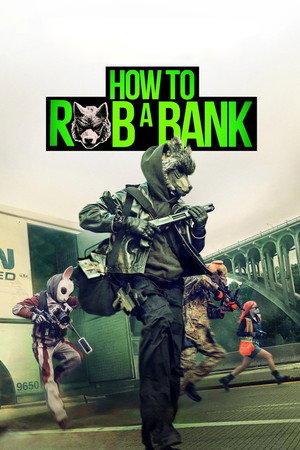
HOW TO ROB A BANK...(2026)
Written by: Mark Bianculli
Genre: Action
Title: How to Rob a Bank...
Written by: Mark Bianculli
Draft date: Not specified
LOGLINE
A charismatic young criminal leads a tight-knit crew on a filmed bank robbery spree up the eastern seaboard — posting instructional videos that go viral — while the FBI agent hunting them begins to suspect the real mastermind is not a street thug but a powerful banking executive hiding in plain sight.
| Very Poor | Poor | Fair | Good | Excellent | |
|---|---|---|---|---|---|
| PREMISE | ✓ | ||||
| STRUCTURE | ✓ | ||||
| CHARACTER | ✓ | ||||
| CONFLICT | ✓ | ||||
| DIALOGUE | ✓ | ||||
| PACING | ✓ | ||||
| TONE | ✓ | ||||
| ORIGINALITY | ✓ | ||||
| LOGIC | ✓ | ||||
| CRAFT | ✓ |
| Strong Pass | Pass | Consider | Recommend | Strong Recommend | |
|---|---|---|---|---|---|
| Overall | ✓ |
Genre: Thriller, Drama
Sub-genre: Crime Thriller, Heist
Keywords: Heist, Crime Spree, Social Media, Viral Video, FBI Investigation, Cat-and-Mouse, Ensemble Cast, Wall Street, Father-Son, Insider Trading, Corruption, Mentor-Protégé, Anti-Hero, Bank Robbery, Found Footage, Male Protagonist
MPA Rating: R (pervasive strong language, gun violence including on-screen deaths, brief drug use, brief sexuality/nudity)
Budget Tier: Medium ($10M–$40M) — multiple states and locations including New York City exteriors, armored truck chase sequence, multiple bank interiors, suburban and rural settings, moderate action/gunplay, no heavy VFX but requires stunt coordination and period-neutral contemporary production
Pages: 115
Time Period: Present over approximately 4-5 months
Locations: Approximately 40% in various motel rooms and vehicles (vans, RVs, cars) across the eastern seaboard. 20% in FBI offices (New York field office — conference rooms, hallways, Khan's office). 15% in various bank interiors across multiple states (New Jersey, Maryland, Delaware, Virginia, Connecticut, North Carolina, West Virginia, New York City) requiring both suburban branches and a large Manhattan flagship bank with marble atrium. 10% in David Walton's upscale home (study, dining room, courtyard, yard). 10% in exterior locations including strip mall parking lots, suburban woods with dirt bikes, a golf course in the Hamptons, New York City streets, and a highway crime scene. 5% in miscellaneous locations (Pakistani restaurant, diner, hospital room, apartment hallway). The New York City Cross Financial bank requires a grand interior with marble staircase and teller atrium. The armored truck chase requires stunt driving on suburban roads.
Lead: Male, 28, race unspecified (likely Caucasian), handsome with a hard-lived quality, intensely intellectual and contemplative, quiet confidence masking deep emotional wounds — the illegitimate son of a wealthy banker.
Comparables: The Town (2010) for the tightly bonded crew dynamic, escalating heists, and FBI pursuit structure. Inside Man (2006) for the heist-with-a-hidden-agenda architecture where the robbery itself is a means to a larger, more sophisticated end. Now You See Me (2013) for the public spectacle element, social media showmanship, and the investigation into who is really pulling the strings. The Big Short (2015) for the populist commentary on financial corruption woven through a crime narrative.
SYNOPSIS
A GO-PRO camera records from a van dashboard as a DRIVER plants a duffel bag on a park bench and phones police with a fake bomb threat, diverting officers from the area. With police occupied, RYAN (28), a contemplative young criminal, leads his crew — girlfriend DANI (25), loyal enforcer VINCE (28), and tech-savvy driver HUGO (25) — in a violent, precisely timed armed robbery of a Commerce Bank. Wearing full assault gear and helmet-mounted cameras, they execute the heist in under two minutes, escape on dirt bikes through the woods, and torch their van. The footage becomes a viral YouTube video titled "How to Rob a Bank," amassing fifty million views.
At the FBI's New York field office, SPECIAL AGENT AAMIR KHAN (40), a Pakistani-American agent known for his intelligence and work ethic, briefs his team on the case: seven banks, four states, three months, no injuries, and no leads beyond the taunting videos. He is joined by SPECIAL AGENT TAYLOR BRIGGS (23), a prodigy with a doctorate in economics from Harvard, transferred from the fraud division. Khan is skeptical of her youth but quickly recognizes her brilliance. Reviewing surveillance footage, Khan notices the crew edited out key details from their instructional videos — they knew the location of a hidden silent alarm and the contents of an ATM safe — leading him to suspect an inside source.
Ryan and his crew celebrate in a motel room, where Ryan philosophizes about the nature of money. In private, Vince struggles with a cocaine addiction, and Ryan catches him using. The crew films a new video — "The Ten Commandments of Bank Robbery" — offering tips while executing heists across multiple states. Ryan then films a populist manifesto about corporate greed and the illusion of money, which inspires copycat robberies nationwide. A fourteen-year-old boy attempting a copycat robbery is shot dead by a security guard, creating a media firestorm.
Khan interrogates bank employees and takes Taylor to dinner at a Pakistani restaurant, where their mentor-protégé bond deepens. Khan's personal life surfaces: his dying father disowned him for marrying his Caucasian wife LINDA (late 30s), and his sister SALMA (40s) pressures him to reconcile. Meanwhile, the crew escalates to robbing an armored truck using a flash grenade and a Craigslist-recruited crowd of decoy construction workers. An off-duty cop intervenes, leading to a car chase where Dani commandeers the truck and then carjacks a BMW, firing shots to escape.
Khan and Taylor visit DAVID WALTON (60), the COO of Cross Financial, whose banks the crew labeled "untouchable" in their videos. Walton explains his superior security measures with understated pride. Khan suspects Walton's involvement but lacks evidence. At a park meeting, Hugo confronts Ryan about the anonymous investor funding their operation, demanding to know his identity. Ryan refuses, and tensions fracture the group. Ryan visits Walton's home, revealing Walton is the secret investor — and Ryan's biological father. Walton, desperate about unspecified financial troubles, pressures Ryan to complete the remaining jobs. Ryan agrees reluctantly.
The crew kidnaps a West Virginia bank manager's family to force him to open his own bank before dawn. Vince guards the wife and daughter with unexpected gentleness. Taylor discovers the home's alarm system was made by Intrepid, Cross Financial's security contractor, confirming the inside connection. When boys discover the crew's buried weapon stash, Vince's fingerprint is identified, and the FBI raids his girlfriend TRISH's (25) home, finding his daughter SKYLER (4) but not Vince. Walton, panicked, tells Ryan over the phone that Vince must be "taken care of." Ryan visits Vince at a motel, shares a painful goodbye, and gives him a bag of drugs. Vince is found dead on the highway — either an overdose or a poisoned supply.
Khan holds a press conference declaring the FBI will share all evidence publicly via social media, crowdsourcing the investigation. The strategy works: Taylor's data system identifies Hugo and Dani through facial recognition and social media traces. Ryan confronts Walton about Vince's death, and their relationship as father and illegitimate son is laid bare. Walton promises Ryan a final easy job — Cross Financial's flagship bank, with guards removed and alarms off — for a massive payout. Ryan agrees but says he is done afterward.
Ryan, Hugo, and Dani approach Cross Financial in Manhattan disguised as businessmen. Dani waits in a getaway van. Inside the empty bank, Hugo is shot dead by a hidden security team. Outside, a man kills Dani in the van. Ryan, shot in the shoulder, crawls behind the teller counter and slides a sealed manila envelope into an outgoing mail slot before being killed. Khan and Taylor arrive moments too late to find all three dead.
SPECIAL AGENT ALTMAN (50s), Khan's superior, refuses Khan's request for a warrant against Walton, deeming the evidence circumstantial. Days later, Khan receives the manila envelope Ryan mailed — containing a flash drive with hidden camera footage of Walton discussing the conspiracy in his study. Khan and Taylor arrest Walton at his offices. Altman gives Taylor a terse "Good job." Khan, moved by witnessing how terribly a father can fail a son, visits his own dying father in the hospital, choosing reconciliation. Ryan's final video message reflects on envy rather than greed — coveting a family he was never allowed to have.
COMMENTS
PREMISE — Good
The core concept merges the heist genre with a social media age sensibility and a financial corruption thriller, generating a premise that pitches cleanly: a crew of bank robbers films instructional YouTube videos of their crimes, going viral while the FBI hunts them, but the real mastermind is a desperate banking executive orchestrating the spree to manipulate stock prices. The dramatic question has two compelling layers — the procedural cat-and-mouse between Khan and Ryan, and the hidden father-son betrayal beneath the surface — which gives the material more emotional depth than a standard heist narrative. The thematic commentary on money as illusory, on corporate crime dwarfing street crime, and on the viral spectacle of criminality provides a timely socioeconomic undercurrent. The premise's strongest asset is the reveal that Ryan is Walton's illegitimate son, reframing the entire enterprise as a desperate bid for paternal approval. Where the premise risks overreach is in trying to be both a cynical populist statement and a deeply personal family tragedy simultaneously, but the tension between those ambitions is itself generative.
STRUCTURE — Fair
The first thirty pages establish the dual-protagonist architecture efficiently: the heist crew operates in one lane while Khan and Taylor investigate in another, and the parallel tracks create natural momentum. The inciting incident — the YouTube video revelation at the FBI — lands appropriately around page 8, with the first-act break arriving when Ryan reveals there are four more jobs and the investor wants a bigger profile (24). The midpoint is the armored truck heist and its aftermath (37–45), which escalates stakes and introduces genuine physical danger. However, the back half of the narrative compresses too many revelations into too little space. The Walton-as-father reveal lands around page 90, which is effective as a late-act surprise but leaves almost no room to explore its implications before the climax. The final heist and triple killing at Cross Financial (100–108) moves at breakneck speed, but the mail-slot flash drive resolution (112–113) — while clever — depends entirely on a device planted in a single brief moment under gunfire, which bears enormous structural weight for how quickly it passes. The emotional resolution for Khan at the hospital (116) works as a thematic mirror but sits somewhat disconnected from the crime plot, functioning more as epilogue than climax.
CHARACTER — Fair
Ryan is the most fully realized figure, with a clear backstory (illegitimate son, boarding school exile), a stated want (family, normalcy), an internal need (paternal acceptance), and an arc that ends in self-sacrifice. His contemplative monologues in the motel room (12–13) and the diner confrontation with Dani (84–86) establish him as someone for whom the robbery was always a means to something else. Khan functions as a strong procedural counterpart, and his family subplot — the estranged father, the interfaith marriage — provides a meaningful parallel to Ryan's paternal wound. Taylor, however, is more functional than dimensional: her intelligence is demonstrated repeatedly (10–11, 72–73, 88, 96–97), but her stated desire to become a field agent and her parents' disapproval (33) never develop beyond introductory beats. Dani's arc is the most disappointing — her climactic monologue in the diner reveals she values escape over love (85–86), but the material never interrogates this beyond the scene itself, and she is killed offscreen in a single line of action (105). Hugo and Vince serve their narrative functions competently, with Vince's daughter and addiction providing genuine pathos (36, 78–81), but Hugo remains largely a device for expressing crew dissent.
CONFLICT — Fair
The central external conflict — the FBI pursuing the crew — escalates methodically through the copycat crisis, the armored truck complications, and the discovery of Vince's identity. The internal conflict for Ryan is potent: he is executing crimes for a father who will never publicly claim him, and his growing realization that Walton views him as disposable rather than beloved drives the tragic conclusion. Scene-level conflict is consistently present, from Hugo's confrontation at the park (55–58) to the armored truck chase (39–44) to the final ambush at Cross Financial (104–108). The weakest conflict point is between Khan and Altman. Altman appears twice (53–54, 110–112) to deliver institutional obstruction, but his refusal to pursue Walton feels predetermined rather than dramatically contested — Khan barely argues before accepting the denial, and the flash drive arrives almost immediately to resolve it anyway, making Altman's resistance feel like a structural placeholder rather than a genuine obstacle.
DIALOGUE — Good
Ryan's voice is the most distinctive element — his philosophical monologues about money (12–13), value, and envy carry a specific cadence that separates him from the genre's typical heist leader. The YouTube narrations function as both exposition and characterization, revealing a mind that intellectualizes to avoid feeling. Khan's dialogue is crisp and authoritative without being generic, particularly in his investigation scenes (20–22, 95–97) where his questions always advance understanding rather than merely soliciting information. The weakest dialogue belongs to the secondary characters: Altman speaks in pure bureaucratic cliché (53–54, 110–112), and Dani's diner monologue (85–86), while emotionally revealing, leans on declarative statements that feel written rather than spoken. The strongest exchange is between Ryan and Walton in the study (89–92), where subtext operates on multiple levels — Ryan accusing Walton of using him while simultaneously begging to be valued — and each line carries double meaning through the father-son dynamic.
PACING — Fair
The first half moves with exceptional energy, toggling between heist sequences, YouTube videos, and investigation scenes with a rhythm that mirrors the viral, fragmented media landscape the material depicts. The montage of copycats (26–28) and the armored truck sequence (37–44) are the pacing high points, creating genuine urgency. The middle section, roughly pages 45–75, slows substantially as the investigation proceeds through conversation-heavy scenes — the golf course (46–48), the manager's house (71–72), the Khan-Taylor working sessions (58–61, 69–70) — where essential information is conveyed but dramatic tension dissipates. The final act regains momentum with the Cross Financial heist (100–108), though the denouement from the mail-slot reveal through Walton's arrest (112–114) moves almost too quickly, resolving the central conspiracy in a few pages when the implications deserve more breathing room. The hospital epilogue (116) provides a quiet emotional landing, but the rapid compression of the final fifteen pages leaves the resolution feeling rushed relative to the careful setup that preceded it.
TONE — Fair
The tone navigates a tricky register — populist heist entertainment layered with genuine tragedy — and mostly succeeds. The YouTube videos establish a brash, irreverent energy that contrasts effectively with the FBI procedural sobriety and the motel-room intimacy of the crew's private lives. The tonal shift after the copycat boy's death (52) is handled well, with the TV news reports providing a bridge between the glamorized crime and its real-world consequences. The most jarring tonal moment is Vince's death sequence (78–81), which reads as both deeply emotional and morally ambiguous — Ryan may have given him a fatal dose deliberately — but the material avoids confirming or denying this, creating an unresolved tonal dissonance that weakens the impact. Dani's death (105) is dispatched with such brutal efficiency ("Sorry sweetheart. BANG!") that it risks feeling callous rather than tragic, a tonal miscalculation given her prominence in the ensemble.
ORIGINALITY — Good
The fusion of YouTube/social media culture with the heist genre represents a genuine conceptual innovation that distinguishes the material from predecessors like The Town and Heat, which operate within purely analog criminal worlds. The structural conceit of intercutting instructional videos with actual heists creates a formal inventiveness not found in comparable crime thrillers. The deeper twist — that the robberies are a vehicle for stock manipulation by a corporate insider — echoes The Big Short's systemic-corruption themes but applies them through a crime narrative lens rather than documentary exposition. However, the individual heist sequences themselves follow familiar genre choreography (burst in, secure hostages, grab cash, escape through woods), and the FBI investigation proceeds through recognizable procedural beats. The father-son reveal, while emotionally effective, belongs to a well-established dramatic tradition. The execution of the social media elements — copycats, viral spread, public crowdsourcing — is the freshest aspect and the material's most distinctive contribution to the genre.
LOGIC — Poor
The most significant logic issue is the final heist at Cross Financial. Walton promises Ryan the guards will be gone and alarms turned off (92), yet an entire security team is waiting inside to execute the crew. The implication is that Walton betrayed Ryan, but the mechanics are unclear: did Walton order the ambush, or did someone else receive Khan's alert about Cross being targeted (101) and deploy security independently? If Walton arranged it, his tearful reaction afterward (109) reads as guilt, but it conflicts with his stated need for the robbery to succeed in order to profit from the stock movement. If the security team acted on Khan's warning, then Walton's plan was foiled by the FBI — but Khan arrives too late and seems surprised (108), suggesting the FBI did not coordinate the ambush. This central ambiguity about who ordered the killings undermines the climactic sequence. Additionally, Ryan's ability to slide a manila envelope into an outgoing mail slot while under active gunfire (107) and have it reliably delivered to a specific FBI agent strains credibility, particularly as the sole mechanism for delivering justice. The alarm-code breadcrumb (72–73) that leads to Intrepid/Cross is a well-planted clue, and the stock-manipulation theory (95–101) is built convincingly through dialogue.
CRAFT — Good
The writing demonstrates strong visual instincts and a confident command of pace-on-the-page, particularly in the heist sequences where short paragraphs, POV shifts, and embedded camera perspectives create kinetic energy. The character introductions are vivid and economical — Khan is "the smartest guy in the room" and "the hardest-working" (8), Vince is "a muscular, tattooed Doberman" (12), Dani is "the Bonnie to Ryan's Clyde" (12) — each landing with specificity. The multi-camera conceit (helmet cams, dash cams, YouTube footage) is handled with clarity despite its complexity, and the parenthetical "NOTE TO READER: THE REST OF THIS HAPPENS PRETTY FAST!" (4) establishes a direct, energetic authorial voice. There are occasional overwritten passages — "the jaded gaze of a burdened conscience" (78) and "a ballet of shifting glances, wordless thoughts" (65) push toward literary affectation — and a typo on page 56 ("their" should be "there": "Is their some chain of command"). The intercutting between YouTube content and reality is the craft's signature achievement, handled with consistent formatting discipline across the entire draft.
OVERALL — Consider
How to Rob a Bank... is a contemporary heist thriller about a crew of bank robbers who film instructional YouTube videos of their crimes, unwittingly serving as pawns in their secret financier's stock manipulation scheme — complicated by the fact that the crew's leader is the financier's illegitimate son. The premise is the material's greatest asset: it pitches immediately, layers personal drama beneath genre mechanics, and taps into timely anxieties about viral culture and financial corruption. Craft and Dialogue are consistently strong throughout, with the multi-camera conceit and Ryan's philosophical voice providing distinctive texture. Structure and Pacing work well through the first seventy pages but compress too aggressively in the final act, where the father-son confrontation, the climactic heist, and the resolution all compete for space. The most significant weakness is in Logic, where the ambiguity about who ordered the Cross Financial ambush — the narrative's pivotal moment — leaves the central betrayal unclear rather than resonant. Character work is strongest for Ryan and Khan but underdeveloped for Dani and Taylor, both of whom deserve fuller arcs given their narrative importance. The material delivers a propulsive, entertaining read with genuine emotional stakes, but its ambition to be simultaneously a slick heist film, a social media satire, a financial corruption exposé, and a father-son tragedy means several of those threads receive less development than they require.
Get this level of coverage for your screenplay
Every coverage includes 10 category ratings, an overall recommendation, and detailed analysis — powered by the same methodology used by talent agencies and literary managers.
Movie data provided by TMDB