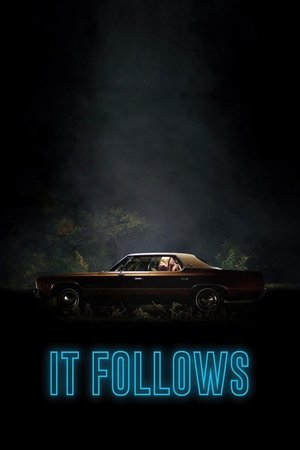
IT FOLLOWS(2015)
Written by: David Robert Mitchell
Draft date: September 29, 2013
Genre: Horror
Title: It Follows
Written by: David Robert Mitchell
Draft date: 9.29.13
LOGLINE
After a seemingly normal sexual encounter, a nineteen-year-old college student in suburban Detroit discovers she has inherited a relentless, shape-shifting entity that walks slowly but ceaselessly toward her — and the only way to survive is to pass it to someone else through sex.
| Very Poor | Poor | Fair | Good | Excellent | |
|---|---|---|---|---|---|
| PREMISE | ✓ | ||||
| STRUCTURE | ✓ | ||||
| CHARACTER | ✓ | ||||
| CONFLICT | ✓ | ||||
| DIALOGUE | ✓ | ||||
| PACING | ✓ | ||||
| TONE | ✓ | ||||
| ORIGINALITY | ✓ | ||||
| LOGIC | ✓ | ||||
| CRAFT | ✓ |
| Strong Pass | Pass | Consider | Recommend | Strong Recommend | |
|---|---|---|---|---|---|
| Overall | ✓ |
Genre: Horror, Thriller
Sub-genre: Supernatural Horror, Coming-of-Age Drama
Keywords: Female Protagonist, Supernatural, STD Metaphor, Suburban Setting, Detroit, Ensemble Cast, Sexual Awakening, Paranoia, Invisible Threat, Lake Setting, Abandoned Locations, Loss of Innocence
MPA Rating: R (sexual content, nudity, disturbing violence, language)
Budget Tier: Low ($1M–$10M): limited cast, practical locations across suburban Detroit and rural Michigan, minimal VFX requirements beyond invisible-force gags and blood effects, no period elements.
Pages: 107
Time Period: Present over approximately 3-4 weeks, during an Indian Summer transitioning into autumn.
Locations: 60% suburban Detroit neighborhood (houses, porches, streets, park), 15% inner-city Detroit (abandoned factory, Hugh's rental house, old pool building), 10% rural Michigan lake house and surrounding fields, 10% Wayne State University campus and Detroit Zoo, 5% hospital rooms. Key special requirements include an ornate abandoned indoor swimming pool rigged with electrical appliances, an abandoned factory warehouse, a lakeside beach for the opening death scene, and a rooftop stunt.
Lead: Female, 19, white, pretty, introspective, increasingly anxious and traumatized — begins as a dreamy young woman enjoying an Indian Summer and transforms into someone desperate, isolated, and grief-stricken.
Comparables: A Nightmare on Elm Street (1984) for the teens-confronting-an-unstoppable-supernatural-pursuer structure and the rules-based horror mythology; The Ring (2002) for the curse-passing mechanic and dread-soaked atmosphere; Let the Right One In (2008) for the melancholy coming-of-age tone married to horror; Rosemary's Baby (1968) for sustained paranoia where the protagonist cannot trust what others see or believe.
SYNOPSIS
ANNIE (20) flees her lakeside home in pajamas and red pumps, terrified of something invisible. After a panicked phone call to her father expressing love, she is found dead on the beach the next morning — her leg grotesquely twisted, a third set of footprints leading to and from her body.
JAIME "JAY" HEIGHT (19), a pretty college student, relaxes in her suburban Detroit hot tub. Her younger sister KELLY (17) introduces us to their friend group: PAUL (17), who nurses an obvious crush on Jay, and YARA (17), a deadpan reader perpetually absorbed in Dostoevsky on her phone. Jay's mother, MRS. HEIGHT, drinks wine and flirts on the telephone. Jay is dating HUGH (21), and on their movie date, Hugh plays a people-watching game with Jay but becomes disturbed when he points out a girl in a yellow dress that Jay cannot see. He insists they leave.
Despite Hugh's strange behavior, Jay sleeps with him in the backseat of his car. Afterward, Hugh chloroforms her and ties her to a wheelchair in an abandoned factory. He explains that he has passed "it" to her through sex — a slow-walking entity that takes human form, is visible only to those in the chain of infection, and will kill her if it catches her. He shows her a naked middle-aged woman approaching through the warehouse. Hugh tells Jay she must sleep with someone else to pass it along, then dumps her, bound and in her underwear, on her front lawn.
Police investigate but cannot find Hugh, who used a fake name. Jay begins seeing entities: an old woman in pajamas stalking her across the Wayne State campus, a half-naked young woman urinating in her kitchen, a towering man entering through a doorway behind Yara. Jay flees to a park on a stolen bicycle, where Kelly, Paul, Yara, and neighbor GREG HANNIGAN (21) rally around her. Using a photo found in Hugh's abandoned Detroit rental, they trace his real identity — JEFF REDMOND — to his mother's suburban home. MRS. REDMOND resembles the naked woman from the warehouse. Jeff confirms the rules: the entity walks in a straight line toward its target, takes various human forms, and can only be redirected by passing it sexually. He urges Jay to pass it on quickly.
The group retreats to Greg's family lake house up north. Jay learns to shoot a handgun. On the lake she feels safe, but the entity arrives — taking Yara's form, it grabs Jay's hair in an invisible attack that Paul and Kelly partially witness when a chair cracks against nothing and Paul is shoved by an unseen force. Jay fires the gun wildly and flees in Greg's car, crashing into trees.
In the hospital, Jay convinces Greg to sleep with her, transferring the curse. Days pass without incident for Greg, but Jay remains withdrawn and terrified. One night she watches from her window as "Greg" walks to his house and breaks in through the window. She races over and finds the entity has taken the form of Greg's mother, MRS. HANNIGAN. It straddles Greg and kills him — fluid pouring over his body.
Devastated, Jay drives to Lake St. Claire and swims toward a boat of young men, contemplating passing the curse through a stranger, but she cannot bring herself to do it. She returns home in despair. Paul proposes a plan: lure the entity to the old indoor swimming pool where they shared their first kiss, surround the pool with plugged-in electrical appliances, and electrocute it when it enters the water.
At the pool, Jay wades in as bait. The entity arrives — visible to Jay as a nearly-naked middle-aged man. It hurls chairs and appliances at her. The electrocution plan does not work. Kelly drapes a bedsheet over the invisible figure, giving Paul a target. He shoots it in the head, and it falls into the pool. Underwater, it grabs Jay's ankle. Paul fires into the water, hitting the entity and freeing Jay. Yara is accidentally shot in the leg during the chaos. Jay stares into the pool and sees only blood.
Afterward, Jay and Paul make love in his basement. Jay's mother tends to her at home. A family portrait reveals Jay's father — a man with salt and pepper hair matching the entity's final form at the pool. Paul is shown driving past prostitutes in the inner city. In the final scene, Jay and Paul walk hand-in-hand through their autumn neighborhood. Far behind them, a figure marches slowly along the road.
COMMENTS
PREMISE — Excellent
The premise distills horror to an elemental, almost fairy-tale purity: an invisible, slow-walking, shape-shifting pursuer that can only be transferred through sex. This generates a self-renewing engine of dread because the entity never stops, sleep is never safe, and every solution is morally compromised. The sexually transmitted nature of the curse layers the horror with thematic resonance — loss of innocence, the anxiety of sexual maturity, the way trauma propagates through intimacy — without ever reducing itself to allegory. The suburban Detroit setting enriches the concept by placing youthful vulnerability against a landscape of economic decay, reinforcing the sense that safety is illusory. The premise's simplicity is its greatest asset: it requires no elaborate mythology, and the central dramatic question — will Jay survive, and at what cost to others? — is immediately graspable and deeply uncomfortable. Compared to rule-based horror in The Ring or A Nightmare on Elm Street, the sexual-transmission mechanic distinguishes itself by making the act of survival inseparable from guilt and moral compromise.
STRUCTURE — Good
The opening Annie sequence efficiently establishes the rules and stakes before introducing the protagonist, functioning as a cold-open prologue that pays off retroactively when Annie's photo appears in Jeff's room (58). Jay's pre-existing life occupies roughly the first twenty pages — hot tub, friends, date — establishing normalcy with patient confidence. The inciting incident lands cleanly when Hugh chloroforms Jay and reveals the entity (22), arriving at roughly 20% of the page count. The midpoint functions as a reversal: after the lake-house attack where the entity physically manifests to Jay's friends through indirect evidence (70-75), Jay crashes Greg's car and loses her autonomy. The decision to pass the curse to Greg (80) serves as a significant pivot but arrives slightly past the midpoint proportionally. Greg's death at roughly page 87 functions as the "all is lost" beat, and the pool sequence climax occupies pages 95-104, landing appropriately around 90%. The resolution — Jay and Paul's coupling and the ambiguous final walk — is economical. One structural weakness is the stretch between Jay's return from the hospital and Greg's death (81-87), where the investigation thread has concluded and the material relies on atmospheric dread that, while effective tonally, thins the narrative momentum.
CHARACTER — Good
Jay is rendered with specificity and emotional credibility — the hot-tub reverie, the lipstick application, the ice cream eaten like a frightened child at the zoo (36-37) — and her arc moves from passive dreamer to desperate survivor to someone who refuses to weaponize intimacy against strangers at the lake (89). Her internal need crystallizes around the question of whether survival justifies transferring suffering, and her choice not to swim to the boat represents genuine moral agency. Paul functions as more than a lovesick sidekick; his eagerness to sacrifice himself is complicated by his transparent desire for Jay, creating an ambiguity the material wisely never resolves (90-91, 104-105). Kelly is sharply drawn as the protective younger sister whose pragmatism grounds Jay's escalating fear (37, 47). Greg is effectively sketched as the confident neighbor whose lack of fear becomes his fatal flaw (91). The antagonist — the entity itself — gains dimension through its choice of forms, particularly the final pool incarnation matching Jay's absent father in the family portrait (105), which introduces a devastating psychological layer. Jeff's brief appearance (57-63) economically conveys both guilt and desperation. Yara risks feeling like comic relief, but her Dostoevsky quotations subtly mirror the thematic concerns about mortality and certainty.
CONFLICT — Good
The central external conflict — Jay versus the entity — functions as an omnipresent, escalating pressure that the material sustains through relentless spatial awareness. Every scene carries the question of whether something is approaching, and the entity's slowness paradoxically intensifies rather than diminishes threat because safety is always temporary. The internal conflict is equally well-defined: Jay must choose between self-preservation and conscience, as passing the curse condemns someone else to the same terror. This dilemma sharpens after Greg's death (87), when Jay understands that "passing it on" does not guarantee the recipient's survival. Scene-level conflict is consistently present — the movie theater where Hugh sees something Jay cannot (11-12), the kitchen encounter where Jay's friends doubt her perception (44-46), the lake-house attack where the group fractures between believers and skeptics (70-75). The pool climax escalates conflict by introducing practical danger (flying objects, accidental shooting of Yara on 101) alongside the supernatural threat, forcing the characters to fight something they largely cannot see.
DIALOGUE — Good
The dialogue achieves naturalistic texture through specificity and restraint. Characters are well-differentiated: Yara's deadpan non-sequiturs ("I have an idea... oh, it got away" on page 7) stand apart from Kelly's protective directness ("Out" on page 69) and Paul's earnest vulnerability ("I'm here for you" on page 69). Hugh/Jeff's exposition in the warehouse (22-26) manages the difficult task of laying out supernatural rules without becoming a lecture, primarily because his fear and guilt color every line. The "trade game" sequence at the movie theater (8-11) accomplishes double duty — it establishes the couple's chemistry while planting the thematic seed of wanting to be someone else. Subtext operates effectively in several exchanges: Paul's "I could..." trailing off (90) communicates his offer to sleep with Jay without stating it, and Jay's "I thought he would be ok. He wasn't scared" (91) reveals her criteria for choosing Greg without self-pity. One area where dialogue thins is during the pool climax, where lines become purely functional shouting of positions ("Where is it?! Here?!" on 101-102), though this is defensible given the chaos of the scene.
PACING — Fair
The deliberate pace of the first forty pages earns its length by building a textured world and a growing sense of unease, with each entity sighting arriving at well-spaced intervals — the old woman on campus (32-34), the kitchen girl (44-45), the giant man behind Yara (48). The lake-house sequence (64-75) represents the longest sustained set piece and works effectively because it layers quiet dread with sudden violence. However, the stretch from Jay's hospital discharge through Greg's death (81-88) sags slightly — scenes of Jay in the hot tub (82), the neighbor boy intrusion (83), and Kelly reporting Jay's withdrawal (83-84) cover similar emotional territory without advancing the plot significantly. The pool climax (95-104) is the material's most kinetic passage and sustains tension through escalating physical danger and the fog-of-war problem of fighting an invisible enemy. The denouement from page 104 to 107 is appropriately brisk, cycling through aftermath beats — the lovemaking, the hospital visit, the family portrait revelation, the final walk — with an efficiency that trusts the accumulated weight of prior scenes.
TONE — Good
The tonal register is remarkably consistent: a melancholic, sun-drenched naturalism that treats the supernatural intrusion as something organic to this world rather than an interruption of it. The Indian Summer setting — sweat, dandelion seeds, above-ground pools — creates a languorous atmosphere where horror feels like an extension of the environment's quiet decay (5, 31, 46). Moments that risk tonal disruption are handled carefully: Yara's flatulence joke (7) and the porno-magazine memory (42-43) provide comic release without undermining the dread because they emerge from character rather than genre convention. The entity's appearances escalate in grotesqueness — from the distant naked woman (24) to the urinating girl (44-45) to the mother-straddling-son sequence (87) — and each increment feels earned by the tone established before it. The one moment that pushes against the tonal envelope is the pool climax, where the action-sequence mechanics (shouting directions, firing guns) shift closer to genre thriller than the atmospheric horror preceding it, though the chaotic helplessness of fighting an invisible enemy mitigates this.
ORIGINALITY — Excellent
The sexually transmitted curse concept is genuinely distinctive in the horror landscape. While The Ring and Ju-On established curse-passing mechanics in early 2000s horror, neither tied transmission to sexual contact, and neither embedded the curse within a coming-of-age framework where the act of survival is inseparable from sexual agency and guilt. The entity's walking pace — never running, always approaching — inverts the grammar of horror pursuit sequences and creates a form of dread more aligned with existential anxiety than jump-scare mechanics. The execution distinguishes itself further through the entity's form-shifting, particularly its tendency to appear as parental figures: Jeff's mother at the warehouse, Greg's mother as the killing instrument, and Jay's absent father at the pool climax. This pattern transforms the entity from a generic monster into a manifestation of corrupted intimacy and familial dysfunction. The suburban Detroit setting and the deliberate temporal ambiguity — rotary phones alongside smartphones, old Fords and modern cars — create a dreamlike quality that resists easy categorization. Among recent horror, The Babadook (2014) shares the psychological-metaphor approach, but its domestic claustrophobia and single-parent framework occupy fundamentally different territory.
LOGIC — Fair
The internal rules of the entity are established clearly and followed consistently: it walks, it takes human form, it is visible only to those in the chain, it can be physically interacted with (chairs crack, Paul is shoved, the door breaks), and it can be passed through sex. One potential inconsistency involves the entity's physical capabilities: it throws chairs and a television at the pool (99-101) but in earlier encounters simply walked toward Jay without weaponizing objects. This escalation could be read as the entity adapting, but no rule establishes that it can or does adapt, which creates a mild logic gap. The pool plan itself has a questionable premise — electrocuting something in water requires the electrical current to actually reach the target, and extension cords plugged into household outlets would likely trip a breaker before delivering lethal current (95-96). The material acknowledges the plan's shortcoming when it does not work (101), which mitigates this somewhat. The entity's blood being visible to Jay but not to others at the pool (104) is consistent with established rules. The absent father — whose portrait matches the entity's final form (105) — raises an unanswered question about whether the entity specifically chose that appearance to torment Jay or whether the connection is coincidental, which functions as productive ambiguity rather than a plot hole.
CRAFT — Good
The writing operates at a high level of visual specificity, creating atmosphere through precisely observed physical details rather than expository prose. Character introductions are economical and vivid — Jay with her mouth at the water's surface (5), Yara reading Dostoevsky while farting (7), Mrs. Height mixing Irish liquor into her morning coffee (30). The direction of attention is particularly skilled: background details that initially register as atmosphere reveal themselves as significant, such as the third set of footprints at Annie's death scene (4), the string of cans across Hugh's windows (52), and the family portrait on Jay's dresser (105). Action description during the pool climax maintains clarity despite the challenge of choreographing a fight against an invisible opponent — the bedsheet moment (103) is an elegant solution to both a dramatic and a visual-storytelling problem. The parenthetical "Some viewers might notice the absence of a license plate" (21) breaks the fourth wall in a way that disrupts the otherwise disciplined prose style and would function better as a purely visual detail. Formatting is clean throughout. The deliberate temporal ambiguity in production design — old phones, vintage cars, shell-compact smartphones — is described with care but occasionally risks confusion about what is intentional anachronism versus oversight.
OVERALL — Recommend
It Follows is a supernatural horror film about a young woman in suburban Detroit who, after a sexual encounter, discovers she is being pursued by a slow-walking, shape-shifting entity that can only be transferred through sex. The material's greatest strengths are its Premise and Tone — the concept is elegant in its simplicity and rich in thematic implication, while the sustained atmosphere of sun-drenched melancholy distinguishes it from nearly all contemporary horror. Character work is strong across the ensemble, with Jay's moral evolution and Paul's complicated devotion providing genuine emotional stakes beneath the genre mechanics. The Dialogue is naturalistic and well-differentiated, particularly in the quieter domestic scenes that establish the friend group's dynamics. The most significant weakness is a pacing lull in the third quarter, where atmospheric scenes between Jay's hospitalization and Greg's death retread emotional ground without sufficient narrative development. The pool climax, while inventive in its problem-solving (the bedsheet, the proxy-aiming), shifts the tonal register toward action in a way that partially disrupts the preceding dread. These are relatively contained issues within material that demonstrates confident command of its genre, its world, and its characters — and that achieves the rare feat of making horror feel genuinely sad.
Get this level of coverage for your screenplay
Every coverage includes 10 category ratings, an overall recommendation, and detailed analysis — powered by the same methodology used by talent agencies and literary managers.
Movie data provided by TMDB