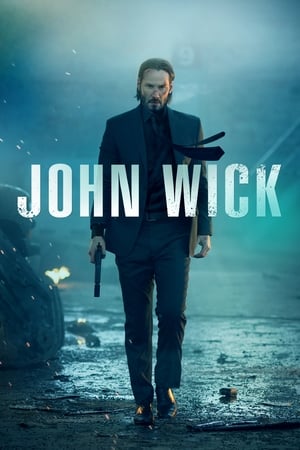
JOHN WICK(2014)
Written by: Derek Kolstad
Draft date: April 13, 2013
Genre: Action
Title: John Wick
Written by: Derek Kolstad
Draft date: April 13, 2013
LOGLINE
After his wife dies and thugs steal his car and kill the puppy she left him as a final gift, a retired legendary assassin returns to the criminal underworld to hunt down the son of a powerful Russian crime lord.
| Very Poor | Poor | Fair | Good | Excellent | |
|---|---|---|---|---|---|
| PREMISE | ✓ | ||||
| STRUCTURE | ✓ | ||||
| CHARACTER | ✓ | ||||
| CONFLICT | ✓ | ||||
| DIALOGUE | ✓ | ||||
| PACING | ✓ | ||||
| TONE | ✓ | ||||
| ORIGINALITY | ✓ | ||||
| LOGIC | ✓ | ||||
| CRAFT | ✓ |
| Strong Pass | Pass | Consider | Recommend | Strong Recommend | |
|---|---|---|---|---|---|
| Overall | ✓ |
Genre: Action, Thriller
Sub-genre: Action Thriller, Revenge Thriller
Keywords: Revenge, Assassin, Criminal Underworld, Male Protagonist, Organized Crime, Russian Mob, Secret Society, Gold Coins, Dog, Grief, Widower, New York City, New Jersey, Gun Fu, Muscle Cars, One-Man Army
MPA Rating: R (pervasive strong violence, frequent strong language including multiple uses of "fuck")
Budget Tier: Medium ($10M–$40M) — multiple New York/New Jersey locations, significant action sequences and car chases, practical stunts, moderate cast, no period requirements or heavy VFX.
Pages: 110
Time Period: Present over approximately 2 weeks.
Locations: Approximately 30% in a small New Jersey shore home (interior/exterior, including a hidden sub-basement requiring breakable concrete floor). 50% across Manhattan and surrounding boroughs — an upscale boutique hotel with speakeasy basement, a multilevel nightclub (penthouse dance floor, bathrooms, elevator), a Russian bank with vault requiring fire/explosion effects, a townhouse library, an art gallery basement, a commercial warehouse in Newark, and various streets. 10% on a bridge requiring car crash/flip stunt work and ocean water sequences. 10% miscellaneous — private airfield, train station, Victorian home, veterinary office. Requires significant car stunt coordination including a bridge crash with vehicle going over the side into water, a car bomb explosion, and a storefront crash.
Lead: Male, 40s, white, former boxer and military, quiet and preternaturally aware, a grieving widower and retired legendary assassin driven by loss and vengeance.
Comparables: The Equalizer (2014) — a retired elite operative returns to violence to pursue justice on personal terms. Taken (2008) — a man with a particular set of skills dismantles a criminal network through relentless, escalating action driven by personal stakes. Point Blank (1967) — a single-minded protagonist methodically works through a criminal organization to reclaim what was taken from him. Kill Bill (2003) — a former assassin emerges from retirement on a revenge quest through a world governed by its own codes.
SYNOPSIS
JOHN WICK (40s), a quiet, preternaturally aware man, dines with his wife NORMA at an upscale restaurant. Walking home, Norma collapses and is rushed to a hospital. At their small New Jersey shore home, John lives a solitary, grief-stricken routine — rising at six, drinking coffee alone, restoring old books in his pristine basement workshop. He receives a phone call and visits Norma in the hospital, where he authorizes the doctor to turn off her life support. She dies.
After the funeral, John is visited by MARCUS (60s), a tall, lanky, well-dressed man who warns him against being seduced by old memories and encourages him to mourn and start over. That evening, a DELIVERY WOMAN brings a pet carrier containing a beagle puppy named DAISY, along with a letter from Norma urging John to find something to love again. John bonds with Daisy — eating breakfast together, working on his prized 1969 Ford Mustang Boss 429, racing on a private airfield, and enjoying quiet evenings.
At a gas station, IOSEF TARASOV (mid-twenties), a brash Russian hipster, admires John's car and asks to buy it. John refuses. That night, Iosef and accomplices KIRILL (a massive man) and VICTOR (twenties, gimpy leg) break into John's home, beat him unconscious, steal his car keys, and fatally injure Daisy. John wakes to find Daisy crawling to his side, where she dies in his arms.
John buries Daisy, shaves, dresses in a dark tailored suit, and transforms. He takes a bus to AURELIO's automotive shop (60s, a father-figure mechanic) who confirms Iosef — son of crime lord VIGGO TARASOV (50s) — stole the car. Aurelio had already punched Iosef for the offense. John tracks his dismantled car to TAKESHI's chop shop, brutally dispatches guards, takes a 1970 Plymouth, and after a car chase, extracts information about the Red Circle nightclub from an overturned driver.
Viggo learns what his son has done and is furious, explaining to Iosef that John Wick was the legendary assassin — "the fucking bogeyman" — whom even Viggo feared. Viggo places a bounty: two million dead, three million alive. He calls Marcus, who accepts the contract. Meanwhile, John breaks open his basement floor to access a hidden sub-basement arsenal of weapons, ammunition, and gold bullion coins.
Viggo sends assassins to John's home. John kills all three, calls a cleanup crew led by CHARLIE (70s), and pays with gold coins. His neighbor JIMMY (50s), a police officer, looks the other way. John travels by train to Manhattan's Continental Hotel — a boutique establishment with its own underground speakeasy, run by WINSTON (70s, English). John checks in, arms himself, and infiltrates the Red Circle nightclub. He finds Victor in the bathroom and brutally kills him and his bodyguards. In the elevator, he fights and kills Kirill and two associates. He calls Iosef on Victor's phone to tell him they are dead.
On the street, John is ambushed by disguised assassins posing as a taxi driver and prostitute — he dispatches them as Marcus watches from the shadows. Back at the Continental, DAVID PERKINS (late twenties), a guest John had encountered earlier, photographs John and sends the images to Viggo's people. David and two accomplices attack John in his hotel room but John kills the accomplices and subdues David. HARRY (60s), a fellow guest, agrees to hold David for a gold coin. John extracts information about Viggo's bank in Little Russia.
John methodically eliminates snipers stationed across from the bank, then storms it with an MP5, kills the guards, and forces the BANK MANAGER to open Viggo's secondary vault. John ignites the contents — millions in cash, art, and blackmail materials. When Viggo arrives to survey the damage, John ambushes his motorcade, killing his men. After a car chase through a pharmacy, John corners Viggo, who reveals Iosef's location in Newark and agrees to pull the contract.
John infiltrates the heavily guarded Newark safe house by first killing four rooftop snipers, then entering through the roof. He finds Iosef playing a game on his iPad and executes him with a single shot between the eyes. Meanwhile, Winston executes David Perkins for violating the Continental's prohibition on conducting business on its premises.
On a bridge, Marcus meets John and tells him the contract is pulled, urging him to go home. MAYNARD (30s), one of Viggo's men, observes them. Viggo, having recorded Marcus's confession of sparing John, confronts Marcus at his Victorian home. Marcus grabs a gun and kills two of Viggo's men before being shot dead — dying on his own terms. Viggo calls John to inform him of Marcus's death as a "courtesy."
John, driving home in a Pontiac Firebird gifted by the Continental, turns around. Tipped off by Winston about Viggo's escape flight, John intercepts Viggo's two-suburban convoy on a bridge. After a brutal vehicular battle, both vehicles crash. John falls from the bridge into the ocean, is struck by the sinking Firebird, but surfaces. He confronts Viggo on the road in a savage knife fight. Viggo stabs John multiple times, but John ultimately drives Viggo's own blade into his neck. Viggo dies kneeling.
Gravely wounded, John breaks into a veterinary office, treats his wounds, and rescues a dog named MIKO scheduled to be euthanized. He returns home, recovers, and reclaims his restored Mustang, racing down the airfield with Miko at his side.
COMMENTS
PREMISE — Excellent
The premise distills revenge to its most primal and emotionally accessible form: a grieving man's last connection to his dead wife — a puppy — is killed by a foolish criminal, and the retired assassin he once was re-emerges. The concept's power lies in the asymmetry between the inciting offense (killing a dog) and the response it unleashes, which communicates volumes about John's internal state without requiring exposition. The criminal underworld — with its gold-coin economy, hotel-sanctuary rules, and professional courtesies — provides a richly textured playground that elevates what could be a simple revenge tale into something more architecturally interesting. Viggo's consolidated crime empire gives the antagonist genuine stakes beyond mere survival, and the father-son mirror between Viggo's disappointment in Iosef and John's loss of Norma adds thematic weight. The premise's clean pitch — retired assassin versus the mob boss whose son wronged him — is its greatest commercial asset, comparable to Taken or The Equalizer in its "wrong person to mess with" DNA, but distinguished by the emotional specificity of its inciting incident and the depth of its world-building.
STRUCTURE — Good
The first thirty pages establish John's pre-existing life, grief, and bond with Daisy with patient, confident pacing, and the home invasion that kills Daisy (16-18) functions as a powerful inciting incident landing at roughly 15% of the page count — slightly late but earned by the emotional groundwork. John's transformation and decision to re-enter the underworld crystallizes around page 19-20, with his arrival at Aurelio's (23) and the trip to Takeshi's (25) serving as his full commitment to the central conflict. The midpoint arrives with the bank assault (72-75), which irreversibly escalates the war and destroys Viggo's leverage — a well-placed structural turn. Iosef's execution (88) resolves the primary revenge thread at roughly 80%, which creates a structural challenge: the final thirty pages must generate a new reason to continue. Marcus's death and the Viggo confrontation fulfill this, but the transition from "revenge completed" to "new vendetta" feels like a second engine starting rather than the original engine's natural culmination. The bridge fight and ocean sequence (100-105) provide a visceral climax, though the veterinary office epilogue (107-109) extends the resolution somewhat past its natural landing point. Every scene advances the plot or deepens the world, and early details — the gas station receipt, the gold coins, the Continental's rules — pay off reliably.
CHARACTER — Fair
John Wick is defined more by behavior and reputation than by internal complexity, which is both the character's chief strength and limitation. His grief is established through precise physical detail — the uneaten breakfast, the mechanical coffee routine (3), the way he holds Daisy as she dies (18) — and his competence is demonstrated through escalating action. However, his internal arc is thin: he begins grieving and lethal, proceeds through grief-fueled lethality, and ends grieving but with a new dog. The "People keep asking me if I'm back" speech (80-81) is the closest the material comes to articulating an internal struggle, but John never meaningfully hesitates or faces a moral crossroads. Viggo is the most three-dimensional character, his monologue about consolidation and peace (79) granting him a worldview that makes him more than a villain, and his grief over Iosef's worthlessness (77) is genuinely affecting. Marcus functions as a mentor-conscience figure whose death provides the final-act catalyst, though his philosophy is delivered in a single bridge scene (90-91) that feels somewhat compressed for its emotional weight. Iosef is deliberately shallow — a "whelp" as Viggo calls him — which serves the thematic purpose but makes the primary target feel like an afterthought by the time John reaches him. Supporting characters like Aurelio, Winston, Addy, and Harry are efficiently sketched and colorful, each with distinct personality in minimal screen time.
CONFLICT — Fair
The central external conflict — John versus the Tarasov organization — escalates through a well-designed series of confrontations: home invasion (16), chop shop (25), nightclub (47-54), bank assault (72-75), safe house infiltration (87-88), and the final bridge battle (100-107). Each encounter raises the stakes and the physical toll on John, creating genuine cumulative tension. The internal conflict, however, is underdeveloped. Marcus articulates it on the bridge — "you're not meant for it" (91) — but John himself never visibly wrestles with the moral cost of his rampage. The material gestures toward this tension in the Viggo interrogation scene where John says "just because I'm good at killin' doesn't mean I like it all that much" (65), but this sentiment is stated rather than dramatized through difficult choices. Viggo's counter-conflict — protecting his empire while managing a son who has endangered it — provides effective dramatic friction, particularly in the library scenes (30-35) where his rage at Iosef is physical and immediate. The secondary conflict surrounding the Continental's rules and David Perkins's violation (62-66, 89-90) enriches the world but resolves somewhat abruptly with Winston's execution of David, which happens offscreen from John's perspective and has no bearing on his journey.
DIALOGUE — Good
The dialogue operates in a clipped, hardboiled register that suits the material well, with characters communicating through what they do not say as much as what they do. The Jimmy the cop exchange (37) — "Noise complaint?" / "Noise complaint." — is a model of economical subtext, conveying an entire backstory of mutual understanding in four lines. Viggo's "bogeyman" monologue (32-34) is effective exposition delivered through character rather than convenience, his grudging respect for John coloring every word. Characters are generally distinguishable: Aurelio's blue-collar directness ("OR FUCK OFF!" on 23), Winston's mannered English formality ("by thine own hand" on 90), and Addy's warm candor (61) each carry distinct flavor. The multilingual dimension — Russian, Japanese, Italian — adds texture and authenticity. Where the dialogue stumbles is in John's own voice, which tends toward functional terseness that occasionally crosses into flatness. His climactic speech to Viggo (80-81) is the one extended passage where John articulates his emotional state, and while its content is powerful, phrases like "I was death's favorite pupil" feel slightly overwritten compared to the spare, behavioral language that defines him elsewhere.
PACING — Fair
The first eighteen pages risk patience with their deliberate establishment of John's grief and daily routine, but the emotional payoff — Daisy's death — retroactively justifies the slow burn. From page 19 forward, the pace accelerates steadily, with the Takeshi chop shop sequence (25-27), the Red Circle infiltration (47-54), and the bank assault (72-75) arriving at well-spaced intervals. The elevator fight (54) and the bathroom kills (50-52) demonstrate tight, efficient action writing that moves rapidly without sacrificing spatial clarity. The middle section between the Red Circle and the bank, however, sags slightly: the David Perkins hotel attack (63-66), while mechanically necessary for extracting the bank information, introduces a character and subplot that feel somewhat tangential. The post-Iosef section (88 onward) must generate new momentum after the primary revenge target is eliminated, and Marcus's death scene (94-96) accomplishes this, though the transition feels slightly episodic — one more obstacle rather than an organic escalation. The bridge confrontation and knife fight (100-107) deliver a propulsive climax, but the veterinary office denouement (107-109) extends the resolution by several pages past the emotional peak.
TONE — Good
The material maintains a remarkably consistent tone of operatic, mythic violence grounded by genuine emotional weight. The opening sequence — Norma's collapse, the hospital, the funeral — establishes sincere grief without sentimentality, and the violence that follows carries that grief's charge. The Jimmy the cop scene (37) and the Francis the bouncer exchange (47) inject deadpan humor that relieves tension without undermining it, functioning as pressure-release valves. The Continental speakeasy sequence (60-62) shifts into a warmer, almost nostalgic register that feels earned rather than jarring. One tonal wobble occurs with the David Perkins subplot: his introduction as a domestic abuser (43) seems designed to make his eventual targeting more palatable, but his role as a would-be assassin (63) requires a pivot from "unpleasant hotel guest" to "professional threat" that strains credibility (see: Logic). The brutality of Viktor's drowning (52-53) and Marcus's death (96) push the violence toward genuinely disturbing territory, but this darkness is calibrated rather than gratuitous — each act of violence carries narrative consequence.
ORIGINALITY — Good
While the revenge-thriller framework — retired killer, stolen property, criminal underworld — is well-trodden territory shared with Point Blank, Payback, and Man on Fire, the execution contains several genuinely distinctive elements. The gold-coin economy that governs the Continental's underworld creates a tactile, self-contained mythology unlike the generic "assassin networks" of comparable films. The emotional engine — a puppy as the last gift from a dead wife — transforms a standard "they took what was mine" revenge premise into something more psychologically specific and unexpectedly moving. The world-building details — the body-disposal service, the TSA contact, the Continental's no-violence rules, the speakeasy — suggest a fully realized shadow society operating alongside the mundane world, an approach more reminiscent of fantasy world-building than typical crime fiction. Where originality falters is in the action choreography on the page: the fight sequences, while competently described, read as variations on familiar close-quarters combat rather than offering the kind of distinctive tactical signature that would distinguish John from other action protagonists. The "gun fu" style that might emerge in production is not yet visible in the prose.
LOGIC — Fair
The internal logic is largely sound within its heightened reality, though several moments require scrutiny. The gas station receipt that enables Iosef to find John (17) is a clever detail, but John — described as "preternaturally aware of his surroundings" (2) — ignoring the receipt churning out (15) feels like a contrivance the character wouldn't commit. John's marksmanship is inconsistent: he misses his first shots at the home invaders (35-36) and initially sprays erratically during the car chase (26), yet later performs surgical kills at the bank (73) and safe house (88). This appears intentional — suggesting rust that fades — but the progression is uneven. David Perkins's transformation from abusive hotel guest to assassin-for-hire who can hack electronic locks and orchestrate a chloroform attack (63-64) is the most significant logic gap: nothing in his introduction suggests this capability. The bridge sequence raises questions about how John, after falling into the ocean, being struck by a sinking car (105), and swimming to shore, has the physical capacity for an extended knife fight — the material acknowledges his damage but asks for extraordinary suspension of disbelief. Viggo's decision to reveal Iosef's location (84) is psychologically believable given his established pragmatism, and the Continental's rule-based society operates with satisfying consistency throughout.
CRAFT — Good
The writing demonstrates strong visual instincts and efficient scene construction, with character introductions that consistently deliver vivid, usable detail — Viggo's "one eye dead, hair perfectly coiffed" (29), Francis the bouncer's "suit one size too small on purpose" (46), Charlie's "tattooed smirk upon his lips" (38). Action sequences are written with clear spatial logic and decisive verbs: "drives a knife up beneath his rib cage to skewer his heart, dead before he hits the floor" (71). The intercutting between Viggo's monologue and John discovering his arsenal (32-34) is the craft's high point, merging exposition with revelation in a way that builds dread. Scene transitions are handled through elegant visual bookends — the recurring "THUMP. THUMP. THUMP." of Daisy's tail becoming the sound of her dying heartbeat (17). Occasional pronoun confusion with Daisy (switching between "his" and "her" on pages 11-12) is a minor but noticeable error. The blue revision marks scattered throughout suggest an active rewrite process, and some inserted passages — particularly the extended Viggo phone call and bridge chase (96-107) — read as slightly less polished than the surrounding material, with action description becoming dense and occasionally repetitive ("John shifts" appears multiple times). The prose style sits comfortably between literary and minimalist, favoring atmospheric detail in quieter scenes and stripped-down efficiency during action.
OVERALL — Recommend
John Wick is a lean, muscular revenge thriller about a retired legendary assassin who re-enters a vividly imagined criminal underworld after the Russian mob kills the puppy his dead wife left him. Its strongest elements are its premise — which delivers an emotionally potent inciting incident paired with an irresistible "wrong guy" setup — and its world-building, which constructs a shadow economy of gold coins, hotel sanctuaries, and professional codes that gives the familiar revenge framework genuine texture and novelty. The craft is confident and visually oriented, with strong character introductions and well-paced action writing. The primary weakness is the protagonist's internal arc: John is compelling as a force of nature but thin as a dramatic character, his grief established through behavior rather than genuine moral complexity. The structural decision to resolve the Iosef revenge thread at the 80% mark and then generate a new conflict through Marcus's death creates a slightly episodic final act that works on momentum rather than organic escalation. The David Perkins subplot introduces a logic gap that a revision could address. These are meaningful limitations, but they do not undermine the material's core appeal: a cleanly constructed action vehicle with an unusually resonant emotional foundation and a world rich enough to sustain expansion.
Get this level of coverage for your screenplay
Every coverage includes 10 category ratings, an overall recommendation, and detailed analysis — powered by the same methodology used by talent agencies and literary managers.
Movie data provided by TMDB