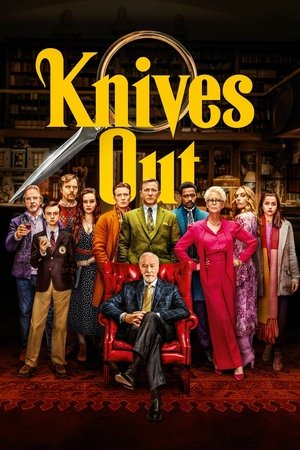
KNIVES OUT(2019)
Written by: Rian Johnson
Draft date: Not specified.
Genre: Thriller
Title: Knives Out
Written by: Rian Johnson
Draft date: Not specified.
LOGLINE
When a wealthy mystery novelist's trusted young nurse accidentally administers what she believes is a fatal drug overdose on the night of his 85th birthday party, she follows his dying instructions to cover her tracks — only to discover that the old man's entire fortune has been left to her, making her the prime target of his scheming family and a relentless private detective.
| Very Poor | Poor | Fair | Good | Excellent | |
|---|---|---|---|---|---|
| PREMISE | ✓ | ||||
| STRUCTURE | ✓ | ||||
| CHARACTER | ✓ | ||||
| CONFLICT | ✓ | ||||
| DIALOGUE | ✓ | ||||
| PACING | ✓ | ||||
| TONE | ✓ | ||||
| ORIGINALITY | ✓ | ||||
| LOGIC | ✓ | ||||
| CRAFT | ✓ |
| Strong Pass | Pass | Consider | Recommend | Strong Recommend | |
|---|---|---|---|---|---|
| Overall | ✓ |
Genre: Thriller, Comedy
Sub-genre: Murder Mystery, Black Comedy, Whodunit
Keywords: Ensemble Cast, Female Protagonist, Latina Protagonist, Inheritance, Family Dysfunction, Wealthy Family, Private Detective, Estate Setting, New England, Twist Ending, Class Divide, Immigration, Deception, Cat-and-Mouse
MPA Rating: PG-13 (borderline R for language — multiple uses of profanity including "shit" and one use of "bitch," plus a throat-slitting suicide depicted on-screen and an attempted stabbing, though violence is not graphically sustained)
Budget Tier: Medium ($10M–$40M): Single primary estate location with period-appropriate interiors, moderate cast of 15+ speaking roles, minimal VFX, some car chase work, a building fire/explosion, and several vehicle exteriors.
Pages: 137
Time Period: Present over approximately 10 days.
Locations: 70% at a gothic New England manor house (the Thrombey estate), requiring a large multi-story home with attic study, trick hallway, climbing trellis, guard gate, and surrounding wooded grounds. 10% at a modest South Boston apartment. 10% at various Norfolk, Massachusetts locations including a roadside restaurant, hospital waiting room, medical examiner's office (requiring a charred/burned exterior), vacant storefront, and suburban home. 5% in vehicles. 5% at Ransom's single-family residence.
Lead: Female, late twenties, Latina (family described as from various South American countries by unreliable narrators), compassionate and competent registered nurse with a physical inability to lie without vomiting — moral, resourceful, and deeply loyal.
Comparables: Clue (1985) for the ensemble whodunit in a single estate with dark comic tone; Gosford Park (2001) for the upstairs-downstairs class dynamics within a murder mystery at a country house; The Grand Budapest Hotel (2014) for the eccentric detective figure, intricate plot machinery, and a protagonist of modest means navigating the schemes of the wealthy; Murder on the Orient Express (2017) for the detective-led parlor-room investigation structure with a large suspect ensemble.
SYNOPSIS
FRAN (Adult), a housekeeper, carries coffee up through a gothic New England manor to the attic study of HARLAN THROMBEY (85), bestselling mystery novelist, and discovers him dead on a day bed with his throat slit. One week later, MARTA CABRERA (late 20s), Harlan's kind and competent nurse, struggles with grief in her small apartment with her MOM (Adult) and sister ALICE (Teenager). Walt Thrombey calls and summons her back to the estate, where police want additional statements. Marta's friend MEG (College-aged), Harlan's granddaughter, greets her warmly but reveals the funeral already took place — the family voted to exclude non-family members.
Inside, LIEUTENANT ELLIOTT (30s) and TROOPER WAGNER (30s) question the Thrombeys one at a time, with a mysterious observer — BENOIT BLANC (Adult), a renowned private detective in a linen suit — sitting silently in the background. Through intercut interviews and flashbacks, the family dynamics emerge. LINDA DRYSDALE (60ish), Harlan's eldest daughter, is a steely self-made businesswoman married to RICHARD (60ish), who is having an affair Harlan discovered. WALT THROMBEY (late 40s) runs Harlan's publishing house and had been lobbying for film rights Harlan refused to grant — Harlan fired him that night. JONI THROMBEY (Adult), widow of Harlan's late son Neil, had been skimming double tuition payments for her daughter Meg and was cut off entirely. RANSOM DRYSDALE (early 30s), Linda and Richard's entitled son, had a screaming fight with Harlan and stormed out. Each family member lies about their private confrontation with Harlan during their interview.
Blanc reveals he was hired anonymously — an envelope of cash arrived with a newspaper clipping — and persuades Elliott to keep the case open for 48 hours. Elliott walks through everyone's alibis for the night: Marta took Harlan upstairs at 11:30, left at midnight (witnessed by Walt and his son JACOB, 16), and Harlan was seen alive at 12:15 coming downstairs for a snack. The creaky stairs and Linda's light sleeping account for every movement.
In an extended flashback, Marta's actual experience that night is revealed. She and Harlan played GO in his attic study, and she administered his medications — but realized too late she switched the vials, giving him 100 milligrams of morphine instead of the correct 3. With no Naloxone in the emergency kit, Harlan stopped her from calling 911 and devised an elaborate plan to protect her: she would leave visibly, return secretly by climbing the trellis, disguise herself in his robe to be "seen" by Walt, and establish an alibi. Harlan then slit his own throat with an ornamental dagger. Marta executed the plan, nearly spotted by GREATNANA (extremely elderly), Harlan's ancient mother, who mistook her for Ransom.
Blanc asks Marta to serve as his "Watson" during the investigation. The next morning, they search the grounds. Marta covertly destroys evidence — stomping through her own footprints in mud near the side gate, kicking a broken trellis piece under bushes, and pocketing the security tape. However, a dog retrieves the trellis piece and drops it at Blanc's feet. He discovers the trick window, mud traces on the carpet, and declares someone broke into Harlan's rooms.
At the will reading, attorney ALAN STEVENS (Adult) reads Harlan's revised will: everything — the house, sixty million dollars, and sole ownership of Blood Like Wine publishing — goes to Marta Cabrera. The family explodes. Ransom laughs hysterically and slips out. Marta escapes the family mob by jumping into Ransom's Porsche.
Over dinner, Ransom reveals he knows Marta can't lie and forces her confession by feeding her a plate of sausage and beans as leverage. He proposes a deal: he'll help her evade Blanc and keep the inheritance in exchange for his cut. Meanwhile, the family strategizes to reverse the will. Walt threatens Marta with exposure of her mother's undocumented status. Blanc investigates further, discovering Walt's gambling debts and Joni's bankrupt business.
Marta receives an anonymous blackmail note — a photocopy of a medical examiner header with her name, reading "I KNOW WHAT YOU DID." Ransom identifies it as a blood toxicology report that would reveal the morphine overdose. That same morning, the medical examiner's office is destroyed by arson, and the security tape from the estate is scrambled. Marta receives an anonymous email with an address and time. She flees Blanc in a brief, comically slow car chase but is caught. Blanc reveals Greatnana identified Ransom as the person climbing the trellis, and Ransom is taken into custody. Blanc insists Marta accompany him to the rendezvous address.
At the vacant storefront, Marta finds her medical bag and Fran barely alive in a chair, holding an empty envelope. Fran gasps "Hugh did this" and "copy... stashed," then loses consciousness. Marta calls 911, sacrificing her self-preservation to save Fran's life. Blanc finds her there.
After Ransom confesses to Blanc (believing Marta has already told everything), Blanc assembles the family and Ransom for the final revelation. The entire scheme is reconstructed: Ransom, told by Harlan about both the will change and Marta, returned to the house the night of the party and switched the medication vials so Marta would accidentally kill Harlan, triggering the slayer rule to nullify the will. But Marta, through pure nursing instinct, unknowingly switched them back and administered the correct doses — Harlan was never in danger. His suicide was unnecessary. Ransom hired Blanc anonymously to expose Marta's "crime," but when Marta confessed to him and he realized the tox report would prove her innocence, he pivoted: burning the medical examiner's office, poisoning Fran to destroy the evidence, and framing Marta. Marta discovers Fran hid a copy of the tox report in the mantle clock. Blanc reads it and confirms Harlan's blood was normal.
When Blanc announces the case will be closed as suicide and Marta will keep the inheritance, Ransom taunts Marta viciously. She projectile vomits on him — revealing her claim that Fran survived was a lie. Fran is dead, and Ransom has just confessed to her murder on the record. He lunges with a knife from the wall, stabs Marta — but it is a retractable theatrical prop. Wagner tackles him. Ransom is arrested. Linda discovers a hidden message from Harlan in invisible ink. Marta stands in the doorway of her house as the Thrombey family looks up at her from the lawn.
COMMENTS
PREMISE — Excellent
The premise — a good-hearted nurse entangled in a cover-up of her own apparent crime while a detective closes in and a wealthy family turns predatory — is inherently rich with tension because the protagonist's goal (self-preservation) directly conflicts with her defining trait (an inability to lie). The central dramatic question is not simply whodunit but whether Marta can survive the moral labyrinth Harlan constructed for her, and this reframing of the classic whodunit into a "will she get away with it" keeps the material from feeling like a standard parlor mystery. The setting — a gothic manor crammed with antique puzzles and decorative weapons — functions as both thematic commentary and literal plot machinery. Each family member's private grievance with Harlan provides a fully loaded field of suspects, but the deeper theme concerns who "deserves" wealth and belonging, sharpened by making the protagonist an immigrant nurse in a family that claims to love her while treating her as an outsider. The premise positions itself in the territory of Agatha Christie adaptations but subverts them by making the audience complicit with the suspect rather than the detective, closer in spirit to Patricia Highsmith than Hercule Poirot.
STRUCTURE — Good
The architecture is unusually sophisticated, layering three distinct structural movements that build on and recontextualize one another. The first movement establishes the family through the interview framework, efficiently introducing eight suspects and their motives before the midpoint revelation — the will reading (74-77) — detonates the status quo. The critical flashback revealing Marta's actual experience of the night (37-59) functions as both inciting incident and emotional engine, arriving at roughly the right proportional point (around 27%) to commit the audience to Marta's predicament. The midpoint will reading lands at approximately 54% of pages, correctly serving as a reversal that transforms Marta from hidden suspect to public target. The break into the final movement — Blanc's parlor-room reconstruction beginning around page 117 — arrives at roughly 85%, somewhat late, which compresses the climax and resolution into a rapid sequence. Every scene serves the throughline: Marta's attempts to destroy evidence (the footprints at 62, the trellis at 64, the security tape at 62) each create immediate tension while advancing the plot. The flashback structure is demanding but never disorienting because each flashback is triggered by a specific present-tense question or moment. One structural weakness is the long stretch from pages 80-100 where Ransom and Marta's alliance is established — the pacing here relies on the audience not yet understanding Ransom's true role, and some of their conversations feel like stalling until the next plot bomb detonates (see: Pacing).
CHARACTER — Good
Marta is a meticulously constructed protagonist whose defining physical trait — vomiting when she lies — is simultaneously comic device, plot mechanism, and character revelation. Her backstory (undocumented mother, no father figure, genuine bond with Harlan) establishes clear stakes, her want (protect her family) conflicts with her need (act with integrity), and her arc resolves when she sacrifices the inheritance to save Fran's life (110-111), choosing moral action over self-preservation. Ransom is the strongest supporting character, his charm weaponized so effectively that his betrayal recontextualizes every prior scene — the pep talk at the restaurant (86-87) reads entirely differently on a second pass. Blanc functions less as a traditional character with an arc and more as a structural instrument — his eccentric mannerisms (the silver dollar, the cigar, the donut metaphor at 117) give him texture, but his emotional investment in the case remains thin. The family members are sharply differentiated through their interview segments: Linda's steeliness (8-9), Walt's obsequiousness (10-11), Joni's performative sincerity (12-13), and Richard's bluster (15) are each established in under two pages. The one character who feels underserved is Meg, whose betrayal of Marta's mother's status (113) is the family's cruelest act but arrives with insufficient setup of the internal conflict that would drive it.
CONFLICT — Good
The central conflict operates on three simultaneous levels: Marta versus Blanc (can she evade detection), Marta versus the family (can she withstand their pressure to renounce the inheritance), and Marta versus herself (can she live with what she believes she's done). The external conflict escalates methodically — from police questioning (6-38) to will reading bombshell (74-77) to blackmail (96) to arson (101) to attempted murder (130-131) — with each escalation raising stakes appropriately. The scene-level conflict is particularly well-managed during the investigation sequences, where every interaction between Blanc and Marta contains the tension of his probing intelligence meeting her desperate concealment: the footprint scene (62-63), the trellis discovery (72), and the guard house tape (60-62) all generate suspense from Marta's barely-contained panic. The internal conflict reaches its crisis point when Marta finds Fran dying and must choose between letting her die (preserving the cover-up) and saving her (exposing the truth) at page 110-111. The resolution of the mystery — that Marta gave the correct doses all along — resolves the external conflict satisfyingly but somewhat diminishes the internal one, since Marta's guilt is retroactively erased rather than confronted.
DIALOGUE — Excellent
The dialogue is the material's most consistent strength, with each character possessing a voice distinct enough to identify without attribution. Linda's clipped precision ("The party? Pre my dad's death? It was great" at 8) contrasts sharply with Joni's New Age vagueness ("that balance of opposites is the nugget of Flam" at 13) and Richard's blunt entitlement ("Immigrants — we get the job done. From Hamilton" at 17). Blanc's dialogue is the most stylistically ambitious — his extended metaphors ("I anticipate the terminus of gravity's rainbow" at 57, the donut monologue at 117) walk a fine line between charming eccentricity and self-indulgence, mostly landing on the right side. The immigration dinner scene (52-54) accomplishes the difficult task of having characters express political positions that reveal character rather than serving as authorial editorials — Richard's obliviousness in dragging Marta into the debate is more damning than any direct condemnation. Subtext operates effectively throughout: Meg's phone call (87-88) begins as genuine concern and curdles into manipulation, with "you know what's right" carrying the weight of the family's entitlement. Alice's overlapping dialogue in the opening (3) efficiently establishes the Cabrera household's warmth and chaos in contrast to the Thrombey formality.
PACING — Fair
The first 38 pages, covering the interview structure and alibis, maintain momentum through the intercutting technique — no single interview overstays its welcome, and each reveals a new secret. The extended Marta flashback (37-59) is the material's most sustained sequence and earns its length through escalating tension and emotional devastation. The middle section (80-100), however, loses propulsive energy. The restaurant scenes with Ransom (80-87) and the family's legal strategizing (83-86) cover necessary ground but at a more leisurely pace than the surrounding material supports — particularly the family's legal discussion, which rehashes information the audience already possesses. The car chase (104-106) is deliberately anticlimactic (Marta's top speed is 55 mph), which works tonally but further extends a section that could benefit from compression. The final act, from Blanc's reconstruction (117) through Ransom's confession and the retractable knife (134-135), moves at breakneck speed — perhaps too quickly, as the donut monologue and the extended flashback reconstructions pack an enormous amount of plot revelation into roughly 18 pages. The balance between action and dialogue tilts heavily toward dialogue throughout, which suits the genre but means physical tension is rare outside of Marta's covert evidence destruction.
TONE — Good
The tonal calibration between comedy, thriller, and genuine emotion is the material's most technically demanding achievement, and it succeeds more often than not. The comedy is character-driven rather than gag-driven — Marta's vomiting (30, 134), Donna's constant startle reflex (11, 66), Greatnana's inscrutable presence (8, 50, 64) — which allows it to coexist with moments of real grief like Marta's laugh-cry in the kitchen (3) and Harlan's suicide (59). The tonal risk points are the immigration debate scene (52-54), which sharpens into social satire that could feel didactic, and Blanc's monologue to Greatnana (96-97), which veers into a register so literary it momentarily breaks from the procedural thriller surrounding it. The retractable knife at the climax (135) is the most audacious tonal choice — resolving a moment of genuine horror with a sight gag — and it works because it has been seeded by Harlan's earlier speech about stage props versus real knives (41). The family's post-will eruption (76-78) balances genuine menace with absurdist comedy effectively, and the final image — Marta standing small in the doorway of "her" house (137) — lands the emotional register precisely.
ORIGINALITY — Good
The whodunit genre has been well-trodden from Christie's novels through Clue (1985) and Kenneth Branagh's Murder on the Orient Express (2017), and the premise's debt to these predecessors is explicit — the manor setting, the eccentric detective, the family-of-suspects ensemble. What distinguishes the material is the structural inversion: by revealing the apparent "truth" at the first-act break and making the audience an accomplice to the cover-up, it transforms a whodunit into a Hitchcockian suspense exercise where dramatic irony replaces mystery as the primary engine. The closest structural precedent is Columbo, where the audience knows the killer and watches the detective close in, but here the "killer" is the sympathetic protagonist, which creates a fundamentally different emotional experience. The double-reversal — that Marta's crime was no crime at all, engineered by Ransom's own scheme backfiring — is genuinely surprising and retroactively enriches every prior scene. The thematic integration of immigration politics into the mystery structure is a meaningful departure from the genre's typically apolitical comfort-food mode, giving the material's class commentary a specificity that Gosford Park approached from a different angle. The vomiting-as-lie-detector conceit is a small invention that yields outsized returns, functioning as both comic relief and plot mechanism through the final act.
LOGIC — Fair
The plot machinery is intricate and mostly airtight, with one significant gap and several minor ones. The central twist — that Marta instinctively gave the correct medications despite switched labels — is established by Blanc's taped-vial demonstration (123), which provides a satisfying mechanical explanation. However, the question of why Harlan did not notice he felt perfectly fine in the minutes before his suicide is never addressed: he shows a bead of sweat (43) suggesting symptoms, but if the drugs were correct, there should have been no symptoms at all, and Harlan — a sharp-minded mystery writer — would presumably have noticed the absence of distress. The Naloxone pen's absence from the emergency kit (43) is attributed to Ransom's theft, but Marta does not question its absence in the moment or later, which strains credibility for a competent nurse. Fran's ability to obtain a copy of the toxicology report through her cousin (127) is acknowledged as convenient but functions within the established world. The retractable knife's presence on a wall of "decorative weapons" (135) is seeded by Harlan's earlier demonstration that one of the knives is real (41), making the prop's existence logical within the house's established character.
CRAFT — Good
The writing operates in a brisk, efficient register that favors white space and rapid-fire dialogue over literary description, appropriate for a plot-heavy ensemble piece. Character introductions are economical and vivid — Linda "dresses and speaks with just a little more sharpness than any situation she's in requires" (6), Blanc's "legs and arms fold sharply, like a paper crane" (7) — each providing a director and actor with a clear behavioral key. The intercutting between interviews and flashbacks is handled with clean transitions that never require excessive slug lines or confusing temporal markers. Action lines are lean ("She PROJECTILE VOMITS into Ransom's face" at 134), trusting the reader's imagination. The parenthetical direction is occasionally heavy-handed — "(angry, no)" for Ransom at 81, "(honest & relieved)" for Marta at 33 — where the dialogue itself already conveys the intended reading. The formatting is consistent throughout, with one notable anomaly: page 97A appears, suggesting a late insertion that disrupts the page count. A minor grammatical issue: "Marta is unexpectedly effected by this" (82) should read "affected." The voice is confident and distinctive, particularly in stage directions that wink at the audience ("the gentlest southern lilt you have ever heard in your life" at 16) without becoming intrusive.
OVERALL — Recommend
Knives Out is a comic murder mystery in which a nurse who believes she accidentally killed her elderly employer must navigate his scheming family, a relentless detective, and a hidden conspiracy while concealing a crime that — in the material's central irony — was never actually committed. The strongest elements are the premise's structural ingenuity, the dialogue's character differentiation, and the tonal balance between genuine suspense and sharp comedy. The weakest element is the middle-section pacing between the will reading and the final act, where the Ransom alliance and family strategizing sequences lose the propulsive energy that the interview structure and flashback sequences generate so effectively. The logical gap surrounding Harlan's failure to recognize the absence of overdose symptoms before his suicide is the most significant plot-level concern, as it sits at the precise hinge point of the entire mystery. The character work is strongest in the ensemble — each Thrombey is a distinct comic creation — while Marta's arc, though mechanically sound, derives more power from her situation than from internal complexity. Blanc's ornamental role is acknowledged within the text but still leaves the detective feeling more like a delivery mechanism for the climactic revelation than a fully inhabited presence. The material is ambitious, densely plotted, and consistently entertaining, with a final act that recontextualizes nearly every prior scene — a rare structural achievement that rewards close attention.
Get this level of coverage for your screenplay
Every coverage includes 10 category ratings, an overall recommendation, and detailed analysis — powered by the same methodology used by talent agencies and literary managers.
Movie data provided by TMDB