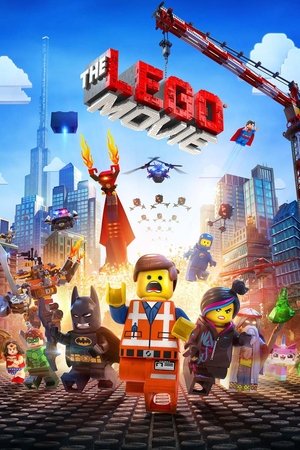
LEGO: THE PIECE OF RESISTANCE(2014)
Written by: Chris Miller & Phil Lord
Genre: Animation
Title: LEGO: THE PIECE OF RESISTANCE
Written by: Chris Miller & Phil Lord
Draft date: Not specified
LOGLINE
In a conformist LEGO world where creativity is outlawed, a painfully average construction worker must rescue his kidnapped mother — secretly the most powerful MasterBuilder in the universe — and stop a megalomaniacal corporate emperor from permanently gluing all of reality into place.
| Very Poor | Poor | Fair | Good | Excellent | |
|---|---|---|---|---|---|
| PREMISE | ✓ | ||||
| STRUCTURE | ✓ | ||||
| CHARACTER | ✓ | ||||
| CONFLICT | ✓ | ||||
| DIALOGUE | ✓ | ||||
| PACING | ✓ | ||||
| TONE | ✓ | ||||
| ORIGINALITY | ✓ | ||||
| LOGIC | ✓ | ||||
| CRAFT | ✓ |
| Strong Pass | Pass | Consider | Recommend | Strong Recommend | |
|---|---|---|---|---|---|
| Overall | ✓ |
Genre: Comedy, Fantasy
Sub-genre: Action Adventure, Animated Comedy, Coming-of-Age Comedy
Keywords: Chosen One, Mother-Son Relationship, Fish-Out-Of-Water, Creativity vs. Conformity, Corporate Villain, Ensemble Cast, Quest, Prophecy, Multiple Worlds, Animated, Toy Adaptation, Meta-Narrative, Female Protagonist (secondary), Rebellion
MPA Rating: PG (mild comic action violence, no strong language — "flipping" substitutes throughout)
Budget Tier: Ultra High ($100M+) — extensive CGI/animation across dozens of elaborately designed LEGO worlds, large voice cast including licensed IP characters (Batman, Indiana Jones, Han Solo, Chewbacca, R2-D2, Harry Potter), massive action set pieces, musical number
Pages: 111
Time Period: Present (fantasy/animated). Events span approximately 3-4 days.
Locations: 70% across multiple fantastical LEGO realms — Legopolis (modern city), Legopia (New Zealand-style fantasy land with hobbit houses), Puertopieceo (colonial port), Krazy Kastle (whimsical medieval kingdom), Old West Ghost Town, underwater/ocean sequences, outer space/Superbrick space station, volcano/Empura Tower. 10% in a live-action basement. All environments require full CG animation with distinct visual identities per realm. Licensed character likenesses required.
Lead: Emmet, male, 22, race unspecified (LEGO minifigure), a deeply earnest and conflict-averse construction worker whose entire identity is built around following instructions and fitting in. Physically indistinguishable from everyone else.
Comparables: The LEGO Movie (2014, the produced version of this draft); The Truman Show (ordinary person discovers manufactured reality controlled by a single authority); Toy Story (toys with inner lives navigating the relationship between a child and adult creator); Wreck-It Ralph (protagonist defined by assigned role rebels against systemic identity).
SYNOPSIS
A NARRATOR describes a mysterious relic that fell from the stars and was lost to history. Ten billion years later, LEGO INDIANA JONES (Adult) discovers a golden sarcophagus in an ancient temple, but THE BLACK FALCON (Adult), the most evil person in the universe, arrives with robot guards and steals the artifact — the Kragle. Indy escapes and warns the MasterBuilders, a secret society of creative warriors led by KRAV M'GA (Adult). Krav M'Ga sends GEMINI (Adult), a mysterious cloaked figure, to find "the Chosen One." The Black Falcon's forces attack, destroying the MasterBuilders. Gemini flees, haunted by Krav M'Ga's dying command.
In Legopolis, a conformist LEGO city, DORIS (Adult), an overbearing but loving mother, fusses over her son EMMET (22), a painfully average construction worker who lives across the hall from her. Emmet's only ambition is to fit in. A recurring dream haunts him: in middle school art class, he drew a face instead of following instructions, and the humiliation made him a pariah. A young GIRL watched sympathetically — this was LUCY. Doris urges him to follow the rules and be safe. Emmet drives to work through a city saturated with identical behavior, corporate billboards for EMPURA, and the omnipresent pop hit "Everything is Awesome." At the construction site, FOREMAN SEAN (Adult) instructs Emmet to follow building plans exactly. Emmet bonds with coworkers over lunch and is invited to watch a game after work.
While building, Emmet is inspired by clouds and accidentally constructs a smiling face instead of the assigned piece. The deviation triggers a chain reaction that topples buildings. Police arrest Emmet and jail him. Doris sees the incident on TV and breaks him out of prison using a blowdart. Emmet, furious at the rule-breaking, argues with her. During their fight, ROBOTIC NINJAS kidnap Doris. Gemini — revealed to be Lucy, Emmet's middle school ex-girlfriend — pursues the ninjas. Emmet flags down LARRY (Adult), a barrista, and an elaborate car chase follows. Lucy reveals that Doris is the Chosen One, the most powerful MasterBuilder alive, and that both the police and ninjas work for the Black Falcon, who is also Rodrigo Falcone, CEO of Empura and self-declared Emperor. The ninjas escape with Doris, but Emmet discovers a false compartment in his mother's purse containing the MasterPiece — a magical, color-shifting brick with a prophecy inscribed on it.
When Emmet touches the MasterPiece, he has a blurry vision of giant human creatures in a basement. Lucy leads him beyond the city limits through a secret passage to Legopia, another walled-off realm. They find VITRUVIUS (Adult), a blind, retired MasterBuilder living behind a waterfall. Vitruvius explains that the Black Falcon was once his student who became obsessed with control after Vitruvius destroyed his creation to teach impermanence. The Black Falcon now forces captured MasterBuilders to generate ideas he steals through a "Think Tank." Meanwhile, the Black Falcon threatens Doris in Empura Tower, revealing the Kragle is actually a tube of Krazy Glue with letters rubbed off. He plans to freeze the entire world permanently and demands Doris build him a better delivery weapon.
Vitruvius, Lucy, and Emmet sail with Lucy's boyfriend NECKBEARD (Adult), a pirate who is only a head, aboard his ship the Sea Cow. They evade a Viking patrol by converting the ship into a submarine. Emmet continues having visions of human beings — TED (Adult) and his nephew FINN (Child) — arguing over LEGO sets in a basement. They reach Legotopia, the last free kingdom, ruled by KRAZY KING KARL (Adult), who presents a musical number celebrating unconstrained creativity. Emmet meets the remaining team: BATMAN (Adult), DUPLO (Adult), a simple Duplo figure, and BENNY (Adult), a damaged spaceman with a mop for a co-pilot. Before they can plan, BAD COP (Adult) arrives — the Black Falcon was cc'd on their mass email. King Karl, who sold them out due to debt, has a change of heart and frees them, but the kingdom is overrun. The heroes escape via catapult, quickbuilding a Rocket-Copter mid-air, surviving a dogfight through dimensional walls.
Camping in an Old West Ghost Town, Emmet and Lucy reconnect. Lucy reveals she was inspired by his childhood drawing and heartbroken when he became a conformist. Emmet confesses he never had real friends despite trying to fit in. Another vision shows Ted scolding Finn for playing with his LEGO sets and picking up Krazy Glue. Vitruvius encourages Emmet to build, and Emmet creates a small mecha-bird — his first original creation.
The team infiltrates Empura Tower using an improvised climbing device. They find the frozen diorama family and Emmet builds them a periscope so they can see each other. Neckbeard impersonates the Black Falcon to get past guards. They reach the Think Tank and find Doris, but the Black Falcon traps them. Vitruvius battles the Black Falcon while the others flee, but Lucy, Doris, and Emmet are captured. Batman, Benny, and Neckbeard escape.
In the Black Falcon's office, Emmet and Doris reconcile. Doris admits she suppressed Emmet's creativity to protect him. The Black Falcon launches the SuperKragleThingy Part II — a colossal glue-spewing mecha-robot — and blasts the Empura Tower into space, docking with the Superbrick space station. Below, Larry the barrista is inspired by Emmet's mecha-bird and leads citizens in building their own creative constructions, distracting the SKT2. Emmet burns through his bindings with a magnifying glass, frees the others, and uses the MasterPiece and collected relics to build a laser portal. He disappears through it.
Emmet emerges in a live-action basement where Ted and Finn's LEGO collection represents his entire world. After a comic confrontation, Emmet persuades Ted that creation is richer when shared and imperfect. Ted gives Emmet a Krazy Glue cap — "the Cone of Power" — to stop the Kragle. Emmet returns through the portal. In the climactic battle, Doris descends from a spaceship to shield Emmet, Lucy orchestrates a WhimsyBot from citizen-built ships, and Emmet caps the Kragle by sneaking through the back of the SKT2. The robot explodes. Giant LEGO cloud hands — the Makers' — catch Emmet and Doris safely. Ted and Finn throw the Krazy Glue in the garbage together. The worlds unfreeze, walls crumble, and everyone reunites. Emmet and Lucy kiss. Neckbeard eyes Doris.
COMMENTS
PREMISE — Excellent
The core concept — a conformist nobody in a world literally built from instructions must embrace creativity to save his kidnapped mother and defeat a corporate tyrant who wants to glue everything in place permanently — is a pitch that sells itself in a single sentence. The inherent tension between order and imagination gives every character a thematic stake, from Emmet's fear of standing out to the Black Falcon's pathological need for control. Doris as the Chosen One rather than Emmet is a smart subversion that keeps the prophecy trope fresh while grounding the emotional engine in a mother-son relationship about overprotection and independence. The meta-layer — that the LEGO universe is a real child's playset governed by an adult's rigidity — elevates the premise beyond its toy-franchise origins into genuine thematic territory about collaborative versus solitary creation. Against comparables like The Truman Show and Toy Story, the concept distinguishes itself through the specificity of its metaphor: Krazy Glue as existential threat, instruction manuals as ideology. The premise provides abundant fuel for spectacle, humor, and heart simultaneously.
STRUCTURE — Fair
The narrative follows a clean quest architecture with well-placed escalations, though the middle passage sags under the weight of world-building tourism. The inciting incident — Emmet's accidental creative act and arrest — lands efficiently around pages 16-18, and Doris's kidnapping (22) locks in the central mission. The midpoint arrives when the Black Falcon captures the team at Krazy Kastle and gloats via teleconference (65-68), effectively raising stakes by demonstrating his near-total victory. The break into the final movement comes when Emmet enters the live-action basement (101), which functions as both revelation and resolution catalyst. What weakens the structure is the long stretch between the submarine escape (55) and the Kastle battle (69), during which the Legotopia arrival, the musical number, and the team assembly feel episodic rather than causally linked — King Karl's betrayal is the only beat that advances the plot, and it arrives after a sequence of scenes that function more as world-showcase than narrative propulsion. The planning-sequence montage (77-81) is comedically inventive but structurally stalling, delaying the climactic infiltration. The climax itself (98-110) is dense and satisfying, with multiple payoffs — Larry's mecha-birds, the Cone of Power, the WhimsyBot — all seeded earlier.
CHARACTER — Good
Emmet is a well-constructed protagonist whose arc moves from desperate conformist to self-chosen creative, with each beat of the five-arc framework accounted for: his backstory trauma in art class (7-8), his explicit want to fit in (7), his internal need to express himself (16), his increasingly active choices from the catapult escape (71) to the portal construction (98), and his transformation confirmed when he persuades Ted to let go of control (104). Doris is the more complex surprise — her overprotection is motivated by genuine love and fear (89), and her late-act revelation as a ferocious fighter (108) pays off the tension between who she told Emmet to be and who she actually is. The Black Falcon's origin as a student whose perfectionism curdled into tyranny (44) gives him psychological specificity rare in animated villains, though his middle-section scenes lean heavily on comedic bluster at the expense of menace. The supporting ensemble — Neckbeard, Benny, Batman — is vividly differentiated in voice and function, with Benny's space madness (63-64) and Neckbeard's bodyless bravado (48-49) providing distinct comic textures. Lucy, however, is somewhat thinly drawn beyond her role as romantic interest and combat asset — her stated status as "intern" (31) promises a parallel growth arc that never fully materializes.
CONFLICT — Good
The central conflict — Emmet must rescue Doris and destroy the Kragle before the Black Falcon freezes the universe — is clearly defined and escalates through increasingly dire setbacks: Doris's capture (22), the team's capture at Krazy Kastle (65), the Think Tank imprisonment (68), and the SKT2's deployment (92-93). The internal conflict is equally well-articulated: Emmet's lifelong suppression of creativity versus his emerging instinct to create, dramatized through the recurring motif of the smiling face (16, 82) and his halting attempts at building (54, 77). Scene-level conflict is generally strong — the coffee shop exchange (10-12) generates friction from Emmet's inability to make even a trivial choice, and the Doris-Emmet argument in the alley (21-22) delivers genuine emotional stakes. The one area where conflict thins is during the voyage sections (50-56), where tension depends primarily on the submarine evasion sequence and the discomfort of Neckbeard's relationship with Lucy, neither of which escalates meaningfully. The Black Falcon's threat is somewhat diffused by his extended comic incompetence with the teleconference (66-67), which trades menace for laughs at a moment when stakes should be tightening.
DIALOGUE — Excellent
The dialogue is the draft's most consistent strength, with distinct voices for nearly every character and a high density of jokes that land through character specificity rather than generic wit. Emmet's verbal tics — his reflexive agreeableness ("They should so keep him!" on 15), his inability to recognize sarcasm ("I forgot to mention, I am saying this with a sarcastic inflection" on 47) — create a voice so particular that lines are identifiable without attribution. The Black Falcon's dialogue oscillates effectively between corporate buzzspeak and petulant rage ("Who built this place? Must have been a bunch of lazy hippies" on 4), establishing his worldview in every utterance. Neckbeard's pirate dialect applied to modern situations ("I beed wondering if you could do me a favor" on 84) generates reliable comedy. Subtext operates well in the Emmet-Doris exchanges — her "Don't forget dinner" / "Be safe" / "Follow the instructions" litany (9) conveys her entire philosophy without exposition. The weakest dialogue belongs to the planning-sequence montage (77-80), where Batman's extended riff on the Joker, while amusing, breaks character voice to become a meta-commentary that sounds more like the writers than Batman.
PACING — Fair
The first thirty pages move briskly, establishing world, character, and central conflict with economy, and the car chase sequence (23-29) sustains momentum through inventive escalation. The final thirty pages (81-110) are dense with action but earn that density through converging plot threads. The problematic stretch is pages 42-70, where the journey to Vitruvius (42), the sea voyage (50), the arrival at Legotopia (58), and King Karl's musical number (59-60) create a cumulative lull. The musical number, while charming in concept, occupies three pages in a section already low on forward momentum. The planning montage (77-81) — five failed plans plus the "wing it" resolution — is comedically satisfying but narratively static, adding approximately four pages of delay before the climax begins. Individual scenes within this stretch are well-calibrated in length, but the sequence of low-stakes encounters (Krazy Kastle tour, Neckbeard's jealousy bits, Vitruvius's echolocation gags) produces a cumulative drag. The live-action basement sequence (101-105) is paced carefully, with the comedy of the chase giving way to the emotional weight of Ted's monologue without rushing either.
TONE — Good
The tonal register — irreverent meta-comedy layered over sincere emotional stakes — is maintained with impressive consistency across 111 pages. The opening narration immediately establishes the dual register by combining mythic portentousness with a parenthetical about Stanley Kubrick (3), signaling that the material will take itself exactly seriously enough. The tone holds through tonal extremes: King Karl's massacre (70) plays the horror of outmatched whimsy for both laughs and genuine pathos, and the frozen family diorama (82-83) shifts to quiet heartbreak without feeling jarring. The live-action basement (101-105) represents the most significant tonal risk — breaking the animated reality for live action — and the draft handles it by keeping Emmet's comic reactions ("So ugly..." on 102) as the bridge between modes. The one scene where tone wobbles is the teleconference sequence (66-67), where the Black Falcon's extended fumbling with technology undercuts the gravity of his gloating reveal. The humor there is generic tech-frustration comedy rather than character-driven, and it arrives at the moment when the villain's threat should feel most concrete.
ORIGINALITY — Good
At the concept level, building an animated adventure around the literal mechanics of LEGO construction — where creativity is both theme and physics — is a genuinely novel framework for a franchise property. Against Toy Story, which explores toys' inner lives but keeps the human world as context, this draft makes the meta-layer an active plot mechanism: Emmet physically travels to the basement, and the Krazy Glue cap becomes the deus ex machina. Against Wreck-It Ralph, which uses a similar "coded identity vs. free will" structure, the execution here distinguishes itself through the MasterBuilder concept — the ability to see and rebuild the world's components in real-time, which creates a visual and narrative vocabulary unique to this property. The prophecy-subversion (the Chosen One is Mom, not the hero, until the hero chooses himself) and the villain's origin in artistic perfectionism gone toxic are specific enough to feel earned rather than assembled from parts. The planning-montage sequence (77-81) and the "Everything is Awesome" as dystopian anthem are strong examples of execution-level originality. Where the draft is most derivative is in its quest structure — the team-assembly, realm-hopping, and final-battle architecture follow fantasy-adventure templates closely.
LOGIC — Fair
The internal logic is largely consistent, with the Kragle-as-Krazy-Glue mechanic providing clear rules for the threat: glued things cannot be separated (26, 82), and the Cone of Power (the cap) is the logical counter. The MasterBuilder abilities — seeing pieces and rebuilding them in real-time — are established early (23) and applied consistently. One notable gap is the mass email to MasterBuilders (47): Vitruvius knows the Black Falcon was a former student of MasterBuilder Academy, yet no one anticipates that a mass email would reach him, which strains credulity given these characters' awareness of his surveillance state. The burn mark on Emmet's arm forming a star shape (97) — fulfilling the prophecy's "hand besmirched in shape of star" — is a contrivance that relies on a magnifying glass burn coincidentally producing a specific insignia. The live-action world's rules are deliberately loose, but the Cone of Power solution works only because Ted voluntarily offers it (104-105), which means the entire climax depends on Emmet's persuasive speech rather than any established mechanism — satisfying thematically but somewhat convenient mechanically.
CRAFT — Good
The writing operates at a high level of visual specificity and comedic timing, with action lines that communicate both the animated spectacle and the jokes embedded within it. Character introductions are consistently vivid — Neckbeard's reveal as "just a head. And a beard" (48) is a perfect two-sentence visual gag, and Vitruvius opening the door "facing the wrong direction" (42) establishes his blindness through action rather than description. The parenthetical directing of emotion is used judiciously, with "(choking up)" for Doris (6) and "(sotto)" for Emmet (96) deployed at moments where the comedy requires precise emotional calibration. The action writing in chase and battle sequences is clear despite enormous complexity — the submarine conversion (54), the catapult escape (71), and the final battle (106-110) all track spatially. A few formatting irregularities appear: the screenplay occasionally addresses the reader directly ("if the audiences have reassembled their minds from being blown before, they just got blown again" on 50; "Remember how I said there were hundreds of baddies" on 103), which, while stylistically consistent with the irreverent tone, breaks the screenplay's fourth wall in a way that reads as pitch-document rather than shooting draft.
OVERALL — Recommend
LEGO: The Piece of Resistance is an irreverent animated adventure-comedy in which a conformist construction worker must embrace creativity to rescue his kidnapped mother and stop a corporate tyrant from permanently gluing the LEGO universe together. The draft's greatest strengths are its dialogue — distinctive, densely funny, and character-specific throughout — and its premise, which transforms a toy-franchise obligation into a genuinely resonant metaphor about the tension between control and creative freedom. The Emmet-Doris relationship provides an emotional spine that the comedy never abandons, and the meta-layer of the live-action basement elevates the material beyond its genre obligations. The primary weakness is pacing in the middle third, where world-building spectacle (the musical number, the sea voyage, the planning montage) accumulates at the expense of narrative momentum. Lucy's arc is underdeveloped relative to her narrative importance, and the teleconference scene trades villain credibility for tech-frustration comedy at a structurally inopportune moment. These are correctable issues within a draft that demonstrates unusual ambition and thematic coherence for its genre.
Get this level of coverage for your screenplay
Every coverage includes 10 category ratings, an overall recommendation, and detailed analysis — powered by the same methodology used by talent agencies and literary managers.
Movie data provided by TMDB