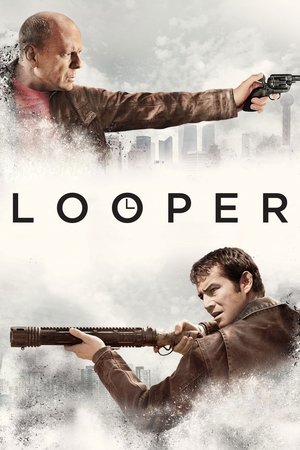
LOOPER(2012)
Written by: Rian Johnson
Draft date: Not specified (prefatory note dated December 2012)
Genre: Sci-Fi
Title: Looper
Written by: Rian Johnson
Draft date: Not specified (prefatory note dated December 2012)
LOGLINE
In a near-future Kansas where criminal syndicates use illegal time travel to send targets back thirty years for execution, a young assassin's routine kill goes wrong when his next victim arrives unbound and unhooded — revealing the face of his own fifty-seven-year-old self, who has traveled back on a desperate mission to murder a child he believes will grow up to destroy everything he loves.
| Very Poor | Poor | Fair | Good | Excellent | |
|---|---|---|---|---|---|
| PREMISE | ✓ | ||||
| STRUCTURE | ✓ | ||||
| CHARACTER | ✓ | ||||
| CONFLICT | ✓ | ||||
| DIALOGUE | ✓ | ||||
| PACING | ✓ | ||||
| TONE | ✓ | ||||
| ORIGINALITY | ✓ | ||||
| LOGIC | ✓ | ||||
| CRAFT | ✓ |
| Strong Pass | Pass | Consider | Recommend | Strong Recommend | |
|---|---|---|---|---|---|
| Overall | ✓ |
Genre: Sci-Fi, Thriller
Sub-genre: Action Thriller, Neo-Noir, Sci-Fi Drama
Keywords: Time Travel, Assassin, Organized Crime, Near-Future, Rural Setting, Child in Peril, Single Mother, Moral Dilemma, Self-Sacrifice, Drug Addiction, Loop/Paradox, Redemption, Male Protagonist, TK/Telekinesis, Father Figure, Hitman
MPA Rating: R (pervasive gun violence including violence involving a child, strong language throughout, drug use, brief sexuality/nudity, and intensely disturbing sequences involving bodily mutilation)
Budget Tier: Medium ($10M–$40M) — primarily rural Kansas locations and a gritty near-future city requiring modest production design, significant practical action sequences, some VFX for telekinesis and time-travel effects, a brief Paris montage, period-neutral wardrobe and vehicles with select futuristic props (slat bikes, floating screens)
Pages: 113
Time Period: Near-future (approximately 2044), with extended flashforward montage spanning roughly 30 years into the further future (approximately 2074). Primary action spans approximately 4-5 days.
Locations: 60% rural Kansas — a working corn farm with farmhouse, barn, surrounding fields, and adjacent highway. 25% a grimy near-future mid-sized city — nightclub (La Belle Aurore) with backstage/offices, apartment buildings, city streets, pawn shop, drainage tunnels, a half-built highrise. 10% Paris — apartment, clubs, streets, a beach highway, a countryside cottage. 5% miscellaneous — diner, suburban park and track home, library, church. Requires a corn field large enough for multiple chase sequences, a farmhouse with basement tunnel access, destructible interiors (explosion/telekinesis damage), and a barn. Slat bikes (hovering motorcycles) and period-neutral vehicles needed.
Lead: Male, approximately 25, race unspecified. Joe is a sharp-dressed, French-studying contract killer who is emotionally stunted, drug-dependent, and fiercely protective of his own narrow self-interest — until circumstances force a reckoning with what his life is worth.
Comparables: Terminator 2: Judgment Day (time-traveling killer pursues a child destined to shape the future, with a protector figure standing between them), Looper (2012 film) notwithstanding — Children of Men (bleak near-future setting, a cynical protagonist drawn into protecting a child who represents hope), No Country for Old Men (rural cat-and-mouse violence with philosophical undertones about fate), Twelve Monkeys (time-travel mechanics that resist clean logic, emotional cost of trying to change the past).
SYNOPSIS
JOE (25), a young assassin in a near-future Kansas, executes bound, hooded men who are sent back in time by a criminal syndicate thirty years in the future. These killers are called "loopers," and their victims arrive on a tarp in a cornfield at a scheduled time. Joe shoots them, collects gold bars taped to their backs, and disposes of the bodies in an industrial furnace. He lives a solitary, drug-fueled life in a sooty city, frequenting a nightclub called La Belle Aurore, pining after a sex worker named SUZIE (20s), and studying French with plans to eventually move to Paris.
Joe's friend SETH (20s), another looper, arrives at his apartment in a panic. Seth's latest target arrived singing a song Seth's mother used to sing — Seth realized the victim was his own future self and let him escape. This is called "letting your loop run," and it is the worst thing a looper can do. Joe hides Seth in his floor safe, but ABE (50s), the mob boss sent from the future to manage the loopers, pressures Joe into giving Seth up. Joe capitulates. Abe's men use a horrifying method to recapture OLD SETH (55) — they begin amputating young Seth's body parts, which causes old Seth's limbs and features to vanish in real time, driving him to a designated address where he is executed.
Joe continues his routine until one day his target arrives late, unbound, and without a hood. The face staring back at Joe is his own — OLD JOE (57). Young Joe hesitates for a split second, and Old Joe exploits this to overpower him and escape. Joe wakes in the field, his truck and loop gone.
The narrative then rewinds to show an alternate version of events: Old Joe arrived bound and hooded, and young Joe killed him without hesitation, closed his loop, collected his payout, and moved to Paris. There, over thirty years, Joe descended into drugs and gangland violence before meeting his WIFE (30s), a woman with long red hair who saved him from self-destruction. They lived quietly in a French cottage until gangsters working for a mysterious future crime lord called the Rainmaker kicked in their door, killed his wife, and sent Old Joe back in time. But Old Joe fought free of his captors and sent himself back voluntarily, untied and unhooded, determined to find and kill the Rainmaker as a child.
Back in the present timeline, Joe is injured and on the run from Abe's enforcers, including the overeager young thug KID BLUE (20s). Old Joe and young Joe meet at a diner, where Old Joe explains his plan: he possesses a fragment of identifying information — a number combining a birthdate and hospital code — that narrows the Rainmaker's identity to three children in the surrounding county. He intends to kill all three. Joe tears away a piece of Old Joe's map during a shootout with Abe's gat men at the diner and escapes on Seth's slat bike. The torn map shows one circled farmhouse.
Joe arrives at the farm of SARA (late 20s), a tough, solitary woman raising CID (6), a quiet, intelligent boy. Sara initially drives Joe off at gunpoint, but when Joe shows her the number on the map, she recognizes it as Cid's birthdate and hospital code. After Joe explains the situation — that a man from the future is coming to kill her son — Sara agrees to let him stay as a protector.
Meanwhile, Old Joe executes his plan, killing DANIEL (6), one of the other children on his map, in a suburban backyard — an act that devastates him. Kid Blue, disgraced and nearly killed by Abe's men, independently tracks Old Joe to Suzie's apartment building, where Old Joe has discovered that the second child on his list is Suzie's daughter. Old Joe watches Suzie through her window but cannot bring himself to act.
On the farm, Joe and Sara grow closer. Cid reveals to Joe that Sara is not his biological mother — Sara abandoned Cid as an infant, and her sister raised him until the sister was killed. Sara eventually tells Joe the truth: Cid's sister died when Cid's uncontrolled telekinetic power erupted. Cid possesses an extraordinarily powerful TK mutation far beyond the trivial quarter-floating most TK people exhibit.
When ABE's gat man JESSE (30s) arrives at the farm searching for Joe, Cid is startled by Jesse drawing on him and his power explodes — Jesse is lifted into the air and torn apart in a spray of blood. Sara realizes what this means and so does Old Joe, who is captured by Kid Blue but experiences the memory remotely: Cid is the Rainmaker.
Old Joe breaks free during his transport into La Belle Aurore, massacres Abe and nearly all the gat men in a brutal rampage, then drives to the farm. Kid Blue pursues on a slat bike. Joe confronts Old Joe on the highway, and Kid Blue intervenes, but Joe kills him.
Old Joe reaches the farm as Sara and Cid flee in Jesse's truck. He shoots out the truck, flipping it. Sara and Cid run across the bare field toward the corn. Old Joe shoots Cid, grazing his jaw. Cid's power erupts massively — the earth rises, the barn splinters, everyone is lifted off the ground. But Cid sees Sara's face, reaching for him, and he releases his power. Sara sends Cid running toward the cornfield and stands between Old Joe and the boy.
Joe, too far away to intervene, watches Old Joe raise his gun. In a flash of vision, Joe sees what will happen: Old Joe will kill Sara, Cid will escape wounded and full of hate, and ride a freight train toward the city — becoming the Rainmaker. Joe turns his blunderbuss on himself and fires. Old Joe disappears. Sara is unharmed. Cid runs back to his mother.
Sara finds Joe's body at the edge of the field. His pocket watch lies open in the dirt, empty of any photograph, ticking. She closes it, touches his hair, and after a long while, the sun breaks through.
COMMENTS
PREMISE — Excellent
The core concept is elegant and immediately graspable: an assassin whose targets are sent from the future must kill his own older self, but the older version escapes with a mission to murder a child. This creates a three-way collision of interests — young Joe wants to close his loop and reclaim his life, Old Joe wants to save his wife by killing the future Rainmaker, and Sara wants to protect her son — that generates inherent tension at every turn. The premise is enriched by a thematic spine about self-interest versus sacrifice: Joe's defining philosophy, repeated in variations ("what's mine"), is systematically dismantled as the consequences of that philosophy are literalized in Old Joe's willingness to murder children. The setting — a grimy near-future where telekinesis is banal and time travel is used for garbage disposal — provides a textured world that serves the drama rather than overwhelming it. The central dramatic question evolves compellingly from "will Joe kill his loop?" to "what is Joe's life worth, and to whom?" The Rainmaker mystery functions as an effective engine, giving Old Joe a ticking clock and Joe a reason to stay on the farm. Where the premise is most potent is in its structural irony: Old Joe's desperate violence to prevent the Rainmaker is precisely what creates the Rainmaker, and only Joe's self-erasure can break the loop.
STRUCTURE — Excellent
The narrative divides into four clearly delineated sections — Joe's world, Old Joe's backstory, the diner confrontation, and the farm siege — and each section serves a distinct structural function. The inciting incident lands cleanly when Old Joe arrives unbound and unhooded (29), roughly 26% of the way through, which is slightly late for a catalyst but functions as a proper break into the central conflict because the preceding pages efficiently establish the rules, stakes, and world. The midpoint arrives when Sara recognizes Cid's birthdate in the number (69-72), reframing the entire conflict from a chase into a siege and introducing the question of whether Cid is the Rainmaker. The "all is lost" beat occurs when Jesse is killed by Cid's power (103-104), confirming Cid's destructive potential and collapsing every character's options simultaneously. The climax (111-118) resolves both the external and internal conflicts in a single gesture. Structural causality is strong throughout: Seth's capture seeds the mutilation mechanics that explain Old Joe's scar-message system, Abe's speech about giving Joe "something that was yours" (23) establishes the thematic framework Joe must reject in the finale, and the frog buzzer Cid builds (77) pays off in the final moments (119). The brief Paris montage (33-36) is the one section that risks feeling disconnected, but it earns its length by establishing the emotional weight of Old Joe's wife — without which his motivation would be abstract.
CHARACTER — Excellent
Joe's arc is complete and well-articulated across five clear beats: his backstory as an abandoned child sold to a panhandle gang (94-95), his conscious want to preserve "my life" and escape overseas, his unconscious need to find something worth dying for, his active but evolving approach to the central problem, and his final transformation when he turns the gun on himself (118). The arc works because the material consistently externalizes his internal state — his drug addiction literalizes his numbness, and his floor safe full of gold literalizes his hoarded selfishness. Old Joe is the strongest supporting character, functioning simultaneously as antagonist, mirror, and cautionary tale. His grief for his wife is established with devastating economy in the diner scene (48-49), and his moral collapse — executing Daniel in a suburban backyard (72) — is rendered with unflinching specificity. Sara is well-differentiated from Suzie, the other redheaded woman in the narrative, and her confession about abandoning Cid (99-100) gives her a parallel arc of reclaimed responsibility. Cid is remarkably effective for a six-year-old character: his intelligence, his grief over his mother's death (78), and his terrifying power are balanced without tipping into sentimentality. Kid Blue is the most vivid minor character, his desperate need for Abe's approval (58) driving his every action, though his arc resolves somewhat abruptly in the highway sequence (112-113).
CONFLICT — Good
The central external conflict — Joe must kill Old Joe before Old Joe kills Cid — is formidable and escalates steadily, with the stakes rising from Joe's personal survival to the fate of an innocent child to the prevention of a future tyrant. The conflict is strengthened by making Old Joe sympathetic: his motivation (saving his murdered wife) is entirely understandable, which means every confrontation between the two Joes carries genuine moral ambiguity rather than simple good-versus-evil tension. The internal conflict is equally well-defined. Joe's governing principle — "what's mine" — is articulated explicitly in his advice to Seth (13), echoed by Abe's speech (23), challenged by Old Joe's accusations of selfishness (49), and finally rejected in the climax. Scene-level conflict is consistently present: the diner confrontation (43-53) layers verbal sparring over hidden weapons over the threat of approaching gat men. The Jesse search sequence (88-94) generates sustained tension from the simple mechanics of a man searching a house. The one area where conflict thins slightly is the middle stretch on the farm (75-86), where the external threat recedes while the Sara-Joe-Cid relationships develop — but Sara's fear of Cid's power (86) and the buzzer system (80) maintain underlying tension even in quieter scenes.
DIALOGUE — Good
The dialogue is distinctive and consistently character-specific. Abe's speech patterns — rambling, grandfatherly, laced with implicit threat — are immediately identifiable, as in his spider monologue (21) and his fashion critique (22). Old Joe's voice is blunt, wounded, and prone to eruptions of grief that override his control, as in "Shut your fucking child mouth" (49). Young Joe speaks in clipped, transactional sentences that reflect his emotional constriction: "I can't do anything for you Seth" (19). The diner scene (43-52) is the dialogue's showcase, with the two Joes talking over each other in overlapping columns (45) that externalize their inability to coexist. Subtext is well-deployed throughout: Suzie's "wife eyes" speech (25) communicates her entire worldview without exposition, and Sara's fake cigarette (56) conveys her self-discipline and loneliness in a single recurring image. The French language motif functions as both character detail and thematic device — Old Joe's monologue about young men sounding like "weenies" in French (45) is simultaneously a digression, an assertion of authority, and an expression of genuine love for the language. Kid Blue's dialogue occasionally tips toward functional villainy, but his tearful "This is all I have" (58) rescues the character from flatness.
PACING — Good
The first thirty pages move with propulsive efficiency, establishing the world, the rules, and the central problem without a wasted scene. The Seth subplot (16-28) is particularly well-paced: it introduces the stakes of a running loop, demonstrates the horrifying consequences, and raises the emotional temperature before Old Joe's arrival. The diner scene (43-53) is long but earns its length through escalating tension and the density of information exchanged. The farm section (56-100) is where pacing becomes most variable. The relationship-building scenes between Joe, Sara, and Cid are necessary but occasionally settle into a rhythm that lacks urgency — particularly the multiplication table scene (83-85), which is effective for character but extends the quietest stretch of the narrative. The intercutting between Old Joe's search for the children and the farm sequences (67-73, 80-83, 96-98) mitigates this by maintaining parallel momentum. The final twenty pages (106-119) accelerate sharply, with the La Belle Aurore massacre, the highway confrontation, and the field climax arriving in rapid succession. The climax itself is paced with exceptional control: the slowed-time sequence where Joe envisions Cid's future (117-118) creates a suspended moment that makes the final gunshot land with maximum impact.
TONE — Good
The tone is consistent and effective: a noir-inflected melancholy undercut by bursts of graphic violence and leavened by dry, specific humor. The humor never undermines the gravity — Abe's "That hammer's there for something else later" (23) is funny precisely because the threat is real, and Joe's "You couldn't scare a retarded hobo with that thing. Literally" (68) lands because it follows a scene of genuine fear. The Old Seth mutilation sequence (26-28) establishes early that the material will not flinch from horror, which makes the quieter farm passages feel like genuine respite rather than tonal drift. The Paris montage (33-36) shifts into a more lyrical register — the gun thrown into the ocean, the hammock at sunset — that could feel jarring but instead functions as a necessary counterweight, establishing what Old Joe is fighting to preserve. The climax achieves something tonally complex: Sara's shooting is presented in dreamlike slow motion with only wind and breathing on the soundtrack (117), which transforms graphic violence into something closer to elegy. The one tonal seam that shows slightly is Daniel's murder (72), which is handled with appropriate gravity but sits uncomfortably close to the lighter suburban park dialogue that precedes it — though this discomfort may be intentional.
ORIGINALITY — Good
The time-travel assassination premise, while not without antecedents in The Terminator and Twelve Monkeys, is executed with a degree of specificity and thematic integration that distinguishes it from those predecessors. The "closing your loop" concept — killing your future self as a contractual obligation — is a genuinely original conceit that generates narrative mechanics unavailable to standard time-travel premises. The Old Seth sequence, in which present-tense mutilation manifests as decades-old scars on a future body, is a set piece with no close parallel in the genre. Where the material most clearly separates from its comparables is in its refusal to treat the time-travel logic as the point: Old Joe's insistence that they not "make diagrams with straws" (42) is a mission statement, redirecting attention from mechanics to emotional consequences. The Rainmaker reveal — that the child Old Joe is hunting will become a monster because of the trauma Old Joe inflicts — echoes the bootstrap paradox of Terminator but applies it to a moral argument rather than a plot mechanism. The farm-siege second half, with its echoes of Witness and Shane, represents a genre hybrid that is unexpected but organic. The TK mutation — introduced as a throwaway cultural detail (floating quarters) and revealed as the source of apocalyptic power — is a satisfying structural surprise that recontextualizes earlier scenes.
LOGIC — Fair
The time-travel mechanics are deliberately left fuzzy, and Old Joe's "pepper and straws" explanation (47-48) acknowledges this directly. Within those self-imposed boundaries, the logic is largely consistent. The "fog of memory" device — Old Joe can remember Joe's actions only after they occur, with diminishing clarity the further back they reach — provides a workable framework for dramatic irony without creating omniscience. The Old Seth sequence (26-28) raises the most significant logical question: if amputating young Seth's limbs causes old Seth's limbs to vanish, why doesn't killing young Joe cause Old Joe to vanish instantly? The answer is implicitly structural rather than explicit — Joe's death in the climax does cause Old Joe to vanish (118) — but the rules governing when present-tense changes propagate to the future self are inconsistent between the Seth and Joe cases. Old Joe fights with both hands and runs on both legs despite young Joe sustaining injuries throughout. The number 07153902935 is decoded as a birthdate and hospital code (72), but the mechanism by which Old Joe obtained this information — a phone call from the dying Dale (51) — strains plausibility given the Rainmaker's supposed anonymity. Sara's recognition of the number is immediate and certain (69), which works dramatically but requires her to parse a ten-digit string on sight.
CRAFT — Good
The writing is lean, propulsive, and marked by a distinctive voice that balances hard-boiled economy with moments of precise lyricism. Character introductions are vivid without being overwritten: Sara "mimes smoking an invisible cigarette" (56) in her first scene, and this single detail communicates her history, her discipline, and her loneliness. The voiceover narration in the opening pages is deployed efficiently to establish rules that would be unwieldy in dialogue, then largely retired once the premise is operational — a disciplined choice. Action sequences are rendered with clarity and spatial logic: the diner shootout (52-53), the fire-escape fall (31), and the highway confrontation (111-113) are all easy to follow despite their complexity. Formatting is clean throughout, with chapter breaks providing useful structural markers. The parallel construction of key images — the floor safe containing first gold, then Seth, then nothing (19, 26, 30); the pocket watch appearing empty in the final image (119); the green door kicked in twice (49, 50) — demonstrates careful craft-level architecture. The single notable weakness in the prose is occasional over-reliance on parenthetical stage direction in dialogue scenes, particularly in the diner (45-48), where "(beat)" appears frequently enough to slow the read.
OVERALL — Recommend
Looper is a science-fiction thriller about a young assassin who must kill his own time-displaced future self to prevent the murder of a child — and ultimately sacrifices his life to break a cycle of violence. The strongest categories are Premise and Character: the concept generates inherent dramatic tension from its first page, and both versions of Joe are fully realized as distinct characters with competing but comprehensible motivations. The diner confrontation is a standout sequence that crystallizes the material's thematic and dramatic ambitions in a single sustained scene. Structure is equally strong, with early details paying off across the full page count and a climax that resolves both plot and theme in one gesture. The weakest category is Logic, where the time-travel rules — intentionally vague — nonetheless create visible inconsistencies between the Seth and Joe cases that attentive engagement will notice. Pacing in the farm's middle stretch dips slightly below the energy established in the first and final movements, though the character work accomplished there is essential to the climax's emotional impact. The material's most distinctive achievement is its refusal to let the science-fiction premise remain conceptual: every speculative element — the loops, the TK, the fog of memory — is pressed into service as a mechanism for exploring what people will sacrifice, and what they will destroy, to hold onto what they believe is theirs.
Get this level of coverage for your screenplay
Every coverage includes 10 category ratings, an overall recommendation, and detailed analysis — powered by the same methodology used by talent agencies and literary managers.
Movie data provided by TMDB