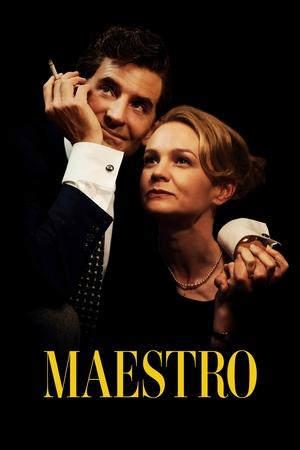
MAESTRO(2023)
Written by: Bradley Cooper & Josh Singer
Genre: Drama
Title: Maestro
Written by: Bradley Cooper & Josh Singer
Draft date: Not specified
LOGLINE
A brilliant young conductor catapults to fame after a last-minute debut at Carnegie Hall, then marries an equally talented Chilean-American actress, and over three decades their marriage endures — and fractures — under the weight of his restless ambition, his secret affairs with men, and her fierce determination to love him on her own terms.
| Very Poor | Poor | Fair | Good | Excellent | |
|---|---|---|---|---|---|
| PREMISE | ✓ | ||||
| STRUCTURE | ✓ | ||||
| CHARACTER | ✓ | ||||
| CONFLICT | ✓ | ||||
| DIALOGUE | ✓ | ||||
| PACING | ✓ | ||||
| TONE | ✓ | ||||
| ORIGINALITY | ✓ | ||||
| LOGIC | ✓ | ||||
| CRAFT | ✓ |
| Strong Pass | Pass | Consider | Recommend | Strong Recommend | |
|---|---|---|---|---|---|
| Overall | ✓ |
Genre: Drama
Sub-genre: Biographical Drama, Romantic Drama, Period Drama
Keywords: Based on True Events, Classical Music, Marriage, LGBTQ, Infidelity, Conducting, Composing, Family, Female Protagonist, New York City, Artist's Life, Ensemble Cast, Mid-Century America
MPA Rating: R (cocaine use, brief nudity, language including multiple uses of "fuck," frank discussion of sexuality)
Budget Tier: High ($40M–$100M) — multiple period recreations spanning 1943–1989, Carnegie Hall interiors, Lincoln Center, Kennedy Center, Ely Cathedral (England), elaborate musical/ballet staging sequences, large orchestras and chorus, period costumes and vehicles, extensive location work across New York, Connecticut, Massachusetts, Washington D.C., Los Angeles, and England.
Pages: 106
Time Period: 1943 to 1989, spanning approximately 46 years, with the bulk of the narrative divided between the 1940s-50s (black and white) and the 1970s-80s (color).
Locations: Approximately 40% New York City interiors (apartments at the Osborne and the Dakota, Carnegie Hall, Lincoln Center, Broadway theaters, Central Park, The Plaza Hotel); 25% Fairfield, Connecticut (the Bernstein country house with pool, yard, study); 15% Tanglewood, Massachusetts (The Shed, Seranak House, grounds); 10% East Hampton, Long Island (seaside house with sea wall); 5% Kennedy Center/Watergate Hotel, Washington D.C.; 5% Ely Cathedral, England and Los Angeles bungalow. Major requirements include period-accurate Carnegie Hall and Lincoln Center stages, functioning orchestras, a ballet sequence with full choreography, and underwater pool photography.
Lead: Male, ages 25–71 across the narrative, Jewish-American, thin and handsome in youth becoming heavier and bearded in middle age, charismatic and insatiable — a man of immense talent, deep neediness, and an inability to be wholly one thing.
Comparables: A Star Is Born (2018) for its intimate exploration of a creative partnership strained by ego and self-destruction; Tár (2022) for its portrait of a classical conductor whose personal behavior collides with artistic genius; Bohemian Rhapsody (2018) for its biopic structure of a closeted musical icon navigating public fame and private sexuality; Marriage Story (2019) for its granular, emotionally devastating depiction of a relationship's erosion.
SYNOPSIS
In 1989, an elderly LEONARD BERNSTEIN (LB) (early 70s), alone at a piano in his Connecticut home, plays a mournful piece and tells an interviewer he still sees his late wife in the garden and misses her terribly.
The narrative jumps to November 14, 1943, in black and white. YOUNG LB (25), thin and shirtless, is woken by a phone call informing him that conductor Bruno Walter is ill and LB must substitute at Carnegie Hall — with no rehearsal. A naked YOUNG MAN lies in his bed. LB rushes to the hall, sweating and terrified, but when he reaches the podium, a glint enters his eye. He conducts brilliantly. BRUNO ZIRATO (59), the orchestra's manager, introduces the world to Leonard Bernstein. Afterward, LB celebrates with his friend and lover DAVID OPPENHEIM (adult) and choreographer JERRY ROBBINS (adult), who is pressing LB to finish composing the ballet Fancy Free.
At a party in Queens, LB meets FELICIA MONTEALEGRE (23), a Chilean-American actress. Their instant connection crackles with intellectual competition and mutual attraction. She takes him to the Provincetown Playhouse, where they read Lorca together and share their first kiss. They visit Tanglewood, where LB's mentor SERGE KOUSSEVITZKY (70s) pressures him to abandon musical theater and even change his Jewish surname. Felicia encourages LB to embrace all facets of his art. An extended fantasy sequence merges the Fancy Free ballet with On the Town, culminating with LB and Felicia running into each other's arms. Post-coital, they play a game of secrets; LB confesses childhood fantasies of killing his cruel father. Felicia proposes they "give it a whirl," and LB drops to one knee.
By 1955, they are married with two children, YOUNG JAMIE (3) and infant ALEXANDER. Edward R. Murrow interviews them on television. Felicia rattles off LB's projects — West Side Story, Omnibus — while the camera quickly returns to him. LB encounters David Oppenheim on the street, now married to ELLEN ADLER, and the lingering intimacy between the men is evident. At their Connecticut country house, LB confesses sadness to Felicia, who responds with tenderness. SHIRLEY BERNSTEIN (adult), LB's sister, warns Felicia about the price of being in LB's orbit. A montage shows the family's happiness alongside LB's consuming career, Felicia always watching from the wings.
The narrative shifts to color in 1971. At a party in their Dakota apartment, Felicia confides to friends MENDY WAGER (mid-40s) and CYNTHIA O'NEAL (mid-30s) that HARRY KRAUT (adult), LB's manager, enables his affairs with young men. LB meets TOMMY COTHRAN (25) at the party, and the attraction is immediate. LB takes Tommy to the roof; when they return, Felicia catches them kissing in the hallway. She tells LB to fix his hair. Later, in an interview with biographer JOHN GRUEN (adult), LB projects his own restlessness onto Felicia, claiming she has "a keen sense of futility."
During a Candide rehearsal, LB's family life and his relationship with Tommy overlap visibly. Tommy begins spending weekends at Fairfield. JAMIE (now 20) has heard gossip about her father at Tanglewood. Felicia demands LB not tell their daughter the truth. LB lies to Jamie, attributing the rumors to jealousy. Poolside, LB and Felicia have a tense, circular conversation about Tommy's presence. LB completes Mass in his study, but the premiere at the Kennedy Center lands poorly. Felicia locks him out of the hotel bedroom.
The marriage fractures further. On Thanksgiving, LB arrives a day late. In the bedroom, Felicia unleashes years of anger: she accuses him of using conducting to demonstrate his superiority, of harboring hate and deep anger, of being unable to love himself. She tells him he will die "a lonely old queen." Their children interrupt, shouting about the Snoopy float passing their window.
In fall 1976, at a public rehearsal, LB announces he must live the rest of his life "exactly the way that I want." Felicia returns to television work. LB, bearded and heavier, does cocaine at a Los Angeles party. Jamie confronts him by phone. At the Plaza, Felicia tells Shirley she tried dating but her suitor turned out to be interested in Mendy. She admits she misses LB — "that child of mine."
At Ely Cathedral in England, LB conducts Mahler's Resurrection Symphony with transcendent power. Felicia watches from the wings. When he rushes offstage, she tells him: "There's no hate in your heart." In July 1977, DR. KRUGER (adult) diagnoses Felicia with breast cancer that may have metastasized to her lung. LB and Felicia sit in Central Park, back to back as they once sat at Tanglewood, and he tells her to lean her weight on him.
At the East Hampton house, Felicia declines rapidly. Cynthia and Mendy visit. The three children stage a mock wedding procession to make her laugh. Jamie helps her mother to bed; Felicia whispers "Kindness. Kindness. Kindness." LB puts on a Shirley Ellis record and dances gently with Felicia. He lies beside her, tells her he loves her, and she slips away. From the bathroom window above, the family is glimpsed running across the lawn in grief.
In 1989 at Tanglewood, now in color, LB mentors a young Black conducting student named WILLIAM (20s), gently coaching him through a Beethoven passage, then dances at a wild student party. Back in his Fairfield living room, LB tells the interviewer that Felicia's words — "If summer doesn't sing in you, then nothing sings in you" — became the basis for Songfest. He says summer still sings in him, then asks: "Any questions?" A final image of young Felicia, in black and white, looking directly at us with a captivating smile, before the title "MAESTRO" fills the screen.
COMMENTS
PREMISE — Good
The premise — a marriage between two fiercely intelligent artists, one of whom is the most publicly celebrated musician in American history and secretly bisexual — contains inherent dramatic tension at every level: vocational, sexual, emotional, generational. By centering the relationship rather than the career, the material distinguishes itself from conventional music biopics like Bohemian Rhapsody, which use romantic partnerships as subplot dressing around professional milestones. The decision to frame the entire narrative through LB's opening confession that he still sees Felicia in the garden gives the work a clear emotional thesis before a single dramatic event occurs. The central question — can a man who contains multitudes sustain a marriage built on partial truths? — is rich enough to carry decades. The Chilean-Jewish cultural hybrid of the Montealegre-Bernstein union adds texture, and Koussevitzky's pressure to change the name "Bernstein" roots the personal drama in broader anxieties about Jewish identity in mid-century America. Where the premise is most vulnerable is in its scope: forty-six years is an enormous canvas, and the concept depends entirely on whether the execution can make every era feel essential rather than obligatory.
STRUCTURE — Good
The framing device — 1989 LB at the piano, addressing an interviewer about Felicia — establishes the emotional destination on the first page and returns at the close (96), creating a satisfying bookend. The shift from black and white to color at the 1971 party (43) functions as a structural hinge, marking the transition from courtship and early marriage to disillusionment. The first half moves efficiently through LB's debut (3–7), the meeting with Felicia (11–13), courtship (14–29), marriage and early fame (30–42), covering roughly twelve years in forty-two pages without feeling rushed, largely because the Fancy Free fantasy sequence (25) consolidates thematic exposition into spectacle. The second half narrows its temporal lens appropriately, spending longer inside individual scenes — the Thanksgiving fight (67), the doctor's office (78), the East Hampton decline (81–89) — as stakes intensify. The midpoint structurally is the Gruen interview and LB's admission that Felicia seems "crushed" (48–56), which lands at roughly page 55 of 106, an effective pivot from external conflict to internal reckoning. One structural concern: the 1976 Avery Fisher rehearsal (68) and the Ely Cathedral sequence (73–76) feel somewhat compressed between the Thanksgiving fight and the cancer diagnosis, covering a reconciliation arc in relatively few pages compared to how thoroughly the estrangement is dramatized. The resolution — Felicia's death, LB's late-life teaching at Tanglewood, and the return to the interview — is proportionally well-handled.
CHARACTER — Good
Felicia Montealegre is the emotional spine. Her arc is fully realized: she enters as a confident young woman who knows exactly who LB is (29), sustains a marriage by choosing not to need what he cannot give (35, 43), and ultimately confronts the cost of that choice in the Thanksgiving scene (67). Her deathbed whisper — "Kindness. Kindness. Kindness" (86) — completes the arc without sentimentality. LB is deliberately more opaque, which is both the material's greatest asset and its largest character risk. His want — to be loved by everyone, to contain all contradictions — is established early (13–15) and never changes, which means his arc is less transformation than gradual exposure. The supporting cast is sharply differentiated: Shirley serves as the truth-teller who sees both sides (35, 72), Harry Kraut as the enabler (47–49), Tommy as the catalyst who is never demonized (49–62), and Jamie as the child who inherits the burden of her parents' arrangement (52–53, 66, 71). David Oppenheim's brief appearances (9–10, 27, 33) efficiently sketch a man who loved LB first and lost. The balance between LB and Felicia tilts toward Felicia being the more three-dimensional figure, which is a deliberate and effective choice given that the material is explicitly about the cost others pay for genius.
CONFLICT — Good
The central conflict — LB's need to live authentically versus Felicia's need for a marriage that honors her dignity — is introduced with deceptive gentleness in Tanglewood (29) and escalates through a series of scenes where the same tension is tested at progressively higher stakes: the hallway kiss with Tommy (45), the bedroom scene about Jamie's gossip (52), the poolside conversation about Tommy's visits (55), and finally the Thanksgiving confrontation (67). That confrontation is the dramatic peak, and it works because both characters are partially right. Felicia's accusation that LB's conducting is an act of domination is devastating, and LB's counter that she wanted "the idea" of him lands with equal force. The scene-level conflict is strongest when the material trusts silence and subtext — the poolside exchange (55) is a masterclass in two people circling an unspoken truth. The cancer diagnosis (78) shifts the conflict from interpersonal to existential without abandoning the relationship tension; LB's screaming into a cushion (83) conveys a man who has no tools for grief. The resolution at Ely Cathedral (76), where Felicia tells LB "There's no hate in your heart," reverses her Thanksgiving accusation and provides catharsis, though the brevity of this reconciliation relative to the extended estrangement leaves it feeling slightly earned by declaration rather than demonstrated change.
DIALOGUE — Excellent
The dialogue is the single strongest technical element. Characters are immediately distinguishable: Felicia's speech is precise, layered with Chilean-inflected formality ("one wishes to make adjustments to one's self," 35), while LB's is expansive, performative, and compulsively charming ("Can I tell you a secret? Do you know I've slept with both your parents," 32). The courtship scenes (13–15) achieve rare naturalism — the overlapping lines, the competitive riffing on each other's biographies, the way both characters use wit as armor. Subtext is deployed with consistent skill: the poolside conversation (55) where every line about Tommy is actually about the marriage never names the real subject. The Thanksgiving fight (67) succeeds because the dialogue shifts registers — Felicia's metaphor about the bird full of shit is coarse and surprising for her character, signaling that all decorum has collapsed. Koussey's dialogue about Jewish identity (24) avoids didacticism by grounding the politics in personal anecdote. The one area where dialogue occasionally thins is in LB's interactions with Tommy (45, 49–50), which lean toward flirtatious banter without the depth that characterizes LB's exchanges with Felicia, though this may be intentional — Tommy is a diversion, not a partner.
PACING — Good
The first forty pages move with remarkable fluidity, the Fancy Free fantasy (25) serving as both emotional climax and pacing accelerant, compressing what could have been several expository scenes into kinetic spectacle. The montage of family life and conducting (36–42) is well-placed, providing warmth before the tonal shift to color and disillusionment. The Dakota party sequence (43–47) runs long at roughly twelve pages, and while this is clearly intentional — establishing the suffocating social world that masks private pain — several of the cocktail-party exchanges with minor characters (Jim, Charlie, Scott) could be trimmed without losing their function. The mid-section from the Gruen interview through Mass (48–62) maintains momentum because compositional scenes (56) are intercut with domestic tension. The East Hampton sequences (81–89) risk monotony given the inherent repetition of illness — visitor, decline, visitor, decline — but the material varies each scene's emotional register effectively: Cynthia's bar mitzvah anecdote (81), Jamie's bedside vigil (86), the Clapping Song dance (87). The Tanglewood coda (93–95) functions as a necessary release valve, though the party scene (95) is slight.
TONE — Excellent
The tonal management across four decades is the material's most sophisticated achievement. The shift from black and white to color at page 43 is not merely a visual device but a tonal one — the first half's romantic optimism, shot through with foreshadowing, gives way to the second half's harsher palette. The Fancy Free fantasy (25) establishes early that the material will periodically depart from naturalism without breaking faith; the underwater pool shot of Felicia (61), motionless at the bottom, extends this permission into something more haunting. The cocaine scene in Los Angeles (70) is the most jarring tonal beat — LB snorting off a serving tray held over his head — but it functions as a necessary demonstration of how far he has strayed from the man Felicia fell in love with. The Thanksgiving fight (67) achieves the most difficult tonal balance: genuine fury that is interrupted by children shouting about the Snoopy float, a juxtaposition that is simultaneously absurd, heartbreaking, and dramatically precise. The Ely Cathedral sequence (73–76) risks grandiosity but earns it by immediately deflating through Felicia's quiet "There's no hate" — the tone pivots from spectacle to intimacy within a single cut.
ORIGINALITY — Good
The material occupies territory shared with musician biopics like Bohemian Rhapsody and Rocketman, but its commitment to the marriage as the primary dramatic engine — rather than the career — represents a meaningful departure from the genre's conventions. Where Bohemian Rhapsody uses Mary Austin as a subplot within Freddie Mercury's professional rise, this work inverts the hierarchy: LB's compositions and performances are the subplot, and Felicia's experience is the throughline. The Fancy Free fantasy sequence has no direct precedent in biographical drama and draws instead from All That Jazz, though it serves a different function — it externalizes Felicia's understanding of LB rather than the protagonist's self-mythology. The structural decision to shift from black and white to color at the point of disillusionment inverts the expected symbolic logic (color usually represents vitality), which is a genuinely surprising formal choice. The Thanksgiving fight's interruption by the Snoopy float is the kind of detail that feels both authentic and dramatically invented — it would be difficult to find an equivalent beat in comparable films.
LOGIC — Fair
The internal chronology is managed carefully, with title cards and contextual cues (children's ages, hairstyles, LB's weight) marking transitions between decades. One inconsistency: LB tells the Gruen interviewer that Felicia said she wanted "to get off" the bus "in Vienna last month" (56), which places the interview around 1971, consistent with the surrounding scenes. However, the Candide rehearsal (49), identified as the 1973 revival, appears to occur shortly after with Tommy present, suggesting either the Gruen interview is later than 1971 or the sequencing is slightly compressed. The lie LB tells Jamie about the Tanglewood gossip (53) — attributing it to "jealousy" — is psychologically consistent but raises a question about whether Jamie, described as a Harvard student, would accept such a transparently evasive answer; her visible relief (53) suggests she wants to believe him, which is plausible. Felicia's cancer timeline (78–89) moves efficiently but elides the duration of treatment; the jump from diagnosis to East Hampton decline is clean dramatically but leaves the medical progression somewhat opaque. The staging of the Fancy Free fantasy (25) requires significant suspension of disbelief as a non-naturalistic sequence, but the material earns this through the ghost light scene (17) that establishes the Provincetown stage as a space where reality is already mutable.
CRAFT — Good
The writing operates at a high level of visual and emotional specificity. Character introductions are economical and evocative: Felicia "steps off a city bus, onto a triangulated suburban street in Queens" (11) — the geometry of that street description places her in physical space immediately. Action lines trust the reader's intelligence: "Felicia sits on the window sill, smoking and waiting" (67) conveys an entire marital dynamic in eight words. The parenthetical stage directions within dialogue — "(ACTING)" during the Lorca scene (17), "(tongue in cheek)" for Shirley (12) — are used sparingly and effectively. The transition from black and white to color is handled with a simple "IN COLOR" (43), which is appropriately restrained. Music cues are embedded throughout the action description, functioning as emotional narration rather than needle drops; this is a legitimate creative choice for material about a composer, though it places an unusual burden on the reader to hear the pieces. Occasional formatting notes like "ANGLE ABOVE LB [in a G-D POV we'll hold for most of this next sequence]" (4) read more as directorial notes than conventional screenplay description, which is appropriate given the material's dual authorship by a writer-director. One minor error: "teh room" (47) for "the room."
OVERALL — Recommend
Maestro is an intimate biographical drama about the marriage between Leonard Bernstein and Felicia Montealegre, spanning nearly five decades from their electric first meeting through her death from cancer. The strongest elements are the dialogue — naturalistic, layered, and sharply individuated — and the character of Felicia, whose arc from knowing participant to devastated truth-teller to graceful dying woman is the emotional achievement of the work. The Thanksgiving confrontation is the dramatic centerpiece and earns its intensity through the patient accumulation of smaller, subtler conflicts across the preceding sixty pages. The structure's ambition — covering forty-six years without resorting to montage fatigue — is largely realized, though the reconciliation between LB and Felicia after the estrangement receives less dramatic space than the estrangement itself, making the Ely Cathedral reunion feel somewhat compressed. LB himself is intentionally elusive, which serves the thematic argument that he was unknowable even to those closest to him, but this choice means the material's emotional weight rests almost entirely on Felicia and on the viewer's willingness to understand LB through her eyes. The fantasy sequences and the black-and-white-to-color transition demonstrate formal ambition that the page-level craft supports. The weakest section is the Dakota party (43–47), which sprawls slightly in service of atmosphere at the expense of narrative momentum. This is a work of genuine emotional intelligence and structural sophistication whose primary risk is that its most compelling character is not its titular one.
Get this level of coverage for your screenplay
Every coverage includes 10 category ratings, an overall recommendation, and detailed analysis — powered by the same methodology used by talent agencies and literary managers.
Movie data provided by TMDB