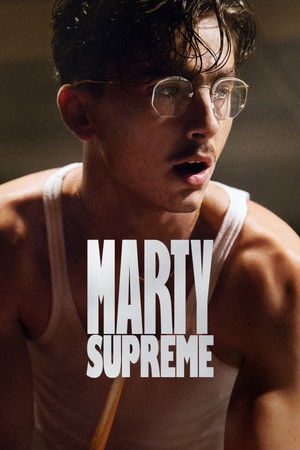
MARTY SUPREME(2025)
Written by: Ronald Bronstein, Josh Safdie
Draft date: February 2, 2025
Genre: Drama
Title: Marty Supreme
Written by: Ronald Bronstein, Josh Safdie
Draft date: 02/02/25
LOGLINE
In 1952 New York, a brash, broke, and brilliantly talented young table tennis player schemes, cons, and burns every bridge available to fund his way to the World Championship in Tokyo — only to discover that the game he plays best may not be the one with a ball.
| Very Poor | Poor | Fair | Good | Excellent | |
|---|---|---|---|---|---|
| PREMISE | ✓ | ||||
| STRUCTURE | ✓ | ||||
| CHARACTER | ✓ | ||||
| CONFLICT | ✓ | ||||
| DIALOGUE | ✓ | ||||
| PACING | ✓ | ||||
| TONE | ✓ | ||||
| ORIGINALITY | ✓ | ||||
| LOGIC | ✓ | ||||
| CRAFT | ✓ |
| Strong Pass | Pass | Consider | Recommend | Strong Recommend | |
|---|---|---|---|---|---|
| Overall | ✓ |
Genre: Drama, Comedy
Sub-genre: Period Drama, Sports Drama, Character Study
Keywords: Male Protagonist, Jewish Theme, 1950s, New York City, London, Tokyo, Sports, Table Tennis, Hustler, Con Artist, Ambition, Father Figure Absent, Mentor-Protégé, Pregnancy, Affair, Underdog, Cold War Era, Fish-Out-Of-Water, Foreign Locale, Showmanship
MPA Rating: R (pervasive strong language, sexual content, graphic violence including shootings, brief nudity)
Budget Tier: High ($40M–$100M) — period-accurate 1950s New York, London, Paris, and Tokyo locations; Wembley Stadium sequences with thousands of extras; military base and airplane interiors; extensive period wardrobe, vehicles, and set dressing; multiple international locations; large cast.
Pages: 167
Time Period: 1952, spanning approximately 3–4 weeks, with a brief flashback to 1944 Auschwitz.
Locations: Approximately 40% Lower East Side NYC interiors (tenement apartments, shoe store, ping pong parlor, pet store, pawn shop, hospital), 15% London (Ritz Hotel, Wembley Stadium, hostel), 5% Paris (upscale restaurant), 15% Tokyo/Japan (amphitheater, airfield, countryside), 10% rural New Jersey (farmhouse, gas station, bowling alley requiring night exteriors and a shootout), 5% Midtown Manhattan (theater, hotel, Fifth Avenue apartment), 10% miscellaneous (airplane interiors, various international Globetrotter tour stops including Sarajevo, Athens, Tangier, Cairo). Period vehicles, a bathtub crash-through-floor stunt, a farmhouse car-crash sequence, and a large-scale outdoor amphitheater ping pong match in Tokyo are notable production requirements.
Lead: Male, 23, Jewish-American, lanky with glasses — supremely confident, abrasive, manipulative, charismatic, desperate, and possessed by singular athletic ambition.
Comparables: Uncut Gems (2019) — a relentless protagonist whose compulsive hustling and self-sabotage drive a propulsive narrative toward an ambiguous reckoning; Raging Bull (1980) — a gifted athlete whose ego and destructive personal life undermine his talent; The Hustler (1961) — a cocky young player who must lose everything before understanding what winning costs; I, Tonya (2017) — a scrappy, class-conscious athlete navigating institutional gatekeeping and personal chaos.
SYNOPSIS
MARTY MAUSER (23), a lanky, bespectacled shoe salesman on Manhattan's Lower East Side, works at Norkin Shoes under his uncle MURRAY NORKIN (60s), who offers him a promotion to manager. Marty refuses — he is a competitive table tennis player preparing for the British Open in London and needs Murray to pay him the $700 he's owed. After sneaking his girlfriend RACHEL MIZLER (20s) into the stockroom for sex, Marty heads to LAWRENCE's (60s) ping pong parlor to train with his friend WALLY (20s). He pitches an orange-colored "Marty Supreme" ball to CHRISTOPHER GALANIS (60s), father of his business partner DION (30s), arguing that the colored ball will revolutionize the sport.
When Murray skips town without paying, Marty pulls a gun on fellow salesman LLOYD (30s) and robs the store safe. He flies to London, where he dominates the early rounds of the British Open and bullies IATT head RAM SETHI into upgrading his accommodations to the Ritz. There he encounters retired movie actress KAY STONE (50s) and her husband MILTON ROCKWELL (50s), who owns Rockwell Ink. Marty flirts aggressively with Kay by phone and wins her attention with a theatrical apple toss. In the semifinals, Marty showboats with Hungarian player BÉLA KLETZKI (late 30s), a Holocaust survivor, in an entertaining exhibition-style match.
In the finals, Marty faces KOTO ENDO (unranked, Japanese), whose revolutionary sponge-rubber paddle produces devastating spin. Endo defeats Marty three games to none. Marty erupts in a public tantrum. A Japanese newsreel celebrates Endo's victory and the nation's resurgence, announcing Tokyo as the site of the upcoming World Championship.
Humiliated, Marty joins Béla on a Harlem Globetrotters halftime tour through Sarajevo, Athens, Tangier, Cairo, and Paris — performing trick shots for indifferent crowds and ultimately losing a point to a sea lion. In Paris, Milton offers Marty $1,000 to participate in a staged exhibition match against Endo in Tokyo as a Rockwell Ink promotional event, on the condition that Marty loses. Marty refuses and insults Milton by referencing his dead son.
Back in New York, Marty discovers Rachel is visibly pregnant. She insists the baby is his. Murray has Marty arrested, but offers a deal: return to the shoe store or face armed robbery charges. Marty escapes down the fire escape. He and Wally head to a New Jersey bowling alley, where Marty hustles local players at ping pong, winning $430. A group of angry locals chases them. In the chaos, a dog named MOSES — entrusted to Marty by MISHKIN (60s), a man injured when a bathtub crashed through the hotel floor — escapes into a field.
Marty tracks Moses to a remote farmhouse owned by HOFF (60s), an antisemitic recluse who refuses to return the dog. Rachel rams Hoff with the car, and they flee under shotgun fire. Rachel attempts to extort Mishkin for a $2,000 reward using a substitute dog, but the scheme collapses violently — Mishkin stabs a bartender in Seward Park.
Meanwhile, Marty discovers his IATT fine has ballooned to $1,480, blocking his Championship entry. He attends Kay's Broadway rehearsal, impresses her with instinctive staging insights, and they begin an affair. He steals her necklace during sex, but it turns out to be costume jewelry worth $2. Desperate, he begs Milton for the Japan job. Milton makes Marty bend over and accept a humiliating paddle-spanking in front of his associates as the price of admission.
Marty flies to Tokyo on Milton's private plane. At the Rockwell promotional event, he plays the scripted match — losing to Endo 21-14 as planned — but then breaks from the script, demanding a real game. The crowd, learning the first match was staged, chants for authenticity. Endo agrees. In a grueling contest, Marty wins 22-20. Milton warns him there will be consequences. Sethi confirms Marty is barred from the Championship regardless.
Marty hitches a military transport home. At Bellevue Hospital, he finds Rachel asleep in postpartum recovery — the baby arrived early. He kisses her forehead, then walks to the nursery window, finds the bassinet marked "Mizler," and breaks down sobbing.
COMMENTS
PREMISE — Excellent
The core concept — a supremely talented but self-destructive young athlete who will do literally anything to compete on the world stage, except the one thing that might actually work (behaving decently) — provides an engine of inexhaustible dramatic tension. Marty Mauser is a protagonist whose gifts and flaws are perfectly calibrated against each other: his charm enables his cons, and his cons sabotage his career. The 1950s table tennis world is a genuinely fresh setting, and the geopolitical texture — a Jewish-American hustler navigating post-war Japan's national pride, Cold War military infrastructure, and institutional gatekeeping — gives the premise thematic density beyond the sports framework. The central dramatic question is not whether Marty will win but whether winning will cost him everything, which distinguishes this from conventional underdog narratives. The premise's closest ancestor is Uncut Gems, which shared a protagonist whose compulsive need to prove himself generated both the entertainment and the tragedy, but the period setting and international scope here open territory that predecessor did not explore.
STRUCTURE — Fair
The narrative architecture is propulsive but structurally lopsided, with the New York middle section sprawling past its dramatic utility. The inciting incident — Marty's robbery of Murray's safe (17-18) — lands at roughly the right proportion and cleanly launches the London journey. The British Open finals function as an effective early climax (38-40), and the Japanese newsreel sequence (40-41) elegantly reframes the stakes. The midpoint is harder to locate with precision: Milton's Paris lunch and the job offer (43-47) occurs around page 45, which is proportionally correct, but the extended New York return sequence that follows — the arrest (52-56), the bowling alley hustle (73-80), the gas station chase (81-83), the Hoff farmhouse (107-111), the Mishkin park confrontation (125-129) — creates a sprawling picaresque that delays the Tokyo climax until page 155. This middle passage contains individually vivid scenes but collectively diffuses momentum, as the throughline (getting to Japan) is served by too many parallel schemes that each dead-end. The Tokyo match (157-164) arrives late but delivers a structurally satisfying climax, and the hospital denouement (166-167) provides genuine emotional resolution. The Globetrotter montage (47-48) efficiently compresses time but the structural function of the Hoff farmhouse subplot is questionable — it consumes significant page real estate for what amounts to another failed scheme.
CHARACTER — Good
Marty is a magnificently realized protagonist whose arc satisfies four of five essential beats but leaves the fifth — genuine internal change — deliberately ambiguous. His backstory (orphaned, abandoned, institutionalized) is delivered through a press junket he treats as performance (24), which characterizes both the trauma and his relationship to it simultaneously. His want (the Championship) and his need (human connection, particularly fatherhood) are clearly distinct, and his active pursuit of the want is relentless — he robs, hustles, seduces, and debases himself across three continents. The nursery scene (167) suggests the need finally breaking through, but the change is gestural rather than demonstrated. Supporting characters are sharply differentiated: Kay functions as Marty's mirror — another talent who traded authenticity for security (101) — while Milton embodies the institutional power Marty both despises and requires, his "vampire" monologue (162-163) crystallizing the thematic stakes. Rachel is the most complex secondary figure, evolving from apparent damsel to resourceful co-conspirator (111, 113), though her arc depends heavily on a faked black eye reveal (119) that retroactively complicates sympathy. Dion (87-88) and Béla (36-37) are efficiently drawn but serve primarily as reflections of Marty's capacity for both exploitation and genuine admiration.
CONFLICT — Good
The central external conflict — Marty versus every institutional and financial barrier between him and competitive table tennis — is formidable and escalates with impressive relentlessness, from the $700 robbery to the $1,480 IATT fine to Sethi's personal vendetta (155). The internal conflict is subtler: Marty's belief that success must be achieved "entirely on my own, purely on the basis of my talent" (101-102) is contradicted by every action he takes, creating a productive irony that drives the narrative. Scene-level conflict is consistently strong — nearly every interaction contains opposition, from the shoe store upsell (2-3) to the Paris lunch where Milton reads Marty's character through a salted soup (43-44). The farmhouse sequence (107-111) and the Seward Park confrontation (125-129) escalate to lethal violence that raises the stakes dramatically but also risks tonal whiplash (see: Tone). The Sethi thread functions as an effective secondary antagonism — his final "Because I don't like you" (155) is devastating precisely because it is personal rather than institutional, revealing that Marty's abrasiveness has real, irreversible consequences.
DIALOGUE — Excellent
The dialogue is the material's most consistently excellent element, with nearly every character possessing a distinct voice that could be identified without attribution. Marty's speech patterns — rapid-fire, self-aggrandizing, pivoting between charm and cruelty — are established in the shoe store opening (2-3) and maintained through his final exchange with Endo's announcer (164). Milton's clipped, patrician cadence contrasts sharply, as in "I have many talents but the one I'm most proud of is the ability to smell bullshit from a mile away" (34). Kay's dialogue shifts register between guarded sophistication and blunt vulgarity — "It's like watching someone jerk off with no lubricant" (92-93) — in ways that reveal character history efficiently. The material employs subtext effectively: Rachel's phone negotiation with Mishkin (112-114), conducted while Marty coaches from beside her, operates on multiple levels simultaneously. Murray's conversation with the cop about pastrami versus roast beef (57) humanizes what could be a stock authority figure. The weakest dialogue belongs to the show workers and translators in Tokyo, who necessarily serve expository functions, though this is a structural constraint rather than a craft failure.
PACING — Fair
The first forty pages move with exceptional velocity — the shoe store, the robbery, the flight, the tournament — each scene compressed to its essential beats. The Globetrotter montage (47-48) is a model of efficient time compression. However, the extended New York return sequence (49-129) constitutes nearly half the total page count and contains pacing problems. Individual scenes within this stretch are compelling — the bathtub collapse (66-67), the bowling alley hustle (73-80), the fire escape chase (57-58) — but their cumulative effect is of a protagonist spinning wheels through increasingly elaborate schemes that all fail. The Hoff farmhouse sequence (107-111) and the subsequent Mishkin dog-swap scheme (125-129) could be consolidated without losing essential narrative function. The Tokyo sequence (151-164) regains momentum but arrives with only thirteen pages remaining, making the climactic match feel slightly compressed relative to the leisurely New York middle. The hospital ending (166-167) is appropriately brief — a quiet beat after sustained frenzy.
TONE — Fair
The tonal register is ambitious — a picaresque comedy that periodically lurches into graphic violence — and the transitions are not always managed. The Béla honey-licking flashback (37) works because it is framed as a dinner anecdote, allowing the horror to be mediated through storytelling. The farmhouse shootout (148-149), however, arrives with an abruptness that jars against the preceding screwball energy of the dog-retrieval scheme. Rachel sustains a gunshot wound, Mitch is shot in the face, Mishkin is shot in the chest, and within pages Marty is counting money and flying to Japan. The material seems aware of this whiplash — Rachel's "Go get the money" (148) while bleeding suggests the world these characters inhabit does not pause for trauma — but the tonal contract with the viewer is strained. The Milton paddle-spanking scene (142-144) occupies a similarly precarious register, hovering between darkly comic and genuinely disturbing, and lands effectively because of the "This one's for my son" line (144) that anchors it emotionally. The 80s pop soundtrack cues noted throughout (Tears for Fears, Alphaville, New Order, Public Image Limited) signal an anachronistic tonal intention that is impossible to fully evaluate on the page.
ORIGINALITY — Good
The premise of a table tennis hustler in the early Cold War era is genuinely novel — no comparable film centers this sport, this milieu, or this specific intersection of postwar geopolitics and athletic ambition. The closest comparables are Uncut Gems (which shares the Safdie sensibility of a charismatic self-destructor careening toward ruin) and The Hustler (which shares the pool-hall-to-big-stakes arc), but the international scope, the period specificity, and the table tennis world-building distinguish the material from both. The execution contains several sequences that feel wholly original: the Japanese newsreel interlude (40-41) that reframes the narrative through the opponent's national perspective, the sea lion match (48) that crystallizes Marty's professional humiliation, and the bathtub-through-the-floor setpiece (66-67) that generates both physical comedy and a major plot thread from architectural failure. The Milton "vampire" speech (162-163) — metaphorical yet delivered with dead seriousness — is a striking departure from conventional antagonist rhetoric. The dog-retrieval subplot is the least original thread, echoing caper-comedy conventions without the same freshness.
LOGIC — Fair
The internal logic is largely sound within the heightened reality the material establishes, though several points strain credibility. Marty's ability to board a transatlantic flight immediately after robbing his uncle's store (18-19) requires accepting that 1952 law enforcement would not pursue him — plausible given the era but never addressed. The party-line eavesdropping setup (10) is period-accurate and cleverly deployed. The IATT fine arriving by mail while Marty has been abroad for months (66) is logical but the timing of its discovery — at the exact moment the bathtub collapses — strains coincidence. Rachel's faked black eye (119) is effective as a character reveal but raises the question of when she applied the makeup, since she arrived at Lawrence's parlor already bearing it (85), implying premeditation before she knew Marty would be there. The Mishkin money envelope containing mostly pornographic magazine cutouts (149) is a satisfying twist but Mishkin's willingness to drive to New Jersey with fake money, knowing he might need to actually pay, is not fully motivated. The military transport home from Yokota Air Base (165) is period-appropriate and a clever logistical solution.
CRAFT — Good
The writing operates at a high level of economy and specificity, with action lines that consistently reveal character rather than merely describing movement. Marty's introduction — swapping shoe sizes to manipulate a customer (2) — establishes his essential nature in a single visual beat. Character introductions are uniformly strong: Kay is introduced through others' recognition of her before she speaks, Milton through his correction of a salad order (42-43), and Mishkin through his shit-caked dog (64). The sperm-to-ping-pong-ball title sequence (7) is a bravura piece of visual writing that could only exist on screen but reads clearly on the page. The formatting is clean throughout, with effective use of text-on-screen location markers and tournament graphics. Scene transitions are often propulsive — voiceover from one scene bleeding into the next (13-14, 105-106) — maintaining momentum through shifts in location. The anachronistic soundtrack cues are noted with specific song titles, which is unconventional but signals directorial intention clearly. A minor error: "CONTINIOUS" appears on page 111 (should be "CONTINUOUS").
OVERALL — Recommend
Marty Supreme is a propulsive period drama about a gifted but self-sabotaging table tennis player who cons, hustles, and debases his way from 1950s New York to London to Tokyo in pursuit of a championship that keeps receding from his grasp. The dialogue and character work are the material's greatest strengths — Marty Mauser is a magnificently drawn protagonist, and the supporting cast (particularly Kay, Milton, and Rachel) are rendered with sharp specificity and genuine complexity. The craft is polished throughout, with economical action writing and inventive visual conceits. The most significant weakness is structural: the New York middle section (pages 49-129) sprawls through too many parallel schemes — the dog, the farmhouse, the bowling alley, the necklace, the Mishkin extortion — that individually entertain but collectively diffuse the narrative drive toward Tokyo. The tonal ambition is admirable but not fully controlled, particularly in the transition from screwball comedy to lethal violence in the farmhouse and park sequences. The ending — Marty weeping at the nursery window — earns its emotional power precisely because the preceding 166 pages have so rigorously withheld sentimentality, making the dam-break feel genuine rather than manufactured.
Get this level of coverage for your screenplay
Every coverage includes 10 category ratings, an overall recommendation, and detailed analysis — powered by the same methodology used by talent agencies and literary managers.
Movie data provided by TMDB