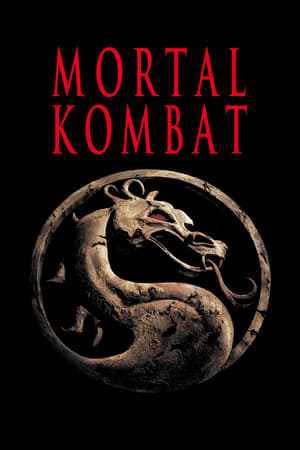
MORTAL KOMBAT (1995)(1995)
Written by: Kevin Droney
Draft date: April 25, 1994
Genre: Action
Title: Mortal Kombat
Written by: Kevin Droney
Draft date: April 25, 1994 (Second Draft)
LOGLINE
A guilt-ridden martial artist who abandoned his ancestral temple must avenge his brother's murder and defend Earth by fighting in a mystical inter-realm tournament against a soul-stealing sorcerer, alongside a brash movie star and a relentless federal agent.
| Very Poor | Poor | Fair | Good | Excellent | |
|---|---|---|---|---|---|
| PREMISE | ✓ | ||||
| STRUCTURE | ✓ | ||||
| CHARACTER | ✓ | ||||
| CONFLICT | ✓ | ||||
| DIALOGUE | ✓ | ||||
| PACING | ✓ | ||||
| TONE | ✓ | ||||
| ORIGINALITY | ✓ | ||||
| LOGIC | ✓ | ||||
| CRAFT | ✓ |
| Strong Pass | Pass | Consider | Recommend | Strong Recommend | |
|---|---|---|---|---|---|
| Overall | ✓ |
Genre: Action, Fantasy
Sub-genre: Action Adventure, Martial Arts Fantasy, Tournament Film
Keywords: Martial Arts, Tournament, Chosen One, Parallel Worlds, Sorcery, Revenge, Ensemble Cast, Sibling Death, Soul Stealing, Prophecy, Video Game Adaptation, Male Protagonist, Asian Theme, Foreign Locale, Island Setting
MPA Rating: PG-13 (fantasy violence including impalings and soul extractions, mild language, no sexual content beyond brief kisses)
Budget Tier: High ($40M–$100M) — multiple elaborate fantasy sets (island fortress, Outworld wasteland, Black Tower dungeon), creature effects for Goro and other non-human combatants, extensive martial arts choreography, numerous extras and costumes spanning multiple realms, VFX for elemental powers and soul-extraction sequences.
Pages: 104
Time Period: Present (mid-1990s) over approximately 5-7 days.
Locations: ~15% Chinese village and temple (rural exterior, practical hillside temple interior); ~5% American city apartment and film set/power plant (industrial interior with rain effects); ~10% Hong Kong pier and warehouse (night exteriors, interior with sewer grate); ~10% junk ship (practical boat deck and below-decks interiors); ~35% tournament island (statuary garden, Great Hall banquet space, ruined temple requiring fire/ice effects, cliff edge, cavern throne room with stalactites and spike pits); ~20% Outworld (desolate blasted forest, Black Tower dungeon arena with mechanical spike-pit floor, tower cell); ~5% village celebration (night exteriors with bonfire).
Lead: Male, early-to-mid 20s, Chinese. Liu Kang — a former temple monk now living in America, torn between modern skepticism and ancestral duty, driven by guilt over his brother's death, physically gifted but emotionally guarded.
Comparables: Enter the Dragon (1973) — island martial arts tournament with a personal revenge thread; Big Trouble in Little China (1986) — blending martial arts action with supernatural Eastern mythology and comedic banter; The Princess Bride (1987) — a hero's journey adventure balancing swashbuckling combat with irreverent humor and romance; Highlander (1986) — immortal warriors competing in a mystical contest with souls at stake.
SYNOPSIS
In a vivid dream, LIU KANG (early 20s), a young Chinese man living in America, watches a stranger kill his brother CHAN (20) atop a sacred hilltop altar, then unleash a consuming Darkness over their native village. Liu wakes in his American apartment to find a telegram confirming Chan's death.
Meanwhile, movie star JOHNNY CAGE (late 20s), a skilled martial artist dogged by tabloid claims that he is a fraud, receives a visit on his film set from BILL BOYD, a respected sensei who invites him to a secret tournament on an island in the South China Sea. After Boyd leaves, he morphs into SHANG TSUNG, a sinister sorcerer. In Hong Kong, federal agent SONYA BLADE (late 20s), obsessed with catching the murderer KANO (30s), raids a warehouse. Kano escapes into the sewers on Shang's instructions, leaving a shipping schedule that leads Sonya to the same vessel — The Dragon's Wing.
Liu returns to his village and learns from his GRANDFATHER (elderly) that Chan died training for "The Tournament," a once-a-generation contest the family's ancestral Order of Light believes determines the fate of Earth. Despite mocking the legends, Liu demands the right to represent the Order. RAIDEN (ancient), the god of thunder disguised as a beggar, arrives and humbles Liu but confirms he is the Chosen One, the last descendant of the great champion Kung Lao.
At the Hong Kong pier, Liu, Johnny, and Sonya converge on the decrepit junk. Below decks, the ninjas SUB-ZERO and SCORPION attack. Raiden intervenes with a massive bolt of electricity and confronts Shang, who apologizes for the premature violence. Raiden gathers the three humans and reveals the stakes: Shang's warriors from Outworld have won nine consecutive tournaments, and a tenth victory will open Earth's portal to the Emperor's invasion. He tells them they three will decide the outcome — and that their individual fears are their greatest vulnerabilities.
The junk passes through a supernatural fog and arrives at a mysterious island. The combatants ascend a stone stairway to a statuary garden and a Great Hall. Liu is assigned quarters that replicate his American apartment; Johnny's resemble his cramped film trailer. At a welcoming banquet, Shang announces the tournament. Liu notices the exotic Princess KITANA (20s), ward of the Emperor, watching him intently.
That night, Liu, Johnny, and Sonya follow Shang into underground caverns and spy on a meeting between Shang, GORO (a four-armed Shokan prince and reigning champion), and Kano. They learn of Shang's plan to have Kano fight Sonya, and that Shang fears failure because the Emperor's punishment is terrible. The trio is discovered and fights off a squad of BARAKAS — armored Outworld soldiers — before Raiden rescues them and delivers a crucial warning: each must face their deepest fear or lose.
Tournament day begins. Sub-Zero destroys a Baraka opponent with a freezing blast. Sonya defeats the stiletto-wielding JADE. Liu fights Kitana, who whispers cryptic advice: "Use the force which brings life." Johnny defeats Scorpion. ART LEAN (30s), a friendly fighter Johnny has befriended, draws Goro. Despite a brave effort, Goro kills Art Lean, and Shang publicly steals Art's warrior soul — a horrifying display that devastates the human fighters.
After a night of soul-searching — Liu strips his room bare and burns the furnishings in a bonfire; Johnny practices staff forms until dawn; Sonya confides in Johnny about her murdered fiancé — the second day proceeds. Shang arranges for Sonya to fight Kano. She nearly kills him but stops when Liu warns that doing so will feed Shang's power. Shang is displeased. In a montage, Outworld warriors defeat most remaining human combatants.
Johnny boldly challenges Goro. Using sectional staffs and cunning guerrilla tactics in the statuary garden, he breaks Goro's wrist and ankle and ultimately sends him over a cliff. Johnny refuses to finish Goro so Shang can steal his soul; Goro, preferring a warrior's death, releases his grip and falls. Shang immediately exercises his right of challenge, seizes Sonya with sorcery, and transports her to the Emperor's Black Tower in Outworld.
Raiden explains he cannot follow into Outworld. Liu and Johnny, guided by Kitana through a dangerous forest where living trees consume the chameleon creature REPTILE, infiltrate the Black Tower disguised as monks. Just as Sonya is about to reluctantly accept Shang's challenge, Johnny and Liu reveal themselves. Liu formally challenges Shang to Mortal Kombat.
In the dungeon arena — a mandala of stone walkways over spiked pits — Shang unleashes his enslaved warrior souls as a deafening spectral cyclone and transforms into a succession of fighters: a Samurai Master, a Dark Ages Warlord wielding a broadsword, and two tigers. Liu adapts to each, remembering Kitana's counsel to look beyond the illusion. Shang's final gambit is to assume Chan's form and mesmerize Liu toward the pit. Liu repeats Kitana's mantra, sees through the deception, and in a furious counterattack sends Shang plummeting onto the spikes.
Shang's death releases hundreds of enslaved warrior souls, which stream joyfully through the tower windows. Chan's spirit appears one last time, tells Liu the sacred flame burns bright inside him, and departs in peace.
The heroes return to Liu's village, where the beacon fire blazes on the hilltop. Johnny and Sonya share a kiss. Kitana tells Liu she must return to Outworld to liberate her own people. Raiden, pleased but characteristically wry, hints at future adventures as the beacon fire fades into the Mortal Kombat emblem.
COMMENTS
PREMISE — Good
The premise executes a reliable tournament-film formula — an ancestral champion must overcome personal failure to defeat a supernatural enemy in a contest that determines humanity's fate — and enriches it with a mythology of parallel realms, soul theft, and generational prophecy. Liu Kang's internal resistance to his own destiny creates genuine tension against the external threat, while the ensemble structure (a skeptical movie star, a revenge-driven federal agent) widens the appeal beyond a single hero's journey. The "chosen one" framework invites comparison to Enter the Dragon, where a martial artist infiltrates an island tournament to avenge a relative, but the supernatural layer — Shang's soul-stealing, Outworld's desolation, Raiden's godhood — distinguishes the territory. The central dramatic question is clear and compelling: can three flawed mortals overcome their fears to prevent an interdimensional conquest? Thematic cohesion around free will versus tyranny gives the action emotional weight, articulated most directly through Raiden's speeches about mortals deciding their own destiny versus Outworld's authoritarianism. As a vehicle for spectacle and arcade-game iconography, the premise is ideally suited to its source material.
STRUCTURE — Good
The narrative follows a clean three-movement arc with well-placed structural beats. The dream-and-telegram opening establishes Liu's stakes immediately, and the parallel introductions of Johnny (4) and Sonya (8) efficiently establish three separate call-to-adventure threads that converge at the Hong Kong pier (18). Raiden's exposition on the deck (27–29) functions as the commitment point, locking the trio into the central conflict at roughly the quarter mark. The midpoint lands precisely where it should: Art Lean's death and Shang's soul-extraction spectacle (62–67) raise the stakes and shift the tone from adventure to existential dread. Johnny's challenge to Goro (76) and the ensuing fight through the statuary garden provide the late-second-movement climax, while Shang's abduction of Sonya (83) triggers the break into the final movement. The climactic arena battle in Outworld (93–101) occupies the final ten percent and resolves every thread. Scene-to-scene causality is strong — Kitana's whispered riddle (56) pays off in the Sub-Zero fight (60), and Sonya's refusal to kill Kano (75) sets up her refusal to accept Shang's challenge (93). One structural weakness is the omission of numerous scenes (marked throughout), which leaves transitions occasionally abrupt, particularly between the second day's montage of losses (76) and Johnny's challenge. The journey through Outworld's forest (87–92) also compresses geography and danger into a passage that reads more like transit than escalation.
CHARACTER — Fair
Liu Kang anchors the ensemble with a clearly defined arc across all five beats: a backstory of abandoning the temple for America (12), a want to avenge Chan, a need to accept his destiny without guilt, active pursuit of Shang throughout, and a transformation completed when he sees through the Chan illusion (99–100). Johnny Cage is the most entertaining figure on the page, progressing from egotistical movie star to genuinely selfless warrior — his refusal to let Shang steal Goro's soul (82) is the moment his arc crystallizes. Sonya is given a strong motivation (her murdered fiancé) revealed in the quiet dawn scene with Johnny (71), but her arc resolves less dramatically; she remains largely reactive in the final act, relegated to spectator during the climactic battle. Shang Tsung functions effectively as a villain whose power (soul theft) and vulnerability (fear of the Emperor) are both established early (26, 45–47), though his fixation on making Sonya his "consort" edges toward a one-note menace. Kitana operates as a crucial catalyst — her riddle, her guidance through Outworld, her confrontation with Shang in the arena (94) — but remains more functional than three-dimensional, her emotional life compressed into a single monologue about Outworld's destruction (91–92).
CONFLICT — Good
The central external conflict — Earth's champions versus Outworld's warriors in a ten-generation tournament — provides an escalating ladder of physical confrontations, from Sub-Zero's freezing powers (55, 57–62) to Goro's four-armed brutality (62–65, 78–82) to Shang's shape-shifting sorcery (93–100). Each major fight raises the stakes: Sub-Zero tests Liu's resourcefulness, Goro tests Johnny's courage, and Shang tests Liu's identity. The internal conflicts are clearly delineated by Raiden (53–54) — Johnny fears being a fake, Sonya fears needing help, Liu fears his destiny — and each finds resolution in action rather than dialogue. Scene-level conflict is consistently present: even quiet moments like the below-decks confrontation with the Captain (22–23) or Sonya's interrogation of Shang in the garden (37–39) contain opposition. The primary weakness is that the Emperor, the ultimate antagonist, never materializes beyond a dark presence behind doors (86–87), which means the threat escalation depends entirely on Shang, whose power level fluctuates based on narrative need.
DIALOGUE — Fair
Dialogue performs its functional duties competently — establishing character, delivering exposition, generating humor — but rarely achieves genuine subtext or surprise. Johnny's quips are the most distinctive voice on the page ("This is where you fall down" on 4, "I'm on location in hell" on 34, "Having a bad hair day?" on 81), and they successfully differentiate him from the earnest Liu and the curt Sonya. Raiden speaks in a register of gruff wisdom that becomes repetitive across his many instructional speeches (27–29, 53–54, 67–69), with several scenes covering the same philosophical ground about fear and free will. Shang's dialogue is effectively menacing but defaults to the same pattern — unctuous flattery followed by veiled threat — in nearly every exchange (38–39, 73, 87–88). The weakest dialogue belongs to Kitana, whose lines are almost entirely composed of exposition and cryptic pronouncements ("Use the force which brings life" on 56, "Look not to the weapon, but the hand that wields it" on 92), leaving her without a conversational personality. The banter between Johnny and Sonya (30, 49, 70–72) provides the most naturalistic exchanges and the closest thing to genuine subtext, with Sonya's reluctant admission of watching his films serving as the clearest instance of saying one thing while meaning another.
PACING — Fair
The first thirty pages establish three separate protagonists and converge them efficiently, but the middle section on the island suffers from an uneven rhythm. The cavern sequence where the trio spies on Goro and Shang (40–52) runs nearly thirteen pages and could be tightened; while it delivers necessary exposition about Goro's relationship to Shang, much of the physical infiltration — match-striking, wrong tunnels, narrow ledges — serves more atmospheric than narrative purpose. The tournament fights themselves are well-paced, each escalating in spectacle: Sonya vs. Jade (55–56) is brief and sharp, Liu vs. Sub-Zero (57–62) builds through multiple reversals, and Johnny vs. Goro (78–82) sustains tension across several pages with genuine strategic beats. The Outworld passage (87–92) compresses what could be a significant journey into a few pages of forest traversal, which makes the arrival at the Black Tower feel rushed relative to the elaborate island sequences. The final arena battle (93–100) maintains momentum through Shang's successive transformations, though the repeated pattern — Shang transforms, Liu adapts, Shang escapes to transform again — risks diminishing returns by the tiger sequence (97–98).
TONE — Fair
The tone balances Saturday-matinee adventure with genuine mythological grandeur, and the mix works more often than it falters. Johnny's irreverent humor provides consistent tonal relief without undermining the stakes — his "shadow puppets" line (41) lands because the Goro reveal is genuinely frightening. The soul-extraction sequences (66, 80) achieve a darker register that the surrounding action scenes do not undercut. Two tonal wobbles stand out: Sonya's strip-and-sniff beat in her quarters (34) plays for a cheap laugh that clashes with her established hardness, and the "slimy toad" exchange between Kano and Goro (44) pushes the comic villainy slightly past credibility for characters meant to be threatening. The Outworld forest sequence (88–90) attempts to shift into a more somber, Lord-of-the-Rings register with Kitana's monologue about extermination and burial mounds, which sits uneasily next to Johnny's quips about trees eating people. Overall, however, the tone serves a PG-13 action-adventure effectively, and the final village celebration (101–103) earns its warmth.
ORIGINALITY — Fair
As a video-game adaptation drawing heavily from Enter the Dragon's island-tournament framework and the "chosen one" mythology common to wuxia cinema, the core concept is not original in isolation. The execution distinguishes itself through two specific elements: the soul-theft mechanic, which provides both the villain's power source and the narrative's emotional climax when the enslaved warriors turn against Shang and are freed (100–101), and the parallel-realm mythology that literalizes the tournament's stakes — the desolate Outworld sequences serve as a concrete vision of what defeat means, rather than an abstract threat. The Sub-Zero fight (57–62) contains a genuinely inventive set piece in which water becomes the weapon through centrifugal force and the enemy's own cold, which feels fresh for the genre. However, the three-hero structure (the reluctant chosen one, the cocky showman, the tough woman) maps closely to numerous ensemble adventure templates, and Shang's shape-shifting final battle recalls the protean sorcerer confrontations of films like Willow (1988). Compared to Big Trouble in Little China, which subverts its hero's competence for comedy, this material plays its mythology straight, which is a defensible choice but not a surprising one.
LOGIC — Fair
The internal mythology is established with enough specificity to support the plot's cause-and-effect chain: ten consecutive victories open Earth's portal, the tournament has rules even Shang must follow, Raiden cannot interfere directly. These constraints are consistently applied — Raiden's refusal to fight is tested multiple times (67, 84), and Shang's exploitation of the challenge rule (77, 83) follows from established precedent. Two structural logic issues merit attention. First, the mechanism by which Liu, Johnny, and Kitana infiltrate the Black Tower disguised as monks (93) is addressed in a single sentence and strains credibility given that Shang commands the monks and has demonstrated psychic perception (50). Second, Shang's decision to challenge Sonya rather than Liu (83) is explained as a strategic preference to fight the weaker opponent, but it contradicts his stated desire to claim Liu's soul specifically as the Kung Lao descendant — a contradiction Kitana's legal argument resolves procedurally but not motivationally. On the incidental level, the compass-spinning scene (31) neatly establishes they have left normal geography, and the "force which brings life" riddle (56) resolves logically in the water-versus-ice solution (60), demonstrating careful setup-payoff construction.
CRAFT — Poor
The writing operates in a functional, visually oriented register appropriate for an action-heavy production draft, with occasional flashes of descriptive potency — Sub-Zero's body freezing "starting at the feet, and moving quickly upward" into "a strange ice sculpture, dully translucent, lit as if from within" (62) is effective scene-painting. Character introductions are clear if not memorable: Liu is "a young Asian man" in "modern American clothing" (3), Johnny is "a very hip cop" who turns out to be acting (4), Sonya is "beautiful and hard as nails" (8). The action description is generally vivid and choreographically specific, particularly in the Sub-Zero fight and the Goro sequence. Formatting is competent but marked by numerous typos throughout: "crumples" for "crumpled" (4), "raps" for "wraps" (7), "enter" for "entire" (7), "ravel" for "raven" (12), "lat" for "last" (16), "vehice" for "vehicle" (17), "hauty" for "haughty" (43), "trumph" for "triumph" (47), "fearly" for "fearful" (80). These accumulate enough to suggest the draft was not proofread after revisions. The omission of numerous scene numbers (noted throughout) creates occasional gaps in continuity. The parenthetical direction is sometimes overwrought ("desperate plea; prostrate" for Raiden on 15, which contradicts Raiden's character in that moment).
OVERALL — Consider
Mortal Kombat is a martial-arts fantasy adventure about three flawed fighters recruited by the god of thunder to compete in an interdimensional tournament that will determine whether Earth falls to a sorcerer-emperor's invasion. The material's strongest categories are Structure and Conflict: the plot moves with clear causality from setup through escalating tournament bouts to a climactic arena showdown, and each major fight tests a different hero's specific weakness. Johnny Cage emerges as the most fully realized and entertaining character, his arc from insecure movie star to selfless warrior providing the draft's most satisfying emotional throughline. The weakest areas are Dialogue and Craft — Raiden's philosophical speeches cycle through the same themes without deepening them, and the accumulated typos and formatting gaps suggest a draft in need of a polish pass. The mythology is well-constructed and the action set pieces — particularly the Sub-Zero ice fight and the Goro statuary-garden battle — demonstrate strong visual imagination. The Outworld third act compresses its geography and introduces Kitana's exposition in a block that slows momentum before the final confrontation. As a blueprint for a PG-13 action spectacle adapting a combat-based video game, this draft provides a solid, workable foundation with clearly defined stakes, a functional ensemble, and enough mythological texture to elevate the material beyond a simple fight-sequence delivery system.
Get this level of coverage for your screenplay
Every coverage includes 10 category ratings, an overall recommendation, and detailed analysis — powered by the same methodology used by talent agencies and literary managers.
Movie data provided by TMDB