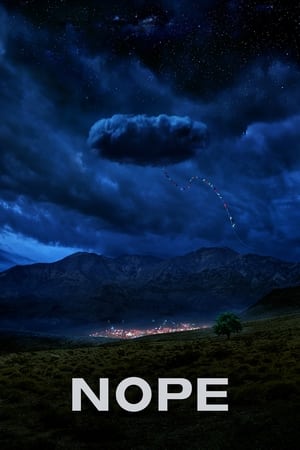
NOPE(2022)
Written by: Jordan Peele
Genre: Sci-Fi
Title: Nope
Written by: Jordan Peele
Draft date: Not specified
LOGLINE
In the dusty hills north of Los Angeles, a stoic Black horse trainer and his hustling younger sister discover that the mysterious object that killed their father is not a spacecraft but a territorial predatory creature hiding in the clouds above their ranch — and they risk everything to capture the one undeniable photograph that will prove it exists.
| Very Poor | Poor | Fair | Good | Excellent | |
|---|---|---|---|---|---|
| PREMISE | ✓ | ||||
| STRUCTURE | ✓ | ||||
| CHARACTER | ✓ | ||||
| CONFLICT | ✓ | ||||
| DIALOGUE | ✓ | ||||
| PACING | ✓ | ||||
| TONE | ✓ | ||||
| ORIGINALITY | ✓ | ||||
| LOGIC | ✓ | ||||
| CRAFT | ✓ |
| Strong Pass | Pass | Consider | Recommend | Strong Recommend | |
|---|---|---|---|---|---|
| Overall | ✓ |
Genre: Sci-Fi, Horror
Sub-genre: Creature Feature, Sci-Fi Thriller, Survival Horror
Keywords: Siblings, Family Legacy, Spectacle, Predator, UFO, Hollywood, Ranch, Animal Training, Black Protagonists, Social Commentary, Alien Creature, Rural Setting, Surveillance, Found Footage Adjacent, Entertainment Industry
MPA Rating: R (sustained creature violence, multiple character deaths, strong language throughout, disturbing imagery including a chimpanzee attack and graphic aftermath)
Budget Tier: High ($40M–$100M) — extensive outdoor locations across ranch and theme park, large creature/VFX sequences, period flashback sets (90s sitcom stage), aerial effects, weather/cloud effects, multiple practical locations, moderate cast size, sky dancer rigging, motorcycle stunts
Pages: 100
Time Period: Present over approximately 2 weeks, with flashbacks to 1996 (roughly 10% of runtime)
Locations: 70% at Haywood Ranch — a sprawling horse ranch in Agua Dulce/Santa Clarita with indoor and outdoor arenas, stables, a valley basin, hills, and a shed (requires wide-open terrain with unobstructed sky views). 15% at Jupiter's Claim — a small frontier-town theme park with Main Street, stadium, petting zoo, and inflatable balloon (requires practical build or dressed location). 5% at a Gordy's Home! sitcom set (1990s period, requires blood effects and chimpanzee VFX). Remaining 10% split across a commercial soundstage, Fry's Electronics, a fast food restaurant, Angel's apartment, Holst's house, hospital, and various roads.
Lead: OJ Haywood — Male, early 30s, Black, physically sturdy and quiet, a gifted horse trainer who communicates better with animals than people, emotionally guarded but deeply principled.
Comparables: Jaws (Spielberg) — small group devises a plan to confront and document a territorial predator in their backyard using limited resources; Close Encounters of the Third Kind — ordinary people drawn into escalating contact with an unknowable aerial phenomenon; Signs (Shyamalan) — a family on a rural property confronts an alien threat filtered through grief and faith; Tremors — genre-savvy characters in an isolated community strategize against a creature with specific behavioral rules.
SYNOPSIS
The opening plays as audio from a 1990s sitcom taping — a birthday episode of "Gordy's Home!" — that devolves into screams when GORDY, the chimpanzee cast member, attacks. Under the wrecked set, a single bloody shoe stands upright. Gordy, blood-soaked and wearing a birthday hat, spots someone hiding under the table and stares.
At the Haywood Ranch in Agua Dulce, OJ HAYWOOD (early 30s), a taciturn Black horse trainer, tends to animals alongside his father OTIS SR. (60s), who trains GHOST, a white horse, for an upcoming film job. A sudden wind kicks up. Strange metallic debris rains from the sky. A nickel lodges in Otis Sr.'s brain, killing him. OJ rushes him to the hospital, but it is too late.
Six months later, OJ struggles to keep the family business alive. On a commercial set, he fumbles a safety meeting until his sister EMERALD HAYWOOD (late 20s), charismatic and scattered, bursts in and delivers the Haywood pitch — their ancestor was the unnamed Black jockey in the first motion picture. The shoot goes sideways when Lucky the horse kicks a makeup bag, and the Haywoods lose the job. OJ has been selling horses to RICKY "JUPE" PARK (35), a former child actor who runs Jupiter's Claim, a frontier-themed park. Jupe shows OJ and Em his private shrine to "Gordy's Home!", the sitcom where, as a child, he witnessed the chimpanzee's rampage. He deflects the trauma with an SNL sketch summary.
That night, Ghost bolts from the ranch. OJ follows and witnesses cellphone towers and lights going dark in sequence before glimpsing a massive circular object hurtling silently through the clouds. He connects the debris that killed his father to whatever is in the sky. Em, initially skeptical, sees the stationary cloud and the power drain herself. They resolve to capture "the Oprah Shot" — undeniable photographic proof — and buy surveillance cameras from Fry's Electronics, where ANGEL TORRES (24), a heartbroken clerk, installs them at the ranch.
Angel, monitoring the feeds remotely despite being told not to, discovers the cloud above the western hills has not moved in days. OJ realizes the object does not behave like a ship — it behaves like an animal. Meanwhile, Jupe has been feeding it horses every Friday. A flashback reveals the full "Gordy's Home!" attack from young Jupe's perspective: the chimp nearly completed their trademark fist bump before being shot dead. In present day, Jupe stages his "Star Lasso Experience" live show for forty spectators, presenting Lucky in a glass case as bait. The creature — now dubbed JEAN JACKET by OJ — arrives early and devours the entire audience.
OJ arrives at the devastated park, retrieves Lucky, and barely survives an encounter with Jean Jacket. That night, the creature hovers above the Haywood house, disgorging metallic debris, blood rain, and personal effects of the consumed spectators. Em and Angel endure the assault inside the house while OJ watches from his stalled truck. OJ realizes the creature does not attack if you avoid eye contact — the same principle he uses with horses. He recruits ANTLERS HOLST (60s), a legendary cinematographer, who brings Dorothy, a hand-cranked 35mm camera immune to the creature's electromagnetic field.
The team executes an elaborate plan: Em fills the valley with forty sky dancers powered by scavenged car batteries, OJ rides Lucky as bait wearing a reflective hood, and Holst films from a hilltop station while Angel monitors digitally. A TMZ photographer on an electric motorcycle disrupts the operation and is consumed. OJ lures Jean Jacket with flag streamers that jam its intake, but Holst, obsessed with capturing the perfect shot in magic-hour light, climbs higher and is taken. Angel is swept up in debris but survives tangled in a tarp that also damages Jean Jacket's ability to fly and generate cloud cover.
OJ draws Jean Jacket's electromagnetic field away from Em so her motorcycle regains power. She rides to Jupiter's Claim, releases a giant helium balloon of Lil' Jupe, and uses the wishing well's flash camera to photograph Jean Jacket as the balloon lures it. Jean Jacket consumes the balloon but the inflatable destroys it from inside — the home cloud goes grey and drifts away. Em collapses in exhaustion. News crews in the parking lot have their cameras rolling, but Em turns away from them. At the end of Main Street, OJ sits mounted on Lucky, alive. In the well's photo tray, the image of Jean Jacket in full expanded form develops — the Oprah Shot, perfect.
COMMENTS
PREMISE — Excellent
The core concept merges a creature feature with an incisive meditation on spectacle — who gets to look, who gets consumed by looking, and who gets erased from the record. OJ and Em Haywood are descendants of the unnamed Black jockey in the first motion picture, and their quest to photograph an alien predator hiding in the clouds above their ranch is simultaneously a survival thriller and a reclamation of their family's place in the image-making industry. The premise generates conflict on multiple levels: the creature is territorial and electromagnetic, meaning every attempt to document it disables the technology needed to do so. This built-in paradox makes the central dramatic question — can they get the shot? — mechanically and thematically rich. Jupe Park's parallel thread, a former child star who survived one predator only to try domesticating another, deepens the thematic architecture around humanity's compulsion to commodify dangerous spectacle. The setting — an isolated ranch abutting a kitschy theme park, both overshadowed by a thing no one can prove is real — is distinctive and productive. Comparable to Jaws in its "ordinary people vs. territorial predator" structure and to Close Encounters in its awe-and-dread relationship with the sky, the premise distinguishes itself by making the act of capturing the image the goal rather than destroying the threat.
STRUCTURE — Good
The narrative builds with strong causality through its first two-thirds, with each escalation creating the conditions for the next. Otis Sr.'s death (6) establishes the mystery and the financial pressure that forces OJ to sell horses to Jupe, whose horse-feeding creates the conditions for the Star Lasso disaster. The inciting incident — OJ's first sighting of the object (27) — lands at roughly the right proportional mark, and the commitment to the plan at Fry's Electronics (28-30) functions as a clean break into the central conflict. The midpoint realization that the cloud has been stationary for months (52-53) effectively reframes the threat from episodic to persistent. The Star Lasso Experience sequence (57-64) is the structural high point, delivering on the Jupe subplot's promise while radically escalating stakes. However, the final operation — sky dancers, Holst's camera, the TMZ rider, the balloon — compresses an enormous number of moving parts into roughly twenty-five pages (79-100), and while the intercutting generates momentum, the simultaneous loss of Holst (94), near-loss of Angel (95), and Em's solo gambit at Jupiter's Claim (97-99) arrive so rapidly that each individual beat receives less dramatic weight than it earns. The resolution — Jean Jacket destroyed by the balloon, OJ alive at the end of Main Street — is emotionally satisfying but somewhat abrupt given the complexity of the preceding sequence.
CHARACTER — Good
OJ is a compellingly drawn protagonist whose defining trait — communicating with animals better than people — is not merely stated but demonstrated consistently, from the commercial set safety meeting he cannot deliver (9-10) to the climactic realization that eye contact governs Jean Jacket's behavior (70). His want (preserve his father's legacy), need (step out of his father's shadow and be seen), and arc (from passive caretaker to the man who rides into the open valley) are clearly delineated. Em is his perfect complement — verbal where he is silent, impulsive where he is methodical — and their dynamic carries real warmth, particularly the Jean Jacket naming scene (74) and the mutual "I see you" gesture (96). Jupe is the most psychologically complex figure despite limited screen time; his trauma from the Gordy attack (55-56) manifests not as avoidance but as a compulsion to re-stage spectacle, and his dawning realization at the Star Lasso Experience (61) is devastating. Angel provides necessary levity and exposition but remains somewhat thin beyond his breakup and his UFO enthusiasm; his survival feels slightly arbitrary compared to Holst's thematically resonant death. Holst, introduced late (49-51), is efficiently characterized — his "impossible shot" reputation and his willingness to die for it (93) cohere — though his arc is essentially a single beat: arrive, commit, sacrifice.
CONFLICT — Good
The central external conflict — capturing undeniable footage of a predatory sky creature that disables all electronic recording devices when it approaches — is elegantly self-complicating. Every attempt to document Jean Jacket triggers the very conditions that prevent documentation, creating a ratcheting problem that demands increasingly creative solutions. The creature's escalation follows a clear pattern: first Ghost is taken (27), then Clover (45), then forty people at the Star Lasso Experience (62), then a direct assault on the house (66-67), then the TMZ rider (89). This escalation keeps the threat credible and growing. The internal conflict between OJ's desire to protect the ranch and Em's desire for recognition is productive early — their argument about "side shit" versus the family business (15-16) — but largely resolves by the midpoint, after which they are functionally aligned. A stronger sustained tension between the siblings' competing motivations through the final operation would have added emotional complexity to the climax. Scene-level conflict is well-maintained: the commercial set sequence (8-13) generates tension from social dynamics alone, and the planning scene (73-77) efficiently builds dread through the gap between the team's confidence and their obvious vulnerability.
DIALOGUE — Excellent
The dialogue is sharply differentiated and naturalistic, with each principal voice identifiable even without character names. OJ's monosyllabic responses — "Mmm," "Mmm hmm," "Cool" (35) — contrast effectively with Em's rapid-fire verbal energy, as in her safety meeting monologue (10-11) or her breathless pitch at Fry's (29-30). Angel's oversharing ("her name is Rebecca Diaz, she's an actress/model, look out for her," 33) establishes his character in a single speech. Jupe's polished showmanship — "What if I told you" (59) — carries an unsettling hollowness that reflects his trauma without the dialogue ever becoming expository about it. Holst's late-arriving voice is distinct: laconic, literary, and slightly grandiose ("We don't deserve the impossible," 93). The recurring use of "Nope" functions as both running gag and thematic punctuation. Subtext is strong in the Gordy Room tour (20-22), where Jupe's breezy narration masks visible distress, and in OJ and Em's porch conversation about the "bad miracle" (27-28), where neither can name what they are describing. The Oprah motif — escalating from joke to obsession to battle cry (30, 98) — demonstrates how dialogue can carry thematic weight without becoming on-the-nose.
PACING — Fair
The first forty pages establish character, setting, and the central mystery at a measured pace that trusts its world-building, and the payoff justifies the patience: the first full encounter with Jean Jacket (44-48) lands with genuine force because the preceding scenes have carefully established the electromagnetic signatures and behavioral rules. The Star Lasso Experience (57-63) is paced brilliantly — Jupe's showmanship builds false security, the crowd's shifting reactions modulate tension, and the consumption happens with horrifying swiftness. The Gordy flashback (54-56), arriving at the midpoint as a chapter break, creates a productive pause that recontextualizes Jupe's behavior without stalling momentum. The final operation (79-100), however, asks roughly twenty pages to manage five characters in four locations with intercutting walkie-talkie dialogue, and while the tension is high, the density of simultaneous events — the TMZ rider's arrival (82-84), his consumption (89), Holst's ascent and death (93-94), Angel's near-death (95), and Em's solo gambit (97-99) — creates a sense of compression where individual beats deserve more breathing room. The resolution, in particular, arrives within two pages of Jean Jacket's destruction and could benefit from a longer exhale.
TONE — Good
The tonal control is precise and purposeful, balancing dread, humor, and wonder without allowing any one register to undercut the others. The commercial set sequence (8-13) plays as workplace comedy with an undercurrent of grief and racial marginalization, establishing the tonal range early. The Gordy flashback thread modulates from eerie audio prologue (2) to Jupe's deflecting comedy (20-22) to full traumatic horror (55-56) across its three appearances, each shift earned by context. The fast food scene (71) where OJ matter-of-factly announces "I don't think it eats you if you don't look it in the eye" while Em and Angel are high and eating fish sandwiches exemplifies the tonal dexterity — the information is terrifying, the delivery is deadpan, and the contrast produces both nervous laughter and dread. One tonal wobble occurs during the distant fence-shouting exchange with Jupe (37-38), where the escalating awkwardness of the thumbs-up exchange pushes toward farce in a way that slightly undercuts the growing tension. Holst's "Purple People Eater" rendition (78) works as gallows humor that reinforces his eccentric characterization and the team's collective anxiety.
ORIGINALITY — Excellent
The premise inverts the standard UFO narrative by revealing the "spacecraft" is a biological organism — a territorial sky predator rather than a vehicle for intelligent aliens — and this single conceptual choice cascades through every subsequent plot decision, from the electromagnetic field to the digestive mechanics to the behavioral rules governing eye contact. No direct precedent exists for this specific creature concept, though Tremors shares the "learning a predator's rules to survive" framework and Jaws provides the "ordinary people hunting a territorial animal" template. Where the material most distinguishes itself is in its thematic architecture: the equation of the creature with spectacle itself — it consumes those who look at it, it cannot be captured on electronic media, its victims are people gathered to watch a show — produces a layered commentary on Hollywood, exploitation, and the consumption of Black labor that has no clear cinematic antecedent. The Gordy subplot adds another axis of originality, using a real-world phenomenon (chimpanzee attacks on sitcom sets) as a thematic rhyme rather than a plot device. The execution of familiar beats — the planning montage, the team-assembles sequence — is polished rather than reinvented, but the creature's unique biology ensures that even conventional structural moves produce unconventional dramatic situations.
LOGIC — Fair
The internal rules governing Jean Jacket are established and maintained with care: the electromagnetic disruption is consistent across every encounter (phones die on page 6, cameras fail on pages 44-45, the motorcycle stalls on page 85), and the eye-contact trigger is seeded at the commercial set (8) before becoming the survival mechanism (70). One notable gap exists: OJ's realization that avoiding eye contact prevents attack (70-71) is presented as an epiphany, but the logic connecting a horse's reaction to a reflective surface with a sky predator's targeting system requires an inferential leap that is asserted rather than demonstrated. The creature's vulnerability to non-organic indigestible material — the flag streamers, the decoy horse, the balloon — is established through the Star Lasso aftermath (68) and paid off in the climax (91-92, 98-99), maintaining consistency. However, the final destruction of Jean Jacket by the helium balloon (99) is somewhat unclear mechanistically — the "POP" and the cloud going grey suggest the balloon exploded inside it, but the physics of how a helium balloon would prove lethal to a creature that has consumed forty humans and multiple horses is underdeveloped. Angel's survival under the tarp (95) is convenient but not impossible. The news crews' presence at Jupiter's Claim (99) is established by the earlier report (71), so their appearance is logical.
CRAFT — Good
The writing operates in a distinctive voice that blends terse action description with precise observational detail, creating a rhythm that mirrors OJ's laconic temperament. Character introductions are efficiently loaded: Jupe is "immediately acts more alert. A wiry guy with white top teeth been relaxing at his desk staring at a painting of Owls" (17), and this single image — the alertness, the teeth, the owls — communicates his performative energy and his fixation on predatory animals. The onomatopoeia system for the debris attack — "THIP... THIP... DING... THUP" (6) — distinguishes between materials and impact severity, turning sound design into prose. The chapter-card structure (Ghost, Clover, Gordy, Lucky, Jean Jacket) organizes the narrative around consumed animals, reinforcing the thematic throughline at the formatting level. Action description during the climax is occasionally congested, with intercutting between four locations producing paragraphs where spatial orientation becomes difficult (88-92). The tarp/barbed wire sequence with Angel (95) is particularly hard to track physically. A few formatting irregularities appear — blank or partial lines (67), occasional missing words — but nothing that impedes comprehension. The Muybridge clip reference (7) is elegant craft: a two-second loop of a Black man on a horse, presented as both historical fact and thematic thesis statement.
OVERALL — Recommend
Nope is a sci-fi horror film about two Black siblings fighting to photograph a predatory sky creature that hides in the clouds above their family horse ranch — and in doing so, reclaim their erased place in the history of motion pictures. The strongest elements are the premise, which generates conflict from the paradox of documenting something that disables documentation, and the character work, particularly OJ's arc from silent caretaker to deliberate hero and Jupe's devastating parallel trajectory as a trauma survivor who repeats the spectacle that nearly killed him. The dialogue is naturalistic and sharply differentiated, and the tonal control — balancing deadpan humor, genuine dread, and thematic weight — is the most consistently accomplished element across all hundred pages. The Gordy flashback thread, parceled across three appearances, is a masterclass in delayed revelation. The weakest element is the density of the final operation, where the intercutting among four locations and the rapid succession of character losses compress dramatic beats that individually warrant more space. The mechanics of Jean Jacket's destruction could also benefit from greater clarity. These are problems of ambition rather than carelessness — the material attempts to do more in its climax than its page count comfortably supports — but they prevent the ending from landing with the full emotional force the preceding ninety pages have earned.
Get this level of coverage for your screenplay
Every coverage includes 10 category ratings, an overall recommendation, and detailed analysis — powered by the same methodology used by talent agencies and literary managers.
Movie data provided by TMDB