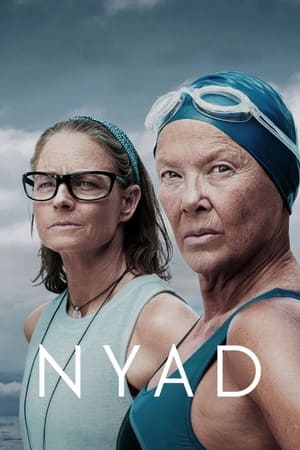
NYAD(2023)
Written by: Julia Cox
Draft date: March 11, 2022
Genre: Drama
Title: NYAD
Written by: Julia Cox
Draft date: 03/11/22
LOGLINE
A sixty-year-old retired champion marathon swimmer, haunted by a failed attempt in her twenties, comes out of a thirty-year retirement to swim the 110 miles from Cuba to Florida without a shark cage — dragging her reluctant best friend into the role of coach across five grueling attempts over three years.
| Very Poor | Poor | Fair | Good | Excellent | |
|---|---|---|---|---|---|
| PREMISE | ✓ | ||||
| STRUCTURE | ✓ | ||||
| CHARACTER | ✓ | ||||
| CONFLICT | ✓ | ||||
| DIALOGUE | ✓ | ||||
| PACING | ✓ | ||||
| TONE | ✓ | ||||
| ORIGINALITY | ✓ | ||||
| LOGIC | ✓ | ||||
| CRAFT | ✓ |
| Strong Pass | Pass | Consider | Recommend | Strong Recommend | |
|---|---|---|---|---|---|
| Overall | ✓ |
Genre: Drama
Sub-genre: Sports Drama, Biographical Drama, Coming-of-Age Drama (late-life)
Keywords: Based on True Events, Female Protagonist, LGBTQ+ Theme, Friendship, Obsession, Aging, Perseverance, Open Water Swimming, Cuba, Mentor-Protégé, Team, Trauma, Survival, Extreme Sports
MPA Rating: PG-13 (some strong language including scattered uses of "fuck," thematic elements of childhood sexual abuse depicted with restraint, perilous ocean sequences, brief medical emergencies)
Budget Tier: Medium ($10M–$40M) — extensive ocean filming requiring multiple boats, underwater photography, period flashback sequences, locations across Southern California, St. Maarten, and Cuba, archival-style recreations, moderate cast, jellyfish/shark VFX or practical effects, night ocean shoots.
Pages: 115
Time Period: 80% Present (approximately 2009–2013) over 4 years / 20% in 1955–1963 in brief flashbacks.
Locations: Approximately 40% open ocean (requiring multiple boats, night shoots, underwater photography), 20% Southern California (suburban homes, pools, malls, gyms, hotels), 15% Havana, Cuba (streets, marina, rental house, press room), 10% St. Maarten (beachfront house, docks, ocean), 10% Key West beach for climax, 5% various interiors (assisted living facility, hospital). Period flashbacks require a 1960s Florida home, school pool, and coach's house.
Lead: Female, 60, white, tan and fit with cropped blond hair, intensely charismatic and relentlessly driven but also self-centered, vulnerable beneath a domineering exterior. Diana Nyad (real person).
Comparables: The Swimmer (2014 documentary) and Eddie the Eagle (2016) for underdog athletic perseverance against long odds; Wild (2014) for a solo physical journey intercut with trauma flashbacks that reframe the protagonist's motivation; The Whale (2022) for a character study about a person whose body and psychology are inseparable from their obsessive pursuit.
SYNOPSIS
A montage of archival footage introduces DIANA NYAD (20s) at the peak of her career as the world's greatest female long-distance swimmer in the 1970s — record-setting swims, appearances on Johnny Carson and the Today Show. She announces her intention to swim from Cuba to Florida, the "Everest of swims," but after 41 hours she is pulled from the water. She tells reporters she will not swim again.
Thirty years later, DIANA (60) is restless, bored, and adrift. She browbeats a teenage store clerk over swimsuit fabric, storms out, and is collected by her best friend BONNIE (58), a no-nonsense personal trainer. Diana visits her elderly mother LUCY (80s) at an assisted living facility, where Bonnie helps care for her. Diana's home is cluttered with memorabilia from her former glory. She exercises obsessively but directs her energy nowhere. At a surprise 60th birthday party Bonnie throws, Diana holds court with stories but feels unsatisfied. She flirts awkwardly with ELISE (50s), a setup, but has no real interest.
Lucy dies. Among her belongings, Diana finds a Mary Oliver poem — "Tell me, what is it you plan to do with your one wild and precious life?" — which, despite belonging to a neighbor named Uli, plants a seed. Diana watches old VHS footage of her failed Cuba attempt and begins secretly swimming laps at a public pool, starting at twenty minutes and building to hours. During a ping-pong game, she tells Bonnie she intends to swim Cuba to Florida and wants Bonnie as her coach. Bonnie refuses, calling it absurd, but Diana persuades her to witness a test swim in Puerto Morelos, Mexico. After a rough first outing of only four hours, Bonnie tells Diana that experts say the swim is impossible. Diana channels the doubt into fuel and completes an eight-hour swim the next day, convincing Bonnie to commit.
Training intensifies. In St. Maarten, Diana decides to swim without a shark cage, infuriating Bonnie. They recruit shark expert LUKE TIPPLE (20s), who demonstrates an electronic shark shield. Diana's charm and persistence — and Bonnie's quieter diplomacy — bring aboard navigator JOHN BARTLETT (60s), an acerbic, brilliant Gulf Stream expert. Bonnie also recruits young Cuban-American kayaker NICO (19) and silent, steely boat captain DEE (50). Diana struggles to find sponsorship but lands Secret deodorant. Flashbacks to Diana at ages 5 and 14 reveal her Egyptian-Greek father ARIS showing her the dictionary definition of "Nyad," her natural swimming talent, and the beginning of a relationship with her swim coach, JACK NELSON (30s), that will darken.
The first Cuba attempt launches August 7, 2011. After strong early progress, Diana suffers an allergic reaction to medication, losing critical hours. The currents push them hopelessly east, and Bartlett insists they pull her at 28 hours. Diana is devastated but immediately wants to try again. Seven weeks later, attempt two begins. Diana swims beautifully through the first night until she encounters thousands of box jellyfish. The stings paralyze her and nearly kill both Diana and medic JON ROSE (30s). Diana's heart stops for fifteen seconds before Bonnie talks her back to breathing. Diana recovers on the boat, her face disfigured by stings.
In the hospital, Diana insists on trying again. She recruits box jellyfish expert DR. ANGEL YANAGIHARA (30s), who designs a full protective suit and face mask. A rival swimmer, CHLOE MCCARDELL (20s), attempts the same crossing but is defeated by jellyfish, clearing Diana's path. Attempt three launches August 2012 despite Bartlett's warnings about weather. A tropical storm batters the team for hours. At 51 hours and 55 miles, with the boat taking on water and Nico endangered, Bonnie forces Diana out. Flashbacks during these attempts progressively reveal that Coach Nelson sexually abused Diana as a teenager — the trauma that fuels both her relentless drive and her savage self-criticism.
Back in Los Angeles, Diana's insistence on continuing alienates Bonnie, who declares she is done. Diana trains alone, delivers a vulnerable speech at a dental convention, and calls Bartlett to apologize. Bartlett, warm but weary, declines another attempt, hinting at health problems. Diana visits Bonnie and, for the first time, opens up about Nelson's abuse — how his voice becomes hers when she berates herself. Bonnie holds her. Diana leaves without asking Bonnie to return.
Bonnie hears the Mary Oliver poem on NPR, learns about Oliver's own history of abuse, and drives to Havana, where Diana has been training alone. Bonnie arrives on her own terms. Bartlett also returns, revealing privately to Bonnie that he is seriously ill and wants one last adventure. Angel provides an improved suit and mask.
Attempt five launches August 31, 2013. The shark shield fails and oceanic white-tip sharks approach, but Luke and MARCUS repair the shield in a harrowing underwater sequence. Diana endures the night in her jellyfish suit, hallucinates the Taj Mahal and the Yellow Brick Road, and at 75 miles passes her personal record. As exhaustion renders her nearly unreachable — swimming in zigzags, unable to see — Bonnie jumps into the water beside her and coaxes her stroke by stroke back to coherence. At sunrise, Bonnie points Diana toward the lights of Key West. After more than 52 hours, Diana staggers onto Smathers Beach, collapses into Bonnie's arms, and tells her, "We did it." She addresses the crowd with three messages: never give up, you are never too old to chase your dreams, and it takes a team. The crew shares a banana split. Diana and Bonnie walk along a dock, debating the meaning of Mary Oliver's poem, and Diana hints at her next adventure — walking — as Bonnie groans.
COMMENTS
PREMISE — Good
The premise pairs a primal, easily grasped goal — swim 110 miles of open ocean — with a rich emotional engine: a sixty-year-old woman's refusal to accept that her defining achievement is behind her. The central dramatic question is not merely whether Diana will complete the swim but whether her obsessive drive is heroism or pathology, and the material is most alive when it refuses to resolve that tension. The relationship between Diana and Bonnie gives the premise its structural backbone, functioning less as athlete-and-coach and more as a study in what one person's dream costs the people who love her. The Cuba-to-Florida setting provides inherent, escalating physical dangers — sharks, jellyfish, storms, currents — that keep the external conflict formidable across multiple attempts. Compared to Wild, which uses a solo physical journey to metabolize trauma through flashback, Nyad adds the complication of a team whose loyalty must be earned and re-earned, and compared to Eddie the Eagle, it substitutes inspirational warmth with a thornier, more abrasive protagonist who is as likely to alienate as to inspire.
STRUCTURE — Fair
The narrative is organized around five distinct swim attempts, which provides a clear episodic engine but also creates a repetitive middle section that consumes roughly fifty pages between attempts one and four (57–85). The inciting incident — Diana's decision to attempt Cuba again — arrives cleanly around page 24 when she blurts it to Bonnie during ping-pong, well-proportioned at roughly 21% of the page count. The midpoint falls near the first jellyfish attack and Diana's near-death (65–71), which permanently raises the stakes and fractures Bonnie's willingness to continue. The break into the final movement comes when Bonnie returns to Diana in Havana (97–98), landing at about 85%, which is late — it compresses the fifth and successful attempt into roughly seventeen pages. This compression means the triumphant swim, which should be the most expansive sequence, receives less real estate than any individual failed attempt. Attempts two through four blur together structurally: each follows a launch-crisis-extraction pattern, and while each crisis differs (allergic reaction, jellyfish, storm), the emotional beats at the end of each — Diana's grief, Bonnie's anguish, the team's exhaustion — are nearly identical. The early Los Angeles and St. Maarten training sections (31–79) do important character work but could be tightened to give the climax more room to breathe.
CHARACTER — Good
Diana is drawn with uncommon specificity — her grandiosity, her inability to listen, her volcanic self-criticism, and her buried tenderness are all demonstrated through behavior rather than exposition. The bathing suit store scene (5–7) establishes her personality in a single encounter: her genuine bewilderment at mediocrity, her obliviousness to how she comes across, and the sting of the "old lady Olympics" crack that she pretends not to feel. Bonnie is the material's secret weapon — her arc from reluctant participant to full partner to someone who discovers her own needs apart from Diana is the more complete emotional journey. The moment Bonnie declares "I have things I want to do" (86) marks her most important beat, and her return (97–98) earns its power because the separation was genuine. Bartlett functions as the truth-teller Diana cannot dismiss, and his late-reveal illness (104) adds poignancy without being overplayed. The weakest character work involves the flashback Diana: the abuse scenes are handled with restraint and power individually (70, 90–91), but young Diana lacks interiority beyond victimhood — her rebellion, her coping mechanisms, her relationship with her siblings are gestured at (scenes 51, 99) but never developed enough to make the younger character feel three-dimensional.
CONFLICT — Fair
The central external conflict — completing the Cuba-to-Florida swim — is vividly dramatized through escalating physical obstacles: hypothermia in Mexico (29–30), the allergic reaction on attempt one (58–60), near-fatal jellyfish stings on attempt two (63–71), a tropical storm on attempt three (81–84), and shark shield failure on attempt five (100–102). Each obstacle is materially different, which prevents the repetition from becoming purely mechanical. The internal conflict is Diana's relationship with her own relentlessness — the voice that calls her "stupid" and "pathetic" (29, 89) is explicitly linked to Coach Nelson's abuse, and the material connects her inability to quit with her inability to process that trauma. The interpersonal conflict between Diana and Bonnie provides the emotional through-line: Diana's selfishness versus Bonnie's need for autonomy reaches its apex in their argument (86–88), which is the most dramatically charged scene in the material. Where conflict weakens is in the external antagonist department — the ocean is formidable but impersonal, and no human antagonist exerts sustained pressure. Chloe McCardell's rival swim (76–78) introduces competitive stakes but is resolved too quickly to generate real tension.
DIALOGUE — Good
Dialogue is the material's most consistent strength, with Diana and Bonnie's voices so distinct that virtually any exchange between them could be identified without character names. Diana speaks in sweeping, grandiose declarations — "a soul-stirring emblem of the grasp for infinitude" (36) — while Bonnie deflates with deadpan precision — "I'm fifty-eight so I wouldn't know" (15). Bartlett's voice is equally sharp: his Gulf Stream monologue (42–43) conveys expertise and personality simultaneously, and "low expectations are the key to happiness" (62) economically defines him. Subtext operates well in the Diana-Bonnie dynamic — when Bonnie says "I have things I want to do" and Diana responds "Like what?" (86), the exchange reveals Diana's inability to conceive of Bonnie's independent life. The dialogue is weaker in the flashback sequences, where young Diana and Coach Nelson speak in functional, somewhat generic terms (21, 49–50), lacking the specificity that distinguishes the present-day voices. Diana's speeches to crowds (46–47, 89–90) occasionally tip into inspirational-poster territory, though the dental convention speech (89–90) redeems itself by breaking into genuine vulnerability.
PACING — Fair
The first thirty pages move with propulsive efficiency, establishing Diana's malaise, her decision, and her first swim in a rhythm that mirrors Diana's own restless energy. The training and team-assembly section in St. Maarten (35–52) maintains momentum through varied scenes — shark demonstrations, sponsor calls, Bartlett's recruitment — but the material begins to drag between attempts two and four. The jellyfish attack sequence (63–71) is gripping, but the hospital scene (72–73) and the subsequent decision to try again retread emotional beats already established after attempt one (60–61). The Chloe McCardell subplot (75–78) injects needed urgency but occupies four pages that could have been compressed. The separation between Diana and Bonnie (86–96) is paced well, with Diana's vulnerability at the dental convention (89–90) and the Bartlett phone call (91–93) providing necessary emotional texture. The final attempt (100–113) is the section most in need of expansion — the shark sequence, the hallucinations, Bonnie's leap into the water, and the beach arrival all happen in rapid succession, and the climax would benefit from more space to let each beat land.
TONE — Good
The tone walks a confident line between inspirational sports narrative and character-driven drama, consistently leavened by humor that emerges organically from personality rather than from imposed comic relief. The balance holds through most of the material — the shark demonstration scene (37–39) is genuinely funny while also establishing real danger, and Diana's speech to the children about sea creatures (47) mines comedy from her complete lack of age-appropriate filter. The abuse flashbacks (70, 90–91) integrate tonally because they are brief, visually restrained, and motivated by Diana's present-tense psychological state during swims. The one tonal wobble occurs in the Chloe McCardell sequence (75–78), where Diana and Bonnie's competitive glee — cheering when Chloe's swim is aborted — sits uneasily alongside the material's emphasis on Diana's empathy and the genuine horror of jellyfish stings that the audience has already witnessed. The moment "Where's a box jellyfish when you need one" (76) is immediately flagged by Bonnie, but the scene still risks making Diana unsympathetic at a point when she needs goodwill.
ORIGINALITY — Good
The "aging athlete's comeback" is well-trodden territory — The Wrestler, Rocky Balboa, and the documentary The Swimmer all explore similar emotional ground — and the Cuba swim itself was covered in the 2014 documentary about Nyad. What distinguishes this execution is the refusal to sentimentalize Diana's obsession: she is genuinely difficult, her friendships are strained to breaking points, and her triumph is inseparable from the damage she inflicts on those around her. The decision to center the friendship with Bonnie rather than a romantic relationship gives the material a structural freshness uncommon in biographical sports narratives, which typically privilege mentor-student or spouse dynamics. The integration of childhood sexual abuse as the psychological engine beneath the athletic drive is handled with more specificity and less exploitation than comparable treatments in films like Foxcatcher, where trauma functions more as atmosphere than as character architecture. The ocean sequences achieve genuine originality in their subjective rendering of Diana's hallucinations — the stars falling into the sea, the Taj Mahal, the encounter with her fourteen-year-old self (106) — which move beyond sports-film convention into something more interior and strange.
LOGIC — Fair
The material maintains strong internal consistency regarding marathon swimming rules — no touching the boat, no flotation devices, no staged swim — and these constraints are established early (3) and enforced rigorously through the climax, where Bonnie screams "Nobody touch her" (112) as Diana staggers ashore. The repeated shark shield failures raise a practical question never fully addressed: after the shield fails on attempt five (100), Luke repairs it underwater and the sharks veer off, but the text does not confirm whether the shield or Marcus's physical intimidation caused the retreat, which undercuts the dramatic clarity. The allergic reaction to "French Tylenol" (58) is presented as the primary cause of attempt one's failure, but Bartlett's concurrent navigation data showing they were hopelessly off course suggests they would have failed regardless — the material does not reconcile these two explanations. Diana's rapid physical recovery between attempts — she is nearly killed by box jellyfish (70) but is arguing in a hospital bed shortly after (72) — strains credibility slightly, though the compressed timeline of the text makes the elapsed recovery time ambiguous.
CRAFT — Good
The prose is muscular, efficient, and visually specific, with character introductions that double as personality diagnoses — Bartlett is "a sharp, shoeless, acerbic hippie: salt and pepper hair, shark tooth necklace, weathered skin" (40), and Dee is introduced through her "thousand-yard stare" (47) before being further defined by silence. The underwater POV sequences are written with a sensory precision that translates Diana's subjective experience without overwriting — "the static roll and swish of the sea, eyes trained on the red LEDs below" (58). Action lines are generally lean, though the capitalized text blocks in the final act — "DIANA IS CRANKING. IT'S PRETTY GLORIOUS" (103) — read as formatting anomalies rather than intentional stylistic choices, and they disrupt the otherwise clean visual language. Scene transitions are handled with care, particularly the drift from present-tense swimming into memory (20–21, 48–49, 69–70), where the shift is triggered by physical sensation rather than conventional flashback cues. Minor formatting inconsistencies appear throughout: some scene headers include numbers that appear to be production markers (e.g., "10 10"), and several "OMITTED" sluglines break reading flow, suggesting this is a production draft rather than a polished reading draft.
OVERALL — Recommend
Nyad is a biographical sports drama about a sixty-year-old champion swimmer's five attempts over four years to complete the impossible 110-mile crossing from Cuba to Florida, anchored by her volatile friendship with a reluctant best-friend-turned-coach. Its greatest strengths are its two central characters — Diana's abrasive, magnetic, deeply flawed personality and Bonnie's wry, quietly heroic counterbalance — and the dialogue that brings them to life with crackling specificity. The physical sequences are vividly rendered, particularly the jellyfish and shark encounters, and the integration of childhood trauma flashbacks adds psychological depth without melodrama. The primary structural weakness is the repetitive architecture of attempts two through four, which follow similar emotional arcs and compress the triumphant final swim into too few pages, underserving the climax. The Bonnie-Diana separation and reconciliation is the emotional climax, and it lands — the material earns its ending through the honest depiction of what Diana's dream costs everyone around her. This is a well-crafted, emotionally engaging work with a clear identity, whose strongest elements are its character writing and dialogue, and whose structural pacing in the middle third is the most significant area requiring attention.
Get this level of coverage for your screenplay
Every coverage includes 10 category ratings, an overall recommendation, and detailed analysis — powered by the same methodology used by talent agencies and literary managers.
Movie data provided by TMDB