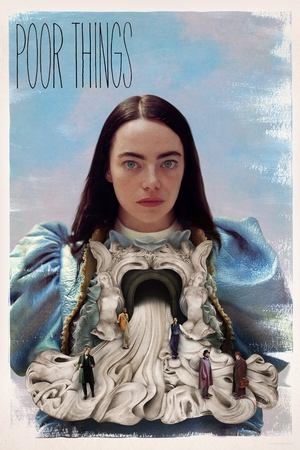
POOR THINGS(2023)
Written by: Tony McNamara
Draft date: December 1, 2023
Genre: Comedy
Title: Poor Things
Written by: Tony McNamara
Draft date: December 2023
LOGLINE
In 1882 London, a young woman reanimated by an eccentric surgeon — her infant brain transplanted into an adult body — escapes her sheltered existence with a rakish lawyer, embarking on a journey across Europe that awakens her intellectually and sexually, forcing her to confront the world's cruelties and the buried truth of her own origins.
| Very Poor | Poor | Fair | Good | Excellent | |
|---|---|---|---|---|---|
| PREMISE | ✓ | ||||
| STRUCTURE | ✓ | ||||
| CHARACTER | ✓ | ||||
| CONFLICT | ✓ | ||||
| DIALOGUE | ✓ | ||||
| PACING | ✓ | ||||
| TONE | ✓ | ||||
| ORIGINALITY | ✓ | ||||
| LOGIC | ✓ | ||||
| CRAFT | ✓ |
| Strong Pass | Pass | Consider | Recommend | Strong Recommend | |
|---|---|---|---|---|---|
| Overall | ✓ |
Genre: Drama, Comedy
Sub-genre: Black Comedy, Period Drama, Coming-of-Age Drama
Keywords: Female Protagonist, Body Autonomy, Victorian Era, European Locale, Science Fiction Elements, Sexual Awakening, Mad Scientist, Fish-Out-Of-Water, Mentor-Protégé, Feminist Themes, Literary Adaptation, Prostitution, Class, Philosophy, Medical Experimentation
MPA Rating: NC-17 (explicit sexual content including multiple sex scenes, full nudity implied, frank sexual dialogue throughout, and graphic surgical imagery)
Budget Tier: High ($40M–$100M) — period Victorian London, Lisbon, Alexandria, Paris locations requiring extensive production design; a cruise ship; hybrid animals requiring VFX; large supporting cast; elaborate costumes and practical effects for surgical sequences.
Pages: 97
Time Period: 1882 London and Europe, over approximately 6-9 months.
Locations: Approximately 30% in a large, eccentric Victorian London townhouse with surgical theater, rooftop, and enclosed garden requiring hybrid animal VFX. 20% in Lisbon — hotel rooms, restaurants, street cafes, a park. 15% aboard a period cruise ship with multiple interior spaces (casino, dining room, cabins, decks). 10% in Paris — a functioning period brothel with multiple bedrooms, streets, a medical school lecture hall. 10% in Alexandria — a colonial hotel with balcony overlooking a slum requiring large-scale poverty staging. 15% across miscellaneous London locations including a church, an asylum, a grand gated estate, a bridge, and a medical school lecture theater.
Lead: Female, approximately 30, white/European. Bella Baxter is physically stunning but behaviorally childlike at the outset — uninhibited, curious, blunt, rapidly evolving in intelligence and emotional sophistication throughout.
Comparables: The Favourite (2018) — McNamara's own dark period comedy with transgressive female characters and biting dialogue; Frankenstein (1931/various) — reanimation premise and creator-creation relationship; Candide (Voltaire) — picaresque journey of a naïve protagonist through a cruel world; Edward Scissorhands (1990) — an innocent created being discovering and disrupting conventional society.
SYNOPSIS
A woman stands on a foggy London bridge and dives off. In 1882 London, BELLA BAXTER (around 30), a beautiful young woman with the mental capacity of a small child, lives in the home of GODWIN BAXTER (50s), a brilliant but physically deformed surgeon she calls "God." She smashes piano keys, spits out food, and speaks in broken language. Baxter keeps her locked inside, attended by housekeeper MRS. PRIM (adult). A half-dog, half-pig and other surgically hybridized animals roam the house.
At his medical school, Baxter summons MAX MCCANDLES (late 20s), an eager, poorly dressed student, to serve as his assistant. Max's job is to meticulously document Bella's rapid cognitive and physical development. Bella swats Max's nose on introduction, explores cadavers with glee, and progresses from near-infant speech to increasingly sophisticated language at accelerated speed. When Bella demands to see the outside world, Baxter reluctantly takes her to a secluded park in a curtained carriage, but when she tries to escape to see an ice cream vendor, he chloroforms her.
Max discovers Bella's medical files and confronts Baxter, who reveals the truth: the woman on the bridge was a pregnant suicide. Baxter extracted the infant's brain and transplanted it into the dead woman's skull, reanimating her as Bella. She has no memory of her previous life. Bella begins discovering sexual pleasure and attempts to share her discovery with everyone, horrifying Max. Baxter, a self-described eunuch due to his father's experiments, proposes that Max marry Bella, with the condition they live in his house permanently.
DUNCAN WEDDERBURN (adult), a charismatic lawyer visiting on contract business, meets Bella and seduces her with promises of freedom and travel. Despite Max's protests, Bella chloroforms Max and departs for Lisbon with Duncan. In Lisbon, Bella experiences sex, food, music, and urban life for the first time with uninhibited joy. She wanders alone, gets lost, and finds her way back. Duncan grows increasingly possessive and jealous, proposing marriage and erupting violently when Bella reveals another man touched her.
Aboard a cruise ship, Bella meets MARTHA VON KURTZROC (adult), an intellectual older woman, and HARRY ASTLEY (30s), an American cynic. Martha introduces Bella to philosophy and reading. Harry challenges her optimism. When the ship docks in Alexandria, Harry shows Bella the desperate poverty outside their luxury hotel. Devastated, Bella steals Duncan's gambling winnings and gives them to ship stewards who claim they will deliver the money to the poor. Duncan is bankrupted. They are expelled from the ship in Marseille.
Penniless in Paris, Bella discovers a brothel run by MADAM SWINEY (40s) and begins sex work, viewing it as both income and experiment. Duncan is destroyed — screaming, weeping, pulling out his hair — and eventually ends up in an asylum. Bella befriends TOINETTE (20s), a socialist sex worker, who points out Bella's caesarean scar. Bella begins questioning Baxter's story about her origins. She reads voraciously, attends medical lectures, and navigates the full spectrum of human desire through her clients.
Back in London, Baxter is dying of cancer. Max operates on him and finds the disease has spread. FELICITY (adult), a new reanimated woman, has replaced Bella in the household. Max locates Duncan in an asylum and learns Bella is in Paris. A postcard summons Bella home.
Bella returns to London and confronts Baxter, who admits the truth: she is both mother and daughter — the baby's brain in the suicide's body. She forgives him for the act but not the lies. She declares she will become a doctor. Max and Bella reconcile and agree to marry. At their wedding, GENERAL ALFRED BLESSINGTON (adult), a magnetic, controlling military man, interrupts — he is Victoria Blessington's husband. Bella chooses to leave with him to understand her past life.
At Alfie's gated estate, Bella discovers she is effectively imprisoned. She learns Alfie plans to have her clitoris surgically removed and impregnate her. When he offers her a chloroform-laced drink at gunpoint, Bella throws it in his face and they struggle. The gun discharges into Alfie's foot. Bella drags him to Baxter's surgery, where she and Max save his life — but transplant a goat's brain into his skull.
Baxter dies peacefully with Bella and Max beside him. In the final scene, Bella studies for her anatomy exam in Baxter's garden, surrounded by Toinette, Max, Prim, and Felicity. Alfie grazes on all fours on the lawn, bleating. Bella smiles, reading her book.
COMMENTS
PREMISE — Excellent
The premise merges Frankenstein's reanimation myth with a picaresque coming-of-age, placing a woman with an infant's brain in an adult's body and sending her through the gauntlet of Victorian society. The central dramatic question — what happens when a being with no socialization, shame, or deference encounters a world built on all three — generates conflict organically at every stage. Bella's unique condition makes her simultaneously vulnerable and invulnerable: she cannot be controlled by convention because she does not understand convention, yet she is at constant physical risk from men who wish to own her. The premise gives every encounter inherent tension, whether Bella is eating an oyster or being propositioned by a butcher. The Baxter-as-God/father dynamic and the competing suitors (Max the safe choice, Duncan the dangerous one, Alfie the predatory one) provide a rich foundation for thematic exploration of bodily autonomy, creation, and the male impulse to contain women. Compared to the Frankenstein tradition, the innovation is that the "creature" is a woman whose monstrousness is simply freedom, and the "horror" she provokes is social rather than physical — a premise closer in spirit to Voltaire's Candide than to Shelley.
STRUCTURE — Good
The narrative follows a clear picaresque arc organized by geography — London, Lisbon, the ship, Alexandria, Paris, London again — with chapter headings marking transitions. The inciting incident lands efficiently: Baxter's revelation of Bella's origins (15-17) establishes the stakes, and Bella's departure with Duncan (28-29) commits her to the central journey at roughly the quarter-mark of a 97-page draft. The midpoint arrives on the ship when Bella witnesses Alexandria's poverty (53-54), which transforms her from a pleasure-seeking innocent into someone grappling with the world's cruelty — a genuine pivot in her internal arc. The return to London and Alfie's appearance at the wedding (85-87) functions as a strong break into the final movement, introducing the last and most dangerous antagonist. Every location advances Bella's development causally: Lisbon teaches sensation, the ship teaches ideas, Alexandria teaches suffering, Paris teaches labor, and Alfie's estate teaches the full horror of patriarchal ownership. The resolution — Alfie reduced to a goat, Baxter dying peacefully, Bella becoming a doctor — closes every thread. One structural weakness is that the Paris brothel sequence (60-76) extends through numerous client vignettes that accumulate thematically but lack the escalating causality of earlier sequences, creating a plateau where the forward drive stalls.
CHARACTER — Good
Bella's arc is the engine, and it is meticulously constructed across five clear beats: her backstory is hidden from her (a secret that drives later confrontation), her want is experience and freedom, her internal need is to reconcile knowledge with compassion, she pursues her goal with relentless agency, and she changes from a creature who kills a frog for fun (12) to a woman who refuses to let her enemy bleed to death (95). Her rapid linguistic and intellectual evolution — from "Ba. Ba." (2) to sophisticated philosophical argument (52) — is the draft's most impressive sustained achievement, tracked through dialogue that grows measurably more complex scene by scene. Duncan functions effectively as an antagonist-lover whose progressive deterioration mirrors Bella's growth: his charm curdles into possessiveness, violence, and eventual madness. Baxter is the most emotionally complex figure — a man who genuinely loves his creation but cannot stop controlling her, whose backstory of paternal abuse (12-13) explains without excusing his behavior. Max is the weakest principal character, functional and decent but lacking the internal contradiction that makes the others vivid. His primary trait — decency — rarely generates dramatic friction after the first act, and his proposal scene (84) resolves too smoothly given the circumstances.
CONFLICT — Good
The overarching external conflict is between Bella's drive for autonomy and a succession of men who attempt to contain her — Baxter through imprisonment, Duncan through emotional manipulation, Alfie through violence. This escalating structure works because each antagonist represents a more extreme version of male control: paternalism, romantic possession, then literal ownership backed by a gun. The internal conflict — Bella's struggle to reconcile her appetite for experience with the suffering that experience reveals — crystallizes in Alexandria (53-54), where her naive generosity (giving away Duncan's money) produces no measurable good but costs everything. Scene-level conflict is strongest in the Duncan sequences, where nearly every exchange contains competing desires: she wants freedom, he wants possession, and their mutual attraction keeps them circling each other. The Alfie sequence (88-95) delivers the highest stakes but resolves quickly — the gun struggle and foot-shooting feel slightly compressed given the threat of clitoral mutilation that precedes them. The climactic surgical revenge (implanting the goat brain) is satisfying but occurs offscreen, which diminishes the payoff of the most dangerous conflict in the draft.
DIALOGUE — Excellent
The dialogue is the draft's most distinctive and consistently excellent element, achieving differentiation through syntax rather than mere vocabulary. Bella's speech evolves from one-word utterances ("Ba. Ba." on page 2) to complex argumentation ("it is only the way it is until we discover the new way it is" on page 66), and this evolution is granular enough that her development is audible scene by scene. Duncan's voice is immediately identifiable — florid, self-dramatizing, volcanic ("A demon sent from hell to rip my spirit to shreds" on page 62) — and never wavers. Baxter speaks in clipped, dry scientific language that masks deep feeling, as when he describes his father's thumb experiments with clinical detachment (12-13). The dialogue achieves subtext most effectively in the Alfie dinner scene (89-91), where every line about kippers and martinis carries the threat of violence. One recurring pattern worth noting: Bella's malapropisms and neologisms ("furious jumping," "softitude," "polites") serve double duty as comedy and characterization, but several supporting characters — Martha, Harry, Swiney — tend toward direct philosophical statement rather than subtext, functioning more as mouthpieces for competing worldviews than as fully dramatized speakers.
PACING — Fair
The first thirty pages move at an ideal clip, establishing Bella's world, revealing her origins, and launching her journey without a wasted scene. The Lisbon sequence (29-40) sustains momentum through rapid tonal shifts — sex, food, violence, jealousy — that mirror Bella's overstimulated state. The ship sequence (43-58) introduces the philosophical dimension without sacrificing forward movement, largely because Duncan's gambling, Martha's mentorship, and the Alexandria detour create competing dramatic threads. The Paris brothel section (60-76) is where pacing loosens. Individual client encounters (the crab man, the priest, the man with hooks for hands, the father-sons lesson) are inventive but episodic, and because they lack causal connection to each other, the sequence reads as a montage stretched across fifteen pages rather than a tightly linked chain of events. The return to London (79 onward) accelerates sharply — perhaps too sharply — with the wedding interruption, Alfie's estate, the gun struggle, and Baxter's death compressed into the final twelve pages. The Alfie confrontation, which carries the draft's most visceral threat, occupies fewer pages than several individual brothel encounters.
TONE — Good
The tonal register — deadpan absurdism layered over genuine emotional stakes — holds with remarkable consistency across wildly varied material. Surgical horror, sexual frankness, slapstick comedy, and sincere pathos coexist within individual scenes: Baxter releasing a saliva bubble at dinner (2) is both grotesque and tender. The hybrid animals (chicken-dog, pig-dog, duck-goat) establish early that this world operates by its own comic-grotesque logic, which licenses later tonal leaps. The Alexandria sequence (53-54) represents the most significant tonal shift, introducing unmediated human suffering into what has been a picaresque comedy, and it lands because Bella's horror is genuine rather than performative. The Alfie section (88-95) pushes into darker territory — the clitoral mutilation threat on page 93 is genuinely chilling — and the tonal return to comedy via the goat-brain surgery requires a leap of faith that the final garden scene (97) manages to earn. The one moment where tone wobbles is Duncan's asylum scene (78-79), where his degradation teeters between comic exaggeration and pathological breakdown without fully committing to either register.
ORIGINALITY — Good
The Frankenstein premise is well-trodden, but the execution inverts every expectation of the tradition. Where James Whale's Frankenstein and its descendants present the created being as monstrous, Bella's "monstrousness" is simply her refusal to conform to Victorian feminine behavior — the horror belongs to the society that encounters her, not to her. The picaresque structure recalls Candide in its episodic tour through human cruelty and hypocrisy, but the sexual frankness and the female perspective distinguish it sharply. The brothel sequence, in which sex work is treated as neither degradation nor empowerment but as data collection, is a genuinely original dramatic choice. The conceit that Bella's rapid intellectual development is visible through her evolving speech patterns — a structural device that doubles as character work — is not borrowed from any obvious predecessor. The final image of Alfie grazing as a goat inverts the power dynamic of the entire narrative in a single visual, turning the most dangerous patriarchal figure into livestock. What prevents the draft from achieving full originality is that its philosophical debates — Harry's nihilism versus Martha's progressivism versus Swiney's pragmatism — are staged as explicit position statements rather than dramatized through action, a more conventional approach to ideas than the rest of the material employs.
LOGIC — Fair
The internal rules of Baxter's science are established early and followed consistently: brain transplantation produces a being with no prior memories, rapid physical and cognitive development, and a caesarean scar that persists as physical evidence (76). The hybrid animals serve as proof-of-concept within the world's logic. The one significant logical gap concerns how Duncan locates Alfie: Duncan tells the wedding scene that he "remembered that old bird at the hotel called you Victoria Blessington" and "pieced this diabolical fuckfest of a puzzle together" (86), but the Duchess's encounter in the Lisbon hotel lobby (37) occurs while Duncan is not present — he arrives carrying an inkwell immediately after (46-47). How he learned of this exchange is never clarified. A smaller issue: Bella gives Duncan's winnings to two ship stewards who transparently pocket the money (54-55), and while her naivety justifies the act, the draft never addresses whether she later recognizes the deception, which would be a natural beat given her intellectual growth. Alfie's claim that Victoria "hated the baby and called it 'the monster'" (89) provides motivation for the suicide but is never corroborated, leaving it ambiguous whether Alfie is reliable — this ambiguity may be intentional but reads as unresolved.
CRAFT — Good
The writing operates in a spare, almost stage-direction mode — minimal scene description, maximum behavioral specificity — and this approach is effective for material that lives primarily in dialogue and physical action. Character introductions are efficient: Baxter is captured in a single phrase ("deformed face, probably a result from medical experiments" with "the kindness of his eyes" on page 2), and Duncan's entrance through the bubble-popping sequence (23-24) conveys his charm and predatory instinct simultaneously. Action lines are muscular and precise: "He shucks two oysters expertly, slides one down his mouth, closes his eyes, glugs champagne" (30) conveys Duncan's entire worldview in one gesture. The draft uses chapter headings with abstract images ("ABSTRACT IMAGE OF BELLA ARRIVING IN ALEXANDRIA - BUBBLE" on page 53) that indicate a visual storytelling ambition beyond what the page describes. Formatting is clean throughout with minimal errors. The few present — "it's breast" for "its breast" (8), "their way" for "their way" (39) — are inconsequential. The "FINAL CUT" designation and December 2023 date indicate this is a post-production draft, which accounts for its economy: scenes have been trimmed to essentials, and several OMITTED markers (pages 18, 37, 42, 73, 87, 92, 95) suggest material was cut. This leanness occasionally costs the draft connective tissue, particularly in the rapid final act.
OVERALL — Recommend
Poor Things is a darkly comic period drama about a reanimated woman with an infant's brain who journeys across Victorian Europe, discovering pleasure, suffering, and selfhood while a succession of men attempt to control her. The draft's greatest strengths are its dialogue — a genuinely distinctive achievement in voice differentiation and linguistic evolution — and its premise, which generates organic conflict at every turn. Bella's arc is fully realized and dramatically satisfying, moving from pre-verbal innocence to philosophical agency without shortcuts. The weakest element is pacing in the middle third, where the Paris brothel sequence accumulates texture at the expense of forward momentum, while the final act compresses its most dangerous antagonist into too few pages. Max remains the least developed principal, pleasant but dramatically inert after the first movement. The tonal control is impressive across nearly a hundred pages of material that spans slapstick, horror, philosophy, and grief, with only minor wobbles. As a blueprint, this draft delivers a complete, thematically coherent, and structurally sound narrative whose primary risk is its NC-17-level sexual content and whose primary asset is a protagonist unlike any other in the genre's history.
Get this level of coverage for your screenplay
Every coverage includes 10 category ratings, an overall recommendation, and detailed analysis — powered by the same methodology used by talent agencies and literary managers.
Movie data provided by TMDB