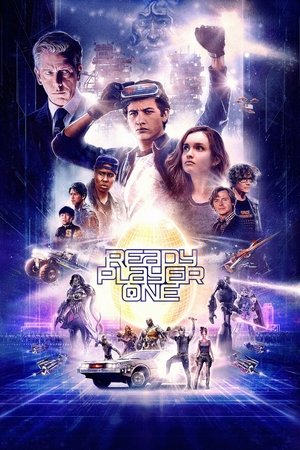
READY PLAYER ONE(2018)
Written by: Zak Penn (Current Revisions), with Previous Drafts by Eric Eason and Ernest Cline
Genre: Sci-Fi
Title: Ready Player One
Written by: Zak Penn (Current Revisions), with Previous Drafts by Eric Eason and Ernest Cline
Draft date: Not specified
LOGLINE
In a dystopian 2040s America where most of humanity escapes into a vast virtual universe, a nineteen-year-old orphan living in the slums discovers the first clue in a legendary Easter egg hunt left behind by the Oasis's deceased creator — a contest whose winner will inherit both an immense fortune and total control of the virtual world — putting him in the crosshairs of a ruthless corporation determined to seize that power at any cost.
| Very Poor | Poor | Fair | Good | Excellent | |
|---|---|---|---|---|---|
| PREMISE | ✓ | ||||
| STRUCTURE | ✓ | ||||
| CHARACTER | ✓ | ||||
| CONFLICT | ✓ | ||||
| DIALOGUE | ✓ | ||||
| PACING | ✓ | ||||
| TONE | ✓ | ||||
| ORIGINALITY | ✓ | ||||
| LOGIC | ✓ | ||||
| CRAFT | ✓ |
| Strong Pass | Pass | Consider | Recommend | Strong Recommend | |
|---|---|---|---|---|---|
| Overall | ✓ |
Genre: Sci-Fi, Action
Sub-genre: Action Adventure, Coming-of-Age Drama, Romantic Drama
Keywords: Virtual Reality, Dystopian Future, Easter Egg Hunt, Treasure Hunt, Corporate Villain, Rebellion, Underdog, Romance, Gaming Culture, 1980s Nostalgia, Pop Culture References, Ensemble Cast, Based on Novel, Fish-Out-Of-Water, Young Protagonist, Class Divide, Quest
MPA Rating: PG-13 (action violence, some sexual content implied but not depicted, mild language throughout, one use of stronger profanity, thematic elements including death of family members)
Budget Tier: Ultra High ($100M+): Extensive CGI/virtual world environments, massive battle sequences, numerous licensed pop culture vehicles and characters, real-world and virtual-world locations, large cast and extras, period recreations (1990s flashbacks), space sequences, destructible environments
Pages: 122
Time Period: Primarily 2044-2045 over approximately 2-3 weeks, with flashback sequences in 1993, 1998, and 2017.
Locations: Roughly 50% takes place in the virtual Oasis across multiple planets and environments (New York City race course, Planet Doom battlefields, Blade Runner recreation, Castle Anorak, space travel, various virtual interiors). Roughly 30% in real-world Oklahoma City Stacks (trailer park slums requiring vertical stacked mobile homes, a hidden junkyard van hideout, destructible structures for explosion sequence). Roughly 15% in real-world Columbus, Ohio (sleek IOI corporate headquarters with loyalty center bullpen, suburban Reb safe house, streets). Roughly 5% in flashback locations (1990s office, 2017 Central Park). Special requirements include a collapsing stack explosion, massive virtual battle with thousands of combatants, a full Blade Runner environment recreation, and numerous licensed vehicle/character designs.
Lead: Male, 19, Caucasian, physically unimpressive and shy in reality but confident and capable as his virtual avatar; an orphan raised by his aunt in poverty, deeply knowledgeable about pop culture and gaming, emotionally earnest to the point of social awkwardness.
Comparables: Willy Wonka & the Chocolate Factory (underdog competing in a contest designed by an eccentric genius to find a worthy heir), The Matrix (real-world oppression contrasted with a liberating virtual realm, climactic rebellion against a controlling system), Star Wars: A New Hope (scrappy hero from humble origins rallies allies against a corporate/imperial enemy in a final battle), Scott Pilgrim vs. the World (pop culture-saturated quest narrative blending romance with action-game logic).
SYNOPSIS
In the virtual universe known as the Oasis, PARZIVAL (19), a confident-looking avatar, competes in an epic street race through a virtual Times Square alongside his best friend AECH, a handsome, linebacker-built avatar who builds custom vehicles. The race is part of Halliday's Challenge, a legendary contest left behind by the deceased creator of the Oasis, JAMES HALLIDAY (deceased at 62). The race proves impossible — obstacles including a T-Rex, collapsing cranes, and a meteor prevent anyone from reaching Central Park and claiming the Copper Key. A skilled motorcyclist named ARTEMIS (early 20s), a sharp, smirking woman, nearly makes it but is stopped by the meteor. Parzival is instantly smitten. The three retire to Aech's virtual basement, where they discuss Halliday and the contest. Artemis mentions Halliday may have made a mistake, sparking an idea in Parzival's mind.
In the real world, WADE WATTS (19), the shy, gangly person behind Parzival, lives in the Stacks — mobile homes stacked vertically in Oklahoma City's slums — with his haggard AUNT ALICE (30s) and her boyfriend RICK. Wade sneaks Alice's IOI-branded haptic gloves to log in from a hidden van in a junkyard. Wade's voiceover explains that Halliday created the Oasis as a free, open-world game tied to each user's DNA, one account per person. After Halliday died, he announced a contest: three hidden keys opening three secret gates, with the winner inheriting his fortune and control of the Oasis. IOI (Innovative Online Industries), led by ambitious executive NOLAN SORRENTO (40s), deployed an army of numbered employees called Sixers to find the egg. Five years have passed with no one completing even the first challenge.
Wade researches Halliday's one known coding mistake — building a game level backwards — in the Halliday Journals, a virtual archive overseen by a sarcastic AI called THE HISTORIAN. Realizing the race must be run in reverse, Wade drives the DeLorean backwards through a hidden sewer passage, bypasses every obstacle, and reaches Bethesda Fountain. He claims the Copper Key and his name rockets to the top of the scoreboard, electrifying the entire Oasis. Sorrento hires NUMBER SIX, a bounty hunter with a nasal voice, to track Parzival. Wade uses his winnings to buy a haptic bootsuit and a spaceship he names the Vonnegut from THE VENDOR, an eccentric craftsman on a wooden moon. The Vendor secretly gives Wade a quarter, telling him not to tell anyone.
Wade sends Artemis the backwards clue, and she claims the second key. Aech is hurt that Wade shared the secret with Artemis instead of him. Sorrento intercepts fragments of Wade's message. Six surveils Parzival and Artemis as they meet on Planet Doom, where IOI security is pursuing her. Parzival rescues Artemis with powerful weapons, and they walk together in a safe zone, flirting and discussing their real identities. Artemis urges Wade to consider the political stakes — IOI plans to monetize and restrict the Oasis — and asks him to join her clan. Wade misreads her interest as romantic rather than strategic and leaves deflated.
Sorrento summons Wade to IOI headquarters in the Oasis and offers him two million dollars a year plus a twenty-five-million-dollar bonus to hunt the egg on IOI's behalf. Wade declines. Sorrento turns threatening, revealing he knows Wade's real identity and address. IOI drones destroy Wade's Stack, killing Aunt Alice and Rick. Wade escapes because he was in his hidden van, not the trailer. A mysterious figure with a lame tattoo captures him.
Wade awakens in a Reb safe house near Columbus, Ohio, rescued by the real-world Artemis, whose prominent birthmark she hides with her hair. She reveals the Rebs' fight against IOI's Loyalty Centers — debt-slavery operations that exploit Halliday's one-person-one-avatar rule through account spoofing. Wade, grieving his aunt, nearly kisses Artemis but cannot make the move. They log in together. Wade gathers Aech, SHOTO (a young Japanese avatar), and DAITO (Shoto's older companion) into a new clan called the First Five. Wade reveals the second clue refers not to a literal leap but to Halliday's failure to pursue a romantic relationship — the answer lies in Blade Runner.
The Five enter an immersive Blade Runner simulation where they must prove they are "human" by answering Anorak's (Halliday's avatar) modified Voight-Kampff questions. Artemis, Parzival, and Aech each earn the Jade Key. Sorrento, using intelligence from a raid, also obtains the second key. Wade and Artemis grow closer in the real world. He plays her "In Your Eyes" by Peter Gabriel and they share their first kiss, then sleep together. Artemis pulls away afterward, insisting they must focus on the contest. Wade leaves the safe house, calling Aech for a ride.
Aech arrives in an RV with Shoto (revealed as a young Asian kid) and Daito. Aech reveals herself as HELEN, a heavyset African American girl Wade's age. Wade is shocked but accepting. IOI raids the Reb safe house and captures Artemis. Wade tricks Sorrento using a virtual recreation of his home built inside Aech's workshop, extracting information about the force field around Castle Anorak and learning Artemis is alive in IOI custody. OGDEN MORROW (elderly), Halliday's estranged former partner — revealed to be the Vendor — intercepts the group and provides IOI access cards, explaining that Halliday's contest is a confessional about the love he lost: Morrow's late wife Kira.
Wade and Aech infiltrate IOI headquarters. Wade frees Artemis from the Sixer bullpen and leads her to the Loyalty Center to log in for the final challenge. Parzival broadcasts a rallying cry to every gunter in the Oasis. A massive army descends on Planet Doom. Daito breaks the IOI force field with a counter-spell. An enormous battle erupts — Aech pilots the Iron Giant, Parzival snipes from the DeLorean, and gunters contribute weapons. Artemis drives the DeLorean over a collapsed bridge ramp into the castle. Inside, the final challenge is a game of Donkey Kong. Number Six detonates a briefcase nuke that kills every avatar in the sector, but the Vendor's quarter grants Parzival an extra life — the only one ever recorded in the Oasis. Parzival beats Halliday's Donkey Kong score, claims the Crystal Key, opens the Crystal Gate with all three keys, and finds the Easter Egg.
Halliday's avatar congratulates Parzival, transferring all power, immortality, and wealth to him. Halliday advises him never to let go of the person he trusts. In the real world, Sorrento finds Wade and Artemis and holds them at gunpoint. Wade announces over his open microphone that all Oasis debts are forgiven, freeing the Loyalty Center workers, who rise from their rigs and surround Sorrento. Sorrento surrenders and is arrested. Wade and Artemis kiss outside IOI headquarters, and Wade reflects that for the first time, he has no desire to log back in. In an epilogue, a young boy named ERNIE (10) visits Wade's biography in the Oasis's Memoir-opolis, where the Historian reveals that Wade shared control with the First Five — though a "Great Schism" eventually followed.
COMMENTS
PREMISE — Good
The core concept — a massive Easter egg hunt inside a virtual universe, with the prize being control of that universe — is an inherently strong pitch with built-in tension, clear stakes, and a ticking clock created by corporate competition. The underdog dynamic is well-established: Wade is broke, orphaned, and physically unimpressive, while IOI commands an army of employees and unlimited resources. The match between protagonist and world is fertile, since Wade's obsessive knowledge of Halliday's life is both his greatest asset and the trait that keeps him isolated. The thematic layer — Halliday's contest as a confessional about missed human connection — gives the treasure hunt emotional weight that distinguishes it from a pure adventure premise. However, the dystopian real-world stakes (debt slavery, corporate authoritarianism) are introduced largely through exposition rather than dramatized experience, which keeps the premise's most urgent social dimensions at arm's length. The concept occupies similar territory to Willy Wonka & the Chocolate Factory in its "eccentric genius seeks heir" structure, but the virtual-world setting and the romance thread give it a distinct identity.
STRUCTURE — Fair
The narrative follows a clean three-challenge structure that provides natural momentum, with the Copper Key race resolved around page 31, the Jade Key Blade Runner challenge around page 82, and the Crystal Key Donkey Kong game around page 116. The inciting incident — Wade discovering the backwards solution — lands around page 27 (roughly 22%), which is appropriate. The midpoint, where Sorrento reveals he knows Wade's identity and destroys the Stacks (64-66), falls at approximately 54%, functioning as a strong reversal that shifts the contest from virtual game to life-or-death stakes. The break into the final movement, where Wade infiltrates IOI and rallies the gunters (103-108), arrives around page 105 (86%), which compresses the climactic sequence considerably. The three-key structure provides satisfying escalation, but the second and third keys arrive in relatively quick succession — the Jade Key challenge itself occupies only about four pages (78-82), and the Donkey Kong challenge even less. This compression means the final third, which carries the most emotional and narrative weight, moves at a pace that undercuts the difficulty the challenges are supposed to represent. The Sorrento-in-a-fake-rig subplot (94-99) is clever but adds a detour just when forward momentum toward the climax should be accelerating.
CHARACTER — Fair
Wade/Parzival is a well-constructed protagonist whose want (win the contest, get rich) and need (genuine human connection) are clearly established and consistently in tension. His backstory — orphaned, raised by a neglectful aunt, emotionally isolated — is sketched efficiently through the Alice/Rick dynamic (14-15) and the brief flashback to his parents (21). His arc from solo operator to clan leader to someone who values real-world relationships over virtual ones completes cleanly with his final line about having no desire to log back in (121). Artemis is the most complex supporting character, with her birthmark, her political convictions, and her emotional guardedness all providing distinct texture, though her capture and rescue in the third act (92, 104) reduces her to a damsel-in-distress at the moment she should be most active. Aech's gender reveal (89) is handled with warmth and humor but arrives so late that it functions more as a plot beat than a character revelation — there is little time to explore its implications. Sorrento is effective as a corporate antagonist but lacks interior dimension beyond ambition. Shoto and Daito remain functional rather than developed, distinguished primarily by their matching samurai aesthetic.
CONFLICT — Fair
The central external conflict — Wade versus IOI for control of the Oasis — is formidable and escalates effectively from virtual competition to real-world violence when Sorrento destroys the Stacks (65-66). The internal conflict between Wade's desire to retreat into the Oasis and his growing need for real human connection is the more interesting engine, and it surfaces most powerfully in his conversations with Artemis on Planet Doom (50-53) and in the real world (85-87). Scene-level conflict is strong in the first half: the race sequences, Aech's anger over the shared clue (44), and the Sorrento recruitment scene (59-64) all generate genuine tension. In the second half, however, conflict resolution comes too easily. The fake-rig deception extracts critical information from Sorrento without meaningful resistance (94-98). The force field, presented as a major obstacle (93), is undone by a single incantation (109). The Donkey Kong challenge is described as "easier than expected" (116), which deflates what should be the most grueling test. The briefcase nuke provides a genuine surprise (114), but the extra-life quarter — planted without any foreshadowing of its significance (41) — resolves the crisis through a device Wade did nothing to earn.
DIALOGUE — Fair
The dialogue is consistently energetic and character-differentiating, with Wade's earnest awkwardness, Aech's affectionate ribbing, and Artemis's guarded directness each producing distinct voices. The banter between Parzival and Aech in the opening race (2-5) establishes their dynamic efficiently, and the Vendor's acerbic patter (38-41) provides reliable comic relief. Sorrento's shift from smooth recruiter to open villain during the off-the-record moment (64) is one of the strongest dialogue beats, revealing character through tonal pivot rather than exposition. The weaker moments come in the voiceover narration, which too frequently tells what could be shown — Wade's explanation of the Oasis economy (19-21), the Loyalty Center system (70-71), and the battle's significance (109-110) all deliver information that would land harder through dramatization. The Historian's sarcasm (26-27) walks a fine line between charming and sitcom-adjacent, occasionally undermining the emotional stakes of the journal scenes. Artemis's political speeches (52-53, 70-71) tend toward on-the-nose articulation of theme rather than organic dialogue.
PACING — Fair
The first forty pages establish the world, the contest, and the central relationships with impressive efficiency, and the race sequence (2-6) is an ideal opening — kinetic, funny, and immediately comprehensible. The middle section sags between roughly pages 55 and 75, where the real-world Reb safe house sequences deliver necessary exposition about IOI's Loyalty Centers but lack the propulsive energy of the Oasis scenes. The romantic subplot between Wade and Artemis, while thematically essential, occupies a stretch (84-88) that stalls momentum just before the final act. Conversely, the third act is rushed: the infiltration of IOI (103-104), the rallying speech (106-107), the massive battle (108-113), the Donkey Kong challenge (114-116), the egg discovery (117), and the real-world confrontation (118-119) all occur within roughly fifteen pages, giving individual beats insufficient room to breathe. The battle sequence, despite its scale, is compressed into montage narration that distances rather than immerses.
TONE — Fair
The tonal register — irreverent adventure comedy with occasional dramatic gravity — is established early and maintained with reasonable consistency. The self-aware narration ("yes, I'm serious, a meteor" on page 5, "And by that I mean sex" on page 86) signals a fourth-wall-adjacent playfulness that suits the material's pop-culture-saturated world. The destruction of the Stacks (65-66) lands as genuinely harrowing, and the tonal shift works because the preceding scenes have built real stakes through the Alice relationship. However, the sex scene's meta-commentary (86) undercuts a moment that the preceding pages have earned emotionally, and the "don't drop the soap" quip after Sorrento's arrest (120) trivializes the preceding life-or-death tension. The Vendor/Morrow reveal (101) attempts to balance whimsy with pathos but arrives so abruptly that the emotional register does not fully land. The epilogue's teases of sequels ("the Great Schism," "volume three" on page 121) shift the tone from satisfying resolution to franchise setup.
ORIGINALITY — Fair
The premise draws openly from Willy Wonka & the Chocolate Factory's heir-selection structure and The Matrix's real-world-versus-virtual-world duality, while the pop-culture treasure hunt owes a clear debt to Ernest Cline's source novel. The execution distinguishes itself through the specific mechanics of the challenges — driving a race backwards, inhabiting a Blade Runner simulation, playing Donkey Kong — which are inventive set pieces that leverage the virtual setting in ways a purely physical quest cannot. The Halliday-as-confessor thread, where each key relates to a romantic regret, adds an emotional layer uncommon in quest narratives. However, the broader beats — underdog versus corporation, ragtag team assembles, massive final battle — follow well-worn genre templates. The real-world sequences, with their debt-slavery dystopia and corporate surveillance, echo numerous YA dystopian narratives without adding a meaningfully new perspective. The gender-swap reveal of Aech, while handled well, has become a familiar beat in online-identity narratives since the early 2000s.
LOGIC — Poor
The most significant logic issue is the extra-life quarter. Morrow gives it to Parzival (41) with no explanation, and Parzival adds it to his inventory without curiosity about why a legendary figure would hand him a coin. The quarter then becomes the single most consequential item in the contest, rendering the briefcase nuke moot — but its power is never foreshadowed or explained within the Oasis's established rules. Sorrento's claim that he "deleted" Wade's account "permanently" (83) is never reconciled with Wade's continued presence on the scoreboard; Number Six notices Wade is still online, but the mechanism of his survival is unaddressed. The fake-rig deception (94-98) requires Sorrento to believe he has been physically kidnapped, restrained, and threatened in his own home — yet he apparently does not attempt to call for help, activate home security, or question why his rig feels different, until a signal glitch tips him off. IOI's ability to identify Wade's real-world location (64) but inability to locate him in their own Loyalty Center (115-116) strains credibility. The force field un-casting requires "close proximity" (97) but Daito accomplishes it while falling from a spaceship (109), which is not clearly "close."
CRAFT — Fair
The writing operates in a breezy, self-aware register that prioritizes momentum over literary density, and this approach generally serves the material well. Action sequences are rendered with clarity and visual imagination — the opening race (2-6) and the Planet Doom battle (108-113) both read as storyboard-ready. Character introductions are efficient: Artemis's entrance, hurling her helmet at a meteor (6), and the Vendor's refusal to stop talking about his Iron Giant (38), are both memorable. The voiceover narration, while occasionally overused, provides useful connective tissue in a world that requires substantial exposition. Formatting is clean throughout with no notable errors. The weakest craft element is the tendency toward parenthetical stage direction that tells rather than shows emotional states — "Parzival blushes a bit. Aech notices this" (10), "Parzival is taken aback, almost like he hasn't really thought this through" (52) — which flattens moments that could be rendered through behavior. The meta-commentary asides ("Cynical dicks can turn the page now" on page 85) break the fictive frame in a way that reads more as authorial anxiety than confident tonal choice.
OVERALL — Consider
Ready Player One is a sci-fi action adventure about a teenage orphan competing in a virtual-reality treasure hunt for control of the world's dominant online universe, set against a dystopian near-future of corporate exploitation. The premise is its greatest asset — the contest structure provides clear, escalating goals, and the Halliday confessional thread gives the quest emotional resonance beyond spectacle. The dialogue is lively and character-differentiating, and the opening race sequence demonstrates strong command of action-comedy craft. The most significant weaknesses are structural compression in the third act, where challenges that should be the most demanding are resolved with the least resistance, and the extra-life quarter, which functions as a deus ex machina that undermines the contest's internal logic. Artemis's reduction to a rescue object in the final movement contradicts the independent, politically engaged character established in her earlier scenes. The voiceover narration, while useful for world-building, substitutes telling for showing at several critical junctures, particularly around the dystopian social stakes that should be the material's most urgent dimension. The material delivers on spectacle and warmth but would benefit from allowing its hardest-won moments — the final challenges, the real-world consequences, the romantic resolution — more room to earn their weight on the page.
Get this level of coverage for your screenplay
Every coverage includes 10 category ratings, an overall recommendation, and detailed analysis — powered by the same methodology used by talent agencies and literary managers.
Movie data provided by TMDB