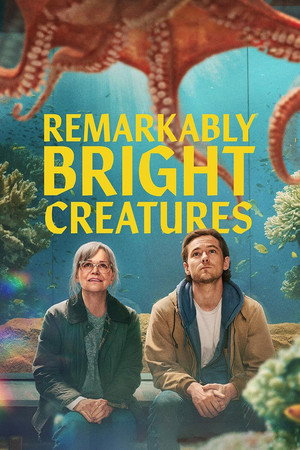
REMARKABLY BRIGHT CREATURES(2026)
Written by: John Whittington, Current Revisions by Olivia Newman
Draft date: June 11, 2024
Genre: Drama
Title: Remarkably Bright Creatures
Written by: John Whittington, Current Revisions by Olivia Newman
Draft date: June 11, 2024
LOGLINE
A grieving seventy-something widow who cleans a small-town aquarium at night forms an unlikely bond with a dying octopus and a drifting young man searching for his biological father — unaware that the octopus holds the key connecting their fractured histories.
| Very Poor | Poor | Fair | Good | Excellent | |
|---|---|---|---|---|---|
| PREMISE | ✓ | ||||
| STRUCTURE | ✓ | ||||
| CHARACTER | ✓ | ||||
| CONFLICT | ✓ | ||||
| DIALOGUE | ✓ | ||||
| PACING | ✓ | ||||
| TONE | ✓ | ||||
| ORIGINALITY | ✓ | ||||
| LOGIC | ✓ | ||||
| CRAFT | ✓ |
| Strong Pass | Pass | Consider | Recommend | Strong Recommend | |
|---|---|---|---|---|---|
| Overall | ✓ |
Genre: Drama
Sub-genre: Dramedy, Multigenerational Drama, Coming-of-Age Drama
Keywords: Female Protagonist, Grief, Family, Redemption, Small Town, Pacific Northwest, Surrogate Family, Mentor-Protégé, Animal Companion, Intergenerational, Mystery, Based on Novel, Ensemble Cast, Loss of a Child, Search for Identity
MPA Rating: PG-13 (occasional strong language including multiple uses of "fuck," mild thematic material involving suicide and drug addiction)
Budget Tier: Medium ($10M–$40M) — multiple Pacific Northwest locations including an aquarium with extensive tank interiors, underwater sequences requiring VFX or practical effects for octopus scenes, a small-town period-adjacent setting, moderate cast, some flashback sequences, and coastal exteriors.
Pages: 115
Time Period: Present over approximately one summer (roughly 2–3 months), with brief flashbacks spanning the late 1980s through the 2000s.
Locations: Approximately 40% set in and around a small coastal aquarium on Puget Sound (tank rooms, lobby, domed shark room, boardwalk, pier); 25% in and around Tova's Scandinavian craftsman home on a hillside overlooking the bay; 15% at a small-town grocery store (Shopway) and downtown shops along a four-block Victorian street; 10% on coastal roads, beaches, and a suburban house in Lynden; 10% in Seattle (a hip bar), a cemetery, a steakhouse, and various interiors. Underwater sequences required for octopus POV at the ocean floor. Period elements minimal (brief 1980s-set flashbacks).
Lead: Female, 70s, Scandinavian descent, petite, grief etched into her features. Tova Sullivan is meticulous, fiercely independent, emotionally guarded, and privately devastated by the decades-old death of her only son.
Comparables: The Curious Case of Benjamin Button (melancholic fable narrated by a non-human consciousness reflecting on human connection); A Man Called Ove (an isolated, grieving elder drawn back into community through an unlikely surrogate family); Finding Nemo (an animal perspective on loss and letting go); The Best Exotic Marigold Hotel (ensemble of aging characters finding renewal in an unexpected setting).
SYNOPSIS
Over black, MARCELLUS (Adult), a Giant Pacific Octopus, narrates in voiceover, reflecting on his life from the wild ocean to captivity in a small-town aquarium on Puget Sound. He describes the fingerprints children leave on his glass and singles out one belonging to his favorite human. That human is TOVA SULLIVAN (70s), a petite, grief-stricken widow who works as the aquarium's nighttime cleaner. Tova speaks to Marcellus with affection, promising him fresh scallops, then methodically scrubs every surface of the building. A brief flashback reveals a sandy-haired boy climbing the aquarium's sea lion statue — her son.
Tova's solitary routine extends to late-night trips to the Shopway grocery, where ETHAN (late 60s), a chatty Scottish shopkeeper, tries to befriend her. Outside, she glimpses CAMERON (30), a scruffy drifter arriving in an old camper van. At home, Tova deletes answering machine messages, including one from BRUCE at Charter Village Senior Homes about a waitlist spot. Her friends — the Knitwits, including MARY ANN MINETTI (70s), JANICE KIM (70s), and BARB VANDERHOOF (70s) — press her about a rash on her arm, actually sucker marks from Marcellus, and urge her to quit cleaning.
One night Tova finds Marcellus tangled in cords outside his tank. She rescues him but sprains her ankle. TERRY (50s), the Jamaican aquarium manager, reveals Marcellus has been escaping to eat mollusks and is nearing the end of his natural lifespan. Tova confides to Marcellus that her late husband WILL wanted her to move to Charter Village, and she promised she would when her name came up. During her medical leave, Ethan arranges for Cameron to fill her cleaning position. Cameron, who lives in his dead mother's camper van, has come to Sowell Bay searching for his biological father, whom he believes is SIMON BRINKS, a wealthy developer.
Tova returns to train Cameron, who is sloppy but earnest. Marcellus presents Tova with her lost house key, cementing the secret pact: Tova removes Terry's clamps so Marcellus can roam freely, and Cameron agrees to keep the escapes quiet. Cameron pursues AVERY (30s), who owns a paddle board shop and has a teenage son. Tova lists her house for sale with realtor JESSICA SNELL (40s) and begins packing. She and Cameron bond during a road trip to find Simon Brinks at an old phonebook address, but a hostile old man chases them away. At a beach afterward, Cameron opens up about his mother's death, his foster-care childhood, and his hope that finding his rich father will turn his life around. Tova shares her own feelings of purposelessness.
Their relationship deepens through cleaning montages, music sessions with Ethan, and Cameron's growing attachment to Marcellus. Tova begins a tentative friendship — possibly something more — with Ethan. At Mary Ann's going-away luncheon, ADAM WRIGHT (50s), who knew Tova's son Erik in high school, mentions Erik had a secret crush on a girl named "Daphne or Cassie." This revelation sends Tova into a frenzy. She tears apart Erik's preserved bedroom searching for evidence, finding nothing, and when Cameron arrives to fix her porch steps and enters the house uninvited, she explodes at him.
Cameron finally meets Simon Brinks in Seattle and learns Simon is not his father — Simon was his mother Daphne's gay best friend who used her as cover. Devastated, Cameron throws his mother's class ring into the wolf eel tank and announces he is leaving town. Meanwhile, Tova finds Marcellus shriveled by the aquarium's back door after a final escape. She wheels him in a mop bucket down the jetty and releases him into Puget Sound, saying goodbye to both the octopus and, symbolically, to her son.
Walking back, Tova hears clinking in the bucket and discovers the class ring — Marcellus retrieved it from the wolf eel tank. She reads the engraving inside: E E L S, for Erik Ernest Lindgren Sullivan. She realizes Cameron is Erik's son. Cameron, having turned his van around, runs back to the pier. Tova tells him the truth: Erik loved Daphne Cassmore, gave her his ring, and did not kill himself. Avery later confirms she once talked Daphne down from the pier and recognized her from Cameron's photo — Daphne's traumatic memory was of a sailing accident, a boom that struck Erik. Cameron stays in Sowell Bay, takes the permanent cleaning job, sells his van, and begins repairing Tova's house so she can remain. Tova cancels Charter Village, reconnects with Ethan, and commits to caring for the aquarium's new young octopus. Marcellus narrates his final moments, settling into his old ocean den beside Erik's remains, at peace.
COMMENTS
PREMISE — Good
The premise pairs a universal emotional core — a grieving mother and a lost young man unknowingly linked by blood — with the distinctive device of an octopus narrator who holds the missing piece. This triangulation gives the material a built-in engine: Marcellus knows what neither human knows, creating dramatic irony that sustains interest across the full runtime. The setting of a small Pacific Northwest aquarium town provides visual texture and a contained world where secrets can plausibly remain buried for decades. The central dramatic question — whether Tova will discover what really happened to her son — is compelling because it is entangled with Cameron's parallel search for his father, and both quests converge on the same answer. Thematically, the material explores how grief calcifies into routine and how connection, even with a creature in a tank, can crack that shell. The premise's closest relatives are A Man Called Ove and literary adaptations like The Storied Life of A.J. Fikry, where a curmudgeon's world is reopened by an interloper. What distinguishes this concept is the animal narrator whose intelligence and mortality mirror the human stakes — though whether that device translates to screen as effectively as it does in prose is the premise's central risk.
STRUCTURE — Fair
The narrative follows a clean three-movement shape: Tova's world is established with Marcellus and the Knitwits, Cameron enters as disruption and eventual surrogate, and the mystery of Erik's death provides a through-line that resolves in the final pages. The inciting incident — Cameron's arrival and Tova's injury forcing her away from the aquarium (9-18) — lands at roughly the right proportion, and the midpoint turn, where Adam Wright mentions Daphne's name at the luncheon (79), effectively splits the narrative between character bonding and active mystery. The climactic sequence on the pier (109-111), where Tova hands Cameron the ring and reveals the truth, delivers the emotional payoff both threads have been building toward. However, the second movement sags under the weight of repetitive cleaning montages and Cameron's fruitless search beats. The Lynden trip (60-61), the Simon Brinks Seattle meeting (96-98), and Cameron's multiple phone calls to dead-end leads each individually work, but cumulatively they establish the same point — Cameron cannot find his father — three times before the twist reveals why. Trimming one of these false leads would tighten the middle considerably. The Avery romance, while charming, functions largely as a parallel track that only becomes structurally essential in the final pages (114) when she delivers the boom revelation, making much of her earlier screen time feel like setup awaiting a purpose.
CHARACTER — Good
Tova is a fully realized protagonist with clear backstory, a defined want (to understand Erik's death), a need that contradicts it (to stop hiding from life), and a visible arc from isolation to openness. Her compulsive cleaning serves as both character texture and metaphor — she controls what she can because she cannot control what she lost. Cameron is well-drawn as her foil: impulsive where she is methodical, emotionally leaky where she is sealed. His vulnerability is established early through the foster-care backstory (50-51) and pays off when he turns the van around (108). However, Cameron's arc relies heavily on external revelation rather than internal decision — learning Simon is not his father, learning Erik is, learning Daphne's boom story — rather than a moment where he chooses to change independent of new information. Marcellus, despite being a voiceover device, functions as the most active character in the plot: he retrieves the key (28), retrieves the ring (108), and engineers the Tova-Cameron reunion (56). The supporting cast is well-differentiated — Ethan's warmth (57-58), Janice's nosiness (22), Mary Ann's obliviousness (10-11) — though Avery remains somewhat underdeveloped until her crucial late-breaking contribution.
CONFLICT — Fair
The main conflict operates on two levels: externally, Tova is racing against Marcellus's death and her own departure to Charter Village, while Cameron races to find his father before his money and patience run out. Internally, Tova must choose between the safety of not knowing (which preserved hope that Erik might return) and the pain of discovering the truth. This internal conflict is articulated directly (109-110) and gives the pier scene its resonance. Scene-level conflict is present but often mild — the Knitwits bicker (11-13), Cameron and Tova clash over cleaning standards (27-28), Cameron argues with the old man in Lynden (60-61). The most dramatically charged confrontation occurs when Tova screams at Cameron to leave Erik's room (87-88), which works because it ruptures the surrogate relationship the audience has been rooting for. The Simon Brinks meeting (98-99) provides a strong reversal but resolves Cameron's external quest without generating a new, escalating obstacle — he simply decides to leave, then decides not to. The stakes feel highest in the emotional register rather than the plot register, which is appropriate for the genre but means the middle stretches depend heavily on the audience's affection for the characters rather than mounting tension.
DIALOGUE — Fair
The dialogue effectively differentiates its speakers. Tova's voice is clipped, formal, and laced with understated emotion — "Didn't your mother ever show you this trick?" (32) carries weight she would never consciously place on it. Cameron speaks in run-on bursts of self-deprecation and slang — "Maybe too hot for me" (50), "Fuck it" (64) — that contrast sharply with Tova's restraint. Ethan's Scottish warmth comes through in pet names and gentle persistence (57-58). Marcellus's voiceover walks a fine line between whimsical and precious, and it mostly succeeds — "Much of human parlance is nonsense" (32) establishes his sardonic intelligence — though lines like "the Man Child appeared dimwitted" (27) occasionally flatten into a device for exposition rather than voice. The weakest dialogue belongs to the revelatory scenes: Adam Wright's delivery of the Daphne clue (79) and Simon Brinks's explanation (98-99) both require characters to relay information somewhat mechanically. Avery's final pier scene with Tova (114) covers critical plot ground — confirming the boom — but her dialogue reads as functional rather than emotionally distinct.
PACING — Fair
The opening twenty pages move briskly, establishing Tova, Marcellus, and the aquarium world with economy and visual charm. The introduction of Cameron and his search provides a second engine that keeps the narrative propulsive through roughly page 50. Between pages 50 and 80, however, the pacing softens considerably. The cleaning montages (30-31, 49), while thematically relevant, accumulate without sufficient variation. Cameron's repeated failed attempts to contact Simon Brinks — the construction site detour (47), the Lynden trip (60), the Seattle bar (96) — create a pattern of approach-and-deflection that, by the third iteration, produces diminishing dramatic returns. The Knitwits scenes (10-13, 33-34, 76-78) provide comic relief but occasionally stall forward momentum when they arrive in clusters. The final thirty pages regain urgency: Tova's frantic search through yearbooks (80-81), Marcellus's wolf eel mission (102), and the pier sequence (104-111) all move with purpose. The resolution pages (112-115) risk feeling protracted as they systematically tie off every thread, but Marcellus's final voiceover provides sufficient emotional current to carry them.
TONE — Good
The tone blends gentle melancholy with dry humor, and this balance is the material's signature achievement. Marcellus's voiceover — observing that humans "have few redeeming qualities" (3) while clearly cherishing Tova — sets the tonal register on page two and maintains it with remarkable consistency. The Knitwits scenes provide warmth and comedy without tipping into farce; Mary Ann's microwaved cookies (11-12) and Barb's crocheted pot holders (33) are funny because they are observed with affection rather than condescension. The most significant tonal challenge is the handling of Erik's death. The material introduces suicide gradually and treats it with appropriate gravity, but the final revelation — that Erik died in a sailing accident, not by his own hand — arrives through Avery's secondhand account (114) rather than through a scene, which slightly mutes what should be the most emotionally transformative beat. The "Fuck it" moment on the beach (64) is a tonal risk that pays off because it earns its catharsis through the preceding scene's vulnerability. The underwater sequences (2, 83, 107) maintain a dreamlike quality that complements rather than contradicts the grounded realism of the land-based scenes.
ORIGINALITY — Fair
The premise derives from Shelby Van Pelt's bestselling novel, and its most distinctive element — the octopus narrator — is inherited from that source. On screen, this device has few direct predecessors; the closest might be the narrating fish of Finding Nemo or the animal consciousness in The Art of Racing in the Rain, but Marcellus's voice is more sardonic and philosophically inflected than either. The execution, however, follows a well-worn template: the curmudgeonly elder softened by a wayward young person is the engine of A Man Called Ove, St. Vincent, and The Best Exotic Marigold Hotel. The mystery element — who is Cameron's father? — adds a layer these comparables lack, but the resolution depends on a coincidence (Erik's initials spelling EELS, matching the class ring) that strains toward the contrived. The cleaning-as-character motif is a distinctive touch that gives the material textural originality even when its plot mechanics feel familiar. The decision to resolve the central mystery through an octopus's treasure-hunting instinct is genuinely inventive and earns the title's promise.
LOGIC — Poor
The plot's cause-and-effect chain holds well at the macro level but depends on several conveniences that accumulate. Marcellus's ability to retrieve the class ring from the wolf eel tank — a creature that previously tore off one of his arms (102) — is acknowledged as dangerous but resolved offscreen, which sidesteps the question of how a dying octopus accomplishes this feat. The ring's engraving reading "EELS" as Erik's initials requires accepting that a high school student would engrave his full four-part name inside a class ring rather than the school mascot, which is never established. Tova's failure to recognize Daphne Cassmore's name for nearly thirty years, despite living in a small town and obsessively preserving Erik's room, strains credibility — though the material partially addresses this by establishing that Erik was "secretive" (79) about the relationship. Cameron's assumption that Simon Brinks is his father, based solely on the initials "SB" on a photo (51), is thin but psychologically plausible for a desperate young man. The most significant structural logic issue is Avery's climactic revelation (114): she recognized Daphne from a photo Cameron showed her but apparently never mentioned this to him, which requires her to have withheld information for an unspecified period without clear motivation.
CRAFT — Good
The writing is clean, visual, and economically descriptive, favoring specificity over literary flourish — "grief etched into her brow even when she's smiling" (3) efficiently characterizes Tova in a single line. Action blocks are lean, rarely exceeding four lines, and camera direction is used sparingly and purposefully — the "MARCELLUS' POV" device (27, 31, 43) effectively establishes the octopus's literal perspective without overuse. Character introductions are strong: Cameron's entrance through a dirty van window with hard rock blasting (9) immediately contrasts with Tova's meticulous world. The screenplay makes effective use of visual motifs — the yellow mop bucket, the anchor key chain, the fingerprints on glass — that pay off in the climax. Formatting is consistent and professional throughout. Minor errors are present: "darts of" for "darts off" (2), "forceps" for "forearms" (17), "shuttering" for "shuddering" (4, 23), "window pain" for "window pane" (30), and "of an of oaf" (29). These are copy-editing issues rather than craft problems. The Marcellus voiceover is the craft's highest-risk element: it works because it is used to bridge scenes and provide emotional counterpoint rather than to explain what is already visible, though a few passages — particularly the extended backstory of Cameron's mother (50-51) — lean toward narrated exposition.
OVERALL — Consider
Remarkably Bright Creatures is a warm, grief-centered drama about a seventy-year-old widow and a rootless young man who discover, through the machinations of a dying octopus, that they are grandmother and grandson. The material's greatest strength is its character work — Tova is a fully dimensional protagonist whose arc from sealed-off grief to open-hearted connection is earned through accumulating small moments rather than melodramatic set pieces, and the Tova-Cameron relationship develops with convincing gradualness. The Marcellus voiceover, the material's most distinctive element, largely succeeds as both structural device and emotional anchor, though it occasionally drifts toward exposition. The weakest element is pacing in the middle third, where Cameron's repeated dead-end searches and the cleaning montages create redundancy that dulls the forward drive. The mystery resolution is emotionally satisfying but logistically convenient — the ring retrieval, the EELS coincidence, and Avery's withheld knowledge all require the audience to prioritize feeling over scrutiny. Dialogue is well-differentiated across the principal cast, and the craft is polished with a clear visual sensibility. The tonal balance between humor and grief is handled with confidence throughout. This is a gentle, character-driven piece that delivers its emotional payoff effectively, even as its plot mechanics occasionally ask for more generosity than they have earned.
Get this level of coverage for your screenplay
Every coverage includes 10 category ratings, an overall recommendation, and detailed analysis — powered by the same methodology used by talent agencies and literary managers.
Movie data provided by TMDB