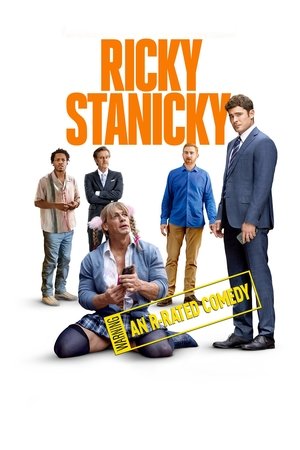
RICKY STANICKY(2024)
Written by: Jeff Bushell
Draft date: November 13, 2009
Genre: Comedy
Title: Ricky Stanicky
Written by: Jeff Bushell
Draft date: November 13, 2009
LOGLINE
Three lifelong friends who invented a fictitious buddy as kids to escape blame for burning down a house have spent twenty years using the same imaginary friend as an alibi — until their girlfriends demand to finally meet him, forcing them to hire a washed-up Las Vegas pirate-show actor to play the role at a birthday party, only to watch him infiltrate and take over their real lives.
| Very Poor | Poor | Fair | Good | Excellent | |
|---|---|---|---|---|---|
| PREMISE | ✓ | ||||
| STRUCTURE | ✓ | ||||
| CHARACTER | ✓ | ||||
| CONFLICT | ✓ | ||||
| DIALOGUE | ✓ | ||||
| PACING | ✓ | ||||
| TONE | ✓ | ||||
| ORIGINALITY | ✓ | ||||
| LOGIC | ✓ | ||||
| CRAFT | ✓ |
| Strong Pass | Pass | Consider | Recommend | Strong Recommend | |
|---|---|---|---|---|---|
| Overall | ✓ |
Genre: Comedy
Sub-genre: Buddy Comedy, Farce
Keywords: Male Ensemble, Bromance, Deception, Las Vegas, Imaginary Friend, Workplace, Con Artist, Fish-Out-Of-Water, Friendship, Romance, Corporate Setting, Identity
MPA Rating: R (pervasive strong language including multiple uses of "fuck," sexual content and crude humor throughout, drug use)
Budget Tier: Medium ($10M–$40M)
Pages: 110
Time Period: 80% in Present (circa 2009) over approximately 8 months / 20% in 1990 over one night, plus a six-month time jump near the end.
Locations: Approximately 40% in Los Angeles interiors (apartments, corporate offices, restaurants, bars, a Bed Bath & Beyond), 25% in Las Vegas (MGM Grand arena, Bellagio conference room, Treasure Island casino/theater, hotel lobbies), 15% at a suburban house (Nana's home with basement), 10% at golf courses/driving ranges, 10% miscellaneous (airport terminals, hair salon, Barney's, movie theater, ballet). Requires a burning house for the Halloween prologue, a New Orleans flood rescue sequence (likely partial VFX or second-unit), a pirate ship fight staged on a conference room stage, and multiple Las Vegas casino interiors.
Lead: Ted, male, approximately 29, white, a driven financial services employee who is charming, guilt-prone, and genuinely in love with his girlfriend but trapped by years of compulsive lying through a fictional alibi.
Comparables: Wedding Crashers (elaborate deception scheme among male friends spirals into real romantic consequences), The Hangover (male-bonding misadventures in Las Vegas with an unpredictable wild card), Identity Thief (a stranger hijacks the protagonist's identity and life, forcing an unlikely alliance), Dirty Rotten Scoundrels (an unrefined con artist outperforms the more polished schemer).
SYNOPSIS
On Halloween night in 1990, three ten-year-old boys — TED, JT, and WES — accidentally burn down a house with a flaming bag prank. Ted devises a cover: they plant JT's jacket at the scene with a fabricated name, "RICKY STANICKY," written on the tag. The fire chief takes the bait, and the boys swear never to use the name again.
Twenty years later, Ted (29) lives with his girlfriend ERIN (28) and works at Lambert and Lambert, a financial services firm run by Erin's intimidating father, HAROLD LAMBERT (50s). Ted, JT (20s, now married to SUSAN), and Wes (29, still living with his grandmother NANA) have been using Ricky Stanicky as a phantom friend to excuse absences for decades. They maintain a "bible" — a notebook logging every lie. When Erin receives a text from "Ricky" about emergency surgery, Ted fakes concern while the three actually fly to Las Vegas for a UFC fight. Erin, moved by Ted's supposed loyalty, buys him Pearl Jam tickets. Guilt-ridden, Ted declares Ricky retired.
Months later, Erin and Susan demand to finally meet Ricky at Ted's 30th birthday party. JT and Wes have both continued using the excuse independently — JT to cover strip club visits, Wes to explain contraband to Nana — making exposure inevitable. Ted remembers ROD (30), a brilliant but dissolute pirate-show actor they met in Vegas, and hires him for $1,000 to impersonate Ricky for one evening. The three put Rod through a crash makeover: haircut, exercise, nicotine patches, new wardrobe, and intensive memorization of the bible's contents.
Rod nearly derails the birthday party by getting high on Nana's Oxycontin, but recovers with a spellbinding improvised monologue about Ted rescuing animals during Hurricane Katrina. The party is a triumph. Lambert is so impressed with "Ricky" that he hires him as head of sales at $164,000 per year, the promotion Ted expected. Rod refuses to leave, embracing the role completely — he joins Erin's book club, takes Susan to a romantic movie, and charms Lambert's biggest clients. Ted's attempts to re-toxify Rod with meat, alcohol, and cigarettes at a barbecue backfire when Rod invents a substance-abuse backstory that makes Erin even more sympathetic toward him. Ted sends Erin's sister SARAH (20s) to seduce Rod, which ends in Rod crashing through Erin's crystal collection.
At the office, Ted snaps and publicly accuses Rod of being a fraud, pulling down his pants to prove he has two testicles — only to discover Rod actually had one removed to stay in character. Lambert has Ted dragged out by security, and Erin asks for time apart. Ted hits rock bottom at Nana's house, doing Oxycontin and wiping Nana. He discovers a Travel Channel recording of Rod performing as "Pirate #3" at Treasure Island and tracks down Rod's former director, MILT CONRAD JR., in Las Vegas.
At Lambert and Lambert's annual sales conference at the Bellagio, Rod delivers a disastrously absurd presentation pitching pot-themed children's books as investment products. As investors flee, Ted swings onto the stage dressed as a pirate with Milt's crew. Together, Ted and Rod improvise a sword-fighting spectacle that reframes the debacle as a theatrical demonstration about avoiding gimmick investments. Lambert's company is saved, the investors applaud, and Ted persuades Rod that this climactic performance is the perfect final scene for Ricky Stanicky. Rod agrees to retire the character.
Ted confesses everything to Erin. She is hurt but listens. Susan kicks JT in the groin for his strip-club lies. Six months later, Ted works as a golf instructor, having left Lambert and Lambert. He has been leaving ballet tickets and heirloom tomatoes for Erin, who has not responded — until Rod sends her his iPhone containing a recording of Ted's earnest declaration of love from their driving-range prep sessions. Erin shows up at the golf course under the name "Ricky Stanicky," and they reconcile. When a baby-shower obligation threatens their evening, Erin uses the Ricky excuse herself, promising it will be the last time. Over the credits, Rod performs as Liesl in a Las Vegas dinner-theater production of The Sound of Music, directed by Milt Conrad Jr.
COMMENTS
PREMISE — Good
The core concept — three friends who created an imaginary alibi as children and have maintained him for twenty years — is immediately graspable, inherently comic, and ripe with escalating complication. The premise gains its best tension from the decision to hire a real person to embody the fiction, which turns a lie-management farce into a body-snatcher comedy where the impostor begins consuming the protagonist's job, girlfriend, and friendships. Ted is well-matched to this threat: he created Ricky to avoid accountability, and now Ricky is the thing holding him accountable. The thematic engine — that elaborate dishonesty eventually constructs a prison more confining than the truth — gives the comedy genuine stakes. The premise does lean on a logic that requires every woman in Ted's life to be incurious about a best friend they have never met or spoken to for years, which stretches credulity even in a broad comedy. Comparisons to Wedding Crashers and The Hangover are apt, as the material occupies similar territory of male-friendship deception with romantic consequences, but the "hiring an actor to be your fake friend" hook gives it a distinct elevator pitch.
STRUCTURE — Fair
The prologue efficiently establishes the origin and stakes of the Ricky myth (1-5), and the transition to present day lands the inciting incident — the women's demand to meet Ricky — at roughly the right proportional moment (25). The midpoint pivot, where Lambert hires Rod as head of sales (53), effectively raises the stakes from social embarrassment to professional catastrophe. However, the second half between pages 60 and 90 sags into a repetitive cycle: Ted tries to undermine Rod, Rod outmaneuvers him, Ted fumes. The BBQ retox sequence (65-72), the golf setup (77-81), and the office confrontation (83-87) all follow essentially the same pattern without meaningful escalation of consequence until the pants-pulling climax on page 86. The break into the final movement — Ted discovering the Travel Channel recording and enlisting Milt (90-95) — arrives late and depends on coincidence (Nana happened to DVR a show). The Vegas pirate-fight climax (96-102) is inventive and provides genuine catharsis, but the six-month time jump to the resolution (105) rushes the emotional reconciliation that the material spent its runtime earning.
CHARACTER — Fair
Ted is clearly drawn as a fundamentally decent man trapped by his own cowardice, and his arc — from compulsive liar to someone who chooses honesty even at personal cost — functions on paper. His want (keep Erin) and need (stop lying) are established early and remain in productive tension. Rod is the most vivid creation: his commitment to the role is simultaneously absurd and oddly poignant, and his Shakespeare audition (15-16), his Katrina monologue (46-47), and his door-slamming on the golf course (79) all demonstrate a character who operates by an internal logic that is consistently entertaining. However, Erin is underserved. She exists primarily to be impressed, disappointed, or forgiving, and her decision-making is driven entirely by Ted's behavior rather than by any independent want or flaw. Susan receives slightly more texture through her sexual-awakening subplot with JT, but Wes remains static throughout — a stoner sidekick at the beginning and at the end, with his pot-book ambition serving as a recurring joke rather than an arc (12-13, 42, 97-99).
CONFLICT — Fair
The central conflict — Ted versus Rod for control of Ted's own life — is well-conceived and generates the material's best scenes. Rod's refusal to relinquish the role creates genuine external pressure: Ted stands to lose his girlfriend, his job, and his reputation. The internal conflict is clear: Ted knows honesty is the only solution but fears the consequences. The weakness is that the conflict does not escalate sufficiently between the midpoint and climax. Ted's retox plan (65), his attempt to sic Sarah on Rod (67-68), and his public accusation (83-86) all represent the same strategic impulse — expose Rod — executed with incrementally more desperation but without new information or shifting alliances. Lambert's threat remains ambient rather than active; he never independently investigates Ricky, which would have tightened the pressure. The resolution of the romantic conflict depends almost entirely on Rod's letter and recording (107-109), which means the protagonist's most important relationship is repaired by the antagonist's generosity rather than by Ted's own decisive action.
DIALOGUE — Good
The dialogue is consistently punchy and demonstrates strong comic timing, particularly in the rapid-fire banter among the three friends. JT's "rapier/raper" exchange with Susan (7), Wes's Cookie Monster pitch (12-13), and Rod's Shakespeare-to-Chewbacca performance (15-16) all land because the voices are distinct: JT is crass and defensive, Wes is earnest and oblivious, Ted is the exasperated straight man, and Rod is grandly delusional. Subtext is limited but appropriate for the genre — Ted's sing-song "best friends" exchange with Rod (77) effectively conveys sarcasm layered over genuine helplessness. The dialogue weakens when it becomes expository: Ted's explanation of the Ricky rules (20, 27) and the driving-range confession about Erin (37) are functional but lack the compression and wit that characterize the comic exchanges. Lambert's pen-stabbing speech (23) is an effective introduction but his dialogue thereafter rarely rises above "imposing boss" boilerplate.
PACING — Poor
The first thirty pages move briskly, efficiently establishing the premise, introducing the ensemble, and landing the Vegas trip with momentum. The montage of Rod's transformation (31-38) maintains energy through quick visual gags. The material begins to drag between pages 60 and 90, where the pattern of Ted scheming, Rod winning, and Ted fuming repeats without sufficient variation. The BBQ sequence (65-72) alone runs twelve pages for what is essentially one extended gag — Rod resisting temptation — and the payoff (Rod burning his hand and crashing into the crystal case) does not justify the runway. By contrast, the climactic pirate sequence (96-102) is compressed and kinetic, suggesting the material performs best when scenes are shorter and stakes are immediate. The six-month time jump (105) creates an abrupt tonal shift from frenetic comedy to quiet romance, and the final reconciliation, while sweet, is resolved in roughly four pages after being the central emotional question for over eighty.
TONE — Fair
The tone is consistently broad R-rated comedy pitched at the Wedding Crashers register, and it maintains this register with few jarring deviations. The Katrina monologue (46-47) represents the most significant tonal risk — a sincere, emotionally moving sequence embedded in a farce — and it works because it serves the plot (saving the party) while revealing Rod's genuine talent. The Nana material occasionally pushes toward cruelty comedy (wiping scenes, Oxycontin abuse) that sits uncomfortably alongside the romantic sincerity of the Ted-Erin relationship (37, 108-109). The pocket-pussy beating (27-28) and Sarah's "just fuck my mouth" proposition (70) are pitched for shock laughs that land differently depending on tolerance for the register. The ending credits gag — Rod performing as Liesl (110) — is perfectly calibrated to the material's comic sensibility and sends the audience out on the right note.
ORIGINALITY — Good
The concept of a fictional alibi brought to life by hiring an actor is a genuinely fresh premise that distinguishes the material from its closest comparables. Wedding Crashers and The Hangover share the male-friendship deception framework but lack the meta-theatrical dimension of an actor who refuses to break character. The "bible" — a meticulous log of every lie — is an inventive structural device that grounds the absurdity in recognizable paranoia. Where originality diminishes is in execution: the second-half beats (protagonist tries to expose the impostor, impostor charms everyone, protagonist melts down publicly) follow the trajectory of identity-swap comedies like Mrs. Doubtfire and Dirty Rotten Scoundrels without introducing a significant deviation. Rod's self-mutilation for the role (removing a testicle) is a boldly committed joke but one that tests the boundaries of comic plausibility in ways that could read as either inspired or desperate depending on execution.
LOGIC — Poor
The foundational premise requires accepting that three adult women have never once video-called, social-media-searched, or insisted on meeting a man described as their partners' closest friend for years. In 2009, this is strained but not impossible. More problematic is Lambert hiring someone as head of sales based entirely on party conversation with no background check, interview process, or reference verification (52-53). Rod's ability to have a testicle surgically removed through corporate insurance under a fake identity (86, 104) is played as a punchline but raises questions about medical records and HR documentation that the material never addresses. The Katrina rescue story (46-47) is presented as Rod's improvisation, but the accompanying visual sequence implies it actually happened, creating ambiguity about whether Rod is narrating fiction or whether the material is dramatizing his lie. The Travel Channel recording that leads Ted to Milt (90-92) is a convenient coincidence that strains the otherwise logical chain of causation.
CRAFT — Good
The writing is clean, efficient, and visually minded, with scene descriptions that read quickly and convey spatial information without overwriting. Character introductions are handled through action and behavior rather than adjective-laden descriptions — Rod's first appearance between two naked women with a penis balloon on his head (30) tells more than any paragraph of exposition could. The montage sequences (31-38) demonstrate strong instincts for visual comedy and economy. Formatting is consistent and professional throughout. The voice-over device for Rod's letter (107) and the pre-recorded audio payoff (109) are elegant structural choices that reward attentive reading. Weaknesses in craft are primarily structural rather than prose-level: the repetitive second-half scenes (65-90) suggest the material needed another draft pass focused on compression and escalation rather than additional incident.
OVERALL — Consider
Ricky Stanicky is a high-concept buddy comedy about three lifelong friends who hire a washed-up actor to impersonate their fictional alibi, only to watch him consume their careers and relationships. The premise is the material's greatest asset — specific, pitchable, and rich with escalating comic potential. Rod is a memorable comic creation whose commitment to character generates both the funniest and most surprising moments. The primary weakness is a sagging second half where Ted's repeated failed schemes to expose Rod follow the same pattern without sufficient escalation, creating roughly twenty-five pages of diminishing returns between the midpoint and climax. Erin's thinness as a character means the emotional stakes of the romantic throughline rest almost entirely on Ted's guilt and Rod's eventual generosity rather than on a relationship between two fully realized people. The dialogue and comic set pieces are consistently sharp, the climactic pirate-fight sequence is inventive and satisfying, and the final reconciliation — anchored by the recorded audio — is an earned emotional beat. With a tighter second half and a more developed female lead, the material would deliver on the considerable promise of its premise.
Get this level of coverage for your screenplay
Every coverage includes 10 category ratings, an overall recommendation, and detailed analysis — powered by the same methodology used by talent agencies and literary managers.
Movie data provided by TMDB