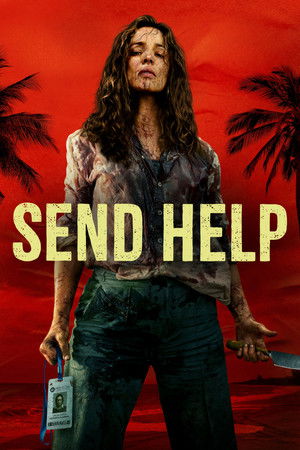
SEND HELP(2026)
Written by: Damian Shannon & Mark Swift
Draft date: Second Draft (no specific date specified)
Genre: Thriller
Title: Send Help
Written by: Damian Shannon & Mark Swift
Draft date: Second Draft (no specific date specified)
LOGLINE
After a private jet crashes in the Pacific, a perpetually overlooked office worker stranded on a remote island with her cruel, incapacitated CEO discovers she has the survival skills — and the ruthlessness — to seize the power that was always denied her.
| Very Poor | Poor | Fair | Good | Excellent | |
|---|---|---|---|---|---|
| PREMISE | ✓ | ||||
| STRUCTURE | ✓ | ||||
| CHARACTER | ✓ | ||||
| CONFLICT | ✓ | ||||
| DIALOGUE | ✓ | ||||
| PACING | ✓ | ||||
| TONE | ✓ | ||||
| ORIGINALITY | ✓ | ||||
| LOGIC | ✓ | ||||
| CRAFT | ✓ |
| Strong Pass | Pass | Consider | Recommend | Strong Recommend | |
|---|---|---|---|---|---|
| Overall | ✓ |
Genre: Thriller, Drama
Sub-genre: Psychological Thriller, Dark Comedy, Survival Thriller
Keywords: Female Protagonist, Workplace Dynamics, Power Reversal, Survival, Deserted Island, Class Conflict, Revenge, Manipulation, Anti-Hero, Plane Crash, Corporate Setting, Cat-and-Mouse
MPA Rating: R (sustained violence, language including multiple uses of "fuck," implied castration threat, dead bodies, blood, disturbing thematic content)
Budget Tier: Medium ($10M–$40M) — requires tropical island locations, plane crash sequence with VFX, ocean filming, storm sequences, compound set, animal work (panther, boar, crab), period-matched corporate office interiors.
Pages: 98
Time Period: Present over approximately 2-3 months (38+ days on island plus eight-month epilogue).
Locations: 60% tropical island exteriors (beach, jungle, ridge, cave, ocean shallows), 15% luxury island compound interior, 15% corporate office interiors (cubicles, corner office, conference room), 5% private jet interior, 5% miscellaneous (Linda's apartment, golf course, parking lot). Requires practical fire, rain/storm effects, shallow ocean water for spearfishing, an explorable jungle with ridgeline, and a palatial vacation home. Animal work includes a black panther, wild boar, coconut crab, and caged exotic animals.
Lead: Female, 30s-40s, white, physically unremarkable at the start but transforms through the narrative into a lean, tanned, confident figure. Deeply intelligent but socially awkward, harboring trauma and a capacity for violence beneath a self-deprecating exterior.
Comparables: Cast Away (2000) for the survival mechanics and single-location physical transformation. Misery (1990) for the captor-captive power dynamic and escalating psychological terror. Gone Girl (2014) for the protagonist's hidden capacity for calculated violence and the unreliable-narrator reveal structure. The Menu (2022) for class-warfare tension in an isolated setting.
SYNOPSIS
LINDA LIDDLE (30s-40s), an intelligent but socially invisible office worker, toils in a cubicle while her co-worker FRANKLIN (30s-40s) takes credit for her reports. Linda lives alone with a pet cockatiel, watches Survivor obsessively, and reads survival manuals. She learns that BRADLEY MOORE (mid-to-late 30s), the handsome new CEO inheriting his father's company, has given a VP promotion she earned to DONOVAN CHONG (30s), his prep school friend. Linda confronts Bradley in his office, where he dismisses her skills, hints she'll be moved to a satellite office, and humiliates her about her tuna fish sandwiches. She meets his fiancée ZURI, a stunning woman, and retreats to her car where she sobs and cuts herself with her keys.
At home, Linda releases her bird out the window and prepares something on her laptop — later revealed to be a homemade bomb. She boards a private jet with Bradley, Donovan, and other executives for an Australia business trip, bringing the explosive in her luggage. Mid-flight, while the men laugh at her Survivor audition tape, the bomb detonates. The plane crashes into the Pacific. Donovan is killed. Linda survives and washes ashore on a remote island, where she finds Bradley unconscious on the rocks with a badly injured leg.
Linda uses her extensive survival knowledge to build shelter, collect water, catch fish, and start fire. When Bradley regains consciousness after three days, he thanks her but quickly reverts to his domineering personality, demanding she focus on rescue and treating her as a subordinate. Linda walks away and leaves him alone for over a day without food or water, establishing that the old power dynamic no longer applies. When a rescue boat passes the island, Linda deliberately hides and lets it go.
Bradley attempts independence but cannot survive on his own. He returns to Linda's camp, humbles himself, and she accepts him back — on her terms. She teaches him survival basics while withholding key information. They share personal histories: Linda reveals her abusive husband died in a car accident after she stopped hiding his keys. Bradley confesses his mother was abusive. A black panther appears on the beach and Linda calmly approaches it, stroking its head, deepening Bradley's awe and fear. After a storm forces them into a cave, they kiss.
Bradley secretly hoards food and builds a raft. He poisons Linda's dinner with toxic berries to knock her unconscious and escapes on the raft, but it breaks apart. Linda, despite being ill from the berries, drags him from the ocean and saves his life again. She then feeds him a paralytic blue-ringed octopus, and while he is immobilized, she pretends to castrate him — actually killing a rat for the blood — as a psychological warning.
Bradley becomes compliant, performing camp labor while Linda grows increasingly erratic. Meanwhile, Zuri arrives on the island with a BOAT CAPTAIN (50s), having independently continued the search. Linda leads them along a treacherous ridge where she murders the Boat Captain and Zuri, burying Zuri's body. Bradley discovers Zuri's remains when a boar digs up her hand. He confronts Linda and she denies murder. He seizes the knife and pursues her through the jungle. They fight viciously until Bradley falls off a cliff into the forbidden part of the island.
Bradley discovers a luxury compound — the island is private, not deserted. Linda found it the first week and contacted authorities claiming no crash survivors existed. Inside, Bradley finds two dead CARETAKERS whom Linda killed. Linda corners him in a game room with a shotgun. Bradley kneels and begs, secretly gripping a broken animal horn. He lunges but Linda strikes him with a golf club.
Eight months later, Linda is a celebrity — a bestselling author and media darling, playing golf with Jeff Probst, telling the world she was the sole crash survivor. Franklin approaches her in a parking lot, hinting he has connected Zuri's disappearance and unsolved island murders to Linda. Linda calmly warns him that blackmailing such a dangerous person face-to-face would be unwise. Franklin retreats, shaken. Linda drives off singing Madonna, triumphant and free.
COMMENTS
PREMISE — Good
The premise inverts the survival genre by weaponizing it: a dismissed, underestimated woman engineers her own plane crash as a suicide attempt, survives, and discovers that the island strips away every social hierarchy that oppressed her, leaving her the apex predator. The concept generates tension on multiple axes — survival against nature, psychological warfare between captor and captive, and the slow revelation that Linda is not a victim but an architect of catastrophe. Bradley is uniquely ill-suited to the threat because every advantage he possesses in civilization (wealth, status, charm) is worthless here, while Linda's lifetime of being overlooked has equipped her with exactly the skills the island demands. The premise's central question — how far will a person go once they discover they have power — provides a rich foundation, and the thematic territory around class, gender, and invisible labor gives the entertainment engine something meaningful underneath. Where the concept carries risk is in asking for sustained sympathy with a protagonist who is revealed to be a mass murderer, which places enormous pressure on execution to earn that tonal tightrope (see: Tone). The comparison to Misery is structural — captor with a grievance, captive who must charm to survive — but the survival-genre packaging and corporate-revenge framing give it a distinct identity.
STRUCTURE — Good
The architecture is well-proportioned and deliberately mirrors Linda's office life against her island life, with the zen garden bookends (2, 68) providing elegant framing. The inciting incident — the plane crash — lands around page 19, roughly 20% in, which is slightly late but justified by the necessary time spent establishing Linda's humiliation and motivation. The midpoint arrives cleanly when Linda lets the rescue boat pass (36), committing fully to the island as her domain rather than a temporary crisis, and this beat fundamentally redefines the narrative's stakes. The raft escape and its aftermath (62-64) functions as an effective "all is lost" reversal for both characters simultaneously. The compound reveal (85) is a strong late-act twist that recontextualizes everything, and the flashback montage (88-91) efficiently fills gaps. The epilogue golf-course sequence (93-98) wraps the external narrative but creates a structural oddity: after the climactic golf-club strike (93), the time jump bypasses the resolution of Bradley's fate entirely, leaving a load-bearing ambiguity that feels more like an omission than a choice. The Franklin parking-lot scene provides a coda but introduces a new threat that is immediately neutralized, which dilutes rather than sharpens the ending.
CHARACTER — Fair
Linda is a meticulously constructed protagonist whose arc moves from invisibility to omnipotence, with each stage — the self-harm in the car (15), the bird release (17), the first fire (25), the castration fake-out (66-68) — marking a specific evolution. Her survival competence is established credibly through the apartment bookcase (4) and Survivor audition tape (17-18), so her island capabilities never feel unearned. Bradley functions well as both antagonist and mirror: his tuna-fish disgust (8-9), his poisonous-berry betrayal (60-62), and his kneeling supplication (92) chart a convincing descent from entitled power to desperate submission. The most significant character problem is that Linda's moral descent is so steep — from sympathetic underdog to someone who bombs a plane full of people (90) — that the reveal retroactively flattens the emotional investment built in the first half. The supporting cast is thin by design, but Zuri is given just enough dimension through her dogged search (72-73) to make her murder land with weight. Donovan and Franklin serve functional roles without becoming memorable.
CONFLICT — Fair
The central conflict operates on three simultaneous levels: survival against the environment, a psychological power struggle between Linda and Bradley, and Linda's internal war between her desire for connection and her capacity for violence. The external escalation is well-calibrated — from coconut crabs (31) to boar hunts (34) to knife fights (80-81) — with each confrontation raising physical stakes. The power dynamic inverts cleanly when Linda abandons Bradley overnight (30-32), and inverts again when he poisons her (62), creating genuine uncertainty about who holds the advantage at any given moment. The internal conflict is where the material strains: Linda's monologue about wars and women's bodies (83-84) articulates her worldview but does so in a speech that tells rather than dramatizes, and her oscillation between tenderness and menace sometimes reads as plot-driven rather than character-driven. The resolution — Linda's total victory — resolves the external conflict decisively but leaves the internal conflict essentially unaddressed. She does not reckon with what she has become. Whether this is a feature or a flaw depends on tonal intent (see: Tone), but it means the conflict's emotional payoff is thinner than its mechanical payoff.
DIALOGUE — Good
The dialogue is the material's most consistent strength, with Linda's voice carrying a distinctive blend of earnest trivia, self-deprecating humor, and quiet menace that makes her instantly identifiable. Her survival lectures double as character work — "Person will die after three days with no water. Did you know that?" (23) — and her one-liners land without feeling written: "I'll tell you where to send my last check! Second coconut tree from the left!" (39). Bradley's dialogue efficiently tracks his transformation from boardroom polish — "Era of success? I hope so" (7) — to desperation — "Take the L, Moore. You're beat" (41). The bathroom-floor monologue (49-50) is the best-written exchange, revealing character through specificity while naturally building warmth between them. Subtext operates well in the sushi scene (42-44), where every line about food is really about power. The weakest dialogue belongs to Linda's jungle monologue during the hunt (83-84), which over-articulates thematic points that have already been dramatized through action, tipping into speechifying.
PACING — Fair
The first twenty pages move briskly through Linda's office humiliation, establishing stakes and sympathy efficiently without lingering on any single beat too long. The island survival montages (21-25) compress time well, and the alternating structure of Linda thriving while Bradley suffers (39-41) generates propulsive contrast. The material's strongest pacing choice is the overnight abandonment sequence (30-32), which uses the passage of time — sunset, midnight, morning, midday — as a torture device, building dread through stillness rather than action. The section between the castration fake-out (68) and Zuri's arrival (71) sags, with Bradley's broken compliance and Linda's mood swings covering ground that has already been established. The compound discovery (85-87) re-energizes the pace with genuine surprise, but the flashback montage that follows (88-91) halts forward momentum to explain rather than advance the plot. The epilogue (93-98) runs long for what it accomplishes — the Franklin confrontation could be tighter by a page.
TONE — Fair
The tonal register is the material's highest-risk element: it asks to function simultaneously as survival adventure, workplace satire, psychological thriller, and dark comedy, and it manages these shifts more often than not but occasionally lurches. The office scenes establish broad comedy — the Pretty Assistant, the grey mules bit (7), the tuna-fish callback — while the self-harm moment in the car (15) signals genuine psychological darkness, and this juxtaposition largely works because Linda's humor is established as a coping mechanism. The castration sequence (66-68) is the tonal apex and nadir simultaneously: it generates visceral horror, then pivots to comedy with the bloody rat reveal, which risks whiplash. Some will find this thrilling. Others will find it manipulative. The jungle monologue (83-84) suddenly introduces a polemical register — gender politics, war, bodily autonomy — that feels grafted onto a character who has until now expressed her worldview through action rather than ideology. The epilogue's breezy celebrity-golf tone (93-95) works as ironic counterpoint to the violence that preceded it, but Franklin's threat-and-retreat scene (96-97) plays the menace too lightly for its implications.
ORIGINALITY — Good
The survival-island genre is well-trodden — Cast Away, The Blue Lagoon, Swept Away — but the specific innovation here is making the island a stage for workplace-revenge fantasy, collapsing the distance between office politics and life-or-death power dynamics. The closest antecedent is Lina Wertmüller's Swept Away (1974), which also strands a class-divided pair on an island and inverts their power relationship, but that film's sexual politics are its engine, while here the engine is competence and its weaponization. Gone Girl provides the structural model for a protagonist whose sympathetic surface conceals premeditated violence, and the bomb reveal (90) directly echoes that film's diary-twist logic — recontextualizing everything that came before. The compound twist is genuinely surprising and reframes the entire survival narrative. Where originality flags is in some individual set pieces — the coconut crab encounter (31), the panther taming (53) — which feel borrowed from survival-show vocabulary without adding new dimension. The ending, in which the villain wins and becomes a media hero, has become more common since Gone Girl and Nightcrawler, reducing its surprise value somewhat.
LOGIC — Poor
The causal chain holds under reasonable genre scrutiny for most of the runtime, but the bomb logistics present a structural logic problem that the material never fully addresses. Linda, a mid-level office worker, builds a functional explosive device from internet instructions (90), smuggles it onto a private jet past a baggage handler (17), and the blast is powerful enough to bring down the aircraft but leaves her without a scratch (20). The material does not establish any demolitions knowledge or access to materials, and the "invisible woman" explanation (90) is thematic rather than mechanical. The compound twist is internally consistent — Linda had weeks to find it, establish control, and eliminate witnesses — and the flashback montage (88-91) answers most questions. Bradley's ability to secretly hoard food and build a raft (57-59) while injured strains credibility slightly but is within acceptable bounds given the time elapsed. The panther's behavior (53) — a wild apex predator allowing a stranger to pet it — breaks zoological logic, though it may be intended as magical realism or Linda's mythologization of herself. Zuri independently chartering a boat and finding the exact island (71-72) is a significant coincidence, though it is at least motivated by her established determination.
CRAFT — Good
The writing demonstrates a confident visual sensibility and efficient scene construction, particularly in the parallel montages that contrast Linda's competence with Bradley's helplessness (39-41). Character introductions are handled with personality — Linda is "not one of the perfect ones... her own sized peg still looking for the right sized hole" (2), and Bradley is "one charming motherfucker" (6) — which set voice immediately. The zen-garden opening (2) is a polished piece of misdirection that pays off structurally when mirrored on page 68. Action description is vivid without becoming novelistic: "two feral animals, trying to survive" (81) tells a director and reader exactly what register the fight needs. The parenthetical stage directions are occasionally overused — "(almost to herself)" and "(long sigh)" on page 66 do work that the dialogue already does. Formatting is clean throughout. The flashback montage (88-91) is the least elegant section from a craft perspective, relying on voiceover exposition to deliver reveals that might land harder if dramatized in real time earlier in the narrative.
OVERALL — Consider
Send Help is a survival thriller crossed with a workplace-revenge dark comedy about an invisible office worker who bombs the plane carrying her abusive CEO, then strands them both on an island where her survival expertise makes her the dominant force. The material's greatest strength is its premise, which generates inherent tension by collapsing corporate hierarchy into primal survival, and its dialogue, which gives Linda a distinctive, funny, and increasingly unsettling voice. The structural architecture is sound, with the compound reveal and the bomb flashback delivering genuine surprises that reward attention. The most significant weakness is the tonal negotiation required by a protagonist who is simultaneously a sympathetic underdog and a mass murderer — the bomb reveal recontextualizes the first half so severely that it may alienate the audience whose investment the material has carefully cultivated. The jungle monologue and some of the epilogue also tip toward thematic over-articulation where the action has already made the point. Character work is strong for the central pair but the reveal compresses Linda's arc into something closer to a villain origin than a transformation, and the material does not fully reckon with that distinction. This is ambitious, entertaining, and well-crafted material that knows exactly what it wants to be — the question is whether it can hold its audience through the moral vertigo of its third act.
Get this level of coverage for your screenplay
Every coverage includes 10 category ratings, an overall recommendation, and detailed analysis — powered by the same methodology used by talent agencies and literary managers.
Movie data provided by TMDB