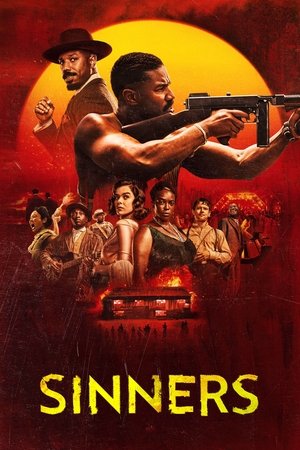
SINNERS(2025)
Written by: Ryan Coogler
Genre: Horror
Title: Sinners
Written by: Ryan Coogler
Draft date: Not specified
LOGLINE
In 1932 Mississippi, identical twin gangsters return from Chicago to open a juke joint in a converted lumber mill, but when a trio of mysterious white drifters arrives at the grand opening, the celebration unleashes an ancient vampiric evil that turns the partygoers against the survivors and forces a young blues guitarist to choose between his music, his faith, and his life.
| Very Poor | Poor | Fair | Good | Excellent | |
|---|---|---|---|---|---|
| PREMISE | ✓ | ||||
| STRUCTURE | ✓ | ||||
| CHARACTER | ✓ | ||||
| CONFLICT | ✓ | ||||
| DIALOGUE | ✓ | ||||
| PACING | ✓ | ||||
| TONE | ✓ | ||||
| ORIGINALITY | ✓ | ||||
| LOGIC | ✓ | ||||
| CRAFT | ✓ |
| Strong Pass | Pass | Consider | Recommend | Strong Recommend | |
|---|---|---|---|---|---|
| Overall | ✓ |
Genre: Horror, Drama
Sub-genre: Period Horror, Southern Gothic, Horror Drama
Keywords: Vampires, 1930s Period, Mississippi Delta, Blues Music, Juke Joint, Twins, African American Theme, Sharecroppers, Jim Crow South, Supernatural, Family, Music, Cultural Heritage, Ancestors, Gangsters, Prohibition Era, Faith/Spirituality, Coming-of-Age, Ensemble Cast
MPA Rating: R (pervasive strong language, graphic violence, sexuality, brief nudity, disturbing horror imagery)
Budget Tier: High ($40M–$100M) — period setting requiring extensive production design, multiple practical locations, large cast with extras, surreal ancestor sequence with significant VFX, action set pieces including explosions and fire, period vehicles and wardrobe throughout.
Pages: 126
Time Period: Primarily 1932 over approximately 24 hours / Epilogue in 1992 Chicago, brief scene.
Locations: 80% at and around an abandoned lumber mill converted to a juke joint on a Mississippi riverbank (requires interior renovation montage, fire effects, river access for night sequences). 10% across rural Mississippi roads, a sharecropper plantation, a small-town grocery store, a railroad station, and a praise house church. 5% at a rural farmhouse (prologue, requires night horror staging). 5% at a 1990s Chicago blues bar (epilogue). All 1932 locations require period-accurate vehicles, wardrobe, and production design. Significant night shooting required.
Lead: Smoke — Male, mid-30s, Black, identical twin, ex-soldier and Chicago gangster, stoic and calculating with shaking hands that betray buried trauma. Secondary co-leads: Stack (his twin, charismatic and reckless) and Sammie (their 19-year-old cousin, a gifted blues guitarist torn between church and music).
Comparables: From Dusk Till Dawn (a crime narrative that pivots into a vampire siege at a roadside establishment), Bram Stoker's Dracula (a charismatic ancient vampire offering eternal life as seduction and critique of mortal suffering), Ma Rainey's Black Bottom (period Black cultural expression under systemic oppression, with music as the dramatic engine), Get Out (horror as metaphor for racial exploitation, with a Black protagonist trapped among those who consume Black bodies and culture).
SYNOPSIS
A voiceover by ANNIE (30s, Black) introduces the concept of musicians whose gifts pierce the veil between life and death, attracting both spirits and evil, illustrated through woodcut images spanning Irish, Choctaw, West African, and American blues traditions.
In 1932 Clarksdale, Mississippi, an INJURED MAN arrives at the farmhouse of BERT (late 20s, White) and JOAN (20s, White), claiming Choctaw attackers took his wife. Bert, whose home contains a Klan uniform, lets him in after seeing gold coins. A CHOCTAW SEARCH PARTY led by CHAYTON (50s) warns Joan the man is dangerous, but she refuses them at gunpoint. After sunset, the Injured Man reveals he has killed Bert and reanimates the corpse — both now grinning with identical predatory smiles.
Seven years later, identical twins SMOKE and STACK (mid-30s, Black) — ex-soldiers and Chicago gangsters — buy the abandoned lumber mill where the prologue's horror occurred from HOGWOOD (45, White), paying extra to keep the Klan away. They recruit their young cousin SAMMIE (19, Black), a gifted blues guitarist and sharecropper, from his father JEDIDIAH's (late 40s, Black) church. Jedidiah warns Sammie that dancing with the devil will bring consequences.
The twins split up to prepare for a grand opening that night. Smoke visits BO CHOW (30s, Chinese American) and GRACE CHOW (30s, Chinese American), who run segregated grocery stores, to order food and supplies. He shoots two thieves attempting to rob his truck. Stack recruits DELTA SLIM (70s, Black), a legendary harmonica and piano player, by offering him $40 and unlimited beer. At the railroad station, PEARLINE (30s, Black), a married singer, flirts with Sammie, while MARY (late 20s, racially ambiguous, passing as White) — Stack's former lover — confronts him about abandoning her years ago. Stack reveals he set her up with a white husband in Little Rock for her safety. Smoke visits Annie, his former partner, at her root-work shop, where they share grief over their deceased infant and reconnect physically. Annie feeds Smoke's mojo bag and warns him about cursed money.
The group transforms the mill into a juke joint. At the grand opening, sharecroppers arrive paying with plantation currency instead of real dollars, creating financial tension between pragmatic Smoke and community-minded Stack and Annie. Sammie performs his original blues composition "I Lied to You" for his preacher father, and the crowd erupts. A surreal montage reveals ancestral spirits — Senegalese griots, 1970s guitarists, 1980s DJs, Zaouli dancers — surrounding the performers in a transcendent vision of cultural continuity, while the mill's walls dissolve into open sky.
Three white drifters approach: REMMICK (the Injured Man from the prologue, now healed), flanked by the undead Joan and Bert. They audition with an Irish folk song and request entry. Smoke refuses. Mary goes outside to investigate and encounters Remmick, who offers gold coins and speaks to her grief with unsettling intimacy. She pulls a gun and retreats. In the back room, Mary — now bitten — feeds on Stack's neck, killing him. Smoke shoots her three times but she runs off laughing, promising to kill everyone.
Stack reanimates as a vampire and breaks out of the locked room. Annie identifies the threat as vampires, not haints, and throws pickled garlic on Stack, driving him outside. CORNBREAD (30s, Black), the door guard, returns also turned. Annie tests everyone with raw garlic and they barricade inside. Remmick and the growing vampire horde surround the mill singing "Pick Poor Robin Clean." Grace, desperate after learning Bo has been turned and Remmick has threatened her daughter LISA (12), inadvertently invites the vampires inside.
In the ensuing battle, Bo bites Grace and both burn in a Molotov fire. Remmick's forces storm in. Stack bites Annie, and Smoke fulfills his promise to free her spirit by staking her through the heart. Delta Slim sacrifices himself, distracting the vampires with a final performance while Smoke, Sammie, and Pearline flee upstairs. Remmick corners them on the balcony, bites Pearline, and pursues Sammie to the river. In a dark baptism, Remmick dunks Sammie while monologuing about lies, hierarchy, and unity through vampirism. Sammie smashes his guitar into Remmick's face — the silver resonator burns the vampire — and Smoke arrives to stake Remmick from behind. At sunrise, the vampires immolate. Remmick explodes into a pillar of fire.
Smoke sends Sammie home with the car. Alone, Smoke cuts off his mojo bag, assembles military weapons from a hidden chest, and guns down Hogwood and fifteen Klansmen who arrive to clean up the expected massacre. Gut-shot, Smoke has a vision of Annie nursing their infant daughter, then kills Hogwood with his last strength. Sammie returns to his father's church covered in blood. Jedidiah embraces him and demands he renounce his sinning ways. Sammie struggles but ultimately drives away clutching the broken guitar neck.
In 1992 Chicago, an elderly SAMMIE (80) finishes a blues set at a bar. Stack and Mary, unchanged by time, arrive. Stack offers Sammie immortality to cure his terminal illness. Sammie declines, saying he wants to see what comes next. He plays one last acoustic blues song in the old Delta style. Stack, wearing a gold ring spelling "SMOKE," departs with Mary, and Sammie smiles.
COMMENTS
PREMISE — Excellent
The core concept fuses a vampire siege with a meditation on Black cultural creation under Jim Crow — an inherently rich foundation because the juke joint itself embodies both liberation and vulnerability. The premise generates tension on multiple axes: the twins are criminals building something communal, Sammie is torn between sacred and secular music, and the vampires literalize the way white supremacy consumes Black bodies and culture while claiming fellowship. Remmick's seduction — offering equality and eternity to people denied both — gives the antagonist a philosophical argument that complicates the horror. The setting of 1932 Mississippi, where plantation currency is still circulating and the Klan operates openly, makes the supernatural threat feel like an extension of the material one rather than a departure from it. Compared to From Dusk Till Dawn, which treats its vampire pivot as pure genre fun, and Get Out, which grounds its horror in social observation, this premise occupies a distinctive middle ground: a genre entertainment that carries genuine thematic weight about whose music, labor, and lives get consumed by whom. The central dramatic question — whether freedom is possible in a world designed to devour you — resonates because it applies equally to the vampires and to Mississippi itself.
STRUCTURE — Good
The architecture is clean and well-proportioned. The prologue establishes the vampire threat (2-7) while withholding its full nature, the extended setup builds the juke joint and its community across roughly forty pages of preparation, and the vampire siege begins at the proportional midpoint when Mary kills Stack (84-85). The catalyst — the drifters' arrival at the door (66) — lands at approximately 52% of the page count, which is late for a traditional inciting incident but functions effectively because the real engine of the first half is the economic and emotional stakes of the juke joint itself. Every preparation scene serves double duty: the grocery negotiation establishes the Chow family who will later be consumed, Delta Slim's recruitment sets up his sacrifice, Mary's confrontation with Stack plants the vulnerability she exploits. The transition from community-building to horror is well-managed through the surreal ancestor montage (63), which marks the emotional peak before the descent. The final thirty pages sustain escalation — Stack turns, Cornbread turns, Grace breaks, the mill is breached, Delta Slim sacrifices, the river confrontation resolves Remmick — without any structural dead spots. The epilogue (122-126) provides necessary closure for Sammie and Stack's relationship, though at four pages it extends slightly beyond its dramatic utility, particularly the bartender exchange with Mary.
CHARACTER — Good
Smoke is the most fully realized character, possessing clear backstory (patricide to protect Stack), a defined goal (build something legitimate), an internal wound (grief over his lost child with Annie), and a tragic arc that culminates in killing everyone he loves to protect the one person left (Sammie). His stoicism cracks precisely when it should — at Annie's death (111) and in the quiet moment with Hogwood's cigarettes (119). Stack functions as Smoke's extroverted complement, and his charisma drives much of the first half, but his arc is necessarily truncated by his death-and-turning at the midpoint (85-86). Sammie's position as the innocent caught between church and blues gives him thematic clarity, though his agency is limited — he is largely protected and directed by others until the river confrontation. His defiant speech to Smoke (81) is his strongest active moment. Annie is compelling but underserved: her root-work expertise, her grief, her relationship with Smoke, and her role as the group's supernatural authority all compete for space, and her death at Smoke's hand (111) lands more as a plot mechanism than the culmination of her own arc. Remmick benefits from a genuinely interesting philosophical position — an ancient Irish vampire who understands colonial theft of culture — but receives limited screen time to develop it before the climax.
CONFLICT — Good
The main external conflict — survival against an expanding vampire horde trapped in a building — is effective and escalates methodically from a single mysterious bite (85) to a full siege (110). What elevates this beyond standard horror structure is the layering of conflicts that precede and complicate the supernatural one: the economic tension of plantation currency versus real dollars (50-53), the personal stakes of Stack and Mary's forbidden relationship (59-62), Smoke and Annie's unresolved grief (40-41), and the philosophical conflict between Jedidiah's sacred worldview and Sammie's secular calling (13-14). The internal conflict is distributed across multiple characters rather than concentrated in one protagonist: Smoke must choose between protecting his brother and protecting the group, Grace must resist her turned husband, and Sammie must reconcile his gift with its consequences. The vampire offer — eternal community and freedom from racial oppression — functions as the most potent conflict because it weaponizes the characters' legitimate desires against them. Stack's pitch to Smoke on the balcony (107-108) is the dramatic peak of this internal struggle, and Smoke's silence rather than verbal refusal keeps the tension unresolved even as Sammie closes the door.
DIALOGUE — Good
The dialogue is the draft's most consistent strength, achieving natural period voice while differentiating characters sharply. Stack's sales-pitch rhythm — building momentum, dropping vulgarity strategically, closing with a grin — is distinct from Smoke's clipped, transactional cadence on every page they share (9-10, 17-18, 51-53). Delta Slim's rambling anecdotal style (44-46) contrasts with Annie's direct spiritual authority (92, 98-99). The negotiation between Smoke and Grace over the sign (28-29) is a small masterclass in revealing character through transaction — Grace's steady counter-offers and Smoke's final pivot to the flowers communicate volumes about both. Subtext operates effectively in the Stack-Mary scenes: "I just wanted you to be safe" (61) carries the weight of everything he cannot say about race, love, and self-hatred. Remmick's dialogue shifts registers convincingly from folksy charm (66-67) to philosophical menace (115-116), though his river baptism monologue tilts toward the expository — "lies of a dominion of man over beast and earth, hierarchy of man, woman, and groups of kin" (115) — where the theme overtakes the character's voice. The recurring motif of Cornbread's politeness after turning (91-93) is a sharp dramatic choice, using courtesy as horror.
PACING — Fair
The first half prioritizes world-building and character establishment at a deliberate pace that trusts the community and its dynamics to sustain interest before the horror arrives. This is largely successful — the grocery store sequences (23-29), the railroad station recruitment (30-34), and the juke setup montage (47-49) each advance both plot and character — but the cumulative effect of forty-plus pages before any supernatural event means the prologue's promise goes unfulfilled for a long stretch. The transition into horror is well-timed: the surreal ancestor sequence (63) signals the shift, and once Mary bites Stack (85), the pacing accelerates sharply and never relents through the climax (116). The siege section manages multiple simultaneous crises — the Cornbread test (91-93), the Stack door-breaking (96-97), the garlic ritual (102-104) — with efficient scene construction. The Hogwood shootout (118-119) functions as a satisfying coda to Smoke's arc but arrives after the primary tension has resolved, creating a brief structural exhale before the emotional climax at the church (120-121). The epilogue's pacing is measured and appropriate for its elegiac purpose.
TONE — Good
The tonal management across a demanding range — from warm community comedy to visceral horror to spiritual meditation — is largely accomplished, with the juke joint setting serving as the fulcrum that makes the shifts feel organic rather than jarring. The humor in the first half (Stack's Cornbread recruitment, 46-47; Delta Slim's sex education contribution, 42-43; the plantation currency standoff, 50-51) establishes a communal warmth that makes the horror's arrival genuinely devastating. The surreal ancestor sequence (63) represents the most ambitious tonal moment, shifting into a transcendent register that could easily feel indulgent but earns its emotional weight by connecting the music to a larger spiritual tradition. The horror sequences maintain seriousness without losing the characters' voices — Delta Slim's "Was afraid I just shat myself" (93) provides necessary relief without undercutting the threat. One tonal strain occurs in Remmick's river baptism speech (115-116), where the philosophical content pushes against the scene's physical urgency, creating a brief disconnect between what the character is doing (drowning Sammie) and what he is saying (delivering a thesis on colonial epistemology). The epilogue's 1992 setting introduces a melancholy cool that closes the tonal arc effectively.
ORIGINALITY — Excellent
The fusion of vampire mythology with Delta blues culture and Jim Crow-era racial politics constitutes a genuinely distinctive genre hybrid. Where From Dusk Till Dawn treats its vampires as pure antagonists and its setting as incidental, and Bram Stoker's Dracula frames vampirism as romantic transgression, Remmick's vampirism operates as a metaphor for assimilation through consumption — he absorbs cultures and offers "equality" by erasing individual identity, which mirrors colonial dynamics without requiring the text to state it explicitly. The invitation rule — vampires cannot enter without being welcomed — becomes a pointed commentary on how oppressed communities are manipulated into opening their doors to their own exploitation. The surreal ancestor sequence has no clear precedent in vampire cinema, transforming a standard juke joint performance into a vision of unbroken cultural lineage that contextualizes the blues within a global tradition of sacred music-making. The decision to make the original vampire Irish rather than Eastern European reframes vampirism itself as a product of colonial trauma — Remmick was colonized before he became a colonizer — adding a layer that most vampire narratives lack. The economic subplot involving plantation currency is a fresh dramatic engine that grounds the supernatural in material reality.
LOGIC — Fair
The internal logic is largely sound, with the vampire mythology establishing clear rules — invitation required for entry, vulnerability to garlic, silver, sunlight, stakes, and holy water — and adhering to them consistently. The linked-pain mechanic, where all vampires feel Remmick's injuries (110, 116), is established and paid off cleanly. One structural logic issue involves Grace's invitation: she shouts "Ya'll come on in" (110) while being physically restrained by four people, and the vampires treat this as a valid invitation despite her clearly acting under duress and not being an owner of the property. The rules established earlier suggest the invitation must come from someone with authority over the threshold, yet Grace is a guest. This is a load-bearing moment — the entire final battle depends on it — and the logic strains. A second issue: Mary is bitten offscreen between her encounter with Remmick (75-76) and her attack on Stack (85), but the timeline is compressed enough that her full transformation and return to the juke without anyone noticing requires accepting a significant gap. The Gambler 2 subplot — his body found drained in the gambling room (100) — raises the question of which vampire bit him and when, since all known vampires were outside. This is left unresolved and creates a minor gap in the infection chain.
CRAFT — Good
The writing demonstrates strong visual instincts and efficient scene construction, particularly in action lines that convey character through behavior rather than description — Smoke's shaking hands as he takes a cigarette (8), Annie pulling a straight razor "from nowhere" (39), Stack's eyes going "white" like a great white shark during negotiation (32). Character introductions are consistently effective: Delta Slim is introduced through his harmonica before his face, Remmick through a woodcut before his physical appearance, and the Chow family through the visual of two identical stores serving segregated customers (27-28). The formatting is clean throughout, with occasional alternate line notations ("(alt)" on 60) that suggest an active revision process. The action writing during the siege sequences maintains clarity despite multiple simultaneous confrontations (110-113). Musical cues are integrated as dramatic beats rather than decoration — Sammie's "I Lied to You" (62) advances his character arc while the surreal montage directions (63) provide enough specificity for a director while leaving interpretive space. Minor craft issues include occasional missing apostrophes in dialogue contractions and one instance where "he her hip" (41) contains an extraneous word. The screenplay's voice is confident and distinctive, operating in a register that is literary enough to convey cultural weight but lean enough to read as a shooting draft.
OVERALL — Recommend
Sinners is a period horror drama set in 1932 Mississippi, in which twin Black gangsters' attempt to build a juke joint becomes a vampire siege that literalizes the consumption of Black culture, labor, and bodies under white supremacy. Its greatest strengths are its dialogue — which differentiates a large ensemble with precision and period authenticity — and its premise, which generates conflict on racial, economic, spiritual, and supernatural axes simultaneously without any one element feeling subordinated to another. The structural choice to invest heavily in community-building before introducing horror pays dividends when the violence arrives, because every death carries established emotional weight. The surreal ancestor sequence represents an ambitious formal gambit that succeeds in contextualizing the blues within a global spiritual tradition. The primary weaknesses are concentrated in the siege's mechanics: Grace's forced invitation strains the established rules at a critical juncture, and Annie's arc — the most thematically loaded of any character — is compressed into a setup-and-sacrifice pattern that does not fully honor her complexity. Remmick is a compelling antagonist whose philosophical dimension deserves more development before the climax. The material's ambition is substantial and largely matched by its execution, with the world-building, character work, and thematic architecture operating at a level that supports the genre entertainment while giving it genuine substance.
Get this level of coverage for your screenplay
Every coverage includes 10 category ratings, an overall recommendation, and detailed analysis — powered by the same methodology used by talent agencies and literary managers.
Movie data provided by TMDB