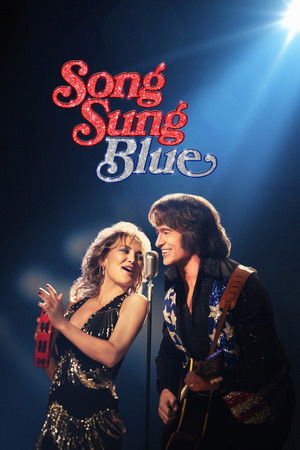
SONG SUNG BLUE(2025)
Written by: Craig Brewer
Draft date: Pink Rev. (10/08/24) [White: 9/23/24, Blue: 9/27/24, Pink: 10/8/24]
Genre: Drama
Title: Song Sung Blue
Written by: Craig Brewer
Draft date: Pink Rev. (10/08/24) [White: 9/23/24, Blue: 9/27/24, Pink: 10/8/24]
LOGLINE
A charismatic but broke Milwaukee bar musician and recovering alcoholic teams up with a talented, down-on-her-luck single mother to form a Neil Diamond tribute act, but just as their partnership — musical and romantic — begins to soar, a devastating accident threatens to silence them both.
| Very Poor | Poor | Fair | Good | Excellent | |
|---|---|---|---|---|---|
| PREMISE | ✓ | ||||
| STRUCTURE | ✓ | ||||
| CHARACTER | ✓ | ||||
| CONFLICT | ✓ | ||||
| DIALOGUE | ✓ | ||||
| PACING | ✓ | ||||
| TONE | ✓ | ||||
| ORIGINALITY | ✓ | ||||
| LOGIC | ✓ | ||||
| CRAFT | ✓ |
| Strong Pass | Pass | Consider | Recommend | Strong Recommend | |
|---|---|---|---|---|---|
| Overall | ✓ |
Genre: Drama
Sub-genre: Musical Drama, Biographical Drama, Romantic Drama
Keywords: Based on True Events, Neil Diamond, Tribute Band, Milwaukee, Working Class, Alcoholism, Recovery, Amputation, Disability, Music, Marriage, Blended Family, Comeback, 1990s, Nostalgia, Entertainer, Underdog, Female Protagonist, Male Protagonist, Heart Disease, Adoption, Mental Health
MPA Rating: PG-13 (some strong language, a brief sexual situation, thematic material including amputation, mental health crisis, and death)
Budget Tier: Medium ($10M–$40M) — multiple Milwaukee-area locations, period 1990s setting, concert/arena sequences requiring large crowds, licensed Neil Diamond and other classic rock music (significant music rights costs), moderate cast size, no major VFX but production value needed for concert staging.
Pages: 130
Time Period: 1990s, spanning approximately 3-4 years.
Locations: 80% Milwaukee interiors and exteriors — modest homes, bars/pubs (Ollie's Tavern, Good Time Charlie's, Hegarty's, Club Room), a Thai restaurant (Charm Thai), a dentist's office, community center, Catholic school, hospital/ER, psychiatric facility, funeral home, frozen custard stand. 10% Wisconsin State Fair (arcade stage, midway, backstage tent). 5% Shawano Casino (casino floor, bar, dinner theater stage). 5% Ritz Theater (large concert venue requiring crowd of 12,000 or staged equivalent, backstage corridors, dressing room, under-stage lift mechanism). Requires planes flying low overhead at the house location. Period 1990s dressing throughout.
Lead: Mike Sardina (male, 50, white/Italian-American), bushy eyebrows, thinning long hair, mustache, missing tooth later replaced with gold lightning bolt implant. Charismatic, gruff Wisconsin baritone, Vietnam veteran, recovering alcoholic, passionate and stubborn musician. Claire Stengl/Sardina (female, 35, white), curvy, platinum blonde, warm and sharp. A co-lead with equal narrative weight — talented singer, divorced mother of two, later amputee struggling with depression and recovery.
Comparables: Walk Hard: The Dewey Cox Story (2007) for its portrait of a larger-than-life musical persona built from humble origins, though played straight rather than for parody. The Wrestler (2008) for its depiction of an aging performer clinging to the thing that gives life meaning despite physical deterioration. Coal Miner's Daughter (1980) for its working-class musical partnership and biographical warmth. CODA (2021) for its emphasis on music as emotional lifeline within a family navigating disability.
SYNOPSIS
MIKE SARDINA (50), a weathered, charismatic recovering alcoholic and bar musician in Milwaukee, introduces himself at an A.A. meeting on his 20th sober birthday, performing Neil Diamond's "Song Sung Blue" for the group. Mike works as a mechanic and plays guitar with various local acts, including the all-Black band The Esquires, but his true identity is "Lightning," a self-created rock persona. At a Wisconsin State Fair Legends Showcase, Mike refuses to perform as Don Ho and clashes with organizer MARK SHURILLA (50s) and jealous Elvis impersonator EARL (50s). Backstage, he meets CLAIRE STENGL (35), a talented singer performing as Patsy Cline. Claire suggests Mike could impersonate Neil Diamond, an idea that thrills and terrifies him given his reverence for Diamond's music. Mike is captivated by Claire's voice and beauty.
Mike's dentist and manager, DR. DAVE WATSON (55), installs a gold lightning-bolt tooth and presses Mike about unpaid alimony to his ex-wife and daughter. Mike invites Claire to his home, where she meets her children — ten-year-old DANA CARTWRIGHT and fifteen-year-old RACHEL. Claire and Mike discover extraordinary musical chemistry performing "Cherry Cherry" and "Play Me," and Claire coins the crucial distinction: Mike should be a Neil Diamond "interpreter," not an impersonator. They kiss and decide to form "Lightning & Thunder: A Neil Diamond Musical Experience."
Mike secures enthusiastic but inexperienced promoter TOM D'AMATO (50s), a Badger Bus driver, and recruits Mark Shurilla and members of The Esquires as their backing band. Rehearsals in Mike's garage unite the extended family — Mike's daughter ANGELINA bonds with Rachel, and hairstylist JOHNNY helps with costumes. Claire's disapproving GRANDMA STENGL questions the relationship. At their first real gig, Tom books them at a biker bar by mistake. Mike stubbornly insists on opening with the obscure "Soolaimon" instead of "Sweet Caroline," sparking a brawl. In the parking lot aftermath, Mike proposes to Claire, and she accepts on the condition they always open with "Sweet Caroline."
A montage follows their wedding and growing success across Milwaukee bars. News coverage builds their local fame. EDDIE VEDDER invites them to open for Pearl Jam at the Ritz Theater, where Mike arranges for Eddie to join them onstage. The triumph leads to a regular casino booking. Then catastrophe strikes: while Claire plants flowers in the front yard, an elderly driver loses control and hits her. Claire's right leg is amputated below the knee. Mike simultaneously suffers a cardiac episode and has Rachel defibrillate him in the ER.
Months pass. Claire sinks into deep depression, addicted to pain medication and unable to engage with her family or therapy. The casino cancels their contract. Mike takes a karaoke hosting job at Charm Thai, a Thai restaurant run by SOMECHAI and his daughters RANEE and DAO. Mike and Claire fight bitterly as her paranoia and medication fog worsen. Dana is expelled from Catholic school for being "flamboyantly" gay, and Mike fiercely defends him to SISTER ANNE. Claire's mental health deteriorates until she sleepwalks into the street during a hallucinatory episode, believing she is performing on a grand stage. Mike admits her to a psychiatric facility.
Rachel reveals she is four months pregnant and plans to give the baby up for adoption. In the hospital, Claire has a breakthrough, recognizing that she let the accident take her singing along with her leg. She returns home, and the family rallies. Mike helps Claire learn to walk on her prosthetic. They resume performing at Charm Thai, where Claire's anxiety lifts during "Holly Holy." A second car crashes into their front yard in the same spot — and Claire laughs, experiencing the emotional catharsis she needed.
Lightning & Thunder mount a comeback. The Ritz Theater offers them a headlining show on the same night Neil Diamond plays a sold-out arena across town. Tom and Dr. Dave arrange for Mike and Claire to meet Diamond after the show at a frozen custard stand. Before the concert, Mike suffers another cardiac episode in the bathroom and super-glues his head wound shut. The Ritz show is a triumph — "Soolaimon," "Brother Love's Travelling Salvation Show," and a rapturous crowd. After the show, Claire finds Mike unresponsive in the backseat of the car. He has died.
At the funeral, Claire performs "I've Been This Way Before." Eddie Vedder sends a Gibson guitar with a heartfelt letter. In the final scene, Dana watches Mike's pre-recorded sober birthday video while Claire plants a third Daphne bush in the yard as Rachel stands guard against traffic. Title cards reveal Claire eventually met Neil Diamond, who was moved by Mike's devotion to his music.
COMMENTS
PREMISE — Good
The premise of a middle-aged recovering alcoholic mechanic who channels his love of Neil Diamond into a tribute act with his romantic and musical partner is inherently rich — it marries an underdog entertainment narrative with a love story grounded in addiction, disability, and working-class aspiration. The central dramatic question is whether two broken people can build something lasting through music, and the "based on a true story" framing lends the material biographical weight similar to Coal Miner's Daughter or The Wrestler. The Milwaukee setting provides specificity and charm that distinguishes this from generic showbiz fare. The premise generates natural conflict on multiple fronts: Mike's stubbornness versus pragmatism, the couple's financial desperation, Claire's catastrophic injury, and the tension between artistic ideals and commercial reality. The thematic backbone — that music is not entertainment but survival, the thing that replaces addiction and gives meaning — is potent and clearly articulated through Mike's A.A. testimony. The dual-lead structure is ambitious, as Claire's arc ultimately carries equal or greater dramatic weight than Mike's.
STRUCTURE — Fair
The narrative follows a clear rise-fall-rise-fall architecture that mirrors the emotional rhythm of a concert. Mike and Claire's meeting and courtship occupy the first quarter with efficient momentum, their partnership formalized by the proposal around page 40. The montage-heavy middle section covering their growing success (44–54) compresses time effectively but at the cost of scene-level dramatic tension. The midpoint pivot — Claire's accident (67) — lands at approximately the halfway mark proportionally and functions as a devastating structural break. The long depression stretch from pages 61–86 risks audience fatigue, though individual scenes within it (the Catholic school confrontation at 71–73, Rachel's pregnancy reveal at 78–80) provide necessary punctuation. The second comeback begins around page 87 and builds steadily toward the Ritz Theater climax (100–104), which delivers genuine catharsis. Mike's death at approximately page 106 is structurally positioned as a bittersweet coda rather than a traditional climax, which is an unconventional choice that works because the Ritz show already provides the triumphant peak. The funeral and planting scenes (107–112) resolve the emotional throughline with grace. One structural concern is that the second car crash (86–87), which triggers Claire's catharsis, arrives with almost no setup and may read as contrived despite its basis in true events.
CHARACTER — Good
Mike and Claire are both fully realized characters with distinct wants, fears, and arcs, and the dual-protagonist structure is the material's greatest asset. Mike's want is to entertain and be recognized, but his need is to be worthy of love and family — his backstory as a Vietnam tunnel rat and abusive ex-husband provides depth that surfaces naturally (23, 31). Claire's want to sing and escape poverty transforms into a need to reclaim her identity after devastating loss, and her arc from vivacious performer to medication-numbed shell to triumphant survivor is the emotional spine (60, 76, 87). The supporting cast is colorful and well-differentiated: Rachel's pragmatic toughness contrasts with Dana's vulnerability, and their respective crises (pregnancy, expulsion) are directly tied to the central theme of resilience. Angelina functions as Mike's conscience. However, some supporting characters — particularly Tom D'Amato and Dr. Dave — remain lovable but functionally interchangeable as cheerful facilitators. The antagonist role is distributed across circumstances rather than a single figure, which suits the biographical tone but diffuses conflict (see: Conflict).
CONFLICT — Fair
The central external conflict shifts across the narrative rather than escalating along a single axis: first it is the struggle to build Lightning & Thunder against financial hardship and industry gatekeeping, then it becomes the fight to survive Claire's injury and its aftermath. This fragmented conflict structure mirrors real life but leaves the middle section (61–86) without a clear dramatic engine — Claire's depression is a state, not an escalating antagonist. The biker bar disaster (38–40) provides an excellent early setback that tests both the partnership and Mike's stubbornness, but nothing of comparable dramatic specificity recurs between the accident and the comeback. The internal conflicts are more consistently compelling: Mike's terror of inadequacy and his suppressed health crisis create dramatic irony that pays off devastatingly when he super-glues his wound shut before the final show (97). Claire's internal battle between surrender and self-reclamation is the strongest conflict thread, particularly her psychiatric breakdown (75–76) and the group therapy breakthrough (80). The material would benefit from a more present external obstacle during the comeback stretch — the Ritz show opportunity arrives without significant resistance.
DIALOGUE — Good
The dialogue is the material's most consistent technical strength, grounding every character in a specific milieu and voice. Mike's speech patterns — the Wisconsin accent, military idioms ("As you were"), and blue-collar directness — are distinctive and sustained throughout, as in his defense of Dana to Sister Anne: "nothing chaps my hide more than a poser" (73). Claire's dialogue reveals her sharpness and warmth simultaneously, particularly the pivotal "interpreter" distinction (20) and her devastating hospital monologue about watching MTV (60). Rachel speaks with a teenager's exasperated authority that ages convincingly into young-adult weariness, her SMEAC scene with Mike (79–80) demonstrating how she has internalized his communication style. The banter among the impersonators (5–7) and the Thai restaurant family (65–66) efficiently establishes distinct voices in ensemble scenes. Sex Machine, Babs, and the two Assholes all register as individuals despite limited screen time. One minor concern: some of the emotional climax dialogue ("Lightning's nothin' without you," 82) edges toward the sentimental, though the performers' established voices mostly earn it.
PACING — Fair
The pacing is strongest in the first forty pages, where scenes move briskly between the A.A. meeting, State Fair, dentist office, courtship, and proposal with almost no dead weight. The montage sequences (44–54) compress the rise effectively but create a structural pattern — montage, scene, montage — that reduces individual scene impact by the third or fourth iteration. The post-accident depression stretch (61–86) is the pacing challenge: while individual scenes are strong (the Catholic school sequence, Rachel's reveal, the street breakdown), the cumulative effect of Claire's stasis risks dragging, particularly since Mike's parallel activity — working at Charm Thai — lacks dramatic urgency. The comeback montage (88–91) re-energizes the pace. The final concert (100–104) is given appropriate room to breathe and builds momentum through its song sequence. Mike's death (106) lands with appropriate swiftness after the sustained euphoria of the show, creating a whiplash effect that is emotionally effective. The funeral resolution (107–112) is proportionate and does not overstay.
TONE — Good
The tone balances blue-collar warmth, musical exuberance, and genuine heartbreak with impressive consistency. The opening A.A. meeting (3–6) establishes the tonal register immediately — a man who is funny and charismatic but carrying real pain, set to music that bridges both. The impersonator backstage scene (7–10) demonstrates a facility for ensemble comedy that never tips into mockery, treating these performers with affection. The tonal transition at Claire's accident (67) is handled with devastating economy — the 747 roar drowning out the impact is a masterful choice that keeps the violence off-screen while amplifying its horror. The psychiatric breakdown sequence (75–76) risks tonal whiplash as Claire's dreamlike stage performance gives way to her crawling in the street, but the juxtaposition between her inner fantasy and external reality is thematically purposeful. The second car crash (86) is the most tonally precarious moment — Claire's laughter could read as absurd rather than cathartic — but the setup of her emotional state earns it. The funeral and final planting scene maintain dignity without becoming maudlin.
ORIGINALITY — Fair
The "musician biopic" is a crowded field, and the closest comparables — Walk the Line, Bohemian Rhapsody, Rocketman — center on icons. Centering on a tribute act performer rather than an original artist is a genuine conceptual distinction that places this closer to The Wrestler or Florence Foster Jenkins in its sympathy for the non-famous. The Neil Diamond specificity is a fresh cultural vein — Diamond's music occupies a particular space in American pop culture (beloved, uncool, deeply emotional) that mirrors Mike's own position. The execution offers several surprising elements: the Catholic school expulsion scene reframes a "gay kid bullied" beat as a showcase for Mike's values rather than Dana's suffering, the defibrillator scene in the ER is startlingly original in its logic, and the second car crash as catharsis is the kind of detail that only a true story could plausibly supply. However, the rise-fall-comeback structure and the montage-heavy middle section follow familiar biographical rhythms. The material does not fundamentally reinvent the form — it executes it with warmth and specificity.
LOGIC — Poor
The internal logic is generally sound, with a few moments that strain credibility. The defibrillator scene (57–58) — Mike anticipating his heart attack, finding the device, and instructing Rachel — is dramatically powerful but medically implausible: a patient in active cardiac arrest would not have the presence of mind or time to locate, charge, and instruct someone on a defibrillator while simultaneously collapsing. The "based on a true story" framing provides some cover, but on the page it reads as heightened. Mike super-gluing his head wound (97) is similarly extreme but more plausible as a stubborn man's desperate fix. The second car crash into the same spot (86) is acknowledged as incredible within the text, but without any foreshadowing or establishment of the dangerous road conditions, it feels like deus ex machina. Claire's rapid tonal shift from paranoid medication fog to laughing catharsis within a few scenes (86–87) is emotionally satisfying but psychologically compressed. The timeline is occasionally unclear — the jump from the accident to the psychiatric breakdown could benefit from clearer temporal markers beyond "months have passed" (61, 74).
CRAFT — Good
The writing operates in a muscular, performance-oriented register that prioritizes rhythm and voice over literary description. Character introductions are vivid and efficient — Mike's opening description ("bushy eyebrows, thinning, long hair, and a mustache... when he smiles it's so bright you mostly forget that he's missing a tooth," 3) immediately communicates both appearance and essence. The use of song lyrics as structural connective tissue is integral to the form and mostly effective, though the sheer volume of transcribed lyrics — particularly in the concert sequences (100–104) — occasionally reads as a stage musical libretto rather than a shooting draft. Action description is spare but effective: "JUST BEFORE THE CAR HITS CLAIRE AT FULL FORCE WE: CUT TO BLACK" (67) is devastating in its restraint. The VHS camera device for Dana's documenting (53–54, 110) provides a textural shift that enriches the visual language. Formatting is clean with minor inconsistencies — "Renee" versus "Ranee" appears on the same page (83A/84), and "theres'" (3) and "it's" for "its" recur. The capitalized editorial interjection "THIS IS THAT MOMENT THAT WE SEE THE FULL POTENTIAL OF WHAT LIGHTNING & THUNDER CAN BE" (21) breaks fourth-wall craft conventions but conveys genuine enthusiasm.
OVERALL — Recommend
Song Sung Blue is a biographical musical drama about a recovering alcoholic Milwaukee mechanic and his wife who build a Neil Diamond tribute act, only to face devastating physical and emotional crises that threaten everything they have created. Its greatest strengths are its characters and dialogue — Mike and Claire are vividly drawn, distinctly voiced, and emotionally compelling, and the supporting ensemble radiates affection without sacrificing individuality. The premise is inherently engaging, and the Neil Diamond framing provides both cultural specificity and thematic resonance. The weakest element is pacing through the extended depression section, where the absence of a clear dramatic engine allows the narrative to drift despite strong individual scenes. The heavy reliance on montage in the success sequences also flattens what could be more dramatically textured material. The tonal control is impressive throughout, navigating comedy, tragedy, and musical euphoria without losing coherence. The ending — Mike's death just short of meeting his idol — is genuinely devastating and earned by the preceding 105 pages. This is heartfelt, specific, well-crafted material with strong commercial and emotional appeal that would benefit from tightening its middle act and developing slightly more resistance in its comeback stretch.
Get this level of coverage for your screenplay
Every coverage includes 10 category ratings, an overall recommendation, and detailed analysis — powered by the same methodology used by talent agencies and literary managers.
Movie data provided by TMDB