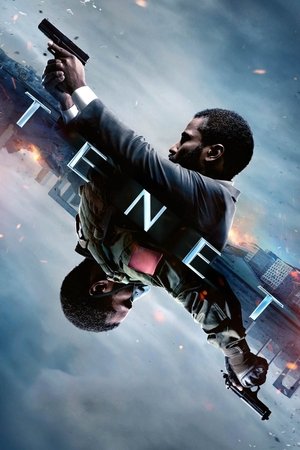
TENET(2020)
Written by: Christopher Nolan
Genre: Sci-Fi
Title: Tenet
Written by: Christopher Nolan
Draft date: Not specified
LOGLINE
A CIA operative, declared dead after a botched extraction at a Kiev opera siege, is recruited into a shadowy organization combating a temporal cold war and must infiltrate the inner circle of a dying Russian oligarch who is brokering weapons from the future capable of inverting the entropy of the entire world.
| Very Poor | Poor | Fair | Good | Excellent | |
|---|---|---|---|---|---|
| PREMISE | ✓ | ||||
| STRUCTURE | ✓ | ||||
| CHARACTER | ✓ | ||||
| CONFLICT | ✓ | ||||
| DIALOGUE | ✓ | ||||
| PACING | ✓ | ||||
| TONE | ✓ | ||||
| ORIGINALITY | ✓ | ||||
| LOGIC | ✓ | ||||
| CRAFT | ✓ |
| Strong Pass | Pass | Consider | Recommend | Strong Recommend | |
|---|---|---|---|---|---|
| Overall | ✓ |
Genre: Sci-Fi, Thriller
Sub-genre: Espionage Thriller, Action Adventure, Temporal Thriller
Keywords: Espionage, Time Manipulation, Arms Dealing, Male Protagonist, Entropy, Cold War, Oligarch, Global Threat, Heist, Temporal Pincer, Dead Man's Switch, Foreign Locale, Ensemble Cast, Abusive Marriage, Art Forgery
MPA Rating: R (sustained gun violence, physical abuse of a woman, torture, strong language including multiple uses of "fuck," intense thematic material)
Budget Tier: Ultra High ($100M+): Extensive global locations (Kiev, Mumbai, Oslo, Tallinn, Amalfi Coast, Vietnam, Siberia, Barents Sea), large-scale practical action sequences including a crashing transport plane, highway convoy ambush, military assault on a ruined city, catamaran sailing, helicopter sequences, extensive VFX for reversed-entropy physics, massive extras, period-free but logistically enormous.
Pages: 147
Time Period: Present over approximately 3–4 weeks, with significant inverted-timeline sequences replaying events backwards across several days.
Locations: Approximately 15% Kiev (opera house siege, rail yards), 10% Mumbai (streets, high-rise house, yacht club, ferry), 15% Oslo (freeport, airport, hotel, opera house roof, war memorial), 20% Tallinn (streets, freeport, highway chase), 10% Amalfi Coast (dock, yacht, restaurant, open ocean sailing), 10% Vietnam coast (yacht, speedboat), 10% Stalsk-12/Siberia (ruined city, tunnels, hypocentre cavern, barren plain), 5% miscellaneous (London club, school, wind farm, icebreaker, shipping container). Requires a crashable transport plane on a real or constructed taxiway, a freeport interior with pentagon-vault architecture, a superyacht with helicopter pad, America's Cup racing yachts, multiple military helicopters, and a massive ruined Soviet city set with underground cavern.
Lead: Male, early-to-mid 30s, Black, physically formidable and resourceful CIA operative who is quick-thinking, principled, and emotionally restrained. Unnamed throughout — referred to only as "the Protagonist."
Comparables: Inception (Christopher Nolan's own high-concept thriller built on a single speculative premise requiring elaborate exposition and multi-layered simultaneous climaxes), Mission: Impossible – Fallout (globe-trotting espionage with escalating physical set pieces and a ticking-clock nuclear threat), Primer (time-manipulation mechanics driving plot complexity and demanding active audience participation), The Bourne Ultimatum (amnesiac-adjacent protagonist navigating opaque intelligence hierarchies while discovering his own role in the conspiracy).
SYNOPSIS
At a Kiev opera house, a CIA operative known only as THE PROTAGONIST (30s) infiltrates a terrorist siege disguised as Ukrainian SWAT, extracting a WELL-DRESSED MAN and recovering a mysterious black metallic object. The siege conceals planted bombs intended to kill the audience. The Protagonist saves civilians by lobbing the bombs into empty VIP boxes, but upon escape, his team is captured by private Russians. Tortured in a rail yard, the Protagonist bites a cyanide pill rather than betray his colleagues — but the pill is a sedative.
He awakens on a boat at sea, where FAY (adult), his handler, explains the pill was a loyalty test. Fay introduces the concept of "Tenet" — a word and gesture granting access to a secret organization fighting a threat beyond national borders. After recuperating alone in a wind turbine, the Protagonist reaches a laboratory where BARBARA (adult), a scientist, demonstrates inverted bullets — ammunition whose entropy runs backwards, making them appear to travel in reverse. Barbara explains these objects are manufactured in the future and streaming back through time, and that the inverted material they are finding may represent the detritus of a coming war.
Tracing the bullets' metallurgy to India, the Protagonist contacts an asset and meets NEIL (30s), a charming, physics-educated operative, at the Bombay Yacht Club. Together they infiltrate the Mumbai high-rise of arms dealer SANJAY SINGH (middle-aged) via bungee-assisted wall-running. The Protagonist discovers Sanjay is a front for his wife, PRIYA SINGH (adult), who reveals that the real dealer of the inverted rounds is Russian oligarch Andrei Sator, who functions as a broker between the present and the future.
In London, British intelligence contact SIR MICHAEL CROSBY (middle-aged) briefs the Protagonist on Sator's origins in the secret Soviet city of Stalsk-12 and suggests approaching him through his estranged wife, KAT BARTON (30s), an art expert at the auction house Shipley's. Crosby provides a forged Goya drawing as leverage — Kat once authenticated a fake painting by a forger named Arepo, and Sator holds this over her to control her and limit her access to their son, MAX (child). The Protagonist meets Kat, and they form an uneasy alliance: he will destroy the incriminating drawing if she introduces him to Sator.
The Protagonist and Neil break into the Oslo Freeport by crashing a transport plane into its rear wall — a scheme executed by MAHIR (adult) and ROHAN (adult). Inside the Rotas vault, they encounter two masked figures — one moving forwards, one backwards — and barely survive. Neil unmasks the forward figure but conceals its identity. The Protagonist later learns from Priya that Sator has built a "turnstile" — a machine for inverting people — inside the vault, and that the two figures were the same person passing through the machine.
On the Amalfi Coast, the Protagonist ingratiates himself with Sator by saving his life after Kat releases Sator's sailing harness. SATOR (50s), cold-eyed and menacing, agrees to partner on stealing a section of plutonium-241 moving through Tallinn — which is actually a piece of a nine-part "algorithm" capable of inverting the world's entropy. The Protagonist witnesses Sator's casual brutality toward his crew and endures a beating from Sator's enforcer, VOLKOV (adult).
In Tallinn, Neil and the Protagonist execute an elaborate highway heist, stealing the algorithm piece from a nuclear convoy using coordinated trucks and a fire engine. But Sator, running a "temporal pincer movement" — attacking from both temporal directions simultaneously — already knows their moves. An inverted Sator in an Audi, driving backwards through traffic, holds Kat at gunpoint, forcing the Protagonist to hand over the algorithm. The Protagonist lies about where the piece is hidden, but Sator shoots Kat with an inverted bullet, causing spreading inverse radiation.
To save Kat, the Protagonist passes through the Tallinn turnstile, becoming inverted. He tracks the backwards-moving events, plants a bug in the orange case, and learns Sator mentioned an "algorithm" and a "hypocentre." The inverted Sator sets the Protagonist's crashed car on fire, but the reversed heat transfer causes hypothermia instead of burns. Neil and IVES (adult), a paramilitary sergeant, rescue both the Protagonist and Kat, placing them in a Rotas shipping container bound for Oslo.
During the inverted journey, the Protagonist's arm wound worsens. Neil explains the algorithm: nine sections hidden in nuclear facilities by a future scientist who killed herself to prevent its reassembly. If activated, it would invert Earth's entropy, annihilating everything. They reach Oslo, and the Protagonist re-enters the freeport during the earlier plane crash — now understanding he was the masked backwards figure who fought his earlier self. He passes through the Oslo turnstile, re-inverting to move forwards again, and escapes with Kat in a stolen ambulance.
The Protagonist confronts Priya, who reveals Sator now possesses all nine algorithm sections and that she deliberately engineered events so Sator would assemble them — making retrieval possible. Kat reveals Sator has inoperable pancreatic cancer and intends to kill himself, triggering a dead man's switch that would transmit the algorithm's location to the future, activating it. The moment he will choose is the 14th — the day of the Kiev opera siege — when Kat took Max ashore from the yacht in Vietnam, giving Sator his last golden moment.
Aboard an icebreaker in the Barents Sea, the Protagonist organizes a two-pronged operation: a temporal pincer assault on Stalsk-12 to extract the algorithm from its dead drop before the hypocentre detonation seals it, while Kat returns to the yacht to prevent Sator from killing himself prematurely. COMMANDER WHEELER (adult) leads the inverted Blue team; Ives leads the forwards Red team with the Protagonist in a splinter unit targeting the underground capsule.
The battle at Stalsk-12 unfolds with simultaneous forward and inverse combat. Kat boards the yacht and distracts Sator with feigned reconciliation, but when she sees the tender approaching with her earlier self and Max, she cannot maintain the charade. She shoots Sator and slides his body off the yacht. Underground, Volkov nearly drops the algorithm into the bore hole, but a dead Tenet soldier — wearing a familiar talisman — rises to absorb Volkov's bullet, saving the Protagonist. Neil, having re-inverted through the Stalsk-12 turnstile, drives a truck that winches the Protagonist and Ives out of the collapsing hypocentre seconds before the detonation seals it.
Ives divides the algorithm into three pieces, giving one to each of them to hide separately, accepting that anyone who has seen it should eventually end their own life to protect the secret. Neil reattaches his piece to the Protagonist's, preparing to go back through the turnstile one final time — to be the soldier who opened the locked gate and took the bullet for the Protagonist. The Protagonist recognizes the talisman on Neil's backpack. Neil reveals the Protagonist himself recruited Neil years from now, and that the entire operation is the Protagonist's own temporal pincer. Neil walks toward the Chinook, saying it is, for him, the end of a beautiful friendship.
In London, Priya moves to assassinate Kat outside Max's school, but the Protagonist — having received Kat's phone message from the future via the dumb phone he gave her — kills Priya's driver and then Priya herself. He watches Kat collect Max from school, the boy taking his mother's hand as they walk away.
COMMENTS
PREMISE — Excellent
The core concept — a temporal cold war fought with entropy-inverting technology, funneled through the espionage-thriller framework of one operative infiltrating a dying oligarch's operation — is genuinely ambitious. It grafts hard-science speculation onto the bones of a Bond film, asking whether cause and effect are negotiable while maintaining a ticking-clock urgency anchored in Sator's suicidal dead man's switch. The premise generates inherent tension at every level: the Protagonist cannot kill the villain without ending the world, the technology he fights with is the same technology he is trying to suppress, and the people directing him deliberately withhold information as a strategic necessity. The central dramatic question — can the algorithm be retrieved before Sator triggers annihilation — is clear, though the thematic question underneath it (does determinism negate heroism?) gives the material intellectual weight beyond its action-film surface. Kat's domestic imprisonment provides emotional grounding that the high-concept machinery needs, and Sator's origin in Stalsk-12 links his personal nihilism to the environmental catastrophe motivating the future's attack, giving the antagonist a coherent philosophical position. The match between concept and world is strong: the globe-trotting espionage structure allows each location to serve as a tutorial in escalating inversion mechanics, so that exposition and spectacle advance together. Compared to the territory of Inception or Primer, the premise occupies a unique niche — less intimate than either, but more physically expansive and politically charged.
STRUCTURE — Good
The architecture is disciplined and proportionally sound, with the Kiev opera siege and its aftermath functioning as an extended prologue that establishes stakes, tradecraft, and the first glimpse of inverted physics by page 7. The catalyst — Fay's recruitment speech and the introduction of the word "Tenet" — lands at page 10 (roughly 7%), slightly early but effective given the density of world-building that follows. The Protagonist commits to the central mission around page 23 when Priya names Sator and directs him to infiltrate, placing the break into the main conflict at approximately 16%. The midpoint arrives with the Tallinn heist and its catastrophic reversal (75–86), which at roughly 55% of the page count functions as a proper midpoint pivot: the Protagonist's plan succeeds tactically but fails strategically, and Kat is mortally wounded. The "all is lost" beat — the Protagonist trapped in a burning car, set alight by Sator (98) — lands at 67%, slightly early, but the subsequent Oslo re-entry and confrontation with Priya (109–112) extends the low point before the final campaign is organized. The climax at Stalsk-12 (120–142) begins at 82% and runs through simultaneous timelines with impressive formal control. Every subplot — the forged drawing, Kat's custody struggle, Neil's hidden history — connects to the throughline. The principal structural weakness is the density of the second quarter (pages 25–60), where exposition about Kat, Crosby, the freeport, and the Oslo heist stacks sequentially without a strong enough escalation of personal threat to the Protagonist, creating a stretch where momentum depends more on novelty than danger.
CHARACTER — Fair
The Protagonist is defined more by competence, principle, and reaction than by interiority — a deliberate choice signaled by his lack of a name, but one that places significant burden on surrounding characters to generate emotional investment. His backstory is limited to CIA training and the loyalty test (8–10), his want is externally assigned (stop Sator), and his internal need — suggested by his growing attachment to Kat — never produces a moment where he must choose between mission success and personal feeling, because the two conveniently align. His arc resolves with the realization that he himself is the architect of Tenet (148), which is intellectually satisfying but emotionally muted because it arrives through Neil's exposition rather than through a visible transformation. Sator is the most fully realized character: his origin in Stalsk-12 (65–66), his philosophy of nihilistic entitlement (133–136), and his domestic cruelty (66–68, 75–77) create a villain whose menace is psychological as much as physical. Kat's arc — from controlled wife to woman who shoots her husband — is the most emotionally affecting trajectory, and her confession about the offer to relinquish Max (32, 117–118) provides the material's most vulnerable human moment. Neil functions as a charming exposition vehicle whose emotional payoff is backloaded into the final scene (144–146), and while the revelation is moving, it depends on the accumulated implication of scenes where Neil knows more than he should rather than on demonstrated emotional depth throughout. The supporting cast — Priya, Ives, Crosby, Mahir — are functional and well-differentiated but thin by design.
CONFLICT — Good
The central external conflict — retrieving the assembled algorithm before Sator's death triggers its activation — is formidable and escalates effectively from the relatively contained opera siege to the global-scale Stalsk-12 assault. The unique complication of the dead man's switch (115) raises stakes elegantly: the villain cannot simply be killed, forcing the Protagonist into a delicate simultaneous operation. Scene-level conflict is consistently present and physically inventive, from the backwards car chase in Tallinn (80–82) to the reversed fistfight in the Rotas vault (47–48). The internal conflict is less developed. The Protagonist's tension between following orders and protecting Kat is stated (93) but never reaches a true breaking point — he consistently finds ways to do both. The most potent internal conflict belongs to Kat, whose struggle between survival instinct and maternal love culminates in her inability to maintain the deception on the yacht (139–140). The philosophical conflict between the Protagonist and Sator — whether one generation has the right to sacrifice another — is articulated in the tunnel exchange (133–136), though it arrives late and compresses a complex argument into a few pages of dialogue delivered under duress.
DIALOGUE — Fair
Dialogue serves two masters — exposition and characterization — and manages the balance unevenly. The Protagonist's voice is defined by dry understatement ("Complex," "How would you like to die?" / "Old," at 58), and his exchanges with Neil have a lived-in banter that suggests deeper history even before the reveal confirms it (the Diet Coke exchange at 19). Sator's dialogue is the most texturally distinct: his threat about cutting a throat "in the middle, like a hole" (58) is chillingly specific, and his philosophical monologues carry the cadence of a man who has rehearsed his justifications. The challenge is that enormous quantities of conceptual exposition must be delivered conversationally — Barbara's shooting-range tutorial (13–16), Neil's shipping-container lecture on entropy (100–101), Wheeler's inversion briefing (94–95) — and while these scenes are structured as dialogues rather than lectures, the characters often function as interchangeable explainers. Barbara, Priya, and Neil each take turns articulating the same conceptual framework from different angles, and their voices during these passages blur. Subtext is strongest in the Kat-Sator scenes: their exchange about despair versus anger (76, 140) carries genuine emotional weight beneath its surface meaning. The weakest dialogue moments are the catchphrase repetitions — "We live in a twilight world" / "No friends at dusk" — which, used across multiple scenes (3, 17, 70), become mechanical rather than atmospheric.
PACING — Fair
The first thirty pages move with propulsive efficiency, establishing the Protagonist's skill set, the concept of inversion, and the path to Sator without a wasted scene. The middle section (30–70) decelerates as the Protagonist navigates social infiltration — the restaurant with Kat (30–34), the Amalfi sailing sequence (60–63), the yacht scenes (56–70) — which are necessary for character but lack the physical urgency of the surrounding action. The Tallinn heist (75–86) is a masterclass in sustained tension, intercutting four simultaneous threads with countdown precision. The inverted return through Tallinn (95–98) and the Oslo re-entry (104–107) maintain momentum through disorientation and novelty. The Stalsk-12 climax (120–142) intercuts three timelines — Red team, Blue team, and the yacht — with metronomic countdown watches, generating the material's most sustained suspense. The epilogue (146–148) is brisk and satisfying. The principal pacing issue is the stretch between the Oslo freeport heist and the Tallinn ambush (roughly pages 50–73), where the Protagonist's investigation into Sator proceeds through a series of conversations — with Priya, Crosby, Kat, and Sator — that, while individually engaging, create a cumulative sense of strategic discussion rather than forward motion.
TONE — Good
The tone is calibrated to a narrow register — high-stakes espionage filtered through cerebral science fiction — and maintains that register with impressive consistency across 147 pages. The material treats its physics with grave seriousness while allowing the Protagonist's dry wit to provide pressure-release valves ("I don't think 'bungee-jumpable' is a word," 19; "Is that Whitman? It's pretty," 70). Sator's domestic violence scenes (66–68, 75–77) are the tonal outliers — not because they are inappropriate, but because their raw emotional brutality operates at a register the surrounding material rarely matches, making them feel imported from a different, more intimate thriller. The Stalsk-12 battle (120–142) pushes toward war-film spectacle, and the simultaneous intercutting with Kat's quiet seduction scene on the yacht creates a tonal juxtaposition that is intentional and effective — the macro and micro scales of the same threat. The Neil farewell (144–146) introduces genuine sentiment without tipping into sentimentality, which is tonally the most difficult moment and is handled well. The one area where tone becomes uncertain is the conceptual exposition: scenes like Barbara's archive tour (17) and Neil's grandfather-paradox discussion (102) aim for wonder but occasionally land as lecture, and the distinction between those outcomes is often a matter of performance rather than anything resolvable on the page.
ORIGINALITY — Good
The core concept — entropy inversion as both weapon and travel mechanism — is distinct from conventional time-travel fiction. Where Primer explores temporal paradoxes through micro-scale personal consequences and Inception builds nested realities with clear spatial rules, this material inverts the physical world itself, creating action sequences whose visual grammar (bullets returning to guns, explosions contracting, cars driving backwards) has no direct cinematic precedent. The espionage chassis is familiar — the globe-trotting infiltration of a Bond film, the heist mechanics of a Mission: Impossible entry — but the execution of set pieces within inverted physics is genuinely novel: the Tallinn highway chase with forward and backward vehicles sharing the road, the Stalsk-12 temporal pincer with simultaneous Red and Blue teams, and the doubled turnstile interrogation where Sator questions the Protagonist from two temporal directions. The protagonist-as-anonymous-operative concept, while intellectually interesting, is less original in practice — it evokes the functional blankness of Jason Bourne without the compensating amnesia mystery that gave that franchise its emotional engine. The Neil reveal — that the Protagonist's future self recruited him — echoes the bootstrap paradoxes of Twelve Monkeys and Interstellar, though the emotional execution here, with Neil knowingly walking toward his own death, gives the trope a distinctive melancholy.
LOGIC — Fair
The internal rules of inversion are established carefully and followed with notable consistency — inverted lungs cannot process normal air (94), inverted fire causes freezing (98), inverted bullets cause spreading radiation (16), and the proving window prevents paradoxical entry into the turnstile (92). The temporal pincer logic holds: Sator's foreknowledge of the Tallinn ambush is explained by his inverted half observing outcomes and communicating them (90), and the doubled interrogation scene (83–88) replays the same events from both temporal perspectives with precise correspondence. Two logic gaps merit attention. First, the mechanism by which Sator's dead man's switch works is described (115) but its specifics remain vague — a "simple email burst" from a fitness tracker seems insufficiently reliable for a plan to end the world, and no scene addresses what happens to the switch when Kat kills Sator before the algorithm is secured (141). Second, the Protagonist's ability to drive an inverted car competently enough to tail the Mercedes through traffic (96–97) seems inconsistent with Wheeler's warning that "friction and wind resistance are reversed" and flying a plane would be impossible (95). The grandfather paradox — whether destroying the past destroys the future — is explicitly flagged as unresolved (102), which is honest but leaves the antagonists' motivation resting on a belief the material acknowledges may be irrational.
CRAFT — Good
The writing is muscular and precise, favoring terse action description and brisk scene transitions that maintain velocity across a dense narrative. Character introductions are efficient if occasionally perfunctory — Sator is introduced with "cold eyes and a thin beard" (57), which is adequate but not distinctive, while the Protagonist's introduction (catching a bullet casing with his eyes closed, 2) is kinetically memorable. The intercut briefing sequences — Kat's exposition about the freeport spliced with Neil's reconnaissance and the Protagonist's planning (36–40) — demonstrate sophisticated control of information flow, parceling out logistical detail across three timelines without confusion. Action description is vivid and spatial: the Stalsk-12 assault coordinates Red team, Blue team, and the yacht across dozens of pages with countdown watches providing temporal anchoring (120–142). The weakest craft element is the handling of the turnstile interrogation (83–88), which replays the same dialogue twice from different perspectives — a necessary structural choice, but one that creates eight pages of near-repetition that reads as redundant on the page, whatever its value on screen. Formatting is clean throughout, with consistent use of continuous sluglines for the complex action sequences. The few instances of descriptive writing that rise above functional — "the Protagonist pulls up his collar and walks into the snow" (146) — are effective precisely because of their restraint against the surrounding technical density.
OVERALL — Recommend
Tenet is a globe-spanning science-fiction espionage thriller about a nameless CIA operative who must infiltrate a dying Russian oligarch brokering entropy-inverting technology from the future before the villain can trigger a device that would annihilate the world by reversing time itself. The material's greatest achievement is its action-sequence design: the Tallinn highway chase, the Oslo freeport heist, and the Stalsk-12 temporal pincer are conceived with extraordinary spatial and temporal ingenuity, creating set pieces that function as both spectacle and logical proof-of-concept for the inversion mechanics. Craft and Structure are the strongest categories — the intercutting is precise, the rules are consistent, and the pacing of the final forty pages is relentless. The most significant weakness is Character: the Protagonist's deliberate anonymity and emotional restraint place the burden of feeling onto Kat and Neil, and while both deliver — Kat's arc is affecting, Neil's farewell is genuinely moving — the central figure remains more admirable than knowable, which limits the emotional stakes of even the most inventive action. Dialogue is functional and often witty but is stretched thin by the sheer volume of conceptual exposition it must carry, and the material's middle section sags under the weight of sequential briefing scenes. The premise is original in its physics and bold in its scale, though the espionage framework it inhabits is conventional enough to feel like protective coloring around a more radical idea. The result is a formidably constructed, intellectually ambitious thriller whose mechanical precision occasionally outpaces its emotional reach.
Get this level of coverage for your screenplay
Every coverage includes 10 category ratings, an overall recommendation, and detailed analysis — powered by the same methodology used by talent agencies and literary managers.
Movie data provided by TMDB