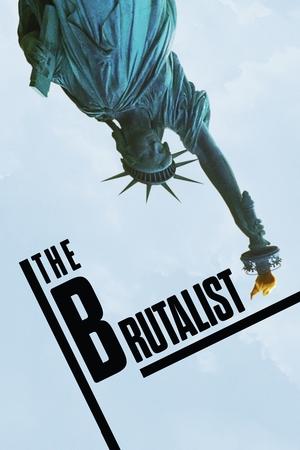
THE BRUTALIST(2024)
Written by: Brady Corbet + Mona Fastvold
Draft date: March 12, 2023
Genre: Drama
Title: The Brutalist
Written by: Brady Corbet + Mona Fastvold
Draft date: March 12, 2023
LOGLINE
A Hungarian Jewish architect, malnourished and traumatized after surviving a concentration camp, emigrates to 1940s Philadelphia where he catches the eye of a powerful industrialist who commissions him to build a monumental community center — a project that becomes an obsession binding the two men together through admiration, exploitation, and devastation.
| Very Poor | Poor | Fair | Good | Excellent | |
|---|---|---|---|---|---|
| PREMISE | ✓ | ||||
| STRUCTURE | ✓ | ||||
| CHARACTER | ✓ | ||||
| CONFLICT | ✓ | ||||
| DIALOGUE | ✓ | ||||
| PACING | ✓ | ||||
| TONE | ✓ | ||||
| ORIGINALITY | ✓ | ||||
| LOGIC | ✓ | ||||
| CRAFT | ✓ |
| Strong Pass | Pass | Consider | Recommend | Strong Recommend | |
|---|---|---|---|---|---|
| Overall | ✓ |
Genre: Drama
Sub-genre: Period Drama, Immigration Drama, Character Study
Keywords: Immigrant Experience, Holocaust Survivor, Architecture, Patron-Artist Relationship, Jewish Identity, Post-War America, Power Dynamics, Sexual Assault, Addiction, Family Separation, Displacement, Male Protagonist, European Theme, Foreign Locale, Based on Original Material, Ensemble Cast, Artist-Patron, Class Divide
MPA Rating: R (sexual content including a rape scene, graphic drug use with syringes, nudity, strong language, and disturbing thematic material)
Budget Tier: High ($40M–$100M) — period production spanning 1947–1980 across multiple countries (Philadelphia, New York City, Italian marble quarries, Venice), large cast, period vehicles and wardrobe, construction site sets at various stages of completion, architectural models, ship interiors, and a train derailment sequence.
Pages: 130
Time Period: 80% spans 1947–1960 over approximately 13 years / 20% in 1980 Venice epilogue and brief 1947 prologue scenes.
Locations: Approximately 40% in and around the Van Buren estate and construction site in Doylestown, Pennsylvania (requires a large estate, forest trails, a pond, and progressive stages of a brutalist construction site). 25% in Philadelphia interiors (furniture showroom with backroom sleeping quarters, synagogue, church shelter, tenement apartment, offices, jazz bar). 10% in New York City (drafting office, hospital, street exteriors). 10% in Carrara, Italy (working marble quarry, sculptor's atelier). 5% on a transatlantic ship (cramped lower deck, stairwell, open deck with Statue of Liberty). 5% in Venice (Biennale pavilion interiors). 5% miscellaneous (brothel, diner, bus interiors, train depot, countryside roads). Period requirements span 1947–1980 with corresponding vehicles, wardrobe, and set dressing. The train derailment is shot at extreme distance and could be achieved with miniatures or VFX.
Lead: Male, ages from late 30s to approximately 70, Hungarian Jewish, malnourished with a badly broken nose upon introduction, intellectual and stoic with flashes of passionate intensity, an architect of international reputation reduced to poverty.
Comparables: The Pianist (2002) — a European Jewish artist's survival through and beyond the Holocaust, the indignity of dependence on others' mercy. Phantom Thread (2017) — an obsessive male artist entangled with a controlling patron figure, power dynamics within intimate relationships, period setting. There Will Be Blood (2007) — an American industrialist whose generosity masks domination, a decades-spanning portrait of ambition and exploitation. The Fountainhead (1949) — an uncompromising architect battling commercial and institutional forces to realize a singular vision.
SYNOPSIS
In the late 1940s, LÁSZLÓ TOTH (late 30s), a malnourished Hungarian Jewish architect with a badly broken nose, arrives in America aboard an immigrant ship. Voiceover from his wife ERZSÉBET reveals she and László's niece ZSÓFIA (teenager), a traumatized young woman who has gone mute, are alive but stranded near the Austrian border. László processes through a HIAS center in New York, visits a brothel with a HUNGARIAN REFUGEE companion, and takes a bus to Philadelphia where his cousin ATTILA (40s), who now goes by "Miller" and runs a furniture shop with his American wife AUDREY (20s), embraces him with the news that Erzsébet is alive.
László settles into a backroom cot at Attila's shop and begins designing modernist furniture that Audrey finds unmarketable. He frequents a synagogue and a church soup kitchen where he befriends GORDON (30s), a Black veteran and single father with a young son, WILLIAM. One night, László and Audrey share an uncomfortably intimate dance. After Audrey tells Attila that László made a pass at her, and after a commission for HARRY LEE VAN BUREN (30s) to renovate his father's study goes unpaid due to property damage during installation, Attila expels László from the shop.
László ends up homeless at the church shelter, working construction alongside Gordon, and secretly using barbiturates. Months later, HARRISON LEE VAN BUREN SR. (50s), the wealthy industrialist, tracks László down after a LOOK Magazine feature showcases the library László designed. Van Buren pays the owed money, invites László to his Christmas party, and introduces him to attorney MICHAEL HOFFMAN (40s) and his wife MICHELLE (40s), who offer to help bring Erzsébet and Zsófia to America. That evening, Van Buren announces his plan to build a community center honoring his late mother Margaret and commissions László to design it.
László moves into the Van Buren guest house and develops an ambitious brutalist design: a trapezoidal complex with a gymnasium, auditorium, library, and chapel featuring a marble altarpiece from Carrara where sunlight forms a cross. Construction supervisor LESLIE WOODROW (40s) and Harry Lee manage logistics while László clashes with cost-cutting consultant JIM SIMPSON. Van Buren secures municipal support from MAYOR KINNEY. László forfeits his design fee to cover budget overruns, and Harry Lee grows increasingly hostile, warning László that the family merely "tolerates" him.
Years pass. Erzsébet and Zsófia finally arrive at Philadelphia's 30th Street Station. Erzsébet is in a wheelchair from osteoporosis caused by famine. The family settles into the guest house. Erzsébet takes a journalism job in New York with Van Buren's help, while Zsófia eventually marries an Orthodox man, BINYAMIN, and announces plans to emigrate to Israel. Van Buren invites László to Carrara to select marble with Italian mason ORAZIO (50s). That night, after a celebration, Van Buren discovers László incapacitated from heroin and rapes him, then acts as though nothing happened the next morning.
Back in America, László's behavior deteriorates. He fires Gordon, fights with Jim Simpson, and argues bitterly with Erzsébet during a car ride. A catastrophic train derailment destroys marble shipments, and Van Buren suspends the project and dismisses the crew. László smashes his architectural model. Time passes. László works as a draftsman at a New York firm while Erzsébet writes a women's column. When insurance money comes through, Van Buren rehires László, but László has introduced Erzsébet to his heroin, and she nearly dies from an overdose. In the hospital, she tells László she is leaving for Israel to be near Zsófia.
Erzsébet makes a final visit to the Van Buren estate, confronting Harrison at dinner and calling him a rapist in front of his children and guests. Harry Lee physically drags her out. Van Buren disappears into the night. A search party combs the unfinished institute and finds something in the chapel where sunlight forms a cross on the marble altarpiece.
An epilogue set at the 1980 Venice Architecture Biennale shows an elderly László in a wheelchair, pushed by a middle-aged Zsófia, now speaking again. Zsófia delivers a speech revealing that László survived Buchenwald, Erzsébet survived Dachau, and that the Van Buren institute — completed in 1973 — reimagined the dimensions of concentration camp cells with soaring glass ceilings above them, connecting representations of both camps so that László and Erzsébet "would never be apart again."
COMMENTS
PREMISE — Excellent
The premise situates a brilliant, displaced artist at the mercy of an American patron whose generosity is indistinguishable from control — a dynamic that transforms a commission into a decades-long psychodrama about power, dependency, and survival after the Holocaust. László Toth is uniquely suited to this conflict: his genius makes him valuable, his displacement makes him vulnerable, and his pride makes him incapable of the deference his situation demands. The central dramatic question — whether László can complete his masterwork without being destroyed by the man financing it — gains force from the historical weight pressing on every interaction. Van Buren functions as both benefactor and predator, and the premise draws its tension from the impossibility of separating the two roles. Thematically, the material asks whether art can redeem suffering or merely aestheticize it, and whether the immigrant's experience in America is liberation or a subtler form of captivity. The architectural project serves as a concrete (literally) manifestation of these abstractions, giving the premise a structural spine that most character studies lack. Compared to Phantom Thread's artist-patron entanglement or There Will Be Blood's portrait of American power corrupting everything it touches, this premise distinguishes itself by filtering those dynamics through the specific wound of the Holocaust and the immigrant experience.
STRUCTURE — Fair
The narrative divides into two titled parts and an epilogue, spanning 1947 to 1980, and this tripartite architecture mirrors the construction-interruption-completion of László's building. The inciting incident — Van Buren's discovery of László at the construction site and subsequent lunch (34–38) — arrives at roughly 27% of the page count, which is late for a catalyst but appropriate given how much essential groundwork the first movement lays about László's displacement, addiction, and relationship to Attila. The midpoint is the sexual assault in Carrara (109), which lands at approximately 84% — far too late to function as a traditional midpoint but clearly the fulcrum on which the entire second half pivots. The structural challenge is that Part Two, beginning at page 68, must compress Erzsébet's arrival, the Carrara trip, the assault, the train derailment, László's professional collapse, his drug-sharing with Erzsébet, her overdose, and her confrontation with Van Buren into roughly sixty pages. This compression causes the final third to move at a pace that occasionally feels like synopsis rather than dramatized action — the train derailment (96), for instance, is observed only from extreme distance and its emotional aftermath is abbreviated. The epilogue at the Biennale (127–129) provides thematic resolution through Zsófia's speech, elegantly recontextualizing the entire building as a memorial to the camps, but it relies heavily on exposition delivered in monologue form rather than dramatic revelation. The first part's patient, scene-by-scene development of László's circumstances is the structural high point; the second part's density is its vulnerability.
CHARACTER — Excellent
László is a fully realized protagonist whose arc traces from displaced pride through creative fulfillment to exploitation-induced collapse. His backstory is conveyed economically through physical detail (the broken nose, the malnourishment) and behavioral cues (the failed pickpocket attempt on the trolley, page 15; the reflexive violence when woken, pages 3, 30) rather than expository speeches. His want — to build — and his need — to reckon with trauma he cannot articulate — diverge convincingly throughout. Van Buren is a formidable antagonist precisely because his villainy operates within a framework of genuine appreciation: his rhapsodic monologue about his grandparents (46–48) reveals a man who weaponizes generosity, and his assault of László (109) is devastating because of the intimacy that preceded it. Erzsébet is the most vivid supporting character, her Oxford-educated wit and physical fragility creating a figure who is simultaneously László's conscience and his equal — her confrontation at the Van Buren estate (122–124) is the most dramatically powerful scene in the material. Gordon functions as László's moral counterweight, and his quiet integrity is well-established (32–34, 89), though his dismissal by László (113) deserves more aftermath than it receives. Zsófia's arc from silence to speech, culminating in her Biennale address, is structurally elegant but emotionally thin — her muteness means she exists primarily as a symbol rather than a character until the final pages. Harry Lee's line "We tolerate you" (91) crystallizes his function efficiently.
CONFLICT — Good
The central external conflict — László's struggle to complete the Van Buren institute against financial obstacles, sabotage, and his patron's predatory control — is formidable and escalates through clearly defined obstacles: the property damage dispute (30–31), Jim Simpson's cost-cutting interference (82–85), the train derailment (96–98), and Van Buren's suspension of the project (98–99). The internal conflict is László's inability to reconcile his artistic ambition with his dependence on a man who has violated him, compounded by an addiction that both numbs his trauma and accelerates his self-destruction. The scene-level conflict is strongest in ensemble confrontations — the trench walk-through with Jim Simpson (82–84), Erzsébet's dining room accusation (122–124) — where competing agendas collide in real time. The one area where conflict thins is the post-assault period: László never directly confronts Van Buren about the rape, and while this silence is psychologically authentic, it means the most charged conflict between them is deferred to Erzsébet's proxy confrontation. The material would benefit from at least one scene where László and Van Buren are alone together after Carrara, where the audience can feel what is not being said.
DIALOGUE — Good
The dialogue is distinguished by its precision in differentiating characters through syntax and register. László's English evolves across the timeline — early scenes feature careful, slightly formal constructions ("I do not permit my people from home to see me as a beggar," page 33) that gradually loosen — while Van Buren speaks in polished, self-regarding cadences that reveal his need to perform even in private ("I'd rather be alive at 18% than dead at the prime rate, Leslie," page 62). Erzsébet's dialogue is the sharpest in the ensemble: her correction of Van Buren's metaphor — "a mural's decorative; nothing to do with the foundation" (80) — is a line that does triple duty as wit, expertise, and warning. The subtext peaks in the Carrara assault scene (109), where Van Buren's whispered cruelties — "You're a tramp. You're a lady of the night" — weaponize the power imbalance that every prior scene has established. Harry Lee's venomous "We tolerate you" (91) is the most efficient piece of character-revealing dialogue in the draft. The weakest dialogue appears in László's town hall speech (65–66), which reads as eloquent essay rather than spoken address and strains the character's established difficulty with English, though the time lapse partly justifies the improvement.
PACING — Fair
The first seventy pages move with deliberate patience, building László's world through accumulation of detail — the soup kitchen, the trolley, the synagogue, the furniture shop — and this measured rhythm pays dividends when Van Buren enters and accelerates the action. The presentation sequence (59–62) is a high point of pacing, intercutting László's nervous precision with Van Buren's mercurial reactions to sustain tension across what is essentially a meeting. The intermission at page 68 is well-placed, creating a natural breath before the second half's escalating crises. However, Part Two attempts to cover seven or more years in sixty pages, and several significant events — the train derailment (96), Gordon's firing (113), Erzsébet's job in New York, László's years at Heywood — pass in montage or brief scenes that deny them the dramatization their emotional weight demands. The sequence from Erzsébet's overdose (119) through her hospital conversation (120) to her confrontation at the estate (121–124) moves with extraordinary urgency and control, demonstrating what the pacing achieves when given room.
TONE — Good
The tone sustains a remarkable consistency across its 130 pages: elegiac but never sentimental, frank about degradation without being exploitative. The brothel scene (6–7) establishes this balance early — László's impotence is treated with humor and sadness simultaneously, and the prostitute's line "Your face is ugly" / "I know it is" sets the tonal key for the entire work. The assault in Carrara (109) is the tonal test case, and it succeeds by presenting the violence with clinical brevity while the preceding monologue — Van Buren's antisemitic rationalizations — provides the true horror. The jazz bar sequence (39–40) and the Italian party (107–108) offer necessary tonal relief, moments of genuine joy that make the subsequent suffering register more acutely. The Biennale epilogue (127–129) shifts into a more conventionally reverent register that slightly flattens the complexity of everything preceding it — Zsófia's speech, while thematically rich, adopts a eulogistic tone that smooths away the contradictions the preceding 125 pages so carefully preserved.
ORIGINALITY — Good
The architect-immigrant premise has few direct precedents in cinema, and the specific fusion of Holocaust survival narrative with American patron-artist power dynamics creates territory that neither The Pianist nor The Fountainhead occupies. Where Phantom Thread aestheticized its artist's obsessions, this material grounds László's creative vision in concrete historical trauma — the epilogue's revelation that the building's dimensions replicate concentration camp cells is a genuine conceptual surprise that retroactively transforms every construction scene. The execution distinguishes itself from comparables through its treatment of the patron-artist relationship as a vehicle for sexual violence, a dimension that films like Amadeus or Pollock avoid entirely. The narrative's most original gesture is structural: using architecture itself as the organizing metaphor, so that the building's progress, interruption, and completion mirror László's psychological state. The material's handling of László's addiction is less distinctive — the descent follows familiar beats — but its integration with the assault narrative gives it a specificity that elevates it above convention.
LOGIC — Fair
The internal logic holds with few exceptions across a complex, multi-decade timeline. The mechanism by which Van Buren locates László at the construction site (34) — having read the LOOK Magazine feature that showcased his library — is established clearly. The Displaced Persons Act is cited accurately as a vehicle for Erzsébet's immigration (44). One point of strain is László's apparent inability to find architectural work in Philadelphia for years despite his credentials, which the material attributes to anti-immigrant sentiment and language barriers but never fully dramatizes. The train derailment (96) is presented as an accident caused by the Van Buren company's own transport crew, which is logical, though the insurance resolution that restores the project (103) happens entirely off-screen and the timeline is vague. Van Buren's disappearance after Erzsébet's confrontation (125–127) implies suicide or flight but deliberately withholds confirmation — the search party "finding something" in the chapel is ambiguous in a way that is dramatically effective but logistically unclear. The Biennale speech states the institute was completed in 1973 (128), thirteen years after the events of Part Two, but no information is provided about how or under whose patronage this occurred.
CRAFT — Good
The writing operates in a mode of controlled visual specificity — action lines read like shot descriptions without being prescriptive, as in "Guided by the ocean's current beneath them; slumbering men, women, and children rock back and forth in their bunk beds" (3). Character introductions are vivid and economical: Van Buren enters "in a miserly fury" (28), Erzsébet arrives with a face that is "agonized and gaunt but her expression betrays some optimism" (69). The voice-over letters between László and Erzsébet are the draft's most distinctive craft element, layering intimate emotional content over visual montages that advance the plot — the construction materials montage under Erzsébet's letter about obtaining photographs (67–68) is particularly effective. Camera directions are frequent (ULTRA-WIDE, LONG LENS, BIRD'S-EYE VIEW) and generally serve the dramatic intent rather than cluttering the read. The dual-column HIAS translation scene (5) is a bold formatting choice that effectively conveys the overwhelming cacophony of arrival. Minor inconsistencies include missing scene numbers for the Mikveh Israel sequences (pages 95) and an apparent formatting error where "INT. MIDTOWN EAST STREET LOBBY" lacks a scene number (100). The Goethe quotation attributed to Erzsébet (4) and the Borges allusion from the party guest (46) are deployed naturally within character voice rather than as authorial imposition.
OVERALL — Recommend
The Brutalist is an epic period drama about a Hungarian Jewish architect who survives the Holocaust only to find himself at the mercy of an American industrialist whose patronage becomes indistinguishable from predation. Its strongest categories are Character and Dialogue, where the central triangle of László, Erzsébet, and Van Buren achieves a depth and specificity that sustains the material across its ambitious scope — Erzsébet's dining room confrontation and Van Buren's grandparent monologue are standout sequences that demonstrate the ensemble operating at full capacity. The Premise is inherently compelling, using architecture as both literal subject and structural metaphor in ways that give the material a conceptual density rare in biographical drama. The principal weakness is structural compression in Part Two, where the pacing cannot accommodate the density of events between Erzsébet's arrival and the epilogue, resulting in several significant narrative beats — the train derailment's aftermath, Gordon's dismissal, the years at Heywood — receiving insufficient dramatization. The epilogue's revelatory recontextualization of the building as a Holocaust memorial is a powerful conceptual stroke, though its delivery through monologue rather than dramatic action represents a tonal shift from the rigorously dramatized material that precedes it. The craft is consistently assured, the dialogue is sharply individuated, and the tone navigates harrowing material with restraint and conviction.
Get this level of coverage for your screenplay
Every coverage includes 10 category ratings, an overall recommendation, and detailed analysis — powered by the same methodology used by talent agencies and literary managers.
Movie data provided by TMDB