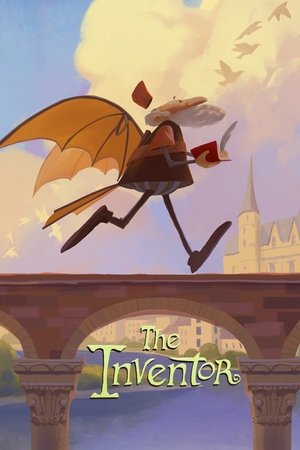
THE INVENTOR(2023)
Written by: [Not found on cover page]
Genre: Animation
Title: The Inventor
Written by: [Not found on cover page]
Draft date: Not specified
LOGLINE
In 1516, an aging polymath — painter, engineer, and anatomist — accepts an invitation from the young King of France to serve as court genius, but his obsessive quest to locate the human soul through forbidden dissection puts him at odds with the Pope, his patron, and his own failing body.
| Very Poor | Poor | Fair | Good | Excellent | |
|---|---|---|---|---|---|
| PREMISE | ✓ | ||||
| STRUCTURE | ✓ | ||||
| CHARACTER | ✓ | ||||
| CONFLICT | ✓ | ||||
| DIALOGUE | ✓ | ||||
| PACING | ✓ | ||||
| TONE | ✓ | ||||
| ORIGINALITY | ✓ | ||||
| LOGIC | ✓ | ||||
| CRAFT | ✓ |
| Strong Pass | Pass | Consider | Recommend | Strong Recommend | |
|---|---|---|---|---|---|
| Overall | ✓ |
Genre: Drama, Musical
Sub-genre: Period Drama, Biographical Drama, Animated Musical
Keywords: Renaissance, Leonardo da Vinci, Historical Figure, Mentor-Protégé, Forbidden Knowledge, Science vs. Religion, Royal Court, Animation, France, Italy, Genius, Aging, Legacy, Curiosity, Male Protagonist, Ensemble Cast, Based on True Events
MPA Rating: PG (mild comic violence, thematic elements involving dissection depicted abstractly, no strong language or sexual content)
Budget Tier: High ($40M–$100M) — extensive period settings across multiple countries, large cast, animation/live-action hybrid requiring significant VFX, elaborate set pieces including festivals, construction sites, and celestial pageants.
Pages: 110
Time Period: Primarily 1515–1519 Over Approximately 4 Years, with a framing device set circa 1550 and brief flashbacks to 1495.
Locations: 40% at Le Cloux (Leonardo's workshop/home) in Amboise, France — requiring period interiors, secret basement anatomy room, tower observatory. 20% at Amboise Castle and surrounding town — courtyard festivals, battlements, frozen river. 15% at the Vatican in Rome — papal throne room, tower with mirror apparatus, subterranean Roman bath. 10% at construction site of the Ideal City at Remorantin. 10% in French woods, alps, and travel sequences. 5% in framing device at Melzi's garret in Italy. Significant animation/mixed-media sequences throughout depicting journeys into the soul, war machine films, and celestial pageants.
Lead: Male, 62–67, Italian (European), white. Leonardo da Vinci — a brilliant, restless polymath with a white beard and intense eyes, driven by insatiable curiosity, prone to distraction and episodes of visionary fugue, physically declining with a paralyzed right arm from a stroke.
Comparables: Amadeus (1984) for its portrayal of genius misunderstood by institutional power and the tension between artistic obsession and patronage. The Man Who Knew Infinity (2015) for the dynamic between a brilliant outsider and establishment gatekeepers. Strange Magic (2015) and Coco (2017) for animated musicals built around a creative protagonist navigating cultural tradition. Shakespeare in Love (1998) for its playful, comedic tone applied to a historical artist's life.
SYNOPSIS
In a framing device set decades after the main events, GIORGIO VASARI (35), a tall, well-dressed art historian, arrives at the garret of OLD FRANCESCO MELZI (63), Leonardo da Vinci's former assistant, now an elderly man guarding mountains of Leonardo's notebooks from his greedy GRANDSON (16). Vasari wants to record the truth about Leonardo's final years for his art history book. Melzi, cantankerous and prone to dozing off, begins recounting how Leonardo left Italy for France.
In Rome, 1515, LEONARDO DA VINCI (62) uses an elaborate mirror apparatus in the Vatican's Belvedere tower to project the moon's image, studying astronomy while his two German "assistants" — spies for the Pope — secretly report his activities. Leonardo's patron GIULIANO DE MEDICI, the Pope's frail brother, warns him to stop questioning humanity's place in the cosmos. When the Germans report Leonardo's forbidden dissections to POPE LEO X, the Pope summons Leonardo and forbids his anatomical investigations, calling them blasphemy. The Pope demands Leonardo stick to painting and engineering.
When the French army defeats the Pope's forces at Marignano, the Pope demands Leonardo design war machines. Leonardo presents an animated projection showing how every weapon inevitably falls into enemy hands, escalating into mutual destruction. Impressed despite himself, the Pope commands Leonardo to create a peace offering for the victorious young KING FRANCIS I (20). Leonardo builds a mechanical bronze lion that opens its chest to spill flowers at the King's feet during peace negotiations in Bologna. Francis, enchanted, invites Leonardo to France. Leonardo declines out of loyalty to Giuliano, but when Giuliano dies shortly after, Leonardo is left without a protector and subjected to the Pope's menial tasks.
Francis writes again, offering Leonardo the title of First Painter, Engineer, and Architect to the King. Leonardo accepts and travels with his assistants MELZI (22) and ZOROASTRO (30) over the Alps to the small chateau of Le Cloux in Amboise, France, where his cook MATHURINE greets them. Leonardo enthusiastically sets up his workshop and secretly resumes his dissections, searching for the physical location of the human soul. His soul-searching manifests as animated dream sequences where he flies through internal landscapes of the body, encountering sense-creatures and a mysterious Woman of Light, always pursued by a terrifying Giant representing Death.
At court, Leonardo meets Francis's domineering mother LOUISE OF SAVOY (42), his architect IL BOCCADOR, engineer NEPVEU, and the king's sister MARGUERITE OF NAVARRE (22), who secretly observes Leonardo with fascination. When Francis shows Leonardo a construction site at Remorantin, Leonardo discovers the ground is unsuitable for building and proposes an Ideal City — a revolutionary urban plan with canals, gardens, and separated traffic levels. Marguerite supports the idea publicly, earning Leonardo's admiration and establishing an intellectual connection between them.
Francis proves a difficult patron. He wants Leonardo's genius directed toward a giant equestrian statue, impressing the German Princes who will elect the next Holy Roman Emperor, and designing elaborate festivals. Leonardo complies, mounting a spectacular Grande Fête reenacting the King's military victories, but privately feels his true work — his science, inventions, and search for the soul — is being wasted on spectacle. Meanwhile, Marguerite and Leonardo develop a deep friendship. She tends to the poor, shares Leonardo's curiosity, and he shows her his astronomical discoveries, including that the Earth revolves around the Sun.
Leonardo suffers a stroke that paralyzes his right arm. The CARDINAL OF ARAGON and his secretary DON ANTONIO DE BEATIS (Adult) visit on the Pope's orders to investigate Leonardo's heresies. Leonardo boldly shows them his anatomy drawings, and de Beatis is moved by them. The Cardinal reports to the Pope that Leonardo's work may be divinely inspired, partially mollifying the pontiff. Louise sends Marguerite away to Paris on diplomatic duties, and the Ideal City construction stalls and is eventually abandoned. Leonardo despairs, questioning whether his life's work matters.
When Marguerite returns to Amboise in spring, Leonardo watches her teaching young women about seeds and nature. In a vision, Marguerite asks if he understands the secret of the soul. Leonardo has his epiphany: the soul is not an object hidden inside the body to be found — it is something given outward through one's contributions to others. Reinvigorated, Leonardo designs one final pageant, "The Dance of the Planets," to help Francis win the Emperorship by showing him as an ordinary star among his people. Francis, uncomfortable being seen as equal to his subjects, abandons the performance. The German Princes depart unimpressed, and Charles V of Spain is crowned Holy Roman Emperor instead.
During the celestial pageant's continuation, Leonardo, playing Saturn, says goodbye to Melzi and Zoroastro, rising into the heavens with Marguerite as animated visions of his ideas unfolding across future centuries play out — airplanes, helicopters, sustainable cities. The framing device closes with Old Melzi sending Vasari away to "write his lies and spread the story," while the Grandson is chased by chickens. End credits reveal the historical fates of each character, including Marguerite's lasting legacy and the tragic scattering of Leonardo's notebooks.
COMMENTS
PREMISE — Good
The premise — Leonardo da Vinci's final years in France, reimagined as an animated musical about a genius searching for the literal human soul while navigating the demands of a vain young king — is inherently rich with dramatic tension. The central conflict between curiosity and authority, between the life of the mind and the demands of power, provides a sturdy dramatic engine. The choice to frame Leonardo's quest as a search for the soul gives the biographical material a throughline that a conventional biopic would lack, and the eventual revelation that the soul is something given rather than found supplies genuine thematic resolution. The premise occupies territory between Amadeus in its portrait of genius under institutional pressure and Coco in its animated musical exploration of legacy and mortality. What distinguishes this concept is the ambition to blend live-action, animation, and musical sequences to externalize Leonardo's inner life — a formal strategy well-suited to a mind that thought in sketches and diagrams. The setting provides natural visual spectacle, and the supporting cast of historical figures (a bombastic Pope, a vain boy-king, a proto-feminist princess) offers comic and dramatic potential.
STRUCTURE — Fair
The narrative follows a clear chronological arc from Rome through the Alps to Amboise, with a framing device bookending the journey, and its structural proportions are largely sound. The inciting incident — the Pope's demand that Leonardo stop his investigations, combined with Giuliano's death — drives Leonardo out of Italy by roughly page 28, appropriately placing the commitment to the central journey around the 25% mark. The midpoint arrives near pages 63–67 when Leonardo, exhausted and hallucinating in the woods, is rescued by Marguerite — establishing the relationship that will deliver the thematic answer. The "all is lost" moment lands around page 84 when Leonardo destroys his observatory mirrors in despair, followed immediately by his stroke (93), which functions well as the compounded low point. However, the second half of the narrative loses structural momentum. The sequence from the Grande Fête (76–83) through the Cardinal's visit (87–91) through Leonardo's despair (94) feels episodic rather than causally driven — events happen to Leonardo in sequence rather than each scene triggering the next. The climactic Dance of the Planets pageant (101–107) carries thematic weight but arrives after Leonardo's epiphany about the soul (98), which means the emotional climax precedes the structural one, dissipating tension.
CHARACTER — Fair
Leonardo is vividly rendered as a man whose greatest strength — insatiable curiosity — is also his greatest weakness, driving him to neglect relationships, overcommit to impossible projects, and rage when the world cannot match his vision. His arc from seeking the soul as a physical object to understanding it as something given is clear and emotionally satisfying. However, his internal transformation occurs somewhat passively — Marguerite essentially tells him the answer (97), and he accepts it in a flash rather than arriving at it through accumulated choices and failures. Marguerite herself is the most compelling supporting character, introduced as a clever spy hiding behind construction equipment (41) and developed into Leonardo's intellectual equal and moral compass, yet her absence for a significant stretch of the middle section (72–96) leaves a gap in the emotional architecture. Francis is well-differentiated as an enthusiastic, easily distracted boy-king whose refusal to be ordinary drives the political subplot (103), though his characterization remains static — he does not grow despite Leonardo's mentorship. Louise of Savoy functions effectively as an antagonist of circumstance but remains one-note in her imperial ambitions. Melzi and Zoroastro are loyal but underdeveloped beyond their functional roles as assistant and strongman.
CONFLICT — Fair
The central external conflict — Leonardo trying to pursue his forbidden scientific investigations while serving a king who wants spectacles and a Pope who wants obedience — is well-established and sustained. The internal conflict between Leonardo's desire to find the soul and his inability to see what is right in front of him provides genuine dramatic tension, particularly in scenes where he snaps at Melzi for suggesting he organize his notes rather than chase grand answers (36–37). Scene-level conflict, however, is inconsistent. The Pope's confrontation (14–18) crackles with energy because the stakes are concrete and immediate. The hunting scene with Francis (57–62) works because Leonardo's frustration builds through the comic business of hiding the boar while being conscripted into ever-larger projects. But many scenes at Le Cloux settle into a pattern where Leonardo works, gets interrupted, and complies, without sufficient resistance or escalation. The soul-journey sequences (13–14, 51–52, 66, 84–85, 92) visualize Leonardo's inner conflict beautifully in concept but risk becoming repetitive — the Giant appears, Leonardo reaches for the Woman, he is pulled away — without sufficient variation in what each encounter reveals or costs him.
DIALOGUE — Fair
The dialogue is at its best when it differentiates characters through comic specificity — the Pope's inability to pronounce "cur-i-osity" (16, 24, 37), the Tall German's monosyllabic "Ja" as a running gag (6–8), and Francis's reflexive use of "fascinating" as a verbal tic that reveals his shallow engagement with ideas he cannot grasp (25, 41, 57). Louise of Savoy's lines consistently betray her political calculations beneath maternal language, as when she reframes every achievement as serving the Emperorship (40, 48, 82). Leonardo's dialogue effectively toggles between aphoristic wisdom and irritable impatience, as in his sarcastic Grande Fête speech (61–62) and his furious outburst about baubles and statues (83). The weaker dialogue tends toward the on-the-nose, particularly in the soul-journey sequences where Leonardo narrates his discoveries aloud — "The common sense" (66), "The minds eye, the window to the soul" (51) — and in Marguerite's revelation scene: "Now do you understand? Do you understand the secret of the soul?" (97). The musical numbers as written read more as lyrical exposition than as expressions of character emotion. "The Workshop Song" (33–36) catalogs rooms and subjects rather than revealing what Leonardo feels about this fresh start.
PACING — Fair
The first forty pages move briskly, efficiently establishing Leonardo's situation in Rome, the Pope's prohibition, the mechanical lion set piece, Giuliano's death, and the journey to France. The arrival at Le Cloux and the Workshop Song (32–36) provide a natural moment of settling before the complications resume. From pages 40 through 65, the pacing remains effective as the Remorantin tour, Ideal City proposal, and developing friendship with Marguerite overlap productively. The material begins to drag from pages 68 through 95, where the Grande Fête preparation, the festival itself, the Cardinal's visit, and Leonardo's stroke form a long stretch without sufficient escalation — each sequence is engaging in isolation but collectively they feel like a plateau. The transition from Leonardo's despair (94) to Marguerite's return and the soul epiphany (97–98) happens too quickly given how much time is spent in the preceding malaise. The Dance of the Planets climax (101–107) then extends through multiple backstage-to-stage transitions that, while charming, dilute the emotional impact of Leonardo's farewell.
TONE — Fair
The tone aspires to a playful, Monty Python–adjacent irreverence applied to Renaissance history, and this works well in the Vatican scenes where the Pope's buffoonery and the Germans' espionage create a comic opera atmosphere (5–12, 14–24). The mechanical lion sequence at Bologna (24–26) represents the tonal sweet spot — wonder, humor, and genuine emotion coexisting. The challenge is that the material must also accommodate Leonardo's anguished existential crisis, his stroke, and his confrontation with death. The transition from Leonardo sarcastically mocking the Grande Fête concept (61–62) to his genuinely despairing walk through the woods (63) is abrupt, and his violent destruction of the observatory (83–84) sits uneasily next to the comic business surrounding it. The animated soul-journey sequences introduce a third tonal register — abstract, mystical, visually poetic — that is distinct from both the historical comedy and the emotional drama. While this multiplicity is ambitious and appropriate for an animated hybrid, the draft does not always signal when the ground is shifting, leaving some transitions feeling jarring rather than intentionally kaleidoscopic.
ORIGINALITY — Good
An animated musical biography of Leonardo da Vinci is a genuinely unusual proposition, and the formal ambition — blending live-action, hand-drawn animation, and Leonardo's own sketches coming to life — sets this apart from conventional biopics like The Agony and the Ecstasy (1965) or even Amadeus. The mechanical lion set piece, the animated war-machine "film" Leonardo projects for the Pope, and the Dance of the Planets pageant are inventive sequences without close precedents in the animated musical canon. The decision to make the soul-quest literal rather than metaphorical — Leonardo physically searching inside cadavers for an object — gives the thematic arc a concrete dramatic engine that distinguishes it from more diffuse "great man" narratives. However, many of the character dynamics are familiar: the genius misunderstood by a philistine patron, the forbidden love with a woman of equal intellect, the race against death to complete one's life work. The "what the genius really needed was right in front of him" revelation echoes numerous films from A Beautiful Mind to Soul (2020), the latter being the closest comparison in both medium and theme — an animated film about a creative person discovering that the meaning of life lies not in achievement but in present engagement.
LOGIC — Poor
The framing device contains a notable inconsistency: Old Melzi initially says the year was 1516, then corrects to 1517, then 1518, before the caption reads "Rome — The Vatican — 1515" (5). While this is played for comedy — an old man's faulty memory — it creates genuine confusion about the timeline. The secret passage Marguerite uses to access Le Cloux's basement (50) is never explained — how does a princess know about a secret tunnel in Leonardo's home? The Cardinal of Aragon's visit (87–91) is dispatched by the Pope to stop Leonardo's heresies, but the Cardinal then reports back that Leonardo's work is divinely inspired (94–95), a reversal that lacks sufficient dramatic justification for why these papal agents would defy their mission. Francis's carriage passing the castle without stopping to go directly to Le Cloux (85) is presented as a slight to the King, but no explanation is given for why a papal cardinal would bypass royal protocol. Leonardo's parachute escape from the battlements (83) is charming but raises the question of when and why he was carrying fabric designed for this purpose during a casual conversation.
CRAFT — Fair
The writing demonstrates a confident visual imagination, particularly in the transitions between live-action, animation, and Leonardo's sketches — the stream morphing into clouds into parchment (1), the forge sparks mixing with stars on the wall (24), and the snowflake geometry dissolving into the Ideal City plan (71) are all cinematically evocative and clearly communicated on the page. Character introductions are generally effective, with physical descriptions that double as personality sketches: Francis as "a strapping yet awkward approximation of King Arthur" (19) and Marguerite having "an air of a rascal about her, which doesn't quite go with her royal costume" (41). The action description occasionally becomes cluttered with production notes and animation test image placeholders (12–13, 31) that interrupt reading flow, and some parenthetical stage directions are overlong, particularly in musical sequences where lyrics and blocking compete for attention (33–36). There are scattered grammatical issues: "there backs" for "their backs" (32), "With do respect" for "With due respect" (16), "irregardless" in Francis's dialogue (43) which may be intentional characterization but reads as an error, and "alludes" for "eludes" (66). The format includes numerous scene numbers and omitted scene markers that suggest this is a working production draft rather than a polished reading draft.
OVERALL — Consider
The Inventor is an animated musical biography of Leonardo da Vinci's final years in France, built around his quest to discover the human soul while serving a vain young king and evading papal persecution. Its strongest elements are its premise — genuinely distinctive in the animated landscape — and its visual imagination, which translates Leonardo's polymathic mind into a formally adventurous hybrid of live-action, animation, and sketch-come-to-life sequences. The dialogue is sharp in its comic registers, particularly for the Pope and the French court, and the thematic resolution — the soul as something given rather than found — lands with satisfying clarity. The principal weaknesses are structural: the second half loses causal momentum as episodes accumulate without sufficient escalation, and the emotional climax (Leonardo's epiphany) precedes rather than coincides with the narrative climax (the Dance of the Planets), dispersing the ending's impact. Marguerite's extended absence from the middle section removes the relationship that most energizes Leonardo as a character. The musical numbers as drafted read more as exposition than as emotional expression, which is the category most in need of development. The material has the architecture of a compelling animated feature — a clear thematic throughline, a richly populated world, and set pieces that exploit the medium's possibilities — but requires tightening in its back half and deeper integration of its musical elements to realize its considerable ambition.
Get this level of coverage for your screenplay
Every coverage includes 10 category ratings, an overall recommendation, and detailed analysis — powered by the same methodology used by talent agencies and literary managers.
Movie data provided by TMDB