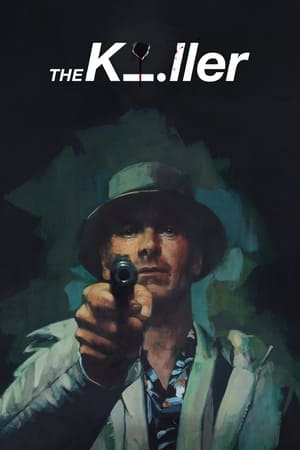
THE KILLER(2023)
Written by: Andrew Kevin Walker, based upon the graphic novel by MATZ
Draft date: October 4, 2022
Genre: Thriller
Title: The Killer
Written by: Andrew Kevin Walker, based upon the graphic novel by MATZ
Draft date: Cherry Revised - 10/04/22
LOGLINE
A meticulous, philosophizing hitman botches a high-profile assassination in Paris, triggering a chain of violent retribution against his own life — and when he returns home to find his partner brutally beaten by operatives sent to eliminate him, he embarks on a methodical, continent-spanning campaign to hunt down everyone in the chain of command responsible.
| Very Poor | Poor | Fair | Good | Excellent | |
|---|---|---|---|---|---|
| PREMISE | ✓ | ||||
| STRUCTURE | ✓ | ||||
| CHARACTER | ✓ | ||||
| CONFLICT | ✓ | ||||
| DIALOGUE | ✓ | ||||
| PACING | ✓ | ||||
| TONE | ✓ | ||||
| ORIGINALITY | ✓ | ||||
| LOGIC | ✓ | ||||
| CRAFT | ✓ |
| Strong Pass | Pass | Consider | Recommend | Strong Recommend | |
|---|---|---|---|---|---|
| Overall | ✓ |
Genre: Thriller
Sub-genre: Neo-Noir Thriller, Assassin Thriller, Revenge Thriller
Keywords: Assassin, Revenge, Hitman, Anti-Hero, Male Protagonist, Globetrotting, Foreign Locale, Methodical Killer, Voiceover-Driven, Cat-and-Mouse, Underworld, Violence, Morally Ambiguous Protagonist, Based on Graphic Novel
MPA Rating: R (pervasive strong violence, language including multiple uses of "fuck," brief sexual content references, drug use)
Budget Tier: High ($40M–$100M) — extensive international locations (Paris, Caribbean, New Orleans, Florida, upstate New York, Chicago), multiple set pieces, numerous extras and period-specific practical locations, elaborate fight choreography, no major VFX but significant logistical complexity.
Pages: 123
Time Period: Present, over approximately 2-3 weeks.
Locations: ~20% Paris (office building stakeout, streets, airport — requires unfinished office space overlooking a Parisian square with grandiose apartment building); ~20% Caribbean island (jungle estate, hospitals, taxi company, small airports — requires tropical jungle, beachfront modern estate, rural roads); ~15% New Orleans (storage facility, office building, suburban house, ferry); ~15% St. Petersburg, Florida (run-down neighborhood house requiring extensive interior destruction for fight sequence, casino exterior); ~15% upstate New York and Chicago (quaint restaurant town with creek, luxury penthouse skyscraper, upscale gym); ~15% airports and transit (Charles de Gaulle, multiple U.S. airports, trains, planes in coach class).
Lead: Male, mid-40s, race unspecified (reads as white), unremarkable and lately unshaven appearance; disciplined, methodical, emotionally detached professional assassin who maintains rigid self-control through mantras, yoga, and routine.
Comparables: Le Samouraï (1967) — lone, ritualistic hitman navigating consequence after a job; John Wick (2014) — retired killer's loved one attacked, triggering systematic revenge up a criminal hierarchy; Collateral (2004) — clinical professional killer operating through nighttime urban settings with philosophical detachment; Ghost Dog: The Way of the Samurai (1999) — solitary, code-driven assassin whose relationship with his handler collapses.
SYNOPSIS
THE KILLER (40s), a professional assassin, occupies an unfinished Paris office space across from a grandiose apartment building, waiting for his target to appear. Over several days, he maintains a disciplined routine — yoga, careful nutrition from McDonald's, meticulous operational security with latex gloves, burner phones, and disguises. His internal voiceover espouses a nihilistic philosophy: no karma, no justice, no empathy. He communicates with his unseen handler by phone, who pressures him to complete the job. On the final night of his stakeout, activity stirs in the target apartment. THE KILLER assembles his sniper rifle and watches as an OLDER GENTLEMAN arrives with a DARK HAIRED WOMAN and BODYGUARDS. He lines up his shot on the Older Gentleman, manages his heart rate, and squeezes the trigger — but at the critical instant, the Dark Haired Woman crosses into the line of fire. She is struck instead. The curtains sweep shut. The Killer curses, rapidly disassembles his weapon, and flees Paris on a Vespa, disposing of evidence methodically along the way — the rifle barrel down a sewer grate, the backpack into a garbage truck, the helmet into a canal.
At Charles de Gaulle Airport, The Killer scrubs gunshot residue from his hands, narrowly avoids a bomb-sniffing dog, and calls his handler, HODGES (50s), who is furious about the miss and warns of consequences. The Killer flies to the southeastern U.S. under the alias "Felix Unger," then continues to the Caribbean under the name "Archibald Bunker." Arriving at his secluded jungle estate, he discovers cigarette butts at the gate and boot prints at his house. Inside, the home is ransacked and blood-smeared. His partner, MAGDALA (34-40), is missing. At a local hospital, MARCUS (30s), Magdala's brother, explains that two attackers — a man and a woman — brutalized Magdala in a prolonged assault. Magdala managed to stab the man and escape through a window into the jungle. At her bedside, Magdala, badly beaten but conscious, tells The Killer she revealed nothing about him despite the torture. The Killer promises Marcus this will never happen again.
The Killer unearths a buried safe containing weapons, passports, and cash, then begins his systematic hunt. He tracks the green taxi that transported the attackers to LEO RODRIGUEZ, a young driver at BestTime Taxi company, after raiding the dispatch office at gunpoint. The Killer hires Leo as a fare and at gunpoint extracts his account of driving two "crazy-looking" people — a business-suited woman and a terrifying man — to The Killer's estate. Despite Leo's pleas of innocence, The Killer executes him.
The Killer travels to New Orleans, where he locates his handler HODGES' office. He sends an empty FedEx envelope requiring signature to get buzzed into the building, then infiltrates the office. He zip-ties DOLORES (middle-aged), Hodges' secretary, and confronts Hodges directly. Hodges insists the retaliation against The Killer was automatic protocol after the botched Paris job and urges him to disappear. The Killer destroys both laptops with a framing nail gun, then fires three nails into Hodges' chest, leaving him to slowly drown in his own blood while extracting the location of Hodges' hidden ledger. Dolores, hearing Hodges dying, reveals the book's hiding place — and negotiates for her death to appear accidental so her children receive life insurance. The Killer retrieves the ledger containing Rolodex cards with addresses for the two subcontractors who attacked Magdala and the client who ordered the hit, HENDERSON CLAYBOURNE. He disposes of Hodges' body in a shredding bin, transports it via ferry and buries parts remotely. He breaks Dolores' neck at the top of her stairs, staging it as a fall.
In St. Petersburg, Florida, The Killer stakes out THE BRUTE, a massive, steroid-fueled thug bearing a healing stab wound on his thigh — confirming he was the male attacker. After drugging the Brute's guard dog with sedative-laced meatballs, The Killer breaks in but is ambushed. A savage, extended fight ensues — fork stabbings, a curtain rod used as a weapon, The Killer nearly strangled to death before jamming a folded bottle cap into The Brute's ear. The Brute retrieves firearms and opens fire. The Killer, with a single reloaded bullet, kills The Brute with a headshot, barely escapes the revived Mastiff, and firebombs the house.
In upstate New York, The Killer locates THE EXPERT, a striking, composed woman — the female subcontractor. Rather than ambush her, he confronts her at a restaurant, sitting at her table with a gun concealed under a napkin. Over whiskey and philosophical conversation, The Expert acknowledges they are alike, warns The Killer his time will come, and shares a joke about a hunter and a bear. The Killer walks her to a creekbed and shoots her in the temple, discovering she had concealed a switchblade — confirming his decision not to trust her extended hand.
Finally, in Chicago, The Killer infiltrates HENDERSON CLAYBOURNE's (60s) luxury penthouse by cloning a gym keycard through an elaborate scheme at Claybourne's fitness club. Claybourne, a wealthy businessman, is bewildered by the intrusion. He explains he was simply told to pay $150,000 for "cleanup" after the botched Paris hit and claims no personal animosity. The Killer assesses Claybourne's apparently genuine ignorance and lowers his gun. He delivers a chilling warning about what future retribution might look like, then leaves Claybourne alive. The Killer tears up his Rolodex cards.
In the final scene, The Killer serves Magdala an espresso romano at their restored Caribbean estate. She is healing but still bandaged. He sits beside her, watching the ocean. His voiceover reflects that fate is a placebo and the only path is the one behind you. His unblinking eye twitches — a crack in the armor — as he concludes he may be "one of the many" after all.
COMMENTS
PREMISE — Good
The core concept — a hyper-disciplined assassin whose single professional failure triggers a devastating personal consequence, forcing him into a revenge campaign against his own infrastructure — is lean, potent, and immediately graspable as a pitch. The inherent tension derives from a compelling inversion: a man who espouses total detachment and claims not to "give a fuck" is driven to action precisely because he does care about Magdala, creating a philosophical contradiction that serves as the thematic spine. The premise positions itself in well-mapped territory alongside Le Samouraï and the John Wick franchise, but distinguishes itself through its procedural granularity and the protagonist's relentless internal monologue, which functions as both character study and ironic commentary. The setting design is strong — a globetrotting structure that moves from Paris to the Caribbean to the American South to Chicago creates visual variety and escalating operational complexity. What elevates the concept beyond a standard revenge thriller is the question of whether The Killer's self-mythology — his mantras about empathy as weakness, his conviction that he is "apart" — can survive contact with genuine emotional stakes. The premise promises this reckoning, though whether the execution fully delivers it is a matter for other categories.
STRUCTURE — Good
The first thirty pages establish an unusually extended stakeout sequence that functions as both pre-existing life and inciting incident runway, with the actual catalyst — the missed shot — landing around page 25, which is proportionally later than ideal at roughly 20% of the total page count. The break into the revenge narrative occurs when The Killer discovers his ransacked home and Magdala's hospitalization (36-42), approximately a third of the way through, creating a protracted setup that tests patience. From there, the structure follows a satisfyingly mechanical target-by-target progression: Leo (49-53), Hodges and Dolores (56-74), The Brute (77-92), The Expert (94-108), and Claybourne (108-122). This episodic chain functions cleanly because each encounter escalates in complexity and emotional stakes — Leo is dispatched efficiently, Hodges with dark ingenuity, The Brute nearly kills The Killer, The Expert engages him philosophically, and Claybourne is spared entirely. The midpoint falls naturally at the Hodges sequence (around page 65), where The Killer transitions from gathering intelligence to active killing. The climactic encounter with Claybourne (118-122) works as an anti-climax by design — the man at the top is neither competent nor malicious, merely rich and careless — which pays off the nihilistic thesis that no grand order underlies events. Early details pay off consistently: the cigarette butts at the gate (37), the stab wound description matching The Brute's thigh (78), and the Rolodex card system threading every target together.
CHARACTER — Fair
The Killer is defined primarily through negation — what he does not feel, does not say, does not reveal — which makes him a fascinating cipher but limits his arc to incremental erosion rather than transformation. His backstory is gestured at (a law professor named Hodges who turned him to crime, referenced at page 53) but never developed, and his want (survival, protection of Magdala) is clear while his internal need (to acknowledge that he does care, that his philosophy is self-deception) remains submerged. The five-point arc registers only partially: he has a goal, he actively pursues it, and his final voiceover admission that he may be "one of the many" (123) constitutes change, but it arrives as narration rather than dramatized realization. The supporting cast is sharply differentiated: Marcus's protective anguish (39-40), Magdala's devastating strength in declaring she "didn't tell them anything" (41), Hodges' defiant lawyerly composure under mortal threat (60-65), and The Expert's philosophical resignation and dark wit (98-108). The Expert is the most compelling character in the ensemble — her monologue about crossing lines, her bear joke, her concealed switchblade — and her scene is the dramatic high point precisely because she reflects The Killer's psychology back at him more effectively than his own voiceover does.
CONFLICT — Fair
The central external conflict — The Killer systematically eliminating everyone in the chain that authorized the attack on Magdala — is formidable and clearly defined, with escalating physical danger peaking in the near-fatal Brute encounter (84-91). The internal conflict, however, is more implied than dramatized. The Killer's mantras ("Forbid empathy. Empathy is weakness.") are repeated as voiceover refrains throughout, and his actions — particularly sparing Dolores initially (68), closing The Expert's blouse (108), and ultimately letting Claybourne live (122) — suggest cracks in his nihilistic armor. Yet these moments are subtle to the point of ambiguity; the gap between what he preaches and what he does is never forced into direct confrontation in a scene. The Brute fight (84-91) is the most viscerally effective conflict sequence, with genuine mortal stakes and inventive improvisation (the fork, the bottle cap, the single reloaded bullet). Scene-level tension is maintained consistently through operational obstacles — the bomb-sniffing dog (30), the mail delivery false alarm (14-15), the elevator encounter with the businessman's joke about "getting rid of that body" (69) — which serve as micro-conflicts that sustain engagement between major confrontations.
DIALOGUE — Good
The dialogue is economical and sharply voice-differentiated, with the voiceover carrying the heaviest load. The Killer speaks sparingly aloud — often single sentences — which makes each utterance land with weight, as when he simply says "Fuck" after the missed shot (26) or the quietly devastating "Conversation?" to The Expert (103). Leo's rambling, fearful taxi monologue (50-53) reads with authentic, desperate energy, his speech patterns distinctly Caribbean and colloquial. Hodges' dialogue is precisely calibrated to a man accustomed to controlling rooms — his repeated attempts to reframe the situation as reasonable ("There's no upside," "Embrace your next life," 63-64) ring true for a lawyer who has never been on the wrong side of leverage. The Expert's extended restaurant monologue (98-108) is the dialogue centerpiece, and it works because her elevated register — "A true samurai can spot another from a great distance" (101) — is established as character-specific affectation rather than authorial indulgence. Claybourne's panicked corporate-speak ("this was an investment that didn't pay out, I bled a little ink," 120) efficiently communicates a man who processes even murder attempts through a business framework. The primary dialogue concern is that the voiceover, while distinctive, occasionally over-explains attitudes already demonstrated through action — the statistics about birth and death rates (4-5) and the Green River Killer reference (16) add color but risk redundancy.
PACING — Fair
The opening Paris stakeout sequence (2-25) is deliberately, almost provocatively slow — a bold structural choice that establishes the tedium of the profession but runs the risk of testing engagement over twenty-three pages before a shot is fired. The extended yoga, McDonald's, and surveillance routines are thematically purposeful but could afford compression. Once the missed shot occurs, pacing tightens dramatically through the escape sequence (26-30), and the Caribbean discovery of Magdala's assault (36-42) injects urgent emotional stakes. The middle passage — the taxi company raid (44-47), Leo interrogation (49-53), and Hodges infiltration (56-69) — maintains momentum through procedural tension. The Brute sequence (77-92) is the most kinetically charged section, a sustained action set piece that earns its length through inventive choreography and genuine uncertainty about The Killer's survival. The Expert's restaurant scene (98-108) deliberately slows the pace again, but this time the deceleration serves the material — it is the emotional and philosophical climax, and the stillness after the Brute's violence creates effective contrast. The Claybourne confrontation (117-122) is appropriately brisk, its brevity reinforcing the anticlimactic thematic point.
TONE — Good
The tone is consistently cool, detached, and mordantly ironic, sustained primarily through the voiceover's deadpan philosophical commentary layered over meticulous violence. This noir-inflected register holds remarkably steady across wildly different settings — from Paris rooftops to Caribbean jungles to a Florida frat house — which is a genuine achievement. The moments that risk tonal disruption are handled carefully: the elevator joke about "getting rid of that body" (69) could have been played for comedy but is rendered as stomach-dropping irony, and The Expert's bear joke (102-104) earns its humor because it emerges from a character facing death with practiced composure. The Brute fight's brutal physicality (84-91) pushes toward action-genre excess — the frozen corn bag, the Mastiff chase, the Molotov cocktail — but the voiceover's weary "Simple" afterward (92) reanchors the sardonic tone. One tonal tension that remains unresolved is between the voiceover's insistence on emotional vacancy and the material's clear investment in Magdala's suffering (40-42) and The Killer's response to it — the text wants its protagonist to be both affectless and emotionally motivated, and while this contradiction is arguably the point, the tonal register does not always acknowledge the dissonance.
ORIGINALITY — Good
Within the assassin-thriller subgenre, the material positions itself closest to Le Samouraï's ritualistic minimalism and Ghost Dog's code-of-conduct philosophy, but distinguishes itself through the sheer granularity of tradecraft — the collapsible drinking cup, the bump key, the RFID card duplicator, the sedative meatballs — which constitutes a genuinely distinctive texture. The missed-shot inciting incident is itself a subversion: where John Wick begins with the assassination of innocence (the dog), this narrative begins with the assassin's own fallibility, a more psychologically complex engine. The episodic target chain is familiar from revenge structures, but the variation across encounters — mechanical execution (Leo), grotesque torture (Hodges), near-death brawl (Brute), philosophical seduction (Expert), and merciful warning (Claybourne) — prevents repetition and demonstrates genuine inventiveness in execution. The Expert's restaurant scene has no close analogue in comparable films; it is a lengthy, tension-filled dialogue between killer and target that functions as the thematic climax rather than any action sequence. The anticlimactic Claybourne confrontation — where the man who ordered the hit is merely a careless rich person, not a worthy adversary — is a genuinely surprising and thematically resonant choice that resists genre convention.
LOGIC — Fair
The operational logic is impressively detailed and internally consistent — the Killer's protocols for evidence disposal, identity management, and counter-forensics are developed with a specificity that rewards scrutiny. One notable gap: the Killer's decision to go directly home to the Caribbean after the botched Paris job (36) is acknowledged by Hodges as inexplicable ("How could you have... you went home," 61), but the material does not sufficiently explain why The Killer, otherwise portrayed as supremely rational, would make this choice. The Killer's ability to infiltrate Hodges' office using an empty FedEx envelope (57-59) is plausible and cleverly staged. The RFID card duplication scheme at Claybourne's gym (114-117) is the most elaborate infiltration and holds up logically, though the Janitor's failure to notice his missing keycard stretches credulity slightly. The Brute fight's escalation is internally sound — the disassembled gun, the single reloaded bullet, the improvised weapons — though The Killer's survival of multiple close-range gunshots fired by a man with two firearms relies on convenient marksmanship failure from The Brute, partially justified by his burst eardrum causing vertigo (90). The disposal of Hodges' body in a shredding bin wheeled through the building (69-70) is darkly effective but assumes no one examines the bin's considerable weight.
CRAFT — Good
The writing operates in a lean, controlled register that mirrors the protagonist's methodology — action lines are precise and functional, with bursts of vivid specificity ("the SNAP of her neck is actually audible, or was it our imagination?" at page 74; "a marionette with cut strings" in the same passage). Character introductions are deliberately withheld or minimal, reflecting the protagonist's dehumanizing worldview — most characters are identified by function rather than interiority, which is a purposeful craft choice that occasionally limits emotional access to supporting players. The voiceover is the most distinctive stylistic element, threading philosophical musings through procedural action with effective counterpoint, though it occasionally becomes a crutch for communicating internal states that could be dramatized (the repeated mantra cycle — "Stick to your plan / Anticipate don't improvise / Trust no one" — appears at pages 23, 47, 66, 83-84, and 105, among others, and while the repetition is intentional, it risks diminishing returns). Formatting is clean and professional throughout, with effective use of inserts for documents, cards, and phone screens that convey information economically. The extended Brute fight sequence (84-91) is choreographed with exceptional clarity on the page — each beat of improvisation is visually comprehensible, which is a considerable craft achievement for an action scene of this length. Minor errors include "it's" for "its" (3) and occasional dense scene-numbering artifacts that create visual clutter.
OVERALL — Recommend
The Killer is a meticulously crafted neo-noir revenge thriller about a disciplined hitman whose botched Paris assassination triggers violent reprisal against his partner, sending him on a methodical, globe-spanning campaign to eliminate everyone in the chain of command. Its greatest strengths are its procedural texture — the tradecraft details that make every infiltration, disposal, and confrontation feel tactile and earned — and its structural intelligence in varying each target encounter to produce escalating dramatic and thematic complexity, culminating in the Expert's restaurant scene, which is a genuinely exceptional piece of writing. The protagonist's design as a philosophical cipher is both the material's defining feature and its limitation: the voiceover sustains engagement and establishes a distinctive voice, but it also substitutes for dramatized internal conflict, leaving the arc's resolution — the final eye-twitch and "one of the many" admission — feeling more asserted than achieved. The extended Paris opening demands patience that the subsequent momentum rewards, but a tighter entry into the inciting incident would strengthen the whole. The supporting cast, particularly The Expert and Hodges, is vivid and well-differentiated, and the anticlimactic Claybourne encounter is a brave, thematically cohesive choice that resists the genre's impulse toward escalating spectacle. This is a polished, production-ready draft with a clear directorial vision embedded in its pages.
Get this level of coverage for your screenplay
Every coverage includes 10 category ratings, an overall recommendation, and detailed analysis — powered by the same methodology used by talent agencies and literary managers.
Movie data provided by TMDB