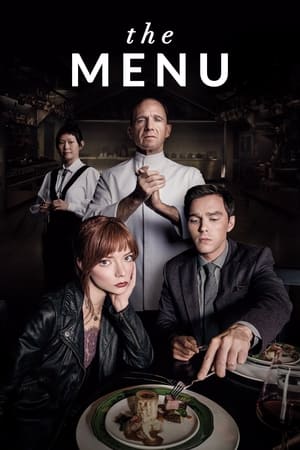
THE MENU(2022)
Written by: Seth Reiss & Will Tracy
Draft date: September 5, 2021
Genre: Thriller
Title: The Menu
Written by: Seth Reiss & Will Tracy
Draft date: Pink Production Draft 9/5/21 (with revisions through 10/29/21)
LOGLINE
A young woman accompanies her foodie date to an exclusive twelve-seat restaurant on a remote island, only to discover that the celebrated chef's elaborately themed tasting menu is designed to end with the death of every guest and staff member — and that she was never supposed to be on the guest list.
| Very Poor | Poor | Fair | Good | Excellent | |
|---|---|---|---|---|---|
| PREMISE | ✓ | ||||
| STRUCTURE | ✓ | ||||
| CHARACTER | ✓ | ||||
| CONFLICT | ✓ | ||||
| DIALOGUE | ✓ | ||||
| PACING | ✓ | ||||
| TONE | ✓ | ||||
| ORIGINALITY | ✓ | ||||
| LOGIC | ✓ | ||||
| CRAFT | ✓ |
| Strong Pass | Pass | Consider | Recommend | Strong Recommend | |
|---|---|---|---|---|---|
| Overall | ✓ |
Genre: Thriller, Comedy
Sub-genre: Black Comedy, Satirical Thriller
Keywords: Ensemble Cast, Female Protagonist, Isolated Location, Fine Dining, Class Satire, Hostage Situation, Cult-Like Dynamics, Survival, Island Setting, Service Industry, Foodie Culture, Dark Humor, Revenge, Single Night
MPA Rating: R (sustained violence including a suicide, a finger amputation, forced allergic reaction, strong language throughout, and dark thematic content)
Budget Tier: Medium ($10M–$40M) — primary location is a single upscale restaurant interior and surrounding island exteriors, moderate cast, boat sequences, practical fire effects for the climax, minimal VFX.
Pages: 111
Time Period: Present, over the course of a single evening into the following morning.
Locations: 80% interior of an upscale minimalist restaurant on a remote island (open kitchen, dining room, hallways, restrooms, chef's office). 10% island exteriors (dock, gardens, smokehouse, woods, coastline, chef's cottage — requiring night shooting, torchlit outdoor dining, and a climactic structure fire). 10% boat interiors/exteriors (a small luxury ferry, a coast guard vessel, a rowboat). A bunkhouse, chicken coop, and a secret fireproof room within the restaurant are also required.
Lead: Female, early-to-mid 20s, white, sharp and guarded with a working-class edge; presents as a cool, snarky date but conceals a complicated past and a survival instinct that outstrips everyone else in the room.
Comparables: Clue (1985) for its ensemble of archetypes trapped in a single location with escalating reveals and dark comic tone; Ready or Not (2019) for its female protagonist surviving an elegant setting that turns lethal; Parasite (2019) for its class-driven satire built around service and consumption; Get Out (2017) for its social horror structure where the protagonist gradually discovers the true nature of an ostensibly civilized gathering.
SYNOPSIS
MARGOT (20s), sharp and guarded, and TYLER (20s-30s), an obsessive foodie, wait on a dock for a boat to take them to Hawthorn, an ultra-exclusive restaurant on a private island run by the legendary CHEF JULIAN SLOWIK (40s/50s). Tyler is nearly reverent about the experience; Margot is skeptical and unimpressed. They are joined by fellow guests: three tech-bro employees of the island's owner — BRYCE, SOREN, and DAVE (30s-40s); a wealthy older couple, RICHARD (60s) and ANNE (60s); renowned food critic LILLIAN BLOOM (50s-60s) and her editor TED (50s-60s); and a fading MOVIE STAR (middle-aged) with his departing assistant FELICITY (20s-30s). Richard briefly locks eyes with Margot, and she recoils. On the boat, Lillian holds court with Chef Slowik's origin myth, Tyler corrects details under his breath, and Margot observes everything with quiet distance.
On the island, the restaurant's captain, ELSA (30s-40s), a severe woman, checks guests in and notes with suspicion that Margot is not the originally listed guest, a Miss Westervelt. A tour of the island's grounds reveals the operation's fanatical devotion: a smokehouse, gardens, and a barracks-style bunkhouse where the entire staff lives. LINDA (75), Chef Slowik's alcoholic mother, sits alone in the dining room drinking wine. Chef Slowik appears and delivers a commanding speech about savoring rather than eating. Each course is introduced with a theatrical clap and a monologue. The first, "The Island," impresses Tyler to tears while Margot remains unmoved. Chef notices her near-empty plate and is visibly disturbed.
The breadless bread course withholds Hawthorn's famous bread as a statement about class. The tech bros ask for bread and are refused. With the second course, "Memory," Chef reveals his childhood trauma — his mother being strangled by his father, whom young Slowik stabbed with scissors — and serves chicken thighs with scissors embedded in them, on tortillas laser-engraved with personalized images. Lillian's tortillas show restaurants she reviewed that closed. Richard and Anne's show images of Richard dining with a young woman who is not Anne. The tech bros' tortillas contain their company's fraudulent tax records. Tyler's show surveillance photos of him sneaking pictures of the food. Tyler berates Margot viciously when she tries to send the food back, revealing a cruel, controlling side. Margot confronts him and leaves the table.
In the restroom, Chef Slowik corners Margot and demands to know who she really is, insisting she should not be there and that she is disrupting his plan. He reveals that everyone will die tonight. Sous-chef JEREMY (30) is brought before the guests, humiliated for his inadequacy, and shoots himself. Richard tries to leave and has his ring finger chopped off by cooks with cleavers. Chef drowns his angel investor DOUG VERRICK in the bay. During a palate-cleansing tea, Chef explains that each guest represents a facet of the culture he despises — critics who destroy livelihoods, patrons who consume without appreciating, enablers, and frauds. He gives Margot a timed ultimatum: choose whether she belongs with the guests (takers) or the staff (givers).
In Chef's office, Margot tries flattery and defiance, but Chef sees through both. He identifies her as a fellow service-industry worker and presses about Richard. Margot admits Richard was a client — she is a sex worker, and Richard's encounter with her was degrading. Chef connects with her over the shared experience of serving people who treat you as disposable. Sous-chef KATHERINE presents a course called "Man's Folly," recounting Chef's sexual harassment, and stabs him in the thigh with scissors. The men are released to run while the women dine together intimately, receiving the famous bread. During this interlude, Anne quietly confirms she knows about Margot and Richard. Margot reveals her real name is Erin, from Brockton, Massachusetts. The men are caught and dragged back.
Chef forces Tyler to cook in front of everyone, exposing his incompetence. Tyler's crude dish is labeled "Tyler's Bullshit." Chef whispers something in Tyler's ear, and Tyler exits toward the office. Chef sends Margot to fetch a barrel from the smokehouse, giving her a key and a reason to leave the building. In Chef's cottage — a replica of the restaurant interior — Margot finds a secret room behind a silver door, containing photos from Slowik's life, including one of a young, happy Slowik at a fast-food grill. She radios the Coast Guard for help, then is attacked by Elsa, who followed her. After a brutal fight, Elsa helps guide the knife into her own throat, accepting that Chef's declining abilities — not her own failure — led to this moment. Passing Chef's office on her return, Margot sees Tyler's legs dangling — he has hanged himself.
Margot rolls the barrel into the restaurant. A Coast Guard officer arrives but turns out to be a plant — another cook. Chef condemns Margot as a taker. The staff coats the dining room in flammable liquid, drapes guests and staff in marshmallow sheets, and prepares for the final course: a giant s'more. Margot stands and claps once, silencing the room. She delivers a devastating critique: Chef cooks with obsession, not love, and she is still hungry. She asks for a cheeseburger. Chef makes her a simple, perfect cheeseburger. Margot asks for the rest to go. Chef wraps it, and Margot pays ten dollars, walks out, and boards the coast guard boat. Chef strikes a match, igniting the restaurant. The boat stalls offshore. Margot sits on the deck eating the cheeseburger, watching Hawthorn burn. The next morning, firefighters find, behind the fireproof silver door, a single framed photo: young Slowik, beaming, flipping a cheeseburger at his first job — the happiest he ever was.
COMMENTS
PREMISE — Excellent
The central concept — an exclusive tasting menu engineered as a death sentence for guests who embody everything the chef despises about food culture — is immediately gripping and lends itself to a strong pitch. Each guest table functions as a different indictment (the critic who ruins careers, the tech bros who treat dining as a status purchase, the loyalist who remembers nothing, the fading celebrity clinging to relevance), giving the premise built-in thematic variety without requiring exposition. Margot's presence as an outsider who was never on the guest list provides a structural wildcard that keeps the premise from becoming a simple revenge fantasy. The tension between art and commerce, between creators and consumers, gives the material genuine thematic weight, echoing territory explored in films like Ready or Not and Parasite but filtering it through the specific absurdities of haute cuisine culture. The premise's greatest asset is its confined setting: once the boat leaves, every scene carries the pressure of entrapment, and every course becomes a ticking clock toward revelation. The question of whether Margot can escape — and whether Chef will let her — sustains the central dramatic engine without requiring external plot machinery.
STRUCTURE — Good
The tasting-menu structure provides an elegant organizing principle, with each course functioning as a discrete act break that escalates stakes and reveals new information. The inciting incident lands precisely where it should: Elsa's notation that Margot is not the expected guest (12-13) establishes the central mystery early without belaboring it. The midpoint — Jeremy's suicide and Richard's finger amputation (54-57) — transforms the evening from unsettling theater into genuine mortal threat, falling almost exactly at the halfway mark of the page count. The "Man's Folly" sequence and the men's chase (72-80) serve as a strong break into the final movement, isolating Margot with the women and accelerating her arc. The barrel errand (88-89) provides a clean mechanism for Margot to leave the restaurant and discover both Elsa's vulnerability and the secret room, though the Coast Guard fake-out (97-101) extends the third act by introducing and discarding hope in a way that, while thematically purposeful, slightly delays the climax. The cheeseburger confrontation (103-106) lands at roughly 94% of the page count, which is late for a climax, but the compressed denouement that follows works because the resolution is swift and emotionally clean. Every subplot — the tech bros' fraud, Richard's infidelity, the Movie Star's irrelevance — resolves through the menu rather than through independent action, which reinforces the premise but does limit structural variety.
CHARACTER — Good
Margot is the strongest element of the ensemble, her arc moving from detached observer to active survivor with clear, page-level evidence at each stage: her refusal to eat (38), her composure under Chef's interrogation (48-50), her revelation of her real name and background to the women (80), and her final clap that mirrors Chef's signature gesture (102). Her Want (to survive) and Need (to reclaim agency from a life of serving exploitative men) are distinct and converge in the cheeseburger scene. Chef Slowik functions as both antagonist and dark mirror, his backstory doled out through the menu courses, though his motivation narrows somewhat once fully articulated — the "I've been corrupted by the system" thesis (65-66) is stated so directly that it leaves little for subtext to carry. Tyler's arc is sharply drawn: his worshipful devotion (25-26) makes his betrayal (82) genuinely shocking, and his humiliation in the kitchen (84-86) completes him as a cautionary figure rather than a mere villain. The supporting characters are efficiently differentiated — Lillian's self-importance, the Movie Star's hollowness, Anne's quiet dignity — though Felicity and Ted remain functional rather than fully dimensional. Linda, Chef's mother, is a potent symbolic presence whose silence speaks volumes, but she receives no dialogue or action beyond drinking, which limits her dramatic utility.
CONFLICT — Good
The central conflict — Margot versus a chef who controls everything on his island and has decided everyone will die — is formidable and escalates with each course. What distinguishes this conflict from a standard hostage scenario is that Chef is not simply threatening violence; he is demanding that his guests confront their own complicity, which creates a secondary layer of internal conflict for nearly every character. Margot's internal conflict is the most developed: she must decide whether to align with the staff or the guests (59-60), a choice that forces her to reckon with her own identity as someone who serves and is consumed. Scene-level conflict is consistently strong — the breadless bread plate creates friction between the tech bros and Elsa (36-37), Tyler's outburst over Margot trying to send food back (46-47) ruptures their relationship, and Katherine's testimony creates conflict between Chef and his own legacy (72-74). The one area where conflict thins is during the men's chase (75-80), which disperses tension across multiple locations without deepening any single confrontation. The resolution — Margot winning her freedom not through violence but by demanding a cheeseburger — reframes the entire conflict as one between authenticity and pretension, which is both surprising and satisfying.
DIALOGUE — Excellent
Dialogue is the material's most consistent strength, with nearly every character possessing a distinct voice that reveals disposition without requiring description. Tyler's dialogue drips with performative expertise — "the balance of the products," "mouthfeel" (8), "next level bad-assery" (34) — establishing him as someone who consumes knowledge about food rather than food itself. Margot's voice is laconic and cutting: "We have reached the base camp of Mount Bullshit" (16), "I strongly feel the need to punch her in the cunt" (21). Chef Slowik's speeches are calibrated to shift between warmth and menace, as when his bread monologue pivots from historical lecture to class indictment (33). The Movie Star's rambling plea to Chef (90) is a masterful piece of character writing — each stumble and qualification reveals a man whose performative instincts have completely abandoned him. Subtext operates well in the exchanges between Richard and Anne, where "How was he?" / "You know... Perry" (30) communicates decades of marital exhaustion in four words. The one area where dialogue occasionally becomes on-the-nose is in Chef's explicit statements of theme — "You represent the ruin of my art" (108) states what the menu has already demonstrated.
PACING — Good
The tasting-menu conceit provides a built-in pacing mechanism that keeps the material moving at a brisk clip for the first half, with each course arriving before the previous one can fully settle. The boat sequence and island tour (2-19) efficiently introduce all characters and establish the world within the first 17% of the page count — lean and effective. Tension escalates sharply from the personalized tortillas (43-46) through Jeremy's suicide (54), a stretch of roughly ten pages that transforms the tone without allowing a pause. The women's dinner sequence (75-80) provides a necessary moment of release, and the bread's arrival within that scene is a small structural reward that earns genuine warmth. Where pacing softens is between the barrel errand and the final confrontation — the Elsa fight (93-94), the cottage exploration (92-95), and the Coast Guard fake-out (97-101) create three consecutive sequences of rising and falling tension that, while individually effective, extend the third act beyond what the central conflict requires. The cheeseburger scene itself (103-106) is perfectly paced: unhurried, conversational, and allowed to breathe in a way that contrasts sharply with everything preceding it.
TONE — Good
The tonal balance between dark comedy and genuine menace is the material's most delicate achievement and is sustained with remarkable consistency. The early scenes establish comedy through social observation — the tech bros' vapid bonhomie (3), Tyler's pretentious reverence (7-8), Lillian's self-aggrandizing origin myth (8-10) — so that when violence arrives, it registers as a tonal rupture that is itself part of the satire. The breadless bread course (33-37) is the clearest example of comedy and critique operating simultaneously: Lillian's praise of the "wickedly clever conceit" is funny precisely because she cannot see her own role in the system being satirized. Jeremy's suicide (54) is the sharpest tonal shift, and the fact that Tyler continues eating immediately afterward (55) prevents the scene from tipping into pure horror by grounding it in absurd character behavior. Katherine's weeping at her own dinner (76-77) is a quieter tonal moment that works because the preceding warmth of the women's meal makes her grief feel earned rather than manipulative. The one tonal uncertainty is the Elsa fight in the cottage (93-94), which introduces a slasher-film energy that sits slightly apart from the satirical register established everywhere else.
ORIGINALITY — Excellent
The core concept — a tasting menu as instrument of murder and class critique — is genuinely novel. While Ready or Not (2019) traps a protagonist in an elegant setting with lethal rules, and Clue (1985) assembles archetypes in a confined space for comic revelation, neither uses the structure of a meal as both narrative architecture and thematic argument. The closest antecedent may be Luis Buñuel's The Exterminating Angel (1962), in which dinner guests find themselves unable to leave, but that film operates in surrealist abstraction where this material works through specificity and social realism pushed to extremes. The execution is where originality truly distinguishes itself: the laser-engraved tortillas personalizing each table's indictment, the breadless bread plate as class commentary, and the cheeseburger as both escape mechanism and thematic thesis are all set pieces without obvious precedent in the genre. The decision to make the protagonist a sex worker whose survival skills derive from reading and managing dangerous men is a character detail that reframes every interaction retroactively and elevates the material beyond its satirical premise.
LOGIC — Fair
The internal logic holds under the weight of its heightened premise, with a few notable pressure points. Chef's elaborate preparations — surveillance cameras capturing Tyler's photos (45), laser-engraved tortillas with financial documents (44), the angel-wing drowning apparatus (66) — are plausible within the established universe of a fanatical, months-in-the-making final menu. The Coast Guard fake-out is the most significant logic strain: the planted officer (101) requires that Chef anticipated someone would find and use the radio, which is possible given his control of the island but is never explicitly established. Margot's decision to sit in the cottage replica and breathe rather than immediately flee the island (92) is psychologically coherent — she has no boat — but may register as a pacing choice masquerading as character logic. The stalled boat engine in the final scene (110) is a convenient mechanism that avoids the question of whether Margot could actually navigate to the mainland, and while it serves the thematic purpose of forcing her to watch the fire, it introduces an unresolved practical question: how does she ultimately get to safety? Chef's statement that guests "probably could have" fought their way out (98) is a clever preemptive acknowledgment of this potential plot hole, effectively lampshading the passivity required by the premise.
CRAFT — Good
The writing operates with confident economy, deploying action lines that double as tonal commentary — "Tyler is too busy greedily devouring his tiny bite to respond" (8), "Richard and Anne sit eating silently like two live corpses" (30). Character introductions are efficient and visual: Elsa is "severe" (12), Chef Slowik is "brooding, intense" (22), and Linda is "a sad husk of a woman" (19), each establishing a physical and emotional impression in a phrase. The superimposed menu titles — "TYLER'S BULLSHIT. Under-cooked lamb, inedible shallot-leek butter sauce, utter lack of cohesion" (85) — function as both production design direction and comic commentary, a formal innovation that reinforces the conceit. Stage directions occasionally carry editorial voice — "Put yourself in Margot's shoes. Mass psychosis" (60) — which breaks the fourth wall of the writing in a way that works for the material's darkly comic register but would be a liability in a different genre. Formatting is clean, with scene transitions handled crisply through the title cards. One minor inconsistency: the script refers to "scissors" during both Chef's childhood story and Katherine's stabbing (42, 73), though Katherine's weapon is described as "a small pair of scissors" while the action reads more like a knife thrust, creating a momentary image confusion.
OVERALL — Recommend
The Menu is a darkly comic thriller about a celebrated chef who transforms his final tasting menu into an elaborate act of class-warfare annihilation, trapping twelve wealthy guests on his private island while an uninvited young woman fights to survive. The material's greatest strengths are its dialogue — distinctive, subtext-rich, and consistently funny even under duress — and its structural ingenuity, which uses the tasting-menu format to create natural escalation and pacing without relying on conventional act-break mechanics. Margot is a compelling, well-arced protagonist whose secret identity as a sex worker recontextualizes the entire evening and deepens every thematic concern about who serves and who consumes. The supporting ensemble is sharply drawn, with the Movie Star's incoherent plea and Tyler's kitchen humiliation standing out as set pieces that are simultaneously hilarious and devastating. The weakest element is the extended third act, where the Elsa confrontation, the cottage exploration, and the Coast Guard fake-out create successive rising-and-falling tension cycles that dilute momentum before the cheeseburger climax. Chef Slowik's motivations, while theatrically powerful, are occasionally over-articulated in dialogue rather than trusted to the menu's own dramaturgy. These are refinement-level concerns in material that is, at its core, conceptually bold, tonally assured, and structurally disciplined.
Get this level of coverage for your screenplay
Every coverage includes 10 category ratings, an overall recommendation, and detailed analysis — powered by the same methodology used by talent agencies and literary managers.
Movie data provided by TMDB