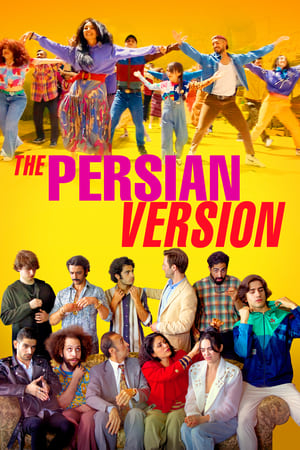
THE PERSIAN VERSION(2023)
Written by: Maryam Keshavarz
Genre: Comedy
Title: The Persian Version
Written by: Maryam Keshavarz
Draft date: Not specified
LOGLINE
A queer Iranian-American filmmaker — the only daughter in a family of nine children — struggles to reconcile with her devoutly traditional mother while uncovering a long-buried family scandal that spans decades and two continents.
| Very Poor | Poor | Fair | Good | Excellent | |
|---|---|---|---|---|---|
| PREMISE | ✓ | ||||
| STRUCTURE | ✓ | ||||
| CHARACTER | ✓ | ||||
| CONFLICT | ✓ | ||||
| DIALOGUE | ✓ | ||||
| PACING | ✓ | ||||
| TONE | ✓ | ||||
| ORIGINALITY | ✓ | ||||
| LOGIC | ✓ | ||||
| CRAFT | ✓ |
| Strong Pass | Pass | Consider | Recommend | Strong Recommend | |
|---|---|---|---|---|---|
| Overall | ✓ |
Genre: Comedy, Drama
Sub-genre: Coming-of-Age Drama, Immigrant Drama, Family Drama
Keywords: Female Protagonist, Iranian Theme, Immigrant Family, Mother-Daughter Relationship, LGBTQ+, Pregnancy, Multigenerational, Fourth Wall Breaking, Cultural Identity, New York City, Foreign Locale, Ensemble Cast, Musical Sequence, Faith/Spirituality
MPA Rating: R (sexual content, language including multiple uses of "fuck," brief nudity implied)
Budget Tier: Medium ($10M–$40M) — multiple time periods spanning 1960s Iran through 2000s New York/New Jersey, archival footage, animation sequences, period costuming, large ensemble cast, musical number, international locations (rural Iran, Shiraz, Brooklyn, Manhattan, New Jersey)
Pages: 106
Time Period: Approximately 40% in Present (2000s) over several weeks / 30% in 1980s Brooklyn over several years / 30% in 1960s rural Iran over several years
Locations: Present-day New York City and New Jersey suburbs (~40%), including a hospital, suburban home, supermarket, restaurant, theater, and banquet hall. 1980s Brooklyn brownstone and surrounding neighborhood (~25%). 1960s rural Iranian village, Shiraz city hospital, mountain passes, and bus stations (~25%). Brief scenes at a school in Iran, a concert hall, and a real estate office in New Jersey. Period-specific set dressing required across three distinct eras and two countries.
Lead: Female, late 20s, Iranian-American. Mischievous, witty, emotionally guarded filmmaker who directly addresses the camera. Pregnant, queer-identified, the only daughter among nine siblings.
Comparables: The Big Sick (immigrant family dynamics colliding with an unconventional romance and medical crisis), Lady Bird (combative mother-daughter relationship driving a coming-of-age narrative), Coco (multigenerational family secrets revealed through cultural tradition), Fleabag (fourth-wall-breaking female protagonist using humor to mask emotional pain).
SYNOPSIS
LEILA (29), a mischievous Iranian-American woman, attends a Halloween party in New York dressed in a provocative "Burkatini" costume. She hooks up with MAXIMILLIAN, a British actor performing as Hedwig at a Broadway theater. Speaking directly to camera, Leila explains her position as a child caught between two warring cultures — Iran and America — and her role as the family's cultural smuggler, having transported forbidden Western music into post-revolutionary Iran as a child. A Bollywood-style dance sequence set to Cyndi Lauper erupts in the family home in Shiraz.
In present-day Brooklyn, Leila runs into her ex-wife ELENA (37) at a supermarket. Elena tells her to stop calling and to confront her family, especially her mother. In New Jersey, SHIRIN (55), Leila's mother, receives news that her husband ALI REZA (63) is finally getting a heart transplant. Shirin and Ali Reza race through traffic to Columbia University Hospital, where Shirin invokes Imam Zaman — a Shi'a Muslim saint who appears in times of need — and a mysterious motorcyclist clears their path. Leila breaks the fourth wall to explain this magical-realist element of her family's faith.
Ali Reza goes into surgery. Leila stays behind in New Jersey to care for her grandmother, MAMANJOON (77), with whom she shares a deep bond. A flashback reveals the Thanksgiving when Leila brought Elena home and Shirin threw them both out, unable to accept her daughter's sexuality. In the present, Leila begins writing about her mother, prompted by Mamanjoon's advice. Mamanjoon reveals that Leila's parents came to America not just for medical training but to escape a scandal.
An extended 1980s flashback shows Shirin managing a household of nine children while Ali Reza suffers a triple bypass. With no insurance and no income, Shirin pursues her GED and a real estate license simultaneously, survives a broken neck from a supermarket accident, wins a lawsuit settlement, and launches a career selling homes to immigrant families. She becomes top agent at her firm and eventually helps create what becomes Little India in Edison, New Jersey. Through these years, teenage Leila serves as Shirin's reluctant helper and spellchecker, resenting the demands while absorbing her mother's relentless work ethic.
Leila discovers she is pregnant from her one-night stand with Maximillian. Her friend DOCTOR ANAHITA SHOJAEI (31) delivers the news. Leila tells Maximillian, who offers to be involved. She announces the pregnancy to her family at a chaotic dinner where Mamanjoon, the brothers, and Shirin react with characteristic humor and tension. Shirin demands marriage; Leila refuses and accuses Shirin of destroying her relationship with Elena.
Mamanjoon finally reveals the full scandal. In the 1960s, Young SHIRIN (13-14) was married to Young ALI REZA (22) and sent to a remote village. There, she befriended NURSE ROYA (36), who secretly became Ali Reza's second wife. Upon discovering the affair, Young Mamanjoon rode to Shiraz with BABAJOON and their son MOHSEN (21) to confront Ali Reza at gunpoint. Young Shirin, pregnant and bleeding, fled the village alone by donkey and bus to Shiraz, where she delivered a stillborn daughter she named AREZOO. Ali Reza arrived with a newborn son, VAHID — Nurse Roya had died in childbirth. He begged Shirin to nurse the baby. Despite her devastation, Shirin accepted Vahid and agreed to emigrate to America. Young Shirin addresses the camera directly, explaining that her silence became her strength and her way of controlling her own narrative.
In the present, VAHID marries NAZANIN (27) at a Persian wedding. Leila attempts to connect with Shirin, hinting at knowledge of the scandal, but Shirin deflects and they argue again. Leila slips away from the wedding and goes into labor alone. Shirin receives the hospital's call and invokes Imam Zaman, who appears as a tuk-tuk driver. The brothers, the bride, and Maximillian — still in full Hedwig drag — race to the hospital. With narrow hips echoing her mother's difficult delivery, Leila struggles until Shirin coaches her to scream. The baby is born healthy. Leila names her Arezoo. Shirin, holding a baby who looks strikingly like her own lost daughter, breaks down and tells Leila she is sorry and that she loves her. Leila deflects with humor — "Don't be so American" — but the reconciliation is real.
COMMENTS
PREMISE — Good
The premise fuses a queer Iranian-American coming-of-age with a multigenerational immigrant saga, anchored by the specific and potent question of whether a daughter can understand — and forgive — a mother whose silence has been both armor and weapon. The central conceit of two warring nations mirroring two warring women provides rich thematic architecture, and the "scandal" mystery gives the generational material narrative propulsion. Leila's pregnancy from a one-night stand with a man while identifying as a lesbian creates an inherently unstable situation that pressurizes every family dynamic. The concept occupies territory near The Big Sick and Lady Bird but distinguishes itself through the Iranian diaspora specificity and the structural ambition of toggling across decades and continents. The premise is strong enough to pitch in a sentence — a queer Iranian-American filmmaker discovers her mother's secret past while unexpectedly pregnant — and the thematic resonance between Leila's birth scene and Shirin's stillbirth gives it emotional architecture that elevates it beyond a standard family dramedy.
STRUCTURE — Fair
The narrative operates on a dual-timeline engine — present-day Leila navigating pregnancy and family estrangement, and past-tense Shirin building a life against impossible odds — and the toggling between these timelines is the material's greatest structural asset and its most persistent liability. The inciting incident functions on two levels: Ali Reza's heart transplant (14-15) creates urgency, while Mamanjoon's revelation of a scandal (27) provides the mystery that drives investigation. The midpoint lands effectively when the 1960s Iran timeline begins in earnest (70), recontextualizing everything known about Shirin. The climax braids Leila's delivery with the echo of Shirin's stillbirth (100-105), which is structurally elegant. However, the 1980s Shirin material — her GED, real estate career, broken neck — occupies roughly pages 33-67 and, while individually compelling, functions more as episodic biography than as a causally linked middle section. Scenes like the basketball game (65) and the Little India creation (63-64) showcase Shirin's character but do not advance the scandal mystery or the mother-daughter conflict. The pregnancy revelation (46-47) arrives at roughly the right proportional point but does not meaningfully alter Leila's relationship to her mother or her investigation, which weakens its function as a structural turn.
CHARACTER — Fair
Shirin is the most fully realized character, possessing all five arc beats: clear backstory (child bride, betrayed wife), clear want (family survival and control), clear internal need (to release her silence and reconnect with her daughter), active pursuit of her goals (GED, real estate, raising Vahid), and change at the climax when she says "I'm sorry" (106). Leila, despite being the protagonist and narrator, is comparatively underwritten in terms of active pursuit. She is told about the scandal by Mamanjoon rather than discovering it herself, her writing project never produces visible results, and her primary mode is reactive — she leaves the Thanksgiving dinner (23), leaves the hospital after Shirin's rejection (68), and leaves the wedding before going into labor (98). Her emotional arc from estrangement to naming her daughter Arezoo is moving, but the mechanism of her transformation remains opaque: what specifically shifts her understanding, and when? Maximillian is charming but functional — the dumpling scene (90-91) gives him personality without depth. The brothers are well-differentiated in type (the labels on page 6 are efficient) but blur together in function, often operating as a comic chorus rather than as individual characters with distinct relationships to Leila.
CONFLICT — Fair
The central conflict — Leila's need for her mother's acceptance versus Shirin's inability to offer it — is emotionally potent and clearly defined. The Thanksgiving expulsion (23) establishes the stakes concretely, and the hospital rejection (68) escalates them. The generational echo between Shirin's betrayal by Ali Reza and Leila's feeling of betrayal by Shirin adds thematic depth to the external conflict. At the scene level, however, conflict is inconsistently present. Several sequences — the real estate montage (58-64), the Iranian village courtship (77-80) — proceed without meaningful opposition, functioning as exposition rather than drama. The scandal mystery provides a secondary conflict engine, but Leila does not actively investigate it; Mamanjoon simply tells her in installments (27, 69-70). The internal conflict — Leila's fear of becoming her mother while unconsciously replicating her patterns — is stated explicitly ("I was just terrified to be like her," 57) but demonstrated only intermittently, most effectively in the parallel narrow-hips delivery scenes (85, 102).
DIALOGUE — Good
The dialogue is at its strongest when characters talk past each other across cultural and generational divides, as in the family dinner announcement scene where Mamanjoon's Persian translations create escalating comic misunderstanding (53-54). Characters are generally distinguishable: Shirin speaks in clipped, practical imperatives ("Even finer, even finer," 27), Mamanjoon in bawdy wisdom ("put it in the back door," 25), and Leila in defensive sarcasm ("He's not gay, he's European," 53). The direct-address passages carry a distinctive voice — conversational, self-deprecating, culturally specific — though they occasionally over-explain what the dramatic scenes have already conveyed, as when Leila narrates "My mother was an enigma" (28) before and after scenes that demonstrate this. The weakest dialogue belongs to functional characters: Dr. Manzano's animal metaphors (18-19) strain for comedy, and the billing bureaucrat exchanges (34-36) repeat the same beat — Shirin can't pay — across multiple scenes without escalation or new information.
PACING — Fair
The first eleven pages move with exceptional velocity — the Halloween opening, the archival footage montage, the Cyndi Lauper smuggling sequence, and the title card land with rhythm and confidence. The present-day scenes maintain momentum through Leila's direct address, which functions as connective tissue between episodes. However, the 1980s Brooklyn section sags between pages 33 and 67. Shirin's real estate rise is told across at least six distinct scenes and a montage, and while each individual scene is well-crafted, the cumulative effect is of a biographical documentary insert rather than a dramatically propelled middle section. The 1960s Iran material (70-88) re-energizes the pacing through genuine suspense — the village woman's revelation (72-73), Shirin's near-suicide at the well (84), the stillbirth (85-86) — and the final act from Vahid's wedding through the delivery (93-106) builds propulsive momentum. The total page count of 106 is appropriate, but the material would benefit from compression in the 1980s section.
TONE — Good
The tonal range is ambitious — comedy, magical realism, melodrama, musical — and largely succeeds because the direct-address framing gives Leila permission to signal tonal shifts. The Imam Zaman sequences (16-18, 100) blend spiritual sincerity with gentle self-awareness, and the Bollywood dance number (10-11) commits fully to its exuberance. The 1960s Iran material shifts into a substantially different register — closer to classical melodrama — and this works because Young Shirin's direct-address moment (75) bridges the tonal gap by echoing Leila's own fourth-wall breaks. The most jarring tonal moment is the well scene (84), where Shirin contemplates suicide. This beat is earned narratively but arrives amid a stretch of material that had been proceeding at the pace of folktale rather than psychological realism, and the transition from Nurse Roya's betrayal to suicidal despair happens within a single page. The comedy of the brothers — particularly the "pasar zeshtoo" running gag (51, 94) — provides effective tonal relief throughout.
ORIGINALITY — Good
The Iranian-American immigrant experience has few direct precedents in English-language cinema; Shaun of the Dead's Edgar Wright has nothing to do with this territory, and the closest comparables — The Big Sick, Ramy — focus on Pakistani and Egyptian-American experiences respectively, leaving the specifically Persian cultural details (tarof, ghormeh sabzi, Googoosh, Imam Zaman) largely uncharted on screen. The structural conceit of a queer narrator uncovering her mother's parallel narrative across decades echoes Lady Bird's mother-daughter dynamics but goes substantially further by making the mother a co-protagonist with her own direct-address moment. The Imam Zaman device — a saint who appears as a motorcyclist or tuk-tuk driver — is genuinely inventive and unlike standard magical-realist deployments in Western cinema. Where originality is thinner is in the present-day relationship material: the pregnancy-from-a-one-night-stand, the comic family dinner reveal, and the reconciliation at the hospital bed are familiar beats executed with cultural specificity rather than structural surprise.
LOGIC — Poor
The timeline requires careful attention and mostly holds, though the age math creates minor friction. Shirin is introduced as 36 in the 1982 family photo (6), then described as 35 at the Iran airport also in 1982 (9), and later as 39 in another 1982 scene (27) — these inconsistencies suggest the 1980s scenes span several years but the repeated "1982" title cards obscure this. If Shirin married at 13 and is 35-39 in the 1980s, she married around 1956-1960, which aligns with the "1960s" Iran scenes only loosely. The discovery of the scandal hinges on Mamanjoon's revelation, but Mamanjoon has been present in Leila's life for decades and the timing of her decision to share — prompted only by Leila's visit — feels convenient rather than motivated (27, 69). Leila's naming of the baby Arezoo (105) implies she learned the dead sister's name, but the text does not show Mamanjoon or anyone telling Leila this specific detail during the present-day scenes. The Imam Zaman appearances function within the established magical-realist logic, and the material is careful to flag skepticism through Leila ("I'm not sure I do," 17).
CRAFT — Fair
The writing operates in a high-energy, visually-oriented register that prioritizes momentum over literary precision. Character introductions are efficient and frequently witty — Shivaz as "Iranian homeboy who looks like a Dominican Rapper" (14), Dr. Manzano as "mousy woman, 4'10'" (18). The direct-address passages are the most distinctive element of craft, functioning as both comedic commentary and structural adhesive. Action lines are generally lean, though some carry editorial commentary that belongs in dialogue rather than description — "Is she hallucinating?" (43), "Leila is floored" alongside scene directions. The musical and animation elements are indicated with sufficient clarity for a reader to envision them. There are occasional formatting issues: "Obviously I've have some issues" (4) contains a grammatical error, and "loosing her cool" should read "losing" (42, "losing" not "loosing"). The Persian dialogue is handled through a consistent convention of parenthetical "(in Persian)" tags, which is clear if occasionally cumbersome when scenes toggle rapidly between languages.
OVERALL — Consider
The Persian Version is a multigenerational immigrant dramedy in which a queer Iranian-American filmmaker discovers that her mother — from whom she is bitterly estranged — survived betrayal, stillbirth, and near-suicide before reinventing herself as an American businesswoman. The strongest element is Shirin's character, whose arc across the 1960s Iran and 1980s Brooklyn sections constitutes a genuinely compelling narrative with emotional weight, structural clarity, and cultural specificity that feels rare on screen. The direct-address device and the Imam Zaman magical-realist conceit give the material a distinctive formal identity. The primary weakness is structural: Leila, despite her role as narrator, functions more as an observer of her mother's arc than as an active protagonist in her own right, and the 1980s biographical material, while individually strong, dilates the middle section without sufficient causal connection to the present-day conflict. The dialogue is sharp and culturally specific at its best, the tonal ambition is largely realized, and the climactic braiding of the two birth scenes demonstrates genuine craft. Tightening the middle section and giving Leila more active agency in uncovering the scandal — rather than receiving it through Mamanjoon's exposition — would bring the present-day timeline into balance with the past.
Get this level of coverage for your screenplay
Every coverage includes 10 category ratings, an overall recommendation, and detailed analysis — powered by the same methodology used by talent agencies and literary managers.
Movie data provided by TMDB