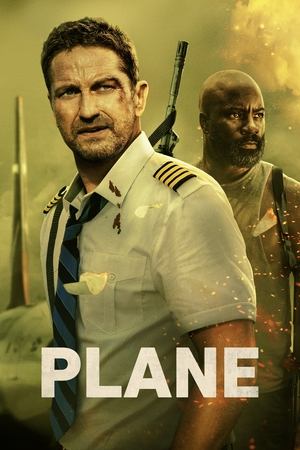
THE PLANE(2023)
Written by: Charles Cumming, JP Davis, Current draft by James Coyne (Story by Charles Cumming and Christian Gudegast)
Draft date: September 24, 2020
Genre: Action
Title: The Plane
Written by: Charles Cumming, JP Davis, Current draft by James Coyne (Story by Charles Cumming and Christian Gudegast)
Draft date: 9.24.20
LOGLINE
When a veteran commercial pilot flying a budget airline crash-lands his crippled passenger jet on a remote Philippine island controlled by pirates and warlords, he must lead his passengers through jungle terrain, fight off armed kidnappers, and jury-rig the damaged aircraft for a desperate takeoff before hundreds of militia close in.
| Very Poor | Poor | Fair | Good | Excellent | |
|---|---|---|---|---|---|
| PREMISE | ✓ | ||||
| STRUCTURE | ✓ | ||||
| CHARACTER | ✓ | ||||
| CONFLICT | ✓ | ||||
| DIALOGUE | ✓ | ||||
| PACING | ✓ | ||||
| TONE | ✓ | ||||
| ORIGINALITY | ✓ | ||||
| LOGIC | ✓ | ||||
| CRAFT | ✓ |
| Strong Pass | Pass | Consider | Recommend | Strong Recommend | |
|---|---|---|---|---|---|
| Overall | ✓ |
Genre: Action, Thriller
Sub-genre: Action Adventure, Survival Thriller
Keywords: Survival, Pilot, Hostage, Pirate, Rescue, Remote Island, Plane Crash, Ensemble Cast, Military, Mercenaries, Father-Daughter, Redemption, Foreign Locale, Fish-Out-Of-Water, Crisis Management, Philippines, Kidnap and Ransom
MPA Rating: R (sustained intense violence, multiple killings, strong language throughout, brief disturbing content involving implied sexual exploitation of a minor)
Budget Tier: High ($40M–$100M) — extensive jungle and ocean locations, multiple aircraft (commercial jet, helicopters, fighter jets, C-130), military vehicles, large cast, significant action/stunt sequences, practical and VFX explosions, drone footage inserts, period-neutral but logistically demanding.
Pages: 111
Time Period: Present, over approximately 36 hours (New Year's Eve through New Year's Day).
Locations: Approximately 30% cockpit/aircraft interior (commercial Airbus A321 in various states of damage), 25% jungle and miner's road on Jolo Island (Philippines), 15% pirate village of Dandulit (shantytown, warehouse, compound on cliffs), 10% Pathfinder Airlines HQ situation room in London, 5% INDOPACOM command center in Oahu, 5% Changi Airport Singapore, 5% Maui beach house, 5% other (Jakarta bank, C-130 cargo bay, lagoon resort). Requires a practical or partial aircraft fuselage, jungle locations or stages, a dilapidated tropical village, multiple helicopter and military vehicle sequences, and aerial photography.
Lead: Male, mid-to-late 40s, white American. Weathered, athletic, scarred from years of hard living. A loner commercial pilot exiled from major airlines, emotionally guarded, deeply competent, estranged from his teenage daughter.
Comparables: Flight (2012) — veteran pilot facing an impossible landing and personal demons; Captain Phillips (2013) — civilian leader thrust into pirate hostage crisis in hostile waters; Non-Stop (2014) — airborne thriller with an embattled captain managing threats to passengers; Con Air (1997) — transport carrying a dangerous prisoner becomes a survival action piece.
SYNOPSIS
A group of Filipino pirates led by DATU JUNMAR (40s), a ruthless warlord, raids a lagoon resort, kidnapping tourists and severing a hostage's finger to demonstrate his seriousness. In Singapore, veteran pilot RAY TORRANCE (late 40s), a lonely journeyman flying for budget carrier Pathfinder Airlines, video-calls his teenage daughter DANIELA (16) and his sister CARRIE (40s) in Maui, promising to arrive for New Year's Eve. Torrance reviews his flight plan for Flight 119, Singapore to Tokyo, and notices the route pushes through a dangerous tropical depression. At the briefing, the PATHFINDER OFFICER refuses an alternate route to save fuel costs.
Torrance meets his First Officer SAMUEL DELE (34), a genial Nigerian ex-Air Force pilot, and performs a meticulous walk-around of the aging Airbus A321. Among the 46 passengers boarding are prisoner LOUIS GASPARE (40), a murder convict and former French Foreign Legionnaire in full restraints escorted by a MARSHALL, along with surfer girls BRIE and KATIE, businessman MATT SINCLAIR, newlyweds ANN and DAVE, married couple JIM and GINI STECK, medical student KALIFA, rugby player JAN DE KLERK, and a group of British lads including DEVINE, DONAHUE, and CARVER. Flight 119 departs at sunset.
Over the South China Sea, a lightning strike destroys all avionics, radio, and navigation systems. With only ten minutes of battery power, Torrance descends through a violent hailstorm. The Marshall is knocked unconscious and dies, and flight attendant FRANCESCA is killed. Torrance breaks through the storm, spots land, follows a river, then banks onto a slick mining road on what he suspects is Jolo Island in the Philippines. He belly-lands the plane in a field. Air traffic controllers in Ho Chi Minh City and Manila lose contact with the flight.
In London, Pathfinder CEO TERRY HAMPTON (64) summons crisis specialist JOHN SCARSDALE (58), who immediately arranges five million dollars in cash through a Jakarta bank, dispatches a kidnap-and-ransom team led by mercenary SILVERBACK (44), and assembles aviation experts to wager on the plane's likely location. At INDOPACOM in Hawaii, LT. COMMANDER GOMEZ and LT. HASLETT launch a naval drone to search. Meanwhile, Daniela watches the news and learns her father's flight is missing.
On the ground, Torrance discovers Gaspare has freed himself from his cuffs and possesses the dead Marshall's firearm. Gaspare reveals his Foreign Legion background and returns the gun. MRS. NURMIHAR (elderly Filipina passenger) and MR. SANTOS (60) warn Torrance the island is controlled by pirates. Torrance, Gaspare, DeKlerk, and Santos trek five miles to a cobalt mine compound, where Torrance finds a destroyed satellite phone and kills a pirate in hand-to-hand combat. Gaspare eliminates three more with surgical precision. They free two kidnapped teenage girls and a prisoner named RODRIGO (38), whose fuel truck becomes essential to Torrance's plan: refuel the plane with diesel and fly to a safe airfield.
While Torrance is away, Junmar arrives by stolen UN helicopter with armed men disguised in blue armbands. He captures all remaining passengers and crew, shoots Devine when he tries to run, and transports everyone to his village of Dandulit. There, passengers are filmed with their passports, sorted by perceived value, and color-coded with spray paint for ransom markets. Sinclair is publicly whipped for defiance.
Torrance returns to find the plane abandoned, Devine dead, and tire tracks leading away. He refuels the plane with diesel, jury-rigs the batteries using the fuel truck's alternator, and leads a night raid on Dandulit. Gaspare infiltrates the village, killing guards and cutting the generator. Torrance, DeKlerk, and Rodrigo storm the warehouse and free the passengers. Torrance walks alone into Junmar's compound to negotiate and buy time while the school bus loads. Junmar whips him savagely but Torrance knocks him unconscious, shoots Yankee, and escapes through a window. A chaotic bus chase ensues until the engine dies.
Silverback's mercenary team, having parachuted onto the miner's road from a C-130, ambushes the pursuing pirate convoy with heavy weapons. The passengers march to the plane. Haslett's drone confirms the plane's location via seat-cover letters spelling "PF 119." Hampton orders Torrance not to take off, but Torrance refuses. With hundreds of militia converging, Torrance duct-tapes a hydraulic line on the wing, and Dele starts the engines on diesel fuel. Under fire, the mercenaries fight a retreating action. Gaspare stays behind with the LAV, covering the escape.
Torrance takes off on the short road, deliberately clips a treetop with the starboard engine to save the port engine, and flies on one engine. Two pirate helicopters pursue. Willis destroys one with machine gun fire. Torrance clips Junmar's helicopter tail rotor with the plane's wing, sending it crashing into the jungle. F/A-18 fighters arrive and bomb the militia on the ground. With the port flaps tearing away, Torrance belly-lands on a flooded farm field, grinding to a halt. All passengers survive.
Scarsdale forces Hampton to make Torrance a hero rather than punish him, leveraging a recorded threat. Gaspare escapes with $4.9 million in bribe money aboard the LAV. Torrance calls Daniela from the crash site, finally promising he is coming home.
COMMENTS
PREMISE — Good
The premise delivers an immediately graspable high-concept pitch — a pilot must land a crippled plane in hostile territory and then get everyone out alive — that naturally generates escalating jeopardy. The dual-engine structure of survival thriller and rescue-action hybrid gives the material two distinct movements: the emergency landing and the hostage recovery, each with its own set of obstacles. Torrance is well-matched to the premise as a disgraced pilot with nothing left but competence and a daughter he keeps disappointing, which gives the external crisis personal stakes. The setting on Jolo Island, a real-world zone of piracy and extremism, grounds the threat in specificity and avoids the need for contrived antagonism. Junmar's operation as a kidnap-for-ransom warlord provides an organic economic logic to the villainy. The premise sits in a productive intersection between Captain Phillips and Flight, borrowing the civilian-in-extremis tension of the former and the damaged-pilot character study of the latter, while the second-half commando elements push it toward Con Air territory. The central dramatic question — can Torrance get his passengers home — is clear, compelling, and maintained throughout.
STRUCTURE — Good
The first thirty pages execute a textbook setup with efficiency: Torrance's isolation and estrangement are established through the Skype call (5), his professional competence through the pre-flight sequence (7–12), and the central threat through the weather dispute with the Pathfinder Officer (9). The inciting incident — the lightning strike that kills avionics — lands around page 18, proportionally appropriate, and the commitment to the island setting is locked by the emergency landing (29–30). The midpoint pivot, where Junmar captures the passengers while Torrance is at the mine (64–65), effectively reverses the stakes from survival to rescue and occurs near the proportional center. The break into the final movement — Torrance's decision to storm Dandulit and attempt takeoff despite Hampton's prohibition — arrives around page 80, slightly late but driven by necessary logistical buildup. One structural concern is that the London and INDOPACOM scenes, while providing necessary information and tension, create a repeating pattern of cutting away from the ground action that slows momentum in the second half. The Scarsdale poker-chip exercise (51–55) is clever but takes substantial page real estate for what amounts to confirming what the ground characters already know. The climax — takeoff under fire through final belly-landing (96–107) — is proportionally sound and delivers sustained escalation across twelve pages.
CHARACTER — Fair
Torrance is defined more by competence and stoicism than by internal complexity, but the material earns this by establishing his specific wounds early: the wife's death, the airline's betrayal, the studio apartment with no photos (4, 6–7). His arc from emotional exile to reconnection with his daughter is clearly charted, and the phone call at the end (111) delivers the payoff. Gaspare is the most vivid supporting character — his backstory as a teenage killer turned Legionnaire turned hotel owner (54) is economically rendered and his combat prowess creates genuine surprise when deployed (60, 66). The relationship between Torrance and Gaspare, from mutual wariness to brotherhood, is the strongest interpersonal thread. Dele functions well as a loyal, steady counterweight but lacks a distinguishing want beyond survival. Junmar is drawn with specificity — the cockfight philosophy (55–56), the whipping cane, the educated English — though his villainy is one-note in register. Scarsdale is a compelling presence in the London scenes, his ruthless efficiency contrasting with Hampton's corporate cowardice (36, 44, 73), but he exists in a parallel narrative that never intersects personally with Torrance. The large passenger ensemble is sketched in quick strokes — Sinclair as the antagonist-turned-ally (30, 41, 80), DeKlerk as the gentle giant (50), the Stecks as everypeople — and while individually thin, they function collectively as a community worth saving.
CONFLICT — Fair
The external conflict operates on three escalating tiers: first the storm and mechanical failure, then Junmar's kidnapping operation, then the takeoff-under-siege finale. Each tier raises the stakes beyond the previous one, and the material is disciplined about not resolving one before introducing the next. The scene where Torrance confronts Junmar alone (81–84) is the most effective conflict sequence because it pits the two men's philosophies directly against each other — Junmar's fatalism about his trapped existence versus Torrance's pragmatic negotiation — while also functioning as a tactical stall. The internal conflict, however, is undercooked. Torrance's estrangement from Daniela is stated in the opening call (5) and resolved in the closing call (111), but the events between rarely force him to choose between personal desire and duty to passengers. His decision-making is consistently correct and his emotional resistance to killing (60) is acknowledged but not revisited. The Sinclair subplot provides useful scene-level friction on the ground (30, 41) but dissipates once the rescue begins. Junmar's capture of the passengers (64–65) is the strongest conflict escalation because it arrives precisely when Torrance believes he has solved the problem.
DIALOGUE — Fair
The dialogue is functional and often sharp in its brevity, reflecting the genre's demand for efficiency under pressure. Torrance's voice is consistently clipped and authoritative — "Sit the fuck down" (30), "That was a controlled landing in an emergency situation" (41) — establishing command without speechifying. Gaspare's lines carry the most personality: his Brando impression (58), his confession about the trap house (54), and his final "Go fly those friendly skies" (99) each reveal character through idiom rather than exposition. Scarsdale's dialogue is the most distinctive in the London scenes, sharp and domineering — "You spent twice that on this fucking table, Terry" (44) — and his threat to the junior staffer (73) is a model of escalating pressure through word choice. The weakness is that many passengers sound interchangeable: Sinclair, Jim Steck, and Dele all speak in the same register of earnest directness. Junmar's dialogue occasionally slides into villain-monologue territory — the cockfight speech (56) and the "I will tell you what it is to be poor" speech (3–4) both run longer than their dramatic function requires. The technical aviation dialogue (14–15, 28–29) is handled with confidence and never becomes impenetrable.
PACING — Fair
The first thirty pages move with propulsive efficiency, establishing character and situation while driving toward the lightning strike and emergency landing. The landing sequence itself (22–30) is the most effectively paced section, using the countdown timer as a structural metronome that creates unbearable tension. The middle section, roughly pages 35–70, loses momentum as the narrative must service three parallel tracks: Torrance on the ground, Scarsdale in London, and Gomez at INDOPACOM. The London scenes, while necessary for information delivery, create a stop-start rhythm that dilutes the jungle tension — the expert gambling exercise (51–55) and the bank vault sequence (45) feel like interruptions during what should be escalating danger. The Dandulit raid and bus escape (77–88) regain velocity, though the bus-chase sequence runs slightly long before Silverback's ambush resolves it. The final takeoff and aerial battle (96–107) sustain tension across twelve pages without flagging, though the belly-landing feels compressed compared to the first landing — understandable given the need for a different emotional register, but the contrast is noticeable.
TONE — Fair
The tone is confidently action-thriller throughout, maintaining a register of serious-but-not-grim that allows for occasional humor without undermining stakes. Gaspare's quips and Torrance's dry asides ("Now it's a party," 21) provide release valves that feel earned. The opening pirate raid (2–4) establishes the tone of real-world brutality — the severed finger, the burning hotel — that carries through Junmar's scenes consistently. One tonal wobble occurs with the introduction of BRIAN and the teenage girl (56): the implication of child sexual exploitation is introduced and then immediately abandoned, serving only to establish that the island is terrible, which has already been established multiple times. This moment feels gratuitous in a way that the other violence does not, because it receives no follow-through or consequence. The Scarsdale scenes in London carry a different tonal weight — boardroom thriller rather than survival action — and the transition between registers is occasionally jarring, particularly when cutting from Sinclair being whipped (72) to the poker-chip exercise (51). The final act achieves tonal cohesion as all threads converge on the takeoff.
ORIGINALITY — Fair
The premise combines the emergency-landing thriller of Flight with the hostile-territory survival of Captain Phillips, and while neither element is novel independently, their combination creates a distinctive two-act structure that most comparables lack. The decision to have the pilot not merely land the plane but then refuel it with diesel and take off again under fire is the most original structural choice, pushing past where most aviation thrillers end. The Scarsdale subplot — a crisis fixer running a parallel operation from London — adds a layer that Captain Phillips achieved with military command but here filters through corporate dynamics, which is less explored territory. The passenger-sorting scene (71–76), with spray-painted color codes, is a visceral detail that feels specific to this world. However, the mercenary rescue team (Silverback and crew) follows well-worn private military contractor tropes, and the final aerial battle between a limping airliner and helicopters, while exciting, is closer to Con Air than anything that redefines the genre. The Gaspare character — a convicted murderer who becomes the most capable warrior — is the freshest element, though the "dangerous prisoner turns ally" dynamic has clear predecessors.
LOGIC — Poor
The diesel-fuel gambit is the biggest logic question: Torrance acknowledges it will "smoke like my step-father" (62), and the material treats it as a desperate measure rather than sound engineering, which helps. However, the engines accepting diesel without immediate catastrophic failure, sustaining flight for nearly 88 miles including aerial combat maneuvers, strains credibility even within the established world of desperate improvisation. The timeline compression is aggressive — Torrance treks to the mine, fights pirates, drives back a fuel truck, refuels, raids Dandulit, and takes off all within roughly 18 hours — and while each individual beat is possible, the cumulative physical toll on Torrance (beaten, cut, whipped, exhausted) is not sufficiently reflected in his performance capabilities. Gaspare's uncuffing is handled cleanly (the turbulence provides opportunity), and his retention of the Marshall's gun is logically sound (39–40). The F/A-18 arrival (100) raises a question: INDOPACOM was tracking via drone throughout, yet fighter support arrives only at the climactic moment with no prior discussion of rules of engagement or authorization. The drone discovering the seat-cover message (70) is satisfying, though the experts' chip-betting exercise reaching the same conclusion independently makes the seat covers redundant as a plot mechanism.
CRAFT — Good
The action writing is the strongest technical element: the first landing sequence uses short sentences, staccato cuts between cockpit and cabin, and a countdown device that generates kinetic momentum on the page (22–30). Character introductions are efficient — Torrance's apartment described as "the residence of a self exiled man hiding from the world" (4) — and the repeated detail of his Ironman watch functions as both character shorthand and plot device. The dual-column simultaneous dialogue (93) is used once and effectively. Scene descriptions occasionally over-explain emotional content — "A reckoning moment" (10), "Emotional refuge in pain" (7) — where the behavior itself already communicates the point. The formatting is clean with minor inconsistencies: "Patherfinder" (18), "Junamr" (37), and the occasional drift between "Datu" and "Junmar" as character reference. The prose carries a muscular, masculine energy ("5'2" inches of ruthless cunning," 2) that suits the genre but occasionally tips into tell-don't-show territory, as when Gaspare's combat prowess is editorialized — "This what the fuck I do" (67) — rather than left to the reader's inference from the preceding action.
OVERALL — Consider
The Plane is a high-octane survival-action thriller about a disgraced commercial pilot who crash-lands on a pirate-controlled Philippine island and must rescue his kidnapped passengers by refueling the damaged aircraft and taking off under fire. The strongest elements are the emergency landing sequence, which is meticulously constructed and genuinely tense, and the Torrance-Gaspare relationship, which earns its emotional payoff through shared action rather than exposition. The craft of the action writing is consistently strong, translating aerial and ground combat into propulsive page-turning momentum. The weakest element is the London subplot, which, while providing necessary exposition and a satisfying Scarsdale character, repeatedly interrupts the ground-level tension at moments when the island narrative needs unbroken momentum. The internal character arc is functional but thin — Torrance is competent from the opening page and remains competent throughout, with his emotional transformation occurring almost entirely in the final phone call. The logic of the diesel-fuel takeoff and the compressed timeline require significant audience generosity, though the material earns some of that generosity through its transparent acknowledgment of desperation. This is a well-executed genre piece with a clear, pitchable concept and sustained spectacle that compensates for its relatively conventional character work.
Get this level of coverage for your screenplay
Every coverage includes 10 category ratings, an overall recommendation, and detailed analysis — powered by the same methodology used by talent agencies and literary managers.
Movie data provided by TMDB