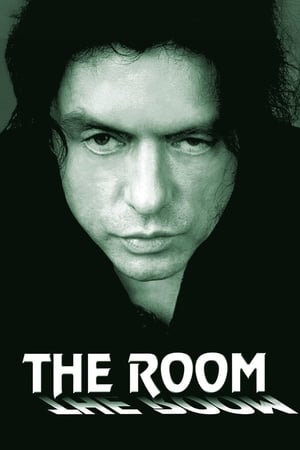
THE ROOM(2003)
Written by: Tommy P. Wiseau
Draft date: Not specified (copyright dates of 1999, 2000, and 2001-15 are listed)
Genre: Drama
Title: The Room
Written by: Tommy P. Wiseau
Draft date: Not specified (copyright dates of 1999, 2000, and 2001-15 are listed)
LOGLINE
In San Francisco, a generous, trusting banker discovers that his fiancée is carrying on an affair with his best friend, and as her lies and manipulations compound — including a false pregnancy announcement and fabricated abuse allegations — he spirals toward a devastating act of self-destruction.
| Very Poor | Poor | Fair | Good | Excellent | |
|---|---|---|---|---|---|
| PREMISE | ✓ | ||||
| STRUCTURE | ✓ | ||||
| CHARACTER | ✓ | ||||
| CONFLICT | ✓ | ||||
| DIALOGUE | ✓ | ||||
| PACING | ✓ | ||||
| TONE | ✓ | ||||
| ORIGINALITY | ✓ | ||||
| LOGIC | ✓ | ||||
| CRAFT | ✓ |
| Strong Pass | Pass | Consider | Recommend | Strong Recommend | |
|---|---|---|---|---|---|
| Overall | ✓ |
Genre: Drama
Sub-genre: Romantic Drama, Melodrama
Keywords: Love Triangle, Betrayal, San Francisco, Ensemble Cast, Infidelity, Suicide, Engagement, Birthday Party, Apartment Setting, Deception, Male Protagonist, Tape Recording, Dysfunctional Family
MPA Rating: R (sexual content, gun violence, drug references, strong language throughout, suicide depiction)
Budget Tier: Low ($1M–$10M): Predominantly apartment interiors with rooftop, alley, coffee shop, and brief car/park exteriors. One scene requires a car appearing to fly/levitate (VFX or practical effect). Moderate cast, present-day San Francisco setting.
Pages: 112
Time Period: Present over approximately 2-4 weeks.
Locations: Approximately 70% takes place in and around a single San Francisco apartment (living room, kitchen, bedroom, bathroom, staircase area). Roughly 15% on a rooftop with city views. Remaining 15% split across an alley, a coffee shop, Golden Gate Park (jogging), and brief car interiors. The rooftop scene with the flying car requires either VFX or a fantastical staging approach. The apartment needs a breakable full-length mirror and a window through which a TV can be thrown.
Lead: Male, approximate age unspecified (likely 30s-40s), race/ethnicity unspecified. Johnny is described as generous, trusting, emotionally expressive, and employed at a bank. He is devoted to his fiancée and deeply loyal to his friends, with an idealistic worldview that makes him vulnerable to betrayal.
Comparables: Closer (2004) — relationship betrayal and emotional cruelty among interconnected characters. A Streetcar Named Desire (1951) — melodramatic domestic conflict, volatile male protagonist, manipulative dynamics. Fatal Attraction (1987) — infidelity with escalating consequences and emotional destruction. Crimes of the Heart (1986) — ensemble domestic drama with tonal inconsistency between comedy and tragedy.
SYNOPSIS
JOHNNY (Adult), a devoted banker in San Francisco, wakes beside his fiancée LISA (Adult), an attractive but restless woman. He rushes to work hoping for a promotion, while Lisa immediately calls her mother CLAUDETTE (Adult), a pragmatic and self-absorbed woman, and confesses she no longer loves Johnny and finds him boring. Claudette urges Lisa to stay because Johnny provides financial security. Lisa then calls MARK (24), a handsome young man who is Johnny's best friend, flirting with him and arranging to meet for coffee.
BILLY (18), Lisa's younger brother described as obnoxious and homosexual, stops by the apartment looking for Johnny, expressing admiration for him. Later, Johnny returns home without his expected promotion, bitter about his employer. Lisa plies him with alcohol despite his protests, and they stumble to bed. The next day, Lisa prepares a seductive setting for Mark's visit — candles, music, a revealing outfit. Mark initially resists her advances, citing loyalty to Johnny, but Lisa breaks down his resistance and they have sex. Mark is immediately guilt-stricken, while Lisa is triumphant. She quickly cleans the apartment before Johnny returns with a rose.
Lisa fabricates a story that Johnny hit her while drunk the previous night. Johnny is horrified and swears off drinking. On the rooftop, Johnny and Mark toss a football and discuss women. Mark hints cryptically about infidelity while Johnny professes total trust in Lisa. Lisa and Claudette discuss Johnny's birthday party, and Claudette reveals she has breast cancer — a revelation Lisa and everyone else dismiss casually. Lisa tells Claudette that Johnny hit her, reinforcing the lie.
MICHELLE (Adult), Lisa's pretty blonde friend, and BRAN (Adult), Michelle's boyfriend, sneak into the apartment for a romantic chocolate-eating encounter and are caught by Lisa and Claudette. Billy arrives seeking sugar and flour, prompting hostile remarks from Claudette about his sexuality. Lisa explains that Johnny essentially adopted Billy, pays his rent, and acts as a father figure. Claudette advises Lisa to marry Johnny before leaving him so she can claim half his assets.
On the rooftop, JIMMY (Adult), a drug-dealing pimp, holds Billy at gunpoint demanding money owed from Billy's prostitution work. Mark, Lisa, and Claudette arrive and are also threatened. Johnny appears flying his Mercedes over the edge of the roof, reveals supernatural powers including bullet deflection and levitation, captures Jimmy, and flies off. Upon returning with blood on his mouth, Johnny consoles Billy, who confesses he was prostituting himself. Johnny and Billy later have a tender conversation where Billy admits his sexual attraction to Johnny, and Johnny responds with acceptance and platitudes about love.
Lisa confides in Michelle about the affair with Mark and her plan to leave Johnny. Michelle warns her that someone will get hurt. Johnny overhears Lisa telling Claudette about the affair and installs a tape recorder on the phone. PETER (Adult), a psychologist friend, advises Johnny to confront Lisa. Peter later confronts Mark on the rooftop, correctly guessing the affair with Lisa. Mark punches Peter unconscious but then apologizes. Peter advises Mark to end the relationship, calling Lisa a sociopath.
After Jimmy's funeral — his body drained of blood — the men gather in tuxedos and play football, resulting in injuries to both Bran and Peter. Johnny listens to incriminating recordings. Lisa continues the affair with Mark and tells her mother she loves Mark. She also announces at Johnny's birthday party that they are expecting a baby — a complete fabrication, as she later admits to Michelle and Peter.
At the birthday party, Mark drunkenly confronts Lisa about the baby. Johnny and Mark fight physically. After the guests leave, Lisa calls Mark while Johnny is in the bathroom, professing her love. Johnny plays back the recorded conversation, confirming the betrayal. Lisa declares she is leaving. Johnny destroys the apartment — throwing the TV through the window, overturning furniture — then finds a gun in a locked box. He writhes on Lisa's discarded clothes, then shoots himself in the head. Lisa and Mark return to find him dead. Lisa immediately mentions the $100,000 insurance payout. Mark, revolted, pushes her away, calls her a tramp, and tells her she killed Johnny. The sound of approaching sirens closes the narrative.
COMMENTS
PREMISE — Poor
The core concept — a good man destroyed by the woman he loves and the friend he trusts — draws on classical betrayal tragedy, positioning Johnny as a Job-like figure whose loyalty and generosity are repaid with cruelty. The premise contains inherent dramatic tension: a love triangle among people living in the same building, an approaching wedding, and a protagonist too trusting to see what is happening around him. The central dramatic question — will Johnny discover the betrayal, and what will happen when he does — is clear and compelling in the abstract. However, the premise is undermined by the characterization of Johnny as a near-perfect, almost superhuman figure with no discernible flaws beyond naïveté, which reduces the complexity of the tragedy. The thematic ambition articulated in the opening manifesto about human behavior and betrayal is earnest but broad, and the premise does not complicate its own thesis in any surprising direction. Comparable to Closer in its examination of infidelity's destructive power and A Streetcar Named Desire in its melodramatic domestic intensity, the material lacks the moral ambiguity that makes those works resonate. The San Francisco setting is underutilized beyond the Golden Gate Bridge as backdrop.
STRUCTURE — Poor
The narrative follows a recognizable trajectory — establishing the relationship, introducing the affair, escalating complications, and arriving at catastrophic revelation — but the execution is severely repetitive. Lisa confesses or hints at the affair to Claudette (5, 27, 51, 75), to Michelle (45-47, 85-87), and to Mark by phone (18-19, 107) in conversations that cover virtually identical ground each time without meaningfully advancing the situation. The inciting incident — Lisa's seduction of Mark (14-16) — arrives at an appropriate early point, but the middle section from roughly page 28 through page 80 constitutes an extended plateau where the same information cycles through different confidantes. Johnny's discovery via eavesdropping (52-53) and his installation of the tape recorder function as the midpoint catalyst, yet his response is passive — he records rather than acts — which stalls momentum. The climactic party sequence (89-107) finally delivers escalation through two physical fights and the public unraveling, and Johnny's suicide (110-111) provides a decisive ending. The flying car scene on the rooftop (35-36) represents a radical structural anomaly that breaks the domestic realism without explanation or recurrence, as if it belongs to an entirely different narrative. Subplots involving Billy's prostitution, Claudette's cancer, Bran's underwear, and Peter's psychological advice all dead-end without meaningful resolution or connection to the throughline.
CHARACTER — Very Poor
Johnny is presented as an idealized figure — generous, loyal, trusting, supernaturally powerful (35), beloved by everyone — which paradoxically makes him the least dimensional character. His arc follows a clear path from contentment to suspicion to devastation, but his lack of any genuine flaw (the "hitting" is Lisa's fabrication) means the tragedy registers as purely external rather than internally driven. Lisa, who functions as both deuteragonist and antagonist, possesses the clearest active goal — escape from a relationship she finds suffocating — but her motivations never deepen beyond "he's boring" (5) and material self-interest, culminating in the insurance remark (111) that reduces her to cartoon villainy. Mark's internal conflict between loyalty and desire is stated repeatedly (16, 68-69) but never develops; he cycles between guilt and capitulation without change. Peter exists solely as an exposition vehicle, announcing his expertise as a psychologist at every opportunity (59, 61, 62, 69) while offering advice that ranges from banal to troubling ("the best way to control a female is to make them emotionally dependent on you," 60). Billy is introduced with his sexuality as his primary trait (8), and his subplot involving prostitution and attraction to Johnny (42-43) appears and disappears without consequence. Claudette's breast cancer, mentioned on pages 20, 27, and 53, is never treated with gravity by any character, including Claudette herself.
CONFLICT — Poor
The central external conflict — Lisa and Mark's affair threatening to destroy Johnny's life — is established early and maintained throughout, but it lacks escalation because the stakes remain static for most of the middle section. Johnny suspects the affair from page 52 onward, yet chooses inaction, which drains tension from scenes where he interacts with Mark (76-80) and Lisa (48-50) because neither party confronts the truth. The two physical fights between Johnny and Mark at the party (97-98, 100-101) arrive in rapid succession without sufficient buildup between them. The internal conflict — Johnny's struggle between his love for Lisa and his growing awareness of betrayal — is stated ("I have to give her a second chance," 60) but not dramatized through difficult choices. The drug dealer subplot (33-40) introduces mortal danger but is resolved instantly by Johnny's supernatural intervention, which eliminates any sense of real threat. Scene-level conflict is often absent: many conversations involve characters restating known information to each other (Lisa telling Michelle about the affair on page 45 repeats what was told to Claudette on page 27 and will be told again on page 85), generating repetition rather than friction.
DIALOGUE — Very Poor
The dialogue is the most consistently problematic element across the material. Characters speak in expository declarations rather than conversation — "He supports you, he provides for you, and you can't support yourself" (5) — telling each other things both parties already know. Voices are largely interchangeable; Claudette, Lisa, Michelle, and Mark all use the same cadence and vocabulary, with Peter distinguished only by repeatedly identifying himself as a psychologist. Subtext is almost entirely absent: Lisa says "I don't love him anymore" (5), "I love Mark" (75), "I'm in love with Mark" (92) in plain statements to anyone who will listen, while characters who should be guarded speak with total transparency. The most distinctive moments are unintentionally so — "old man Donkey" (3), "doing sex" (16), "hemale trans-homo perverts" (40) — where unusual phrasing creates memorability but not intentional characterization. Peter's extended tirade about "stupider" comments (91) and Johnny's supernatural monologue about "power level" and "adjusted force rating" (35) represent extreme tonal departures that read as parody rather than drama. The repeated "Chip! Chip!" chicken taunting (55-56, 63, 72, 101) functions as a recurring motif but undercuts dramatic moments.
PACING — Poor
The material suffers from severe pacing imbalances. The first sixteen pages move efficiently through setup, establishing the engagement, Lisa's dissatisfaction, and the seduction of Mark. From approximately page 17 through page 80, momentum stalls as the same dramatic situation — Lisa is having an affair, various people learn about it, nothing changes — repeats across numerous scenes of near-identical content. The football-tossing scenes (23, 42, 55-57, 73-74) and the chocolate scene between Bran and Michelle (28-29) function as padding without advancing any plot or character arc. The Billy/Jimmy gun scene (33-40) arrives with sudden urgency but resolves so quickly (via the flying car) that it generates no sustained tension. The party sequence (89-107) finally delivers the confrontation the material has been deferring, but it arrives too late and must compress multiple revelations and two fights into a compressed space. Johnny's destruction of the apartment and suicide (109-111) move at an appropriate pace for their emotional weight, though the shift from furniture-smashing to the sexual act with Lisa's clothing to suicide happens in a single continuous sequence that lurches between registers.
TONE — Very Poor
The tonal incoherence is the material's most defining characteristic, and it represents a fundamental obstacle to dramatic effectiveness. The opening manifesto (2) signals earnest melodrama about human betrayal, and many scenes play as straightforward domestic tragedy — Johnny's anguish about the promotion (10), his pleading with Lisa (49), his suicide (110-111). Yet the flying Mercedes scene (35-36), complete with fangs, levitation powers, and "power level over 9,000," introduces supernatural fantasy without any preparation or follow-through. The chicken-noise running gag (55, 63, 72, 101) and Mark's animal impressions (73) play as broad comedy in the middle of a betrayal drama. Claudette's dismissal of Billy as "my son, the homo" (30) sits alongside Lisa's genuine concern for Billy's welfare (37-38). The treatment of Claudette's breast cancer — announced gravely (27) then ignored by every character including the patient — creates a tonal void where something serious is treated as background noise. Peter's speech about controlling women through emotional dependence (60) plays as sincere advice rather than intentional villainy, creating moral confusion about how the audience is meant to receive it.
ORIGINALITY — Poor
The love triangle resulting in the betrayed partner's destruction is among the oldest dramatic structures in existence, and the specific configuration here — trusting man, manipulative woman, guilty best friend — closely mirrors numerous predecessors. Compared to Closer, which explores infidelity through the moral complicity of all four participants, this material places blame almost entirely on Lisa, reducing the moral complexity. Compared to Othello, where the protagonist's own jealousy is weaponized against him by a brilliant antagonist, Johnny has no tragic flaw and Lisa has no strategy beyond simply sleeping with Mark in the same building. The flying car sequence and Johnny's supernatural abilities represent the most genuinely original element — nothing in the domestic drama genre prepares for a protagonist who deflects bullets and levitates criminals — but this originality exists in tension with, rather than in service of, the central narrative. The tape-recording device (53), the false pregnancy announcement (93), and the insurance payout revelation (111) are all recognizable dramatic beats executed without notable innovation. The character of Billy, combining the roles of surrogate son, comic relief, prostitution subplot, and unrequited same-sex attraction, represents an unusual combination of functions for a single supporting character, though these elements are accumulated rather than integrated.
LOGIC — Very Poor
Internal consistency is severely compromised on multiple levels. The most conspicuous issue is Johnny's supernatural abilities — flying a car, deflecting bullets, emitting power fields, apparent vampirism (blood on mouth, Jimmy's blood drained) — which appear in the rooftop scene (35-36) and Jimmy's funeral (70) but are never referenced, explained, or utilized again. Johnny can apparently kill a man and fly, yet he cannot confront his fiancée about her affair. Lisa tells Johnny he hit her (20), a fabrication that she repeats to Claudette (27), Michelle (45), and others, yet no character ever asks to see a bruise, and Johnny's distress about the accusation (22-23) evaporates without resolution. Lisa tells Johnny they are expecting (93) and privately admits it is a lie (94), but no character ever confronts her about this publicly. The tape recorder captures a phone conversation (107-109) that Lisa made to Mark while standing in the kitchen — the recorder was installed under the table by the phone (53) — yet somehow records both sides of the conversation with equal clarity, including Mark's responses. On page 33, the stage direction reads "BIMMY AND JIMMY" when the character's name is Billy, suggesting either a renaming inconsistency or typo. Scene 20 appears twice (80, 81) with different content, indicating a numbering error.
CRAFT — Very Poor
The writing adopts an all-caps action line style that reads as stage direction rather than screenplay description, consistently using constructions like "SHE GOES TO THE KITCHEN AND COMES BACK WITH TWO CUPS" (14) rather than crafting visual storytelling. Character introductions are functional but lack evocative detail — Mark is "A YOUNG HANDSOME MAN WITH A WELL-TRIMMED BEARD" (6), Michelle is "A PRETTY BLOND" (28), Jimmy is "A RUGGED DRUG DEALING PIMP WITH CHISELED FEATURES AND A BLACK BEANIE" (33) — relying on simple adjectives rather than behavior or specificity. The parenthetical stage directions are overused and often describe physical actions that belong in action lines: "(MARK WALKS AWAY FROM JOHNNY AND CAREFULLY POSITIONS HIMSELF SO HE IS STANDING IN THE EXACT MIDDLE OF THE ROOF)" (24). Formatting is inconsistent, with the cover page displaying multiple overlapping copyright notices and the body mixing screenplay and stage play conventions. Spelling errors appear throughout — "APPARTMENT" (12), "WHEELE" (35), "NEIGHNOR" (109, 111), "HURLES" (59) — and grammatical irregularities ("more stupider," 91; "doing sex," 16; "hemale," 40) persist without clear intentionality. The opening author's note (2) functions as a mission statement rather than dramatic setup, a convention more common to theater than film.
OVERALL — Strong Pass
The Room is a domestic melodrama about a devoted San Francisco banker whose fiancée's affair with his best friend leads to public humiliation and suicide, punctuated by an incongruous supernatural sequence. The material's strongest quality is the clarity of its central dramatic premise — betrayal by the two people a man trusts most — which provides a durable emotional engine that survives the execution problems surrounding it. The suicide climax and Mark's final rejection of Lisa (111-112) achieve genuine dramatic force through their directness. However, the material is undermined most severely by its dialogue, which lacks subtext, differentiation, and naturalism across virtually every scene, and by its tonal incoherence, which oscillates between sincere tragedy, broad physical comedy, and unexplained supernatural fantasy without apparent awareness of the shifts. The repetitive structure, in which the same information about the affair is communicated in nearly identical conversations across dozens of pages, represents a pacing problem that extensive revision could address. The characterization of Johnny as flawless and Lisa as irredeemable eliminates the moral complexity that could elevate the betrayal from melodrama to tragedy. The craft-level issues — formatting inconsistencies, spelling errors, stage-play conventions — compound but do not cause the fundamental dramatic problems, which reside in character construction, tonal control, and structural economy.
Get this level of coverage for your screenplay
Every coverage includes 10 category ratings, an overall recommendation, and detailed analysis — powered by the same methodology used by talent agencies and literary managers.
Movie data provided by TMDB