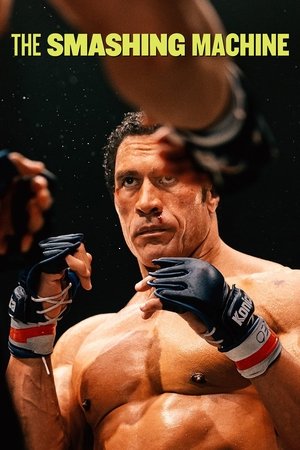
THE SMASHING MACHINE(2025)
Written by: Benny Safdie
Draft date: June 28th, 2024 (Shooting Draft)
Genre: Drama
Title: The Smashing Machine
Written by: Benny Safdie
Draft date: June 28th, 2024 (Shooting Draft)
LOGLINE
In the late 1990s, a gentle-souled MMA heavyweight with devastating power rises to fame in the sport's early days, only to spiral into opioid addiction and a volatile relationship that threaten to destroy him before a high-stakes international tournament offers a shot at redemption.
| Very Poor | Poor | Fair | Good | Excellent | |
|---|---|---|---|---|---|
| PREMISE | ✓ | ||||
| STRUCTURE | ✓ | ||||
| CHARACTER | ✓ | ||||
| CONFLICT | ✓ | ||||
| DIALOGUE | ✓ | ||||
| PACING | ✓ | ||||
| TONE | ✓ | ||||
| ORIGINALITY | ✓ | ||||
| LOGIC | ✓ | ||||
| CRAFT | ✓ |
| Strong Pass | Pass | Consider | Recommend | Strong Recommend | |
|---|---|---|---|---|---|
| Overall | ✓ |
Genre: Drama
Sub-genre: Sports Drama, Biographical Drama
Keywords: Based on True Events, Male Protagonist, Addiction, MMA/Fighting, Sports, Redemption, Foreign Locale, Mentor-Protégé, Dysfunctional Relationship, Rehabilitation, 1990s Period, Japan, Tournament, Masculinity, Brotherhood
MPA Rating: R (pervasive strong language, drug use including injection scenes, intense sports violence, domestic crisis including a suicide attempt)
Budget Tier: High ($40M–$100M) — period recreation across multiple international locations (Tokyo, Phoenix, Los Angeles, Ohio), large arena crowd sequences requiring thousands of extras or VFX augmentation, extensive fight choreography, multiple hotel/venue builds, and the Tokyo Dome interior.
Pages: 138
Time Period: Primarily 1997–2000 over approximately 3 years, with a brief coda in 2024.
Locations: Approximately 40% Tokyo (hotel lobbies, the Tokyo Dome arena and backstage areas, streets, shops, subway stations), 35% Phoenix, Arizona (Kerr's house, gym, barber shop, hospital, rehabilitation center, state fair, restaurant, drive-through), 15% Los Angeles (Hollywood jiu-jitsu gym, Redondo Beach steps), 10% Columbus, Ohio (Coleman's house, Ohio State gym). Requires a large-scale arena setting for multiple fight sequences, period-accurate late-1990s production design across all locations, and a Japanese countryside Buddhist temple.
Lead: Male, late 20s, White, physically massive (6'1", 260 lbs) with gentle eyes, an athletic grace that belies his size, and a megawatt smile — a deeply empathetic man concealing addiction behind charm and charisma.
Comparables: The Wrestler (2008) — a damaged combat-sport athlete struggling with addiction and relationships outside the ring; Raging Bull (1980) — the intertwining of athletic brilliance with personal self-destruction; The Fighter (2010) — family and friendship dynamics surrounding a fighter's comeback amid substance abuse; Uncut Gems (2019) — Safdie Brothers' immersive, character-driven intensity applied to a specific subculture.
SYNOPSIS
In 1997, MARK KERR (late 20s), a massively built freestyle wrestler with gentle eyes, makes his professional fighting debut at the World Vale Tudo Championship in Brazil. He dominates PAUL VARLENS (Adult), a much larger opponent, winning by referee stoppage while showing remarkable empathy — checking on Varlens afterward and holding his hand. Through voiceover narration and a montage of additional victories, Kerr describes the primal rush of competition and the god-like feeling of winning a tournament. He befriends fellow fighter MARK COLEMAN (late 20s), a fellow Midwesterner and elder statesman of the sport, who had helped launch Kerr's career.
By 1999, Kerr visits DOCTOR CORTEZ (Adult), his physician in Phoenix, for shoulder and knee injuries. While waiting, he charms an OLDER WOMAN named PEGGY (60s) and signs an autograph for her grandson. In the exam room, he sneaks a look at injectable medication before the doctor enters. At the front desk, he insists on paying out of pocket for prescriptions rather than using insurance — a subtle sign of secrecy. At a commercial gym, he inspires a YOUNG MMA FIGHTER (20s) with stories of his own early fear, revealing his generous spirit. At home, his girlfriend DAWN STAPLES (late 20s), an attractive but anxious brunette, prepares a meticulous protein shake for him. Kerr carelessly remakes it with whole milk, revealing their contrasting temperaments. Despite bickering over her cat Sneakers, they share genuine affection.
Kerr travels to Tokyo for a Pride Fighting Championship event, exploring the city with childlike wonder — buying ceramic art, visiting a Buddhist temple, and shopping for mini-disc players. At the Pride press conference, new rule changes are announced. Dawn arrives in Tokyo and visits Kerr's dressing room before his fight against IGOR VOVCHANCHYN (Adult), a feared Ukrainian striker. Coleman, acting as cornerman, is visibly annoyed by Dawn's presence. The couple argues, and Kerr enters the fight emotionally compromised. Igor knocks Kerr out with illegal knees to the head, but Kerr's protest to the referee and Pride owner MR. SAKAKIBARA (Adult) results in the fight being declared a no contest.
In the devastating aftermath, Kerr weeps alone in his dressing room before Coleman arrives to comfort him. Dawn reveals to Coleman that Kerr had been drinking for two weeks before the fight. Later, Kerr emotionally confides in Dawn about the irreplaceable high of competition, but the two cannot connect — a gulf made painfully visible when Igor visits the dressing room and Kerr shows the defeated fighter more emotional intimacy than he can offer Dawn. Back in Phoenix, Kerr's depression deepens. He barely eats, and Dawn discovers syringes in the bathroom. After an argument, Kerr destroys a door in rage, then pleads for Dawn to simply hold him.
Dawn calls Coleman in Columbus, Ohio, where he lives with his wife ELIZABETH (Adult) and daughter MCKENZIE (Child), hysterically reporting that Kerr was found unconscious. Coleman flies to Phoenix and visits Kerr in the hospital, where Kerr attempts to joke his way through the conversation before breaking down in tears, admitting he doesn't want to die. Coleman declares his love and holds him. Kerr subsequently cleans out his house of dozens of syringes and vials, dumps them in a dumpster, and checks into the Sierra Tucson rehabilitation center.
After 21 days in rehab, Dawn picks Kerr up and they enjoy the Arizona State Fair together — funnel cake, a demolition derby, the Gravitron ride. But cracks persist: at the derby, Kerr sees himself in the smashed cars, and the couple cannot find each other in a glass maze. Dawn's drinking becomes a point of contention when Kerr returns from rehab. Their arguments intensify as Dawn resents being treated as lesser now that Kerr is sober, while Kerr feels unsupported.
Pride announces a Grand Prix tournament worth $200,000 to determine the world's best fighter. Kerr delivers an emotional public apology to the Japanese fans and the organization. He travels to Los Angeles to train with BAS RUTTEN (Adult), a Dutch-American fighter and trainer, in an intense montage set to "My Way." During training, Bas suffers a tendon injury and Kerr administers Nubain from a syringe he still carries — he claims it is old and he is not using, then throws the vial away. Kerr impresses Mr. Sakakibara and Japanese journalists with his renewed dedication.
Dawn visits L.A. and presents Kerr with the ceramic bowl he had bought her in Japan, now glued back together in the spirit of Kintsugi. Kerr is deeply moved, but Bas watches the reunion with concern. Back in Phoenix, Dawn discovers voicemails from Coleman and Bas urging Kerr not to bring her to Japan. A brutal argument escalates: Kerr throws a beer bottle, tells Dawn to leave, and she retrieves a gun from his safe and points it at her own head. Kerr knocks the gun away, then breaks down the bathroom door when she locks herself inside with pills. He restrains her in a bear hug until police arrive and take Dawn away for a 72-hour psychiatric hold.
At the Pride Grand Prix finals in Tokyo, Coleman defeats AKIRA SHOJI (Adult) and advances. Kerr fights KAZUYUKI FUJITA (Adult) but cannot move in the ring, absorbing punishment until losing by decision. In a luxury operating room, Doctor Cortez stitches Kerr's chin as Coleman's championship fight against Igor plays on a nearby television. Coleman wins the tournament and the $200,000 prize. Kerr, alone in a locker room shower, washes the floor before sitting down under the water and smiling a genuine smile of acceptance.
A coda jumps to 2024: the real Mark Kerr pushes a grocery cart out of a Phoenix supermarket, noticed by a camera crew filming from across the street. Title cards reveal he co-parents a son with Dawn, lives a quiet life in Scottsdale, retired from fighting in 2009, and that the UFC has since become a $10 billion business.
COMMENTS
PREMISE — Good
The premise positions a contradictory figure — a man whose gentleness defines him as much as his violence — at the center of an early-era combat sport, creating inherent tension between who Kerr is and what he does. The central dramatic question is whether Kerr can reconcile the transcendent highs of competition with the self-destructive lows of addiction and emotional dependency, a question enriched by the sport's own transition from underground spectacle to mainstream legitimacy. Unlike The Wrestler, which charts a decline with finality, the material frames Kerr's trajectory as cyclical — recovery, relapse, partial redemption — landing closer to the messier, less cathartic territory of addiction narratives like Beautiful Boy. The triangulated relationship among Kerr, Coleman, and Dawn provides a rich dramatic engine: two men who share a language of physical intimacy that Dawn cannot access, and a woman whose own instability mirrors and amplifies Kerr's. The 1990s MMA world is a specific, underexplored setting that grounds the premise in a period of genuine cultural transition, and the biographical basis lends it weight. Where the premise is most vulnerable is in the absence of a single, propulsive dramatic question — the tournament arrives late and resolves anticlimactically — which means the material depends heavily on character portraiture rather than narrative momentum.
STRUCTURE — Poor
The material is structured as a loose biographical chronicle rather than a tightly plotted narrative, which creates both its most distinctive quality and its most significant liability. The first thirty pages function as an extended prologue establishing Kerr's dominance and personality across the 1997 Vale Tudo and UFC events before introducing the 1999 timeline and the central conflicts. The inciting incident — Kerr's loss to Igor (43) — arrives at roughly the right proportional point, but because no clear external goal has been established beyond fighting, the loss functions more as an emotional wound than a structural catalyst. The midpoint, Kerr's overdose and hospitalization (63-67), effectively raises the stakes and forces a change, but the subsequent rehab sequence (67-73) resolves too quickly, with Kerr emerging from Sierra Tucson in what feels like a scene transition rather than a dramatized transformation. The Grand Prix announcement (82-83) arrives at approximately page 82 of 138 — nearly 60% through — which means the tournament that should serve as the structural spine of the second half is introduced very late. The climactic Fujita fight (126-129) results in defeat, and Coleman's championship victory (134-135) serves as a surrogate climax, which is structurally unusual and emotionally muted since the protagonist is watching from an operating table. The present-day coda (137-138) provides closure but also underscores how little the narrative resolves on its own dramatic terms.
CHARACTER — Good
Kerr is a deeply rendered protagonist whose contradictions — enormous physical power paired with emotional fragility, radical empathy for opponents paired with inability to connect with his partner — generate the material's richest moments. His backstory is embedded in action rather than exposition, his want (the transcendent high of competition) is articulated explicitly in the dressing room scene with Dawn (49-50), and his need (to accept himself without that high) is implied throughout but only realized in the final shower scene (136). His arc, however, is passive: things happen to him — he loses, overdoses, gets dumped, loses again — and his agency is limited to brief moments of self-assertion like the rehab check-in (67) and the needle disposal (68). Dawn is drawn with surprising specificity — the meticulous shake-making sequence (22), the Gravitron ride (74), the Kintsugi bowl (106-107) — but her arc veers into crisis without sufficient interiority; the suicide attempt (119) arrives as a dramatic peak for Kerr rather than as the culmination of her own psychological trajectory. Coleman is the most consistently compelling figure: his understated love for Kerr in the hospital scene (66-67), his quiet irritation with Dawn (37-38), and his own parallel arc of fighting for his family give him a dimensionality that occasionally overshadows the lead. Bas Rutten provides levity and professional urgency but remains functional.
CONFLICT — Fair
The central external conflict — Kerr's pursuit of championship glory in a brutal, evolving sport — is established through visceral fight sequences but lacks a sustained through-line because there is no single opponent or tournament driving the narrative until page 82. The internal conflict between addiction and purpose is the material's true engine, and it is most potent in scenes where both forces are visible simultaneously, as when Kerr inspects the injectable vial in the doctor's office (15) or administers Nubain to Bas while insisting he is clean (94). The relationship conflict with Dawn escalates effectively through accumulation — the smoothie disagreement (22-23), the post-rehab tension (79-81), the Japan argument (114-118) — building to the gun and pills confrontation (119-120), which is the single most dramatically charged sequence. Scene-level conflict is strongest in the domestic scenes and weakest in the Japan press conference sequences (33-35, 82-84), which tend toward informational rather than dramatic exchanges. The final tournament provides external stakes, but Kerr's loss to Fujita (127-129) deflates rather than resolves the central conflict, and Coleman's victory serves as an emotional proxy rather than a direct resolution of what Kerr has been fighting for.
DIALOGUE — Fair
The dialogue achieves a naturalistic texture that distinguishes characters through rhythm and vocabulary rather than stylized language, consistent with the material's documentary-adjacent approach. Kerr's speech patterns — long, digressive, earnest, peppered with self-deprecating humor — are established in the gym conversation with the Young Fighter (19-22) and remain consistent through his press interviews and private moments. His flashlight-versus-laser analogy (10-11) is a character-defining detail that rings true. Coleman speaks in short, grounded declaratives that contrast effectively with Kerr's expansiveness, and their hospital exchange (64-67) achieves genuine emotional power through understatement. Dawn's dialogue is more variable: her domestic exchanges carry authentic friction (79-81), but her arguments sometimes cycle through the same beats — demanding validation, accusing Kerr of exclusion — without revealing new information, particularly in the extended Japan confrontation (114-118). The interview sequences with Japanese journalists occasionally flatten into exposition, as when the Young Female Pride Director delivers rule changes (34-35) or tournament announcements (83) that read as functional plot delivery rather than dramatic dialogue. The announcer commentary, while necessary for fight context, is occasionally overwritten (101-104).
PACING — Poor
The material's pacing is front-loaded with atmospheric world-building and back-loaded with dramatic urgency, creating an uneven rhythm across its 138 pages. The first 30 pages move deliberately through fight footage and interviews, establishing tone and character but delaying the introduction of active conflict. The Tokyo sequences in the first half (27-54) are rich in texture — the shopping, the temple visit, the press conferences — but their cumulative duration slows momentum when the narrative needs to be building toward the Igor fight. The domestic scenes in Phoenix are paced well individually, with the smoothie sequence (22-23) and the door-destruction scene (59-60) both demonstrating effective slow-burn tension. The training montage with Bas (85-104) is energizing but extended — approximately 20 pages of workout footage intercut with brief dialogue scenes — and could achieve the same effect more economically. The gun/suicide attempt sequence (119-120) is the most tautly paced section, with genuine urgency and surprise. The final tournament (123-135) moves efficiently through multiple fights but distributes its dramatic weight to Coleman's victory rather than Kerr's defeat, which means the emotional climax belongs to a supporting character.
TONE — Fair
The tone sustains a distinctive balance between documentary observation and intimate character study, drawing obvious influence from the 2002 documentary of the same name while translating its aesthetic into narrative filmmaking. The fight sequences oscillate between announcer-narrated broadcast footage and immersive ringside perspectives, a tonal duality that works well in the opening Vale Tudo sequence (2-9) but becomes repetitive across subsequent fights. The domestic scenes achieve a quieter, more unsettling register — Dawn's meticulous shake preparation followed by Kerr's careless demolition of her work (22-23) communicates volumes without dialogue and sets a tone of controlled unease that permeates their relationship. The demolition derby scene (75-77) represents the tone at its most layered: Dawn's giddy enjoyment against Kerr's slow recognition of himself in the destroyed cars. Where tone falters is in the transitions between comedic warmth (the Bob's Burgers drive-through, 56-57) and harrowing crisis (the gun scene, 119-120), which occur within relatively close proximity without sufficient modulation. The present-day coda (137-138) introduces a meta-documentary register — Kerr playing himself, noticing the camera — that is tonally jarring against the dramatized narrative preceding it.
ORIGINALITY — Good
The material occupies territory adjacent to The Wrestler and Raging Bull in its portrait of a combat athlete undone by forces outside the ring, but distinguishes itself through its specific historical moment — the late-1990s Wild West of MMA before UFC's corporate consolidation — and through its emphasis on male emotional intimacy rather than masculine isolation. Where those predecessors frame their athletes as fundamentally alone, this material builds its emotional architecture around the Kerr-Coleman friendship, and the hospital scene where Coleman says "I love you" to another fighter is genuinely unusual for the sports-drama genre. The documentary-hybrid approach — announcer narration, press conference sequences, the real Kerr appearing in the coda — is a formal choice that differentiates the execution from conventional biopics, though it also introduces the risk of feeling like a dramatized documentary rather than a standalone narrative. The Kintsugi bowl as a metaphor for damaged beauty is well-deployed but not unprecedented in films exploring brokenness and repair. The most original element may be the treatment of Dawn, who is neither purely sympathetic nor purely villainous but rather a person whose own damage interacts unpredictably with Kerr's — a more complex rendering of the "fighter's girlfriend" archetype than typically seen.
LOGIC — Fair
The internal logic is generally consistent, though several elements raise questions. Kerr's ability to carry and administer Nubain at Bas's gym (94) while ostensibly in recovery is acknowledged by his claim that the syringe is "old," but the convenience of having a half-full vial and a syringe in his locker strains credibility as a coincidence — this may be intentional ambiguity, but it is not clearly resolved. The timeline of Kerr's rehab stay (67-73) — 21 days at Sierra Tucson followed by an apparently rapid return to public life — is plausible but compressed in a way that elides the difficulty of early recovery. The Pride rule changes regarding knees (35-36) are established before the Igor fight, and the foul call is consistent with those rules (43-44), which is well-constructed. Dawn's access to Kerr's gun safe (119) presumes she knows the combination, which is reasonable for a live-in partner but is not established beforehand. The present-day coda states Kerr co-parents a son with Dawn (138), which implies a reconciliation and child that the narrative never dramatizes — a significant gap for a story that makes their relationship its emotional core. The Fujita fight's resolution — Kerr simply cannot move (129) — is presented without medical explanation, leaving ambiguity about whether this is exhaustion, injury, or psychological collapse.
CRAFT — Fair
The writing operates in a distinctive register that blends documentary precision with novelistic interiority, frequently embedding emotional direction within action lines — "There is a Radical Empathy behind his eyes" (5), "FORCES A SMILE OF LOVE FOR THE FIRST TIME" (77) — that signals directorial intention rather than observable action. This approach is effective for a shooting draft authored by the director but occasionally crosses into un-filmable territory, as when the national anthem sequence asks the audience to perceive that "all of these thoughts bubble in our characters heads" (98). Character introductions are inconsistent: some are vivid and specific (Dawn's first appearance emphasizes her meticulous behavior, 22), while others are perfunctory or absent (Bas Rutten receives no physical description beyond height and nationality, 85). The fight choreography is written with genuine expertise and clarity, each exchange legible on the page — the Fujita fight (127-129) is particularly well-constructed in its escalating hopelessness. Formatting is functional but includes multiple draft artifacts: "(MORE)" tags appearing mid-page (2), duplicate paragraphs about Bas's recording (87), and inconsistent character name spellings ("Cortes" vs. "Cortez" throughout, "Colman" for Coleman on 47). The camera directions are extensive and specific — the hallway pan between doors (81), the camera entering the shower (136) — appropriate for a director's shooting draft but dense for a reading experience.
OVERALL — Consider
The Smashing Machine is a biographical sports drama chronicling MMA pioneer Mark Kerr's rise, addiction, and partial redemption across the late 1990s, structured as an intimate character study rather than a conventional athletic narrative. Its greatest strengths are character and tone: Kerr is rendered with genuine complexity, the Kerr-Coleman friendship achieves rare emotional depth for the genre, and the domestic scenes with Dawn build with authentic, uncomfortable specificity toward the shattering gun sequence. The craft of the fight choreography is exceptional, translating physical combat into legible, emotionally charged prose. The most significant weakness is structural — the material functions as a biographical chronicle without a sufficiently propulsive dramatic spine, arriving at its tournament engine too late and resolving it through a supporting character's victory rather than the protagonist's agency. The pacing compounds this issue, with atmospheric sequences in the first half and the extended training montage consuming pages that could build toward a more dramatically satisfying climax. The present-day coda, while conceptually interesting, introduces a tonal register that sits uneasily against the dramatized narrative. This is a deeply felt and carefully observed work whose individual scenes frequently achieve real power, but whose overall architecture asks the emotional texture to compensate for narrative momentum it does not fully generate.
Get this level of coverage for your screenplay
Every coverage includes 10 category ratings, an overall recommendation, and detailed analysis — powered by the same methodology used by talent agencies and literary managers.
Movie data provided by TMDB