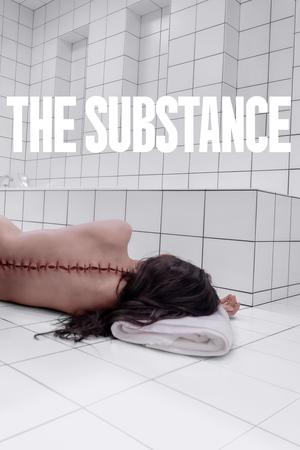
THE SUBSTANCE(2024)
Written by: Coralie Fargeat
Draft date: May 3rd 2022
Genre: Horror
Title: THE SUBSTANCE
Written by: Coralie Fargeat
Draft date: May 3rd 2022
LOGLINE
A fading, fifty-year-old fitness TV star, freshly fired from her long-running show, injects a mysterious black-market serum that splits her into two bodies — her aging original self and a stunning younger version — who must share existence in strict seven-day rotations, but the younger self's insatiable hunger for more time sets off an irreversible spiral of bodily deterioration, jealousy, and grotesque transformation.
| Very Poor | Poor | Fair | Good | Excellent | |
|---|---|---|---|---|---|
| PREMISE | ✓ | ||||
| STRUCTURE | ✓ | ||||
| CHARACTER | ✓ | ||||
| CONFLICT | ✓ | ||||
| DIALOGUE | ✓ | ||||
| PACING | ✓ | ||||
| TONE | ✓ | ||||
| ORIGINALITY | ✓ | ||||
| LOGIC | ✓ | ||||
| CRAFT | ✓ |
| Strong Pass | Pass | Consider | Recommend | Strong Recommend | |
|---|---|---|---|---|---|
| Overall | ✓ |
Genre: Horror, Drama
Sub-genre: Body Horror, Psychological Thriller, Dark Satire
Keywords: Female Protagonist, Hollywood, Aging, Beauty Standards, Body Transformation, Doppelgänger, Celebrity, Television Industry, Misogyny, Self-Destruction, Vanity, Identity, Los Angeles, Grotesque
MPA Rating: R (pervasive graphic body horror, strong language throughout, brief sexuality, nudity)
Budget Tier: Medium ($10M–$40M) — primarily interior apartment and TV studio locations, but requires extensive practical and digital body horror effects, creature/prosthetic design, and several elaborate set pieces including a live New Year's Eve show sequence.
Pages: 145
Time Period: Present over approximately 8 months.
Locations: 60% in a spacious Los Angeles apartment (living room, bathroom, secret room behind a wall, kitchen, bedroom, walk-in closet). 20% in TV studio soundstages and backstage corridors. 10% on LA streets and the Hollywood Walk of Fame. 10% across miscellaneous locations: a restaurant, a hospital ER, a diner, a cocktail lounge, a seedy deposit/locker corridor, a fitting room. The apartment bathroom requires a hidden room built behind a wall. The finale requires a large live TV studio set dressed for a New Year's Eve spectacular. The Walk of Fame sidewalk bookends the narrative.
Lead: Female, approximately 50, white, physically fit but aging; outwardly confident and glamorous but privately devastated by her diminishing relevance. Her younger split (Sue) is female, early 20s, white, supernaturally beautiful and increasingly narcissistic.
Comparables: Black Swan (2010) for the female protagonist's psychological fracturing and body horror driven by performance pressure; Death Becomes Her (1992) for dark comedy about women's obsessive pursuit of youth and beauty; The Picture of Dorian Gray for the hidden cost of preserved youth transferred onto a decaying counterpart; Titane (2021) for extreme French body horror with a female lead navigating identity and physical transformation.
SYNOPSIS
The narrative opens with a top-shot visual metaphor: a syringe injects fluorescent liquid into a raw egg yolk, causing a second, more perfect yolk to emerge and separate. A static shot of the Hollywood Walk of Fame shows workers installing a star for ELISABETH SPARKLE. Over time, the star ages and is neglected, eventually smeared with ketchup by an indifferent tourist.
ELISABETH SPARKLE (close to 50), a once-celebrated Oscar-winning actress turned TV fitness host, leads her long-running morning show "Sparkle Your Life." After taping, she overhears HARVEY (mid-50s), the crass network director, ranting on his phone in the men's bathroom about replacing her with someone young and hot, calling her "the old bitch." At a lunch meeting, Harvey fires her with empty pleasantries about renewal and biology. Her agent CRAIG SILVER (40) also drops her. Distracted while driving, Elisabeth crashes her car.
At the hospital, a YOUNG MALE NURSE with piercing blue eyes performs an unusual spinal examination and secretly slips a USB stick labeled "THE SUBSTANCE" into her coat pocket. Outside, she encounters FRED (50s), a balding, awkward former classmate who gushes over her beauty. At home, Elisabeth watches the USB stick's presentation: a deep male voice explains that a single injection can unlock DNA to create a younger, more perfect version of oneself, but the two bodies must share time equally — seven days each — and "you are one." Elisabeth throws the stick away, then retrieves it from the trash after a drunken, despairing night.
She calls the number, receives a delivery at a seedy locker facility, and injects the Activator. In agonizing pain, a second body literally emerges from her spine. The new young woman — who will name herself SUE (20s) — wakes on the bathroom floor, sutures Elisabeth's back, and connects a feeding IV bag. Sue attends the casting call to replace Elisabeth on the network, names herself on the spot, and instantly captivates the room. Harvey hires her immediately for "Pump It Up," Sue's sexier, younger version of Elisabeth's show. Sue negotiates an every-other-week absence to accommodate the switching schedule.
Sue builds a hidden room behind the bathroom wall to store Elisabeth's body during her weeks, removes Elisabeth's framed poster and memorabilia, and launches into her new life. The show is a massive hit. Sue begins going out at night, bringing home a motorcycle-riding man named TROY (25-30). When the IV nutrition bag runs empty during her date, Sue secretly punctures Elisabeth's spine to extract extra stabilizer fluid rather than switch on time. When Elisabeth awakens, she discovers her index finger has aged horrifically with arthritis — the irreversible cost of Sue's stolen hours. Elisabeth calls the Substance hotline and learns there is no reversal: "What has been used on one side is lost on the other."
Elisabeth's weeks become increasingly desolate. She vacuums, watches TV, and stares at Sue's billboard outside her window. At a diner, a SWEATY OBESE MAN (50s) with a familiar birthmark and the locker number 207 reveals himself as another Substance user, warning her about his other self "eating away" at him. Elisabeth finds Fred's old number and arranges a dinner date, but after dressing up, she spirals into self-loathing comparing herself to Sue's billboard image and never goes. Sue, upon returning, is disgusted by Elisabeth's binge eating and physical decline, and views the matrix body with increasing contempt.
Harvey offers Sue the network's New Year's Eve show — 50 million viewers, live. Sue begins systematically draining Elisabeth's spinal fluid for extra days, rationalizing each theft. Over months, Elisabeth's body deteriorates catastrophically: varicose veins, a dowager's hump, near-blindness, hearing loss, necrotic toes. Elisabeth calls demanding to stop the experience entirely. She receives a termination kit — a vial of black liquid for an intra-cardiac injection into Sue. She prepares to kill Sue but, seeing a card reading "They're going to love you" beside roses, breaks down. She cannot bring herself to end her younger self and instead revives Sue with an emergency switch pipe to the heart.
Both women awaken simultaneously for the first time. Sue spots the termination vial and attacks Elisabeth in a prolonged, brutal fight through the apartment. Sue beats Elisabeth to death, then realizes she has killed the matrix — killed herself. Panicking but committed, Sue goes to the studio for the New Year's Eve show. During preparations, her teeth fall out. She glues them back in. A black spider-like floater overtakes her vision. Her ear detaches. She rushes home and injects the remaining Activator into herself, attempting to birth a third, better version. What emerges is MONSTROELISASUE — a grotesque hybrid with misplaced body parts, teeth in cheeks, and Elisabeth's screaming face embedded in its back.
Monstro puts on the princess dress, glues Elisabeth's poster-face over her own, and walks to the studio. She takes the stage live on air. Her mask falls off, revealing the monster. Panic erupts. Blood sprays from a detaching hand. She flees through the streets, her body disintegrating into a shapeless mass that drags itself to the Hollywood Walk of Fame. Lying on Elisabeth's star, she watches golden confetti fall as the sounds of applause fill her ears. At dawn, a street-cleaning machine scrubs away the bloody remains.
COMMENTS
PREMISE — Excellent
The core concept is sharp and immediately graspable: a woman splits herself in two to recapture youth, but the arrangement demands a balance she cannot maintain. The premise embeds its central conflict directly into its mechanics — the seven-day rule is both the plot engine and the thematic statement, forcing Elisabeth/Sue into a zero-sum competition with herself over finite life. The setting of shallow Hollywood television provides the perfect pressure cooker for a parable about aging, self-worth, and the male gaze, with Harvey functioning as the system's grotesque mouthpiece. What distinguishes the concept from its closest relatives — Death Becomes Her's comic vanity or Dorian Gray's hidden portrait — is the literalization of self-hatred: Elisabeth and Sue are the same person, which means every act of cruelty Sue commits against the matrix is self-inflicted. This gives the material an emotional dimension that transcends its body-horror spectacle, and it makes for an exceptionally strong pitch.
STRUCTURE — Good
The architecture is sound and propulsive, organized around a clear escalation pattern. The pre-existing life and inciting incident land efficiently: Elisabeth's firing, the car crash, and the USB stick discovery all occur within the first 15 pages, and the Activator injection — the true commitment — arrives around page 26, placing it at roughly 18% of the page count, which is slightly early but appropriately urgent given the material's momentum. The midpoint lands near pages 62-68, where Sue steals extra time and Elisabeth discovers her deformed finger, permanently altering the stakes from "will the balance hold" to "the balance has already broken." The structural engine thereafter is a ratchet: each of Sue's thefts produces visible deterioration on Elisabeth's body, and each scene in Elisabeth's week grows more claustrophobic (119, 139, 163). The "all is lost" moment — Elisabeth's attempt to terminate Sue and subsequent reversal (124-126) — occurs around page 125 (86%), which is late for that beat and compresses the climax. The New Year's Eve show and Monstro sequence that follow move at breakneck speed, which is tonally effective but leaves almost no room for emotional processing between Elisabeth's death, Sue's disintegration, and the final Walk of Fame image.
CHARACTER — Good
Elisabeth is the strongest element. Her arc moves through clearly delineated beats: a public identity built on appearance (6), private devastation at its loss (13), desperate self-reinvention (26), and then a prolonged, harrowing decline into self-loathing (135-137) as she cannot separate her worth from her youth. The scene where she dresses for Fred's date and progressively undoes herself in the mirror (132-137) is the most psychologically precise sequence in the material, dramatizing internalized ageism without a single line of exposition. Sue, however, presents a characterization challenge: because she is Elisabeth, her increasing cruelty toward the matrix should register as tragic self-destruction, but her scenes are primarily defined by external success and vanity rather than interior conflict. Her moments of hesitation before puncturing Elisabeth's spine (99, 100) are brief, and she never articulates — even to herself — what she fears losing beyond the surface. Harvey functions well as a thematic instrument but is deliberately one-dimensional, his every scene built around the same gag of crudeness. Fred, the one character who offers Elisabeth genuine human warmth, disappears entirely after the phone call (80-81), a missed opportunity for contrast.
CONFLICT — Good
The central conflict — Elisabeth versus Sue, which is Elisabeth versus herself — is formidable and escalates with mechanical precision. Each violation of the seven-day balance produces a visible, irreversible physical consequence, which means the stakes are literally written on Elisabeth's body: the arthritic finger (65), the aged leg (101), the dowager's hump (105). This concreteness prevents the conflict from becoming abstract. The scene-level conflict is less consistent during Elisabeth's solo weeks, where the dramatic tension often relies on her watching television or vacuuming (71-72, 85), and the emotional stakes of her isolation are conveyed more through atmosphere than through active confrontation. The fight between Elisabeth and Sue (126-128) is the conflict's inevitable physical climax and is staged with appropriate brutality, though it arrives somewhat abruptly — they go from Elisabeth's attempted termination to full combat with little negotiation, which sacrifices a beat of mutual recognition that could have deepened the tragedy.
DIALOGUE — Good
Dialogue is deployed sparingly and strategically, with most of the material's heaviest lifting done through visual storytelling. Harvey's lines are the most distinctive — his shrimp-eating monologue about "renewal" (9), his renaming of Isabella to "Cindy" (38), his declaration that "pretty girls should always smile" (132) — all function as thematic bullets delivered in a consistent voice of oblivious, entitled crudity. Elisabeth's dialogue becomes more revealing as she deteriorates: her phone call to the Substance hotline (67-68) exposes her psychological compartmentalization as she refers to Sue as "she" despite being told they are one. Sue's dialogue is deliberately shallow, which is the point, but the talk show scene (106-110) where Elisabeth watches Sue claim to be "sincere and grateful" is the dialogue's sharpest moment of irony. The Substance's hotline voice operates as a deadpan oracle, and its flat repetition of "Would you like to stop?" (102-103) is chilling precisely because it offers no comfort. The weakest dialogue belongs to the boyfriend character (118-120), whose lines feel purely functional.
PACING — Fair
The first sixty pages move with excellent velocity, propelled by the novelty of the premise and the visceral spectacle of Sue's emergence. The montage sequences — Sue's makeover, the secret room construction, the show's debut (38-55) — are efficiently compressed. The middle stretch, roughly pages 70-105, sags during Elisabeth's weeks by design, but the repetitive structure of vacuum-cleaner-and-television scenes (71, 85) risks losing momentum even as it dramatizes her stagnation. The cooking-while-watching-Sue's-talk-show sequence (106-110) is the strongest scene in this section because it gives Elisabeth active behavior. The final thirty pages accelerate sharply — teeth falling out (130), the ear in the elevator (135), the Monstro transformation (137) — and the pacing here is relentless but effective, matching the narrative's logic of total disintegration. The Walk of Fame coda (145) provides necessary deceleration after the chaos.
TONE — Good
The tonal register is body horror pitched to the frequency of social satire, and this combination holds with impressive consistency. The egg-yolk prologue (3), Harvey's shrimp-eating (9), and the Substance's instructional video with blu-tack balls (17-19) all establish a world where human bodies are treated as objects to be molded, consumed, and discarded — a tone that makes the later grotesqueries feel like logical extensions rather than escalations. The tonal tightrope is most precarious during the Monstro sequence (138-145), where the material pushes into Grand Guignol excess: the breast swinging from an eye socket, the hand detaching on the microphone (143), the blood spraying like a "snow canon." These moments risk tipping from horror into comedy, and the material seems to invite that ambiguity rather than resolve it. The fantasy sequence where studio staff greet Monstro warmly (140) is the one scene that feels tonally uncertain — it is unclear whether it registers as poignant delusion or absurdist gag.
ORIGINALITY — Good
The concept of a youth-splitting serum is not new — The Picture of Dorian Gray, Death Becomes Her, and Cronenbergian body horror all occupy adjacent territory. What distinguishes the execution is the literalization of the self-as-two-bodies mechanic, which creates a uniquely visceral dramatization of internalized misogyny: Elisabeth's enemy is not an external force but her own younger self, and the violence she suffers is self-inflicted through a chain of her own decisions. The seven-day timer is a clever structural invention that gives the premise built-in escalation. The cooking montage intercut with Sue's talk show (106-110) is a set piece without clear precedent in the genre, weaponizing domestic banality against celebrity spectacle. The Monstro transformation and the New Year's Eve climax push into territory that Titane and early Cronenberg explored — the body as site of identity collapse — but the specificity of the Hollywood fitness-show milieu and the Elisabeth/Sue dynamic give the material its own identity within that lineage.
LOGIC — Fair
The Substance's rules are established clearly — seven days each, stabilizer injections daily, switching resets the cycle — and the consequences of violating them are consistent. The aging transfers track logically: Sue steals hours, Elisabeth's body pays (65, 101). One notable gap involves the boyfriend character (115-120): he has apparently been living with Sue for months during the lead-up to New Year's Eve, yet there is no indication of how Sue has managed the switching schedule around his presence, or whether she has been switching at all during this period. Given that hundreds of empty IV bags litter the secret room (116), the implication is that she has not switched for months, which should have produced far more dramatic physical consequences on Elisabeth than the material depicts in real time. The Activator vial marked "single use / discard after use" (24) is used a second time by Sue on page 137 — the text notes there is "a little of the fluorescent yellow fluid left," but the single-use instruction creates an ambiguity about whether this should work at all, which the material does not address.
CRAFT — Good
The writing operates in a maximalist visual register that is remarkably effective at conveying information through image rather than dialogue. Character introductions are handled through physical detail — Harvey's "greasy fingers that rip the head off of a shrimp" (9), Fred's "just a crown of hair left on his balding head" (15) — which communicates personality instantly. The recurring POV shots from inside containers (trash can at 21, fridge at 48 and 85, cardboard box at 50) create a visual motif of entrapment and disposal. The Walk of Fame sequence (3-5) is a masterclass in compressed time-passage told entirely through a static frame. Action lines occasionally over-direct camera movements and editing choices — "ZZZZZZZZZZZ THE IMAGE REWINDS AND PLAYS EVEN CLOSER" (36), for instance — which pushes the material toward a shooting script rather than a spec. The naming conventions (NewElisabeth, MonstroElisaSue, MushofMonstroElisaSue, PuddleofMonstroElisaSue) are playful but create mild confusion in the final pages when it becomes unclear which consciousness, if any, is driving the body. Formatting is consistent throughout with only minor issues, including an apparent French-language scene heading on page 129 ("INT. SALLE DE BAIN - JOUR").
OVERALL — Recommend
The Substance is an ambitious body-horror satire about a displaced Hollywood fitness star who splits herself into a younger version, only to be consumed — literally and figuratively — by the youth she created. Its greatest strengths are its premise, which functions as both plot engine and thematic statement, and its craft, which tells a complex narrative primarily through visual storytelling with extraordinary economy and inventiveness. Elisabeth's psychological arc is the emotional core, and her mirror scenes and self-sabotaged date night represent the material at its most devastatingly precise. The weakest elements are Sue's relative thinness as a character beyond surface vanity, the pacing drag during Elisabeth's middle-section weeks, and some logical gaps around the extended non-switching period before the finale. The Monstro climax is committed and viscerally memorable, though it tests the tonal boundaries the material has carefully established. The material delivers a coherent, visually commanding, and thematically unified experience whose body-horror excess is earned by the specificity of its human pain.
Get this level of coverage for your screenplay
Every coverage includes 10 category ratings, an overall recommendation, and detailed analysis — powered by the same methodology used by talent agencies and literary managers.
Movie data provided by TMDB