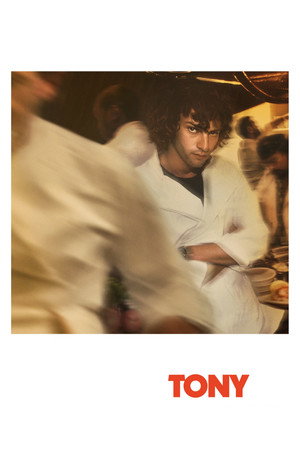
TONY(2026)
Written by: Todd Bartels & Lou Howe
Draft date: Not specified.
Genre: Drama
Title: TONY
Written by: Todd Bartels & Lou Howe
Draft date: Not specified.
LOGLINE
In the summer of 1975, a restless, self-destructive twenty-year-old escapes his New Jersey home for Provincetown, Massachusetts, where—dumped by his girlfriend and starting at the bottom as a dishwasher—he falls under the mentorship of a worldly chef and discovers that food, community, and vulnerability might be the antidotes to his own darkness.
| Very Poor | Poor | Fair | Good | Excellent | |
|---|---|---|---|---|---|
| PREMISE | ✓ | ||||
| STRUCTURE | ✓ | ||||
| CHARACTER | ✓ | ||||
| CONFLICT | ✓ | ||||
| DIALOGUE | ✓ | ||||
| PACING | ✓ | ||||
| TONE | ✓ | ||||
| ORIGINALITY | ✓ | ||||
| LOGIC | ✓ | ||||
| CRAFT | ✓ |
| Strong Pass | Pass | Consider | Recommend | Strong Recommend | |
|---|---|---|---|---|---|
| Overall | ✓ |
Genre: Drama
Sub-genre: Coming-of-Age Drama, Biographical Drama
Keywords: Based on True Events, Male Protagonist, Mentor-Protégé, Food/Culinary, 1970s Period, Cape Cod, Restaurant Kitchen, Addiction, Mental Health, Suicide, Portuguese Culture, Summer Setting, Found Family, Romantic Relationship
MPA Rating: R (pervasive strong language, drug use including heroin, brief nudity, sexual references)
Budget Tier: Medium ($10M–$40M): 1970s period recreation across multiple Provincetown locations, ocean/boat sequences, fishing fleet, fireworks, beach party set pieces, period wardrobe and vehicles, modest VFX for fantasy/vision sequences.
Pages: 111
Time Period: Summer 1975 over approximately 2-3 months.
Locations: 80% Provincetown, MA — restaurant kitchen (working kitchen with range, walk-in fridge, alley), share house on the beach, Commercial Street storefronts, dive bars (Colony Tap, Atlantic House), fishing wharf, sand dunes with remote shacks, multiple beaches, ocean sequences on fishing boats. 10% Leonia, NJ — suburban home, roadside hot dog stand. 10% various — ocean swimming/underwater sequences, ferry boat, highway hitchhiking. Period 1970s throughout. Requires working fishing boats, a beach clambake for 100+ extras, 4th of July fireworks, underwater photography, and a drag cabaret stage.
Lead: Male, 20, white (French-American), six-foot-four with long hair (later cut short), volatile and charismatic, intellectually voracious but emotionally immature, prone to rage, addiction, and self-destruction beneath a bravado exterior.
Comparables: The Bear (FX series) — high-pressure kitchen dynamics, found family among cooks, grief and addiction; Big Night (1996) — food as expression of love and identity, culminating feast as emotional climax; Almost Famous (2000) — young protagonist's formative summer among charismatic older figures; Good Will Hunting (1997) — brilliant but self-sabotaging young man requiring mentorship to confront his pain.
SYNOPSIS
ANTHONY "TONY" BOURDAIN (20), a lanky, restless college student, pitches his parents on a summer of adventure at the family dinner table in Leonia, New Jersey. His mother GLADYS (adult) shuts him down, insisting he take a job in Hackensack, while his father PIERRE (adult) offers quiet, ineffectual support. Tony retreats to his bedroom, packs a bag, and sneaks out with Pierre's silent blessing. After stopping at Hiram's Roadstand for his beloved chili cheese dogs, Tony hitchhikes to Provincetown, Massachusetts, where his girlfriend NANCY (21), a sharp, literary young woman, works at a pizza shop.
Nancy is not thrilled to see him. Tony crashes at the Colony Tap, a local dive, where he antagonizes the bar's cool crowd by raging against their ABBA selection. DIMITRI (early 30s), the charismatic, multilingual leader of the group, tries to calm him, but TYRONE (30s), a hulking cook, throws Tony out. Alone on the beach, Tony has a dark moment at the harbor railing—a vision of jumping—before swimming naked into the ocean.
The next morning, Nancy tells Tony they need to break up permanently. Devastated, he stumbles to Ciro's restaurant seeking work. CIRO (40s), the boorish owner, hires him as a dishwasher. Tony discovers the kitchen crew is the same group from the bar: Dimitri is head chef, Tyrone his second, LYDIA (adult) a single mother who makes chowder, and SAL (adult) a Salvadoran line cook. They nickname Tony "Mel"—short for "mal carne," bad meat.
Tony struggles through grueling shifts but begins earning small gestures of acceptance. Nancy officially breaks things off but allows Tony to rent the spare room in her share house with her sister ROBIN (23) and roommate MIKE (20). Tony wins his place by cooking croque madames for the household. He throws himself into kitchen work, arriving early, studying Sal's oyster-shucking technique, and slowly gaining competence.
Dimitri begins mentoring Tony—waking him at 5 AM to buy squid from Portuguese fishermen, teaching him the marsupial apron pouch, cooking an eight-hour Portuguese squid stew. Tony is introduced to the town's Portuguese community at a hidden beach shack in the dunes, where he hears fado music for the first time and meets HOWARD (elderly), a retired fisherman and Dimitri's own mentor, and BEATRIZ (30s), a singer Dimitri quietly loves. During a miraculous striper run, Tony participates in a communal fishing and feasting experience that transforms his understanding of food and belonging.
Tony reconnects briefly with Nancy—cooking her a striper at the restaurant, sharing ice cream, swimming naked together, spending the night. But Nancy pulls back the next morning, insisting the encounter cannot change things. Tony erupts, trashing the share house kitchen, and Nancy kicks him out. He begins sleeping in the restaurant, channeling his pain into studying Escoffier and Larousse, mastering egg preparations, and developing his palate. Lydia cuts his hair. He gets a pierced ear. The transformation is underway.
When Ciro demands a spectacular Labor Day beach party, Tony and Dimitri plan an ambitious French haute cuisine menu, fueled by cocaine. They create elaborate aspic fish tableaux in the walk-in. But on the busiest night of summer, Tony abandons his station to cook an off-menu Lobster Thermidor for Nancy, who rejects the gesture. Meanwhile, Tyrone's pans catch fire. Tony throws water on the grease fire, igniting the uncleaned hood. Ciro demands someone take the blame. Dimitri claims responsibility and is fired. The crew turns against Tony, who cannot bring himself to apologize.
Tony spirals—confronting Nancy at a dance club, running out of cocaine, and finally shooting heroin at the Colony Tap with bartender BOBBY (adult). During his high, he has an underwater vision in which he appears as an eleven-year-old boy, diving to the ocean floor to retrieve the mythological oyster from his French childhood—finding a speck of light above him worth swimming toward.
Tony visits Dimitri at his dune shack and receives a devastating rebuke: Dimitri calls him a silver-spoon kid who has never done anything for anyone else. Tony absorbs this. He visits Howard at the wharf and asks about the legendary clambake tradition. He enlists Portuguese fishermen and their boats to gather seafood, then goes door-to-door apologizing to each crew member. He apologizes to Nancy at Spiritus, and she delivers a searing speech comparing him to his mother, urging him to believe in himself.
On the day of the party, Tony organizes a communal clambake on the beach—an assembly line of clam bundles, lobsters, corn, and linguica cooked in garbage cans over fire pits. The Portuguese fishermen, the kitchen crew, tourists, and drag queens all converge. Dimitri arrives and reconciles with Tony. Ciro's exclusive party for the wealthy is abandoned as the crowd gathers on the public beach. Tony gives a speech quoting Heart of Darkness, toasting "the flicker." He calls his mother. He serves the crew his own family meal: Hiram's chili cheese dogs.
Days later, Tony boards a ferry out of Provincetown. His friends wave from the pier. At the stern, he gazes at the receding town, then climbs the railing and jumps in slow motion before the screen cuts to black. End cards reveal Tony married Nancy, became a celebrated chef and author, struggled with addiction and mental health, and died by suicide in France in 2018.
COMMENTS
PREMISE — Good
The premise—a young Anthony Bourdain finding himself through the crucible of a Provincetown kitchen in the summer of 1975—carries inherent dramatic tension by pairing an intellectually arrogant but emotionally fragile protagonist against a world that does not care about his pedigree. The central dramatic question is not whether Tony will become a great chef but whether he can overcome his own self-destructive patterns long enough to connect with other human beings. Food operates as both literal subject and metaphor: the oyster from childhood represents a moment of power and belonging, and the communal clambake becomes proof that Tony can give rather than only take. The setting is richly specific—Portuguese fishing culture, 1970s counterculture, the restaurant underworld—and provides a textured foundation that distinguishes this from a generic coming-of-age. The Bourdain biography lends emotional weight but also imposes a shadow: the material must contend with the foreknowledge of its subject's death, which the visions and the final jump make explicit. Unlike comparables such as Almost Famous or Good Will Hunting, the protagonist here is not passively absorbing a world but actively alienating it, which makes the arc more volatile and less reassuring. The risk is sentimentalizing a figure whose real darkness was irreducible, but the premise at least acknowledges that tension rather than dodging it.
STRUCTURE — Fair
The narrative follows a clean chronological arc over one summer, with structural beats falling in roughly conventional positions: Tony arrives in Provincetown and gets dumped by Nancy (the catalyst, around pages 14-17), takes the dishwashing job (commitment to the new world, around page 23), experiences the striper run and beach shack as a midpoint transformation (pages 56-59), and the kitchen fire serves as the "all is lost" crisis (pages 85-90). The climactic clambake occupies pages 103-110, proportionally appropriate for a climax. Where the architecture works best is in the cause-and-effect chain linking Tony's cocaine use, his obsessive off-menu cooking, and the fire—each decision builds logically to the catastrophe. The montage of Tony's culinary education (68-70) efficiently compresses weeks of growth but arrives after a long stretch of episodic scenes in the middle section (roughly pages 35-55) that, while individually charming, lack a strong connective engine. The Nancy subplot functions as an emotional throughline but oscillates in a pattern—rejection, reconciliation, rejection—that becomes predictable by the third cycle. The apology tour (pages 99-102) provides satisfying payoff for relationships seeded throughout, and the dual endings—the communal feast and the ambiguous ferry jump—create a bittersweet resolution that honors both the character's growth and his unresolved pain.
CHARACTER — Fair
Tony is vividly drawn: his motormouth intellectualism, his volcanic sensitivity, his compulsive need for attention are all established in the opening monologue (3) and consistently demonstrated through behavior rather than exposition. The five-beat arc is present—backstory with Gladys and Pierre (3-4), want to win Nancy back and prove himself, internal need to face his own vulnerability rather than running from it, active pursuit of his goals through cooking, and genuine change evidenced by the apology tour and the phone call to his mother (109). Dimitri is the strongest supporting character, with his own implied backstory of past failures (46, 67, 96), his role as both mentor and mirror, and his refusal to be Tony's enabler when it matters most. Nancy, however, is underserved by the material—she exists primarily as a barometer of Tony's behavior rather than as a character pursuing her own arc. She mentions wanting to "grow" (17) and feeling envious of Tony's purpose (42), but these threads are never developed into action. Robin reads as a single-note antagonist. Lydia, Tyrone, and Sal are colorful and well-differentiated through speech and behavior, though none undergoes meaningful change. The ensemble is appropriate in size and each member serves the thematic function of teaching Tony something about community.
CONFLICT — Good
The main external conflict is Tony's struggle to earn his place in the kitchen hierarchy and, by extension, in a community that has no obligation to accept him. This is formidable because every gain Tony makes—learning to shuck oysters, earning Dimitri's trust, reconnecting with Nancy—is imperiled by his own behavior, which constitutes the main internal conflict: his compulsive need for attention and his terror of vulnerability drive him to sabotage every relationship he builds. The fire sequence (85-90) is the convergence point where external and internal conflicts collide—Tony's selfish off-menu cooking directly causes the catastrophe. Scene-level conflict is generally strong: the ABBA confrontation at the Colony Tap (13-14), the escalating tension between Tony and Tyrone over station duties (72, 83-86), and Nancy's devastating speech comparing Tony to his mother (102-103) all generate genuine friction. The Ciro antagonism functions adequately as a systemic obstacle but remains one-dimensional—Ciro is a bully without complexity, which limits the satisfaction of the clambake's implicit triumph over him. The internal conflict's resolution is appropriately ambiguous: Tony's growth is real but incomplete, as the final jump suggests (113).
DIALOGUE — Good
The dialogue is the material's most consistently accomplished element, achieving distinct voices for nearly every character. Tony's speech is a recognizable cocktail of literary references, profanity, and manic energy—"the pirate's life for me" monologue (3), the breathless cooking pitch to Ciro (21-22), and his speech quoting Heart of Darkness (109-110) all sound like the same person at different emotional registers. Nancy's voice is drier, more measured, and her best moments land through restraint: "A cheap parlor trick. Everything's better with an egg on it" (31). The kitchen crew speaks in a convincing patois of Spanish, Portuguese, and blue-collar English, with Sal's untranslated insults and Tyrone's profane pragmatism ("We hittin' the fuckin' iceberg!" on 86) providing texture. Dimitri's dialogue shifts register between avuncular wisdom and sharp rebuke, which tracks his dual role (96). The weakest dialogue belongs to Ciro, whose lines rarely rise above functional antagonism ("Who the fuck did this?!" on 88). The banter between Tony and Nancy (10-11, 31-32, 62-63) crackles with intelligence and subtext, effectively conveying two people who are intellectually matched but emotionally misaligned.
PACING — Fair
The first thirty pages move briskly, efficiently establishing Tony's world, his arrival in Provincetown, the breakup, and his entry into the kitchen. The middle section between pages 35 and 65 is where momentum sags—the repetitive cycle of Tony seeking Nancy's approval, being rebuffed, then returning to the kitchen creates a sense of stasis despite individual scenes being well-crafted. The bonfire scene (35), the Jaws conversation (35), and the Clapps Pond gathering could be consolidated without losing essential beats. The cocaine-fueled cooking montage (75-81) re-energizes the narrative with manic energy that appropriately mirrors Tony's state, and from the fire forward (85), the pacing tightens considerably—the spiral, the apology tour, and the clambake unfold with propulsive urgency. The clambake sequence itself (103-110) is well-paced, balancing preparation, execution, and emotional payoff without overstaying. The epilogue on the ferry (112-113) wisely runs only two pages, allowing the ambiguous final image to land without dilution.
TONE — Fair
The tonal identity is a tricky calibration between raucous kitchen comedy and genuine psychological darkness, and the material largely succeeds at both without letting either dominate. The fantasy sequences—the pirate ship kitchen (50), the 17th-century walk-in fridge (77-80), the underwater oyster visions (15, 94)—are the most tonally precarious elements. The pirate ship and Versailles hallucinations land as charming because they are brief and contextually motivated (Tony's imagination, cocaine), but the underwater sequences carry a much heavier symbolic weight that occasionally feels imposed rather than earned. The juxtaposition of Tony burning himself with a cigarette (66) against the comedy of the ABBA fights is jarring, but productively so—it prevents the material from becoming a nostalgic romp. The fado shack sequence (55-57) achieves a tonal register distinct from anything else in the piece, introducing genuine melancholy and cultural specificity that deepens the world. The end cards (113) shift tone dramatically from ambiguous to biographical, and the explicit mention of suicide recontextualizes the visions with a gravity that some of the earlier comedic scenes may not fully support.
ORIGINALITY — Fair
The biographical coming-of-age set in a restaurant kitchen occupies territory adjacent to The Bear and Kitchen Confidential (Bourdain's own memoir), and the summer-of-transformation framework echoes Almost Famous and The Way We Were. The Portuguese fishing community and fado culture provide genuine novelty—this is not a world frequently depicted in American film, and its integration into the kitchen milieu creates a distinctive cultural texture. The fantasy sequences, while individually inventive, draw on a familiar visual grammar of magical realism that recalls The Secret Life of Walter Mitty (2013). The most original element is the structural decision to end on profound ambiguity—the final jump neither confirms death nor survival, forcing the biographical epilogue to carry the weight of interpretation. The clambake as climactic set piece is a fresh inversion of the typical cooking competition or restaurant opening that drives most culinary narratives. However, the mentor-protégé dynamic between Dimitri and Tony follows a well-worn arc (wisdom imparted, trust betrayed, reconciliation achieved) without significant deviation from the template.
LOGIC — Fair
The causal chain holds under scrutiny for the major plot mechanics: Tony's cocaine use and obsessive off-menu cooking logically produce the fire, and Dimitri's decision to take the blame follows from his established sense of responsibility and his guilt over enabling Tony (90). The Portuguese fishermen's willingness to help Tony at the clambake is adequately motivated through Howard's endorsement (98), though the speed with which an entire fishing fleet mobilizes for a stranger stretches convenience. A more significant logic concern is Tony's access to cocaine: Bobby the bartender appears as a supplier with no prior establishment (72), and Tony's ability to fund an escalating drug habit on dishwasher wages is never addressed. The fire itself is well-constructed—the uncleaned hood is planted early as a Chekhov's gun (27-28), and Tony's ignorance about grease fires is consistent with his amateur status. The reconciliation between Tony and the crew after his apology tour (99-101) happens quickly given the severity of the betrayal, but the compressed timeline of the final act makes this a pacing choice rather than a logic failure. Nancy's oscillation between warmth and rejection (59-65) is psychologically credible even if structurally repetitive.
CRAFT — Good
The writing style sits on the literary end of the spectrum, with action lines that frequently editorialize ("A raw nerve, finally giving in, facing himself" on 110) and employ metaphor ("a tsunami of feelings" on 93). This voice is effective when it captures Tony's interiority—the description of him as "vulnerable and sensitive, but also full of rage" (4) efficiently communicates what dialogue alone cannot—but occasionally tips into overwriting, particularly in the ocean sequences ("both beautiful and sinister" on 9). Character introductions are vivid and economic: Dimitri as "the de-facto mayor of P-Town" (13), Lydia as "goddess of clam chowder, single mom" (23), and Howard's face as "a leathery map of years at sea" (9) all land with immediate clarity. The kitchen sequences demonstrate genuine technical knowledge—the marsupial pouch (45), the aspic preparation (78), the assembly-line clambake (105)—which grounds the culinary world in physical specificity. Formatting is clean with one minor inconsistency: the blue revision markers and asterisks throughout suggest an active revision process that occasionally leaves vestigial marks. The culinary monologue to Ciro (21-22) is a tour de force of voice-driven exposition that reveals character, backstory, and comic timing simultaneously.
OVERALL — Consider
TONY is a biographical coming-of-age drama about twenty-year-old Anthony Bourdain's transformative summer as a dishwasher in 1975 Provincetown, where a charismatic mentor, a Portuguese fishing community, and the wreckage of his own behavior teach him the first lessons about food, empathy, and self-destruction that would define his life. The material's greatest strengths are its dialogue—distinctive, literate, and alive with subtext—and its richly specific world, which integrates Portuguese culture, 1970s kitchen life, and Cape Cod geography into a setting that feels genuinely inhabited. Dimitri is a compelling mentor figure, and the kitchen ensemble provides warmth and texture. The weakest elements are Nancy's underdevelopment as a character with her own agency, the repetitive middle-section pacing driven by the on-again-off-again romantic cycle, and an occasional tension between the comedic kitchen energy and the serious psychological undercurrents of Tony's self-harm and suicidal ideation. The fantasy sequences are ambitious but uneven—the underwater oyster visions carry genuine emotional weight, while the Versailles hallucination, though entertaining, risks trivializing the cocaine spiral. The clambake climax is emotionally satisfying and structurally sound, earning its communal warmth through the painful failures that precede it. The final image—Tony jumping from the ferry, suspended in air before a cut to black—is the material's boldest choice, refusing to resolve the tension between growth and destruction that defines both the character and the real man.
Get this level of coverage for your screenplay
Every coverage includes 10 category ratings, an overall recommendation, and detailed analysis — powered by the same methodology used by talent agencies and literary managers.
Movie data provided by TMDB