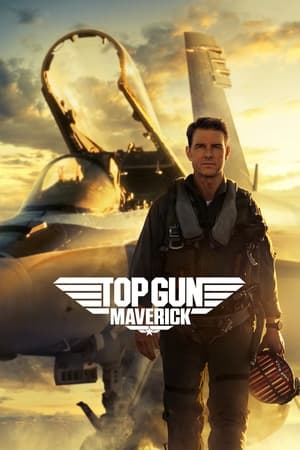
TOP GUN: MAVERICK(2022)
Written by: Ehren Kruger and Eric Warren Singer and Christopher McQuarrie (Story by Peter Craig and Justin Marks, Based on Characters Created by Jim Cash & Jack Epps, Jr.)
Draft date: November 25, 2019
Genre: Action
Title: Top Gun: Maverick
Written by: Ehren Kruger and Eric Warren Singer and Christopher McQuarrie (Story by Peter Craig and Justin Marks, Based on Characters Created by Jim Cash & Jack Epps, Jr.)
Draft date: November 25, 2019 (Cherry)
LOGLINE
A aging Navy test pilot, still clinging to the cockpit decades after his glory days, is pulled back to the Top Gun program to train a new generation of elite aviators for an almost-impossible bombing mission — complicated by the fact that one of his students is the bitter son of his late best friend, whose death he's never stopped carrying.
| Very Poor | Poor | Fair | Good | Excellent | |
|---|---|---|---|---|---|
| PREMISE | ✓ | ||||
| STRUCTURE | ✓ | ||||
| CHARACTER | ✓ | ||||
| CONFLICT | ✓ | ||||
| DIALOGUE | ✓ | ||||
| PACING | ✓ | ||||
| TONE | ✓ | ||||
| ORIGINALITY | ✓ | ||||
| LOGIC | ✓ | ||||
| CRAFT | ✓ |
| Strong Pass | Pass | Consider | Recommend | Strong Recommend | |
|---|---|---|---|---|---|
| Overall | ✓ |
Genre: Action, Drama
Sub-genre: Action Adventure, Military Drama, Mentor-Protégé Drama
Keywords: Military, Mentor-Protégé, Redemption, Legacy, Father Figure, Aerial Combat, Naval Aviation, Sequel, Male Protagonist, Ensemble Cast, Dogfight, Impossible Mission, Grief, Reconciliation, Aircraft Carrier
MPA Rating: PG-13 (sustained intense action sequences, some strong language with limited f-word usage, peril)
Budget Tier: Ultra High ($100M+) — extensive aerial photography with multiple fighter jet types, aircraft carrier sequences, military hardware, large cast, multiple domestic and implied foreign locations, complex aerial VFX and practical stunt coordination.
Pages: 169
Time Period: Present, over approximately 4-5 weeks.
Locations: Approximately 30% California desert test facility and training canyons (China Lake area), 25% North Island Naval Air Station / Top Gun facilities (Coronado, San Diego), 15% Hard Deck bar and Penny's house (coastal San Diego), 15% USS Theodore Roosevelt (aircraft carrier at sea), 10% hostile foreign territory (snowy mountains, enemy airfield), 5% miscellaneous (Iceman's home, cemetery, hangar home, truck stop). Requires extensive aerial filming over mountains and ocean, carrier deck access, period aircraft (P-51 Mustang, F-14 Tomcat), modern military jets (F-18 Super Hornets), desert bombing range, simulated enemy airfield with destruction, and a frozen lake environment.
Lead: Male, approximately late 50s, white, ruggedly handsome test pilot who lives modestly but adventurously — defiant, instinctive, emotionally guarded, unable to let go of the past or accept a future without flying.
Comparables: Top Gun (1986) — direct sequel continuing characters and themes; The Right Stuff (1983) — test pilot ethos, pushing beyond limits; An Officer and a Gentleman (1982) — military training crucible with personal transformation; The Bridges at Toko-Ri (1954) — carrier-based mission with existential stakes and the human cost of duty.
SYNOPSIS
PETE "MAVERICK" MITCHELL (late 50s), a decorated but perpetually demoted Navy Captain, lives in a hangar filled with motorcycles and a vintage P-51 Mustang. He works as a test pilot at China Lake, preparing to fly the experimental DARKSTAR hypersonic jet to Mach 9. When his team learns that REAR ADMIRAL CHESTER "HAMMER" CAIN (60s), a cold-eyed advocate for unmanned drones, is coming to shut the program down, Maverick moves up the test flight to beat Cain's arrival. His loyal warrant officer BERNIE "HONDO" COLEMAN (35) and the engineering team — JACK, SIMON, and MATTHEW — reluctantly support the plan.
Maverick launches the Darkstar and, despite Cain ordering him to land, pushes past the Mach 9 test point. He reaches the contract threshold of Mach 10 but cannot resist pushing further. The aircraft breaks apart beyond Mach 10.2, and Maverick ejects, stumbling into a truck stop diner. Cain informs Maverick that his career should be over — he cannot get promoted, will not retire, and refuses to die — but a call has come in: Maverick has been ordered to return to Top Gun at North Island.
At North Island, VICE ADMIRAL BEAU "CYCLONE" SIMPSON (40s) and ADMIRAL "WARLOCK" BATES (55) brief Maverick on an urgent mission: an unsanctioned uranium enrichment plant in a heavily defended valley must be destroyed before it becomes operational in three weeks. The mission requires a low-level canyon run, a precision pop-up bombing dive, and a high-G climb out — all while evading surface-to-air missiles and fifth-generation enemy fighters. Maverick's job is not to fly the mission but to teach twelve Top Gun graduates and select the six best. Among the pilot photos, Maverick spots BRADLEY "ROOSTER" BRADSHAW (late 20s), the son of his late RIO Goose. Cyclone reveals that Maverick is here only because his old rival-turned-friend, Admiral TOM "ICEMAN" KAZANSKY, Commander of the Pacific Fleet, intervened.
Maverick reconnects with PENNY BENJAMIN (late 40s), who owns a bar called the Hard Deck near the base, and with the young pilots, including the cocky JAKE "HANGMAN" SERESIN, the capable NATASHA "PHOENIX" TRACE, her quiet backseater ROBERT "BOB" FLOYD, REUBEN "PAYBACK" FLOYD, MICKEY "FANBOY" GARCIA, and JAVY "COYOTE" MACHADO. Rooster's hostility toward Maverick is palpable — Maverick once pulled Rooster's application to the Naval Academy, setting his career back four years.
Training begins with dogfighting exercises in which Maverick defeats every team, exposing both their individual weaknesses and their lack of cohesion. Rooster is skilled but too cautious, refusing to push his limits. Hangman is brilliant but selfish, abandoning wingmen. Maverick clashes with Cyclone over methods, lowering the hard deck and pushing the pilots dangerously hard. The low-level canyon training proves devastating — no team can complete the run within the required two-and-a-half-minute window. Rooster consistently arrives at the target but too slowly, while Hangman flies too fast for his wingmen to follow.
Maverick visits Iceman at his Coronado home and discovers his friend is dying of throat cancer, barely able to speak. Iceman types his side of the conversation, urging Maverick to teach Rooster and to let go of his fear. SARAH KAZANSKY (50), Iceman's wife, watches the friends share what may be their last meeting.
A football game on the beach builds camaraderie among the pilots, but Cyclone moves the mission up one week, compressing the training timeline. Maverick introduces the pop-up bombing phase — a near-suicidal inverted dive followed by a 9-G climb out of "coffin corner." During training, Coyote blacks out from G-forces, nearly crashing. Phoenix and Bob suffer a double engine failure from a bird strike and must eject, losing their aircraft. Cyclone uses the incidents to question Maverick's methods, but Phoenix and Bob refuse to blame their instructor.
Rooster confronts Maverick about the pulled academy papers. Maverick cannot bring himself to reveal the truth — that Rooster's dying mother Carole made him promise to keep her son from flying. In private, Penny draws the truth from Maverick and gently suggests he must trust Rooster to make his own choices. Iceman dies, and at his funeral Maverick eulogizes his wingman. With Iceman gone, Cyclone removes Maverick from the training program entirely.
Penny pushes Maverick not to quit. He takes a black F-18 and flies the entire mission profile solo, completing the canyon run in two minutes and fifteen seconds, hitting the target on the mark, and pulling 10 Gs on the climb — proving the mission is survivable. Cyclone, forced to acknowledge the demonstration, reluctantly reinstates Maverick not just as instructor but as mission leader.
On the carrier, Maverick selects his team: Phoenix and Bob, Payback and Fanboy as the two-seat pairs, and Rooster as his wingman. Hangman accepts being left in reserve with grace. The strike launches at dawn. During the canyon run, Rooster freezes on the throttle, falling dangerously behind schedule. Payback urges him forward. Finally, Rooster whispers "Talk to me, Dad," pushes the throttle, and catches up with pure instinct. The first bomb team — Maverick and Phoenix/Bob — scores a direct hit on the bunker. Rooster and Payback/Fanboy deliver the killshot despite a laser malfunction, destroying the target.
On the climb out, SAMs fill the sky. Maverick takes a missile meant for Rooster, his jet destroyed. He ejects onto a frozen lake in enemy territory and is strafed by a Hind helicopter. Rooster, defying orders, turns back and destroys the helicopter but is hit by a SAM himself and ejects nearby. The two men reunite on the ground. They infiltrate the bombed enemy airfield and steal an F-14 Tomcat, with Rooster taking the RIO seat his father once occupied.
Airborne in the antique fighter, they are intercepted by two fifth-generation enemy jets. Maverick destroys one by exploiting its wingman's missile. A prolonged dogfight with the second enemy pilot pushes the F-14 to its limits — they exhaust missiles, then guns. Maverick's final burst brings down the second bandit. A third fifth-gen fighter corners them with no weapons and no flares remaining. Hangman, who launched without authorization, arrives in time to destroy it. The battered F-14 makes a harrowing carrier landing with no tailhook and no nose gear, slamming into a barricade net.
On deck, Rooster and Maverick embrace. Rooster tells Maverick that saving him is what his dad would have done. Days later, Penny, Amelia, Phoenix, and Rooster visit Maverick's hangar. Rooster sees photos of himself as a boy alongside Maverick and Goose, and smiles at the makeshift family taking shape. Maverick takes Penny up in his P-51 Mustang, and as she screams and laughs, he banks the vintage plane into the sky — still flying, still refusing to grow up.
COMMENTS
PREMISE — Excellent
The premise harnesses a potent combination: an aging warrior confronting obsolescence while forced to prepare younger pilots for a mission he believes only he should fly, all while reckoning with a surrogate son who blames him for past betrayal. The uranium enrichment plant provides a concrete ticking-clock objective, and the canyon geography — GPS-jammed, SAM-defended, requiring precision flying below radar — creates a mission that is inherently cinematic and tactically specific enough to sustain extended training sequences. The mentor-student dynamic is enriched by the Maverick-Rooster relationship, which functions simultaneously as a professional conflict, a generational father-son wound, and a spiritual reckoning with the ghost of Goose. What elevates the premise beyond a standard "one last mission" framework is the thematic tension between Maverick's identity as a pilot and his responsibility as a protector — he cannot be both without risking the person he most wants to protect. The pairing of this personal conflict with a mission whose parameters are essentially suicidal gives the material genuine dramatic stakes that do not depend solely on spectacle.
STRUCTURE — Good
The structural architecture is clear and proportional, with the Darkstar sequence serving as an extended cold open and character thesis (1-23), the Top Gun assignment and mission briefing as the catalyst (24-28), and training exercises filling the long middle section before a climactic mission and extended aerial battle. The midpoint lands effectively with Iceman's scene (82-85), which reorients Maverick's internal arc from resistance to acceptance. The strongest structural choice is the demonstration flight (111-114), which functions as a break-into-three moment at roughly page 111 of 169 — proportionally around 66%, slightly early but earning its placement by simultaneously resolving the "can the mission be flown?" question and triggering Maverick's reinstatement. The carrier mission and its aftermath occupy the final forty pages and maintain escalating tension through a series of compounding obstacles: Rooster's hesitation, the laser malfunction, the SAM hits, the shootdown, the F-14 theft, and the three-stage dogfight. One structural concern is that the training middle section (approximately pages 40-110) risks repetition — sortie after sortie follows a briefing-flight-debrief pattern that, on the page, can read as episodic even if each introduces new tactical elements. The debrief scenes (75-80, 91-93) efficiently compress multiple lessons but do not always advance the Maverick-Rooster relationship proportionally to their page count.
CHARACTER — Good
Maverick is the rare legacy protagonist whose arc is not about recapturing past glory but about learning to let go — of control, of Rooster, of his identity as the man in the cockpit. His five arc beats are well-defined: backstory rooted in Goose's death and a promise to Carole (89), a want to keep flying (22), an internal need to release Rooster into danger (83-85), active resistance through his rogue demonstration flight (111-114), and a completed transformation when he takes the SAM for Rooster (138). Rooster is the most important supporting character and carries his own complete arc from resentment through hesitation to instinctive trust, crystallized in his "Talk to me, Dad" moment (131). The ensemble pilots are efficiently differentiated — Hangman's selfishness and bravado, Phoenix's competence and loyalty, Bob's invisible-man quiet — though several (Harvard, Yale, Fritz, Halo, Omaha) exist only as names and cannon fodder for sortie sequences. The weakest character work belongs to Cyclone, who functions as an institutional antagonist but never develops beyond procedural obstruction. His final-act reversal (115-116) feels earned by plot logic rather than character growth.
CONFLICT — Good
The central external conflict — training pilots to execute an impossible mission under a compressed timeline — generates consistent pressure, and the mission itself delivers on the promise of escalating danger. The internal conflict is more compelling: Maverick must choose between protecting Rooster and preparing him to survive, a dilemma made explicit in the Iceman scene (83-85) where Maverick admits "If I send him on this mission he might never come home... If I don't send him, he'll never forgive me." This is the emotional engine of the material. Scene-level conflict is strongest during the training sequences where tactical failure has personal consequences — Hangman abandoning Phoenix (54-55), Rooster refusing to increase speed (78-79) — and weakest during the romance scenes, which carry warmth but little friction. The antagonist layer is split between Cyclone's bureaucratic resistance and the unnamed enemy state's military hardware, neither of which generates the psychological menace of a personified adversary. The fifth-gen enemy pilot in the climactic dogfight is faceless and voiceless, which keeps the final confrontation purely mechanical rather than dramatic.
DIALOGUE — Fair
The dialogue is functional and efficient throughout, with several exchanges that achieve genuine wit — Penny's rapid-fire deflection of Maverick's "look" (30-31), Hondo's deadpan "She's an acrobat. Very flexible" (40), and the kid in the diner delivering "Earth" (20). Character voice differentiation is solid among the principals: Hangman's cocky drawl ("Got it bad, got it bad... I'm hot for teacher," 55), Bob's wallflower deadpan ("I've been here the whole time," 34), and Phoenix's unflappable competence are all distinct. The Iceman scene (82-85) achieves genuine poignancy through the typing mechanic, which forces economy and raises the emotional stakes of every word. The weakest dialogue appears in the extensive radio chatter during flight sequences (pages 8-13, 44-49), where technical accuracy crowds out drama. Multiple pages of procedural call-and-response — fuel temps, hydrogen pressure, breaker checks — read as production reference material rather than dramatized tension. The draft also carries visible "ALT" lines throughout, sometimes three or four options per beat (8, 60, 155-160), which makes certain climactic moments difficult to evaluate as written.
PACING — Fair
The opening Darkstar sequence moves with impressive velocity through approximately twenty pages, establishing Maverick's character and the material's kinetic identity in a single sustained set piece. The training middle section is where pacing becomes uneven. The sortie structure — brief, fly, debrief — repeats five or six times between pages 44 and 100, and while each introduces new tactical information (dogfighting, then canyon runs, then pop-up strikes), the emotional rhythm becomes predictable. The football scene (86) provides necessary tonal release, but it arrives after the training has already begun to feel repetitive. The romance subplot with Penny is well-paced as individual scenes but interrupts training momentum — the sailing sequence (68-72) is charming but lengthy given the ticking clock the material has established. From page 117 onward, pacing is exceptional: the carrier launch, canyon run, bombing dive, shootdown, F-14 theft, and triple-stage dogfight maintain relentless forward momentum for fifty pages without a wasted beat.
TONE — Good
The tone is confident and consistent, balancing high-stakes military action with character-driven emotion and just enough humor to relieve pressure without undermining danger. The Darkstar sequence sets the tonal template: technical precision layered with defiant humor ("dark blue. Ominous," 5) and genuine peril. The material knows when to be funny — Bob's introduction (33-34), Maverick being thrown out of the bar (39) — and when to be grave, as in Iceman's scene where the typing mechanic forces silence to carry weight (82-85). The funeral and eulogy (106-107) risk sentimentality but earn their emotion through restraint. The only tonal wobble occurs in the climactic dogfight, where Rooster's reaction lines cycle through so many alternate options — "Oh my god. We're gonna die" / "HOLY SHIT. WE'RE DEAD" / "Oh shit, do some of that pilot shit" (155-156) — that the intended register is unclear. The final P-51 scene (168-169) is a perfect tonal coda, matching the material's essential spirit: joy in flight, defiance of mortality, and love expressed through shared risk.
ORIGINALITY — Fair
The material is explicitly a legacy sequel, and its originality operates within that framework rather than in spite of it. The closest comparables are the original Top Gun (1986) and the wave of legacy sequels it preceded — Creed (2015) shares the mentor-protégé structure with a surrogate son, while The Right Stuff provides the test-pilot ethos. What distinguishes this draft is the specificity of its mission design: the canyon run, pop-up bombing dive, coffin corner, and cascading failure conditions create a tactical architecture that makes the training sequences feel purposeful rather than generic. The F-14 theft in the third act is a genuinely surprising turn that recontextualizes the entire material — suddenly the obsolete aircraft that has been treated as a relic becomes the only vehicle of survival. The Iceman typing scene is a formally inventive way to handle a character who cannot speak, turning limitation into emotional power. Where originality is weakest is in the romance, which follows a familiar pattern of reunion-resistance-reconciliation without a single beat that departs from expectation.
LOGIC — Fair
The internal logic is generally sound, with the mission parameters established thoroughly enough to make the training sequences feel consequential. The GPS jamming rationale for using F-18s instead of stealth F-35s is cleanly stated (24-25). Two logic concerns stand out. First, Rooster's ability to steal back into hostile airspace, destroy a Hind helicopter, get shot down, and then have Maverick conveniently reach him on foot within minutes strains geographic plausibility (139-143). The frozen lake, the forest, and the enemy airfield are all implied to be within running distance of each other, which — given the speeds involved in the ejections — would require remarkable coincidence. Second, the F-14 startup sequence requires the aircraft to be fueled, armed, and connected to a functioning start cart despite the airfield having just been hit by Tomahawk missiles (145-147). The draft acknowledges this implicitly — the F-14 is in a cement bunker — but the convenience is notable. The alternate dialogue lines throughout the draft (pages 8, 60, 155-160) create genuine ambiguity about what the definitive version of several scenes is, which makes evaluating certain plot beats and character moments difficult.
CRAFT — Fair
The writing is muscular and visually oriented, clearly the work of a team accustomed to writing for large-scale production. Character introductions are effective — Penny's entrance via her Casablanca quote (29), Bob's invisible-man reveal (34), and Iceman's slow-reveal typing scene (82-83) all land with economy and personality. Action description during flight sequences is vivid when conveying physical sensation ("your lungs imploding like an elephant is sitting on your chest," 97) but becomes cluttered with bracketed production directions ("[MAVERICK ROLLS OVER THE TOP OF ROOSTER, INVERTED, LOOKING DOWN AT HIM FROM ABOVE]," 60) that read as stunt coordination notes rather than prose. The most significant craft issue is the draft's unfinished quality: extensive ALT lines, bracketed technical placeholders ("[TIME TBD]," 124), production stage directions ("STAGE 5 – GREEN CANYON / SET: MIDDLE FORK FEATHER RIVER," 156), and notes to the production team ("[Note: Still waiting on technical here]," 104) are embedded throughout the back half. This is clearly a working production draft rather than a reading draft, which makes evaluating the final fifteen pages — where the dogfight carries the climax — particularly challenging. Formatting is otherwise clean and professional.
OVERALL — Recommend
Top Gun: Maverick is a large-scale military action drama about an aging Navy test pilot forced to teach a new generation of elite aviators to execute a near-suicidal bombing mission, while confronting the embittered son of his dead best friend. The material's greatest strength is its structural integration of character and spectacle — the mission parameters are designed so that Rooster's internal arc (his inability to push past fear) is the literal obstacle to mission success, ensuring that every training sortie carries both tactical and emotional stakes. The Iceman scene is the emotional centerpiece, achieving more with a laptop and silence than most material achieves with pages of dialogue. The weakest elements are the repetitive middle-section training rhythm, the underdeveloped institutional antagonist in Cyclone, and the romance subplot, which is warm but dramatically inert. The draft's unfinished quality — pervasive ALT lines, production placeholders, and technical bracketing — makes definitive evaluation of the climactic dogfight impossible, as the intended dialogue and tonal register remain undetermined across several critical pages. What emerges clearly, even through the production scaffolding, is a premise with genuine emotional architecture and an action climax designed to escalate relentlessly through compounding failures, culminating in a father-son reconciliation that earns its sentiment through sustained dramatic investment.
Get this level of coverage for your screenplay
Every coverage includes 10 category ratings, an overall recommendation, and detailed analysis — powered by the same methodology used by talent agencies and literary managers.
Movie data provided by TMDB