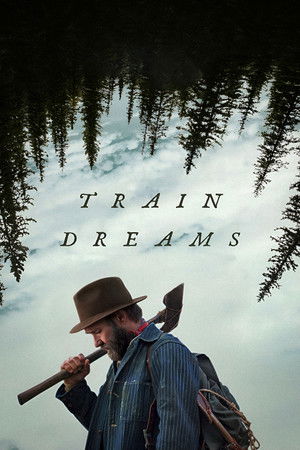
TRAIN DREAMS(2025)
Written by: Clint Bentley & Greg Kwedar
Genre: Drama
Title: Train Dreams
Written by: Clint Bentley & Greg Kwedar
Draft date: Not specified
LOGLINE
A solitary logger in early twentieth-century Idaho builds a fragile life with his wife and infant daughter, only to lose them both to a catastrophic wildfire — and spends the remaining decades searching for connection, meaning, and the ghost of the child he believes survived.
| Very Poor | Poor | Fair | Good | Excellent | |
|---|---|---|---|---|---|
| PREMISE | ✓ | ||||
| STRUCTURE | ✓ | ||||
| CHARACTER | ✓ | ||||
| CONFLICT | ✓ | ||||
| DIALOGUE | ✓ | ||||
| PACING | ✓ | ||||
| TONE | ✓ | ||||
| ORIGINALITY | ✓ | ||||
| LOGIC | ✓ | ||||
| CRAFT | ✓ |
| Strong Pass | Pass | Consider | Recommend | Strong Recommend | |
|---|---|---|---|---|---|
| Overall | ✓ |
Genre: Drama
Sub-genre: Period Drama, Literary Adaptation
Keywords: Male Protagonist, Loss, Grief, Logging, American West, Early 20th Century, Nature, Wilderness, Solitude, Family, Based on Book, Voiceover Narration, Episodic, Mortality, Blue-Collar, Indigenous Characters, Historical, Americana
MPA Rating: R (brief violence including a man shot in the head and a man thrown from a bridge, brief sexuality, thematic intensity)
Budget Tier: Medium ($10M–$40M) — extensive period recreation across multiple decades (1910s–1960s), remote wilderness locations, fire sequences, animal work (horses, elk, wolves, dogs), biplane, period trains and logging equipment, large number of extras for logging crews
Pages: 98
Time Period: Approximately 1910 to 1968, spanning roughly 55 years of one man's life, with the central events concentrated between approximately 1917 and the early 1930s.
Locations: 80% remote wilderness and small-town Idaho/Washington/Montana — logging camps, a riverside cabin (built, burned, rebuilt), burned forest, meadows, rivers, a fire lookout tower. 10% small-town Bonners Ferry storefronts, church, train stations. 10% Spokane city streets, theater, fairgrounds. Requires period logging operations with horse teams and steam equipment, a large forest fire (practical and/or VFX), a half-built wooden bridge over a gorge, a functioning biplane, multiple period trains, and extensive seasonal/weather variation including snow, rain, and fire aftermath.
Lead: Male, ages from early 30s to approximately 80, white, bearded and weathered. A quiet, emotionally guarded laborer who finds himself most alive with his family and most lost without them. Physically strong but increasingly diminished by age and grief.
Comparables: The Revenant (survival and loss in the American wilderness, period setting, nature as both beauty and threat), A River Runs Through It (lyrical depiction of the early twentieth-century American West, family bonds, voiceover narration), Nomadland (episodic structure following a solitary figure through labor, landscape, and encounters that accumulate into a portrait of an American life), Days of Heaven (period Americana, poetic narration, spare dialogue, visual emphasis on landscape and light).
SYNOPSIS
ROBERT GRAINIER (30s), a bearded logger, works felling trees with crews of diverse laborers in the primeval forests of the Pacific Northwest. Through narration, his life is sketched in fragments: orphaned as a young child and sent by train to Fry, Idaho, he grew up without direction. As a teenager he encountered a dying BOOMER (Adult) in the woods, an experience that haunted him. He drifted until his early thirties, when he met GLADYS (Adult) singing in a Methodist church choir. They fell in love, married, and built a cabin on an acre along the Moyea River.
In the summer of 1917, Grainier works building the Robinson Gorge Bridge for the Spokane International Railroad. A CHINESE LABORER (Adult) is accused of stealing and dragged toward the bridge. Grainier tries to intervene but is kicked to the ground. The Laborer is thrown over the side and never surfaces. Grainier carries deep shame. Forty-one days later, the bridge is completed. As the crew celebrates, Grainier sees the Laborer's face beneath the water — a vision that will recur throughout his life.
Grainier returns home to find Gladys has given birth to KATE (6 months). He meets his daughter for the first time. The family settles into a tender domestic rhythm — fishing, gardening, making love, taking a portrait together. Grainier leaves again for logging work, where he encounters memorable figures: a SILENT MAN (Adult) who speaks only once, APOSTLE FRANK (Adult) who is shot dead by a MAN IN A TRENCH COAT (Adult) avenging his murdered brother, and ARN PEEPLES (elderly), a loquacious old dynamiter full of tall tales. Grainier and Arn form a friendship around campfires, sharing stories and fears about the passage of time.
During a subsequent job, a falling snag strikes Arn. He grows disoriented over several days and dies. Grainier feels death is pursuing him. On the train home, he sees a massive column of smoke between the mountains. He arrives at Bonners Ferry station to find chaos — a wildfire has swept through the region. He searches frantically for Gladys and Kate but cannot find them. He walks through the burned landscape to his acre and discovers only ashes and the overturned woodstove. Inside it he finds a barely charred piece of birch — something Gladys had touched.
Grainier collapses in grief. The Chinese Laborer appears to him again by the fire. Grainier accuses the ghost of cursing him, then begs for mercy. Days later, IGNATIUS JACK (Adult), a Kootenai man who runs the general store, arrives with food and a blanket. They hunt together and Grainier weeps over a killed elk — his first tears since the loss. Ignatius Jack becomes a steady, quiet friend. A RED DOG with wolf-hybrid puppies arrives at Grainier's camp, and he takes them in. Through narration, Ignatius Jack's later death — drunk and run over by trains — is disclosed even as the friendship is shown at its warmest.
Grainier rebuilds his cabin. One night, Gladys appears as a spectral presence, and he witnesses her final moments: fleeing the fire with Kate, falling from a rock, breaking her back, and freeing the child to crawl away before dying by the river. Grainier whispers: "Kate? Escaped?"
He takes work as a freighter with a horse and wagon, hauling goods and people across the region. He meets CLAIRE THOMPSON (Adult), a Forest Service fire lookout, and drives her to her post. Weeks later, recovering from illness, he visits Claire at her tower. He confides his grief and his experience of hearing Gladys and Kate in the woods. Claire, a widow herself, offers perspective rooted in the interconnectedness of the natural world.
One moonlit night, wolves flood Grainier's clearing. Among them is a WOLF-GIRL — unmistakably his daughter Kate, now feral, crawling on three limbs with a broken leg. He splints her leg and sings to her. By morning she escapes through the window. He chases her through the woods but she looks back at him once — a look of goodbye — and vanishes. He keeps a scrap of her clothing and resolves to remain on his acre forever, in case she returns.
Years collapse. As an old man in the early 1960s, Grainier rides a train to Spokane, watches John Glenn's spaceflight on a store window of televisions, attends a curiosity show featuring a wolf-boy in costume, and takes a biplane ride at a county fair. As the plane plummets, his life flashes before him — memories of Gladys, Kate, Arn, Ignatius Jack, the Laborer. The narration reveals he died quietly in November 1968, his body overtaken by vines in his cabin. But in the biplane, as the engine roars back to life, Grainier finds himself, at last, at peace.
COMMENTS
PREMISE — Good
The premise — a quiet laborer's life measured across six decades of love, loss, labor, and solitude in the early American West — is more portrait than plot, which is both its distinction and its challenge. Grainier is compellingly suited to his world: an orphan without origin who builds a family only to have it erased, then spends his remaining years haunted by what he couldn't protect. The central dramatic question is existential rather than goal-driven — can a man who has lost everything find meaning in what remains? — which places enormous weight on execution. The thematic architecture is rich: guilt over the Chinese Laborer, the tension between providing for a family and being present for one, the vanishing of the old-growth world mirroring the vanishing of Grainier's personal world. As a premise it resists easy pitching, functioning more as Days of Heaven or Nomadland than as a conventional narrative, and its viability depends entirely on whether the episodic texture of a life can sustain dramatic engagement across nearly a hundred pages.
STRUCTURE — Fair
The narrative is structured as a biographical panorama, moving chronologically through Grainier's life with the fire functioning as the central rupture. The inciting incident — Gladys and Kate's death by fire — lands around page 52, which is past the midpoint of a 98-page document, meaning the entire first half is devoted to establishing the life that will be lost. This is a deliberate and defensible choice for a literary adaptation, but it creates an asymmetry: the pre-fire material (courtship, domestic life, logging camp vignettes) accumulates beautifully yet without a pressing dramatic engine, while the post-fire material must compress decades of aftermath — grief, the wolf-girl encounter, Claire, the Spokane trip, the biplane — into roughly forty pages. The wolf-girl sequence (88-92), which functions as the emotional climax, arrives late and resolves quickly, with Grainier's remaining years collapsed into a few pages of montage. Subplots are episodic by design — the Chinese Laborer's ghost, Arn Peeples, Ignatius Jack — and each contributes thematically, but none provides sustained dramatic momentum. The biplane sequence (96-98) serves as a poetic resolution, though its revelatory power depends on whether the preceding accumulation of incident has generated sufficient emotional pressure.
CHARACTER — Good
Grainier is a fully realized portrait of a man defined by absence — absent parents, absent from his family during work, absent when the fire came. His arc traces from passive drifter to loving husband to grief-stricken hermit to, finally, a man who finds peace with his incompleteness. His want (to be present for his family) and his need (to forgive himself for not being there) are established clearly through the domestic scenes (12-44) and the Chinese Laborer visions (10, 30-31, 55). Gladys is the most vivid supporting character, drawn with specificity and warmth — her fish trap (21), her monologue about words and names (16-17), her plan for the sawmill (37-38) — though she functions primarily as the embodiment of what Grainier loses. Claire Thompson (76-86) arrives late but provides the thematic counterweight Grainier needs, articulating the interconnectedness he cannot. Arn Peeples is the most colorful figure, a raconteur whose tall tales enliven the logging sequences (27-30), and his death (50) registers because his friendship with Grainier has been earned across multiple scenes. The Chinese Laborer operates as a symbolic presence rather than a character, which is effective as a device of conscience but risks reducing a human being to a function of Grainier's guilt.
CONFLICT — Fair
The central conflict is internal: Grainier's guilt over not being present — for the Laborer's murder, for his family's death — and his struggle to find purpose in a life hollowed by loss. External conflict is episodic and varied rather than sustained: the bridge incident (8-10), the logging accidents (32), the fire (52-55), the wolf-girl's appearance and departure (88-92). The fire is the most dramatic external event, but Grainier is absent from it, which is precisely the point — his helplessness is the wound. After the fire, conflict becomes largely atmospheric, residing in Grainier's encounters with grief, isolation, and the passage of time. The wolf-girl sequence introduces a surge of dramatic tension that dissipates within a few pages when Kate escapes (91-92). The material does not escalate conflict in a conventional sense, instead allowing the cumulative weight of loss to serve as the antagonist. This works thematically but means the post-fire section can feel diffuse, with long stretches where Grainier is acted upon by the world rather than acting within it.
DIALOGUE — Good
The dialogue is restrained and naturalistic, with characters distinguished primarily by their relationship to speech itself — Arn Peeples talks incessantly and colorfully ("I was only eleven or twelve miles from the sun," 29), the Silent Man speaks a single devastating line ("Ain't there no place in this world a man can find some peace?" 24), and Grainier himself communicates in halting, incomplete thoughts that reveal his difficulty with emotional expression ("I'm just— What if... What if I die?" 36). The most textured exchanges occur between Grainier and Gladys, where subtext runs beneath domestic surface talk: the argument about moved tools (18) encodes the tension of long separation, and Gladys's late-night monologue about words and names (16-17) operates on multiple philosophical levels while remaining entirely in character. Claire's dialogue (83-86) risks becoming expository in its thematic articulation ("The dead tree is as important as the living one"), though her voice is distinct enough — educated, measured, unafraid — to carry it. The narration carries significant weight, and while it is literary and evocative, it occasionally states what the visual storytelling has already conveyed.
PACING — Fair
The pacing mirrors the rhythms of a long, quiet life — deliberately slow, with stretches of contemplative stillness punctuated by sudden violence or loss. The pre-fire section (1-51) takes its time establishing the logging world and domestic life, and individual scenes are well-calibrated in length: the Apostle Frank shooting (25-27) is brisk and shocking, the fireside conversations with Arn (44-47) are allowed to breathe. However, the cumulative effect of the first half's episodic structure — logging vignettes, domestic scenes, more logging vignettes — can feel slack, particularly in the middle stretch (23-44) where the pattern of departure and return repeats without significant variation in stakes. The fire itself (52-55) arrives with appropriate force, and the grief sequence that follows moves at a pace that honors the emotional weight. The final twenty pages compress decades and multiple set pieces (Claire, the wolf-girl, Spokane, the biplane) into rapid succession, which risks the inverse problem: too much ground covered too quickly, with the wolf-girl encounter (88-92) in particular deserving more room to develop.
TONE — Good
The tone is elegiac and consistent throughout — a lyrical sadness tempered by warmth, humor, and wonder at the natural world. The humor is gentle and character-driven: Grainier's joke about the fish trap bassinet (21), Arn Peeples' Kansas insult (47), the "bless you" Grainier says to himself (80). These moments of lightness are calibrated to prevent the material from becoming oppressively mournful. The violence — the bridge murder (9-10), Apostle Frank's shooting (26-27), Avery's sudden death (71) — arrives without warning and departs without melodrama, which maintains the tone of a world where death is commonplace and unremarkable. The supernatural elements — the Chinese Laborer's apparitions, Gladys's visitation (74-75), the burning elk antlers (60-61), the wolf-girl — are integrated without tonal disruption, presented as natural extensions of grief and wonder rather than genre intrusions. The narration reinforces this consistency, maintaining a voice that is contemplative without becoming precious.
ORIGINALITY — Good
The core concept — a single laborer's life spanning the transformation of the American West — has precedent in A River Runs Through It and Legends of the Fall as literary adaptations depicting lives shaped by landscape and loss. The execution distinguishes itself through the accumulation of small, specific incidents rather than dramatic plot architecture, closer to Nomadland in its episodic portraiture. The wolf-girl sequence is the most genuinely surprising element, a mythic intrusion into an otherwise naturalistic world that has no close analogue in recent period dramas. The Chinese Laborer as a recurring apparition of conscience adds a dimension of racial guilt uncommon in Americana narratives. The material's refusal to offer redemption through action — Grainier cannot save the Laborer, cannot save his family, cannot keep his daughter — is a meaningful departure from the conventions of frontier narratives, which typically reward perseverance. The biplane ending, with its compression of a life into a plummeting moment of clarity, is a striking formal choice that earns its poetry through the specificity of the memories it invokes.
LOGIC — Good
The internal logic is consistent within the material's blend of naturalism and mythic symbolism. The Chinese Laborer's appearances function as psychological projections rather than literal hauntings, and this is maintained throughout — Grainier addresses him as if speaking to his own guilt (55). Gladys's visitation (74-75) shifts into a more overtly supernatural register, showing events Grainier could not have witnessed, which raises the question of whether this is vision, dream, or ghost — the ambiguity is productive rather than confusing. The wolf-girl's appearance (88-90) is the material's boldest logical leap: a child surviving years in the wild, adopted by wolves, physically transformed. The narration frames this within myth ("she returned to the place of myths and dreams," 92), which provides cover, but the splinting of her leg (90) and the specificity of her physical description ground the encounter in physical reality. The timeline is occasionally difficult to track — Grainier's age across decades is left imprecise, and the jump to the 1960s (93) arrives abruptly — though the narration generally orients the audience. One minor inconsistency: the narration of Ignatius Jack's death (63-64) during a scene set years earlier is tonally effective but structurally disorienting, disclosing a future event while the present scene is still unfolding.
CRAFT — Good
The writing operates at a high literary register, drawing extensively from Denis Johnson's prose, and the result is vivid and evocative: the stove with "its legs curled up under it like a beetle's" (54), Kate "curled on her side like a little animal" (35), Ignatius Jack walking away with the elk "like some shape-shifting being from an ancient story" (59). Character introductions are efficiently handled — Arn Peeples is introduced through action (walking away from a gaping hole, unspooling wire, 27) before his personality is revealed through speech. The action description is economical where it needs to be (the bridge murder, the falling log) and expansive where atmosphere demands it (the burned forest, the wolf-girl encounter). The narration is the most notable craft element: it provides continuity across decades and articulates what Grainier cannot, though it occasionally over-explains emotional states that the images have already conveyed — "Grainier began to feel a dread he could not name" (32) tells what the preceding scene has shown. Formatting is clean throughout, with effective use of time transitions ("ANOTHER DAY," "YEARS LATER") that keep the episodic structure navigable. A minor typo: "GRAINER" appears once (17) where "GRAINIER" is intended.
OVERALL — Consider
Train Dreams is an elegiac period drama tracing a solitary logger's life across six decades of the American West, from the primeval forests of the 1910s through the space age of the 1960s. Its strongest elements are character and craft: Grainier and Gladys are rendered with tenderness and specificity, the supporting cast is vivid and memorable, and the prose-inflected writing creates images of genuine beauty and strangeness. The tone is remarkably consistent, balancing grief with humor and naturalism with myth. Its most significant challenge is structural: the episodic, biographical design lacks a sustained dramatic engine, with the central catastrophe arriving past the halfway point and the most dramatically charged sequence — Kate's return as a wolf-girl — compressed into a few pages near the end. The material asks its audience to find drama in the texture of a life rather than in the escalation of a plot, which is a legitimate artistic choice but one that places extraordinary demands on direction and performance to sustain. The premise is deeply felt, the execution is literate and assured, and the result is a screenplay that reads more like a poem than a blueprint — powerful in its cumulative effect, fragile in its dramatic architecture.
Get this level of coverage for your screenplay
Every coverage includes 10 category ratings, an overall recommendation, and detailed analysis — powered by the same methodology used by talent agencies and literary managers.
Movie data provided by TMDB