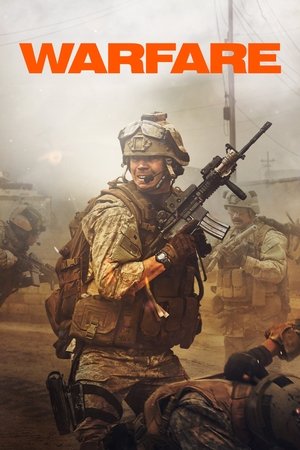
WARFARE(2025)
Written by: Ray Mendoza and Alex Garland
Draft date: May 13, 2024
Genre: Thriller
Title: Warfare
Written by: Ray Mendoza and Alex Garland
Draft date: 05/13/2024
LOGLINE
During a single day in 2006 Ramadi, a Navy SEAL platoon occupying a sniper position in an enemy stronghold comes under a devastating coordinated attack — grenades, an IED, and sustained gunfire — and must fight to evacuate their critically wounded while trapped in a hostile urban landscape with dwindling support.
| Very Poor | Poor | Fair | Good | Excellent | |
|---|---|---|---|---|---|
| PREMISE | ✓ | ||||
| STRUCTURE | ✓ | ||||
| CHARACTER | ✓ | ||||
| CONFLICT | ✓ | ||||
| DIALOGUE | ✓ | ||||
| PACING | ✓ | ||||
| TONE | ✓ | ||||
| ORIGINALITY | ✓ | ||||
| LOGIC | ✓ | ||||
| CRAFT | ✓ |
| Strong Pass | Pass | Consider | Recommend | Strong Recommend | |
|---|---|---|---|---|---|
| Overall | ✓ |
Genre: Drama, Thriller
Sub-genre: War Drama, Military Thriller
Keywords: Based on True Events, Military, Iraq War, Navy SEALs, Marines, Urban Combat, Survival, Brotherhood, Ensemble Cast, Male Ensemble, Real-Time, Single Location, War Trauma, IED, Sniper, Medical Emergency
MPA Rating: R (graphic war violence, severe injuries depicted in clinical detail, pervasive strong language)
Budget Tier: Medium ($10M–$40M) — single primary location with exterior street work, practical explosion and gunfire effects, military vehicles including Bradley fighting vehicles, period-accurate military equipment, modest cast but significant pyrotechnics and prosthetic/makeup effects for injuries.
Pages: 102
Time Period: November 19, 2006, spanning roughly 12 hours (night insertion through daytime combat and evacuation).
Locations: 90% interior and immediate exterior of a single two-story Iraqi residential house in Ramadi (requiring a courtyard, driveway, balcony, multiple rooms furnished with Iraqi domestic items, and progressive destruction including blast damage and tank fire to the upper floor). 5% adjacent streets requiring burning phosphorus effects, blood, and Bradley fighting vehicle staging. 5% interiors of Bradley tank cabins and a field hospital tent exterior. All set in 2006 Iraq.
Lead: RAY (24), Mexican and Native American heritage, a Navy SEAL JTAC specialist — resourceful, quietly competent, deeply bonded to his teammates, increasingly pushed to his psychological and physical limits.
Comparables: Black Hawk Down (Ridley Scott, 2001) — real-event military ensemble trapped under sustained urban combat with evacuation as the central objective. Dunkirk (Christopher Nolan, 2017) — experiential, near-real-time war filmmaking that prioritizes sensory immersion over conventional character arcs. Lone Survivor (Peter Berg, 2013) — Navy SEAL-specific combat based on actual events with clinical attention to injuries and tactical procedure. Restrepo (Tim Hetherington/Sebastian Junger, 2010) — documentary-adjacent immersion in a single contested position.
SYNOPSIS
On the night of November 19, 2006, twenty-two American soldiers — Navy SEALs, Marines, and Iraqi Scouts — walk in single file through the streets of Ramadi, Iraq, entering an area the U.S. military abandoned three months earlier. The column splits into three observation posts. We follow OP-1: ten men who silently breach a two-story house, waking an IRAQI FAMILY — a MAN (Adult), a WOMAN (Adult), and her two DAUGHTERS (7 and 9) — who scream in terror.
By morning, the soldiers have converted the house into a sniper position. ELLIOTT (25), lead sniper and medic, watches through a hole punched in the wall. FRANK (25), his spotter, sits nearby. RAY (24), the JTAC communications specialist, relays situation reports to headquarters. ERIK (27), the Officer-in-Charge, monitors the operation. SAM (28), second-in-command, watches from a bedroom window. TOMMY (21), a young gunner, covers the entrance downstairs alongside Iraqi Scouts FARID (30) and SIDAR (31). Marines LT MACDONALD (27) and SGT LAERRUS (24) monitor aerial surveillance feeds.
Tension builds as Elliott spots a man in a white shirt repeatedly observing their position. OP-2, located streets away under JAKE (Adult), reports similar probing activity. A Bravo platoon elsewhere in Ramadi enters a firefight and pulls OP-1's air support away. Then a minaret broadcast calls for jihad against the Americans. The Iraqi Scouts rush upstairs to translate the threat. Erik orders everyone to stay locked down.
Without warning, Al-Qaeda fighters who have crept across rooftops push a grenade through the sniper hole. It explodes in the sniper room. Tommy, Frank, and Elliott are hit with fragments. Elliott, bleeding from his arm, crawls out. Ray spots a figure through the balcony door and empties two magazines through the metal. Erik declares the mission over and orders the platoon to collapse downstairs and evacuate Elliott. A Bradley fighting vehicle is called for medical evacuation.
As they prepare to break out, Frank throws a smoke grenade that fills their own courtyard. The stack pushes through the smoke to the street. Elliott, Sam, the Iraqi Scouts, and Erik exit the gate — and an expertly constructed IED detonates. Farid is blown in half. Elliott's legs are shattered below the knees. Sam's right leg is torn apart. Erik is concussed. Ray and Tommy are knocked unconscious by the blast wave. The Bradley, its gunner wounded, closes its ramp and drives away, leaving the wounded in the street.
Ray regains consciousness, finds Elliott lying motionless in the road covered in burning phosphorus, and freezes in emotional overload before dragging him back through gunfire. Inside the house, Erik attempts first aid on Sam while suffering worsening concussion. Ray discovers his fine motor skills are failing from shock — he cannot thread a tourniquet buckle. He presses his knee onto Sam's thigh wound as a makeshift tourniquet while Sam screams continuously. Erik, recognizing his own impairment, hands leadership to Jake when OP-2 fights its way to their position.
Jake rapidly takes command. When headquarters delays sending tanks pending brigade approval, Jake orders JOHN (21), OP-2's radio operator, to impersonate the commanding officer and authorize the vehicles himself. BRIAN (32), a gunner, fights on the rooftop but is driven back by overwhelming fire. BROCK (Adult) accidentally causes Sam more agony with a misguided pep talk until Ray shoves him away. LT MACDONALD accidentally injects morphine into his own thumb before successfully medicating Elliott. Aaron checks tourniquets and praises the work done. Four Bradleys arrive. Elliott and Sam are loaded under fire. Ray is accidentally sealed inside a Bradley with Sam and carried away from the fight.
Jake orders the Bradley tanks to fire on the top floor of their own occupied house to clear the enemy fighters above them. The family's home is destroyed around them as the mother screams "WHY?" at Erik, who can only say "I'm sorry." The remaining soldiers break out under withering fire, gunners coordinating overlapping bursts until their barrels glow red, and cram into the Bradleys. Erik is the last man in. The vehicles drive away, leaving the street empty and silent except for the howling Iraqi family.
In a field hospital, doctors question Ray about tourniquet times and morphine doses he cannot remember. Elliott is wheeled past Ray on a stretcher toward a Chinook helicopter. Drugged and dazed, Elliott half-smiles and greets Ray. Ray tells him he loves him. Elliott is carried out of view, leaving Ray standing alone, his face holding dismay, hope, and need.
COMMENTS
PREMISE — Fair
The premise is elemental and immediately legible: a small unit of elite soldiers occupies a house in enemy territory and is subjected to a coordinated, escalating attack that transforms an observation mission into a desperate fight for survival and evacuation. The restriction to remembered events — announced in the opening caption — establishes a documentary contract that justifies the material's narrow scope and its refusal to provide backstory, enemy perspective, or political context. This is both the concept's greatest strength and its most significant limitation. The inherent tension is tremendous: ten men in a single building, surrounded, with wounded comrades bleeding out. But the premise offers no dramatic question beyond "will they survive and escape?" — there is no decision the protagonist faces that could go meaningfully in two directions, no moral dilemma except the briefly glimpsed anguish over the Iraqi family. The closest comparisons — Black Hawk Down and Dunkirk — compensated for similar narrative simplicity with either geographic scope or structural invention. Here, the commitment to a single platoon's memory creates a visceral, claustrophobic experience, but the premise is essentially a chronicle rather than a drama.
STRUCTURE — Fair
The architecture is clean and effective in its first half, less so in its second. The opening night-vision infiltration through the quiet surveillance period (2–20) functions as a carefully calibrated ramp, establishing geography, personnel, and threat level with disciplined patience. The first grenade at roughly page 27 — about 26% through — serves as the inciting incident, shattering the calm. The IED explosion around page 45 — roughly 44% — operates as a devastating midpoint that fundamentally changes the nature of the problem from "we're under fire" to "we have catastrophically wounded men and no way out." Jake's arrival and assumption of command (75–77) provides structural relief and a new engine. The order to fire on their own building (94–95) functions as a climactic escalation. The difficulty is that from the IED forward, the material becomes a series of procedural tasks — tourniquet, morphine, radio calls, load casualties, extract — without the rising-and-falling tension that structural proportion demands. The breakout sequences at pages 43–52 and 87–98 are structurally near-identical, which flattens the second half.
CHARACTER — Fair
The memory-based approach produces an ensemble of convincingly differentiated soldiers but no fully realized protagonist. Ray functions as the central consciousness — he is the character whose perceptual states are most closely tracked, whose frozen moments and daze cycles provide the emotional throughline — but he has no arc in the traditional sense. He begins competent and ends shattered, which is a trajectory, not a transformation. Elliott's shift from focused sniper to critically wounded man begging for morphine (67–70) is the most affecting character passage. Erik's recognition of his own concussive impairment and his decision to hand command to Jake (77) is a genuinely powerful beat that communicates more about character than any amount of backstory could. Sam's disbelief about his own injuries (58–59) is harrowing and specific. The Iraqi family, however, remains a presence rather than characters — their function is to witness, and while the mother's "WHY?" (96) lands, the material does not invest enough in them earlier for it to resonate as fully as it could.
CONFLICT — Fair
The external conflict is formidable and relentlessly escalating: probing observers become grenade attacks become an IED become sustained firefight become enemy occupation of the soldiers' own rooftop. Each escalation compounds the previous one rather than replacing it, which is effective — the wounded do not stop bleeding while new threats emerge. The central conflict is survival against an enemy that holds every tactical advantage, and it is sufficient to sustain engagement. The internal conflict, however, is diffuse. Ray's dissociative episodes (57, 61, 71, 73) gesture toward psychological collapse but are described rather than dramatized through choices. The most potent internal moment is the tourniquet scene (65–66) where Ray physically cannot perform the action his training demands — the conflict between will and capacity is rendered with devastating specificity. The resolution is appropriately incomplete: the soldiers escape, but the cost is enormous and unanswered, and the final image of Ray's face refuses closure.
DIALOGUE — Good
The dialogue is remarkably effective precisely because of its restraint and technical specificity. Radio communications — which constitute perhaps 40% of all spoken words — carry their own tension through procedural language, as when Ray calmly requests a casevac while his best friend bleeds out beside him (33, 58). Character differentiation emerges through compression: Sam's panicked "Is it me?" (59), Brock's tone-deaf "Let's GO, boys" (78), Jake's controlled "You've got to be the CO" (83), and Elliott's lucid "It's in my bag. Medic bag. The pocket" (69) while in agony all reveal character under pressure without exposition. The Iraqi Scouts' broken English — "That's no good. No good" (24) — is used sparingly and effectively. The one moment that risks feeling written rather than remembered is Ray's reassurance "your junk is still there" (72), but it is consistent with the gallows humor documented in combat accounts.
PACING — Fair
The pacing is deliberate and successful through the first third, where the slow accumulation of threat indicators — peekers, probing, the minaret broadcast — builds genuine dread (15–25). The grenade attack detonates this tension effectively. The post-IED section, however, presents a pacing challenge that the material does not fully resolve. The medical procedures, radio exchanges, and waiting for vehicles occupy roughly pages 55–88 — over thirty pages of material in which the physical situation is essentially static. Individual moments within this stretch are gripping (the tourniquet failure at 65, the morphine injector mishap at 70), but the cumulative effect is repetitive: request help, treat wound, wait, request help again. The breakout and tank-fire sequence (87–98) restores momentum powerfully, and the abrupt cut to the hospital black screen (100) is a striking tonal shift that compresses time effectively.
TONE — Good
The tone is overwhelmingly consistent: clinical, experiential, and unsparing. The material refuses heroic framing — soldiers vomit, freeze, stare blankly, and fail at basic tasks. This anti-glamour approach holds from the first quiet surveillance scenes through the final hospital exchange. The few moments that risk tonal disruption are managed carefully: Brock's amped-up entrance (78) is immediately contextualized as inappropriate by Ray's physical response, and Sam's dry joke about the vomit (99) reads as authentic shock humor rather than comic relief. The most tonally complex passage is the Iraqi family's recurring presence — their terror operates as a moral counterweight to the soldiers' survival focus, and the mother's "WHY?" confrontation with Erik (96) introduces a register of accusation that the material wisely does not attempt to resolve. The description of the peach curtains "dancing" as bullets pass through them (28) is one of several details that achieve an almost lyric quality within the otherwise austere register.
ORIGINALITY — Fair
The war-survival subgenre is densely populated, and this material sits squarely within it. The closest antecedent is Black Hawk Down, which similarly depicts a real military engagement through an ensemble of soldiers under sustained urban attack. The differences are meaningful but narrow: the single-location constraint, the memory-sourced approach, and the extended medical sequences set this apart from Scott's geographic sprawl. Dunkirk provides a comparison for experiential, dialogue-sparse war filmmaking, though Nolan employed radical structural invention to compensate for the absence of traditional character drama — a strategy not attempted here. The most original elements are specific and granular rather than conceptual: Ray's dissociative episodes interrupting his ability to function, the tourniquet buckle scene, the morphine self-injection, Sam's pants falling down during the extraction. These details feel genuinely retrieved from memory rather than invented, which gives them a texture that purely fictional war narratives rarely achieve. The commitment to banality within extremity — the empty dip can, the missing Nike hoodie, the Felix the Cat clock — is the material's most distinctive quality.
LOGIC — Good
The internal logic is rigorously maintained throughout, which is notable given the complexity of the military operations depicted. The geography of the house — sniper room, main room, stairwell, kitchen, courtyard, driveway, gate — is established with architectural precision in the opening survey (6–12) and then consistently adhered to during chaos. Every radio exchange follows proper protocol, and the chain of command is clear. The one significant logical question involves the IED's placement: the text notes it was hidden "perhaps during the night, perhaps in the morning" (45), which is honest about uncertainty but leaves open the question of how insurgents planted a sophisticated device at the gate of a building they knew was occupied. The Bradley's departure with the first wounded — closing its ramp and leaving — is presented without explanation (48), which creates brief confusion about whether this was planned or panicked. John impersonating the CO (83) is internally logical but raises the question of whether HQ would not recognize a different voice — though in the chaos of combat communications, this is plausible.
CRAFT — Good
The writing operates in a distinctive mode: heavily descriptive, with action lines functioning almost as documentary narration. Character introductions are handled through embedded dossiers — Ray's backstory (12), Elliott's build and dual role (10), Tommy's family legacy (8) — that read more like intelligence briefings than dramatic introductions. This approach is effective for establishing the ensemble quickly but distances the material from the characters as felt presences. The most powerful writing occurs in the perceptual passages describing Ray's dissociative states (57, 61, 65), where the prose slows and fragments to mirror cognitive breakdown. The description of Elliott's body in the road (50) — "blood is oozing, like water pushing up from beneath dry soil" — achieves genuine literary force. The shooting-script format includes scene numbers and omitted scenes (26–28, 94–95), which are production artifacts rather than craft issues. Occasional tense inconsistencies appear in action lines — "When ray lifts his head" (28) uses lowercase for the character name — but these are minor in a draft clearly prepared for production.
OVERALL — Consider
Warfare is an experiential war drama reconstructing a single day of sustained combat in 2006 Ramadi from the memories of the Navy SEALs who lived it. Its strongest elements are its craft — particularly the perceptual rendering of shock, dissociation, and physical limitation under fire — and its tone, which maintains an unflinching, anti-heroic register that never sentimentalizes or glamorizes the violence. The dialogue is precise, technically authentic, and character-revealing within extreme compression. The material's most significant weakness is structural: the memory-faithful approach produces a middle section that is procedurally repetitive, and the absence of a dramatic question beyond survival limits the emotional architecture available. Character functions effectively at the ensemble level — the contrast between Erik's impairment and Jake's clarity, between Brock's performative energy and Ray's quiet competence — but no single character undergoes a transformation that could anchor the material dramatically. The Iraqi family's presence is the most morally charged element and could bear greater weight. What the material achieves, it achieves with considerable discipline and specificity: a visceral, granular account of what it is like to be inside a building that is being systematically attacked, with friends who are dying, while the tools to save them keep failing.
Get this level of coverage for your screenplay
Every coverage includes 10 category ratings, an overall recommendation, and detailed analysis — powered by the same methodology used by talent agencies and literary managers.
Movie data provided by TMDB