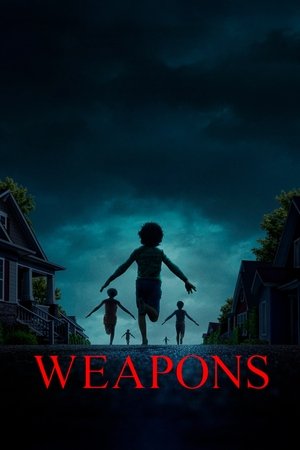
WEAPONS(2025)
Written by: Zach Cregger
Draft date: November 27, 2023
Genre: Horror
Title: Weapons
Written by: Zach Cregger
Draft date: Full White 11/27/2023 (with revision pages through 06/24/2024)
LOGLINE
In a small suburban town, seventeen children from a single third-grade classroom vanish in the middle of the night, and the intersecting investigations of their ostracized teacher, a grieving father, a corrupt cop, and a desperate homeless man converge on one house — where an ancient evil hides in plain sight.
| Very Poor | Poor | Fair | Good | Excellent | |
|---|---|---|---|---|---|
| PREMISE | ✓ | ||||
| STRUCTURE | ✓ | ||||
| CHARACTER | ✓ | ||||
| CONFLICT | ✓ | ||||
| DIALOGUE | ✓ | ||||
| PACING | ✓ | ||||
| TONE | ✓ | ||||
| ORIGINALITY | ✓ | ||||
| LOGIC | ✓ | ||||
| CRAFT | ✓ |
| Strong Pass | Pass | Consider | Recommend | Strong Recommend | |
|---|---|---|---|---|---|
| Overall | ✓ |
Genre: Horror, Thriller
Sub-genre: Supernatural Horror, Mystery Thriller, Ensemble Drama
Keywords: Missing Children, Supernatural, Witchcraft, Small Town, Ensemble Cast, Multiple Perspectives, Folk Horror, Rashomon Structure, Suburban Setting, Child Protagonist, Police Corruption, Addiction, Grief, Paranoia, Community Suspicion
MPA Rating: R (graphic violence, strong language throughout, drug use, disturbing images involving children, brief sexuality)
Budget Tier: Medium ($10M–$40M) — multiple suburban locations, significant child cast, practical creature/makeup effects, moderate VFX for supernatural sequences, several action set-pieces including a multi-house chase and destruction
Pages: 132
Time Period: Present, spanning approximately 2-3 months
Locations: 90% set in a single American suburb — residential homes (5-6 distinct houses, one requiring significant interior destruction and a dark cluttered basement housing 17 children), an elementary school with classrooms/hallways/auditorium/parking lot, a police station with offices/interrogation rooms/locker room, bars, a liquor store, a gas station (requiring a violent chase and gasoline spray), a pawn shop, a construction site, industrial alleys, woods/tent encampment, a hospital. 10% vehicles and miscellaneous exteriors. Period is present day. The climactic sequence requires children smashing through multiple houses in succession.
Lead: Four co-leads — JUSTINE (Female, 30s, white, a caring but troubled teacher with a DUI history and boundary issues); ARCHER (Male, 40s, white, a large physically imposing construction boss and grieving father); PAUL (Male, 30s, white, a police officer struggling with sobriety and infidelity); JAMES (Male, adult, Black, a homeless man battling crack addiction). Additionally, ALEX (Male, ~8-9, a quiet child trapped by supernatural forces).
Comparables: Barbarian (Zach Cregger's prior work — perspective-shifting horror with darkly comic tonal shifts and hidden terrors in domestic spaces); Rashomon / Pulp Fiction (overlapping timelines revealing the same events from different angles); The Blair Witch Project / Hereditary (folk horror and witchcraft mythology operating in mundane settings); It (children as both victims and eventual agents of confrontation against a supernatural predator in a small town).
SYNOPSIS
MADDIE (11), narrating in campfire tones, recounts a true local event: one Wednesday, every child in a single third-grade class at Maybrook Elementary was absent except one. The night before at exactly 2:17 AM, seventeen children left their homes, running into the darkness with their arms outstretched in a peculiar posture. Security cameras captured them leaving but not where they went. The school closed for a month-long investigation that yielded nothing. ALEX (8-9), the only child who remained, told police he knew nothing. His teacher, JUSTINE GANDY (30s), a first-year instructor, also had no answers.
At a contentious PTA meeting, ARCHER GRAFF (40s), father of missing boy MATTHEW, demands answers from Justine. The crowd turns hostile, and Justine flees. She receives threatening phone calls, finds "WITCH" spray-painted on her car, and is placed on paid leave by PRINCIPAL MARCUS (50s). Despite Marcus's explicit orders, Justine follows Alex home and discovers his house in disturbing condition — windows papered over, lawn overgrown, and his parents sitting motionless on the couch. Marcus and the police dismiss her concerns.
Justine reconnects with ex-boyfriend PAUL (30s), a police officer married to DONNA, Captain ED's daughter. They sleep together. Meanwhile, Justine has nightmares featuring Alex in garish makeup and a terrifying woman covered in bright cosmetics who appears above her ceiling. Someone cuts a chunk of Justine's hair while she sleeps in her car outside Alex's house.
Archer, sleeping in Matthew's bed, obsessively rewatches Ring camera footage. He traces Matthew's trajectory on a map and visits another missing child's family to examine their footage. Using surveying tools, he plots two trajectories that intersect in a specific neighborhood — directly over Alex's house.
Paul, on patrol, chases JAMES (adult), a homeless man attempting to break into a warehouse. During the arrest, a hypodermic needle punctures Paul's hand. Paul punches the handcuffed James, unplugs his dashcam, and lets James go with a threat. Paul's captain ED quietly advises him that the dashcam footage will be overwritten in a month if no complaint is filed. Paul sleeps with Justine again and is caught by Donna.
James, desperate for drug money, notices Alex's neglected house and breaks in to steal. He discovers the catatonic parents on the couch and, in the basement, finds all seventeen missing children standing motionless in the dark. He flees but later calls the police tip line about the reward. Approaching the station, he encounters Paul and runs. Paul pursues him into the woods, where James stabs Paul in the face with dirty needles and reveals he knows where the children are. Paul enters Alex's house and does not come back out.
GLADYS, Alex's great-aunt, arrived at the family home weeks earlier as a frail, dying woman. Through folk magic involving a thorned tree, sticks wrapped in human hair, blood rituals, and a small brass bell, she enslaved Alex's parents and used them as puppets. She coerced Alex into stealing personal items from each classmate, then performed a ritual at exactly 2:17 AM that summoned the children to the house, drawing vitality from them to restore her health. She threatens Alex by demonstrating she can make his parents mutilate themselves. Alex obediently feeds both his parents and the basement children soup while attending school in silence.
When Marcus schedules a meeting about Alex's welfare, Gladys visits his home, cuts TERRY's hair, performs her stick-and-bell ritual, and sends a possessed Marcus sprinting across town to attack Justine at a gas station. Archer intervenes. Marcus is struck and killed by a car. At the hospital, Archer shows Justine his map, and she identifies Alex's house at the intersection point.
The next morning, Justine and Archer arrive at Alex's house where Paul's squad car is parked. A possessed Paul beckons them inside. James and Paul attack them while Alex attempts to reach Gladys's room upstairs, triggering his enslaved parents to attack him. Justine kills James with Paul's service pistol and then kills Paul. Alex barricades himself in the bathroom, harvests hair from Gladys's wig, bloods a stick with his own hand, wraps Gladys's hair around it, and snaps it — turning the children against Gladys. They explode from the basement and chase her through multiple neighboring houses before catching and tearing her apart.
Archer finds Matthew among the blood-covered children and carries him away weeping with joy. Justine finds Alex embracing his freed parents upstairs. But the final images reveal the hollowness beneath: Alex's parents stare vacantly at the wall, and Matthew's eyes are empty. The tree remains unharmed.
COMMENTS
PREMISE — Excellent
The core concept — an entire classroom of children vanishes overnight, and the investigation is told through four radically different perspectives that converge on a single supernatural explanation — is immediately compelling and elegantly pitched. The Rashomon-style structure gives the premise built-in dramatic architecture: a teacher scapegoated by her community, a father channeling grief into detective work, a corrupt cop spiraling, and a homeless man who stumbles onto the truth nobody else can find. Each protagonist is uniquely suited or ill-suited to the central mystery in ways that generate organic conflict — Justine is closest to the answer but least empowered to act, Archer has the resources but is blinded by rage, Paul has institutional authority but is compromised, and James has nothing to lose but no credibility. The supernatural engine — a dying woman using folk magic to parasitically feed on children — grounds the horror in something primal and specific, avoiding the vagueness that plagues many supernatural premises. The thematic layer is potent: the title "Weapons" resonates across every thread, from the giant floating AR-15 in Archer's dream to the needles James wields, to the children themselves becoming instruments of violence. The premise's greatest asset is that it functions as a mystery, a character study, and a horror film simultaneously, giving each genre element room to breathe.
STRUCTURE — Good
The four-chapter architecture — Justine, Archer, Paul, James, then Alex — creates a satisfying narrative mechanism where each new perspective recontextualizes prior events, but the proportions are uneven in ways that affect momentum. Justine's section runs roughly from pages 8 through 55, establishing the world and central mystery with strong scene-level causality. Archer's section (47–75) introduces the investigative engine and the crucial map work that drives the plot toward convergence. Paul's chapter (51–95) overlaps temporally and provides critical new information but dwells heavily on his personal failings before connecting to the main throughline. James's section (62–95) is the shortest and most propulsive, delivering the basement discovery around page 70 — functionally the midpoint revelation at roughly 53% of the page count, well-placed. The Alex chapter beginning around page 94 then rewinds to fill in the origin of the horror. The structural risk is that the Alex section, which explains the mythology, arrives after the mystery's emotional peak. The climactic convergence at Alex's house (pages 119–131) is tightly constructed with effective cross-cutting, and the dual endings — Archer's apparent joy, Alex's hollow reunion — land with genuine impact. The repeated replaying of scenes from new angles (the PTA meeting at pages 8 and 53, the gas station attack at pages 55 and 133, Paul's encounter with James) is the structural signature, and it works because each replay adds genuine information rather than mere perspective.
CHARACTER — Good
The ensemble is unusually well-balanced, with each lead carrying a distinct dramatic function and a clearly articulated flaw. Justine's arc is the most complete: her overstepping of professional boundaries (hugging students, driving one home, stalking Alex) is established as both her greatest liability and the quality that ultimately saves Alex (17–18, 36–37, 55). Archer's grief manifests as controlled rage that tips into obsession — his confession to Matthew's ghost that he hit his son (49) is the single most revealing character moment in the material, delivered with restraint. Paul is the weakest of the four leads, defined more by the accumulation of bad decisions (punching James, sleeping with Justine, pulling the dashcam cord) than by an internal struggle that generates empathy. His sobriety is mentioned (52) but never dramatized in a way that deepens understanding. James is rendered with surprising specificity — the phone call to his brother (63), the crack pipe ritual (62–63), the pawn shop humiliation (64–65) — and his discovery of the children carries the most visceral horror precisely because he is the character with the least investment in finding them. Alex, despite being the emotional center, is necessarily passive for most of his section, which is appropriate given his age and circumstances but leaves the climactic stick-snapping moment (128) feeling slightly mechanical rather than earned through internal transformation.
CONFLICT — Good
The central external conflict — seventeen children are missing and a supernatural force holds them — is formidable and escalates with precision, but the material's real achievement is layering distinct interpersonal conflicts within each chapter that organically obstruct the investigation. Justine's conflict is with an entire community that views her as suspect (8–10), compounded by Marcus blocking her access to Alex (14–15, 27–28) and Paul dismissing her instincts (24–25). Archer's conflict with the police establishment (37–38) runs parallel to his deteriorating marriage (44, 50), and his scene-level confrontation with Justine at the gas station (49) occurs at the precise moment the supernatural threat physically manifests. The Gladys threat escalates through demonstration rather than exposition — the fork scene (105) is the conflict's most effective beat because it shows Alex exactly what he stands to lose. The internal conflicts are less consistently developed: Justine's alcoholism is present but static, and Paul's moral deterioration lacks the resistance that would make it feel like a genuine struggle rather than a slide. The climactic battle in Alex's house (122–128) effectively pays off multiple conflict threads simultaneously, with possessed Paul fighting Justine and possessed James fighting Archer while Alex faces his own parents.
DIALOGUE — Good
The dialogue is naturalistic and character-specific, with Justine's voice — defensive, self-deprecating, quick to provoke — being the most distinctively rendered. Her bar scene with Paul (17–25) crackles with the rhythms of a failed relationship: her needling ("Suck my dick," page 25), his measured deflection, and their competing agendas are all legible through speech patterns alone. Gladys's dialogue operates in a deliberately anachronistic register — "a touch of consumption" (82) — that signals her otherness without tipping into camp. Marcus's bureaucratic hedging ("Let's worry about the fall in the fall," page 13) efficiently characterizes institutional cowardice. Maddie's narration (2–8) effectively establishes a campfire-tale tone with age-appropriate verbal tics ("like so embarrassed," "and like that") that ground the supernatural premise in a child's understanding. The weakest dialogue belongs to Paul, whose lines tend toward functional exposition ("I'm not a detective, I don't know if you know that," page 24) without the idiosyncratic texture that distinguishes the other voices. The Gladys-Alex exchanges (102–106, 109–110) achieve genuine menace through understatement — "One word" (114) being the most economical threat in the material.
PACING — Fair
The first half sustains tension through withholding — the mystery of why the children left and where they went propels each chapter — but the Paul section (51–62) loses momentum by dwelling on domestic complications (Donna's ovulation schedule, Ed's lunch plans) that, while characterizing, delay connection to the central throughline. The James chapter recovers pace sharply: his break-in at Alex's house and basement discovery (68–71) is the material's most propulsive sequence, moving from petty crime to cosmic horror in under three pages. The Alex chapter's rewinding to show Gladys's arrival and the ritual's mechanics (96–113) is necessary but creates a pacing valley at roughly 73% of the page count, where forward momentum stalls for backstory. The climactic sequence (119–131) is excellently paced, cross-cutting between four simultaneous confrontations without losing spatial clarity. The Marcus possession and gas station attack (86–92) functions as a midpoint action set-piece that resets the stakes effectively. The material runs 132 pages, and the Paul and Alex sections each contain approximately 5-8 pages that could be compressed without losing essential information.
TONE — Good
The tonal management across radically different registers — procedural mystery, domestic drama, addiction realism, folk horror, and finally kinetic action — is the material's most technically demanding achievement, and it largely succeeds. The campfire narration framing (2–8) establishes permission for genre flexibility early. The Justine section plays as grounded suburban thriller until the ceiling woman apparition (31), which introduces the supernatural without disrupting the established reality. Archer's floating AR-15 dream (42) is the most tonally precarious moment — a surreal, politically charged image that risks pulling the material into allegory — but it works within the dream logic established. The James section shifts closest to dark comedy (the pawn shop exchanges, the drug dealer encounter on pages 63–65) before pivoting to genuine terror in the basement. The most jarring tonal element is the children's collective destruction of Gladys (129–130), which escalates to a Grand Guignol register — "pieces of her coming loose in the frenzy" — that feels excessive relative to the restraint shown elsewhere. The final images (131) effectively re-establish the somber, ambiguous tone, but the preceding gore sequence may alienate viewers the careful tonal work has attracted.
ORIGINALITY — Good
The Rashomon-through-horror-lens structure is the material's most distinctive formal choice, differentiating it from direct comparables. Barbarian — the same author's previous work — similarly used perspective shifts and hidden domestic horrors, but that film's structure was essentially bifurcated rather than kaleidoscopic. The closest structural analog is Pulp Fiction's interlocking timelines revealing a single event's full dimensions, applied here to genre horror rather than crime. The folk-magic system — thorned sticks, harvested hair, blood, brass bells, and bowls of water as a control mechanism — is refreshingly specific and internally consistent, avoiding the vagueness of most cinematic witchcraft. The use of a child as unwilling collaborator to the villain, rather than simply a victim, adds moral complexity rare in the subgenre. Where originality falters is in certain horror imagery: the possessed characters' bulging eyes and black bile recall Evil Dead and Hereditary without adding new visual vocabulary, and the children-as-swarm climax evokes Children of the Corn and The Birds in ways that feel inherited rather than reinvented. The floating AR-15 is genuinely surprising and functions as a provocative dream-symbol without equivalent in comparable films.
LOGIC — Fair
The internal logic of Gladys's magic system is carefully established and mostly consistent — the hair-stick-blood-bell sequence is repeated enough times (86–88, 105, 112–113, 128) to feel like a reliable rule set. However, several questions arise. Alex's decision to withhold his own name-card from the cubby theft (110) is the detail that saves him, but Gladys never notices or inquires about why only seventeen children arrived rather than eighteen — a gap that strains credibility given her demonstrated cunning. The timeline of Gladys's physical restoration is unclear: she arrives near death (97) but appears healthy enough to drive and visit Marcus's house (80, 84) within what seems like days, before the children have been in the basement long enough to meaningfully restore her. Paul enters Alex's house (77) and is presumably enslaved, but the mechanism — does Gladys have his hair? when did she obtain it? — is never shown. James entering the house and also being enslaved (119) raises the same question. The salt line boundary (119, 122) is introduced without prior establishment in the rule system. These gaps do not collapse the narrative but they accumulate in the final act where precision matters most.
CRAFT — Good
The writing operates in a lean, visually oriented register that trusts the camera to do interpretive work — action lines like "His face warps into a menacing smile" (31) and "She rubs her palms together and SMILES with a manic PREDATORY GLEE" (31) communicate tone through image rather than prose. Character introductions are efficient: Archer is established in four words — "Very large man in a very small bed" (34) — and the visual of him sleeping in his son's room communicates grief more effectively than dialogue could. The repeated visual motif of the outstretched-arms running posture (4, 33, 38, 77) is the material's strongest craft decision, creating an image system that accrues meaning with each iteration. The Maddie narration occasionally over-explains what the visuals already convey (5–8), and could be trimmed. Formatting is professional throughout with clear scene headers and economical transitions. The multi-house chase sequence (128–130) is written with impressive spatial clarity given its complexity, using cross-cutting between four simultaneous locations without losing the reader. One notable craft limitation: the emotional interiority of characters is almost entirely externalized through behavior and dialogue, which works for Justine and Archer but leaves Paul and James feeling slightly observed rather than inhabited.
OVERALL — Recommend
Weapons is a structurally ambitious supernatural horror-thriller that uses a Rashomon-style multi-perspective framework to investigate the disappearance of seventeen children from a single classroom, converging on a folk-magic practitioner hiding in the home of the sole remaining student. The strongest categories are Premise and Structure — the four-chapter architecture creates genuine narrative pleasure as each perspective recontextualizes what came before, and the convergence at Alex's house pays off threads planted across all four sections with satisfying precision. Character work is strong for Justine and Archer, adequate for James, and weakest for Paul, whose section is the material's primary drag on pacing and emotional investment. The folk-magic system is specific and well-constructed, though Logic gaps in the final act — particularly around how Gladys enslaves Paul and James without established access to their hair — introduce friction at the moment when the rules matter most. The tonal range is impressive and mostly controlled, though the children's graphic dismemberment of Gladys risks undermining the restraint that distinguishes the preceding 125 pages. The Craft is confident and visually fluent, with recurring image motifs that reward attentive viewing. At 132 pages, the material would benefit from compression in the Paul and Alex sections, where domestic and expository beats respectively slow the build toward the climax. The final images — vacant eyes, an intact tree — are the material's most resonant achievement, suggesting that the horror's true cost is not death but hollowing, and that the source of evil remains undefeated.
Get this level of coverage for your screenplay
Every coverage includes 10 category ratings, an overall recommendation, and detailed analysis — powered by the same methodology used by talent agencies and literary managers.
Movie data provided by TMDB